Sunday, May 10, 2026
Home Blog Page 475

These Types Of People Are More Likely To Spread The Coronavirus

A new study says that being silent or speaking quietly could greatly help when it comes to preventing the spread of the coronavirus.

Loud talkers — you know who you are — are much more likely to spread the coronavirus when compared to people who speak quietly. More specifically, those who speak in low tones are capable of reducing the transmission risk of the coronavirus by 80%.

These findings were reported by The Atlantic, which spoke with several experts and concluded that silence in public spaces is an extremely efficient way of keeping the spread of the virus under control.

Since COVID seems to be transmitted primarily through droplets that come out of our nose and mouth when we sneeze or cough,  “Every route of viral transmission would go down if we talked less, or talked less loudly, in public spaces,” Jose L. Jimenez, a professor at the University of Colorado at Boulder, who studies disease transmission, told The Atlantic. “This is just a very clear fact. It’s not controversial.”

Donald K. Milton, a professor at the University of Maryland School of Public Health, echoes those sentiments, telling The Atlantic that “silence and quiet speaking are reasonable means of intervening” to reduce COVID-19 transmission.

RELATED: 5 Coronavirus Myths That Have Been Debunked

Loud People Are More Likely To Spread The Coronavirus
Photo by Edmond Dantès via Pexels

The battle that has been waged against the virus, at least in the U.S., has been all about controlling the spread of these particles, whether that’s by keeping air filters in top shape, by encouraging people to wear masks and stay 6-feet apart, or by preventing large groups of people from gathering indoors. Talking quietly has the opportunity to reduce the amount of risk by about the same percentage as wearing a mask.

The article quotes Japan as an example. While the New York government spends $15 million a month submitting their trains to thorough cleanings, subway goers in Japan follow an unwritten rule: they enjoy their quiet time.

RELATED: How The Coronavirus Has Negatively Impacted Marijuana Legalization

While it might be too much to ask for people to take a vow of silence while also coping with the isolation caused by a pandemic, it might help everyone to understand that the pitch and vigor of their conversations can play a role in the spread of germs. The louder you get, the bigger the risk, and that’s without even going into how annoying it is to listen to strangers’ conversations without wanting to.

Is Transporting Hemp Really Worth The Risk?

Until states had hemp plans approved and hemp was cultivated under those plans, which essentially did not happen until 2020, transporters really had no additional protections than they had previously.

When the 2018 Farm Bill was inked, one of the biggest perceived wins was a provision prohibiting states from interfering with interstate transport or shipment of hemp. It turns out that this protection was for a long time meaningless. Many hemp transporters today face just as much risk when transporting hemp as they did before the 2018 Farm Bill was signed—and in some cases, even more risk.

In this post, I’ll walk through exactly how we got into the current mess we are in and why transporting hemp can be such a massive risk—even though hemp is technically federally legal (or at least no longer a controlled substance).

The biggest problem with the 2018 Farm Bill’s blanket prohibition on interference with interstate transport is that for a long time, it didn’t actually exist. As we wrote back in early 2019, the prohibition on interference ONLY applied to hemp cultivated under the 2018 Farm Bill. The US Department of Agriculture (USDA) didn’t create hemp regulations until late 2019 and only approved its first hemp plans at the very end of 2019, so the protections on interstate transport arguably didn’t kick in until the first harvests by cultivators operating under those plans.

RELATED: Why The DEA’s Interim Rule On Hemp-Derived Cannabinoids Is Bad For The Industry

One hemp company made the argument in 2019 that its hemp biomass confiscated by the Idaho State Police shouldn’t have been confiscated in light of the 2018 Farm Bill’s transportation-interference prohibition, but that didn’t sway the court. In its order, the court seized upon the fact that the hemp was produced prior to USDA-approved hemp plans:

[T]he hemp that was seized in Idaho could not possibly meet that standard because no “plans” to regulate the production of industrial hemp under the 2018 Farm Act have either been approved (by the federal government as to Oregon, as pertinent here) or created and promulgated by the United States Department of Agriculture for the federal government (to apply in the absence of an approved state or tribal plan).

To be fair, the USDA did issue an opinion in mid-2019 that stated that states/tribes could not prohibit the interstate transport of hemp produced under the 2014 Farm Bill. However, this (1) did not offer any help for hemp cultivated in states with hemp programs that were inconsistent with the 2014 Farm Bill, and (2) is only guidance and was not legally binding on any court or law enforcement agency. In fact, people still continued to get stopped and arrested for the simple act of driving with hemp.

In summary, until states had hemp plans approved and hemp was cultivated under those plans, which essentially did not happen until 2020, transporters really had no additional protections than they had previously.

In the wake of the 2018 Farm Bill, it was extremely commonplace for hemp transporters to be arrested for transporting hemp. Our hemp attorneys have seen this happen countless times. Many state law enforcement agencies simply mistook hemp for an illegal controlled substance. Here’s a good example: New York law enforcement apparently arrested and charged a person transporting hemp that they thought was illegal cannabis (apparently the company is now suing).

RELATED: The Laws And Regulations On Hemp CBD In All 50 States

In cases like this, it could take law enforcement a significant time to figure out that what they just confiscated was actually hemp—while the biomass has a definite shelf life. People can sit in jail for no reason and have unnecessary arrest records. Driver employees can be pulled off the road and vehicles impounded. All for what?

Things can be even worse for companies transporting biomass. Take this example: ABC Transport buys legal hemp biomass with a passing certificate of analysis (COA) in one state to transport legally to another state. During transport, the hemp is exposed to too much heat, and the delta-9 THC levels increase. If those levels increase too much, then hemp becomes “marijuana” and the transporter is now a federal criminal. They are also subject to prosecution under state law since no state allows interstate transport (even states with full-scale legalization).

Is Transporting Hemp Really Worth The Risk?
Photo by afiq fatah via Unsplash

From the arresting law enforcement agency’s point of view, a passing COA is meaningless if the actual THC content isn’t consistent with the COA. The transporter can have the most robust written contracts imaginable with their suppliers to indemnify them against these kinds of losses, but all the indemnity in the world won’t keep someone out of jail.

To make matters even worse, DEA’s interim hemp rule (you can read about it here and here) makes things even worse. The rule states that any derivative of lawful hemp that contains more than .3% THC is itself illegal, even if the source hemp had less than .3% THC. Here’s our summary of why that is such a problem:

In order to extract cannabinoids from hemp, hemp plant material must go through an extraction process. This extraction process almost certainly results in a temporary increase in Delta-9 THC. As cannabinoids are isolated it is nearly impossible to control the levels of delta-9 THC from increasing through that process. This means that under the DEA’s interim rule, the processor would be in possession of a schedule I substance, even if the processor dilutes the end product down to the requisite level of 0.3% delta-9 THC or destroys any delta-9 THC by product.

If a hemp transporter transports non-finished oil that’s been extracted but for any reason has THC in excess of .3%, then that transporter is now subject to arrest and prosecution. In many states, this kind of oil is not independently tested so transporters may not have any idea whether what they are transporting contains. And here too, all the indemnification in the world won’t keep someone out of jail.

The bottom line is that until the DEA, USDA, federal Food and Drug Administration, and state law enforcement agencies figure out what to do about hemp—and don’t hold your breath that this will happen any time soon—hemp transporters and their employees face monumental risks. There are many things they can do to reduce those risks, but the government seems intent on stripping away any existing protections.

To add yet another layer of complexity, states that are implementing hemp programs may impose vastly different requirements on hemp transporters. For example, some states require transporters to obtain permits to transport hemp (more red tape!). Where I practice, California, the Department of Food and Agriculture notes:

California Food and Agricultural Code Section 81006(d)(11) requires registrants to provide an original copy of the laboratory test report to each person transporting hemp including hemp fiber, oil, cake, seed, or any component of the seed.

Additionally, the California Department of Motor Vehicles (DMV) and law enforcement may have additional requirements that may apply to transporting hemp. For information regarding any additional requirements that may apply to any proposed industrial hemp transporation, contact the applicable city, county and/or state officials, including the California Highway Patrol and the DMV.

All of this means that on top of the many possible liabilities that hemp transporters and their employees face, hemp transporters must constantly monitor state (and even local!) laws, regulations, and policies everywhere they go. This will undoubtedly create significantly higher costs for hemp distributors who want to comply with laws. It really does not have to be this way for a product that is theoretically lawful.

Griffen Thorne is an attorney at Harris Bricken. This article originally appeared on Canna Law Blog and has been reposted with permission. 

House Will Vote On Marijuana Legalization Bill Next Month

The bill would allow states to decide marijuana legalization for themselves and expunge cannabis records for some.

A chamber of Congress will vote to remove cannabis from the federal list of controlled substance for the first time in the nation’s history. The U.S. House of Representative confirmed its historic vote will occur next month and would effectively decriminalize cannabis nationwide.

The legislation in question, known as the Marijuana Opportunity, Reinvestment, and Expungement Act (MORE Act), would not legalize marijuana at the federal level. Instead it would remove cannabis from its Schedule I drug classification, which the Drug Enforcement Agency (DEA) defines as “drugs with no currently accepted medical use and a high potential for abuse.”

RELATED: Arizona Emerges As Fierce Battleground For Marijuana Legalization

Once removed, states could then decide whether to legalize cannabis for medical or recreational use. The bill would also expunge cannabis records for some and create a fund to support individuals impacted by the enforcement of marijuana laws.

Marijuana Legalization Could Get A Boost Post Coronavirus
Photo by krblokhin/Getty Images

“Passage of the MORE Act is essential in order to truly right the wrongs of federal marijuana criminalization, and to once and for all allow the majority of states that have legalized cannabis for either medical or adult-use to embrace these policies free from the threat of undue federal prosecution or interference,” said NORML Deputy Director Paul Armentano.

RELATED: Trump Fears States Legalizing Marijuana Could Lose Him The Election

It’s unknown whether the MORE Act will have enough votes to carry the Democrat-controlled House. Even if it does, the Senate is not expected to vote on the bill considering the long-held opposition by Majority Leader Mitch McConnell.

Republicans, who control the Senate, have not show support for ending cannabis prohibition in recent weeks. The head of the Republican National Committee would not answer whether medical marijuana supporters had a place in the GOP in a recent interview. And President Donald Trump told a Republican crowd earlier this month not to allow cannabis legalization ballot if they want to win.

Can Microdosing Help You Work From Home?

0

Microdosing is the process of consuming a low dose of cannabis — too low to produce a noticeable intoxicating effect. Can this help you stay focused while working from  home?

Microdosing sounds like a complex process, but it’s actually quite simple. Medically speaking, microdosing refers to consuming small doses of a compound throughout the day. When it comes to microdosing marijuana, this process helps some people achieve the results that they want, whether they’re recreational or medicinal, while eliminating the odds of negative side effects and bad highs.

Can microdosing be used to work from home more comfortably and to increase productivity?

A lot of articles have been written on how difficult it is to create an office environment while working from home. This has been a challenge over the last several of months, with lots of people reporting more trouble focusing, increased stress and longer work hours. While microdosing marijuana won’t solve all of your problems, it could help you focus and provide you with a productivity boost.

RELATED: Microdosing: The Secret To A New Cannabis Experience

Of course, this all depends on your personality and the kind of marijuana you’re ingesting.

The office routine is hard to replicate. Your commute, coworkers and work space, even if they can be distracting, are usually triggers for you to get in a work mindset. As soon as you walk out of your house you enter work mode; you leave the office and you’re back to normal.

How To Improve Your Internet When Working From Home
Photo by Thought Catalog via Unsplash

Now that a large number of people have been working from home for the majority of the year, it’s been tough to recreate that experience, forcing them to come up with their own routines, usually within the constraints of their homes. It takes some work, the purchase of a decent office set up and some dedication to remain productive.

RELATED: Microdosing Mamas And Divorced Dads Emerging As Key Cannabis Consumers

In a situation like this, where someone is having trouble coping with the new changes in their lives, microdosing could provide some help, much like consuming cannabis could pump you up for working out. The slow administration of cannabis, whether it’s an edible, an oil or a tincture (vapes and joints aren’t as accurate for microdising) can affect you without you realizing it, helping your body feel loose and relaxed and lifting your mood as the days go by.

As you slowly and steadily up your dosage, you could experience a return to “normal,” or the kind of attitude you used to have with work before the pandemic. Although your circumstances remain the same, your mood could improve and your anxiety could be decreased.

As always, when it comes to consuming marijuana, start off small and work your way up, taking a milligram or two on your first day. Modify as you go on. Try starting off on the weekend or on a light day of work, where you have no meetings and extra stressors. Use this time to explore your options, whether you want to consume an edible, an oil, or if you want to choose something that is THC or CBD heavy. Adjust as you go and see what works out best for you.

Is Trump Willing To Lose the Election For Marijuana Prohibition?

0

Disclaimer: The views expressed in this article solely belong to the author and do not necessarily represent those of The Fresh Toast.

Given Trump’s rather blatant efforts to suppress voter turnout, it’s all the more significant that he would recognize the impact of having marijuana as an issue in this election.  

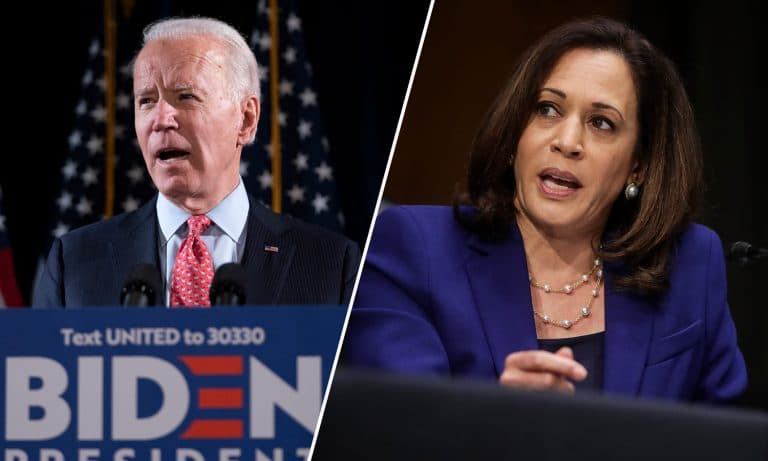
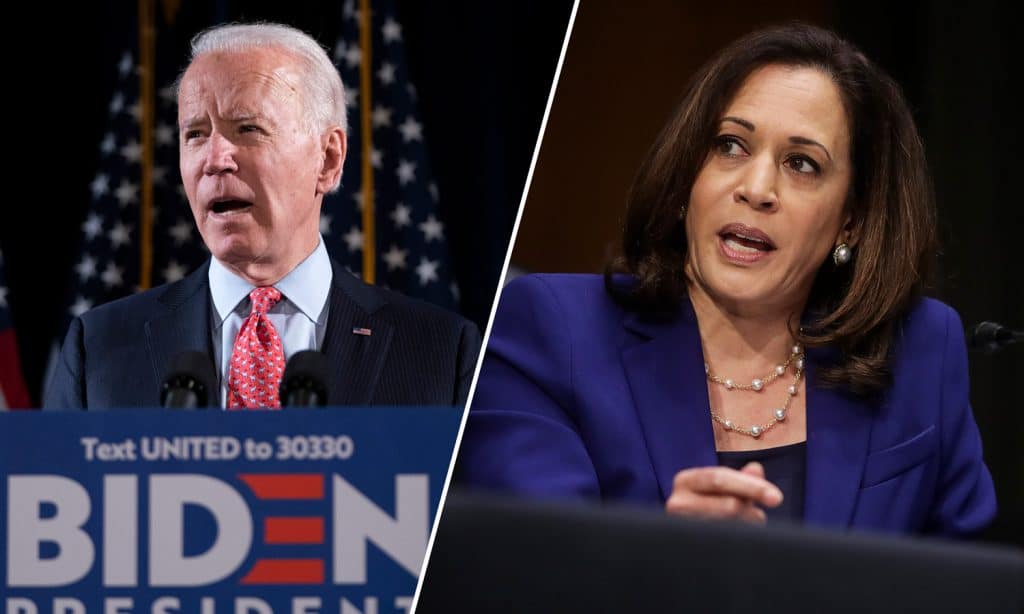
Recently, the Marijuana Moment carried two articles by Kyle Jaeger, their Los Angeles-based associate editor — Trump Voices Concern That Putting Marijuana On The Ballot Makes Republicans Lose and Biden’s Marijuana Decriminalization Plan Is ‘Meaningless’ — that really make me wonder if Donald Trump is willing to lose the election to maintain marijuana prohibition. (Or is Biden?)  

Jaeger reported that on a campaign visit to Wisconsin, Trump “urged Republicans not to place marijuana legalization initiatives on state ballots out of concern that it will increase Democratic turnout in elections… and that he blames marijuana legalization efforts on former Wisconsin Gov. Scott Walker’s (R) defeat in the 2018 election.”  

“The next time you run please don’t put marijuana on the ballot at the same time you’re running,” Trump said, directing his advice to Walker, who was in the crowd. “You brought out like a million people that nobody ever knew were coming out.” 

 RELATED: Trump To Republicans: Keep Marijuana Legalization Off The Ballot If You Want To Win

Given Trump’s rather blatant efforts to suppress voter turnout, it is all the more significant that he would recognize the impact of having marijuana as an issue in this election.  

Of course, Walker, a prohibitionist, did not put them on the ballot, so the voters had to do it to go around the Republicans, who may well have lost as a result. Previously, Trump has expressed his support “for allowing states to set their own cannabis policies, going so far as to say he “really” supports bipartisan legislation to codify the rights of states to implement marijuana programs without fear of federal interference.”  

And now, Newsweek is reporting that “60 percent of Republicans say they support the Marijuana Opportunity Reinvestment and Expungement Act, or MORE Act, which was introduced by Harris in the Senate…”  

However, Trump has filled many staff positions with prohibitionists, most significantly, Attorney General Bill Barr and Chief of Staff, Mark Meadows. Plus, he is courting militant police unions, which are generally headed by rabid prohibitionists but don’t really represent the majority of the police. Recently, he was endorsed by the New York City police union, even though he is expected to lose to Biden in both the city and the state by a wide margin. 

RELATED: Biden Marijuana Plan ‘Essentially Meaningless,’ Says Democratic Congressman

To make things more confusing, Biden, a longtime Drug Warrior, says he is against “legalization”, but favors a position that a leading legalization advocate, Rep. Earl Blumenauer (D-OR) and Biden supporter, finds “meaningless”, given that legalization is already supported by a large majority of the American people.  

Ironically, (Tragically? Absurdly?) Blumenauer also acknowledged that he was having trouble getting support from the Congressional Black Caucus (Lock My People Up??) who seem to think that black people will kill themselves with crack cocaine if white people legalize marijuana.  

I know that from personal experience. When I was National Director of NORML I was accused of supporting genocide because wanted stop arresting People of Color for marijuana possession. Let me make very clear that I trust People of Color with their freedom, but, given our very limited resources, we abandoned efforts to recruit in Communities of Color. I would joke that NORML was the whitest organization that I had ever belonged to that didn’t have a golf course. And it was. No joke. 

So, it is still what it is. To paraphrase Michelle Obama. 

Donald Trump Fears Marijuana Legalization Could Lose Him The Election
Photo by Pool/Pool/Getty Images

As Westworld recently reported, “Colorado has the least disproportionate rate when you compare marijuana arrests for white and black people in the country, according to the American Civil Liberties Union, but it’s still far from equal. 

The ACLU’s recent report examines arrests of both whites and blacks for marijuana possession from 2010 to 2018, compiling data across the country, and comparing statistics for every 100,000 people. The conclusion? Black people were about four times more likely to be arrested for possessing marijuana than white people.  

RELATED: Trump Fears States Legalizing Marijuana Could Lose Him The Election

“Montana and Kentucky had the most disparate rates, with over nine black people arrested for marijuana possession for every white person. (That ratio is particularly startling for Montana, which has a tiny African-American population.) Illinois, West Virginia and Iowa all had arrest ratios of over seven to one, according to the report. (Florida and Washington, D.C., were not included in the report.)”  

So, if Trump reads the polls (and does he read anything else?) he might be able to beat Biden. Or will Biden listen to Harris???  

Richard Cowan is a former NORML National Director and author on the Real Tested CBD blog. 

Cannabis 101: Why Doesn’t CBD Get You Stoned?

0

In a lot of ways, CBD has become a socially acceptable way for the zombies of popular culture to consume marijuana without being considered a stoner — this in spite of the fact it is a derivative of the cannabis plant, a substance the federal government still considers a no-no.

But how is it that this part of the plant doesn’t come with the high typically associated with weed? Why doesn’t CBD get you stoned? Well, that’s all science, baby.

It was back in 1992 when scientists learned the human body was equipped with what is called the endocannabinoid system, a series of receptors (CB1 and CB2) all over the body designed perfectly to respond to cannabis. Considering cannabinoids were first discovered in the 1940s, it is baffling it took researchers so long to determine humans were built to feel the effects of marijuana. But they finally got there (that’s all that is important), leaning how the various components of the cannabis plant reacted with certain receptors in the brain, immune system and vital organs.

RELATED: 5 Of The Most Popular Ways To Take CBD

Without going overboard with all the science babble, let’s just say that CBD pushes back against the stoned effects of marijuana. If THC — the chemical compound in pot that produces the feel goods — is the party, CBD is the person at the door making sure the scene doesn’t spiral out of control.

It is for this reason if an individual smokes a strain with a near equal ratio of THC:CBD, the high that comes with it will not be as intense as a high-THC strain on its own.

How Patients With Parkinson’s Disease Can Benefit From CBD
Photo by LauriPatterson/Getty Images

Although CBD is often referred to as the non-psychoactive compound, this is not completely accurate. The cannabinoid does work on the mind, which typically makes it a psychoactive force, only it does this without getting the user stoned. This is why CBD has the ability to combat pain and even certain mental health issues.

Research has shown the compound has mood enhancement properties, not to mention the ability to relieve anxiety and reduce seizure frequency in epilepsy patients. In fact, CBD’s ability to control seizures is really where much of its popularity originated.

RELATED: How CBD Blocks The Paranoia And Anxiety From Marijuana’s THC

It’s true CBD is non-intoxicating, but it can still lead to incarceration. Depending on how the substance is manufactured (marijuana CBD vs. hemp CBD), it is still considered a Schedule I drug under the Controlled Substances Act.

CBD extracted from industrial hemp seed is typically overlooked, but possession of any substance squeezed from the cannabis plant itself can lead to jail. It is important to understand the pot laws in your state.

Ways CBD Can Enhance Your Yoga Practice

Because meditation is an important part of any yoga practice, CBD can help slow down the racing thoughts in your head, allowing you to enjoy some calmer vibes.

Whether you are one of the uber-bendy yogis who down dogs daily, or you are someone who just dabbles in the occasional vinyasa, you might be ready to take your practice to the next level. Here are some ways CBD can enhance your yoga practice.

It turns out, CBD and yoga can be a harmonious combination. From getting you in the right mindset for practice and meditation, to helping heal your sore muscles from too many yogi pushups, here’s why CBD may be your new trusty go-to.

It can help you find your Shavasana


View this post on Instagram


A post shared by Caroline Perrineau (@theyoginist) on


While getting into a meditative state comes naturally for some, others of us have a lot of trouble sitting still. Because meditation is an important part of any yoga practice, CBD can help slow down the racing thoughts in your head, allowing you to enjoy some calmer vibes. If you experience anxiety, brain fog, or depression, CBD may benefit you, too.  

It can help you get into the flow


View this post on Instagram


A post shared by CorePower Yoga (@corepoweryoga) on

Sometimes it can take 30 minutes or more before you feel like you’re focused enough to enjoy the class, right? For a one-hour class, that time can be crucial. CBD can help get your mind yoga-ready. That includes helping clear your head and let go of stress so you’ll be ready to flow faster. Once you are in class, you’ll also feel more focused so you can power through until the last down dog sequence.

It can help work out any aches and pains  


View this post on Instagram


A post shared by Yoga Garden SF (@yogagardensf) on

RELATED: What Is CBD Yoga And Does It Work?

As well as getting your mind ready for yoga, CBD can also benefit your body. If you’re coming to your mat with any residual tightness or tension from a previous practice or workout, CBD can help you loosen up faster. It also can help rid your spine, upper back, and shoulders of any rigidness so you can start to bend and move comfortably.

It can help with faster recovery  


View this post on Instagram


A post shared by CorePower Yoga Central Coast (@corepoweryogasb) on

Yoga can be a relaxing way to exercise, but it’s also hard work. A one-hour vinyasa flow can involve pushups, planks, and other muscle strengthening moves.

Turning to CBD after a difficult class can help you recover faster by helping fight inflammation, reducing soreness, and easing tightness in your muscles. (Pro tip: Try adding a CBD bath bomb or salts to your bubble bath and you’ll be feeling better in no time.) Plus, CBD may help you sleep better at night post-yoga, which is crucial for muscle recovery. In the next day or two, you’ll be ready to flow again.

5 Things Dispensaries Are Doing To Keep You COVID Safe

0

In many states, dispensaries are essential businesses during the pandemic. Here are some of the most common safety measures they’ve implemented.

Even though dispensaries are considered essential businesses, the pandemic has still affected them. Just like any other business, marijuana retailers are enforcing new safety measure to keep you COVID-free. Here are just a few of the precautions they’ve implemented.

Adapting to shopping trends

Unlike other businesses that have had to cope with less customers during the pandemic, dispensaries have been experiencing more visits and larger orders. While sales aren’t exactly as robust as they were when COVID first hit, don’t be surprised to see more people than usual in your dispensary or notice that some products have gone out of stock.

In order to keep people safe, dispensaries are limiting the amount of costumers they let inside, allowing for social distanced waiting lines that are usually held outdoors. Some dispensaries might also be implementing shopping schedules.

Implementing social distancing

Marijuana Stores Being Targeted By Looters
Photo by Heath Korvola/Getty Images

RELATED: Here’s What You Should Know Before Visiting A Marijuana Dispensary

Every state and business implements social distancing guidelines differently. If you live somewhere where there’s a relatively low number of cases, you most likely won’t notice a big change except, hopefully, seeing employees and customers wearing masks. If you live in a state with a large number of cases, dispensaries will likely allow smaller groups of people indoors and will enforce outside social distanced lines.

Strict sanitary measures

Dispensaries should be handling their products more carefully, with employees wearing both gloves and masks. They might suggest customers pay with credit and debit cards (instead of their usual cash-only policy) in order to minimize the exchange of paper currency. They could also be more careful when providing options to customers, not allowing people to interact with every product they find appealing. Dispensaries might also offer hand sanitizer to customers as they enter and leave the premises.

Curbside pickup

Study Says Legal Marijuana Doesn't Increase The Odds Of Underage Cannabis Use
Photo by Heath Korvola/Getty Images

RELATED: Are Amazon, Uber, Etc. The Future Of Post-Pandemic Cannabis?

Some of the most useful options for businesses trying to cope with pandemic include providing delivery and curbside pickup. While delivery is at times complicated when it comes to cannabis, most dispensaries are offering curbside pickup, where you call ahead of time, ask for your order and wait outside the dispensary for an employee to bring your product out. If you know what you want, you can also call your dispensary ahead of time and choose the product you’d like to purchase to eliminate the hassle of spending time inside the store.

Relying on customers

It’s very important for customers to be aware of the risk of the virus and for them to be careful with employees and other customers. Be sure to wear your mask and to avoid entering indoor locations that are crowded. Use all of the tools at your disposal, whether that’s delivery, curbside pickup or simply keeping your distance from others and being mindful of yourself.

Does Katy Perry Consume Marijuana

Katy Perry is a Grammy nominated singer who just gave birth to her first child. What’s her relationship with marijuana?

Katy Perry has had a big week. The multi-Grammy award nominee and “American Idol” judge just gave birth to her first child. She also released her new album, “Smile,” coinciding with the 10-year anniversary of her biggest hit, “Teenage Dream.”  But does Katy Perry consume weed?

Perry has had an interesting musical career. At one point, she matched Michael Jackson in record sales, but in recent years, her songs have had trouble breaking the Billboard 100. Perry is a pop star who’s capable of releasing power ballads alongside bubblegum pop anthems. Although she still has a devoted set of fans, her recent work is wobbly, as if it’s still trying to find its footing.

katy perry is taking a break from music
Photo by Neilson Barnard/Staff/Getty Images


RELATED: Does Bella Thorne Smoke Weed?

In 2018, musician Telle Smith told Alternative Press that Katy Perry started smoking weed while on tour with his band The World Alive in 2008. He said that he saw her smoking weed from an apple and that she was very excited about it, which is something that you wouldn’t expect from a seasoned weed smoker.

In an interview with Rolling Stone in 2014, when asked about marijuana, Perry said, “I can’t do that stuff. I’d be like in the corner: ‘Are you trying to kill me?!’” which is extreme, but okay.

More recently, she’s made a couple of tweets alluding to weed, making it clear that she doesn’t smoke, but also doesn’t hold a grudge against the drug either.

RELATED: Does Drake Smoke Weed?

Although Perry has consumed weed, at least from an apple bong, it doesn’t appear like it’s on her list of priorities. Our verdict is that she’s not a regular weed user, which is cool now that she’s a new mom.

A Women’s Guide To Tasteful Marijuana Use: Tincture, Vape, And Edibles

For women who prefer an inconspicuous way to use marijuana, vapes, tinctures and edibles are all good options.  

Some women would prefer a more discreet method for using marijuana. If we’re perfectly honest, the smell of smoking cannabis can feel like a little much for certain circumstances. Although there are many options out there, a trip to a dispensary can be downright overwhelming if you’re not certain what you’re looking to buy.

Looking for a more tasteful way to consume cannabis? Here’s a women’s guide to tasteful marijuana use.

Vape 

Vape Sales Showing Signs Of Recovery From Crisis
Photo by Jamie Grill/Getty Images

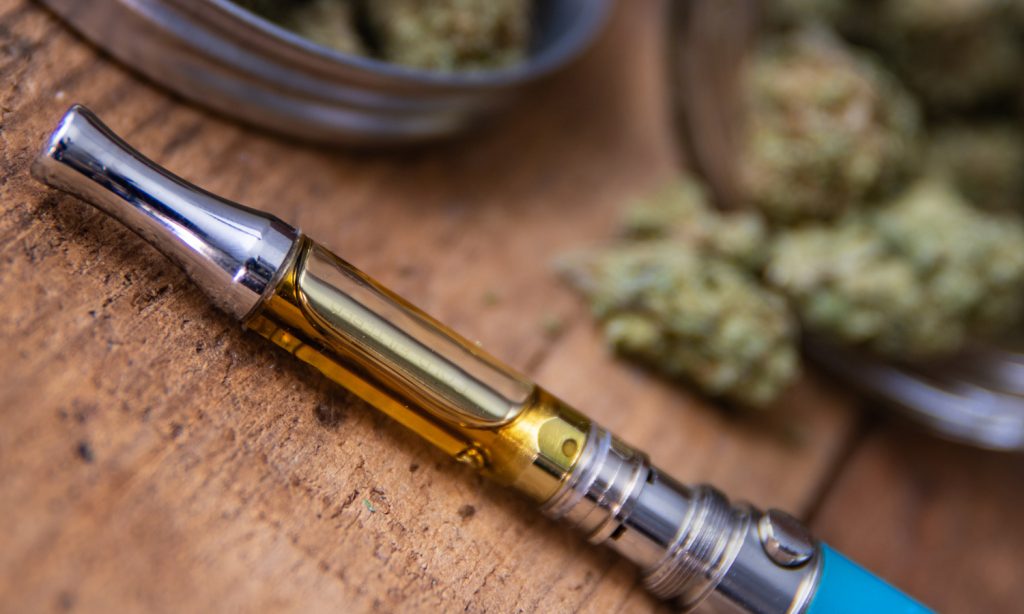
In general, vaping is considered to be one of the healthiest ways to consume weed. A 2007 study published in the Harm Reduction Journal found that vaporizers are associated with lower risks for respiratory damage than smoking.  

RELATED: 5 Of The Most Popular Ways To Take CBD

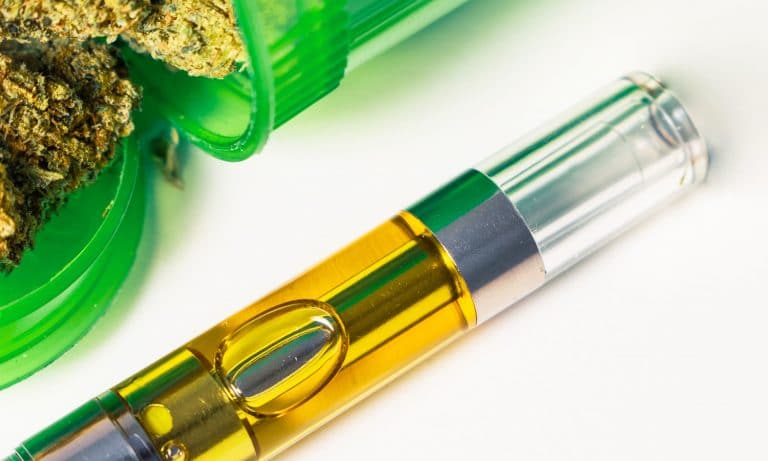
This isn’t the only reason vaping has become a popular means of consuming marijuana, it is also considered to be a much more subtle delivery method. For starters, vaping doesn’t smell as strongly as smoking if you stick with devices that vaporize concentrates. Additionally, because so many individuals are using e-cigarettes over conventional cigarettes, marijuana users can smoke without unwanted attention, if that is what they desire. 

Tincture 

Photo by Nisangha/Getty Images

A smokeless marijuana consumption option, tinctures are cannabis extracts that are usually made from alcohol. Some users turn to tinctures because they’re looking for a high or the medicinal properties of cannabis but are concerned about the health risks associated with smoking weed. 

RELATED: The Essential Guide To Smoke Proofing Your Apartment

For women who prefer an inconspicuous way to use marijuana, tinctures are a fantastic option. Generally, dosing is simple—start with a small dose like a drop or two. Place drops under your tongue and give your body time to absorb before increasing the dosage to make sure you don’t overdo it.    

Edibles 

Skip The Booze This Holiday With Next Generation Edibles
Photo by Massimo Adami via Unsplash

Edibles just might be the most subtle means of consuming marijuana, but first-timers should proceed with caution. Cannabis-infused foods are a simple delivery method, but they’re also easy to over-consume. This is because your body has to fully digest the food you consume before you’ll fully experience the effects of the weed it contains. Generally, users will experience a high within half an hour of eating an edible but might not experience the full effect until two hours have passed.

RELATED: Why Do Edibles Hit You Harder Than Smoking Marijuana?

Ultimately, tasteful marijuana use is largely about what makes you feel most comfortable while still allowing you to achieve your desired effects. Whether you’re using recreationally or for the medicinal benefits, experimentation with tinctures, vapes and edibles is a great way to become more familiar with alternative marijuana consumption methods. 

Don't Miss Your Weekly Dose of The Fresh Toast.

Stay informed with exclusive news briefs delivered directly to your inbox every Friday.

We respect your privacy. Unsubscribe anytime.