Friday, July 17, 2026
Home Blog Page 490

How CBD Can Help Deter Hormone Disrupter Chemicals

When hormone issues are caused by environmental factors like toxins, growth hormones or waste byproducts, it affects not only the body’s ability to reproduce, but the aging process as well.

Sometimes, emotions are like fireworks, suddenly exploding into colorful arrays, spilling down into every facet of life. Talk to any woman who has fluctuating hormone levels and she’ll tell you that feeling unbalanced or “out-of-whack” is something that she wishes never occurred. 


Scientists have been looking into the link between hormone imbalance, early menstruation, and quality-of-life for decades. While not always caused by environmental factors, (some are genetic or induced by thyroid problems or stress,) hormone imbalances can affect mood, weight gain, hair loss and pain levels. While both men and women are susceptible to hormone fluctuations, Between the Bridges Healing Center explains that, “Women experience hormonal imbalances at key transitions in their lives, for example, puberty, childbirth, perimenopause and menopause. “

Amanda Holmberg-Sasek, a therapist at Radiant Living Therapy  out of Plymouth, Minnesota, says she often sees clients who are experiencing the effects of hormone imbalance and its direct connection to a healthy sex life. “Working with the psychological effects of hormone imbalance can really help make big changes In and out of the bedroom,” she explained. Often a cause of dysfunction in relationships, she believes having a conversation is the first step to feeling and communicating more effectively with your partner.
The Truth About CBD And The Coronavirus Pandemic
Photo by chriss_ns/Getty Images

When hormone issues are caused by environmental factors such as toxins, growth hormones or waste byproducts, it affects not only the body’s ability to reproduce, but the aging process as well. According to the Dr. Shel wellness center in Sugarland, Texas, an imbalance can overwhelm the liver, which helps “to filter out excessive hormones.” When the liver can’t keep up with the disruptors in the food we’re eating, the air we’re breathing and the water we’re drinking, we experience symptoms, like, “weight gain, brain fog, sleepless nights, headaches” and more. 

RELATED: What Impact Does Cannabis Consumption Have On Our Hormones?

So, how can CBD play a role in easing the effect of imbalance? Cannabinoids have long been studied for their effect on a body’s metabolism. A few studies showcased that CBD actually harmed fertility in male mice, yet the compounds has been shown to have positive effects with hormone imbalances. Research has long confirmed CBD’s role in moving the bowels to assist with bloating, but it also seems to be able to ease cramping as well.

While more studies are certainly needed to determine CBD’s effectiveness on the male and female hormone system, research is in the works all over the globe. Harvard Health recommends talking to your doctor if you feel it might be right for you. 
Poll Says Trump And Biden Would Legalize Weed

Neither major presidential candidate has emerged as the nominee for the United States of Weed.

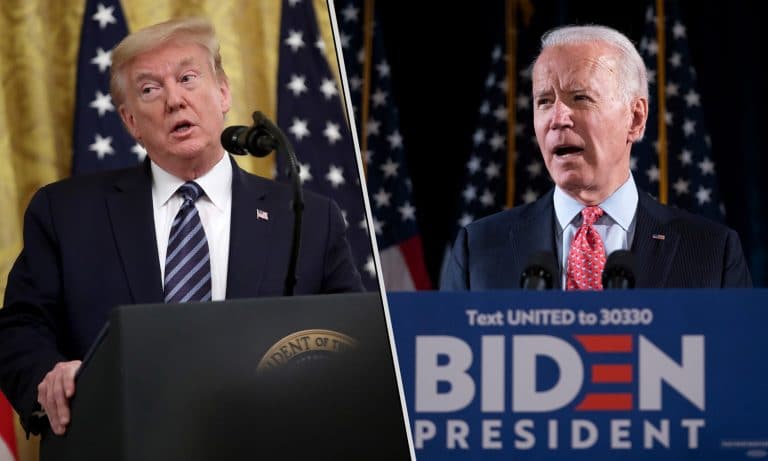
One thing we learned when polling Fresh Toast readers about which presidential candidate they believe would legalize cannabis if elected: Little faith exists that either major party candidate is pro-marijuana. Belief in Donald Trump and Joe Biden enacting serious cannabis reform was split almost evenly among our readers.

This is an unscientific poll and does not necessarily reflect the views of Americans at large. But it should provide some insight into how online cannabis advocates view Biden and Trump in the upcoming election.

RELATED: The Laws And Regulations On Hemp CBD In All 50 States

More than 5,600 readers participated in an online Facebook poll that asked: “Who is more likely to legalize marijuana if elected?” Biden received 52% support while Trump had 48% of all votes cast. The lack of a clear frontrunner among cannabis advocates was expected, as both Trump and Biden have distanced themselves from marijuana reform at a time when some prominent members of their party have.

Though he campaigned in 2016 as someone open to cannabis issues, Trump has earned a reputation as anti-legalization as of late. A whistleblower told Congress earlier this year Attorney General William Barr, who was hand-picked by Trump, was inappropriately using Justice Department funds to target the legal cannabis industry and cause financial setbacks.

The Role Marijuana Legalization Can Play In Fighting Racial Injustice
Photo by dvulikaia/Getty Images

In addition, a secret memo released as part of a lawsuit showed the Trump Administration had quietly blocked cannabis research for years. A Trump 2020 campaign director also indicated that Trump believed parents needed to keep cannabis out of the hands of children, although research finds that cannabis legalization was linked with a decline in adolescent use.

A contingent of Democrat voters hoped Biden would embrace cannabis reform ahead of the election, but the former Vice President has rejected the possibility. His official platform includes federal decriminalization and removing marijuana as a Schedule I drug. Even a task force formed with Sen. Bernie Sanders, a well-known supporter of federal legalization, did not sway Biden in changing his mind on cannabis.

RELATED: There’s Probably Too Much THC In Your Marijuana

Biden participated in and advanced America’s War on Drugs throughout his career in the Senate. On the campaign trail, Biden has stated some confusing and at times conflicting opinions on cannabis. He stated he “knew a lot of weed smokers” and that helped him understand marijuana’s long-term impact on brain development. But he also emphasized marijuana was not a gateway drug in an audio recording obtained by Politico. “I think It is at the point where it has to be, basically, legalized,” he added, a statement that he later backtracked.

The primary complaint lodged by Fresh Toast readers was that we did not include third party candidates like Libertarian party nominee Dr. Jo Jorgensen and Green party nominee Howie Hawkins. Both have stated they would prioritize ending the Drug War if elected. However, both candidates polled at less than 2% in a recent CNBC/Change poll and aren’t expected to make significant noise in the upcoming election.

The Difference Between Marijuana And Hemp CBD

0

Although CBD oil and hemp oil are both low in THC, the difference in the amount of CBD these products contain is huge.

There is a lot of noise reverberating throughout the United States these days regarding cannabidiol (CBD). It is the primary non-psychoactive chemical of the cannabis plant, beneficial in the treatment of a variety of conditions from epilepsy to chronic pain. Some patients believe CBD has the most medicinal benefit of all the cannabis compounds. But most of them do not realize that there are actually two versions of this product on the market. One is created from hemp, while the other marijuana.

So, what’s the difference?

It is first important to understand what CBD is. It is one out of at least 100 cannabinoids found naturally in the cannabis plant. For the past few years, there have been countless reports released about the medicinal power of this marijuana component. It really began gaining traction once people began to see how CBD could reduce seizure frequency in epileptic children without getting them stoned.

Do I Really Need Both CBD And THC?
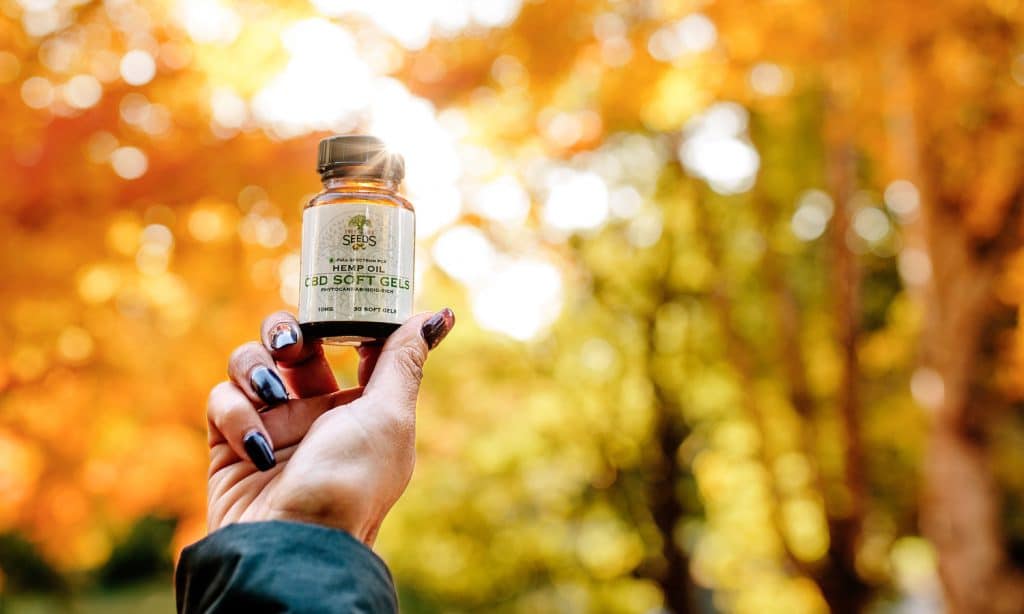
Photo by Tree of Life Seeds via Pexels

Several states have passed ultra-restrictive CBD laws as a means to help sick children. But the federal government still considers it an illegal drug. Yet, CBD products are found on retail shelves all over the country — even in areas of total prohibition.

RELATED: Hemp: Marijuana Or Not Marijuana?

It is the distinction between CBD derived from marijuana and CBD from hemp that sets them apart. Marijuana is harvested for its buds, which contains psychoactive properties known to produce stoned effects. When it comes to hemp, the stalks and seed are the targets of this crop. These plants do not contain enough THC to get anyone high. In fact, for cannabis to be considered hemp, it must have no more than 0.3% THC.

Although CBD oil and hemp oil are both low in THC, the difference in the amount of CBD these products contain is huge. Hemp oil has only traces of CBD (around 3.5%,) while CBD oil can have up to 20%. It is the higher concentration that makes CBD beneficial in the treatment of various health disorders. Hemp oil based CBD products do not contain enough of the compound to be considered much more than a health supplement. These are the products found in health food stores all over the country – legal in all 50 states.

Just think of hemp oil-based CBD as a vitamin (high in Potassium and Magnesium) and the bud-based products to be pharmaceutical grade.

Laws And Regulations On Hemp CBD In All 50 States

Some states have aligned themselves with the FDA’s position. Others have taken a more permissive approach. Many states have provided little to no guidance on the subject of Hemp CBD.

The 2018 Farm Bill removed hemp from the Controlled Substances Act did not affect or modify the Federal Food, Drug, and Cosmetic Act (“FDCA”) or the Food and Drug Administration’s (“FDA”) ability to promulgate regulations and guidelines that relate to hemp under. The FDA regulates a wide variety of medical and consumer products sold in the United States including food, drugs, dietary supplements, medical devices, cosmetics, and tobacco products.

The FDA has approved of the use of CBD in the prescription drug Epidiolex. As a result, the FDA has indicated in press releases, enforcement letters, and its website that Hemp CBD cannot be used in foods, beverages, or dietary supplements. This is because under the FDCA, any article that is investigated as a new drug cannot be used in food, beverages, or dietary supplements, unless the article was widely marketed in those products prior to the drug investigation.

In addition, the FDA has taken a hard line against Hemp CBD in unapproved drugs. The FDA determines whether something is a drug based on its intended use, and determines a product’s intended use, in turn, based on how it is marketed. If a manufacturer or distributor makes any type of health claim (“CBD cures cancer” or “CBD may treat inflammation”) or human structure claim (“CBD may increase levels of calcium in bones”) about a product that the FDA has not investigated and approved as a drug, the FDA will consider it a drug. Foods, ingredients in foods, drugs, and dietary supplements are all subject to premarket FDA approval.

RELATED: Federal Policy On Hemp CBD Is Taking Shape: What Needs To Be Addressed?

The FDA also regulates tobacco and nicotine tightly but does not have clear regulatory authority of smokable hemp products, such as dried flower, e-liquid and vape pens. That’s because generally, these products don’t contain any tobacco or nicotine. To clarify, the FDA likely could have regulatory authority over these products, but it hasn’t established a clear jurisdictional hook.

Though the FDA is a federal agency, its policies have a significant impact on the states. Some states have aligned themselves with the FDA’s position. Others have taken a more permissive approach. Many states have provided little to no guidance on the subject of Hemp CBD.

Almost 90 years ago, in 1932, Supreme Court Justice Louis Brandeis wrote a dissenting opinion in New State Ice Co. v Liebmann, which contained this timeless passage:

To stay experimentation in things social and economic is a grave responsibility. Denial of the right to experiment may be fraught with serious consequences to the nation. It is one of the happy incidents of the federal system that a single courageous State may, if its citizens choose, serve as a laboratory; and try novel social and economic experiments without risk to the rest of the country.

This concept of states as “laboratories of democracy” remains a “happy incident” of our federal system to this day. States can experiment with their own laws without subjecting the citizens of other states to the related risks (or, including them in the upside).

hemp is officially legal in the united states
Photo by TinaKru via Pixabay

Experiments are complicated and require close observation. That can be tough when you have 50 “laboratories of democracy” all operating at once. Over the past few years, states have been experimenting with how to regulate products containing Hemp CBD. This has resulted in a complex system of inconsistent policies on Hemp CBD. For businesses that are distributing Hemp CBD products across the country, it seems that these laboratories of democracy have created a logistical monster.

RELATED: The Latest Report From The FDA Shows How Poorly It Has Handled CBD

Our attorneys have watched this play out in real-time and in doing so, developed a method to track how each of the fifty states treat Hemp CBD. Our approach is to answer the following questions for each state:

  1. Does the state allow the sale of Hemp CBD products and if so are there any general regulatory requirements on these products (e.g., labeling requirements, product registration)?
  2. Does the state authorize or restrict the sale of consumable Hemp CBD products such as food and dietary supplements?
  3. Does the state authorize or restrict the sale of smokable Hemp CBD products such as dried flower and vapor liquid?
  4. Does the state authorize or restrict the sale of cosmetic Hemp CBD products such as topicals and lotions?
  5. Has any state authority take an enforcement action against Hemp CBD businesses in the last six months?
  6. What are the relevant statutes and regulations that govern Hemp CBD in the state?
  7. Are there any pending laws or regulations on Hemp CBD in the state that would impact the ability to sell Hemp CBD products?

Guided by these seven questions, we developed a Hemp CBD risk matrix that covers all fifty states and is updated each month by a team of Harris Bricken attorneys. We look at each of the seven questions for every state and update the risk matrix accordingly. Click HERE to download a sample of the risk matrix.

The matrix provides a snapshot of each state’s laws, regulations, and policies regarding Hemp CBD products. By simply updating a website or issuing a memorandum, a state regulator can totally change the legal landscape for Hemp CBD products overnight. In addition, both the United States Department of Agriculture (“USDA”) and the Food and Drug Administration (“FDA”) are actively working on regulations and policies that could impact the states.

The risk matrix can help your business with the following:

If you are interested in purchasing the Hemp CBD Risk Matrix, you can do so entirely online through this page. You can also email me directly at daniel@harrisbricken.com to learn more about the risk matrix.

In addition, below are links to each post from our “Hemp CBD Across State Lines” series which covered each of the 50 states, as well as certain U.S. territories and Tribes. Unlike the risk matrix, which is updated monthly, these posts may be out of date due to the fast-changing nature of this industry.

States, Territories and Tribes 

Daniel Shortt is an attorney at Harris Bricken. This article was originally published on the Canna Law Blog and has been reposted with permission.

What Is Havening And Why Are Anxious People Trying It?

Havening is a technique that’s used to treat trauma and compulsions. It can also be used to treat everyday anxiety.

Anxiety is a feeling we’re all acquainted with, either intimately or peripherally. The word encompasses a variety of emotions, ranging from nervousness and panic, to irritability. While there are plenty of effective ways to treat low levels of anxiety, such as working out or meditating, havening is a new thing that’s been popping up more and more.

When people experience anxiety, their bodies get locked in a fight or flight response, triggering their adrenaline, heart rate, and more, where there’s no immediate threat. It’s a very confusing and annoying feeling that can alter your eating and sleeping patterns and also disrupt your relationships and your life.

Havening is a tool used by therapists and psychologists in order to cope with trauma. Developed by Dr. Ronald Ruden, the practice consists of touching and massaging your arms, hands or face as you chant a relaxing mantra, tricking your body into a relaxed state.

RELATED: A Beginner’s Guide To Meditating With Cannabis

“First is activation of the emotional content of the traumatic event by imaginal recall … A gentle and soothing touch is then applied to the upper arms, palms, and around the eyes,” explains Havening Techniques. “It produces an extrasensory response of safety that arises from the evolutionary equivalent of what a mother’s touch does at the time of birth. It is innately wired.”
4 ways that medical cannabis can ease chronic pain

Photo by Raj Eiamworakul via UnsplashWhile it sounds strange, like something that you likely won’t feel comfortable doing while walking down the street, sessions conducted by psychologists and therapists have found lots of success within short periods of time.

RELATED: 4 Meditations For Your Fluctuating Quarantine Moods

While now’s not the most comfortable time to go to your therapist and ask for someone to give you a soothing massage, havening can be done simply by rubbing your arms and repeating soothing words to yourself. If you have a kid who is also experiencing anxiety due to quarantine or social distancing, it can help them feel safe and cared for.

Havening is not much different than Progressive Muscle Relaxation and other relaxing practices that keep your anxiety at bay and remind you to stay in the present.

Probability Of Legal Marijuana Already Upsetting Arizona Lawmakers

Arizona has emerged as a fierce battleground in marijuana legalization and lawmakers aren’t too happy about it.

Arizona is expected to vote on legalizing recreational marijuana after an advocacy group submitted more than 420,000 signatures to put the question on the ballot. But opponents have already attempted to de-legitimize state legalization in a lawsuit and a new adversary with a powerful position has also emerged — Arizona Gov. Doug Ducey.

An official state voter guide argument was published last Monday and included commentary from notable figures on upcoming ballot initiatives. Ducey submitted an argument against legalizing weed in Arizona, calling it “a bad idea based on false promises.”

“We know from states that have fully legalized marijuana that it has real consequences: more deaths on highways caused by high drivers, dramatic increases in teen drug use, and more newborns exposed to marijuana,” Ducey wrote.

RELATED: NJ Gov. Suggests Legal Marijuana As Post-Pandemic Economic Fix

State Sen. Sine Kerr also wrote that she was “deeply saddened by the prospect of how this initiative would harm children.”

“Kids would become easy prey for an industry hungry to create a new generation of users,” she added. “The industry will succeed in hooking too many of our kids and stealing their potential early.”

arizona considers categorizing porn as a public health crisis
Photo by Florian Schneider via Unsplash

However, studies have shown these comments to be misleading. Research indicates states have seen an increase of traffic deaths after legalizing marijuana. But those same states also experienced a stark drop off immediately following the increase, calling into question what role cannabis played in traffic deaths.

Multiple studies have shown teenage marijuana use decreasing after states legalize cannabis. One study actually claims that legalization discourages teen use.

The same voter packet also featured voices in favor of the marijuana, including comments by former Gov. Fife Symington III.

RELATED: Portland Plans To Stop Using Marijuana Tax Revenue To Fund Police

“Today the evidence is overwhelmingly clear: criminalizing law-abiding citizens who choose to responsibly consume marijuana is an outdated policy that wastes precious government resources and unnecessarily restricts individual liberty,” he wrote. “A far more logical approach would be to respect the right of adults to choose to consume marijuana while regulating and taxing its production and sale.”

A poll last month found that 62% of Arizona voters were in favor of legalizing recreational cannabis.

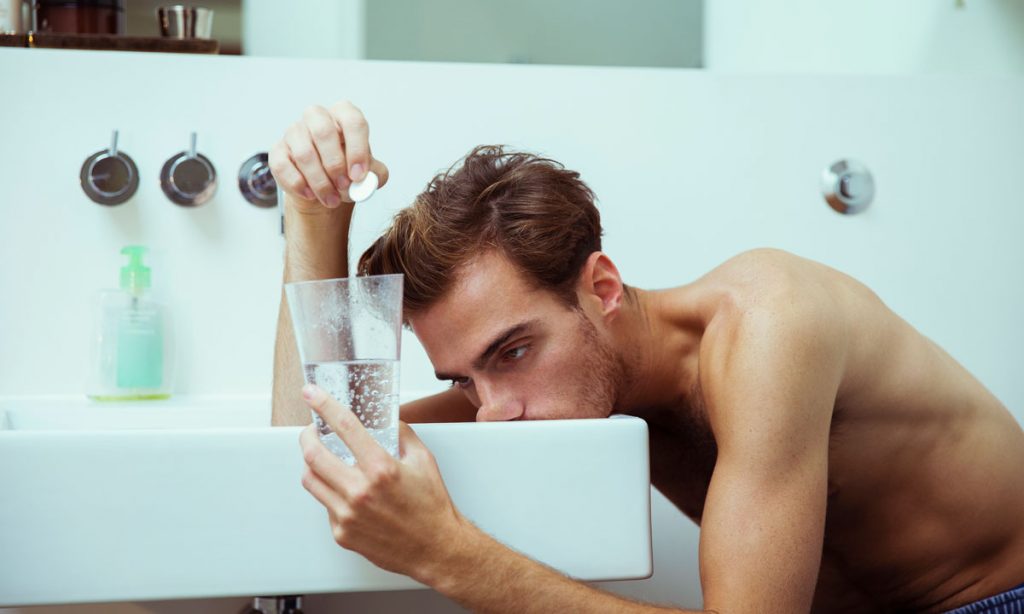
Types Of Marijuana To Ease A Hangover

For the same reason cancer patients rely on weed to fight the nasty effects of chemotherapy, a person with a hangover can use it to keep from loitering on the bathroom floor.

The hangover that comes after a night of heavy drinking is a cruel reminder that we are delicate beasts that, no matter how much Bukowski we wear on our sleeves during the celebration, we can’t hold our liquor worth a damn. But no matter how many times we’ve been slumped over the toilet, dry-heaving in ways that make us look like an old cobra that was sold to a circus sideshow for a dime bag, we continue to engage in this behavior as though we are incapable of learning a lesson.  But good news, for the same reason cancer patients relay on weed, it can help with overindulgence and here are the types of marijuana to east a hangover.

It’s like no sooner than the Jack Daniels induced fog in the brain starts to subside from one too many beers, shots and “Hell Yeahs!,” another weekend sneaks up and, once again, threatens to turn us into a wad of the feel bads. Indeed, for the party people of the planet, the hangover is the bane of their existence, a painful roadblock that stands in the way of livin’ la vida loca with the kind of enthusiasm that would have even Jim Morrison saying, “Whoa! You’d better slow it down there, pal.”  

What’s worse is there is no known cure for a hangover, which means too much booze tonight and you’re inevitably going to be paying for it tomorrow.

RELATED: 5 Simple Ways Marijuana Can Help You Smash A Hangover

The good news is there is evidence that marijuana can help squash those pesky hangovers and get the sipping socialite back on the barstool in no time. But how? Well, federal studies have shown that cannabis can help fight nausea and vomiting. So, for the same reason that cancer patients often rely on the herb to fight the nasty effects of chemotherapy, a person with a hangover can use it to keep from loitering on the bathroom floor.

A Hangover Pill
Photo by Caiaimage/Paul Bradbury/Getty Images

There is also research that shows marijuana compounds have anti-inflammatory properties, which can be useful for those pounding headaches that often present themselves during a hangover. Weed can also help fight off that depression, guilt and the overall lousy state of mind that has been known to rear its ugly head after a night of drinking. Studies show that cannabis is effective in alleviating this kind of anxiety. We’re not saying weed is a fail-safe, but amid the liquor sickness, any relief whatsoever is welcomed. 

RELATED: Can You Prevent A Hangover By Eating A Big Meal?

But a person shouldn’t just reach for any old cannabis product and expect to find their way to recovery. Some strains are better than others when it comes to dealing with the symptoms of a fierce katzenjammer. And these morning after a night of heavy drinking that put us on the couch for the rest of the weekend are not all created equal. So it is crucial to select the appropriate strain to match the goals of the day. 

Here’s some solid advice:

“It depends on whether you’re planning on being productive that day,” a Los Angeles-based budtender explained to Mel Magazine. “For a hangover that you can’t get out of bed from, I recommend a CBD-heavy strain [Harlequin]. CBD has anti-inflammatory and anti-nausea properties that will help you feel slightly human again. For a less intense hangover, I’d go for an indica-dominant hybrid [Strawberry Banana], which will help with relaxing your body and working up an appetite. If you’re hungover and need to get up and go somewhere, I suggest a sativa [Green Crack] because it helps get you up and moving.” 

RELATED: 4 Ways To Relieve A Marijuana Hangover

Other strains have been known to tame a hangover, as well. Sour Tsunami, which is another high-CBD brand, has been said to snuff out nausea like a champ. There is also Northern Lights, known for its ability to help with anxiety and pain. Some say Trainwreck is their go-to strain for combatting headaches, and others like Jillybean (hybrid) for getting their energy back. Oh yeah, and some folks swear by CBD-infused water to combat both dehydration and inflammation at the same time.

As with anything, however, the person needs to find what works for them. It might take a little experimentation, but there is likely a strain out there that will help pull you out of the funk of a booze bender. Until you find it, a greasy breakfast, a few ibuprofen and plenty of water might pull you through. And if none of that helps, well, you might just need a little more practice or the number to an AA meeting. 

Good luck!

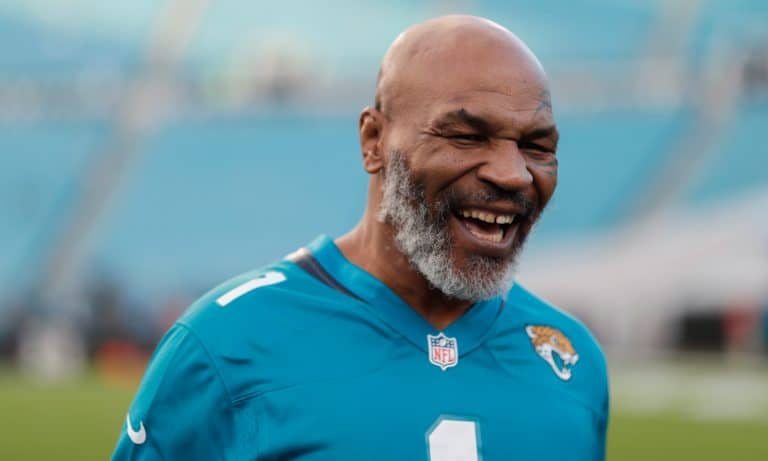
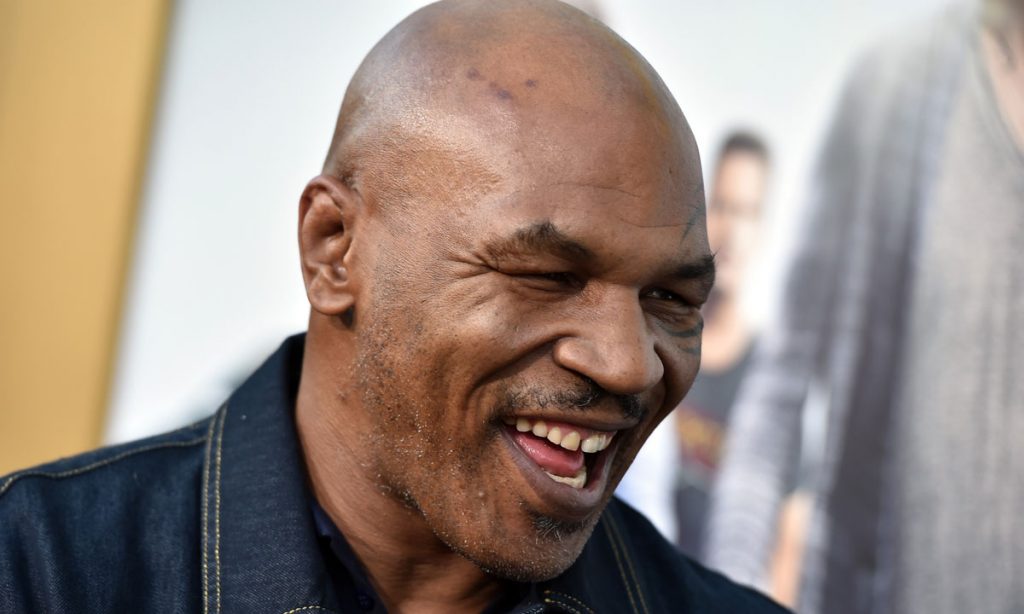
Mike Tyson Will Print (Yes, Print) Cannabis Beverages

“With this global license for printing cannabis, we’ll be able to address the dosing issue, which has plagued the cannabis industry for years,” said Tyson. Here’s how it works.

Just when you thought you’d seen every cannabis product imaginable, from CBD pillows to weed hummus, Mike Tyson is coming in with a surprise jab.

According to information procured exclusively, The Ranch Companies, founded by Mike Tyson, has acquired a global license to print (yes, you read right, print) cannabis products.

But what does this even mean? How can you print a cannabis product? And even more so, how can you print a beverage?

Well, there’s where Tyson’s new partner, Smart Cups, comes in. The company, responsible for creating the world’s first printed beverage, will license its IP to The Ranch Companies for it to print ingestible cannabis products with accurate and consistent dosing.

Sound too surreal to be true?

Well, it isn’t. Here’s how it works:

“For The Ranch Companies, it is very exciting to be working with Smart Cups’ technology, because it gives us the opportunity to make anything that is possible with this innovative tech,” Tyson said in an exclusive conversation.

“Having the ability to produce lines of ingestible cannabis products that will have accurate and consistent doses of cannabis is incredibly important to us.”

How It Works

Getting a little bit further into the nitty-gritty, what Smart Cups does is print active and flavor ingredients from diverse natural products on the surface of substrates, thus eliminating all of the liquid from a beverage — consequently reducing transportation costs and carbon footprints.

In order to achieve this, the company uses micro-encapsulation printing technology to infuse its plant-based products into the substrate, which is then embedded in a bioplastic cup.

“In this specific application, we use water soluble cannabinoids and are able to precisely print them on virtually any surface,” explained Chris Kanik, founder and CEO of Smart Cups. “The printed actives and flavors are released when they come in contact with a liquid (i.e. water, soda, or saliva).”

An ‘Incredible’ Technology 

When asked about the deal, Tyson called Smart Cups’ technology “incredible.

“I mean, when you look at what they are doing it is really cool. I see the long-term benefits it will have, helping people be confident and understanding proper dosing. It is important to know what we are putting in our bodies, as well as how much of certain ingredients, medicines, etc,” Tyson added.

RELATED: A Breakdown Of Mike Tyson’s $40K A Month Weed Habit

But the deal is not just about novelty. It’s about health.

In an era where cannabis products have become extremely potent, dosing can mark the difference between effective and ineffective medication.

mike tyson once boxed while high and won
Photo by Kevin Winter/Staff/Getty Images

In fact, Rob Hickman, CEO of The Ranch Companies, noted dosing has been “one of the systematic issues plaguing this industry.”

For him, acquiring the science and technology to efficiently deliver consistent and accurate dosages “will be a game changer in the cannabis marketplace.”

RELATED: Mike Tyson Once Boxed While High…And Won

“We have partnered with top research universities to collect critical clinical data supporting CBD for medicinal purposes and pain relief. The Smart Cups Technology is a new delivery system which we believe will set new standards in this industry,” he continued.

Bringing up an example, Kanik added, “at the moment, the industry is lacking consistency. When an individual consumes 100mg of aspirin, no matter where they are in the world, they are confident that they are consuming 100mg of aspirin. Smart Cups Technology can provide that same consumer confidence.”

And Tyson seemed to concur.

“We’ve seen ingestible forms of cannabis continue to grow as popular alternatives for many users who wish to avoid smoking. With this global license for printing cannabis, we’ll be able to address the dosing issue, which has plagued the cannabis industry for years,” Tyson voiced.

The Future, Now

According to Kanik and Hickman, The Ranch Companies will be developing products in a number of categories utilizing the Smart Cups printing technology. However, like many in the cannabis industry, The Ranch Companies is “waiting for rulings allowing the consumption of CBD.

“Once that occurs we will aim for national distribution,” said Hickman.

“CBD is helping a lot of people. And it is the government’s responsibility to figure out how to make it fully legal for consumption,” Kanik concluded.

This article has been reposted with permission from Benzinga.

Does Cameron Diaz Consume Weed

Cameron Diaz is one of Hollywood’s most iconic stars, but she’s also a new mom. Has she lost her partying ways?

Cameron Diaz is an icon. Although she sadly retired from acting, Diaz rose to fame in the 1990s, when she ditched her modeling career for a role co-staring opposite Jim Carrey in “The Mask” and became an overnight success. This week, in an interview with Gwyneth Paltrow for Goop Health, Diaz elaborated on why she chose to leave acting and why she felt like that was the right decision for herself.

“When you’re making a movie, it’s a perfect excuse. They own you,” she said. “You’re there for 12 hours a day. For months on end, you have no time for anything else. I realized I handed off parts of my life to all these other people and they took it.”

Although it’s sad that we won’t get to see her in any future projects, Diaz retired with a list of epic and extremely profitable films under her belt. She worked with some of the most prominent directors in Hollywood and her laugh is kind of immortalized as one of the best that has ever been captured onscreen.

As someone who used to pal around with Hollywood’s young elite, Diaz has now settled into being a mom and wife. Does she smoke marijuana?

This Is How To Know When It Might Be Time To Lay Off Marijuana
Photo by Artëm Vasilenko/EyeEm/Getty Images

RELATED: Does Charlie Puth Smoke Weed?

In an interview with George Lopez back in 2011, Diaz explained that she went to high school with Snoop Dog and that he was a year her senior. Like most celebrities who’ve come in contact with Snoop, she admits buying weed from him. In another interview with Lopez, Snoop confirmed this story, claiming that he sold her “white girl” weed.


Another instance of Diaz smoking weed was documented in 2007, when she was papped sharing a joint with Drew Barrymore after shooting one of the “Charlie’s Angels” movies.

RELATED: Does Harry Styles Smoke Weed?

As for Diaz’s current weed habits, there’s not much information out there. Since she decided to step away from the spotlight, she’s only resurfaced recently to promote her new “clean” wine, Avaline. However, in 2015, she did mention how she practices Transcendental Meditation and how the activity helps her feel good. That sounds a little weedy, so yeah, we think Cameron Diaz probably smokes weed if the occasion feels right.

Enforcement Alone Won’t End California’s Illicit Cannabis Market

So long as it is extremely difficult and expensive to start and run a licensed cannabis business, there will be people who opt for the illicit market.

It seems like every week, there’s a new announcement of state or local enforcement actions or raids of allegedly unlicensed cannabis operators in California. Some time ago, this would have been welcome news to many licensed cannabis businesses in the Golden State that pay large sums of money to get licensed while illicit market operators can offer cheaper, tax-free products to consumers at a huge competitive (though not legal) advantage. Nevertheless, it’s becoming clearer that nothing the state is doing is really changing the illicit market, and this offers little solace to the participants in the regulated market.

To date, legislative efforts to ratchet up penalties haven’t really disincentivized unlicensed activity. For example, AB-97, a bill that passed in mid-2019 that authorized penalties of up to $30,000 per day for unlicensed activities, didn’t end California’s illicit market. In fact, a few months after that law passed, I wrote a post citing a then-recent audit that showed that there were nearly 3,000 unlicensed cannabis businesses in the state.

As I write this post, California continues to struggle with its illicit market. The state is considering adopting another bill (AB-2122) that would authorize similar, $30,000/day penalties against landlords and other third parties that aid and abet unlicensed operators, and the state indicated it would like to expand its police enforcement team. This is on top of the seemingly weekly news of raids and other enforcement activities.

RELATED: Why Enforcement Is Not The Best Way To Combat The Illicit Market

Will these enforcement efforts really end or even significantly hamper California’s illicit market? In my opinion, the answer is a clear “no”–at least without a lot more help. As I wrote in 2019:

In my opinion, enforcement is not the best way to combat the illicit market. No matter how high the penalties are, there will always be people who are willing to ‘risk it’ and ignore the law. Prohibition never stopped many people from selling cannabis.”

How The Marijuana Industry Is Battling The Black Market
Photo by RichVintage/Getty Images

The state’s recent penalty augmentations won’t realistically be much of a deterrence, when for decades, people sold cannabis while it was still criminalized at every level of government. The state would have to devote tremendous amounts of resources (which could be better spent elsewhere) to pursuing enforcement and ultimately, not much would stop unlicensed operators from re-entering the market. In fact, arrests and convictions may prevent people from entering the state-licensed market even if they wanted to.

RELATED: Why The Black Market Continues To Thrive — And What Is Being Done About It

In my opinion, the best way to solve the illicit market problem would be to make it seem more appealing than the illicit market. So long as it is extremely difficult and expensive to start and run a licensed cannabis business, there will be people who opt for the illicit market, regardless of whether doing so could lead to administrative or criminal charges.

Enforcement will always play a role in the licensed cannabis regime. But it should by no means be the first or only thing that the state uses to fight back against illicit activity. It failed during prohibition and it will again. I compiled a list of possible solutions for California to combat illicit market more than a year ago, and many of those potential solutions still hold fast today. I intend to update this list in the near future, so please stay tuned to the Canna Law Blog for more updates.

Griffen Thorne is an attorney at Harris Bricken. This article has been reposted  from Canna Law Blog with permission. 

Don't Miss Your Weekly Dose of The Fresh Toast.

Stay informed with exclusive news briefs delivered directly to your inbox every Friday.

We respect your privacy. Unsubscribe anytime.