Tuesday, May 12, 2026
Home Blog Page 521

5 Tips To Make The Most Of Your Online Therapy Sessions

Online therapy is very different than an in-person session. Here are some tips that can help you adapt better.

The coronavirus outbreak has created a complex landscape for mental health and wellness. People are stressed out due to the virus, financial uncertainties, communities in crisis and more. There’s also the fact that, since we’re spending most of our time indoors, there’s plenty of time to think about the long list of problems that are plaguing us.

While online therapy is better than no therapy, there’s a learning curve for everyone involved, from patients to therapists. Here are 5 things you can do to make the most of your therapy right now:

Change anything that’s bothering you about the new set up

There’s a long list of things that make teletherapy less effective than real-life therapy, like poor wi-fi or awkwardness over having to see your face at the bottom of your screen as you’re confessing your deepest and darkest feelings.

Therapy relies on body language, physical cues and open and vulnerable conversation. A lot of that is lost once you decide to cross over to teletherapy. Still, you should be as flexible as possible and work with the problem. If your room is messy and you don’t feel like having therapy there, be sure to clean up your space before your session and put yourself in a comfortable position.

Make sure your internet connection is working, add a video background, or anything else that will help ease you into this new virtual setup. If you have roommates and feel like the walls are too thin, try having your session while going on a walk or in your garage.

Don’t be ashamed of what’s stressing you out

5 Things You Can Do To Make The Most Of Your Therapy Sessions
Photo by cottonbro via Pexels

RELATED: 5 Self-Care Tips We Should All Be Using Now

The pandemic is a strange time for stress. It may feel like you’re being selfish when you’re worried about toilet paper while others are losing their jobs and lives. But all of your feelings are valid, especially in therapy. It’s important for you to discuss them and address them — hopefully with a therapist that makes you feel like you’re being heard. When you address your feelings you’re much more likely to be in a better mental state.

Discuss your biggest pandemic fears

Is the pandemic keeping you up at night? Now that we’re living in timeless times, when there’s no everyday occurrences that can provide padding for your therapy sessions, it might be a good time to discuss these scenarios with a professional. Discussing these fears and acknowledging them alongside an expert will validate your emotions and make you feel safe, removing the fear of the unknown.

Name your feelings and emotions

5 ways to find more affordable therapy
Photo by Kelly Sikkema via Unsplash

RELATED: 5 Therapy Apps When You Need To Talk To An Expert

With teletherapy, you might need to work harder in verbalizing your emotions and feelings in an attempt to help your therapist deliver the best results. Therapists are experts and decipher your feelings through your facial expressions and eye contact. It may be more taxing to try to name these feelings yourself, but it’s a good long term exercise that will leave you better equipped to handle problems and your own emotions.

Know that it takes time to adapt 

When in between sessions, try journaling, writing down possible conversation topics and memories that could work for your therapy. These moments can serve as conversation starters and can help you feel more prepared and less awkward over your virtual therapy session.

Ask Mister Manners, Thomas P. Farley: ‘A Home-Wrecker Lives In The Apt. Above Me’

I’m going crazy listening to the rambunctious toddler who lives upstairs from me. Working from home is nearly impossible. How do I stop this living nightmare?

Etiquette tips on how to interact in today’s world. Have a question for Mister Manners? Send your queries to info@whatmannersmost.com and look for replies in the coming weeks. 

CAUSING A COMMOTION

Q: My upstairs neighbors have an energetic two-year-old who spends his day knocking things over. With both of his parents working from home and daycare closed, I know they have their hands full. But I’m working from home, too, and frankly, I can’t concentrate with all of the upturned toy boxes, bookshelves and tricycles pounding on my ceiling like a hailstorm of heavy objects. Is there a way of addressing this matter that won’t offend his parents?

A: As so many of us continue to work from home, and with innumerable companies suggesting it will be quite some time before employees are invited back to their offices, it’s essential that you and your neighbors work out a solution. With noise issues, in particular, I often find that apartment dwellers don’t ever bring their concerns to the offending party. Instead, they resort to measures such as abusing the ceiling with broomsticks. Others prefer a subtler approach, cranking up a song like Mastadon’s Curl of the Burl.

I don’t recommend either tactic. Though if you’re a metal fan stuck in a multifamily dwelling, feel free to blast whatever playlist gets you through your day — providing you’re listening on a good pair of headphones, of course.

With the understanding that conversations with neighbors carry their own potential for awkwardness at this time, I would put on a mask, knock on their door and, from six feet away, as nicely as you can, mention that there seems to be a bit of noise coming from their apartment. Since you’re WFH as they are, advise them that anything they can do to diminish the decibels would be greatly appreciated. If they plead powerlessness when it comes to reining in their high-energy tyke, a sound-dampening rug may help. For good measure, offer that if noise from your apartment ever bothers them, you hope they’ll let you know immediately so you can address the din.

RELATED: Ask Mister Manners, Thomas P. Farley: ‘Do I Give A Gift If It’s A Virtual Wedding?’

By your taking the high road they will not be on the defensive, and chances will be greater they’ll work to reduce the pandemonium. If all else fails, remember: the terrible twos are not forever. And though it may feel this way, neither is the quarantine.

Ask Mister Manners, Thomas P. Farley: 'A Home-Wrecker Lives In The Apt. Above Me'
Photo by Brandon Griggs via Unsplash

WHAT’S UP WITH THAT, DOC?

Q: Last week, I accompanied a friend to an orthopedist appointment and was stunned by what we encountered. Although the other patients in the waiting room were appropriately covered — as were we — the receptionist wore neither a mask nor gloves. Even more alarming, when it was our time to see the doctor, he entered the treatment room maskless and gloveless, and even tried to shake our hands. Just as I thought things couldn’t get worse, he initiated a conversation about how Sweden’s casual approach to the pandemic has kept their economy intact. Maddening! When it’s time for her next appointment, how should my friend broach the topic of safety precautions (not to mention politics) with this doctor and his staff?

A: In all seriousness…next appointment? If his concern for the respiratory health of his patients is this cavalier, I shudder to ponder his standards for ensuring their bone health. Even if he is a leader in his field, what good is it to arrive at his office with a fractured clavicle only to leave as a carrier of COVID-19?

RELATED: Ask Mister Manners, Thomas P. Farley: ‘My Neighbor Is Quarantining In The Nude’

If for whatever reason this particular specialist is your friend’s only option (e.g., he is the leading medical practitioner for a rare condition or the only one within 100 miles of her home who accepts her insurance), I suggest she put these concerns to the doctor in an email, referring him to American Medical Association guidelines on this issue. If he balks or simply ignores her requests, I would report him to the AMA and without question find another doctor.

Make no bones about it: It should be easy enough to find a new practitioner who actually believes in the Hippocratic Oath.

Mister Manners, Thomas P. Farley, is a nationally regarded expert who appears regularly in the media to discuss modern-day etiquette dilemmas — from how to split a check fairly to how to get a word in edgewise. Follow Thomas on Facebook, Twitter and Instagram @MisterManners. And for more insights, listen to his brand-new podcast, “What Manners Most,” which will be focused exclusively on Coronavirus-related etiquette for the foreseeable future.

Majority Of Moms Believe In Hemp-CBD As Medicine For Kids

Moms have become new leaders of normalizing cannabis within family households, according to a new poll.

Sorry wine moms, but there’s new game in town. That would be “weed moms,” who have emerged as a strong driving force in the normalization of cannabis nationwide. As a new poll finds, moms are more likely than dads to educate their children about using hemp or CBD.

Oasis Intelligence surveyed 20,000 adults who consume marijuana or hemp CBD to better understand how attitudes around the plant have changed within family households. According to the results, more than half of marijuana-consuming moms (54%) approved using cannabis products for pain relief and other medical ailments under medical supervision.

Marijuana-consuming dads were less likely (46%) to consider cannabis-derived medicine for their kids. Both moms and dads who consumed hemp-CBD were more willing to use similar medications on their children. Two-thirds of moms (66%) supported hemp-CBD as pain relief for children under the age of 17. More than half of dads approved similar measures.

Oasis was struck by the higher rates of moms embracing cannabis medications over dads.

RELATED: Are Weed Moms The New Wine Moms?

“This is likely due to the continued role of moms as the primary medical and wellness caretaker in families, and indicates an increased willingness to try more natural healing modalities than dads,” Oasis wrote in an analysis of the poll.

What Parents Should Know About Dabbing Vs Smoking Marijuana
Photo by Klaus Vedfelt/Getty Images

Similar disparities played out when it came to discussing cannabis with their kids. About 83% of moms surveyed were in favor of educating students about marijuana while 74% voiced support in discussing marijuana use with their kids. Dads and non-parents were not as keen on marijuana education for students.

RELATED: Moms Are Using Marijuana More Than Ever During Pandemic

A different Oasis Intelligence poll previously found that moms with kids at home were the most likely adult demographic to use marijuana more amid the coronavirus pandemic. The demographic least likely to turn to marijuana? Men without kids.

5 CBD Products For When You Need To Relax

CBD can be very helpful for stressful times, making it one of the most timely products out there. Here are some products you might want to try to unwind.

Stressful days are common, especially while in the midst of a pandemic. While some people have better coping mechanisms than others, everyone is likely feeling the stress of their circumstances right now, whether they’re going through a rough time or are just tired of being stuck inside with others.

CBD is a good product to have in your arsenal right now to help you cope with symptoms of depression, stress, anxiety and more. CBD products can also help you protect your skin, and treat your achy muscles.

Here are 5 CBD products that can help you relax when you need it most.

CBD massage oils

One of CBD’s strongest properties is its effect on inflammation, providing plenty of relief for people with sore muscles due to workouts, bad posture or because they spend most of the day sitting down (read as: all of us). While you won’t be able to replicate the experience of getting a cannabis massage, you can still reap the benefits of CBD by massaging some oil or lotion on your joints and muscles and letting the compound work its magic.

CBD face masks

Which Beauty Procedures Are Worth Your Money In 2020?
Photo by John Tekeridis via Pexels

RELATED: CBD Might Not Cause You To Fail a Drug Test,  But CBN Might

There’s plenty of CBD faces masks, from the ones that come in a tube to those masks that you just have to remove from the package and put on your face, preferably after spending some time in the fridge. Face masks are relaxing and an efficient form of self care, hydrating your skin and preventing flakiness and irritation. The addition of CBD increases blood flow and prevents blemishes since it battles inflamed skin.

CBD topicals

Working from home limits your movement by a considerable amount. CBD creams and other topicals can help you get rid of those kinks and muscle pains since the compound quickly targets all sorts of cramps and hydrates your skin.

CBD bath bombs

CBD Bath Bombs Sound Relaxing, But Do They Work?
Photo by Pharma Hemp Complex via Unsplash

RELATED: The Most Important Dos And Don’ts When First Using CBD

Baths are always relaxing, especially if there’s a fizzy, good smelling bath bomb thrown in there. CBD bath bombs are good for releasing tension, making you feel even more relaxed and also providing plenty of benefits for your skin.

CBD gummies

While CBD gummies probably won’t provide instant relaxation —  every user’s experience is  different when it comes to CBD — the effects can build up over time, increasing results as you become a regular user. CBD gummies are delicious and won’t make you feel high, but they will make you feel relaxed, which sounds pretty ideal right now.

Feds To Withdraw Mental Health Grants From Schools Allowing Medical Marijuana

Maine law states students can consume medical marijuana on campus with a prescription, which caused conflict with federal funding.

A 2019 JAMA Pediatrics analysis found that more than 1 in 4 Maine children were diagnosed with at least one mental disorder, the highest rate in the country. The state’s Department of Education announced earlier this month that the federal government will cut off funding dedicated to youth mental health program because of Maine’s medical marijuana policy.

In 2018, Maine won a five-year federal grant designed to boost social service infrastructures supporting student mental health. The grant provided the program, called Maine-AWARE, $1.1 million in annual funding. Maine received $2.2 million in the past two years and spent the money appropriately. According to the Lewiston Sun Journal, the feds informed the state’s Education Department the rest of the funding will now be cut off.

As Maine’s state commissioner of education Pender Makin wrote in an email, state law allows students to consume medical marijuana on campus if they have a medical prescription. Other states with legal medical cannabis feature similar rules. Typically, these programs, including Maine’s, exclude the use of smokable marijuana.

RELATED: Study: Cannabis Might Prevent COVID-19 Infections

Makin explained the conflict in a May 6 email to a superintendent that funding for Maine AWARE had been rescinded “because of our state’s medical marijuana law, which requires schools to allow students who have written certification from their medical provider indicating their need for medical marijuana to receive such treatment while at school.”

France bans smartphones
Photo by jarmoluk via Pixabay

The JAMA Pediatrics study reported that 27.9% of Maine children were diagnosed with anxiety, depression, or attention deficit disorder. According to researchers, about half of children nationwide with at least one mental disorder did not receive necessary treatment or attention from a medical professional.

RELATED: Why Grandma And Grandpa Now Smoke Marijuana

Donald Trump stated early in his term he supported states’ rights to marijuana programs. In recent years, he has shown himself to be unfriendly to legal marijuana efforts. A lawsuit from earlier this month revealed a secret memo that showed the Trump Administration had blocked cannabis research for years. A top spokesman for Trump’s re-election campaign told reporters in February the president will maintain federal policies that keep marijuana illegal.

How To Use CBD For A Better Night’s Sleep

Over-the-counter meds can lead to grogginess, headaches, and possibly heart palpitations. But a sleepy alternative may be found in cannabidiol (CBD).

Sleep is precious and we need it more than we may realize. Living in a chronic sleep deprived state affects overall health and cognitive function, and can cause fatigue, weakened immunity, decreased libido, weight gain and carry an increased risk for chronic illnesses such as heart disease and diabetes.

Signs of sleep deprivation include moodiness, irritability, depression, difficulty learning, forgetfulness and lack of concentration. While many people ignore their sleep nutrition needs, others obsess over how to get enough of it.

A commonly used remedy for insomnia is everyday cold, flu and antihistamine medicines, such as Nyquil or Benadryl. But the sedating antihistamines present in these medicines that swiftly cause drowsiness to set in are not meant to induce sleep.

“[Over-the-counter] cold medications typically contain several medications, including a pain reliever, a cough suppressant and an antihistamine,” Susheel Patil, clinical director at Johns Hopkins Sleep Medicine Center, told the Huffington Post.

“These medications have an elimination half-life of 10 to 12 hours, which means they are often circulating in your blood after you are waking up,” she added.

RELATED: Let’s Talk About Why Sleep Is Important — And How To Get Some

This can lead to grogginess, headaches, and possibly heart palpitations. But a sleepy alternative may be found in cannabidiol (CBD). If taken a half-hour before bed, it could just do the trick.

Marijuana Vs. Prescription Sleep Aids
Photo by PhotoAlto/Frederic Cirou/Getty Images

“CBD is commonly used to address anxiety, and for patients who suffer through the misery of insomnia, studies suggest that CBD may help with both falling asleep and staying asleep,” Peter Grinspoon, M.D., professor at Harvard Medical School, wrote in a blog post. 

RELATED: Study: People Who Purchase Recreational Marijuana Desire Pain Relief And Sleep

CBD has a calming effect on the central nervous system, reducing anxiety by regulating the production of the stress hormone cortisol. CBD also serves as a pain reliever and muscle relaxant, helping patients with movement disorders such as Parkinson’s and Huntington’s disease to find better sleep. There is even some evidence that CBD helps to eliminate nightmares in those suffering from REM sleep behavior disorder.

Each body is unique, so it is important to experiment with CBD dosages and the time of day it is taken. Tinctures and sublingual sprays can offer effects quickly, while edibles and oils have a slower release, leading to a longer period of sleep.

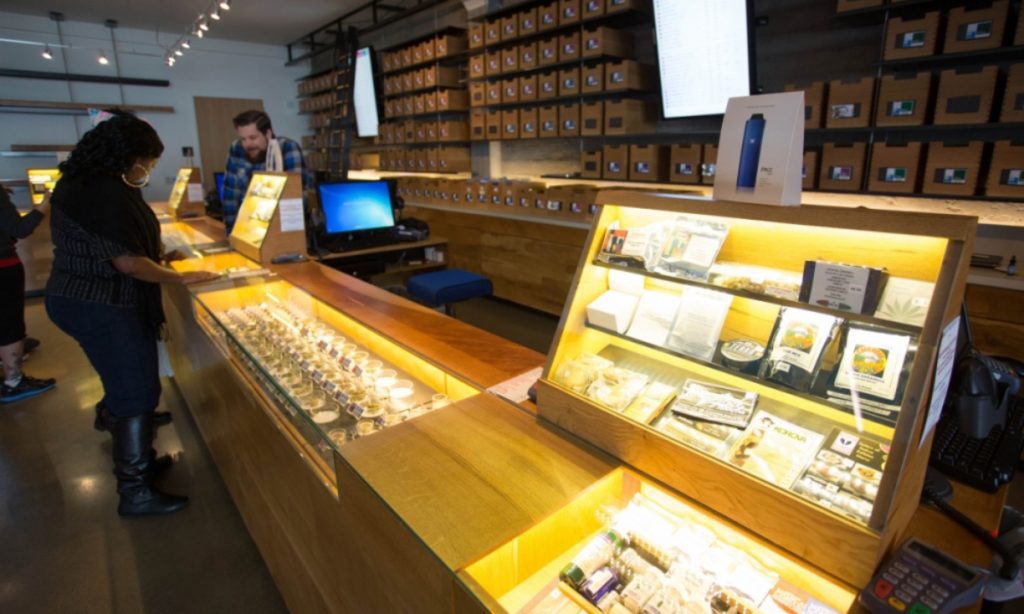
How WA Marijuana Businesses Stayed Open During COVID

A trip to the marijuana store is one of the few retail experiences we have outside of visiting the grocery store. So what can be learned from marijuana businesses during this stretch?

On January 21, 2020, a man in Washington State was diagnosed with the novel coronavirus after he traveled to China. This was the first confirmed case in the United States. A little over a month later, on February 29, a man in Washington died from what we were now calling COVID-19. This was the first reported COVID-19 death in the United States, though we would later learn that two residents of a nursing home in Washington State had died a few days before and a man in California’s autopsy later confirmed that he had succumbed to the virus on February 6.

At that point, everything began to accelerate. On March, 11  Governor Jay Inslee banned gatherings of more than 250 people in several counties. Washington was the first state to take what felt like an extreme measure of banning large gatherings. Twelve days later, on March 23rd, Inslee issued Washington’s state at home order shutting down non-essential businesses across the state. Among the few businesses deemed essential were the state’s marijuana retail stores, processors, and growers.

By now we’ve all become familiar with life under COVID-19 lockdown as these measures have been undertaken around the country and the world. The subject of reopening businesses has led to contentious debate and even protests. We don’t know when it will be safe to reopen or what will happen when we do but we do know that business is not going to simply go back to normal.

Marijuana businesses provide a case study as to what businesses will look like in the COVID-19 era. A trip to the marijuana store is one of the few retail experiences we have outside of visiting the grocery store. So what can be learned from marijuana businesses during this stretch? A lot.

For one, it’s pretty clear that consumer habits are heavily influenced by the constant news cycle. I live two blocks away from a retail store in Seattle. In the days leading up to Governor Inslee’s lockdown, there was a line out the door every day. On March 23rd, the day the stay home order was announced, one client told me they were busier than they were on 4/20 most years. People were stocking up because at the time we didn’t know whether stores marijuana businesses would continue to operate, but we did know that lockdown was imminent.

RELATED: Hemp Farmers May Now Qualify For Federal Economic Relief

After a few days, the lockdown surge balanced out but COVID-19 continued to alter consumer behavior. COVID-19 wreaks havoc on the lungs so many consumers are ditching smokable products like pre-rolls and vape cartridges for edibles and tincture. Jenni Avins wrote about this market trend for Quartz. Marijuana businesses must consider how these changing consumer trends will impact production lines. Marijuana cannot cross state lines, which means that marijuana economies are cut off from each other. There is no national supply chain so if a product starts running low its not as if products can be redirected from another region.

COVID-19 has also raised a number of employment issues for marijuana businesses. For example, Governor Inslee issued a proclamation protecting the jobs of employees at a high risk of contracting COVID-19. This raises the question of what to do when an employee does not come into work due to the risk of COVID-19. Everyone should be cautious of COVID-19 as it can be deadly regardless of your general health. For those over 65 and those who are immune-compromised, caution is a matter of life and death.

How WA Marijuana Businesses Have Stayed Open During Pandemic
Photo by zoe pappas via Pexels

Inslee’s proclamation to defend the jobs of “high risk” individuals is important policy as it means that they will not be laid off or fired because their health makes them especially susceptible to COVID-19. For the many small marijuana businesses, with only a few employees, that means business has to stop. In addition, “high risk” is a general term that Inslee doesn’t explicitly define. The proclamation references the Center for Disease Control’s guidance on what makes someone “high risk” but there are not clear lines. In addition, state and federal laws limit what an employer can ask an employee about employee health, and requires that employers make accommodations for employees with disabilities.

Marijuana employers also must make sure that the employees who are at work are protected. In Washington, there are minimum standards established by the state, such as providing enough space for social distancing (6 feet apart) and allowing employees to wash hands frequently. These measures are  required by all businesses, not just those with marijuana licenses but marijuana businesses are heavily regulated by the Liquor and Cannabis Board (“LCB”) who are making sure those minimums are met.

RELATED: Washington State Liquor And Cannabis Board Addresses COVID-19

Many marijuana businesses in Washington have continued operations despite not really being able to implement meaningful work from home measures due to the nature of the work. You can’t really grow, process, or sell marijuana from home. Well, not legally at least. Business has adapted during this process to protect employees. There have been trainings on hygiene and health. Some businesses have limited hours to allow nightly cleaning. Other have designed shifts to minimize the spread of COVID-19 by creating small groups that don’t overlap (meaning that if one person gets sick it won’t spread to the entire staff). I’ve been telling my clients to document everything they are doing so that if the issue ever arises, they can show that they took reasonable steps to keep their employees and customers safe.

These are just a few examples of what it’s like to operate a business in the new normal. As we see other businesses reopen, they’ll face the same issues and challenges. For now, marijuana businesses in Washington provide guidance on economic activity during COVID-19.

Daniel Shortt is an attorney at Harris Bricken and this article was originally published on the Canna Law Blog.

5 Types Of Cannabis For Enhancing Your Workouts

Sometimes we need a nudge in the right direction to keep us on the right track, especially regarding our health and well-being.

How much exercise do we need to stay in optimal health? Exercise recommendations typically vary based on the doctor you speak with or the institution whose guidelines you read about online. But according to recommendations from the Department of Health & Human Services, for the majority of healthy adults, we must get at least 150 minutes of moderate aerobic activity (cardio) or at least 75 minutes of vigorous aerobic activity (cardio) per week. This can be in the form of biking, hiking, weight training, pilates, standard cardio, or yoga.

When we’re unmotivated or stagnant, it helps to incorporate a natural form of medicine to boost our mood, focus, motivation, and energy, so we can get back on a healthy track. One natural medicine that can do this for us is cannabis and various cannabinoids.

Why Cannabis Can Help Improve and Enhance Your Exercise Routine

It’s no secret that cannabis and various cannabinoids are medically, therapeutically, and even nutritionally beneficial. Sometimes, though, we need a nudge in the right direction to keep us on the right track, especially regarding our health and well-being. Fortunately, cannabis can serve as a helping hand in areas related to exercise and health and wellness. When exercising, many people need to clear their mind and focus on the task at hand. Different cannabis strains can help make this a reality, thus, allowing individuals to get down to business and meet their workout goals.

One common myth about cannabis consumers is that they are lazy stoners who sit around all day eating junk food and watching TV. However, this couldn’t be more inaccurate seeing as though it has been found that cannabis users are not as likely to be obese and they have a lower body mass index (BMI) as compared to non-cannabis users. Overall, one way to remain fit, healthy, and in shape is to exercise frequently, and cannabis can help individuals meet these goals.

RELATED: 4 Terrific Ways Marijuana Can Help You In The Gym

Numerous anecdotal success stories have pointed to individuals experiencing elevated motivation when they consumed cannabis before exercising in addition to being able to push through pain and soreness. Others have reported that consuming cannabis before exercising leads to a more enjoyable workout, and it can help them last longer.

If you plan on consuming cannabis before or during your workout, it’s recommended to consume strains high in CBD rather than THC, so you won’t have to worry about getting dizzy, light-headed, or anxious while exercising.

Cannabis—a Helping Hand Before, During, and After Workouts

There are countless cannabis strains to choose from, and they’re grouped into the categories of Sativa, Indica, and hybrids. Then, there are strains that are dominant in certain cannabinoids like THC and CBD. The cannabis strain you consume matters, especially if you’re consuming it for strictly medical and/or therapeutic purposes.

Fortunately for cannabis consumers, different strains can deliver much-needed energy and motivation plus medicinal benefits, which can significantly help before, during, and after workouts. After cannabis delivers a helpful energy jolt, individuals can combat fatigue better while possibly extending the length of their workout. For individuals who are often fatigued, depressed, or stressed, consuming certain cannabis strains can turn things around for the better. Sometimes, it can be a challenge to get out of bed in the morning and start the day off on a positive note. When life gets to be too much to handle, cannabis can offer a helping hand.

RELATED: Why Are Cannabis Users Skinnier Than Non-Users?

Once you find the right cannabis strain(s) to fulfill your personal criteria, life can be less overwhelming because you know that you can get medical and/or therapeutic help from cannabis when need be. However, it takes some time to find a cannabis strain that work best for you while also meeting your needs and wants, especially in the area of exercise goals. On the bright side, different websites and online platforms can help point you in the right direction by describing the medical and therapeutic benefits of various strains as well as its most common effects. Below are five beneficial cannabis strains that can help improve your exercise routine.

Five Cannabis Strains for Improving Exercise Routines

Durban Poison (Sativa):

  • Known for its energetic, uplifting, and euphoric effects
  • Contains THC and THCV, in which the latter cannabinoid contains appetite-suppressing properties
  • Can help individuals lose weight and manage their appetite and caloric intake
  • Can provide energetic boosts to stay consistent with workouts and exercise routines

Harlequin (Sativa):

  • Contains CBD and THC in which the CBD balances out the psycho-active effects caused by THC
  • The presence of CBD in this strain helps prevent dizziness and anxiety from occurring
  • Can provide focus, energy, and calmness to help individuals accomplish their workout goals
  • Contains anti-anxiety and analgesic properties

Ghost Train Haze (Sativa):

  • Often consumed by weight-lifters, hikers, and nature explorers
  • Contains high THC content thus making this strain more ideal for experienced cannabis consumers
  • Can help individuals stay focused, calm, and relaxed
  • Can deliver an energy boost, which helps individuals stay on track with exercise reps, sets, and overall workout routine

Grape Ape (Indica):

  • Contains various cannabinoids including CBD
  • Contains the terpene ‘myrcene’, which is known for its calming and tranquil effects
  • Ideal for post-workout muscle and joint recovery and relaxation

Great White Shark (Sativa):

  •  Works to loosen up various stiff, achy, and sore muscles
  •  Can deliver energy, focus, and uplifting effects
  •  Helps deliver physical and mental improvements
  •  Can help individuals carry on with workouts longer than usual

Cannabis Products to Use Before, During, or After Exercising

Nowadays, there are countless cannabis products out on the market that can help improve one’s well-being and quality of life. When it comes to exercising though and maintaining a consistent workout routine, certain cannabis products could be more suitable than others. Below are several beneficial cannabis products that can help improve and enhance your workout routine:

Infinite CBD’s a.m. capsules can help those who need an energy boost/jolt before exercising without feeling any psycho-active effects.

RELATED: Why Many Weekend Warriors Workout With Marijuana

Cordial Organics ‘Balance’ CBD Tincture can help those who need a medical or therapeutic improvement before, during, or after working out. The added terpenes and phyto-cannabinoids can help improve users’ well-being too.

CBD Select Vape Pens (Relax Lavender Blend) can help individuals who need pain and inflammation relief due to overworked muscles. This product can also deliver calming benefits thus leading to physical and mental relaxation. The lavender and CBD in this product interact well with one another to deliver a multitude of medical and therapeutic benefits before, during, and after exercising.

Accumulating Benefits of Cannabis and CBD

As cannabis has become more socially accepted due to its variety of physical, mental, and emotional benefits, professional and non-professional athletes have begun using cannabis to help improve their focus while exercising, combatting anxiety and insecurities, and getting a motivation boost. So far, it has been found that different cannabinoids can impact the perception of discomfort and varying levels of pain. Additionally, cannabis is often consumed for its anti-inflammatory, anti-spasm, and analgesic properties.

Due to CBD’s non-psychoactive make-up and its variety of medicinal and therapeutic benefits, this cannabinoid is being consumed more and more by different athletes, fitness enthusiasts, and every day individuals who want to improve and enhance their exercise routine.

Researchers Say This Is The Best Age For Marijuana Use

A new study found this age is ideal for limiting negative impacts on long-term health, educational attainment, and mental wellness.

Determining the legal age to allow consumption of various vices is a matter that’s hardly ever agreed upon. Late last year, Donald Trump signed a bill raising the age of legal tobacco purchases in the United States from 18 to 21. The legal drinking age varies throughout the world; in countries like Austria and Portugal, 16-year-olds can legally consume alcohol, whereas in the United States and Sri Lanka, the age is 21.

States with legal adult-use marijuana set the age limit at 21, but that is a contested figure within the scientific community. Some researchers believe that number should be higher. As two physicians argued in the New York Times last year, states should set a minimum age of 25 and older to avoid the damage marijuana incurs on developing brains.

A new study out of Canada proposes a different conclusion. Published in the peer-review journal BMC Public Health, researchers found 19-years-old is optimal in limiting negative impacts on long-term health, educational attainment, and mental wellness. (The legal limit in most Canadian provinces, except Quebec, is 19.)

“While the medical community recommended an MLA [minimum legal age] of 21 or 25 based on neuroscientific evidence about adverse impacts of cannabis on cognitive development, this would lead to a large underground market for cannabis,” the study’s authors wrote. “On the contrary, policymakers have decided on a lower MLA such as 18 or 19 to curb the size of underground market, but this raises concerns about adverse outcomes for adolescents.

RELATED: Another Survey Shows Teen Marijuana Use Declines After Legalization

“This study, however, found that later life outcomes associated with first using cannabis at age 19 are better than those associated with first using it at age 18 but not significantly different from those first using between 21 and 25.”

Canadian Scientists Researching If Cannabis Can Treat COVID-19 Symptoms
Photo by Wanida Prapan/Getty Images

For researchers, determining minimum legal age is all about balance. Their findings reported different ages were optimal based on the quality of focus. For general health purposes, 18-years-old was the optimal age. To ensure the greatest education retention, 21 was ideal. And those worried about mental health should know the best age is 19, according to the study.

RELATED: Legal Marijuana States Had Lowest Rate Of Vaping-Related Lung Injury

“This finding helps to address concerns over potential adverse outcomes associated with setting a low age as MLA,” notes the study. “At the same time, our findings can also be used to highlight to youth and their caregivers, the long-term adverse impacts of starting cannabis before age 19.”

What Happens To Your Body When You Consume CBD

CBD is a complex compound that affects physical and emotional ailments. Although a lot remains unknown, here’s what experts believe.

Though it’s still a fledgling industry, CBD is booming. Despite the compound’s popularity, the product remains unregulated and lacks scientific research. People interested in the compound have to make sure that they’re purchasing the right kind of products, avoiding false advertising and items that claim to feature CBD but don’t.

There are many questions surrounding CBD, including how it works and why it provides relief for so many different conditions. While expert are nowhere near understanding all there is to know about the compound, here are some illuminating answers about how CBD interacts with your body:

CBD influences the cannabinoid receptors  

5 Common Myths About Hemp Oil And CBD Oil
Photo by Tinnakorn Jorruang/Getty Images

RELATED: The Most Important Dos And Don’ts When First Using CBD

Experts believe CBD attaches itself indirectly to the cannabinoid receptors in our bodies. These receptors are known for regulating a wide variety of behaviors, including appetite, pain, moods and even your memory. This is why CBD has an influence on so many different conditions, whether they’re emotional or physical.

It treats inflammation, pain and anxiety

Thanks to its anti-inflammatory properties, CBD can reduce pain  — not completely eliminating it, but making it more manageable. Experts believe the compound works best when taken as a supplement and not as a replacement for other kinds of treatment.

When it comes to anxiety and mood disorders, people say that CBD is non-psychoactive, which isn’t technically true. According to Project CBD: “If CBD can relieve anxiety or depression or psychosis, then obviously cannabidiol is a profound mood-altering substance, even if it doesn’t deliver much by way of euphoria. Perhaps it would be better to say that CBD is ‘not psychoactive like THC, rather than repeating the familiar and somewhat misleading refrain that “CBD is not psychoactive.”

RELATED: Why the 1:1 Ratio Of THC And CBD Is Canna-Magic

Different studies suggest that CBD can treat anxiety, PTSD, panic disorders, and more. Data shows that results are even better when there’s some THC thrown in the mix

It could influence sleep and gastrointestinal issues

Photo by Kinga Cichewicz via Unsplash

There’s mixed evidence on CBD and gastrointestinal issues, with one study suggesting that the compound might help treat people with GERD by limiting acid reflux. When taking high doses or experiencing an adverse reaction to CBD, some of the side effects reported include nausea and diarrhea.

RELATED: Study: Cannabis Might Prevent COVID-19 Infections

When it comes to sleep, the data is interesting since it appears that the compound helps patients sleep better when they also suffer from anxiety or stress. By treating these symptoms, CBD might indirectly help you get better sleep and battle periodic bouts of insomnia.

It may have adverse reactions when taken with other drugs

One of CBD’s strongest shortcomings is the fact that when consumed in very high doses it can interact with other medications that people might be taking. This is especially concerning for people who suffer from chronic illnesses and other conditions where they’re consuming different medications.

Don't Miss Your Weekly Dose of The Fresh Toast.

Stay informed with exclusive news briefs delivered directly to your inbox every Friday.

We respect your privacy. Unsubscribe anytime.