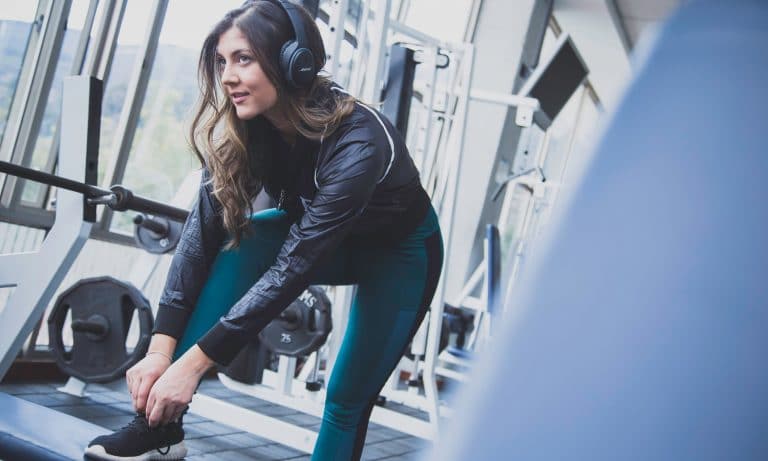
1 in 3 Americans say that consuming cannabis prior to the gym increased their workout productivity.
Some wellness trends seem too good to be true, while others appear counterintuitive to healthy living. Consuming marijuana prior to working out — a growing pairing in the fitness community — is a little bit of both. But, you may be wondering, doesn’t weed make you lazy? Wouldn’t you worry about passing out during yoga classes? Won’t being high give you the munchies after hitting the gym?
It depends on who you ask. According to exclusive research by FitRated, 65% of people believe an active, healthy lifestyle can include marijuana. About 1 in 3 Americans add that consuming cannabis prior to the gym increased their workout productivity, while the majority (60.4%) say it remains the same. Just under 10% of Americans say it decreases productivity, with explanations like feeling hungry or sluggish while exercising serving as the most common reasons why.
Previous studies show that marijuana can reduce inflammation following working out, as well as providing pain relief. Though a comprehensive 2011 review, which included scientists from the World Anti-Doping Agency and National Institute on Drug Abuse, found that examine how marijuana affects athletes found “the use of cannabis as doping will not help to gain a competitive edge by any means,” it indicated marijuana plays a potential role in training.
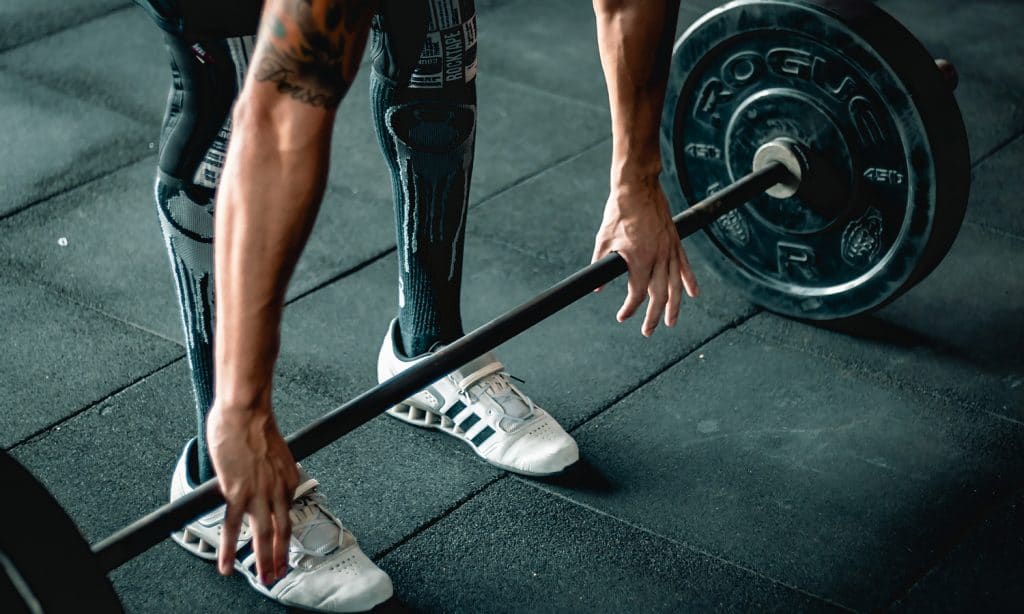
Photo by Victor Freitas via Unsplash
“Cannabis improves sleep and recovery after an event, reduces anxiety and fear and aids the forgetting of negative events such as bad falls and so forth,” researchers wrote. “Cannabis enhances sensory perception, decreases respiratory rate and increases heart rate; increased bronchodilation may improve oxygenation of the tissues.”
Participants in FitRated’s survey agreed, with 45% of respondents saying their workouts were more relaxing and 38% were more excited from exercise. Perhaps more interesting is that 20% said consuming marijuana helped them work out longer and made them less sore in the long run.
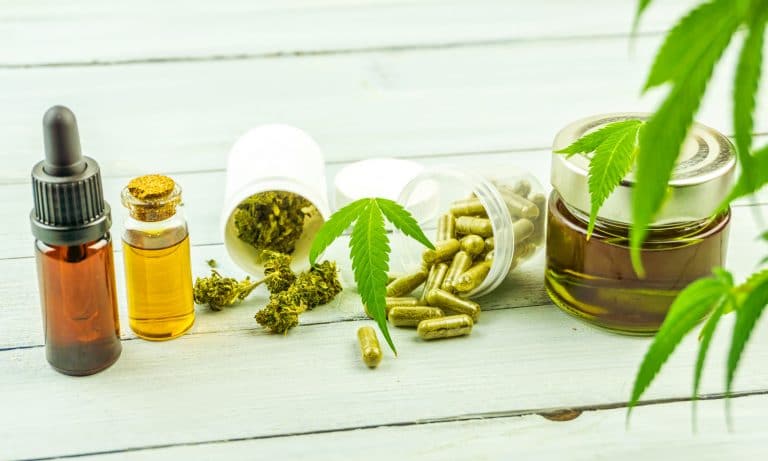
Two important notes before you light up and pump weights. Using marijuana causes your heart rate to increase, so those with heart health issues or participating high-intensity exercises, which already elicit elevated heart rates, should use caution. Don’t forget smoking is just one option for consumption. Sub-lingual strips, low-dose edibles, or tinctures might make sense for your lifestyle, or if you’d rather protect your lungs while working out.
FDA Commissioner said that the agency is working towards regulating hemp-derived CBD products and admitted that the agency’s approach to Hemp CBD is not sustainable.
According to Hemp Industry Daily reporter Laura Drotleff, it was an eventful week for hemp regulation at the National Association of State Department of Agriculture (NASDA) meeting in Arlington, Virginia. Drotleff reported on two major developments at NASDA. These developments came from the Food and Drug Administration (FDA) and the US Department of Agriculture (USDA), respectively, which are the primary regulators of hemp and its derivative products. In a pleasant surprise it seems the FDA and USDA will start making sense on hemp CBD. Both are analyzed below.
FDA Changing Its Tune on Hemp CBD?
FDA Commissioner Stephen Hahn, M.D., said that the agency is working towards regulating hemp-derived CBD (Hemp CBD) products and admitted that the agency’s approach to Hemp CBD is not sustainable:
We’re not going to be able to say you can’t use these products. It’s a fools errand to even approach that[.] We have to be open to the fact that there might be some value to these products and certainly Americans think that’s the case. But we want to get them information to make the right decisions.
Finally! The FDA is finally taking a rational approach to Hemp CBD. This is a major departure from the FDA’s recent messaging on Hemp CBD and it’s coming from the head of the agency.
It was only three months ago, on November 25, 2019, that the FDA sent out a whopping 15 warning letters to companies selling CBD and issued a consumer update stating that CBD was dangerous and could harm people before they even knew the harm occurred. Now, Dr. Hahn is admitting that the agency sees value in Hemp CBD and wants to make sure that consumers get enough information to make the right decision. Good! That’s what the FDA should be doing instead of constantly repeating that most Hemp CBD products are unlawful.
Now I know what you’re thinking: Aren’t you getting a little over-enthusiastic about a single statement on Hemp CBD? It’s not as if the law has changed or the FDA’s actually issued any regulations on Hemp CBD. Plus, hasn’t the FDA made positive statements on Hemp CBD before?
Yes, it’s true that Dr. Hahn has not established a regulatory framework for Hemp CBD with his statements, or convinced Congress to alter the Food, Drug and Cosmetic Act (FDCA) to accommodate Hemp CBD. It’s also true that before leaving his post, former FDA Commissioner Scott Gottleib, M.D., testified to Congress that “[w]e believe [CBD] does have therapeutic value and has been demonstrated[.]” That being said, there is reason to be excited the statements made in Arlington because of who said it and who heard it.
Photo by Tinnakorn Jorruang/Getty Images
Let’s start with Dr. Hahn. The FDA’s issue with Hemp CBD stems from the FDCA’s “Drug Exclusion Rule” which, simply put, means that an article that has been approved or investigated as a drug cannot be a dietary supplement or be added to food unless the article was marketed as a supplement or food before it was investigated. CBD has been approved as an article in the drug Epidiolex and the FDA does not believe that CBD was marketed as a food or supplement prior to that investigation. But, the FDCA grants the FDA Commissioner can override the Drug Exclusion Rule by issuing “a regulation, after notice and comment, finding that the article would be lawful under [the FDCA].” As head of the FDA, Dr. Hahn has the ability to regulate Hemp CBD so his statements are important.
Now, let’s talk about the audience which was made up of representatives from state departments of agriculture across the country. We’ve been doing a series on how states treat Hemp CBD and if you’ve been following it you know that states have been struggling to regulate Hemp CBD in light of the FDA’s position. Some states have regulated Hemp CBD despite the FDA’s slow movement, others are locked into the FDA’s policy, banning Hemp CBD in foods and dietary supplements. Many are somewhere in between, trying to figure out how the FDA will act. A positive statement like this from Dr. Hahn, made directly to the NASDA is likely to have ripple effects on enforcement policies across the state. This doesn’t mean that everything will change overnight, but I think it does portend a change in Hemp CBD policy across the US.
USDA Ditches DEA Registration
Drotleff also covered a very promising statement from USDA Undersecretary Greg Ibach, who told the NASDA that the USDA has reached an agreement with the Drug Enforcement Agency (DEA) to remove the requirement that only DEA-registered labs test hemp for THC. The DEA wrinkle was not part of the 2018 Farm Bill but was included in the USDA’s interim hemp rules issued in October.
Update: Drotleff’s story was updated on February 27 to clarify that DEA registration will not be required in 2020, but DEA expects states to work with its labs in the 2021 season.
The DEA registration was widely opposed by the agriculture community. Requiring DEA registration on all labs testing hemp creates a huge potential for a bottleneck as all hemp must be tested 15 days before harvest and there are less than 50 DEA-registered labs that could even undertake these tests. Many state departments of agriculture saw this as such a burden that they decided not to even submit a hemp cultivation plan to the USDA, electing to run out the clock with the 2014 Farm Bill, which expires October 31, 2020, rather than operate under the USDA’s interim rules and 2018 Farm Bill. The DEA Registration was a big part of this.
There are still challenges in THC testing, including the need to test for Total THC (delta-9 THC and THCA), which has caused some cultivars of hemp that would have been legal under the 2014 Farm Bill to fail under the 2018 Farm Bill. Still, this is a step in the right direction and quite promising, considering that the USDA will again accept public comments after the 2020 season.
Conclusion
The USDA and FDA are the two federal agencies directing the domestic hemp market. This process is far from over, but the NASDA meeting indicates that policy is moving in the right direction. If nothing else, these agencies are cognizant of how their decisions are perceived by the public and by state regulators. If you’re interested in hemp and Hemp CBD, stay focused on the FDA and USDA and make sure to participate in the public discourse.
Practicing a healthy flow of emotions and thoughts while being aware that pain and suffering are a part of life enhances gratitude in everyday moments.
Turn on any television or Facebook feed and the emotional assault starts. With so many injustices, political divides, a worldwide health crisis getting ever-nearer, finding a non-toxic positivity seems out of reach. Here are tips on how to practice gratitude in times of grief and uncertainty.
The Psychology Group, based in Fort Lauderdale, Florida, believes there’s a place for positivity every day of our lives — if it’s not toxic or judgmental in nature. Suppressing emotions, allowing shame to take hold or masking true feelings are all indicators of toxic positivity. They explained:
“Being a healthy human being involves being conscious of ourselves and how we show up in the world. Instead of practicing toxic positivity, aim for balance and the acceptance of both good and bad emotions rather than all-or-nothing thinking.”
Joseph Burgo Ph.D. writes on shame for Psychology Today. He believes grief and gratitude, “are the hallmarks of mental health” and often coexist in the same space in people of all ages. He often asks clients, “Can you grieve for the damage that you’ll never completely transcend but at the same time feel grateful for the actual good in your life?” That’s the ticket to recognizing how loss can be overcome, he says.
But do gratitude and grief go hand-in-hand? Researchers think so, including a 2011 study featured in the Journal of Positive Psychology, which found that participants who reflected on death showed enhanced gratitude compared to individuals in a control group. Researchers believe this supports the theory that practicing a healthy flow of emotions and thoughts while being aware that pain and suffering are a part of life enhances gratitude in everyday moments.
Photo by McKinsey via rawpixel.com
Learning from our community
Robyn Kaiser, a Housing Management Consultant in Florida, sought healing after grief through finding gratitude, saying, “Turning my grief into helping others helps me to escape the reality of my situation while also still being able to handle the gravity of it all.” She recently spoke with The Fresh Toast about one very personal and painful experience in her past.
While undergoing chemotherapy, Kaiser met a little boy named Leroy who shared with her how she could check out music devices during treatment. Kaiser and the Leroy kept each other company through the lens of sharing music during their treatments. One day, when Leroy didn’t show up, Kaiser found out that he had passed on the night before.
By channeling her pain and grief into action, Kaiser learned Musicians On Call was behind the availability of the music devices available, so she worked to volunteer with the organization to serve others in remembrance of the little boy. She explained that enriching the lives of others gave her deep purpose. “While it may seem that I’m being selfless, I feel I’m being selfish — because doing things that better myself make me feel stronger and better-equipped to help other people.”
Photo by rawpixel.com
Kaiser isn’t alone in her thinking.
Mark Hendricks started GrieveWell after losing his son, Brady. He found that by channeling gratitude it elevated his mindset, without erasing the loss of someone he loved most. Hendricks writes in GrieveWell, “I have found that by summoning an image of that tilted gratitude-versus-expectations scale, I can sometimes work up the feeling that I am at least a little bit more grateful to have had Brady for the time he was with me than I am disappointed in my expectation that he would outlive me.”
So how can each individual practice gratitude in uncertain times (or on a never-ending negative Facebook feed?)
1.) Practicing good boundaries: Step away when it becomes too much and give your brain and heart a rest.
2.) When in moments of grief, know that joy and love will come again and one of the healthiest ways to work through feelings is to speak with a professional.
3.) Practice a lifestyle of mindfulness, focused on having true gratitude for people, experiences, and items in your life.
After all, our journey here is temporary. Finding a way to recognize there is good with bad is one of the best ways we can evolve our thinking and leave toxic positivity behind.
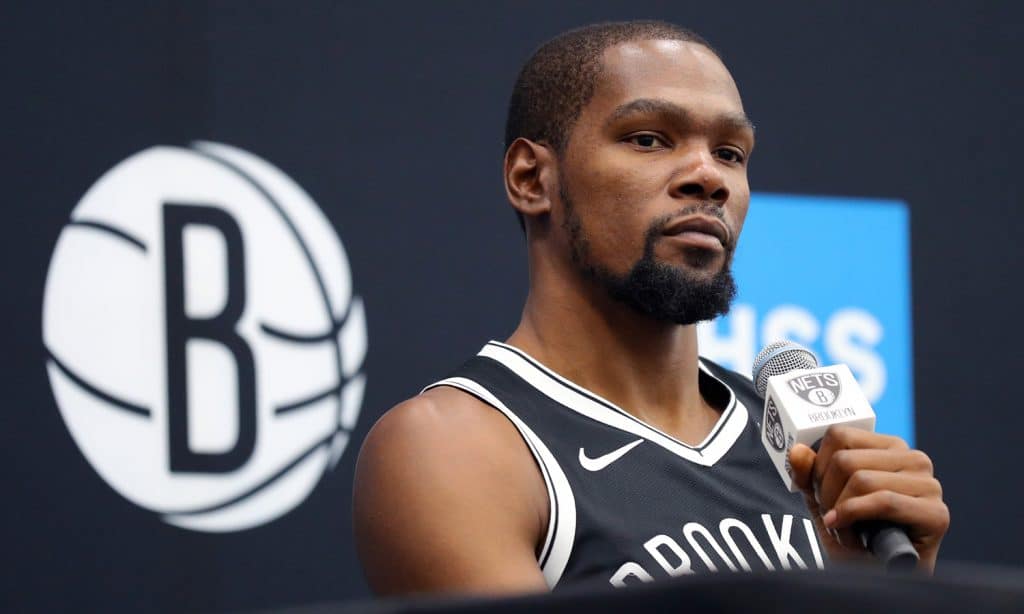
Kevin Durant compared smoking marijuana to drinking wine after work, and believes NBA players should have access to the plant.
NBA superstar Kevin Durant hasn’t exactly hid his relationship to cannabis over the past several years. Through Thirty Five Ventures, an investment firm he co-founded with business partner Rich Kleiman, Durant announced last year a partnership with Canopy Rivers, which specializes in marijuana investments.
It should come as little surprise then that Durant has begun publicly advocating for the NBA to remove marijuana from its banned substances list. Former players have discussing past marijuana use while playing in the league and how players should have access to it, but Durant is among the only current players to state so publicly. He’s also one of the NBA’s biggest stars.
“It’s one of those plants that’s an acquired taste. If you love it, you love it. If you don’t, you’re not even going to be pick it up. It shouldn’t even be a discussion these days,” Durant said on a recent episode of Showtime’s All The Smoke. “It’s just like, marijuana is marijuana. It’s not harmful to anybody. It can only help and enhance and do good things. I feel like it shouldn’t even be a huge topic around it anymore.”
Often among the cannabis advocate community, individuals will compare marijuana use to drinking a glass of wine at the end of the day to relax. Durant, you will notice, made the same comparison about his co-workers.
Photo by Mike Lawrie/Staff/Getty Images
“Everybody on my team drinks coffee every day. Taking caffeine every day. Or guys go out to have wine after games or have a little drink here and there. Marijuana should be in that tone,” Durant said. “Why are we even talking about? It shouldn’t even be a conversation now.
“So hopefully we can get past that and the stigma around it and know that it does nothing but make people have a good time, make people hungry, bring people together — that plant brings us all together.”
In a previous interview, NBA Commissioner Adam Silver stated a change to the league’s substance abuse policy is a conversation currently happening within the league. He did remind players, though, that any changes would have to occur in the collective bargaining agreement between the NBA and its player union.
“We start getting people out of jail for marijuana. That’s the next step,” Durant said. “And just keep going. But it’s a plant that’s put here for a reason, and that’s to bring us together. Hopefully it happens (removing marijuana from the banned substance list), especially in the NBA.”
Mornings aren’t easy. Here’s how you can make them a little less awful.
One of the world’s most common discomforts is waking up early in the morning. While there are morning people out there (please share your secrets), most of us find mornings stressful. Sleeping in for ten more minutes can throw off the rest of your day, potentially forcing you to skip out on breakfast, a shower, or more importantly, making you forget an important document or some other critical piece of information that you needed for the day.
The act of waking up is complex, with dozens of different apps and alarms trying to crack the code on how to make it a little less awful. There are devices that wake you up with smells and apps that wake you up according to your circadian rhythms, but it’s all pretty relative; you don’t need to go fancy in order to have a good morning, you just need some organization and a decent amount of sleep.
Here are four way to make your mornings more pleasant. Believe it or not, it is possible:
Stretch
Once you get over how boring it is, stretching is kind of nice. It’s a relaxing activity that makes you feel like you used your muscles and that provides tons of positive things for your body. While everyone benefits from stretching, it’s a good activity to take up if you’re not the most active kind of person. Stretching can be conducted easily, with the orientation of a few YouTube videos or a Yoga app. By allotting 15 minutes of your morning to this, you’ll go to work feeling like a new and much limber person.
You want to have an alarm that allows you to take a shower and have breakfast, but that also gives you some additional minutes for extra sleep and lounging around. Figure out what’s most important to you: if you treasure your sleep, shuffle your schedule around, taking showers at night and preparing your breakfast beforehand. If you can’t function without your morning routine and are feeling like you’re waking up too early, then you’ll have to go to bed at an earlier time.
Do things that are relaxing for you
Kicking off the morning positively influences the rest of your day by allowing you to feel more productive and to get your work done faster and effectively. Figure out what relaxes you, whether that’s listening to music, listening to a good podcast or reading before your day begins. Find ways to sneak in stuff you enjoy early on in the mornings to help you feel inspired and ready to take on the new day.
Most of us love to scroll through social media as soon as we wake up but this is not a good habit to have, because it encourages laziness and it takes up precious moments that could be spent doing more productive things. Try to get out of bed as soon as the alarm sounds and get started with your day.
Get the right amount of sleep
Being tired every morning probably means that you aren’t getting enough sleep. Try to commit to your sleep schedule, even if you have to get a little strict with it. Avoid checking your phone in bed, having coffee or caffeine during the evenings, and over drinking and eating right before you sleep.
CBD products must now meet the Clean at Sephora standard, which states that all Sephora products are clear of 50+ ingredients that don’t meet their satisfaction.
Sephora has been devoting big chunks of time and effort into the CBD industry, pursuing partnerships with small and large companies in order to sell these products as legitimate beauty compounds. This past week, Sephora announced that they were now enforcing some standards on the CBD products in their stores, ensuring that all of their products are trusted and of high quality.
“Search for CBD on Sephora.com has increased over 1000 times since 2018, so there’s clearly client interest in these kind of products. As customers are looking to navigate this growing category, we saw the need to provide transparency and quality assurance,” Cindy Deily, Sephora’s VP of skin-care merchandising, told Glossy.
CBD products must now meet the Clean at Sephora standard, a rule that was implemented in 2018 requiring that all Sephora products are clear of more than 50 ingredients that don’t meet their satisfaction. In addition to this rule, CBD beauty products in Sephora must now ensure they contain full or broad spectrum CBD, that their CBD oil is grown domestically, and that there’s testing of the product conducted by a third party. These products must also contain a Certificate of Analysis (COA), which you should always look for when purchasing CBD.
Photo courtesy of www.bargainmoose.ca/Flickr
While many retailers are selling CBD beauty products, Sephora is the first company to implement standards pertaining to the CBD products they have in stock. This development gives them an edge over competitors and protects the company from lawsuits and from gray areas within the law.
Sephora has been expanding on the partnerships with Lord Jones, Saint Jane, and Flora + Bast, distributing their products in locations throughout the country while also making them available online. Recently, the company partnered up with Prima, another beauty company that utilizes hemp.
Since there’s no word on CBD regulations from the FDA and government, it all comes down to stores and how they choose to take on these challenges. We can expect many retailers to follow Sephora’s lead and to come up with their own CBD regulations.
ALS causes the degeneration of nerves that control voluntary muscle movement, like those that allow us to chew, speak, and walk.
It strikes over 30,000 people and it tough, what you should know about cannabis and Lou Gehrig’s disease. Charlie Wedemeyer was one of Hawaii’s greatest athletes when he attended Punahou School in the 1960s. He was the quarterback for the football team, but also excelled at basketball and baseball. Charlie was named the Hawaii Prep Athlete of the 1960’s and went on to play football for Michigan State.
In 1978 Charlie was the football coach at Los Gatos High School in California when he was diagnosed with Amyotrophic Lateral Sclerosis (ALS). Like many athletes before him, including the great Lou Gehrig, Charlie Wedemeyer would find a fight he could not win in ALS.
What IsALS?
ALS (also known as Lou Gehrig’s Disease) is a fatal motor neuron disease, affecting an estimated 30,000 Americans. ALS causes the degeneration of nerves that control voluntary muscle movement, like those that allow us to chew, speak, and walk. When the nerves die, they stop sending messages to the muscles which causes gradual weakening, twitching, and wasting away.
Patients with ALS become weak, but remain quite conscious. They are completely aware of their progressive disability. Eventually, the brain can no longer initiate or control voluntary movements. Death often results from respiratory failure when the nerves that control breathing lose the ability to function.
We don’t know what causes ALS. There is a genetic mutation that affects 5 to 10 percent of patients, but most cases are sporadic with no clear risk factors or family history of the disease. Athletes and those who have served in the military have a higher incidence of ALS, but we have not been able to find a clear causal connection for this observation. ALS is recognized as a service-connected disease by the U.S. Department of Veterans Affairs.
Conventional Treatment For ALS
There is no known cure for ALS. There are prescription medications approved by the FDA to treat the disease by reducing damage to nerves or by slowing the decline of function. These drugs may prolong life, but neither drug stops the disease in its tracks.
Other prescription medications are used to treat the symptoms of ALS. Muscle cramps, stiffness, and drooling are common, as are disturbing uncontrollable episodes of laughing or crying caused by destruction of brain tissue. Pain, depression, sleep problems and constipation may also be managed by medication, some more successfully than others.
Cannabinoids: Antioxidants And Neuroprotectants
Nerve damage in ALS is caused by two significant factors: oxidative stress and excitotoxicity. Cannabis shows promise as an aid in managing some of the nerve damage, as it has been shown to generally address both factors, though specific studies on ALS and cannabis have yet to be done.
Oxidative stress occurs when there is an imbalance between free radicals and antioxidants within the body. When the production of antioxidants can’t keep up with production of free radicals, we are not able to detoxify from the free radicals’ harmful effects in the body. Cannabis is a known antioxidant and helps to decrease the nerve tissue damage that free radicals can cause.
Excitotoxicity destroys nerve tissue that has already been compromised. When nerve tissue is injured, the amino acid glutamate is released in excessive, uncontrolled amounts. This excess leads to cell death, a destructive process called excitotoxicity. CBD and THC both decrease the release of glutamate, thus sparing the neurons from excitotoxity and cell death.
The Proof Is In The Patents
These cannabinoid qualities are well-known and recognized as therapeutic. The US government filed Federal Patent #US 6630507 B1 in 1999 that specifically identifies cannabinoids as antioxidants and neuroprotectants:
“The cannabinoids are found to have particular application as neuroprotectants, for example in limiting neurological damage following ischemic insults, such as stroke and trauma, or in the treatment of neurodegenerative diseases…”
Considering the neuroprotective effects of cannabinoids and the anti-spastic effects of cannabinoids in multiple sclerosis patients, it only makes sense to consider their use in ALS. Preclinical work and some patient reports are promising.
What Research Exists?
Raman et al published a 2004 study that showed THC delays ALS progression in mice. Based on this and other compelling research data, Carter et al published a review in 2010 that called for clinical studies:
“Preclinical data indicate that cannabis has powerful antioxidative, anti-inflammatory, and neuroprotective effects. Cannabis also has properties applicable to symptom management of ALS, including analgesia, muscle relaxation, bronchodilation, saliva reduction, appetite stimulation, and sleep induction. With respect to the treatment of ALS, from both a disease modifying and symptom management viewpoint, clinical trials with cannabis are the next logical step. Based on the currently available scientific data, it is reasonable to think that cannabis might significantly slow the progression of ALS, potentially extending life expectancy and substantially reducing the overall burden of the disease.”
Managing ALS With Cannabis
THC and CBD are considered the most helpful phytocannabinoids for patients with ALS. Any clinical feedback ALS patients provide on the use and effectiveness of cannabinoid medicine will encourage further research and the publication of well-designed clinical studies.
Stacey Kerr, M.D. is a teacher, physician, and author living and working in Northern California. Dr. Kerr was in private practice until she decided to write and educate full-time. After several years working with the Society of Cannabis Clinicians, and co-developing the first comprehensive online course in cannabinoid medicine, she is now serving as the Medical Director for Hawaiian Ethos. This article was originally published by Hawaiian Ethos.
Multiple vital functions happen while you sleep. It plays a housekeeping role that removes toxins in your brain that build up while you are awake.
Anyone who has ever cared for a baby or watched someone else care for a baby knows that there are basically two primary activities that must be monitored continually. One is sleeping and the other is pooping. Both activities done on a routine schedule result in a happy baby and, in turn, a happy caretaker and family.
Insomnia, which encompasses poor quality sleep, is the #1 health complaint among Americans.
Adults are just like babies. They need routines, too. Without routines, which should include sleeping and pooping, adults are not happy campers. When clients consult with me about various symptoms and diagnoses, I work on two issues first. You guessed it: sleeping and pooping. Let’s leave bowel movements for another article and discuss sleep, why it’s important, and how to achieve it.
Multiple vital functions happen while you sleep. These dynamic processes and others are regulated by the endocannabinoid system. One of the most crucial is the functioning of the liver to detox what your body is storing. For many chronic diseases, eliminating toxins from the body can change outcomes and health dramatically. According to the National Institutes of Health, “sleep plays a housekeeping role that removes toxins in your brain that build up while you are awake.”
Another vital function of sleep is to consolidate learning and memory. This is one of the reasons why individuals who suffer from post-traumatic stress disorder, or PTSD, must have high quality sleep and frequently use cannabis to achieve this. Think about how you feel when you do not get sufficient and quality sleep. Not good.
The type of sleep that we often hear about is called REM sleep, or rapid eye movement sleep. Lesser discussed is non-rapid eye movement (NREM) sleep, which has three stages. An optimal, full sleep cycle, which features both types of sleep, should happen five to six times per night. The processes of falling asleep, staying asleep, waking up, and remaining awake are part of your circadian rhythm, which is regulated by the endocannabinoid system.
Photo by rawpixel.com
Here are a few ways that we can help our endocannabinoid systems keep our sleep cycles performing at optimal levels.
Stay on the same sleep routine every day, winding down at the end of your day. Maybe reading before bed, taking a bath, packing you bag for the next day. Whatever you do before bed, keep it consistent from day to day.
Know your caffeine tolerance. Are you someone who can fall asleep immediately after consuming four espressos or is one coffee in the morning your limit?
Do not eat just before bed and do not eat in bed. Try to have your last meal at least two hours before going to bed.
Keep your bedroom cool (under 68 degrees) and dark. Our bodies were made to follow the rising and setting of the sun. With artificial light, however, we’ve interfered with that process.
Turn off all electronic devices, including mobile phones. Use an alarm clock to wake in morning or put your phone in airplane mode.
Use blue glasses at night to block out the blue light from screens and artificial light that interfere with sleep.
Try aromatherapy. Certain terpenes found in plants, including cannabis, can aid in sleep. The most well-known sleep-inducing scent is lavender oil, which can be applied directly to the soles of the feet, sprayed on your pillow, or diffused in your room just before going to bed.
Take a bath, just like babies do. A warm bath with added Epson salts is great for sleep and easing aches and pains.
Mediate. Emptying your mind before shut eye is a great way to get a good night’s sleep.
Sleep is foundational to optimal health. It’s a one of the primary lifestyle habits that is regulated by the endocannabinoid system. Keeping your ECS functioning properly by following these tips can help you get the quality sleep that you need to stay healthy.
The surprising impact Trump’s growing anti-marijuana sentiment could have on Canadian marijuana companies.
Marijuana stocks — once a hot commodity that influenced millennials to invest in stocks again — have plummeted over the past several months. High valuations and market obstacles have caused the previously widespread capital to dry up. Multiple companies in the space have shed assets and laid off employees to deal with the cash crunch.
Cowen analyst Viven Azer downgraded Canadian-based companies like Aurora Cannabis and Tilray this week, as investors worry market obstacles won’t disappear anytime soon. Most cannabis consumers have spoken with their wallets and shown a preference toward cheap wee — it’s a decision that has damaged Aurora, which initially focused on developing high-grade product for customers. Other headwinds include lack of enough retail spaces and the persistence of the black market in legal areas.
On the other hand, Canopy Growth exists in an odd in-between state. That’s for two reasons: (a) Constellation Brands’ $4 billion investment in Canopy — which Azer argues has helped the company maintain a healthy balance sheet — and (b) Canopy’s play for the U.S. market. Last April, Canopy agreed to acquire U.S.-based Acreage Holdings for $3.4 billion.
There’s an important catch, though. The deal only goes through when marijuana becomes federally legal in the United States. That doesn’t mean Canopy will lose $3.4 billion if legalization fails to materialize. Canopy instead made a $300 million payment up front to Acreage, which the latter gets to keep should the deal fall apart.
Photo by Win McNamee/Staff/Getty Images
All of which means Canopy would likely prefer if Donald Trump wasn’t re-elected this year. This is not a reflection of the company’s politics, just its business. Close watchers of the Trump Administration have noticed a new anti-marijuana sentiment brewing in the White House over the past several months. Whereas Trump previously voiced support for the STATES Act—which would protect states with legal marijuana from federal prosecution—recent actions indicate something changed for the President.
Trump announced he would remove a rider provision from the upcoming 2021 budget that protects medical marijuana programs from Justice Department interference. (One congressman announced they would ignore Trump’s push.) A top Trump campaign spokesman confirmed the anti-legalization suspicion in a recent interview with Las Vegas CBS affiliate KLAS-TV.
“I think the president is looking at this from a standpoint of a parent — a parent of a young person — to make sure we keep our kids away from drugs,” said Marc Lotter, who serves as director of strategic communications for Trump’s 2020 campaign said. “They need to be kept illegal. That is the federal policy.”
“I think the president has been pretty clear on his views on marijuana at the federal level. I know many states have taken a different path,” he added.
According to The Motely Fool, if marijuana isn’t legalized within 90 months of Canopy’s upfront payment to Acreage, the deal would automatically terminate. A Trump win in the 2020 Election could make that all the more likely to happen.
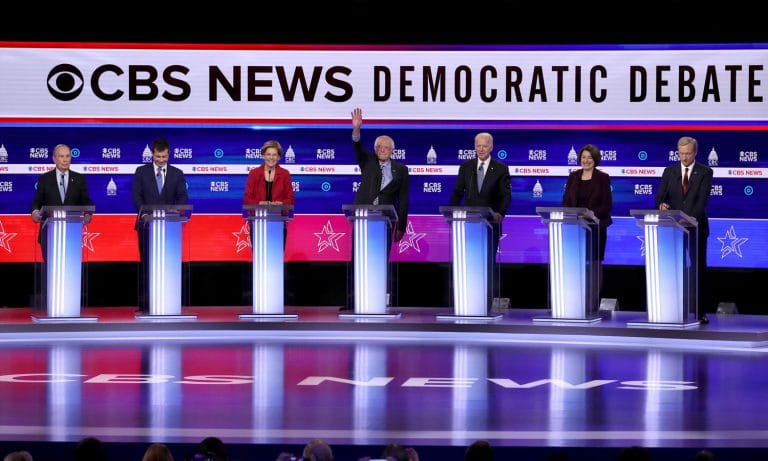
Presidential candidates discussed marijuana legalization during Tuesday night’s debate, revealing clear differences in opinion.
Following the silence of marijuana reform at the Democratic presidential debates last week in Las Vegas, candidates announced their policy outlook front and center Tuesday in Charleston, South Carolina.
The majority of candidates on stage supported marijuana legalization, with the known exceptions of Michael Bloomberg and Joe Biden, both of whom believe more research is necessary before pushing forward. Among those supporters, however, the debate exposed differences in achieving legalization and how quickly it was possible to do so.
Here were the notable statements made by candidates.
Amy Klobuchar
The conversation started with Sen. Amy Klobuchar, who was asked about Bernie Sanders’ plan to legalize cannabis his first day in office through executive action. Sanders has also proposed expunging all prior marijuana convictions and moderators inquired whether the plan was realistic.
“It is realistic to want to legalize marijuana. I want to do that, too,” Klobuchar said. “I also think you need to look back at people’s records. You maybe can’t do it on day one, as he said. I think you want to have a process you go through because there are too many people that have things on their records that stopped them from getting jobs.”
Klobuchar isn’t alone in questioning whether Sanders can unilaterally legalize cannabis. In addition to legalizing marijuana, Klobuchar emphasized the need to establish treatment centers to battle opioid and other substance abuse addiction.
Bernie Sanders
Following the exchange, Sanders was given a chance to argue why his proposal to end marijuana prohibition will work. He explained how the War on Drugs has broken the criminal justice system, as the federal Controlled Substances Act equates the dangers of marijuana to using heroin. Sanders will remove cannabis as a controlled substance, which would effectively legalize marijuana in every state in the country,” he said.
“What we are also going to do is move to expunge the records of those people arrested for possession of marijuana,” Sanders said. “And I’ll tell you what else we’re going to do. We’re going to provide help to the African American, Latino, Native American community to start businesses to sell legal marijuana rather than let a few corporations control the legalized marijuana market.”
Michael Bloomberg
The former New York Mayor has made no secret his opposition to marijuana. Debate moderators asked Bloomberg about past statements on marijuana — just last year, he called legalization “perhaps the stupidest thing anybody has ever done.” As he said on the debate stage, Bloomberg now favors decriminalizing small amounts of cannabis possession, while still punishing dealers. He also would move to expunge past marijuana convictions.
In a revealing note, Bloomberg underlined that his administration would not take away legalization from states that have already done so. He didn’t state whether he would block any more states from legalizing cannabis, though.
Photo by Mario Tama/Staff/Getty Images
“You should listen to the scientists and the doctors. They say go very slowly, they haven’t done enough research and the evidence so far is worrisome. Before we get all our kids — particularly kids in their late teens, boys even more than girls — where this may be damaging their brains. Until we know the science, it’s just nonsensical to push ahead,” he said.
Bloomberg didn’t mention that many scientists complain that federal policies block them from conducting significant research on marijuana. In the past, researchers have received moldy marijuana, with flowers ground along stems and seeds, lessening the impact of possible studies.
“But the cat’s out of the bag,” Bloomberg added. “Some states have it, you’re not going to take it away. Decriminalize the possession.”