Monday, December 15, 2025
Home Blog Page 563

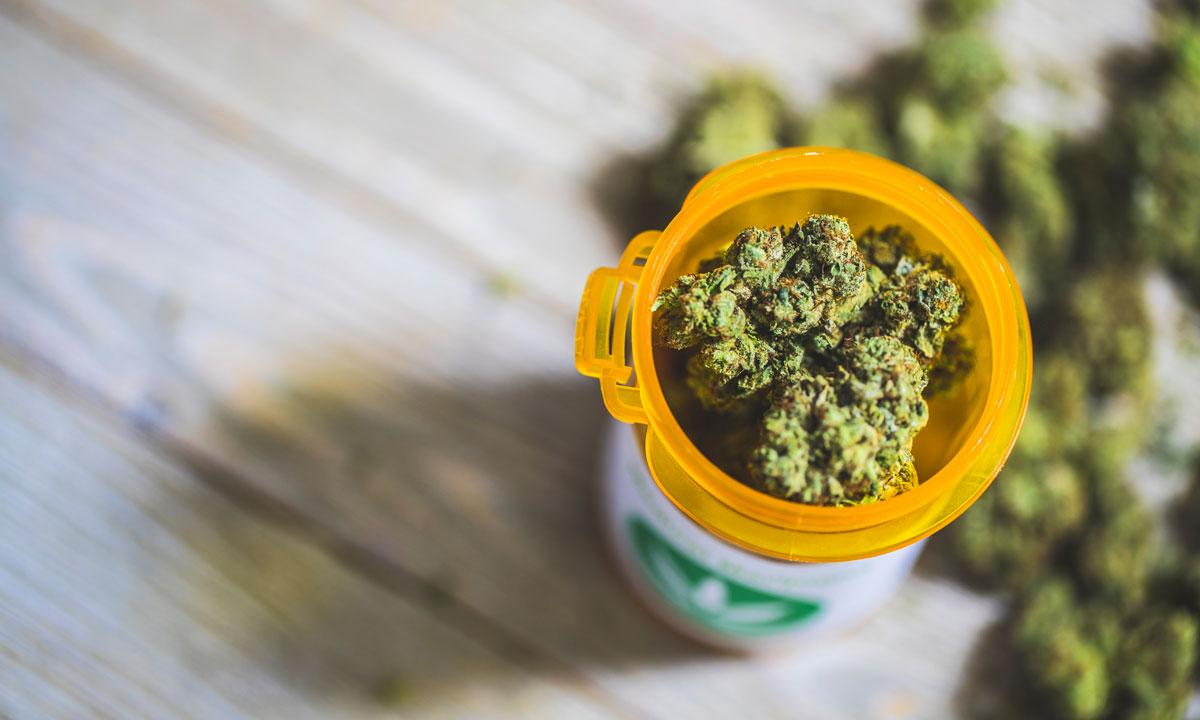
Mexican Cartels Are Now Smuggling Cannabis Oil

Unlike marijuana products available in legal markets, smuggled and black markets are not tested for potency or toxins, putting consumers at risk.

Many people have heard of OPEC, the group of petroleum exporting countries often referred to as the “oil cartel,” which aims to regulate the price and supply of oil globally. But the mantle of oil cartel may soon pass onto the violent drug organizations south of the border, which are adapting to the growing legal marijuana marketplace by smuggling their own version of oil made from cannabis.

Mexican drug cartels rose to prominence by smuggling bales of cannabis through the border between the United States and the Aztec nation. But the amount of raw marijuana illegally transported into the U.S. has decreased over the years, due to a few possible reasons. Security along traditional smuggling routes has increased, making bulky marijuana riskier to move. Increased legal access to better quality cannabis may also be a contributing factor.

RELATED: Marijuana Legalization Would Eliminate Drug Smuggling Better Than Trump’s Wall

With cannabis now legal in Canada, the cartels to the south are also facing stiff competition from drug runners along the US northern border.  Finally, increased demand for higher-margin and easier to smuggle opioids like fentanyl may have also turned cartel focus away cannabis. 

Here's What Kind Of CBD Product Is Most Popular In Each State
Photo by lovelyday12/Getty Images

Nonetheless, the demand for black market marijuana in the U.S. remains strong enough that cartels do not want to abandon it completely.

Along with increased illegal and toxic grow operations within U.S. national parks, Mexican drug organizations are also importing marijuana processed in Mexico into a viscous concentrate called “crude oil” due to its similarity in color and consistency to Texas Tea.

RELATED: Donald Trump Is Securing The Wrong Border Against The War On Drugs

Unlike marijuana products available in legal markets, smuggled and black markets are not tested for potency or toxins, putting consumers at risk. While there is as yet no correlation between Mexican “crude oil” and last year’s rash of contaminated vape cartridges it can safely be assumed that vape or dab products made from smuggled marijuana oil have not gone through independent lab testing.

Cannabis oil isn’t the only way Mexican cartels are diversifying their criminal enterprise to suit changing consumer tastes in America. Increased demand along with lower than expected yields has led to a recent surge in avocado prices along with Mexican cartels fighting for control of the lucrative extortion market in the state of Michoacan. The cartels have in the past also been known to smuggle actual petroleum oil as well.

Murderer Avoids Jail Because ‘Cannabis Made Him Do It’

0

The French court claims a man who committed murder isn’t responsible because he was under the influence of cannabis.

In a controversial and mind-boggling case in France, a man guilty of murder will not go to jail. Instead, he’ll be spending some time in a drug rehab facility. Why? His defense argued that he committed the murder in the throes of a cannabis induced psychosis.

The case has been going on for years, but it wasn’t until this past December that the Paris Court of Appeal ruled that Kobili Traoré wouldn’t be facing a trial due to mental incapacity. In April 2017, Traoré confessed to murdering his Jewish neighbor, Sarah Halimi, a retired teacher.

According to police records, people could hear a woman screaming and a man shouting “Allahu akbar.” He was also heard calling Halimi a “Shaitan,” which is the Arabic word for Satan.

RELATED: Smoking Marijuana In France Just Got A Whole Lot Easier

The Times of Israel reports that Traoré had no previous history of mental illness but that, on the night of the murder, he suffered from “acute delirium” after ingesting cannabis. The report explains that a then 27-year-old Traoré consumed over 15 cannabis joints that night, believed he’d been possessed by a demon and had no control of his actions.

Supreme Court Nominee Brett Kavanaugh
Photo by Matthew Henry via Burst

Surprisingly, three doctors were brought onboard to overlook and consult the case, with most of them believing that cannabis could actually produce those effects and delusions. Only one of them said that the presence of cannabis didn’t nullify Traoré’s actions.

Meyer Habib, a French Jewish parliamentarian, said he was shocked over the court’s ruling and expressed his discontent regarding the government’s double standards when overlooking cases that involve alcohol versus drugs.

RELATED: Athletes Will Use CBD This Olympics And Here’s Why

“This decision sends a clear message to all criminals: when one drinks and commits an offense it is aggravating circumstances, and when another partakes excessive amounts of drugs, it is a mitigating circumstance and he is not responsible for his actions,” he said.

Other members of parliament also believed that the ruling would set a dangerous precedent.

This case is disturbing for many reasons. Aside from the anti-Semitic nature of it, one that’s been alarmingly popping up across different areas of the globe with varying degrees of violence. It also sets a harmful precedent for France, one that will only fuel marijuana prohibitionists and continue to spread ignorance.

NFL Exploring CBD As Possible Treatment For Football Players

The NFL remains open to CBD, but continues to be firm in their stance that there’s not enough evidence and research to recommend it to players.

The National Football League announced last year its intention to study marijuana as a potential pain management tool for its players. This week, the NFL took its first steps into that process. The Pain Management Committee, a joint group between the NFL and NFL Players Association, met with manufacturers of CBD products to understand the efficacy behind the cannabinoid.

The fact-finding forum—as the NFL is calling it—was an effort to gather as much available data and scientific research around CBD in treating and managing acute pain for players. They also sought information about delivery systems for CBD and how products like oils, edibles, and vaporizers could provide different benefits.

“The Committee invited manufacturers of CBD products to share their research today so the Committee may hear and consider the possible scientific evidence base for CBD use as a pain management alternative,” the NFL and the players union said in a joint statement.

RELATED: Why This Will Be The Decade Of CBD

While current and former NFL players have long called for cannabis use as an alternative to opioids in managing pain and inflammation, the league’s drug policy maintains a ban on THC, the psychoactive element found in traditional marijuana and some CBD products. After the meeting, the league reiterated its belief there still isn’t enough information and research available to support claims CBD can treat acute and chronic pain.

does your child suffer from seizures here are the states with cbd only laws
Photo by Tinnakorn Jorruang/Getty Images

“CBD is a promising compound, but the extent of its use in the United States outpaces the level of evidence,” co-chairs of the pain management committee wrote in a white paper sent to NFL teams.

The white paper did mention small clinical studies that demonstrated CBD could be effective in combating neuropathic pain. However, the authors noted CBD remains an unregulated market, as the Food and Drug Administration still hasn’t established guidelines and rules around CBD, despite urgency from Senate Majority Leader Mitch McConnell. As a result, many products have varying degrees of purity and potency.

RELATED: The Super Bowl, Football, And Cannabis All Benefit Each Other

The white paper also added there were multiple controlled trials where marijuana and two FDA-approved cannabinoids successfully treated chronic and neuropathic pain. However, the committee raised concerns over the trials, due to their small sample sizes and short follow-up periods.

“Of course, cannabis remains a banned substance under the NFL Policy for Substances of Abuse,” the paper concludes. “In addition, the potential problems associated with cannabis, from acute impairment of driving, addiction, and exacerbation of psychiatric disorders such as depression and anxiety, make it a substance to approach with extreme caution.”

Will The FDA’s Ban On E-Cigarettes Affect CBD Vaping Devices?

The sale of Hemp-CBD-infused smokable products is in a legal gray area, not explicitly allowed nor prohibited under federal law.

On January 2, the Food and Drug Administration (“FDA”) issued non-binding guidance (“Guidance”) in which the agency explains how it intends to prioritize enforcement actions to tackle the growing increase in youth use of electronic nicotine delivery systems (“ENDS”)–more commonly and broadly referred to as “e-cigarettes”–as well as to address vaping-associated lung injuries.

According to a press release by the U.S. Department of Health and Human Services, the FDA intends to ban flavored cartridge-based ENDS that appeal to children, including fruit and mint flavors, beginning 30 days from the publication of the notice of availability of this guidance in the Federal Register.

Specifically, the agency intends to prioritize enforcement against:

  • Any flavored, cartridge-based ENDS product (other than a tobacco- or menthol-flavored ENDS product);
  • All other ENDS products for which the manufacturer has failed to take (or is failing to take) adequate measures to prevent minors’ access; and
  • Any ENDS product that is targeted to minors or whose marketing is likely to promote use of ENDS by minors.

Since the enactment of the 2018 Farm Bill, a wide range of hemp-derived CBD (“Hemp CBD”) products have sparked the interest of American consumers, including CBD vaping devices. Despite the growing popularity of CBD smokable products, the FDA has yet to issue regulations for these products. Consequently, the sale of Hemp-CBD-infused smokable products is in a legal gray area, not explicitly allowed nor prohibited under federal law.

RELATED: Are CBD-Infused Alcohol Beverages Legal?

What Does Instagram's Ban On Vaping Influencers Mean For Cannabis?
Photo by HAZEMMKAMAL/Getty Images

The lack of FDA regulation surrounding this issue likely stems from the fact that many of these products are free of tobacco and/or nicotine.

As we previously discussed, federal law gives the agency the authority to regulate the sale, manufacture, and marketing of tobacco products under the 2009 Family Smoking Prevention and Tobacco Control Act (“TCA”). In 2016, the FDA finalized a rule that extended its regulatory authority to all products meeting the TCA’s statutory definition of a tobacco product, including e-cigarettes.

The FDA now oversees all products “made or derived from tobacco that [are] intended for human consumption . . . .” The definition also includes components, parts, and accessories of tobacco products and excludes products that are classified as drugs or devices under the Food, Drug, and Cosmetic Act (“FDCA”), even if those products are made or derived from tobacco.

The FDA has consistently declined to interpret “tobacco products” so broadly as to include products free of nicotine or tobacco. Under this reasoning, it seems to follow that most Hemp-CBD smokable products, which are free of nicotine and tobacco, would not be considered “tobacco products.”

The newly published Guidance seems consistent with this rationale.

The Guidance expressly provides that it “does not address products that are not tobacco products” and that only “[l]iquids that do not contain nicotine or other material or derived from tobacco, but that are intended or reasonably expected to be used with or for the human consumption of a tobacco product, may be components or parts and, therefore, subject to FDA’s tobacco control authorities.” (Emphasis added).

RELATED: Why The USDA Testing Rules Will Hurt The Hemp Industry

the benefits and potential downsides of vaping according to research
Photo by HighGradeRoots/Getty Images

So, while most Hemp-CBD-infused vaping devices don’t fall under the FDA’s jurisdiction, and thus, won’t be affected by this upcoming enforcement effort, industry players should keep in mind that:

  1. Any flavored CBD vaping product that does contain nicotine is subject to this federal ban;
  2. Any CBD vaping product that contains nicotine and for which the manufacturer fails to take adequate measures to limit minors’ access is subject to FDA enforcement actions;
  3. Any CBD vaping product that is targeted at minors or whose marketing is likely to promote the ENDS use by minors falls under the FDA ban; and
  4. The manufacture, sale and marketing of non-flavored, nicotine or tobacco-free CBD vaping products, as well as other smokable hemp products, may nonetheless be banned under certain state laws. Accordingly, manufacturers, distributors and retailers of these products should refrain from selling their products in these jurisdictions to mitigate the risk of local enforcement actions.

Debunking 7 Common Myths About CBD

Instead of simply believing the current hype around CBD, do a bit of research and learn how to separate fact from fiction.

As the CBD market continues to explode and possibly outpace cannabis sales, the misconceptions surrounding the compound continue to grow as well. Debunking common myths around CBD is necessary so that consumers can utilize it in a manner that can maximize and not mythologize the benefits of this plant based medicine

Following are seven of the most common myths surrounding CBD. Despite the lack of proven research to verify these claims, they continue to get touted in various online forums as verifiable facts.

You can’t get high from CBD.

True, CBD isolate that contains no THC cannot get you high. However, since full spectrum and broad spectrum CBD contains some THC (less than 0.2% or 0.3%), if you take a substantial amount of this oil, you could get high.

There’s no scientific research to justify using CBD as medicine.

While extensive research is needed in this regard, anecdotal evidence points towards the efficacy of CBD. Also, Project CBD points to some very promising preliminary research studies in this regard.

RELATED: CBD As Medicine — How Much Do We Know So Far?

cbd as medicine how much do we know so far
Photo by OlegMalyshev/Getty Images

CBD is safe for children and pets to use.

Even though some dogs and cats appear to benefit from CBD, there have been no conclusive research studies confirming that CBD is safe for long-term use with pets.

CBD is non-psychoactive.

The more accurate phrasing should be “CBD is not psychedelic.” When used in proper dosage, CBD will not get one high; however, CBD is psychoactive in that it alters the body’s chemistry.

RELATED: Debunking 6 Popular Myths About Today’s Marijuana

Has Psychedelics Changed Your Life? These Scientists Want To Hear From You
Photo by Activedia via Pixabay

CBD  can cure whatever ails you.

CBD is not a magic elixir, a cure-all that can treat all forms of sickness. Preliminary research indicates that CBD can be helpful in sleep management, anxiety, pain management, and inflammation.

CBD will make you sleepy.

Actually a key benefit of CBD is that it can keep one alert and functioning unlike many prescription drugs and over the counter treatments. Having said that, CBD can help your body achieve a state of homeostasis. So it can be helpful in reducing the stressors that keep you up at night. Also, some CBD products come in formations designed to help you get a sound night sleep.

Insomnia
Photo by Flickr user anoldent

I tried CBD and it didn’t do anything.

If at first you don’t succeed, try again. Educate yourself on the the basics of CBD, so that you can select both the types of products and the correct dosages that will work best for your unique endocannabinoid system. 

As CBD continues to become more accepted into the mainstream culture, more myths will emerge. Instead of simply believing the current hype around CBD, do a bit of research and learn how to separate fact from fiction.

Athletes Will Use CBD This Olympics And Here’s Why

Thanks to changes in WADA policies, Olympic athletes can use CBD legally for the first time.

A new champion will be crowned when the 2020 Summer Olympics debut in Tokyo. We’re not talking gold medals or world records, though. Instead, a new presence will be felt for the first time legally at the Olympics—cannabidiol, or CBD.

The World Anti-Doping Agency, an organization that monitors and fights against the use of drugs in the Olympics, announced in 2018 that CBD had been removed from its list of banned substances. Since the organization’s formation in 1999, all cannabinoids like CBD and THC had been banned for all Olympic athletes. The 2020 Olympics represents the first games in which athletes can legally use CBD without fear of consequence.

RELATED: Super Bowl Champ Percy Harvin Used Marijuana To Cope With Severe Anxiety And Migraines

Although it isn’t necessarily that simple. Athletes must ensure their CBD oil or supplement doesn’t contain more than 0.3% THC, the psychoactive element in cannabis. In the United States, that isn’t always so easy. Ellipse Analytics tested 250 top-selling CBD products in the country last year and discovered that 45% of them contain over the legal threshold of THC. Even worse, 21% of CBD products boldly claiming they were “THC-free” had detectable levels of THC in them.

Some consumers might not sweat over the inclusion of extra THC in their products. But ingesting a product like that could cause Olympians to fail a drug test. That would be devastating to athletes who trained four years for the event, especially when they though they were playing by the rules.

Could CBD And Cannabis Eliminate The High-Cost And High-Stakes Of Current Psoriasis Medicines?
Photo by IRA_EVVA/Getty Images

Still, athletes have embraced CBD in droves. Retired athletes like former NFL athletes Rob Gronkowski and Tiki Barber, as well as former NBA players Paul Pierce, John Salley, and Lamar Odom, have publicly endorsed CBD. Professional golfers like Greg Norman and Bubba Watson have partnered with CBD companies, too. Count Olympic Gold Medalist and US Women’s soccer star Megan Rapinoe among the athletes who stand behind the health benefits of CBD. Olympic hurdler and bobsledder Lolo Jones signed a deal with cbdMD, the same company as Watson.

Jones told Yahoo she felt empowered to explore the benefits of CBD once WADA lifted its ban.

RELATED: Weed And Snowboarding: Double Standard for Women?

“I have done a ton of research on this, and I have tried out different ones because I’m a 37-year-old Olympian,” she said. “I need all the help I can get. When I wake up in the morning, I feel like an 80-year-old sometimes. I’ve aged in dog years.”

Expect more athletes to have similar stances as the Olympics approaches. While some may not be as public with their use as others, it appears that athletes from nontraditional have more permission to use CBD thanks to WADA’s changes. USA Triathlon signed a deal with the CBD company Pure Spectrum last year, becoming the first governing body of a sports organization to do so. Don’t be surprised if we see a future Gold Medalist announce a similar deal following the Olympics this year.

Donald Trump Is Securing The Wrong Border Against The War On Drugs

US border officials reported increases in marijuana seizures at the Canadian border, while numbers fall at the Mexico border.

Securing the United States-Mexico border through a massive border wall was one of President Donald Trump’s major campaign promises in 2016. This week, it was reported U.S. Customs and Border Patrol (CBP) officials have seized nearly 5,000 pounds of marijuana at the border between Nov. 1, 2018 and Oct. 31, 2019. The only problem for Trump was CBP’s seizures happened at America’s Canadian border.

Ever since Canada legalized recreational cannabis nationwide, the volume of cannabis moving across the border into the United States has jumped significantly. Last year, CBP officials caught 2,214 kilograms (4, 881 pounds) in illegal marijuana. The figure represents a 75% increase from the year previous, when CBP officials seized 1,259 kilograms (2,775 pounds) in illicit cannabis. But CBP officials downplayed the significance of the statistics. Instead, they pointed the recorded individual seizures year to year: 3,917 incidents following Canadian legalization and 3,139 in the year prior to legalization.

RELATED: Did Canada Blow Its Chance To Be The World Cannabis Leader?

“Although the CBP recognizes an increase in marijuana seizures and incidents, seizures and incidents normally vary from year to year,” CPB spokesman Kris Grogan told CBC. Instead, Grogan calls the increase in volume a small “uptick” more than anything else.

Experts point to possible confusion in the law for those crossing the border into states with legal marijuana like Michigan or Washington. Some may mistake that because it’s legal in both places, it’s okay to cross the border with cannabis. But because it’s a national border, federal rules and penalties apply.

why is big pharma heading to canada for its cannabis patents
Photo by Jp Valery via Unsplash

In addition, University of Ottawa drug policy expert Eugene Oscapella said the increase in volume could be explained by a different problem—Canada’s black market problem. Many Canadian provinces experienced shortages, complications, or higher prices when it came to buying marijuana following legalization. Within the first six months of legalization, 79% of all cannabis sales still occurred underneath the table, according to Statistics Canada. Those black market producers who can’t find buyers in Canada may be trying to move their goods elsewhere, theorized Oscpella.

“There’s the possibility that if they lose the Canadian market, that they’ll focus more effort on shipping it to the United States, places where it is still illegal, or to other countries for that matter,” Oscapella told CBC.

“But I don’t know that we’ve been successful enough in getting people to shift to the Canadian legal market, that it’s really dented the profits of criminal organizations significantly here.”

RELATED: Who Wins From Marijuana Taxes? It’s Not Always Who You Think.

As far as the US-Mexico border, a Cato Institute report found that state marijuana legalization has stopped drug smuggling more successfully than Trump’s border wall. Using government data, the report concludes that “smuggling has fallen 78 percent over just a five-year period,” which coincided with state-level marijuana legalization.

State-level marijuana legalization has undercut demand for illegal Mexican marijuana, which in turn has decreased the amount of drug smuggling into the United States across the southwest border,” the paper reads.

Hawaii’s Decriminilazation Of Marijuana Is In Effect

Hawaii is the 26th state to decriminalize marijuana, even if their policy on the drug is one of the most conservative ones in the country.

In 2019, Hawaii became the 26th state in the U.S. to decriminalize marijuana. On January 11th of this year, the law that prevented the incarceration of people over the possession of marijuana went into effect.

Residents of Hawaii with three grams or less of marijuana will now face a $130 fine as their sole punishment. Under this law, possession of larger amounts of the drug, distribution of it and repeat offenses could still lead to more severe punishments.

While three grams of marijuana isn’t much when compared to other states that have decriminalized marijuana or embraced similar policies, experts and lawmakers still believe that this is a necessary and welcome first step towards marijuana legalization.

RELATED: Hawaii Once Again Says No To Recreational Marijuana

“Unfortunately, three grams would be the smallest amount of any state that has decriminalized (or legalized) simple possession of marijuana,” said the Marijuana Policy Project in a statement. “Still, removing criminal penalties and possible jail time for possession of a small amount of cannabis is an improvement.”

Hawaii
Photo by thomas marban via Unsplash

David Ige, governor of Hawaii, debated heavily on the topic, calling it “a very tough call.” He’s always had a conservative perspective on marijuana legalization, vetoing bills that would legalize industrial hemp and that would allow for the inter-island transport of medical cannabis.

Ige’s opinions on the bill that would decrimiailize marijuana were mixed and don’t mean that Hawaii will legalize the drug anytime soon. Regarding the proposal, he said that he would have preferred is it included measures aimed at young people, preventing them from getting involved with substance abuse or helping them deal with their drug use.

RELATED: Legal Marijuana In Illinois Causing Someone To Break The Law

“We continue to learn from other states about the problems they see with recreational marijuana, and most of the governors that I talk to that have recreational laws have acknowledged significant problems with those measures,” he said on a press conference in Honolulu last year.

Although Hawaii’s stance on marijuana is a slightly conservative one at the moment, decriminalizing the drug is still a win for advocates, one that might eliminate unnecessary arrests, the racial disparity that these trigger, and many of the harms caused by prohibition.

Does Vince Vaughn Smoke Weed

When it comes to weed, Vaughn vehemently opposes the war on drugs.

You’ve surely heard of Vince Vaughn, the iconic actor who’s starred in dozens of movies and has become a staple of buddy comedies. Although he’s not made many movies recently, at least, not any notorious or good ones, he broke the news when he amicably shook Present Donald Trump’s hand at a football game.

Ah, the internet’s favorite past time: observing the downfall of beloved cultural icons.

No matter if Vaughn supports Trump or if he was simply being courteous, the video made us ask ourselves a couple of important questions: Is Vince Vaughn high in this video? And subsequently: Does Vince Vaughn smoke weed?

RELATED: Does Prince Harry Smoke Weed?

Vaughn is an interesting character, at least when it comes to his politics. Unlike a large percentage of Hollywood, he’s unafraid to support Republicans on occasions, calling himself a libertarian. He’s defended the rights of gun owners and collaborated with Glenn Beck, a conservative and polarizing political commentator, which makes sense after seeing the Trump video.

this newspaper handed out joints to celebrate marijuana legalization
Photo by MmeEmil/Getty Images

When it comes to weed though, Vaughn vehemently opposes the war on drugs.

RELATED: Dave Chappelle Will Share His Magic Mushrooms, But Not His Weed

“Governments claim to write endless laws to protect us, a law for this, a law for that, but are they working? I don’t think so. The consequences are that there is a staggering loss of freedom for the individual. I look at the drug wars and they are absolutely fucking ridiculous. There is a black market and the prisons are overcrowded and it’s not preventing drug use. There’s a corruption that goes all the way to the top,” he said in an interview with GQ.

Then there’s also the rumor that while shooting Old School, starring Will Ferrell and himself, Snoop Dogg made a visit. And you know that when Snoop’s around, there’s also weed, so you can draw your own conclusions on whether Vaughn smokes or not.

Top 5 CBD Skincare Brands That Celebrities Love

Celebrities like Emma Roberts, Kim Kardashian, and Olivia Wilde have embraced CBD and these are their favorite products.

Notoriety can make or break a product, especially if the product is a part of a nascent industry. For example, you could say ubiquity and love for cannabidoil (CBD) happened because the product popped up during the right time. It was just when people’s perspectives on cannabis were evolving and when Instagram influencers and celebrities could transform a small product into an overnight sensation.

While CBD’s meteoric rise isn’t all due to celebrity influence, it does help that a large percentage of them are proponents of the compound, speaking openly about CBD and how it helps manage their anxiety, stress and physical aches.

Here are 5 CBD brands that have been embraced by celebrities:

Lord Jones

Beloved by artists such as Olivia Wilde, Mandy Moore, Busy Phillips and Kristen Bell, Lord Jones is without a doubt the most mentioned CBD products by celebrities. The brand’s lotions, oils and gummies are brought up by most, highlighting their relaxing effects and delicious flavors.

RELATED: 5 Ways To Incorporate Effective CBD Products Into Your Everyday Life

“Recently I did a play on Broadway for six months. My body was wrecked, [and] my neck was really tight. The CBD has relaxing benefits, and the idea is to avoid using too many painkillers,” said Olivia Wilde on an interview with the New York Times.

Whoopi & Maya

Whoopi & Maya was founded some years ago by Whoopi Goldberg and Maya Synergy, with the hopes of treating menstrual cramps. The company has since expanded, making bath salts, rubs and tonics.

Pellequr

Social Media Bans On CBD Ads Make No Sense
Photo by Caitlin Riley/Getty Images

RELATED: What Is CBN And Is It Legal?

Loved by Kim and Khloe Kardashian, Pellequr is a CBD brand that was designed in hopes of treating post-partum pains, mood swings and swelling. Some of their products are expensive but include a wide range of effects, from relaxing bath bombs, to oils, salves and more.

“Anyone that knows me knows I am obsessed with CBD everything!” said Kim Kardashian. “This is not an ad lol, my fave right now is Pellequr.”

Mazz Hanna

Emma Roberts explained on a couple of her Instagram stories how much she liked Mazz Hanna’s CBD bath tonics, which provided soothing effects for her entire body. The company began to include CBD in their products when Hanna, the founder and CEO, had a car accident and turned to the cannabinoid for relief.

Kreation Organic Juicery

To help cope with her insomnia, anxiety and post workout aches, Alessandra Ambrosio explained that she used CBD oil and CBD water from a place in LA called Kreation Organic Juicery.

“The most important thing to do [to prep for the Victoria’s Secret Show] is to sleep eight hours the night before,” Ambrosio told Well + Good. “It’s hard because the mind gets anxious, so I try CBD oil, and I think it helps.”

Don't Miss Your Weekly Dose of The Fresh Toast.

Stay informed with exclusive news briefs delivered directly to your inbox every Friday.

We respect your privacy. Unsubscribe anytime.