Photography is a skill that’s on the rise. With the introduction of smartphones that have great cameras, more and more people are falling in love with the medium and learning about it.
Apps like Instagram and Snapseed are also helping us play around with our images so we can achieve really cool results, but there’s always more you can learn, especially when it comes to the basics of composition and getting to know the tool you’re using.
We looked around online for some helpful tips for amateur photographers. Check out some of the most useful ones:
A strong back light can lead to underexposed photos, where all you see are dark subjects with barely noticeable features. When done right, a strong back light can create striking images, especially when you play around with the exposure levels of your camera. “Bump up your exposure and keep experimenting until you strike an artful balance between your subject and the background,” recommends photographer Tyler Stableford.
Get to know your camera
Most smartphones nowadays allow you to manipulate your camera settings, modes, exposure and more, so it’s important to get to know these features if you’re interested in taking better pictures. If you own a DSLR or some other camera, play around with the features and settings, since they can improve your photos depending on the subject you are photographing.
According to Outsideonline.com, portraits are all about knowing your subject and breaking down the barrier that naturally occurs when you point a camera at someone. “As a photographer, showing vulnerability opens yourself to being observed as a human, and in that moment, you are recognized as something other than a photographer, which is pivotal to helping somebody relax,” explains National Geographic photographer Cory Richards.
Keep things simple
As an amateur photographer it’s easier to start off slow than to stuff your images with a bunch of objects and action. Focus on basic images that are easy to follow. The less objects in your photo, the easier it is to create a beautiful and memorable composition.
Show off depth in your photos
Landscape photography is all about depth, which attracts the viewer’s eye and makes your photographs interesting. Leading lines can really help when it comes to depth composition. These can be fences and road tracks and guide the eye of the viewer through the length of your entire photo.
Studying connections between marijuana and feeling lonely and depressed may not be something you expect from scientists in Iran, but the findings are great.
Studying possible connections between marijuana and feeling lonely and depressed may not be something you expect from scientists in Iran, but that’s pretty much what’s going on. What’s more, they have published some intriguing work with results worth a look.
Humans are social animals. Lack of social connection affects us deeply. Sleep patterns, attention and reasoning are all impacted by loneliness or feelings of temporary seclusion. On the more extreme side, isolation is complete or nearly complete lack of connection and interaction.
For decades, healthcare professionals have recognized that social isolation leads to greater incidence of disease and death. Being separated from “the pack” has the potential to alter brain chemistry, make some autoimmune diseases worse and enhances susceptibility to seizures. Other studies have shown that not only does social isolation stress lead to symptoms such as depressive-like behavior, it even alters the genes that affect neuroplasticity or how the brain learns and adapts. We are reminded of the debilitating combination of these effects by those who advocate for an end of prisoner isolation in the criminal justice system.
Social isolation stress, SIS, is a condition that researchers impose on lab animals. Social animals, like mice in this case, are separated from their peers. They are effectively placed in solitary long enough to exhibit symptoms of loneliness so severe it affects their observable behavior and ability to complete simple task tests.
In this study, the researcher chemically activated both main types of cannabinoid receptors, CB1 and CB2. These receptors are responsible for helping receive innate and phytocannabinoids like those found in marijuana. When the receptors were activated it reduced the symptoms of depression in the mice. Inversely, when researchers chemically inhibited the receptors, depressive like symptoms were increased.
Researchers determined that, “activation of cannabinoid receptors (type 1 and 2) could mitigate depression-like behavior induced by SIS in a mouse model.” While mice outcomes do not always infer the same truth forhumans, the fact that we share the large majority of active DNA with them is not lost on scientists and investors. Considering that several popular anti-depressant medicines have serious side effects including suicidal thoughts, possible application of cannabis could be very promising.
The lonely pot smoker was a popular figure in past anti-drug ads. How ironic if, for some people, using cannabis could one day be seen as an option to combat the “chemistry of isolation.”
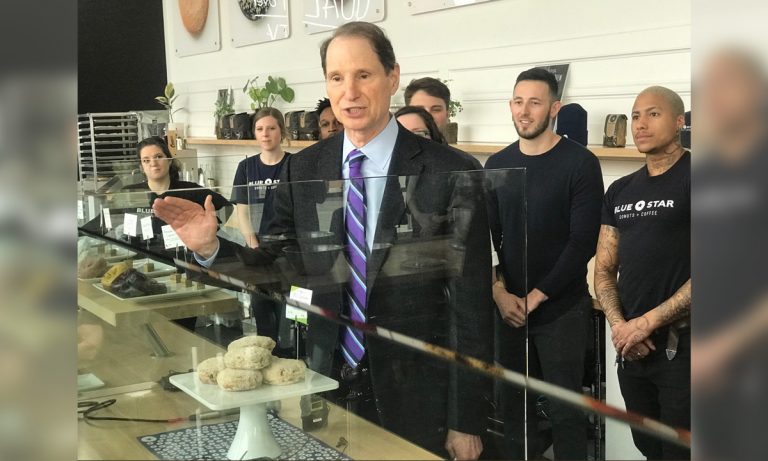
If it weren’t for the key legislative efforts Rep. Earl Blumenauer and Sen. Ron Wyden who, along with Senate Leader Mitch McConnell, were instrumental in passing the 2018 Farm Bill, the concept of CBD-infused food products faced many hurdles and possibly illegal loopholes. So it was only right that Wyden and Blumenauer were on hand to taste Blue Star’s latest CBD-infused chocolate-hazelnut donut offering.
The lawmakers were in Portland to celebrate hemp’s legalization thanks to their efforts around the 2018 Farm Bill. Wyden worked closely with McConnell to ensure the Hemp Farming Act was included in the final draft of the farm bill.
Enjoyed celebrating a sweet day for Oregon agriculture this morning in Portland w/ @repblumenauer when @BlueStarDonuts rolled out its new hemp CBD-infused donut. Proud to have helped make this day happen by getting hemp legalization into the Farm Bill. pic.twitter.com/4QWSPqhqMt
According to the Portland Business Journal, Oregon plans to more than double its hemp production this year (a previous state pilot program under the previous farm bill had allowed the previous crops). Some have also predicted that hemp could soon become a $1 billion crop for the state.
Blumenauer and Wyden thought it was actually fitting the legislators were enjoying the CBD-infused donuts on President’s Day of all days.
“I think George Washington and Thomas Jefferson would be spinning in their graves if they knew hemp had been made a Schedule I drug,” Blumenauer said. “You know, they were growing hemp plants on the site of the Pentagon during World War II because it was considered a strategic material vital to the war effort.”
You can watch the lawmakers talk more about the historic day below.
There was much speculation throughout 2018 about Canada’s soon-to-be-legal cannabis market. But only recently has data become available that shows what cannabis consumers really want and actually buy.
For example, Statistics Canada recently released its National Cannabis Survey. The most-discussed finding is that cannabis use did not jump after legalization in October. The proportion of Canadians using it stayed around 15 per cent.
That’s good news for politicians who supported legalization, and for physicians concerned that legality would prompt surging usage.
Product quality is key
The survey also asked consumers their top three reasons for choosing cannabis suppliers. Concern about product quality and safety was the top-ranked reason.
Finding products with the desired ingredient mix, and potency, was the number three consumer priority. That factor could also benefit legal producers. Their government-mandated labels specify that information.
But the desired products must be available. Product shortages are an ongoing problem.
And cannabis foods and drinks aren’t yet legal. That’s a crucial gap, as U.S. experience shows. Edibles constitute 43 per cent of demand in Colorado and California.
Diverging purchases
Other consumer preferences appear in Health Canada’s fourth quarter sales data. They show recreational cannabis customers strongly prefer dry cannabis (flowers and leaves) over cannabis oils. Sales were split 74 per cent dry and 26 per cent oil. New Brunswick and Québec both reported even stronger dry preferences of 90 per cent.
By contrast, medical clients favor oils. They bought just 28 per cent dry cannabis. Producers likely knew medical and recreational preferences would differ. But the extent may have surprised them and contributed to dry product shortages.
Incidentally, a note to Health Canada: Kudos for posting monthly sales and inventory numbers. One suggestion: please report the monthly cannabis harvest too. Knowing the “fresh” cannabis count each month would let us gauge the industry’s capacity and growth. Currently, those vital figures are impossible to estimate reliably.
Recreational consumers also prefer small purchases, well below the 30-gram possession limit. Québec’s mostly in-store transactions averaged just 6.6 grams and $47 each.
Those numbers suggest customers were sampling small amounts. Experienced users might have sought replacements for existing, formerly illegal favorites. Meanwhile, first-timers explored the newly legal selection.
Ontario’s cannabis agency hasn’t released such sales details. But combiningitsreports with Statistics Canada sales data suggest its orders were larger, possibly because they were all online. They perhaps averaged $70 in October and $100 in November.
Where underground markets have an edge is pricing. Statistics Canada estimates average nationwide prices at around $9.70 per gram for legal products versus $6.51 for illegal ones. That’s unfortunate. Low price was the second most important criterion for cannabis consumers.
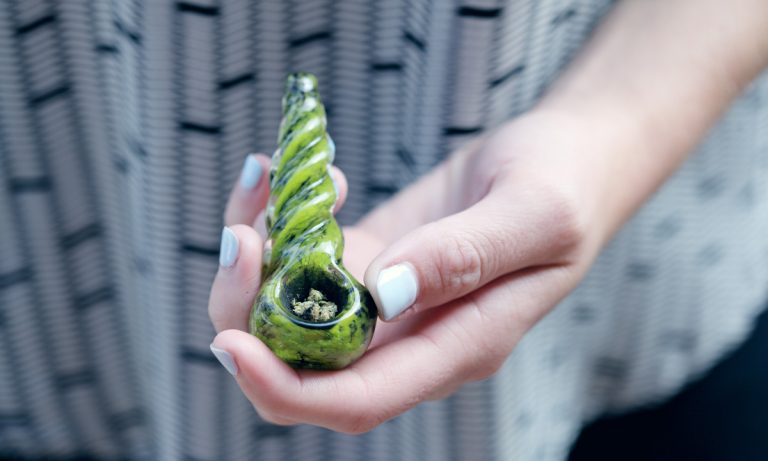
Canadians prefer smoke-able or vape-able weed. Unsplash
Québec’s approach is interesting here. With an average price of just $7.27 per gram, it might be losing money on sales. But it’s more competitive with illegal vendors.
Physical stores matter
Cannabis consumers also prefer brick-and-mortar stores over online shopping. In-store purchases accounted for 80 per cent of sales in Québec. They hit 94 per cent in Nova Scotia and 95 per cent in New Brunswick.
Stores let shoppers see and smell products, plus receive advice from staff. By accepting cash and retaining no customer information, they also avoid online privacy problems.
The preference for physical shops, combined with their relative availability, could partly explain provincial sales differences. For example, New Brunswick’s stores were plentiful, at one per 39,000 people. It had correspondingly high purchases of $6.87 per resident during October and November. Only $0.31 of that was online.
By contrast, Québec’s stores were scant—one per 699,000 people. Relative to New Brunswick, its per capita sales were lower overall at $2.53, but higher online at $0.51.
Ontario meanwhile had no legal stores. Its $1.54 of online sales per resident were lower than the other two provinces’ overall numbers but higher than their online ones.
These sales comparisons suggest the absence of legal shops diverts some cannabis users online. But most stick with black markets.
The cannabis survey supports that idea. Availability of cannabis at convenient times and places were consumers’ fourth and fifth highest priorities, respectively.
Improving access
This illustrates why provinces with few existing stores should open more once cannabis supplies allow. Ontario especially should let producers open their on-site shops.
Ontario’s plans for same-day delivery of online orders would similarly boost convenience. California recently legalized private-sector delivery services. Those have flourished by bringing cannabis into cities that opted out of allowing stores. (Municipalities in Ontario and B.C. that opted out might want to ponder that trend.)
Naturally, other factors contributed to inter-provincial differences. Consider Prince Edward Island. It had slightly fewer stores than New Brunswick; one per 51,000 people. But it had higher per capita sales of $13.83. That success was reportedly due to it avoiding the product shortages plaguing other provinces.
Store revenues also varied by province. P.E.I.’s averaged $1.1 million each in the fourth quarter, whereas New Brunswick’s only hit $410,000. By contrast, Québec’s scarce outlets averaged $2.7 million apiece.
Given its similar dearth of stores, Ontario’s first 25 outlets could see similar results to Québec’s. The shop coming to ritzy Yorkville should do even better. High-end shopping, anyone?
No matter which name-brand OTC drug you’re looking to buy at the pharmacy, chances are they offer a generic store-brand for less.
In case you’ve ever wondered who makes all of the store-brand OTC drugs on behalf of pharmacy chains like CVS Health Corp. (NYSE:CVS) and Walgreens Boots Alliance, Inc. (NASDAQ:WBA), the answer is probably Hauppauge, New York-based Contract Pharmacal Corp.
Background on Contract Pharmacal
Founded back in 1971, Contract Pharmacal develops, manufactures and packages pharmaceuticals, over-the-counter drugs, and dietary supplements for customers ranging from major drug companies like Bayer AG (OTC:BAYRY) (OTC:BAYZF) all the way to nationwide supplement retailers like GNC Holdings Inc. (NYSE:GNC).
With hundreds of different product offerings, and expertise in tablet, capsule, and powder production, it should come as no surprise that major players like Contract Pharmacal would eventually eye hemp as the next major health and wellness ingredient. Ever since the Farm Bill passed, there’s almost nothing stopping them.
Uleva Hemp Supplements
Uleva Hemp Supplements
Contract Pharmacal’s new product line, called Uleva, is comprised of six different formulas. Each one combines hemp with other “specific herbal ingredients to provide the ultimate hemp-based support for a healthier lifestyle.”
For instance, Uleva’s “Fuel” capsules combine the caffeinated power of green tea extract with hemp oil powder to offer its users an herbal boost when they need it most. Uleva’s “Sleep” capsules, on the other hand, combine the calming power of melatonin with hemp oil powder to offer its users a relaxing touch.
Conclusion
At $35.99 for 30 capsules, Uleva’s product line is priced comparably with most dietary supplements. With the scale, reach, and capacity of Uleva’s manufacturer, don’t be surprised if you see them at a pharmacy near you.
Valentine’s Day gestures, marriage proposals, gender reveal parties. Social media has given us free reign to go crazy when letting the world know that we love someone and that there’s something important going on with our lives.
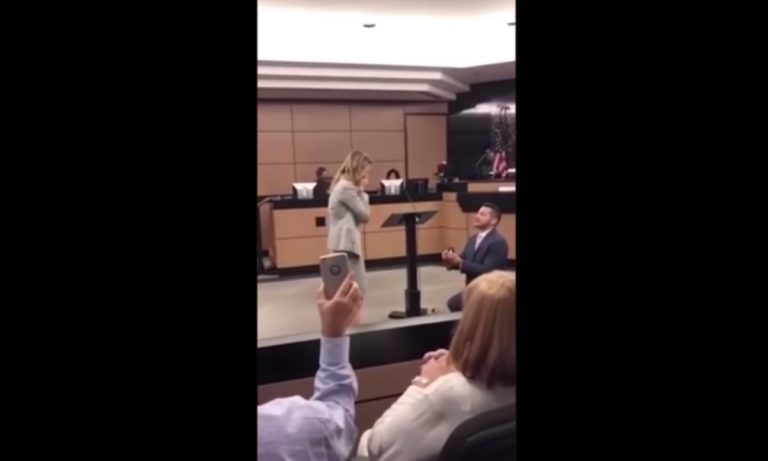
The New York Post was the first to report the latest over the top marriage proposal, which I’m still trying to wrap my head around. Brandon Dinetz, a lawyer from Florida, spent five months plotting his marriage proposal to girlfriend Jen Lettman, who is also a lawyer. Both met while working on a case and have been dating seriously for a couple of years.
Dinetz arranged a fake DUI trial that included a judge, a defense attorney and a fictional defendant. The jury was made up of 17 of Lettman’s family members and friends. In order to get Lettman to join him in court, Dinetz told her that he really wanted her to hear his opening statement.
“When we worked together we would regularly watch each other’s opening statements and critique each other, so it wasn’t unusual for me to be in the courtroom with him,” explains Lettman. “I wasn’t really paying attention until I recognized that one of the jurors looked like Brandon’s dad, which I thought was funny. Then I saw my dad and I was so confused. When I saw my sister I knew what was happening and I started crying.”
Thankfully, Lettman didn’t embarrass anyone and said yes, finding the gesture surprising and romantic.
Setting up a fake DUI trial sounds like a lot of work, and even though there are many questions—the main one being why and how he got access to the courtroom—we wish the best to the newly engaged couple. Congratulations! Your proposal was so crazy that it made the news.
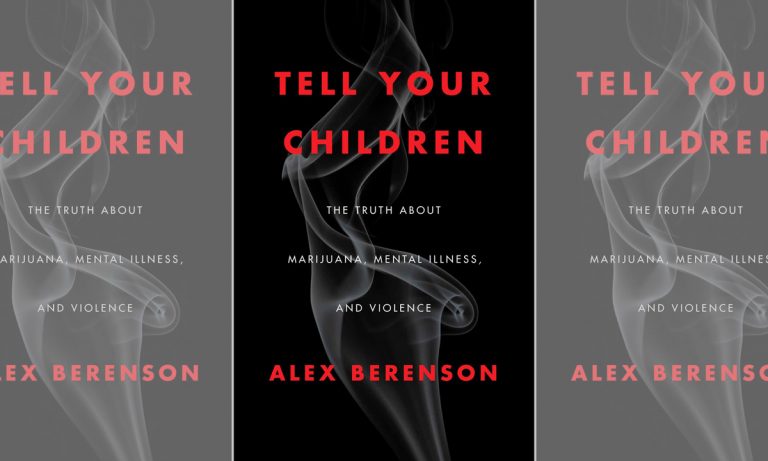
It can be difficult to distinguish fact from fiction when it comes to cannabis, especially when conflicting information is published almost daily. It’s just one of the reasons a slew of scientists has criticized a new book on the supposed dangers of cannabis released last month called Tell Your Children by Alex Berenson. The book argues the nation should be careful legalizing marijuana because of the risks involved, such as increased violence and even total mental collapse.
However, medical professionals say these claims are “based on a deeply inaccurate misreading of science.”
Earlier last week, 75 doctors and scholars from New York University, Harvard Medical School and Columbia University banded together in an open letter to Berenson over his writings in Tell Your Children. They are concerned the book and others like it might throw a wrench in the marijuana movement currently sweeping the United States —something they argue would do more harm than good.
“We urge policymakers and the public to rely on scientific evidence,” the letter reads, “not flawed pop science and ideological polemics, in formulating their opinions about marijuana legalization.”
“Weighed against the harms of prohibition, including the criminalization of millions of people, overwhelmingly black and brown, and the devastating collateral consequences of criminal justice system involvement, legalization is the less harmful approach,” the letter concludes.
The problem with Berenson’s book, according to the critics, is that it is mostly based on cherry-picked science. And some of it is old science at that. In reference to the correlation between cannabis use and schizophrenia, the document points to studies that were conducted as far back as 1987.
Although one study from 2017 did conclude that “the higher the use, the greater the risk” when it comes to marijuana and this mental disorder, scientists say the results show only “an association,” not an actual threat.
Nevertheless, Berenson would have readers believe that marijuana definitely causes schizophrenia. In fact, the author wrote last month for the New York Times that the issue was “settled.”
Other research published over the past few years also shows that mental health issues are not a significant risk factor in healthy individuals. “Cannabis does not in itself cause a psychosis disorder,” Dr. Carl Hart, a drug expert at Columbia, toldThe Guardian. “Rather, the evidence leads us to conclude that both early use and heavy use of cannabis are more likely in individuals with a vulnerability to psychosis.”
Berenson, who says he just wants cannabis advocates to be truthful in their approach to legalization, has dismissed the letter, arguing that it only “attracted only a handful of signatures from MDs, and almost no psychiatrists, who are on the front lines of treating psychosis and severe mental illness.”
But just because cannabis is not safe across the board doesn’t mean it cannot still be pushed into legal territory, Berenson says. “You can believe that cannabis is a real risk for psychosis and violence and still believe it should be legal. That’s a totally reasonable position to take. Just tell the truth.”
The truth is not enough is known about marijuana for anyone to speak in definitive terms about its pros and cons on human health. Until the federal government loosens its pot policies and allows the herb to be researched extensively, these types of “my science is better than yours” arguments will surely continue. All we know at this point is that marijuana is no more of a health risk than alcohol and other legal substances and that prohibition hasn’t worked. That should be good enough for now.
According to The Sun’s gossip columnist Simon Boyle, Kevin, Joe and Nick Jonas are planning to stage a comeback for their family band, with new music from the once wildly popular group on the horizon.
Boyle reports that the brothers are planning a massive reunion complete with a documentary about their efforts to stage a comeback six years after breaking up.
“This is going to be one of the biggest music reunions in years,” an insider told Boyle. “It’s no secret that things weren’t great by the end of the Jonas Brothers, but blood is thicker than water and they’re healed their rift in the years since the split. After enjoying solo success and taking time to work on passion projects, they feel that now is the right time to get back together.”
With Ben Affleck having officially hung up his cape, Warner Bros. is in search for a new cape crusader, and if you believe a new report from Revenge of the Fans, the studio has found its Bruce Wayne in Armie Hammer.
Hammer is reportedly in “final negotiations” to star in Matt Reeves’ The Batman, which is set to hit theaters on June 25th, 2021.
As previously reported, Reeves’ reboot has been described as a “noir-driven detective” movie playing up the “world’s greatest detective” angle. It will not be an origin story, nor will it be tied to the existing films in DC Extended Universe.
He’s supposed to be the world’s greatest detective, and that’s not necessarily been a part of what the movies have been,” Reeves recently explained. “I’d love this to be one where when we go on that journey of tracking down the criminals and trying to solve a crime, it’s going to allow his character to have an arc so that he can go through a transformation.”
Kim Kardashian, Khloé Kardashian and Kylie Jenner have all filed to trademark the names of their kids: Saint, North and Chicago West, as well as True Thompson and Stormi Webster, according to documents obtained by TMZ. The mothers plan to use their children’s names on various products, including a clothing line, toys and skincare.
Kylie, 21, specifically filed to trademark “Stormiworld,” which was the theme for Stormi’s epic first birthday party. Kylie’s boyfriend and Stormi’s father, Travis Scott, also designed custom Stormiworld tour merch for her first birthday.
The Kardashian-Jenners also requested the ability to sign endorsement deals to hawk others’ products, although the application doesn’t list specifics.
Kourtney Kardashian, Rob Kardashian and their kids don’t appear to be involved in the trademark filing.
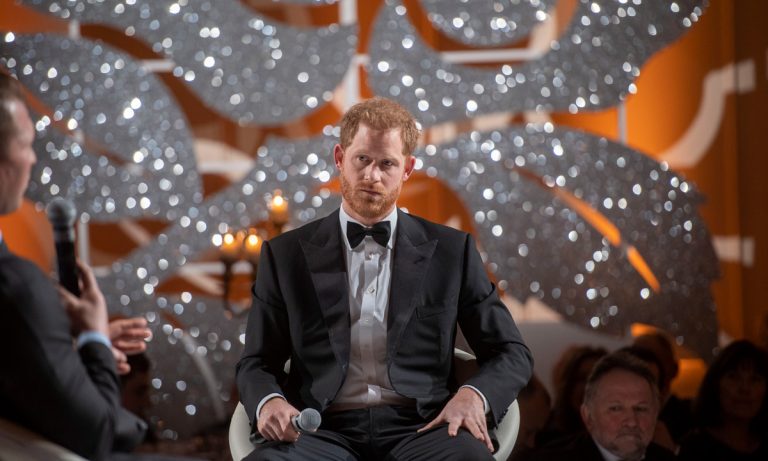
There’s no doubt Prince Harry is going to make a terrific father. He’s incredibly protective of his pregnant wife, Meghan Markle, and even sprung for a $10,000 christening gift for his nephew Prince Louis. But he’s now revealed that there’s one thing about becoming a new dad that keeps him up at night.
“As someone who is about to become a father, I am acutely aware of our shared responsibility to make this world more resilient and its inhabitants more accountable for the next generation,” he said. “The only way to see real progress is not by chance, it’s by change.”
His father, Prince Charles, echoed those sentiments last November a visit to Ghana, when he called the world “damage” and “destroyed”.
“I am about to have another grandchild actually. I suspect quite a few of you may too have grandchildren or will do soon,” he said, adding, “It does seem to me insanity if we are going to bequeath this completely polluted, damaged and destroyed world to them. All grandchildren deserve a better future.”
It’s easy to find porn on the internet, but if that’s not really your thing, how about just snapshots of the really bizarre stuff? Out of context, many porn scenes make absolutely no sense. And there’s now a Twitter account that takes full advantage of this.
With already more than 8,000 followers, the aptly named Out of Context Pornhub account was created in January by a group of people who run a porn curation site called Fap Curators. Would it be fun or mentally damaging to scour pornos all day to find the craziest images?
The creators of OOCP tell the Daily Dot that they were inspired by other “Out of Context” accounts on Twitter, which usually show screengrabs from popular TV shows and films.
“A lot of people know stuff about porn and don’t really talk about it. We would love people to stop [feeling] shame about pornography, and Out of Context Pornhub is a good way to share some (mostly) SFW porno images with friends and have a laugh about it.”