Saturday, December 27, 2025
Home Blog Page 753

New Studies Suggest Digital Hoarding Might Be A Real Disease

Clutter is a word that’s commonly associated with objects and things, but it doesn’t have to be tangible to have a negative impact on your life. Now that our digital life runs parallel to our real one, maintaining it should be one of our priorities.

The BBC reports that new studies on technology posit the existence of digital hoarding — the accumulation of digital files like documents, photos, apps, emails, and more — claiming that this phenomenon can make us feel just as stressed as having too many objects. These problems hinder your work life, making it harder for you to find a document or an email, and can also create cybersecurity issues.

Defined as the “accumulation of digital files to the point of loss of perspective, which eventually results in stress and disorganization,” digital hoarding can seriously affect your life, very much like a real disease.

RELATED: 5 Ways You Can Protect Your Eyes From Overexposure To Digital Screens

A study from 2018 surveyed over 840 people and tried to find a relationship between digital habits and stress. The link was found, with subjects who hoarded files finding it harder to make decisions. “If they get to that point where they’ve become overwhelmed by the data that they’ve got, that they can’t find things, that things are getting lost… that may indicate that there’s some kind of problem,” says Nick Neave, director of a hoarding research group at Northumbria University.

Experts believe that beloved tools like the Cloud and Google Drive facilitate these types of behaviors, allowing users to have thousands of photos and documents not because they find value in them, but because they’re allowed to. Maybe we should all painstakingly comb through our files, getting rid of what we don’t need and really appreciating what matters most.

Boston Is Getting Its First Recreational Dispensary

Ascend Massachusetts was awarded the first conditional-use permit for adult-use cannabis retail sales in the city of Boston. The flagship store will be the first adult-use retailer to operate within a major East Coast metropolitan city and is expected to open by the end of the year.

Massachusetts legalized adult use cannabis sales, but it took two years to license operators and open stores. When sales began on November 20, 2018, only two locations had been approved resulting in traffic headaches and customer lines. Still, the state managed to log $7 million in sales in just the first three weeks. A new report by ArcView Research and BDS Analytics projects that cannabis spending in Massachusetts will reach $1 billion by 2022 and that it will be the fifth biggest market in the U.S.

“Ascend Massachusetts is honored to be chosen as the first company awarded a license for an adult-use retail store by the city of Boston,” said Andrea Cabral, CEO of Ascend Massachusetts, which is a wholly own subsidiary of Ascend Wellness. “A core value of our company is to positively impact our neighborhoods and communities. We are proud to have the support of leaders and organizations across Boston and Massachusetts in this endeavor.”

No doubt that support helped sway the approval process.  Ascend managed to get letters of support from State Senator Joseph Boncore (D); State Representative Aaron Michlewitz (D); Boston City Councilors Josh Zakim and Ed Flynn; The Downtown North Business Association; as well as a letter of non-opposition from the West End Civic Association.

The store will be located in downtown Boston close to Faneuil Hall, a site built in 1742 for merchants and where the Sugar Act was protested in 1764 and established the doctrine of “no taxation without representation.” The store will be multi-leveled and designed by the Andrus Group, which has designed stores for Apple, Tesla, and Burberry. The designers noted that the store will combine innovation with education in order to create an engaging in-store experience for shoppers.

James Andrus, principal at The Andrus Group said, “This is a unique project that builds upon our experience in creating highly visited retail locations that serve the needs of tourists, consumers, and the community.”

So far, five retail locations have been approved in the state. There are still about 200 completed applications waiting for the state’s review and approval.

“We are proud of the work that Andrea and her team did to secure and plan our location,” says Abner Kurtin, CEO of Ascend Wellness. “We are gratified by the confidence the City of Boston has in Ascend Massachusetts to create best-in-practice and best-in-class adult-use retail for the Boston community.”

Ascend Wellness is a private multi-state operator located in three states: Illinois, Michigan, and Massachusetts. The Massachusetts CEO Cabral was the Executive Secretary of Public Safety in Massachusetts where she oversaw 14 public agencies. She was the twice-elected Sheriff of Suffolk County and the first female sheriff in Massachusetts’ history.

This article originally appeared on Green Market Report.

Chrissy Teigen Is Learning to ‘Be Happy’ With Her Body; Madonna Shaded Over Retouched #10YearChallenge Post

0

Chrissy Teigen on Learning to ‘Be Happy’ with Her Body After Baby

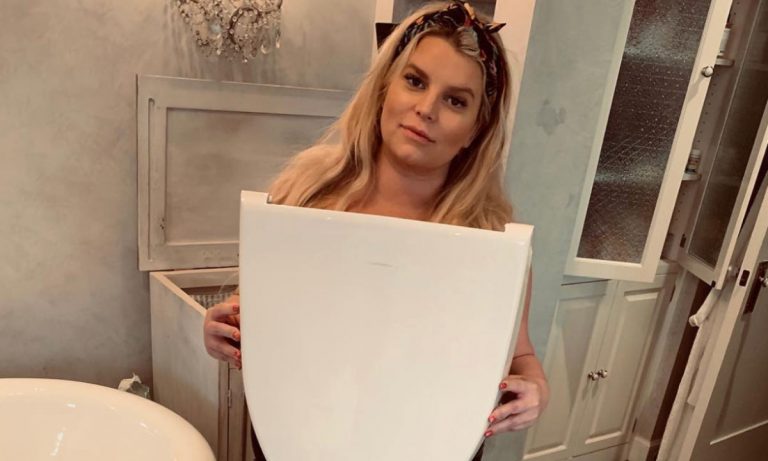
Teigen admits that after giving birth to her and Legend’s second child, son Miles, seven months ago, she’s still learning to accept her post-baby body.

“Every morning when I look at myself in the mirror, I’m like, ‘Oh, my gosh, how did it get here? My baby was, like, four pounds and I gained, like, 60 pounds, and that seems off!’” Teigen, who’s also the mother to 2-year-old daughter Luna, tells the February issue of Good Housekeeping. “But, you know, I think everyone’s body is just really different. That’s why, my posts of real mom s**t, and wearing the diaper, and having that mesh thing, and real postpartum business? I think as important as it is for people to see me do that, it’s also really important for me.”

RELATED: Chrissy Teigen Creatively Skirts Around Instagram’s Nudity Policies

“I think, in a way, we’ve forgotten what a regular body looks like,” she continues. “There are people out there who are struggling and I’m struggling, and it’s OK to come to terms with that being OK, to realize that it’s gonna be a bit of a journey.”

Katy Perry was suspended in 6th grade for humping a tree she called Tom Cruise

Katy posted a photo on her Instagram Stories of a suspension peport from when she attended Santa Barbara Christian School.

Over the photo, she wrote the caption: When I was suspended in 6th grade for humping a tree and I guess other stuff.”

The report itself, made out in Katy’s original name, Katy Hudson, proceeds to give several details that didn’t exactly seem necessary to include, like the fact that the tree was standing in for Tom Cruise.

https://twitter.com/katysecstasy/status/1084705377541939200

Madonna shaded over ‘retouched’ #10Yearchallenge post

As celebrities flaunt how they (supposedly) haven’t aged in 10 years with Facebook’s viral challenge, there are a few side-by-side pictures that haven’t gone over so well … like Madonna‘s new post.

The “glow-up challenge,” as it’s been dubbed, asks people to post their Facebook profile photo (or any old photo) from a decade ago next to a recent snapshot. The 60-year-old legend did just that, only the picture she chose from 2018 appears to be a tad edited.

RELATED: 5 Things We Learned From Madonna’s ‘Carpool Karaoke’

https://www.instagram.com/p/Bsp9stnhkgj/

These Women-Owned Companies Are Combining Weed And Wellness

Though only 27 percent of ganjapreneurs are currently women, that means the cannabis industry is beating U.S. businesses as a whole in terms of female inclusion. Women are increasingly turning to cannabis as a form of self-care, with menstruation, menopause, and sex being their top reasons for consumption. It would only make sense for women-owned companies to begin gaining traction in the industry: women know what women want, right?

Women-owned cannabis companies are creating products by and for women, challenging the stoner stereotype that 66 percent of women fear. Let’s face it, the notion that people who use cannabis are lazy couch-dwellers is an antiquated but still very real stigma. As more companies discover thoughtful ways for successful women to incorporate cannabis into their everyday routine, fewer women will feel the need to keep their consumption under wraps.

“Cannabis legalization is creating an insatiable appetite for information,” says Anna Duckworth, cofounder of Miss Grass. “Women are looking for alternative non-toxic, plant-based, holistic remedies for health and cannabis falls into all of those categories.”

RELATED: 5 Weird Ways In Which Marijuana Affects Men And Women Differently

“That’s why women are adopting cannabis as a wellness tool and making it a part of a much bigger approach to self-care,” she adds.

Women are proving that the market for cannabis products focused on health and wellness is growing, and won’t be stopping anytime soon. From edibles to skincare to greeting cards, here are the women-owned companies shaping the future of cannabis.

Treat Yourself

Touting healing creams, infused tarts, and CBD tinctures, Treat Yourself  founders Leone Posod and Cindy Pinzon offer healthy cannabis products designed with women in mind. Their famous Strawberry Rose Tart is packed with a 1:1 ratio of CBD to THC and made with superfoods like chia seed dough.

Kushkards

Designed by founder and artist Lauren Miele, Kushkards is basically weed-themed Hallmark. Her clever greeting cards are available for every occasion and each have a special spot to insert a pre-roll of your choosing for your very best buds.

https://www.instagram.com/p/Bsi02COBmTM/

Whoopi & Maya

You’ve probably already heard of Whoopi Goldberg and Maya Elisabeth’s brand, Whoopi & Maya. Their luxurious Rub and lavender-scented Soak are specially formulated to ease menstrual pain, and their Savor raw cacao also serves as a mood-booster and cramp-buster.

RELATED: Whoopi Goldberg On How Women Benefit From Cannabis Access

Kikoko

Founded by Amanda Jones and Jennifer Chapin, Kikoko has popularized the idea of “high tea,” with low-dose teas designed to induce certain moods. Their organic blends include Tranquili-Tea, Positivi-Tea, Sympa-Tea, and Sensuali-Tea, developed for sleep, fun, pain, and sex.

https://www.instagram.com/p/BslVMeMhOmh/

Moxie Meds

Founded by cannabis clinician Jessica Peters, Moxie Meds creates tinctures for women designed to ease symptoms associate with cramps, menopause, and other reproductive concerns. Her products include a Relief tincture with 1:1 of CBD to THC, and a Recovery tincture with 4:1 of CBD to THC.

Going Going Gone: Here’s Where You Can Find Banksy’s Famous Shredded Painting

0

One of Banksy’s most famous works of art is his 2006 ‘Girl With Balloon’, which you likely know by now self-destructed during a Sotheby’s auction in London last October.

https://www.instagram.com/p/Bokt2sEhlsu/

Since the artwork has been slightly tweaked, it’s been renamed ‘Love is in the Bin’ and it will be exhibited  at Museum Frieder Burda in Baden-Baden, Germany next month.

RELATED: Meet The Banksy Of Menu Art

The stunt, which was actually intended to shred the entire piece of artwork, is worth more now than it’s original state. The painting (in its new incarnation) is considered to be the first artwork ever to be created during a live auction.

‘Love is in the Bin’ is on loan to the museum from February 5 to March 3. According to a statement, Henning Schaper, the director of the Museum Frieder Burda, says they’re expecting a lot of interest, especially from young people and Banksy fans, adding:

But we don’t want to succumb to the temptation of putting the work on a pedestal. This certainly wouldn’t be what its creator would want either. Instead, we’re following his approach of comprehensively democratising art and are discussing how to make the work accessible to as many as possible.

The statement goes on to say that the exhibition will be accompanied by a symposium exploring strategies “to torpedo the art market while simultaneously giving it new momentum.”

New Jersey Voters Support Marijuana, Just ‘Not In My Backyard’

As New Jersey Governor Phil Murphy (D) faces internal strife and significant delays in his efforts to pass legislation that would legalize recreational marijuana, growing opposition to legal weed among New Jersey towns and municipalities poses yet another threat to legalization efforts in the state.

As of December 2018, at least 50 NJ towns/municipalities have passed preemptive bans on legal marijuana and cannabis-related businesses, including bans on marijuana sales, manufacturing, and farming. The number of towns/municipalities that passed legal weed bans has grown from just under 40 in September 2018 to its most current count of 50+ published last month. Meanwhile, only four NJ towns have officially stated that they would welcome legal weed.

Interestingly, despite the still-growing number of towns that have either already passed or are planning to pass bans on legal weed, support for marijuana legalization among New Jersey residents still appears quite strong.

According to an October 2018 poll from the Rutgers University Eagleton Center for Public Interest, of the 1,006 adult New Jersey residents who participated, 58% said they either strongly or somewhat support marijuana legalization, while only 37% said they were opposed. In addition, 64% of participants said that a regulated and taxed cannabis industry would likely benefit New Jersey’s economy.

RELATED: What States Will Legalize Marijuana In 2019?

Another poll conducted in August 2018 from Quinnipiac University surveyed 908 New Jersey voters and found that 62% said they support the legalization of marijuana for recreational use in NJ, and 33% said they do not. Meanwhile, 50% also said they support the sale of legal marijuana in their community, while 45% said they would not.

So, if the majority of NJ voters do actually support marijuana legalization, then why are more and more towns/municipalities choosing to ban legal weed?

In Chatham Township, for instance, local government decided to ban legal weed because they feared its presence alone would upend the progress they have made in controlling widespread substance abuse and teaching addiction prevention. In other places, like Hawthorne, they opted to ban legal weed because of projected zoning issues surrounding the construction of dispensaries and/or cannabis businesses in the town.

Some communities, like Wyckoff Twp., justify banning legal cannabis simply using their belief that marijuana is a drug that is harmful, and that legalizing marijuana would increase its presence in their community exponentially, which would be a detriment to public health, safety, and welfare in the Township.

RELATED: New Jersey Is Linking Criminal Justice Reform With Marijuana Legalization

The growing number of NJ towns/municipalities banning legal weed even though the majority of NJ voters say they support marijuana legalization is the result of the “not in my backyard” phenomenon. Although the majority of NJ voters say they support legal weed, the growing number of communities opting to ban legal weed suggests that the majority of NJ voters’ ‘support’ for  marijuana legalization is actually conditional on keeping legal weed and weed-related business out of their own communities.

Their fear? The construction and development of legal weed businesses to follow the passage of legalization will negatively affect their neighborhoods, local communities, and/or individual property values.

The “not in my backyard” phenomenon can become highly problematic for the fate of legal weed in New Jersey. If enough residents of enough towns in New Jersey refuse to accept weed-related construction/developmental projects in their own communities, then there will be no place for legal weed and related businesses to open, and therefore the entire cause for legal weed and the fight to legalize marijuana in New Jersey will have been for nothing.

Types Of Marijuana That Can Relieve Your Migraines

Treating migraines is among cannabis’ long list of healing power, but you can’t just consume any strain.

Let’s face it: migraines and the symptoms that come with them, suck. The light and sound sensitivity, the constant throbbing and the nausea – all are enough to have you reaching for the nearest bottle of pain relief to drown your soul in. But in all seriousness, what do you do when Excedrin isn’t cutting it and those weird at home remedies you googled (like drinking warm apple cider vinegar or making feverfew tea) don’t go according to plan? How do you relieve your migraines?

Well, the power is in the cannabis. Treating migraines is among cannabis’ long list of healing power, but you can’t just smoke any ol’ train. The key to effectively treating your migraine is knowing which strains will actually get the job done.

Know that there are multiple ways to consume marijuana, you can eat or drink it, rub it into your skin, vape, smoke and much more. Ask the budtenders at your local dispensary which products have the strains listed and then pick how you want to put it into your body.


via GIPHY

RELATED: Science: Why More Marijuana May Equal Fewer Migraines 

Cannatonic

This hybrid strain ranks high on the headache scale. Matter of fact, this bad boy is great for most pain and leaves you with a relaxed feeling thanks to its earthy and citrusy notes.

Dream Queen

Add this indica strain to your Dream Team. This girl is is perfect for fighting off nausea, on set by migraines. Pineapple and bubblegum scents combine to make this indica strain the relaxation inducing strain that it is.

Island Sweet Skunk

Sexy name, right? Island Sweet Skunk is just that: tropical like an island, sweet like a lollipop, but pungent like a skunk. Get pass the strange combination of flavors and you’re in for some serious headache relief from this sativa.

Mr. Nice

Mr. Nice is Mr. Right. This sativa is completely relaxing and it’s earthy aromas are a great migraine reducer. You’ll feel happy your headache is reduced and even more happy that this guy doesn’t give you too crazy of a body high.

Chocolope

via GIPHY

Meet Coffee’s more attractive cousin. Chocolope is perfect for the initial onset of a migraine because of it’s fast acting pain relief. You’ll also feel energized and refreshed from this sativa dominant strain.

RELATED: Will Medical Marijuana Ease The Pain From My Migraines?

Blue Dream

Blue Dream is a sativa dominant hybrid and the answer to your migraine prayers. The sweet blueberry aroma will soothe your pain while you experience happiness in a relatively sedated state. Winning.

Platinum Girl Scout Cookies

Rightfully named, Platinum Girl Scout Cookies will give you the same happiness and euphoria you experience when you open that box of Thin Mints or Samoas. Plus, it’s a well known pain reliever, perfect for targeting those pesky headaches

Khalifa Kush

Created for the OG Stoner himself, Wiz Khalifa, this hybrid strain is dank to say the least. It’s an exotic combo of pungent and lemon, but the benefits make this strain an all time favorite. It can tackle headaches and relax the hell out of you, with just a few hits.

Vortex

Let’s just say this 80-20 sativa dominant gets its name from the whirlwind of euphoria it’ll suck you into. But hey, that’s not always a bad thing, right? We think not, considering this bad boy is just what you need to target those painful pressure points.

California Orange

via GIPHY

This hybrid is as citrusy and relaxing as it sounds. Notes of sweet lemon deliver a slight buzz, if consumed in moderation, but most importantly, this bud is potent enough to eradicate the worst headaches.

Solving For CBD’s Funky Taste Before Beverages Can Go Mainstream

Mainstream consumer goods companies continue to throw out their fears of the cannabis industry and instead are embracing all things CBD (cannabidiol.) Last week it was the shoe chain DSW (NYSE: DSW) that signed on with Green Growth Brands (CSE: GGB) to sell its CBD products in the shoe stores. Today Tilray announced it was going to work with Authentic Brands and provide the CBD for its over 50 brands of goods.

These companies are pursuing topicals for skin like foot creams, lip balms, and muscle rubs.  CBD beverages though also show great promise for big brand companies. Cannabis research company Brightfield Group said in 2019 to look to continued CBD growth in mainstream retailers and more CPG (consumer packaged goods) companies are entering the space.

The beverage company New Age’s announcement of plans for a new line of CBD-infused beverages – a reveal that caused stocks to surge 528%– is a sign that CBD is banging down mainstream products doors, said Brightfield.

RELATED: 3 Ways To Mix An Oil Based CBD Tincture Into Your Drink

The only problem is that CBD tastes, well, funky. It’s usually described as having a bitter, earthy taste that takes some getting used to. The key to getting CBD beverages accepted by mainstream consumers is fixing for the taste problem.

Seattle-based Tarukino developed an emulsion technology called Sorse that has solved for consistency and taste by encapsulating cannabinoids in a water-soluble form that is odorless, tasteless and dissolves in water.

“The cannabis beverage industry today consists of products that smell like cannabis, taste bad and have an effect onset that takes longer than 20minutes. Tarukino solves all these issues,” said CEO Howard Lee.

The company has teamed up with California-based Caliva to bring cannabis beverages to the market. Caliva already produces flower, pre-rolls, and vapes and is known for its wellness options. Its products focus on motivating the mind, steadying the body, and inspiring creativity. Now it’s tinctures and beverages will use Tarukino’s technology in an exclusive agreement.

“After extensive due diligence, we are confident that Tarukino is the right nano-emulsion technology company to partner with,” said Dennis O-Malley, Caliva’s CEO.

RELATED: New York Restricts CBD-Infused Food And Beverages

According to sales rankings this past summer from Headset, the Caliva ranked as a top brand across its three product categories: pre-roll, flower, and vaporizer. In the pre-rolled joint category, Caliva led the rankings in the top five slots with its House Doobies, Dogwalkers, Super Sessions, and Toasties. In the cannabis flower category, the top four spots belonged to Caliva as well, with the company’s breakout hit Reef Leaf taking the top slot.

“Our rankings have become a key indicator of quality and scale in California,” says Cy Scott, CEO of Headset. “The category, segment, brand, and product trends continue to tell the narrative of the growth in the California cannabis market, and looking at real-time sales data, Headset is identifying which companies are establishing themselves as the major brands as this market evolves into the world’s largest cannabis economy.”

The first beverages are expected to be available for purchase in the first quarter of 2019 in the San Jose store.

This article originally appeared on Green Market Report.

AG Nominee William Barr Announces Intention To Respect State Marijuana Laws

During Senate confirmation hearings Tuesday, the cannabis industry waited to see if Donald Trump’s Attorney General appointee William Barr would follow his predecessor Jeff Sessions’ footsteps of prohibition-minded strategies or establish a new cannabis-related protocol in the Justice Department. Instead, Barr told lawmakers his “approach to this would be not to upset settled expectations and the reliant interests that have arisen as a result of the Cole memorandum.”

“I’m not going to go after companies that rely on the Cole Memorandum,” Barr added.

In response to further questioning from Sen. Cory Booker (D-NJ), Barr clarified he believed that Sessions had made a mistake in rescinding the Cole Memo, which discouraged federal prosecutors from going after law-abiding cannabis operations in legal states.

RELATED: How Will The Incoming Congress Shape Marijuana Legalization?

“As Attorney General, William Barr has signaled that he would essentially revive the Cole amendment and take a ‘hands-off’ approach to those states that have legalized marijuana for responsible adult and medical use,” Marijuana Policy Project executive director Steven Hawkins told The Fresh Toast in a statement. “This is a welcome reversal from the policies of Jeff Sessions and should mean less emphasis by federal prosecutors on low level marijuana offenses.”

However, Barr stated his belief in federal prohibition of marijuana despite this “hands-off” approach. He emphasized the need for Congress to fix the disparity between state and federal law. Currently two bills have been submitted in Congress that would address the issue — the STATES Act and the Marijuana Justice Act. Both would allow states to determine their laws without federal interference.

“State marijuana laws are successfully replacing criminal markets with responsible small businesses and it is long past time for Congress to enact legislation that respects those laws,” Aaron Smith, executive director of the National Cannabis Industry Association, said in a statement. “We will continue to work with lawmakers to make sure it is a priority during this session.”

WATCH: People Are Going Nuts Over This Perfect Gymnastics Routine

The floor routine that earned UCLA gymnast Katelyn Ohashi a perfect score at this year’s Collegiate Challenge has gone viral, thanks in part to her athletic ability, but also for — what has now become — her signature Michael Jackson moves.

The 21-year-old, two-time All American from Seattle dazzled judges last year with her MJ-inspired routine at the Pac-12 Championships, where she received a 9.95. This year, she opted for a musical medley along with a little more pep in her step, which likely earned her that perfect 10 — the fourth one in her floor career.

RELATED: 3 Reasons Athletes Are Expected To Turn To Marijuana In 2019

Here’s Katelyn’s latest routine:

Here’s Katelyn channelling her inner Michael Jackson last year:

But those viral videos don’t come without a price. According to a 2018 Lenny Letter article, the young gymnast was broken by the sport:

In 2017, Ohashi started posting diary entries from her competing days in an effort to start a conversation around body image surrounding the sport. “I’m used to waking up to the taste of blood or iron in my mouth, as if I might almost throw up from being so hungry,” she wrote in June 2010, at age thirteen. “I am completely and utterly in disgust with myself,” she wrote in November 2013, at age sixteen. “By 2012, I probably had like three stress reactions in my back,” she tells me today. “Two stress fractures in my fibula. My back is permanently messed up. I’ve had two shoulder surgeries.”

Ohashi described the culture of elite gymnastics as “abusive, restricting.” She underwent shoulder and back surgery in 2014, leaving her unsure of her future in competition.  Reads Lenny Letter:

So she called up Valorie Kondos Field (known as Miss Val), the head coach at UCLA, one of the most popular collegiate gymnastics programs. Field, a former dancer, had no prior experience in gymnastics before being hired by the UCLA team in 1983. She is known for her refreshing approach to the sport, championing individualism and enjoyment over titles, and encouraging gymnasts to treat the beam and floor as a stage.

Said Ohashi, “I’ve discovered things from being severely injured, to having gymnastics being taken away from me, and I realized this isn’t forever. When I was in elite, [I was] living in black and white, whereas now I feel like I live more in full color.”

Don't Miss Your Weekly Dose of The Fresh Toast.

Stay informed with exclusive news briefs delivered directly to your inbox every Friday.

We respect your privacy. Unsubscribe anytime.