Sunday, July 5, 2026
Home Blog Page 771

How You Can Read More Books

The benefits of reading are tremendous, with numerous studies listing out all it does for your brain and with readers from all across time documenting that great and singular feeling of getting lost in a novel.

Unlike a TV show or a movie, books demand more of you. You can’t trick a book and skim through it as you go through your emails. Well, you can, but it won’t be much fun. Reading demands that you put the world on hold for a few minutes and for you to access that focused state that gets progressively harder to achieve as the world evolves and as our attention span grows shorter.

A valid resolution or goal for the new year is to read more, and it’s completely possible if you’re patient and are willing to put in the time. Check out seven tips that’ll help you get more reading done:

Make it a routine

https://giphy.com/gifs/book-TwJ6ix2kjxloQ

RELATED: The Ultimate Summer Reading For The Cannabis Enthusiast

The best way to develop a new habit is to schedule a time for it and to stick to it as much as you can. Set a time for reading either on mornings, during commutes, or at night, where you’re sure that you’ll be able to concentrate and read a couple of pages.

It’s also important for you to choose books that interest you, be that horror, romance or genre novels. Avoid jumping into a super intense yet critically acclaimed story that will discourage you from reading. Start off slow and make reading a pleasure instead of a chore. Once you have a handle on the habit, jump into the more serious stuff.

Set a daily page goal

https://giphy.com/gifs/tonyawards-tonys-tony-awards-cCaLV8fuGnp45VBdG7

Start off slow by reading five or ten pages a day, increasing your amount of pages the more you develop your reading habit.

Have a book on you at all times

https://giphy.com/gifs/season-10-the-simpsons-10×5-l2JdZHwRb9E5bxroY

It’s easy to remember to read if you carry a book with you when you have time off. Instead of scrolling through your phone, keep a book on hand and read whenever you get the chance, be that on a lunch break, during your commute, or while waiting for your doctor appointment.

Find good reading lists and recommendations

https://giphy.com/gifs/success-brenda-marlowe-8hY8FkKfcrux2

In order to love reading you need to find books that draw you in and that make you feel personally invested. It’s impossible to keep track of all the books that come out on a yearly basis, so go to bookstores and look through the staff picks or do your research online and create your own reading list.

Read physical books

https://giphy.com/gifs/portlandia-season-1-episode-2-l3mZkzLykD0izy8qQ

If you find yourself ignoring your kindle and your e-books maybe what you need is to read physical books. These give you a visual representation of your progress and provide a break from all the screens in your life, which may encourage you to read more than you think.

Buy a bookshelf

https://giphy.com/gifs/sarah-brian-theory-JLW2bwIunSVxu

RELATED: What You Should Read Before Seeing ‘Star Wars: The Last Jedi’

Bookshelves can serve as visual reminders for reading, keeping all of your books in a visible place and encouraging you to interact and reorganize them. Put your bookshelf in a transited place in your house, forcing you to see them everywhere you go. Make it a habit to shuffle around its contents, adding in and getting rid of books every couple of months.

Keep track of what you read

https://giphy.com/gifs/snl-saturday-night-live-season-42-l0Iy1TMlpD6Wu41mE

A good motivator for readers is keeping tabs on what you’re reading, showing your progress and increasing your knowledge of books. Have fun with your lists, write them down by hand or on Excel, and you’ll see that in a few months your reading output will have increased significantly.

What We Can Learn From The Chinese Medical Marijuana System

China is more than 5,000 years old with a legendary history of herbal pharmacology. It should be no surprise that Chinese medical marijuana is thriving.

The truth is out there, as two fictional characters once reminded us. Researchers from Hong Kong Baptist University were in search of the truth as it related to the historical use of medical marijuana in traditional Chinese medicine. They published a review of classic medical literature from Chinese antiquity as recorded in more than 800 texts collected in a set called the Complete Ben Cao or the Compendium of Materia Medica.

It is widely held to be the most complete and comprehensive resource regarding the practice of traditional Chinese medicine. They focused on the texts of five different dynasties in history, translating and cross referencing information about about specific uses of cannabis. 

RELATED: Dig This! Cannabis Found In Ancient Chinese Tomb

One interesting note is that, unlike Western fascination with cannabis “buds” or flowers, the Chinese documented using all parts of the plant: seeds, stalks and roots. It is hypothesized that, because China so valued its traditional hemp production, the plant continued to be bred and selected based on its fiber and seed food quality rather than resin production in its flowers.

Hemp cultivars became the favored sons. That said, the psychotropic potential of the plant were well known, as evidenced by the quote, “excessive consumption causes one to see ghosts and run about frenetically.”

The authors found other interesting historic snapshots:

  • In the 6th century, author Tao Hongjing wrote, “adepts (believed to be Taoist monk alchemists) take cannabis flower (mabo) with ginseng and know of things that have not yet come.”
  • In 1070, physicians would compound a cannabis seed wine to treat pain so severe that it caused the patient to be immobile.
  • The first well documented use of cannabis was for pain relief 1127-1270 AD. The flower of the plant, called mahua, was combined with datura flower, a highly psychotropic plant. The mixture was known as “sagacious sleep powder” and caused a heavy, dazed sleep.
  • Historic cannabis use has been documented among Silk Road from the Qing Dynasty (1644–1911 AD).

Historic use of opium and some highly hallucinogenic alkaloid based plants is well documented in China. However, researchers found, “there is little evidence that cannabis was either abused or prohibited in China prior to the first documented seizures of imported cannabis products in Xinjiang in 1936.” In some regions, it was simply part of the everyday pharmacopeia for hundreds of years.

RELATED: 5 Uses For Hemp Besides CBD Oil

Research like this brought to us from Hong Kong is a humbling reminder that as we seek more information about therapeutic uses of cannabis that we must look not only forward to future research.

We must also seek to benefit from the ancients, those hard-working and passionate people who sought health centuries before we arrived on the scene. To not seek their consul would be an arrogance we cannot afford.

Here’s Every Cannabis College Course You Can Take In The US And Canada

It turns out if you’re interested in starting a career in the cannabis industry after graduation, you can jump on a path at many schools that’ll help you land a suitable position in the industry while giving you valuable experience. If you live in Canada or the U.S., there are various major cities that offer cannabis courses and programs. Keep reading to find out where you can study cannabis and get legitimate college credit for it.

Employment Cannabis Boom in Canada

Since Canada federally legalized cannabis in October of last year, the number of employment opportunities has significantly grown. In particular, according to Indeed Canada, openings for cannabis-oriented positions have tripled over the past year. So far though, Canada has roughly 150,000 workers within the cannabis industry. But according to chief science officer Roger Ferreira of Beleave Kannabis Corp (an Ontario-based cannabis company), there’s been a lack of experienced Canadian staff members.

To meet demand, many Canadian colleges and universities have started offering cannabis courses to interested students, often at the urging of numerous cannabis companies.

RELATED: Southern Illinois University To Study Hemp And Marijuana

“Nearly a dozen colleges nationwide are adding or expanding courses designed to train the next generation of marijuana producers, often at the nudging of area employers,” reports the Washington Post.

Cannabis Courses Offered In Canada

Overall, each Canadian province has a different approach regarding cannabis. Although the plant is now federally legal, all provinces have the right to decide whether they want to offer cannabis courses or programs at various colleges and universities. Below is a breakdown of cannabis courses, programs, and/or certifications that are offered by various Canadian schools.

Ontario

A small college in Ontario called Durham College recently launched their own “Cannabis Industry Specialization Program” this past Autumn. Additionally, Bill MacDonald, an Ontario-based science professor decided to create a “Commercial Cannabis Production program” at Niagara College. This program became available last September, and more than 300 people have applied to be in it. MacDonald released the following statement about the program’s growing demand: “I had licensed producers come to the college and say, ‘We need highly trained personnel.’ The demand is just huge.”

Furthermore, Ontario Loyalist College has a partnership with a British Columbia university called Kwantlen Polytechnic University (KPU). The Ontario-based college employs KPU’s class material through distance education. Then, Boreal College in Toronto offers a cannabis cultivation course to students. They also debuted their own cannabis production technician program this past Autumn. Lastly, sometime this month, the University of Ottawa will debut their two-week long crash course in cannabis laws.

Alberta

Recently, Alberta got involved in a process to train cannabis workers. They received an application from a private Canadian career college, but this is still a work in progress. Mount Royal University in Calgary started offering three online cannabis classes this past September.

Quebec

In January of 2020, McGill University in Montreal will officially launch a graduate degree program in the area of cannabis production. However, this program will only be available to students who possess a background in botany and/or hold a bachelor’s degree in a related field.

New Brunswick

Although New Brunswick isn’t as far along with cannabis cultivation and employment opportunities as other provinces are, they’re moving towards offering cannabis cultivation technician programs. Specifically, the New Brunswick government is in the process of partnering with Dieppe Community College as well as Moncton-based Organigram to launch a 12-week long cannabis program.

Currently though, the Community College of New Brunswick offers a twelve-week long medical cannabis cultivation course.

Nova Scotia

Nova Scotia is also moving forward with launching cannabis courses and programs. One example is St. Francis Xavier University, which signed a three-year agreement with THC Dispensaries Canada Inc. Roughly 20-30 students will be able to eventually work at the facility of THC Dispensaries Canada Inc. for college credit.

British Columbia

In Vancouver, British Columbia, Kwantlen Polytechnic University (KPU) offers students the opportunity to attain a “Retail Cannabis Consultant” certificate. The university also debuted their own cannabis career training program, which consists of various non-credit online classes that last for thirteen weeks. The leader of this program and director of emerging business at KPU (David Purcell) stated: “We’re breaking down these stereotypes with evidence-based education. We’re the anti-reefer madness.”

RELATED: How Will The Incoming Congress Shape Marijuana Legalization?

Then, Camosun College offers a cannabis cultivation course. Whereas, the College of the Rockies offers a cannabis retail specialist program that combines customer service with science. Lastly, third and fourth-year college students enrolled in Okanagan College in Kelowna can learn about cannabis in an elective class.

Cannabis Courses Offered In U.S.

Although Canadian provinces are taking concrete steps to support schools that create cannabis courses and programs for students, many American colleges and universities are trying to do the same. Below are some top name American colleges and universities that offer different cannabis courses, programs, and/or certificates.

Colorado

At the University of Denver’s Daniels College of Business, a course about the business of cannabis is offered. Then, the University of Denver’s Sturm College of Law offers a course for law students on the topic of what to know when representing a cannabis client. Whereas, at the University of Denver, a course called, “Cannabis Journalism” is available. There’s also Cannabis Training University, which offers an online cannabis program.

However, let’s not forget about Trichome Institute, The Grow School, and Clover Leaf University that all offer their own variation of cannabis courses and/or programs.

Ohio

This past Autumn, Ohio State University unveiled a cannabis course called “Cannabiz: Exploring the Legalized Cannabis Industry”.

Michigan

Northern Michigan University offers a four-year medicinal plant chemistry undergraduate degree, which will expand into educating students about medical cannabis and the growing cannabis industry.

New Jersey

Stockton University recently gave students the opportunity to minor in cannabis studies. This opportunity became available last year, and the program consists of five classes, an internship placement, and two required classes on the topics of cannabis law and medical cannabis.

RELATED: How Are College Campuses Responding To Legal Marijuana?

Vermont

The University of Vermont now offers a few cannabis courses. The university has a “Cannabis Science and Medicine Program”, which also includes a continuing medical education program for those pursuing medical-related degrees. Surprisingly, this university was the first to launch this type of cannabis science program.

Washington State

The University of Washington offers a cannabis training program called “Medicinal Cannabis and Chronic Pain”. This program is specifically designed for medical professionals including soon-to-be nurses, physicians, and other healthcare professionals.

California

At the University of California in Los Angles (UCLA), students can partake in the school’s cannabis research initiative. Whereas, at the University of California-Davis, there are two cannabis courses that are a part of the University of California system.

Currently, the school offers a class called, “The Physiology of Cannabis”, and they plan to offer other courses that focus on cannabinoid education. Additionally, there’s an upper-level course that focuses on the health impact, risks, and benefits of cannabis.

Lastly, Oaksterdam University in Oakland, California offers its own cannabis classes as does Humboldt Cannabis College.

Overall, the demand for cannabis continues to grow, but so does the demand for qualified and experienced cannabis professionals. If you wish to have a career in the cannabis industry now or in the future, it’s recommended to enroll in some type of cannabis course or program where you can receive valuable experience that can help you stand out to employers. The more qualifications and certifications you have, the better.


Cannabis Stocks Started Strong But Ended On Sour Note In Fourth Quarter

The Green Market Report (GMR), the cannabis industry’s most trusted source for credible in-depth financial and economic reporting, today released its 2018 Cannabis Company Index Q4 Summary Report. The report can be downloaded at GreenMarketReport.com/Reports.

The GMR Index follows the trading activity of 30 selected public cannabis companies that denote market dominance. After rising 56% in the third quarter, on a plethora of good news, the Index plunged along with the broader market in general which saw stocks give back most of the year’s gains. The S&P 500 fell 9.2% in December, while the Horizons Marijuana Life Sciences ETF (HMMJ) declined by 39% in the fourth quarter. The GMR Index managed to gain 5.5% for the entire year, while the HMMJ actually dropped 19% for the year.

The fourth quarter got off to a good start as stocks began ticking higher at the beginning of October, but then halfway through the month, the selloff began. While there was a slight recovery at the beginning of November, stocks took another downward turn and never looked back.

RELATED: Green Market Report: Cannabis Trends for 2019

History continued to be made in the cannabis industry during the last quarter. On October 17, Canada began the first day for sales of adult use cannabis in Canada – making 1017 the new 420. The mid-term elections in the U.S. were the next big event for the quarter. More states legalized cannabis in this year’s midterm elections in November, with Michigan becoming the latest one to legalize adult-use cannabis. Missouri and Utah both approved medical cannabis. If that wasn’t enough for the industry to cheer about, in December lawmakers in D.C. passed the 2018 Farm Bill, which included an amendment legalizing hemp.

“The fourth quarter of 2018 was very challenging for cannabis industry stocks as share prices plunged as stocks, in general, entered bear market territory. Legalization of hemp in December set the stage for recovery as cannabis stocks have mostly moved higher in the early days of 2019,” stated Debra Borchardt, CEO of Green Market Report.

The best performing stock in the GMR Index was Charlotte’s Web Holdings (CSE: CWEB) which managed to end the quarter neither gaining or losing. Remaining flat was a huge accomplishment.  The company stands to benefit greatly from the legalization of hemp and hemp-derived CBD products.

RELATED: There Are More Cannabis Workers In The US Than Librarians Or Pilots

The Index decided to add Acreage Holdings (CSE: ACRG-U) as that company continues to add to its portfolio and now has a presence in 19 states. iAnthus (CSE: IAN) is acquiring MPX Bioceutical and is also getting added to the Index. While the Index was sad to let MPX go, the substitution is just as stellar.  Cresco Labs (CSE: CL) is added as this multi-state operator focuses on markets with high barriers of entry. Finally, Florida-based Trulieve (CSE: TRUL) was added as the company continues to report increasing revenues and has embarked on an expansion strategy outside of the state.

“Looking ahead to 2019, we expect to see the industry adjust to the legalization of help and what that means for hemp-derived CBD products,” added Borchardt. “We expect the industry will experience more consolidation and even more cannabis companies to become publicly traded stocks.”

Scientists And Experts Say Anti-Marijuana Book Misunderstood Their Research

If you have any burgeoning interest in cannabis and drug policy, you probably have heard of Alex Berneson’s new anti-marijuana book Tell Your Children: The Truth About Marijuana, Mental Illness, and Violence this past week. He’s experienced the kind of book coverage an author dreams of in 2019, with a very notable piece of publicity in the New Yorker by Malcolm Gladwell.

Berenson’s main position is that he’s anti-legalization, but pro-decriminalization. This contention is informed by the following sentences in his book, first highlighted by Vox: “Marijuana causes psychosis. Psychosis causes violence. The obvious implication is that marijuana causes violence.”

Readers of this site will likely approach Berenson’s book with skepticism. After all, Berenson titled the book Tell Your Children, a knowing wink to the 1936 film Reefer Madness, which was originally titled Tell Your Children. While the pros of cannabis legalization are many—ending the War on Drugs, properly studying the medicinal benefits, and limiting criminal activity surrounding illicit drug trade, including at the border—the cons still require a closer look as we undergo one of the more monumental changes in drug policy over the past century.

RELATED: Sorry, But Malcolm Gladwell Is Plain Wrong About Marijuana

Curious observers of Berenson’s press coverage will notice a disturbing trend: the scientists behind the research which forms Berenson’s negative marijuana conclusions in the book have all emerged to state one thing—Berenson misinterpreted the research.

First, you have RAND Drug Policy Research Center co-director Beau Kilmer. Gladwell quotes Kilmer in his piece for his warning to Canadian parliament about cannabis. Kilmer “tweeted in response to Berenson a rather comprehensive study showing, ‘Marijuana use does not induce violent crime,’” as Rolling Stone pointed out.

You also have Mark Kleiman, drug expert and NYU professor who has also expressed caution over bullishly legalizing marijuana at any cost. In his book, Berenson asserts that violent crime rose in Alaska, Colorado, Oregon and Washington—the first four states to legalize adult-use cannabis—in 2014. But, as Kleiman told New York Magazine, “Nothing interesting happened with regard to pot in 2014, but there was a national uptick in homicide in 2015–2016.”

Via NYMag:

Despite Berenson’s claim of “sharp increases in murders and aggravated assaults since 2014” in Oregon, for example, the FBI reported that the murder rate there went up a grand total of 1.0 percent from 2015 to 2016, as compared to a nationwide uptick of 7.9 percent, and then dropped by 11.6 percent between 2016 and 2017, a significantly steeper drop than in the rest of the country. If one insists on positing a tight causal relationship between pot laws and murder rates, one could just as easily argue that Oregon’s homicide trajectory has been softened by pot legalization in these years, at least relative to national trends, saving a number of Oregonians’ lives.

Both Gladwell and Berenson heavily lean on 468-page report titled “The Health Effects of Cannabis and Cannabinoids” by the National Academy of Sciences, Engineering, and Medicine. Here is where the potentially troubling link between marijuana and schizophrenia emerges. But Ziva Cooper, research director at UCLA’s Cannabis Research Initiative and committee member on the National Academy’s report, told Rolling Stone that Berenson misinterpreted their conclusions about schizophrenia.

“To say that we concluded cannabis causes schizophrenia, it’s just wrong, and it’s meant to precipitate fear,” Cooper said, mentioning the association between schizophrenia and cannabis use required more evidence before drawing any definitive conclusions.

“People who have schizophrenia are also known to be very heavy tobacco smokers, but we don’t say that tobacco causes schizophrenia,” she added.

RELATED: Using Medical Marijuana For Anxiety Relief: The Dose Is Key

The list goes on for these type of comments. Vox did a comprehensive breakdown of Berenson’s claims with refutations from other significant data and the scholars behind them. (An example: Berenson leans on Home Grown: Marijuana and the Origins of Mexico’s War on Drugs by historian Isaac Campos for his research on Mexico and drug violence. Campos emailed Vox to say Berenson “pretty badly misrepresented” his work.) Or you could view a similar breakdown in the New York Times, positing how we can reasonably view marijuana’s potential risks without fear mongering headlines.

Overall, it appears Berenson hand-selected data and research that supported his thesis and omitted any counterevidence that could portray a more balanced look at marijuana legalization. He also mistook correlation for causation, as Cooper told the Times.

I won’t pretend to be an expert on drug policy or on marijuana research, but I will say this: When a bunch of other really smart people say your misinterpreting their work your findings are based on, maybe it’s time to re-examine those findings.

This Picture Of An Egg Just Beat Kylie Jenner’s Instagram Record

A picture of a plain old egg just became Instagram’s most liked post. Kylie Jenner’s pregnancy announcement took this coveted spot after nine months of intrigue and speculation regarding her pregnancy and relationship with Travis Scott.

Egg Gang, an Instagram account with just one post, uploaded the picture of the egg on January 4th, directly stating that they wanted to break Kylie Jenner’s record. The post beat Jenner’s record late Sunday and it currently has 32 million likes.

RELATED: Kylie Jenner Secretly Announces New Makeup Instead Of Pregnancy

The Washington Post spoke with an anonymous member of the Egg Gang who’s located in London. In an email interview they said the idea of the egg post germinated during their first Friday of Dry January.

“I thought it would be an interesting experiment to try and beat the record with something as basic as possible. Which led to me deciding on the egg. I guess it’s also a comment on celebrity culture and how fragile and easily cracked it is (pun intended),” they said.

Viral social media posts have become a staple of sorts in the last couple of years, with random items like eggs and chicken nuggets dethroning celebrity images and the like. It’s almost as if we like these pictures out of spite, to remind celebrities that they don’t have that much power.

As for the Egg Gang, their next logical step is selling merchandise. See you soon with your $1,000 egg t-shirts.

How Marijuana Stock Photography Got Out Of Control

This past summer, the podcast CANADALAND released an episode titled “The Legend Of Weed Toque Girl” which took listeners through an uncannily challenging search for the subject of an accidentally iconic image: a young girl with bright white sunglasses, exhaling plumes of smoke and wearing a toque (you might call it a beanie) with WEED knitted into the folded-up brim.

Multiple photojournalists have taken similar pictures, from 420 festivals all over the world, and they often end up leading a news story. Even if that news story has nothing to do with a cannabis festival and has more to do with, say, environmental issues or a survey tracking the public’s current perception of cannabis.

Before arriving at the juicy interview with the long lost “weed toque girl,” (aka ), the CANADALAND episode checks in with freelance photographer, Justin Tang who, besides capturing Trump, Obama, and Trudeau for the Canadian Press has also lensed some 420 festivals, to get his perspective on these festival images.

RELATED: Professional DSLR Photos Vs. iPhone Camera: What’s The Dif?

As a news photographer, Tang explains that he wants to tell a story in one image, a “quick read” so that someone doesn’t even have to rely on the caption to understand what is going on in the story. Moreover, at a 420 festival, he’s looking for someone doing something out of the ordinary. He’s the photographer who pulled the trigger on weed toque girl.

Once a photo like that is submitted to a press agency, photographers like Tang don’t have much control over which stories the images become paired. That’s up to the photo editor, and photographers like himself get paid once for the photo, no matter how often the image is used.

The practice of using such images so prolifically, despite the subject matter of the story is what Jag Davis of the Drug Policy Alliance (DPA) calls a harmful depiction of the average cannabis consumer. “It gives the wrong impression, and there’s like no other serious civil right and racial justice issue that would be treated in such the condescending way,” says Davis.

Tired of seeing the played-out themes of green leaves and “stoners” laying out on lawns during a 420 festival, the DPA tried to do something about it.

In 2015, they created a set of free-to-use normcore stock images that they felt better exemplified the diverse nature of the cannabis consumer, namely those using the plant as medicine. The photos depict subjects of various age, race, and consumption methods. Although outlets like The Guardian and Vice did use the pictures for a time, it’s nearly impossible to find the DPA images in play any more.

Photo by Darrin Harris Frisby/Drug Policy Alliance

Toronto photographer and canna-business owner, Patrick Moher, calls it a symptom of the day and age. He identifies two things influencing the media when it comes to choosing images for cannabis stories: a lack of good, realistic image sources, and the muddied waters that represent cannabis marketing regulations. Photo editors keep relying on the same sources—Getty Images is a prime example—only to return with the same stigmatized images of cannabis activity.

RELATED: How Cannabis Sommeliers Are Making Dinner Parties Way More Fun

Photographers will regularly create lifestyle images and submit them to Getty with the hopes of having those images licensed out by news outlets and marketers, but without clarity on how to depict cannabis—de-stigmatized, and don’t forget unsexy—the efforts of a cannabis illiterate photographer could be a waste of time.

So how do we solve the recycling of stigmatized weed image in the media? Davis suggests simply that photo editors get more creative in their use of images.

Moher, who spent this weekend photographing a cannabis event of sorts—the Lift & Co. Expo in Vancouver offering a much more buttoned up and lanyard-filled version of the 420 festival—says he would like to create a ton of modern, clean, vibrant lifestyle imagery for the contemporary cannabis consumer and is taking steps to become more familiar cannabis marketing compliance before proceeding.

How To: 5 Tips On Getting The Best Buds For The Buck

As more states legalize marijuana, consumer are discovering more and more varieties. Expert growers are creating a new market for the cannabis aficionado with a more refined palette. How do weed tastings fit in?

The industry is slowly developing into a scene that reminds many of the boutique wine or craft beer industries. Yes, consumers can now tailor their herb purchases to their own unique taste and style.

“This is similar to the wine industry, which depends on defined varieties such as chardonnay or merlot for high value products,” said Jörg Bohlmann, a professor in the Michael Smith Laboratories and faculty of forestry at the University of British Columbia. “Our genomics work can inform breeders of commercial varieties which genes to pay attention to for specific flavour qualities.”

Bohlmann says the economic potential of a regulated cannabis industry is huge, but a current challenge is that growers are working with a crop that is not well standardized and highly variable for its key natural product profiles.

“There is a need for high-quality and consistent products made from well defined varieties.” he said.

With that in mind, here are some tips for you to consider when selecting the type of marijuana that’s perfect for you:

What’s That Smell?

Some connoisseurs prefer their cannabis to have a citrusy, lemony aroma. Others are into an earthy smell and still others pine for the piney odor. Like wine or beer, there is a type of marijuana — or strain — for everybody.

RELATED: Why Your Marijuana Smells Skunky

Terpenes are essential oils in cannabis that provide the fragrance in foods and herbs. When you take a whiff of basil, for example, what you are smelling are the terpenes. Cannabis strains also have unique terpenes that provide specific aromas. Some strains smell spicy (caryophyllene) or floral (linalool) or piney (alpha-pinene).

Nearly 200 terpenes have been found in cannabis. The terpenoid profile varies wildly from strain to strain. Martin A. Lee, a cannabis expert, author and co-founder of Project CBD, has studied the science of terpenes and sees a future in which companies will manufacture “made-to-order marijuana extracts with a full array of terpenes artfully tailored to meet the needs and desires of individual users.”

But that’s the future. For now, take the time to smell the flower. Whether you like floral or musky or citrusy, there is a bud for you.

Does The Nug Look Healthy?

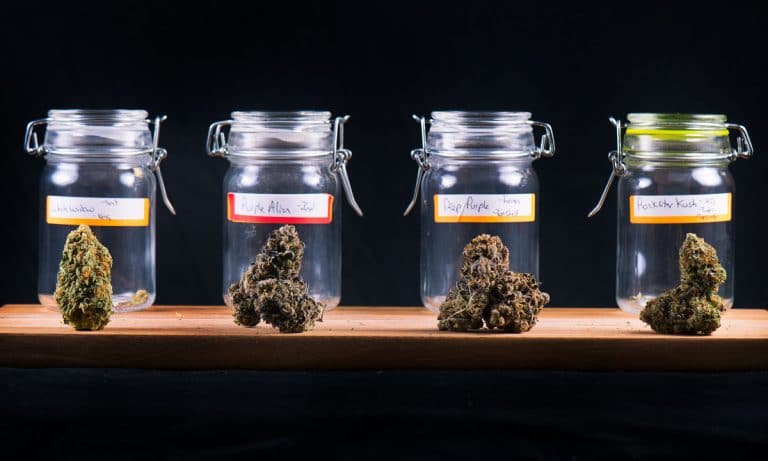
Ideally, the marijuana bud will look full and plush. Also take a look and see if you see hairs of different colors (purples, yellows) and you can easily identify if the bud is loaded with trichomes, the almost microscopic crystals covering the bud. If it is a premier nug, it may look like it’s covered in frost. Most of the plant’s essential oils are found in the trichomes.

So look for frosty nugs. Most experts prefer large buds and most professional trimmers are great at shaping the nugs to appeal to the consumer’s visual aesthetic. But small buds can pack a punch, too. Look for colorful hairs and frost.

Give It A Taste

When you smoke marijuana, the act of combustion will certainly alter the taste. The best way to experience the flavor of cannabis is by vaporization. This method allows the consumer to truly taste the terpenes and evaluate it. But if you are a smoker, then you’ll need to judge the taste after lighting it.

Have you ever seen a sommelier taste wine? It may look pretentious, but these pros know what they’re doing. To properly taste smoke cannabis give this method a try:

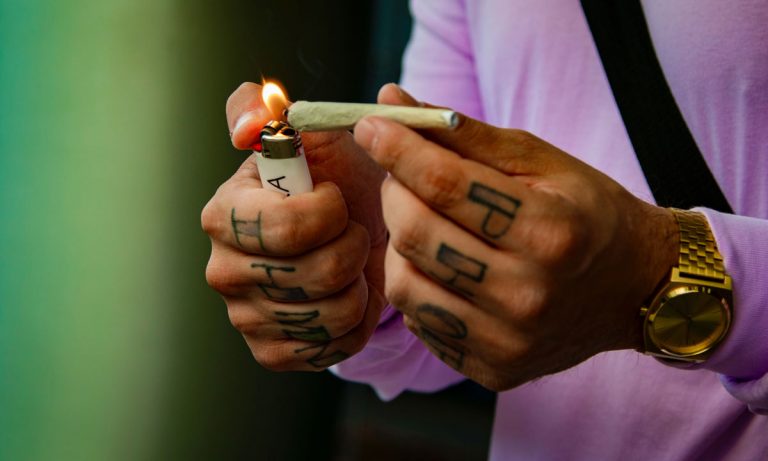
Take a medium toke off the joint or pipe. Let it fill your mouth. Do NOT hold it in until your lungs give out. Just let the smoke coat the tissue in your mouth. Open your mouth and gently exhale. Once your mouth is clear of smoke, stop and assess the taste. Are you experiencing any of the terpenes? I suggest doing a second small toke to verify your first impressions.

RELATED: How Cannabis Sommeliers Are Making Dinner Parties Way More Fun

For some tokers, especially beginners, two hits may be enough to feel slight euphoria — depending on the potency. Clearly, this is not like wine tasting. Leave the challenge of multiple tastings to the experts.

How Is It Working For You?

This, obviously, is the most important part and the often the most difficult to judge. How high does it get you? Do you feel lazy? Happy? Goofy? Creative?

It is wise to take notes. Keep a journal and record how you react to each strain of cannabis. And do NOT listen to how it makes others feel. What makes you creative may make your friend lazy. Everybody reacts to cannabis differently, which is why it’s important for you to do your own homework. Relying on the recommendations of others may lead you astray.

RELATED: Here Are The Differences Between Sativa, Indica And Hybrid Marijuana

Besides, the joy of personal discovery is part of the benefits of cannabis.

Why Touching It May Not Be Proper Etiquette

It is not a smart idea to pick up someone’s bud and examine it clumsily in your hand. The trichomes are fragile little buggers and a heavy touch will almost certainly make them fall from the bud.

Handle with care. It is, after all, a delicate flower. Treat it like one.

Citing Pressure From Nearby States, Rhode Island Gov. Proposes Full Marijuana Legalization

To prevent surrounding legal marijuana states from creating chaos in Rhode Island, Governor Gina Raimondo wants to legalize it for recreational use. It is part of her 2019 budget proposal, which calls for the allotment of millions of dollars to get this new business sector up and running.

Although the budget projects this money will be recouped through sales and excise taxes, some government officials, while understanding of the governor’s position, are still a bit squeamish about her approach.

“As our neighboring states move forward with legal marijuana, the Governor is mindful of its impact on Rhode Island, from law enforcement to public health,” Raimondo’s press secretary Josh Block said in a statement.

RELATED: East Coast Weed: Rhode Island Wants Rec Marijuana, Vermont To Decrim

The governor’s latest budget, which would take hold in early July, is not a free-for-all of marijuana like we’ve seen in other states. Instead, the proposal would ban home grows and cannabis products with higher potency. Most states have established a single dose as meaning 10 milligrams of THC, but those products in Rhodes Island could contain no more than 5 milligrams.

Still, adults 21 and over would have the freedom to walk down to their friendly neighborhood cannabis store and purchase a variety of weed products in a manner similar to beer. It’s a concept that has been discussed in the state for some time, yet it never managed to find a way on the books.

In spite of the governor’s desire to end prohibition, high-ranking lawmakers are not completely on board because the plan was not conceptualized and negotiated through the legislative process.

Rhode Island House Speaker Nicholas Mattiello said that while he appreciates “the Governor’s viewpoints,” he still has “mixed feelings” about legalization. Nevertheless, he says the House will examine the proposal and try to find “a consensus pathway forward.”

Senate President Dominick J. Ruggerio wants to keep an “open mind” about the legalization of marijuana, but he has “significant concerns, particularly with regard to workforce issues, enforcement around edibles, and impact on children.”

RELATED: The Driving Force Behind Lawmakers’ Push For Legal Marijuana In 17 States

But this apprehension toward full-blown legalization doesn’t stop at the legislative chambers. Rhode Island Attorney General Peter Neronha says he is concerned the proposal doesn’t cover all the bases regarding public health and safety. He plans to dig into the proposal carefully to ensure it doesn’t create chaos of its own.

“I think I understand where the governor is coming from,” Neronha told the Providence Journal. “I have some concerns with how it is implemented.

But differences aside, all three said they would be willing to meet governor Raimondo in the middle. More details surrounding the marijuana legalization plan are expected to be released later this week.

Rhode Island stands to generate more than $14 million in gross revenue from legal weed, according to a report from the Providence Journal.

Chris Pratt Announces Engagement To Katherine Schwarzenegger; Meghan Markle Has Had a Dramatic Effect on Prince Harry’s Diet

Chris Pratt announces engagement to Katherine Schwarzenegger

Chris Pratt, the star of Jurassic World and Katherine Schwarzenegger are engaged to be married, the actor announced on Monday.

Pratt, 39, revealed on Instagram that Schwarzenegger, the 29-year-old daughter of Arnold Schwarzenegger, accepted his proposal.

“Sweet Katherine, so happy you said yes! I’m thrilled to be marrying you. Proud to live boldly in faith with you. Here we go!” he captioned with a diamond ring emoji.

The Avengers star began dating Schwarzenegger earlier last year. Pratt finalized his divorce from ex-wife actress Anna Faris in October 2018. They were married for 9 years and share together their 6-year-old son, Jack.

Meghan Markle Has Had a Dramatic Effect on Prince Harry’s Diet

Meghan Markle is often portrayed as shaking things up at Kensington Palace, and apparently Prince Harry’s fridge was not immune to Meg’s changes.

According to royal biographer Andrew Morton, Meghan has had a big effect on her husband’s diet, which started years ago when they began dating. “She loves cooking, exploring new foods and experimenting with fresh flavors,” Andrew told Express. “Just as Meghan encouraged a helping of culinary adventure, so she dramatically changed the contents of Prince Harry’s fridge.”

RELATED: Why Prince Harry And Meghan Markle Will Spend Christmas Morning Apart

So what might you find in their fridge now? A whole bunch of healthy stuff. “Meghan never leaves home unless she has hummus, carrots, green juice, almonds and chia seed pudding in the fridge,” says Andrew.

Apparently, Meghan has also helped Harry swap out some less-healthy drinks for mineral water, and he has also started doing yoga (side note: how amazing would it be to see Harry in a yoga pose?).

https://www.instagram.com/p/BsizXFsld5h/?utm_source=ig_embed

Fans Cannot Stop Rubbing Cristiano Ronaldo’s Bulge

Rubbing a statue for good luck or just because it is there has been a long tradition in many cities. Now Cristiano Ronaldo is feeling the rub.

The Portuguese footballer was honored with a statute at the Juventus player’s museum in Funchal, Portugal. His prominence on the field of course would bring people to see this 11-foot statue of the player, but once there, the attention may be going to one specific part of the effigy.

Since being unveiled in 2014 the statue’s crotch has been rubbed so much the bronze finish has worn down. May it be the oils in our hands or the rubbing of his nob, the bulge stands out even more.

https://www.instagram.com/p/BouER1KgUG4/?utm_source=ig_embed

Don't Miss Your Weekly Dose of The Fresh Toast.

Stay informed with exclusive news briefs delivered directly to your inbox every Friday.

We respect your privacy. Unsubscribe anytime.