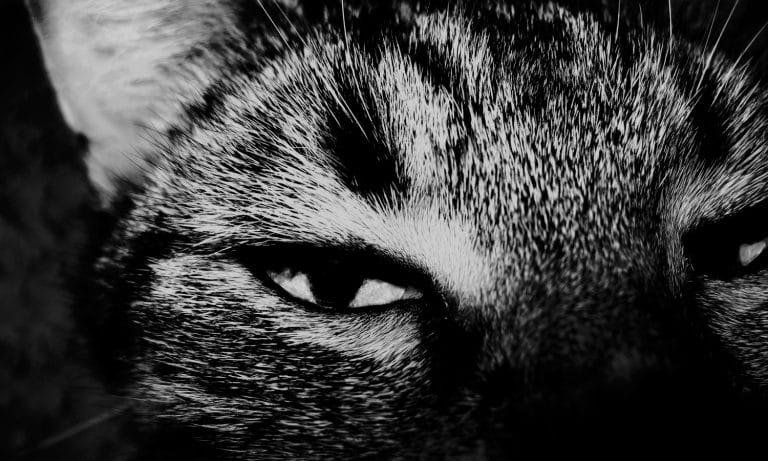
My 16-year-old cat, Pearl, enjoys pot. And so does Pete, my 5-year old yellow lab.
Before you judge my furry friends – or me – let me clarify. Pearl and Pete aren’t passing around a bong (the lack of opposable thumbs is just one issue here) or getting second-hand smoke blown in their face (that’s not cool). I feed my pets a tablespoon of coconut oil infused with CBD-rich marijuana. I make my own using Magical Butter botanical extractor, but commercial hemp-based products, such as Canna-Pet, do the trick.
Vets are split on the efficacy of pot for pets because research in veterinary cannabis pharmacology is limited. Federal law still considers marijuana a Schedule 1 narcotic, making scientists hesitant to spend time and money investigating the benefits.
In states where medical marijuana is legal, doctors are allowed to recommend the herb to patients. But it remains illegal in all 50 states for veterinarians to do the same. And PETA and the ASPCA do not support cannabis for animals due to this lack of solid data. But anecdotal reports, including mine, suggest that there is a substantial benefit.
But here are some questions to ask yourself and your vet:
What symptom are you trying to address?
I give Pearl cannabis to help alleviate joint pain and to combat arthritis. She is more active and playful than she was before her CBD treatment. Pete gets his marijuana to combat hip pain and as an appetite enhancer – unlike most labs, he is not motivated by food and needs some coaxing. He loves the taste of the coconut oil and loves eating it after a nice afternoon stroll.
One study concluded that marijuana could prevent inflammatory disorders, including skin problems, in dogs. Another study has concluded that CBD has anticonvulsant properties and may be better than conventional veterinary medications.
The most common uses for pet cannabis are:
Epileptic seizures/convulsions
Nausea/Chronic vomiting
Cancer
Arthritis
Inflammation
Lethargy
Separation anxiety
Fear of thunderstorms or fireworks
Appetite stimulation
Skin rash
Car travel
End-of-life care
Do animals get high the same way humans do?
It’s unlikely – but entirely possible – that Pete and Pearl enjoy tripping out to some sweet tunes a little more after eating their medicine. But all mammals have an endocannabinoid system, which regulates how your body utilizes the various cannabinoids present in marijuana. Like you, your pets have receptors throughout their bodies that are activated by these phytocannabinoids.
THC, the psychoactive component in marijuana, has been found to be disorienting for some pets (and some humans, too). But there have been no studies suggesting that CBD is harmful in any way to pets. So leave the high-THC strains aside, and find a strain high in CBD for your dog or cat.
Should I tell my vet?
Yes. Your vet may not support your decision, but it is your loved one and it is ultimately your decision. Work with your vet on what is right for your pet and report the progress. Until the federal government lifts the onerous Schedule I designation for cannabis, data will be limited. But that does not mean your pets’ medical options are limited.
With Canada set to begin cannabis sales on Oct. 17, some questions linger about how such marijuana reform will interface with Canadian’s daily lives. Chief among these concerns is an issue that has also plagued states that have legalized recreational marijuana: once people buy the marijuana, where can they use it?
Public consumption has been left to individual provinces, each determining a different set of regulations. In Ontario, where Toronto and Ottawa, the nation’s capital, are located, public smoking has been banned, except for those with a medical marijuana card. However, universities have been scrambling ahead of the legalization to determine rules for students on campus.
While both the University of Ottawa and Carleton University will prohibit marijuana consumption on campus, Carleton will still permit students to possess up to 30 grams of recreational marijuana. La Cité collégiale, meanwhile, will create a specific spot on campus where students can go to consume marijuana, according to CBC. Other Ontario universities are still finalizing their policies on marijuana.
British Columbia, on the other hand, is having an issue outside of the classroom. Though the province allows for public consumption, brows were raised following a poll from the B.C. Golf Association about using marijuana on the course.
The poll surveyed thousands of members and found that more than half of players age 35 and under plan on using cannabis on the green. Of those 55 years and older, only 10 percent admitted they’d use cannabis on the course. The news has some from the older crowd worried about running into marijuana users on the links.
“They have some concerns about being paired with someone who is smoking marijuana on the golf course,” Kris Jonasson, the association’s chief executive, told CBC.
Once the date of legalization passes, says the National Golf Course Owners Association Canada, players and staff must know and comply with the policies. Though municipal law will take precedence on public courses, private golf club will be allowed to decide their own rules on marijuana consumption.
Staging a photo for social media is nothing new. It’s pretty common. Even if you’re just moving your dishes around a table and adding some pretty garnish to your food for the perfect #foodie “gram,” it’s still manipulated. But an influencer in London is catching some serious heat for posting a photo that some say goes beyond staged.
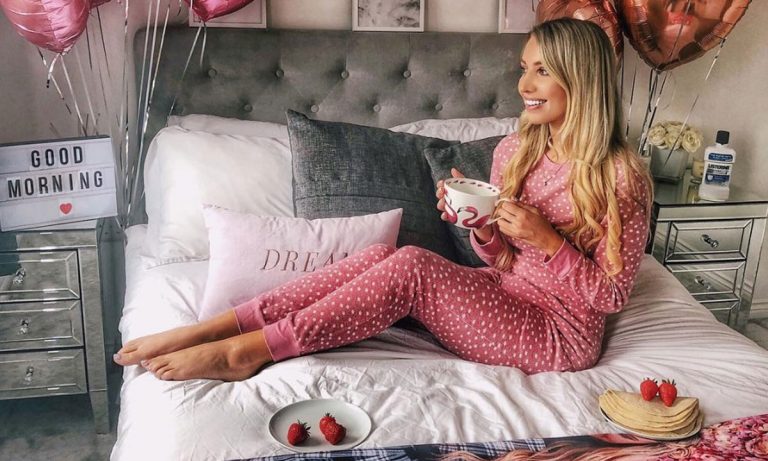
Scarlett London found out that blatantly deceiving your followers is probably not a good idea when she posted this sponsored pic of her enjoying a morning of pancakes and tea in bed. Problem is, that cup has no tea in it — and those pancakes look an awful lot like tortillas.
https://www.instagram.com/p/BnIlqUShl31
Someone else pointed out that the blanket at the end of London’s bed had a photo of her on it. And even though this post was paid for by Listerine, some thought the product placement of the mouthwash on the nightstand was obnoxious.
London said it didn’t take long for the criticism to turn into bullying and even death threats.
Many to the effect of that I’m a danger to young women and should suffer, I should be stopped, I should suffocate on the balloons, I should kill myself because of how pathetic I am. But if I’m totally honest, those were the more tame of the bunch.
Some of the nearly two-thousand comments the photo has received thus far include things like:
Sorry but those are not pancakes those are tortillas!??♀️?? social media is really getting out of hand.
All this frenzy over a picture that is like every other staged picture on Instagram (my pictures included) ?
imma spill the tea since you obviously don’t have any in that cup; fake pancakes ? really ?
But generally, London seems to have attracted more supporters than haters at this point.
Others think London is blowing this whole scenario out of proportion to get attention.
I don't think you can do a paid advert for mouthwash and get away with it.
I didn't see a single death threat on the thread, just plenty of people moaning about what social media has become.
However you've got yourself and a company a lot of exposure, fair play
Said London, “In the last 48 hours, grown men & women, MPs, women’s equality representatives, journalists, actresses and broadcasters have discovered my Instagram feed and decided to pick it apart online, in front of thousands.
“I implore those mindlessly sharing this content to research who I am as a person, before they further drag my name and image through the mud. Yes, I do adverts on here, but only with brands I genuinely use and would spend money on myself. My feed isn’t a place of reality.
“I am a strong 24-year-old woman who has experienced bullying in the past. I am and will be okay after this hideous experience. But another young girl or guy as the subject of a targeted hate campaign might not be okay. Please remember at the centre of of every viral storm is a human being.”
OP ED: Donald Trump must answer for marijuana smear team.
When Donald Trump was elected president in November 2016, the cannabis industry assumed they had an ally heading into the White House. Mr. Trump offered the most cannabis reform-oriented rhetoric of any major party candidate in American history, favoring medical cannabis and arguing adult-use cannabis policy was a matter for the states. The cannabis industry was patient — if nervous — even as he appointed drug warrior Jeff Sessions as Attorney General and again when Mr. Sessions ultimately rescinded the Cole Memo.
Along the way, there were other concerns about how the administration would handle cannabis policy, but still the cannabis industry as well as its customers, patients, and investors had hope. However, last week Buzzfeed reported that the White House organized the so-called “Marijuana Policy Coordination Committee,” composed of “14 federal agencies and the [DEA].”
Ostensibly, the goal was to balance what the White House sees as a one-sided (read: pro-reform) debate. And in that process, it offered a damning indictment of the administration’s true perspective on the cannabis issue. The organizing memorandum noted, “[d]epartments should provide … the most significant data demonstrating negative trends, with a statement describing the implications of such trends.”
Why might the White House be moving in this direction on cannabis policy? It flies in the face of public opinion as well as the president’s promises on the campaign trail and to a senator of his own party, Cory Gardener (R-Colo.). One argument could be that the president’s base — older, white conservatives — are among those most opposed to cannabis reform. Yet, the 2016 campaign showed us that those voters did not hold Mr. Trump’s cannabis position against him.
Another alternative is that Mr. Trump truly opposes cannabis reform. If that is true, the president would be among august company. Each of his predecessors opposed cannabis reform, actively worked to undermine reform, arrested legal operators, and opposed Congressional efforts at reform (yes, even Mr. Obama). However, such an effort would be politically damaging for the president. While most Americans care about 20 or 30 or 40 other issues before they care about cannabis, what Americans don’t care for is a president or a candidate who breaks campaign promises.
Another explanation is that Mr. Trump was unaware of the formation of this Committee and did not authorize it. This is genuinely possible. A lot happens in an administration that a president never knows anything about. It’s a fact of life. The federal government is huge, and the president is only one person. The same is actually true of a White House. A lot can happen that the president doesn’t know about — especially a president who, by many accounts, is less engaged on day-to-day policy details. Because cannabis policy does not fall into the set of issues the president cares more deeply about — the broader economy, North Korea, trade policy, etc. — the issue could be staffed out. It wouldn’t surprise anyone if the White House — like many White Houses before it — is staffed with cannabis reform opponents.
Some could argue the formation of the Marijuana Policy Coordination Committee shows a president who isn’t paying attention. That would be unfair to the president, especially if staffers were purposely operating away from the president’s view. However, now the issue is out in the open, the president, if he is truly committed to his campaign promises, must aggressively denounce the Committee. He must take an additional step. He should either redesign its mission to include an unbiased, data-driven policy shop that seeks the true answer instead of a pre-determined perspective or the president can take the more assertive step of disbanding the Committee and fire whoever authorized it without his permission.
The formation of this Committee puts the spotlight on the president. He has the opportunity to show the supermajority of Americans who support cannabis reform, the hundreds of thousands of people who work in or purchase from the legal cannabis industry, and the members of his own party in Congress to whom he has pledged support for reform, that he is with them. Otherwise, the president will show the country that he was either disingenuous when he made his 2016 campaign pledges or that something has happened in the past year to change his mind. If no one pushes him to answer for this Committee now, he can bet his 2020 opponent will.
Revenue from Montana’s first year of collecting taxes clocked in at nearly double the initial predictions. When Senate Bill 333 was approved last year, Montana’s medical cannabis program was severely reformed. One such reform was to charge a 4 percent tax on all cannabis, whether sold, bartered, exchanged or gifted, at retail value for the first year.
That first year ended on July 1, 2018 and the tax has been reduced to 2 percent for the foreseeable future. However, if patients continue to sign up for the program at the current rate, the revenue isn’t bound to go down in the next four quarters.
During 2017, approximately 1,000 new patients signed up per month. That kind of growth is the reason why seemingly all projections fell short. The people of Montana are able to obtain a card for any of the following conditions: wasting syndrome, cancer, chronic pain, Crohn’s disease, glaucoma, HIV/AIDS, nausea, seizures and severe or persistent muscle spasms.
Though there are longer (and shorter) lists of maladies from state to state, Montana covers a wide range of illnesses that are relieved or treated by cannabis. The fact that more patients are willing to add cannabis to their wellness regimes than predicted speaks to the bravery and convictions of Montanans and to the messaging of their pot proponents.
When the tax revenue is calculated for the year when the 4 percent was implemented, it adds up to cannabis having brought in around $45 million in sales. That means a job creating, economy bolstering, tax revenue generating machine that is growing by the minute.
So where do the taxes go? Brilliantly, so far they’re being used to better the cannabis marketplace ecosystem. From seed to sale tracking to inspection facilities, the money goes back into the movement to bring the safest, cleanest, healthiest medicine to those who need it.
It’s worth mentioning that as of July, there are 420 medical marijuana providers in Montana. Though we’re rooting for them to add more, of course, it’s cool that they’ve landed on the community’s lucky number as the state seems to be raking in some luck itself.
State revenue director Gene Walborn stated, “We were pleasantly surprised on how well it went. It being a new tax, we were concerned what challenges you receive with a new tax.” He was also surprised and pleased by how many people filed electronically, implying also that pot providers as a whole had been the definition of cooperative.
As microdosing psychedelics becomes a more popular choice for boosting creativity and focus, especially in Silicon Valley circles, the question remains why and how effective the practice can be. Psychedelics like psilocybin mushrooms and LSD are illegal, so the number of users is completely unknown. Scientists say most reports on psychedelics tend to be anecdotal and patient-forward—mirroring comments often made in medical communities regarding cannabis—but a new study will aim to answer the persistent question lingering around microdosing.
This week the Beckley Foundation launched a first-of-its-kind placebo-controlled trial on microdosing at the Imperial College London, as the Guardian first reported. Researchers will aim to discern if microdosing has impact on “cognitive function” or “psychological well-being” beyond a placebo effect.
To conduct the research, scientists have gathered those who already engage in microdosing to partake in a “self-blinding” study. Participants will create capsules of their normal microdosing amount of LSD and also capsules with nothing inside. Then these capsules will be placed in individual envelopes, which will be shuffled around and re-organized, so participants no longer know which envelope contains the actual drug or a placebo.
Throughout the process, they will play cognitive games and complete questionnaires online. By the end, they should know if they were more content and focused because they were on LSD, or because they just thought they were.
“The people who microdose right now are not an average random set of people from the street,” Balázs Szigeti, the study leader, told the Guardian. “They are very likely to have used psychedelics before and have preconceptions about them.”
“You are doing something novel and exciting and that you believe in—and you know you are doing it,” he added. “It is absolutely no surprise that you are getting a positive effect.”
Those who agree to sign up for the study, which you do so here, will be sent a manual with instructions of how to set up the capsules and envelopes. Each envelope will have a QR code you can scan with your smartphone, so at the end of the study you’ll know which you took: a placebo or LSD. Forewarning: Researchers will not be supplying psychedelics, so don’t try signing up if you aren’t serious about the study and can provide your own.
“It has become popular in Silicon Valley as a way to increase creativity and productivity,” said Szigeti. “I was interested in this and looked at the scientific literature. To my great surprise I found there were zero studies on microdosing. If you go online there are hundreds and hundreds of people expressing very positive outcomes but this is completely novel terrain in scientific literature”
Added Amanda Feilding, director of the Beckley Foundation: “I think it could give a boost to vitality, an improvement in mood possibly. […] One can’t and doesn’t want to encourage people to microdose, but it is interesting to try to gather data in a slightly more scientific way from people who are doing it.”
Dwayne ‘The Rock’ Johnson has revealed that he would love to take part in the Great British Bake Off. The actor, who is best known for his roles in Fast and Furious and Moana, has opened up about the hit Channel 4 baking show. Chatting to the Daily Star, he said: “Baking is something I am really fascinated by, mainly because I love to eat the finished product. I would do Celebrity Bake Off if I wasn’t shooting a movie – especially if it was for charity.”
He added that he “always tries to make time” to watch the show, and speaking about how he’d fare, he added: “Hopefully, I’d do well – but if not I could just kick somebody’s [expletive].” Dwayne isn’t the American star to have revealed that they love watching Bake Off, as A-listers including Anna Kendrick, Amy Schumer and Snoop Dogg, are self-confessed fans of the show.
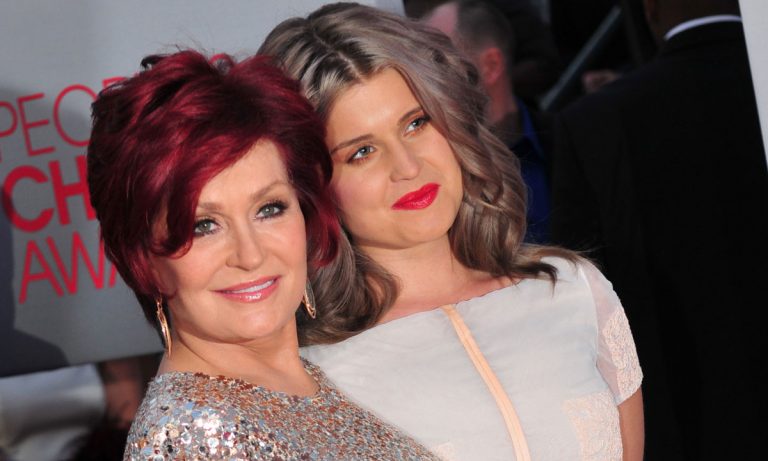
“Was there an attempt to bring back The Osbournes the TV show? Because I had heard something about that,” Howard Stern asked Sharon, 65, on Tuesday’s episode of SiriusXM’s The Howard Stern Show.
“It keeps going back and forth, different networks will approach us and it never works out. They can’t afford us,” she said. “They can’t afford us. It’s like why would we want to do it for f—— peanuts?”
With dinosaurs in the lobby, hopefully you can still get a roaring good night’s sleep.
While we might still be years and years away from creating a theme park inhabited with living breathing dinosaurs, a hotel in Japan has come up with a more plausible substitution. Henn na Hotel is one of the first hotels to be operated by robots, specifically dinosaurs robots, surely becoming the first hotel in the world to boast this feature.
The hotel located in East Tokyo features dinosaurs that can help guests from all sorts of countries, having the ability to communicate in different languages including English, Japanese, Korean or Chinese.
While these features sounds awesome, The Huffington Post reports that some guests find the dinosaurs unnerving despite the fact that they’re designed to be hospitable, and that management still hasn’t figured out when guests want to interact with robots and when they want to interact with real people.
The robot dinosaurs look very real. They’re all wearing adorable bellboy hats and their small arms are outstretched in a gesture that’s meant to be warm and welcoming. Still, there’s a certain amount of trepidation when approaching a creature with large teeth and claws, no matter if it’s a robot or not, so guests reactions are understandable.
The robots are equipped with a motion sensor that lets them know when guests are approaching them, prompting them to say welcome and to move their arms around as if they’re having an actual conversation. Depending on guests’ responses and language preferences, the dinosaurs will check them into their room and make the process as smooth as possible.
Gratitude may be more beneficial than we commonly suppose. One recent study asked subjects to write a note of thanks to someone and then estimate how surprised and happy the recipient would feel – an impact that they consistently underestimated. Another study assessed the health benefits of writing thank you notes. The researchers found that writing as few as three weekly thank you notes over the course of three weeks improved life satisfaction, increased happy feelings and reduced symptoms of depression.
While this research into gratitude is relatively new, the principles involved are anything but. Students of mine in a political philosophy course at Indiana University are reading Daniel Defoe’s 300-year-old “Robinson Crusoe,” often regarded as the first novel published in English. Marooned alone on an unknown island with no apparent prospect of rescue or escape, Crusoe has much to lament. But instead of giving in to despair, he makes a list of things for which he is grateful, including the fact that he is the shipwreck’s sole survivor and has been able to salvage many useful items from the wreckage.
Defoe’s masterpiece, which is often ranked as one of the world’s greatest novels, provides a portrait of gratitude in action that is as timely and relevant today as it has ever been. It is also one with which contemporary psychology and medicine are just beginning to catch up. Simply put, for most of us, it is far more helpful to focus on the things in life for which we can express gratitude than those that incline us toward resentment and lamentation.
The benefits of gratitude
When we focus on the things we regret, such as failed relationships, family disputes, and setbacks in career and finance, we tend to become more regretful. Conversely, when we focus on the things we are grateful for, a greater sense of happiness tends to pervade our lives. And while no one would argue for cultivating a false sense of blessedness, there is mounting evidence that counting our blessings is one of the best habits we can develop to promote mental and physical health.
Gratitude has long enjoyed a privileged position in many of the world’s faith traditions. For example, the Biblical Book of Psalms counsels gratitude that is both enduring and complete, saying, “I will give thanks to you forever” and “with my whole heart.” Martin Luther writes of gratitude as the heart of the Gospel, portraying it as not merely an attitude but a virtue to be put into practice. The Quran recommends gratitude, saying “Whoever gives thanks benefits his own soul.”
Recent scientific studies support these ancient teachings. Individuals who regularly engage in gratitude exercises, such as counting their blessings or expressing gratitude to others, exhibit increased satisfaction with relationships and fewer symptoms of physical illness. And the benefits are not only psychological and physical. They may also be moral – those who practice gratitude also view their lives less materialistically and suffer from less envy.
Why gratitude is good for you
There are multiple explanations for such benefits of gratefulness. One is the fact that expressing gratitude encourages others to continue being generous, thus promoting a virtuous cycle of goodness in relationships. Similarly, grateful people may be more likely to reciprocate with acts of kindness of their own. Broadly speaking, a community in which people feel grateful to one another is likely to be a more pleasant place to live than one characterized by mutual suspicion and resentment.
The beneficial effects of gratitude may extend even further. For example, when many people feel good about what someone else has done for them, they experience a sense of being lifted up, with a corresponding enhancement of their regard for humanity. Some are inspired to attempt to become better people themselves, doing more to help bring out the best in others and bringing more goodness into the world around them.
Gratitude also tends to strengthen a sense of connection with others. When people want to do good things that inspire gratitude, the level of dedication in relationships tends to grow and relationships seem to last longer. And when people feel more connected, they are more likely to choose to spend their time with one another and demonstrate their feelings of affection in daily acts.
Of course, acts of kindness can also foster discomfort. For example, if people feel they are not worthy of kindness or suspect that some ulterior motive lies behind it, the benefits of gratitude will not be realized. Likewise, receiving a kindness can give rise to a sense of indebtedness, leaving beneficiaries feeling that they must now pay back whatever good they have received. Gratitude can flourish only if people are secure enough in themselves and sufficiently trusting to allow it to do so.
Another obstacle to gratitude is often called a sense of entitlement. Instead of experiencing a benefaction as a good turn, people sometimes regard it as a mere payment of what they are owed, for which no one deserves any moral credit. While seeing that justice is done is important, supplanting all opportunities for genuine feelings and expressions of generosity can also produce a more impersonal and fragmented community.
Practicing gratitude
There are a number of practical steps anyone can take to promote a sense of gratitude. One is simply spending time on a regular basis thinking about someone who has made a difference, or perhaps writing a thank you note or expressing such gratitude in person. Others are found in ancient religious disciplines, such as meditating on benefactions received from another person or actually praying for the health and happiness of a benefactor.
In addition to benefactions received, it is also possible to focus on opportunities to do good oneself, whether those acted on in the past or hoped for in the future. Some people are most grateful not for what others have done for them but for chances they enjoyed to help others. To envision gratitude at its best, imagine a person hoping and perhaps even praying for an opportunity to make a difference in someone else’s life.
An island that may resemble the one on which Robinson Crusoe was marooned. Nikos38/Shutterstock.com
In regularly reflecting on the things in his life he is grateful for, Defoe’s Crusoe believes that he becomes a far better person than he would have been had he remained in the society from which he originally set out on his voyage:
“I gave humble and hearty thanks that God had been pleased to discover to me, even that it was possible I might be more happy in this solitary condition, than I should have been a liberty of society, and all the pleasures of the world… It was now that I began sensibly to feel how much more happy this life I now led was, with all its miserable circumstances, than the wicked, cursed, abominable life I led all the past part of my days.”
Reflecting on generosity and gratitude, the great basketball coach John Wooden once offered two counsels to his players and students. First, he said, “It is impossible to have a perfect day unless you have done something for someone who will never be able to repay you.” In saying this, Wooden sought to promote purely generous acts, as opposed to those performed with an expectation of recompense. Second, he said, “Give thanks for your blessings every day.”
Some faith traditions incorporate such practices into the rhythm of daily life. For example, adherents of some religions offer prayers of thanksgiving every morning before rising and every night before lying down to sleep. Others offer thanks throughout the day, such as before meals. Other less frequent special events, such as births, deaths and marriages, may also be heralded by such prayers.
When Defoe depicted Robinson Crusoe making thanksgiving a daily part of his island life, he was anticipating findings in social science and medicine that would not appear for hundreds of years. Yet he was also reflecting the wisdom of religious and philosophical traditions that extend back thousands of years. Gratitude is one of the healthiest and most nourishing of all states of mind, and those who adopt it as a habit are enriching not only their own lives but also the lives of those around them.
While many onlookers will be curious watching Canada establish itself as a preeminent player in the cannabis industry, one country that’s just as large and already a global cannabis leader is China. For anyone familiar with international drug laws this might be confusing. Why? Because cannabis is illegal in China.
A large reason for China’s global cannabis dominance is industrial hemp cultivation, as the South China Morning Post laid out.
Thanks to government support and a long tradition, China has quietly become a superpower in the plant’s production and research.
Since the 2000s, the government has been interested in hemp for military and herbal remedies usage.
At the same time, China owns more than half of the 600 global patents on cannabis, according to the World Intellectual Property Organisation. In addition, China produces around half of the “world’s legal commercial cropland” for hemp cannabis cultivation, according the National Bureau of Statistics. While you could easily tune this information out as neat trivia, industry leaders in the West don’t look at it this way.
“Because cannabis in Western medicine is becoming accepted, the predominance of Chinese patents suggests that pharmaceutical sciences are evolving quickly in China, outpacing Western capabilities,” said Dr. Luc Duchesne, an Ottawa-based businessman and biochemist.
“[Chinese traditional medicine] is poised to take advantage of a growing trend. The writing is on the wall: westernised Chinese traditional medicine is coming to a dispensary near you.”
Earlier this year, Canada solidified itself as the largest medical cannabis producer in the world. Countries like Austria and Germany receive medical cannabis from Canada. In fact, Canada produces so much cannabis that China has complained that Canadian product has found its way onto the black market in China.
All this sets up a potential trade war between Canada and China down the road as international cannabis exporters. For now, both countries seem content with their corner of the market, though.