Saturday, July 4, 2026
Home Blog Page 884

The Ultimate Guide To Marijuana Dosing For Beginners

Cannabis therapeutics is personalized medicine. The right treatment regimen depends on the person and condition being treated. For maximum therapeutic benefit, choose cannabis products that include both cannabidiol (CBD), a non-intoxicating compound, and tetrahydrocannabinol (THC), the psychoactive component of cannabis. Here is the ultimate guide to marijuana dosing.

Working Better Together

CBD and THC interact to enhance each other’s therapeutic effects. They work best together. A patient’s sensitivity to THC is a key factor to determining the ratio and dosage of CBD-rich medicine. Many people enjoy the cannabis high and can consume reasonable doses of any cannabis product without feeling too high or dysphoric. Others find THC unpleasant. CBD can lessen or neutralize the intoxicating effects of THC. So a greater ratio of CBD-to-THC means less of a “high.”

Finding your ratio is the first step to effective treatment.

Find Your Ratio

Although banned by federal law, dosed cannabis medicine is currently available in the form of concentrated oil extracts, infused sublingual sprays, capsules, edibles, and other products. Potent cannabis oil extracts have varying ratios of CBD and THC that are calibrated to suit the needs and sensitivities of each patient.

For anxiety, depression, spasms, and pediatric seizure disorders, many patients initially find they do best with a moderate dose of a CBD-dominant remedy (a CBD:THC ratio of more than 10:1). But a low THC remedy, while not intoxicating, is not necessarily the best therapeutic option.

A combination of CBD and THC will likely have a greater therapeutic effect for a wider range of conditions than CBD or THC alone.

For cancer, neurological disease, and many other ailments, patients may benefit from a balanced ratio of CBD and THC. Extensive clinical research has shown that a 1:1 CBD:THC ratio is effective for neuropathic pain. Optimizing one’s therapeutic use of cannabis may entail a careful, step-by-step process, whereby a patient starts with small doses of a non-intoxicating CBD-rich remedy, observes the results, and gradually increases the amount of THC.

In essence, the goal is to self-administer consistent, measurable doses of a CBD-rich remedy that includes as much THC as a person is comfortable with.

The Biphasic Effect

Cannabis compounds have biphasic properties, which means that low and high doses of the same substance can produce opposite effects. Small doses of cannabis tend to stimulate; large doses sedate. Too much THC, while not lethal, can amplify anxiety and mood disorders.

CBD has no known adverse side effects at any dose, but drug interactions can be problematic. An excessive amount of CBD could be less effective therapeutically than a moderate dose. “Less is more” is often the case with respect to cannabis therapy.

“Dosage is everything”—Paracelsus

Dosage Guidelines

  • Decide how you want to take cannabis. Cannabis oil is available in sprays, capsules, edibles and other products.
  • Find your ratio. Cannabis products have varying amounts of CBD and THC. A high CBD or high THC product is not necessarily superior to a strain with a balanced ratio. Find the proper combination to optimize your therapeutic use of cannabis.
  • Begin with a low dose especially if you have little or no experience with cannabis.
  • Take a few small doses over the course of the day rather than one big dose.
  • Use the same dose and ratio for several days. Observe the effects and if necessary adjust the ratio or amount.
  • Don’t overdo it. “Less is more” is often the case with cannabis therapeutics.
  • Be aware of possible side effects. Cannabis is a safe and forgiving medicine. Depending upon delivery method and individual tolerance, it can amplify anxiety and mood disorders. Other possible side effects are dry mouth, dizziness and faintness.
  • Consult your health counselor. Proceed cautiously, especially if you have a history of alcohol or drug abuse, mental illness, or are pregnant or breastfeeding.

This story originally appeared on Project CBD.
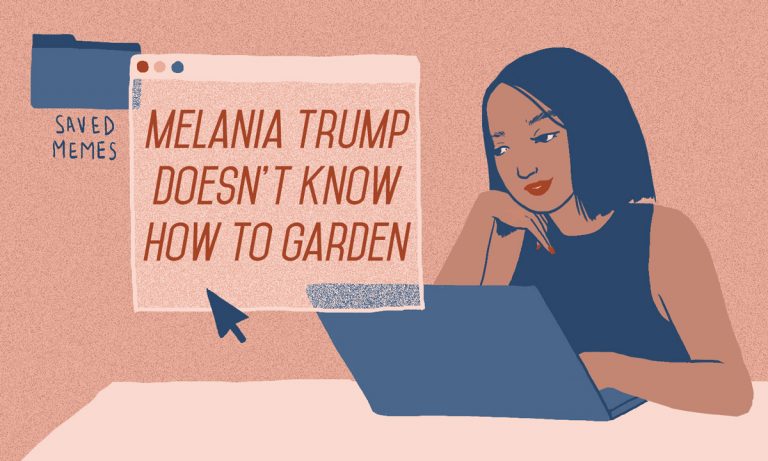
Meme Of The Week: Melania Trump Doesn’t Know How To Garden

Melania Trump is getting a harsh reminder that the internet never forgets. In this instance, the content isn’t even all that incriminating, it’s just an awkward picture that features her “gardening.” It’s funnier than it sounds.

Huffington Post reports that the photo was taken a while ago, in September 2017, when Melania Trump was planting and harvesting vegetables with the Boys & Girls Club of America. After looking at the photo for a few seconds you might wonder just why it didn’t go viral when it first came out.

Model and author Chrissy Tiegen was one of the first to comment on the photo, mentioning how spotless Melania’s shoes look and how unlikely it is that she’s actually gardening. Her large following made the tweet go viral in a few hours. The post now has over 10 thousand Retweets and 130 thousand likes.

Users were quick to join in and add even more jokes, photo shopping Melania into other scenarios, adding in a dancing Michael Jackson and commenting on how spotless her outfit and hair looks. Maybe people are being really mean and Melania is the cleanest and smoothest gardener around. Who knows. The jokes are still great.

Is Facebook Blocking Marijuana-Related Searches?

Facebook is allegedly up to some super-secret plot to prevent pages with the words “marijuana” and “cannabis” in the title from showing up in its search results. So it Facebook blocking marijuana-related searches? Although the targeted listings have not been disabled, a report from Marijuana Moment suggests that the social media giant is “shadow-banning” certain organizations from the platform that blatantly represent the cannabis trade and the fight to dig the cannabis plant further out of the pits of prohibition. This dust up was uncovered earlier this week after the California Bureau of Cannabis Control discovered its page was affected. It was later determined that cannabis media outlets Marijuana Moment and Marijuana Business Daily, as well as advocacy group the Marijuana Policy Project also did not turn up when entered into the Facebook search.

However, it does not appear that every pot-related page is victim to the supposed shadow ban. Pages like Cannabis Now Magazine, Cannabis Culture and even the First Church of Cannabis are still turning up without issue. Others pages representing sites that publish almost exclusively marijuana-related news and features, like The Fresh Toast, High Times and Snoop Dogg’s Merry Jane remained unaffected, as well.

But there is no doubt that when “marijuana” is entered into the Facebook search bar, nothing shows up but the message “We couldn’t find anything for marijuana.” Whether this is an intentional move on the part of Facebook or just a technical snag to be sorted out in the near future is not yet known. The social media company has not responded as to why this is happening.

Journalist Chris Roberts, who penned the shadow ban piece, explains that Facebook and other social media platforms have been struggling for years to figure out how to handle pages dedicate to marijuana, which remains illegal at the federal level.

“Advertisements for marijuana businesses or advocating cannabis use are regularly blocked on Facebook and other social-media websites—including Instagram, which is also a Facebook property—for violating community standards, which ban the sale of “illegal drugs”,” he wrote.

“Algorithms often block promotions for news articles or other noncommercial posts that merely mention “marijuana” or “cannabis,” a situation that often requires lengthy appeals processes to clear automatically flagged content that doesn’t actually violate terms of service.”

Social media platforms have been causing trouble for the cannabis community for sometime. Last year, Twitter temporarily blocked searches pertaining to marijuana. So it is possible that Facebook is experimenting with a similar policy shift. Yet, as Roberts points out, “Users accessing Facebook via the iOS app have been able to find cannabis-related pages they already follow on the main search results tab, but tapping the “Pages” tab yields an empty result.” This is likely an indication that the geeks in Facebook’s coding department are just stoned.

Apple’s Next iPad Pro Could Look A Lot Like The iPhone X

Apple is planning on improving their iPads, releasing two models in the coming year that are different and promise an upgrade that , up until now, the tablets have been missing. One of the tablets is cheaper and accessible to schools, the other will look like a large iPhone X.

This iPad will be called iPad Pro and it could feature Face ID, no notch, and a much thinner and sleek design. This discovery was found by 9to5Mac, hidden in the code of beta 5 of Apple’s iOS 12. The icon found on the software shows an iPad with no notch.

Another bit of code was uncovered by9to5Mac developer Guilherme Rambo, who uploaded an image on Twitter.

In order to have access to Face ID, iPhones must have True Depth camera, which is currently exclusive for iPhone X devices. In the future, Apple might make the technology available for all of their devices, or they might save the most expensive and cool features for higher priced products.

If the iPad Pro follows the footsteps of the iPhone, then it’s likely that it won’t feature a headphone jack. Which is the worst idea that Apple is successfully popularizing.

France Has Banned The Use Of Cellphones In Schools

0

French citizens and lawmakers decided to ban the use of smartphones in schools this past Monday. President Emmanuel Macron had proposed this law while he was campaigning, promising that kids under the age of 15 would have the choice of either leaving their phones at home, or shutting them off for the duration of the school day.

While some exceptions are made for students with disabilities and for those who’ll use electronic devices for educational purposes, the law is supposed to extend itself to other electronic devices that have access to the Internet, including tablets, laptops, and others.

The Verge reports that this isn’t the first time that France has monitored the use of cellphones; in 2010 the use of smartphones was banned during all teaching activity. Earlier this year, texting while in a car was banned, even when pulled over by the side of the road.

Alex Corbière, deputy of Unbowed France party, said that the approved law was already in place. “I don’t know a single teacher in this country that allows the use of phones in class.”

According to The Guardian, the law will kick off properly during the beginning of the school year in September. French lawmakers explained that even though technology can be used for educational purposes, the use of mobiles should be controlled. This law is also supposed to serve as a public health message to families. “It’s good that children are not too often, or even at all, in front of a screen before the age of seven,” said Jean-Michel Blanquer, the French minister of education.

Former NJ Gov. Partners With Marijuana Edibles Company

New Jersey’s former Governor James Florio has joined the advisory board of Nuka Enterprises. It’s a big score for the Colorado-based company as they work to expand into the Garden State.

Floria will be supporting the company through his law firm, Florio Perrucci Steinhardt & Capelli, LLC.

Nuka’s 1906 cannabis edibles include artisanal chocolates for energy, arousal, sleep, relaxation and bliss.

“The people of New Jersey have recognized and acknowledged the importance of cannabis legalization as a medicinal, social justice and economic issue, and that the time for responsible change has come,” said Florio in a statement. “I am proud to be partnering with Nuka who have been recognized for their safe, innovative and progressive approach to the cannabis edibles market. I also believe in Peter Barsoom, Nuka’s founder and CEO, who is a New Jersey native and a thought leader in the industry, promoting responsible consumption of legal cannabis in a regulated market that protects the consumer.”

Peter Barsoom, CEO of Nuka Enterprises, says it’s an honor to be working.

“This is an exciting time of economic growth in New Jersey, which has the potential to be totally transformative for cannabis legislation and regulation,” said Barsoom. “New Jersey is the home of so many highly-regulated industries, including pharmaceutical and biotech, and robust research institutions. We’ve got incredible resources and models, and we have executive support across all branches of government–our governor and both leaders of the the legislative branch. This is our opportunity to get this right–to get social justice right, to get research right, to get the consumer experience right–and when we do, we will set best practices and standards for the entire world.”

Florio joins a list of other politicians joining the Green Rush.

Former House Speaker John Boehner and former Massachusetts Gov. Bill Weld are both board members of Acreage Holdings,  a cannabis business that aims to “make cannabis available to any patient who can benefit from safe and reliable access.”

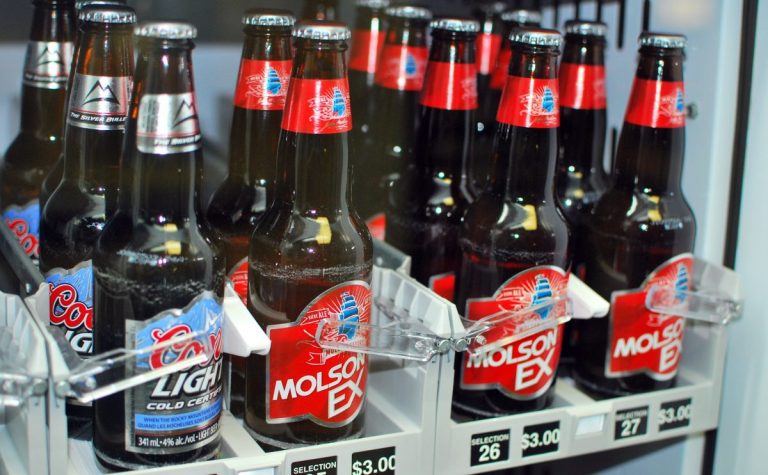
Molson Coors Beer Company Gets Into Cannabis

There is no question about it – brewing giants are getting into the business of marijuana. Just last year, Constellation Brands, maker of Corona and Modelo, invested millions into the design of cannabis-infused beverages to be sold on the Canadian market. Heineken-owned Lagunitas has also jumped in with its IPA-inspired, THC-infused sparkling water Hi-Fi Hops. This brew is now available in California.

But now, Molson Coors has joined the ganja game. The second largest brewing company in the U.S. and Canada announced earlier this week that it had officially partnered with Hydropothecary Corporation to develop a line of THC-infused, non-alcoholic beverages that it plans to sell in the northern nation later next year.

Related: Genetically-Engineered Cannabis: Growing Trend In North America?

The brewery told investors during a recent earning call that it was considering a move into marijuana, but had not yet made an official determination. Company executives said the decision to move forward was a matter of “do we want to be a spectators or a participant.”

Canada recently legalized a nationwide recreational pot market. It is set to get underway in October of this year. However, edible cannabis products, which include THC-infused drinks, will not be allowed on dispensary shelves until sometime in 2019. The law only allows the distribution of smokeable forms of marijuana until then.

“Canada is breaking new ground in the cannabis sector and, as one of the country’s leading beverage companies, Molson Coors Canada has a unique opportunity to participate in this exciting and rapidly expanding consumer segment,” Frederic Landtmeters, president and CEO of Molson Coors Canada, said in a statement.

“This new venture is consistent with our growth strategy and our commitment to being first choice for consumers and customers by ensuring that Canadians have access to high-quality products that meet their evolving drinking preferences.”

Beer companies getting into marijuana is a no-brainer. The recent decline in domestic sales as more customers spend money on craft beer and hard liquor has given major brewers no choice but to expand or die. Even Anheuser-Busch, the largest brewer in the world has felt the hit. In fact, the company, while not yet making a move to cannabis, has indicated that it plans to put more focus on its non-alcoholic beverage line to attract the Millennials and those deemed Generation Z that are no longer consuming alcohol with as much enthusiasm as those who came before them.

Related: Hops Cross-Pollinated By Cannabis Make For Legal CBD

In reality, all of the brewing companies dabbling in the Canadian cannabis industry are just preparing for the time when the United States government finally ends marijuana prohibition. Molson Coors Brewing CEO Mark Hunter says the Canadian deal is intended to be a “test” for products that could one day be available all across the Land of the Free.

“We believe potentially it’s got really significant potential and we’re going to learn a lot,” Hunter said. “If other markets start to open up in due course and this becomes federally legal, then we’ll be in a good place at that point in time.”

New York Governor Takes Major Step Toward Marijuana Legalization

New York Governor Andrew Cuomo has moved one step closer to legalizing recreational marijuana in the state. Cuomo appointed a committee tasked with drafting legislation around the recreational usage of cannabis. The committee will use recommendations from the State Health Department to inform the bill, with an expectation that legislators will vote on it in the upcoming session.

“As we work to implement the report’s recommendations through legislation, we must thoroughly consider all aspects of a regulated marijuana program, including its impact on public health, criminal justice and State revenue, and mitigate any potential risks associated with it,” Cuomo said in a statement.

Cuomo also urged the drafting committee to start a dialogue with the State Senate and State Assembly, as well as cannabis advocates and sponsors who supported medical marijuana legislation in the state. Alphonso David, who serves as counsel to the governor, will oversee the working committee. The group will “consist of individuals with specialized knowledge, including experts in public health, public safety and economics, and the leaders of relevant state agencies,” according to the press release.

In January Cuomo commissioned a report from the New York State Department of Health to weigh the effects of legalizing recreational marijuana. The 75-page study recommended in favor, stating, “The positive effects of a regulated marijuana market in New York State outweigh the potential negative impacts.” One of those positive impacts included a projected $700 million tax revenue from cannabis sales, depending on tax rates and buying figures.

The report also found through regulation of marijuana, including government oversight of the production, testing, labeling, distribution, and sales, would benefit public health. With proper legislation and the inception of a legal cannabis market, New York would be allowed to control licensing, assure quality control and consumer protection, as well as set age and amount limits.

The report also concluded that legalization would reduce racial disparity in enforcing cannabis laws and decrease the incarceration rate in the state.

This support of cannabis legalization can be seen as a change of heart from Cuomo, who previously labeled marijuana as a “gateway drug.” Cynthia Nixon, Cuomo’s opponent in the state’s gubernatorial race, has created pressure for the incumbent to consider legalization, as she has continually attacked Cuomo for his stances on marijuana.

Cannabis Flower Now Available In Pennsylvania

As of August 1, Pennsylvanians with medical marijuana cards were able to purchase dried buds for the first time. Sixteen medical cannabis dispensaries opened on the 1st to throngs of people who were beyond glad to have the actual cannabis option.

Though SB 3 was signed into law on April 17, 2016, it wasn’t until April 2018 that dispensaries opened and then it was with extremely processed forms of cannabis, such as oils, tinctures and salves. As cannabis continues to gain momentum across the states, these processed products have become popular, many with very good reason and especially vape pens, but the lines to buy bud are the proof in the pudding, people love their weed.

Dried, cured, trimmed marijuana is still the one, still the most familiar and still the way most imbibers are comfortable taking it. There is one stipulation in Pennsylvania, however, the cannabis cannot be smoked, but vaporized. Special pens, boxes and the infamous Volcano are all available to assist, though, and for many, breathing in the vapor just feels right.

An amazing aspect to cannabis is the amount of people who are able to wean themselves off of addictive prescriptions, like benzos and opiates. Patients on line described their victories over pharmaceuticals to Philly.com and their stories, though full of suffering and pain, became uplifting and on the verge of miraculous when they got to the parts about medical marijuana and how it intervened in their lives.

Around 32,000 patients have registered for medical cannabis in Pennsylvania so far, and if the dispensary lines were any indication, adding full plant cannabis to the list of wares will likely bring in many new patients. Aside from being the more familiar choice, dried bud also costs less than most cannabis products. Some dispensaries were selling high quality grams for as little as $12.

The rush to buy greens is encouraging in another way. As the cannabis industry becomes more homogenized and corporatized, many older school activists and those who follow history have had concerns that cannabis itself was going to morph into a variety of isolated pharmaceuticals. Period. This latest showing by Pennsylvanians makes it clear that that’s just not what the people want. Though what they really, really want is to probably spark up a joint.

What Would Happen To The Cannabis Movement If Trump Left Office

I’ve been asked several times recently what would happen to cannabis reform if President Donald Trump were to leave office—either by resignation or removal. For industry and for the advocacy community, it is a critical question, as President Trump—at least rhetorically—has been the most pro-cannabis reform-minded president in history.

First, let’s be clear. The likelihood of the president resigning or being removed is extraordinarily low. The president’s pride and self-conviction that he has done nothing wrong vis-à-vis the current investigations his administration and campaign face are clear. What’s more, the president’s historically high popularity among Republican voters means that it would take a cataclysmic event or discovery of information for a sufficient number of Republican senators—currently 18—to join all 49 Democrats (assuming they vote in unison) to vote to remove Mr. Trump—if the House impeached.

But what would happen if the unthinkable happened?

The elevation of Vice President Mike Pence to the presidency would likely be a dark day for cannabis policy. Mr. Pence is an avowed social conservative who has shown himself to be no friend to the cannabis movement. When given the chance as a congressman, Mike Pence voted against legislative measures that sought to prevent the Justice Department from spending funds to enforce against state-legal medical marijuana programs in 2005 and 2007. And in an Indiana Governor’s debate in 2012, Pence opposed cannabis decriminalization, noting “I would not support the decriminalization of marijuana. To be candid with you growing up in the Hoosier state, I’ve seen too many people become involved with marijuana and have their lives sidetracked as a result or to see marijuana become a gateway drug to even worse addictions on their part…Decriminalization is not the right path.”

The very opponents in the Trump administration—appointees like former Health and Human Services Secretary Tom Price and Attorney General Jeff Sessions—are the same social conservatives with whom Mr. Pence is most aligned ideologically. Moreover, Mr. Pence’s core ideology—religious and social conservatism—finds its greatest support among older, white, conservative Republicans, a demographic group least supportive of cannabis reform. The irony, of course, is that a President Pence’s political viability at the national level would depend on his ability to grow his base. He would need to appeal to conservatives of the non-social stripe and moderates, a feat at which Mr. Trump has excelled. However, Mr. Pence has spent a career appealing to that core group as a congressman and governor. His transformation on the cannabis issue may be beyond his reach and if he attempted it, it may not seem legitimate or believable, given his record.

Yet, despite this reality, little would change in terms of substantive policy under a Pence administration. While President Trump’s words have been supportive of cannabis reform, his administration’s only actions—save the technical, apolitical FDA approval of Epidiolex—have been anti-reform. One would imagine a Democratic House of Representatives working with a closely divided Republican Senate to deliver cannabis reform legislation to the president’s desk.

Such legislation would likely face a different face in Mr. Trump’s Oval Office than in Mr. Pence’s. But beyond this hypothetical, little actionable difference is evident.

However, depending on who the Republican president is in 2020 will matter much in the next presidential race. President Trump can largely disarm the Democratic nominee on the issue, arguing that he has a similar position to Democrats and that Congress hasn’t given him legislation to sign, but that he would, given the opportunity. (Although Democrats could still attack the president for the rescission of the Cole Memo, regardless of its policy impact or lack thereof.)

RELATED: Which One Of These 6 States Will Legalize Marijuana Next?

President Pence would be different. A Democratic nominee could have a very public debate with Mr. Pence over the issue, using it as a springboard to discuss the man related issues such as states’ rights, medical efficacy, economic growth, job opportunities, trade, criminal justice, etc. Any 2020 Democratic presidential nominee would chomp at the bit to debate Mr. Pence about cannabis legalization—an issue about two-thirds of Americans support—to paint him as out of touch. Such a fight would elevate and mainstream the cannabis policy debate in a way a contest with President Trump may not.

Ultimately, the extremely unlikely event of a pre-2020 Pence presidency may have little effect on policy, even if it means replacing a cannabis reform supporter with an opponent. Yet, come 2020, the presidential race will either be between two cannabis supporters or be one that elevates the cannabis conversation.

John Hudak is a Senior Fellow at the Brookings Institution and Senior Advisor at Freedman & Koski, Inc. He is the author of the 2016 book Marijuana: A Short History.

Don't Miss Your Weekly Dose of The Fresh Toast.

Stay informed with exclusive news briefs delivered directly to your inbox every Friday.

We respect your privacy. Unsubscribe anytime.