Friday, December 19, 2025
Home Blog Page 907

Woman Builds Robot Boyfriend Who Can Text Her Back

Texting has created a million problems, but one of the most prevalent is that empty feeling you get when someone you like doesn’t text you back. It’s why one young woman is making herself a robot boyfriend, who texts back and is probably very sweet and attentive. He also looks a little bit like Wall-E, which is adorable, just not very sexy.

In an interview with Mashable, an artist named Fei Liu explained the reason why she’s interested in creating robots and why her version of a “sex doll” is different than what’s out available on the market.

Gabriel 2052 is a pretty cool piece of technology, different than most sex dolls available who look bad and can only do a few clunky commands. This robot contains a library of knowledge about Liu, including her favorite books, movies, words, and places where she likes to be touched. Whenever they’re away from each other, Gabriel sends her text messages, which are sort of coherent for a robot. This ability to text is one of Gabriel’s most complex features, demonstrating a “boyfriend” robot that’s more romantic and layered than what you’d expect.  Liu claims that her purpose with creating a robot like this one is to help people feel less alone and like they deserve love.

The name Gabriel 2052 has an interesting origin: Gabriel is the name of the most famous sex doll available on the market, and 2052 is the year where experts predict that marriage with robots will be legal.

While a lot of people get freaked out by the concept of sex robots, Lui believes that robots aren’t out there to replace humans. She claims that there are things that robots can do better than us, and that that’s something worth pursuing. Gabriel 2052 is also an opportunity for her to become a better coder, and to learn more about robots and technology.

On her free time, Liu gives free workshops where she teaches people the basics of building robots and code. You can check out Lui’s website here, and watch the full interview below.

Gwyneth Paltrow Welcomes Cannabis Into The Luxury Wellness Space

Though Gwyneth Paltrow’s Goop gets chided by snarky bloggers, her lifestyle brand has become a serious player within the health and wellness space. Whenever she endorses a new trend or product, it launches into the self-care space as an overnight necessity for living your best life. We’ve seen Paltrow help popularize Reiki and infrared saunas, among other products.

Of course, Paltrow’s Goop exists in a somewhat rarefied space of luxury wellness, where the everyday Joe can’t really afford what she’s peddling. For example, the Paltrow brand hosted a conference in Los Angeles last weekend called “In Goop Health.” Tickets started at $650 for attendees and they were exposed to “aerial yoga and LED light eye-masks, along with seminars on autoimmune disorders and postnatal depletion,” according to Quartzy.

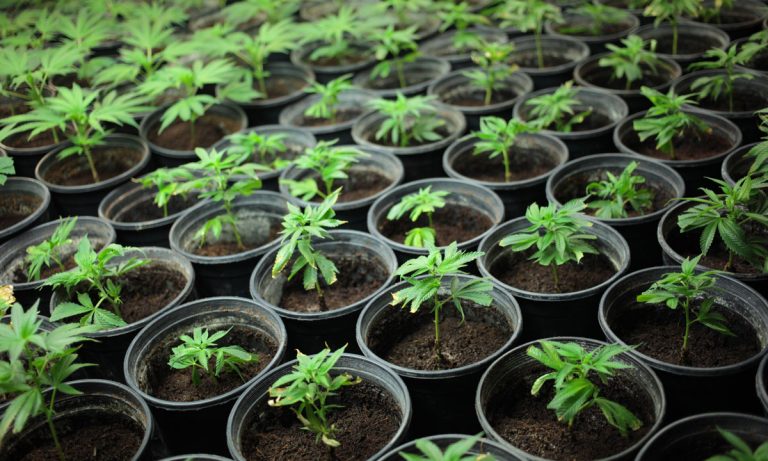
But Paltrow and company also focused on the plant that’s trickling through the wellness space, luxury or otherwise. That would be cannabis.

“I love this subject,” said Paltrow. “It really has the potential to shift old patterns of thought and change lives, and I feel like we really could be on the precipice of something a lot bigger than we realize, scientifically.”

The conference played host to a panel on the future of cannabis hosted by actress and director Lake Bell, whose husband is a co-founder of Beboe, the luxury vaporizer and edible company.

Via Quartzy:

What followed was a 40-minute cannabis crash course, with panelists outlining the differences between the cannabinoids THC and CBD, and between the indica and sativa strains, and providing tips for the uninitiated: “Start slow and low,” said [Cindy Capobianco of Lord Jones]. “You can always consume more, but you can’t consume less.” Also: try a full-spectrum plant or extract (as opposed to a chemical isolate), don’t mix it with alcohol, and do it in a safe place. Dillon espoused the myriad methods of consuming cannabis: topicals, tinctures, vaping, even suppositories and tampons for easing cramps.

But education wasn’t all that attendees received. In fact, it sounds like they received one of the most premiere swag bags of luxury cannabis products assembled. Check it out:

As guests filed out, they received red zippered pouches from MedMen, a Los Angeles-based chain of dispensaries. Inside were pink Kush Queen CBD bath bombs, Papa & Barkley pain “releaf” patches, and cards announcing that a “Goop-curated edit” of products would be available at MedMen’s new location, on Venice’s swanky Abbot Kinney Boulevard. Among those products: Défoncé matcha chocolate bars, Kikiko Tranquili-Tea, and Beboe’s Sativa vape pen.

Ashley Lewis, who runs Goop’s wellness products lines, hinted that we might see some Goop CBD products down the road. But don’t expect to see anything soon. Regardless, it’s becoming increasingly clear that the luxury wellness space is embracing cannabis with open arms.

Elon Musk Does These 3 Things Every Day To Be Successful

There’s nothing like waking up in the morning, only to realize that some CEO has already accomplished more in the wee hours of dawn than you will all day.

Tesla kingpin Elon Musk is no exception.

Geoffrey James, Inc. contributor, has kept a close eye on Musk and his company over the years, allowing him to accurately detail his winning techniques over the years. Here are 3 things Musk practices on a daily basis that anyone can duplicate.

Don’t Engage In Pointless Conversations

Says James: “When Musk perceives that people are wasting his time, he cuts them off, even if it seems rude. To his way of thinking, what’s truly rude is forcing him to listen to conversations that are neither interesting nor useful.”

https://giphy.com/gifs/stephen-colbert-elon-musk-the-late-show-pAcK9udBmeNji

Don’t Engage In Useless Meetings

Here’s something many of us can related to: the pointless meeting that is a waste of everyone’s time. James says Musk simply “gets up and leaves” when he attends a meeting that’s not useful to him and gives his staff permission to do the same.

Says James, “Since meetings are the biggest time wasters in business, Musk, by refusing to be part of a captive audience, probably frees up another dozen hours a week that he can spend on something useful or amusing.”

Make A Decision

Musk makes a habit out of taking action versus talking out a decision to death. It’s something we can all learn from. Sometimes it’s easy to get caught up talking about what would happen “if” instead of just making a decision already. “A perfect example of this,” says James, “was when he fired all the Tesla contractors who couldn’t find a Tesla employee to vouch for them. Most CEOs would have tried to cut the contractors “with all due speed,” taking months to do something that could apparently be accomplished in a single day.”

DEA Confirms It Cannot Regulate All Parts Of The Cannabis Plant

Last month, the federal Drug Enforcement Administration (“DEA”) issued an internal directive (the “Directive”) acknowledging the Agency’s jurisdiction over cannabis has its limits. The directive is in line with a plain reading of the federal Controlled Substance Act (“CSA”), which authorizes the DEA’s enforcement power, but does not regulate the whole cannabis plant.

To conceptualize this, think of the CSA distinguishing the cannabis plant into two parts. The first is “Marihuana” which is “all parts of the plant Cannabis sativa L., whether growing or not; the seeds thereof; the resin extracted from any part of such plant; and every compound, manufacture, salt, derivative, mixture, or preparation of such plant, its seeds or resin.” The second classification under the CSA is “Exempt Cannabis Plant Material.” As per the CSA definition, we can break Exempt Cannabis Plant Material into four categories:

  1. Mature stalks
  2. Fiber produced from mature stalks
  3. Oil or cake made from seeds
  4. Seeds incapable  of germination

Exempt Cannabis Plant Material also includes “any other compound, manufacture, salt, derivative, mixture, or preparation” of the items listed above. However, there is an exception to the exemption as resin derived from mature stalks is considered Marijuana, not Exempt Plant Material. If you are feeling confused at this point, don’t worry: This stuff is not for the faint of heart.

And that is where the Directive comes in. The Directive states that it was issued in order to clarify the ruling in Hemp Industries Ass’n v. DEA, 357 F.3d 1012 (9th Cir. 2004). In this 2004 decision the Court prevented the DEA from enforcing 21 C.F.R. § 1308.11(d)(31), which independently lists THC as a Schedule I substance, with respect to Exempt Plant Material. The Directive also acknowledges that the DEA does not enforce 21 C.F.R. § 1308.35, which was the agency’s attempt to regulate Exempt Plant Material when it was contained in products intended for human consumption. Kyle Jaeger of Marijuana Moment reported that the Directive’s concession was part of a settlement with the Hemp Industries Association (“HIA”).

So why would the DEA is issue a directive based on a case that was 14 years ago? It probably has to do with the HIA’s more recent lawsuit against the DEA over its Marijuana Extract Rule. In that case, the Ninth Circuit declined to review the Marijuana Extract Rule on largely procedural grounds. For those keeping score, HIA has sued the DEA three times, with two wins and a qualified loss.

The “Marijuana Extract Rule” broadly defines a “marijuana extract” as:

[A]n extract containing one or more cannabinoids that has been derived from any plant of the genus Cannabis, other than the separated resin (whether crude or purified) obtained from the plant.”

Under the plain text, the “hook” for this rule is the presence of any cannabinoid from any part of the cannabis plant. Full stop. It makes no distinction between Exempt Plant Material and Marijuana. This seems to go far beyond the scope of the CSA. However, this directive concedes that the DEA’s power is limited to Marijuana and not Exempt Plant Plant Material:

Products and materials that are made from the cannabis plant and which fall outside the CSA definition of marijuana (such as sterilized seeds, oil or cake made from the seeds, and mature stalks) are not controlled under the CSA.”

The Directive goes a step further by acknowleding that Exempt Plant Material is outside of the DEA’s jurisdiction despite the presence of a cannabinoid:

Such products may accordingly be sold and otherwise distributed throughout the United States without restriction under the CSA or its implementing regulations. The mere presence of cannabinoids is not itself dispositive as to whether a substance is within the scope of the CSA; the dispositive question is whether the substance falls within the CSA definition of marijuana.”

The Directive goes on to clarify that Exempt Plant Materials are also legal to import and export in compliance with the Controlled Substances Import and Export Act.

The Directive does not explicitly address Industrial Hemp as defined in 7606 of the 2014 US Farm Bill (the “Farm Bill”). The Farm Bill allows states to grow “Industrial Hemp” defined as having less than 0.3% THC on a dry weight basis in states that have implement agricultural pilot hemp programs. In the Court’s recent decision to deny reviewing the Marijuana Extract Rule, it threw HIA a pretty nice bone:

[The Farm Bill] contemplates potential conflict between the Controlled Substances Act and preempts it. The Final Rule therefore, does not violate the [Farm Bill].”

Premption means that the Farm Bill overides the CSA, when the two conflict. The DEA cannot use its enforcement authority under the CSA to enforce the Marijuana Extract Rule with regards to extracts derived from bona fide Industrial Hemp. Specifically, the Industrial Hemp must be grown pursuant to a state’s industrial hemp program and contain less than .3% THC. Also, the DEA has stated that the Farm Bill  does not permit the commercial sale of Industrial Hemp or its interstate transfer, although Congress has limited DEA’s ability to use federal funds to prohibit the sale or interstate transfer of Industrial Hemp until September 2018.

So where does that leave us with regards to cannabidiol (“CBD”)? The Marijuana Extract Rule is valid. Obviously, it would cover any product containing CBD if that product were derived from Marijuana. However, based on the Directive and the Ninth Circuit’s decisions, extracts containing CBD derived from Exempt Plant Material or Industrial Hemp would not be within the Marijuana Extract Rule.

There is significant scientific research showing that meaningful levels of CBD cannot be extracted from Exempt Plant Material. The Farm Bill provides protection to all parts of the cannabis plant if the plant is Industrial Hemp, including the flowering tops. CBD could be extracted from Industrial Hemp without necessarily falling under the DEA’s jurisdiction. And can it be sold interstate? Well, given what Congress has done, at least until September.

Daniel Shortt is an attorney at Harris Bricken, a law firm with lawyers in Seattle, Portland, Los Angeles, San Francisco, Barcelona, and Beijing. This story was originally published on the Canna Law Blog.

How Did Prince Harry And Meghan Markle Escape For A Two Week Honeymoon?

Even though they’re royals with a commitment-filled schedule, Prince Harry and Meghan Markle managed to sneak in a two-week honeymoon vacation after their wedding celebration.

The royal wedding took place on May 19, but the couple had to wait some days before they could travel. According to People Magazine, Prince Harry and Meghan Markle had to stay in London until May 22, so they could celebrate Prince Charles’ 70th birthday. The couple made their official debut during this event, which was held at the gardens in Kensington Palace. Meghan wore a peach outfit that people loved, and Prince Harry gave a sweet speech about his father, while he was relentlessly taunted by a bee.

All rumors suggest that the couple left after Prince Charles’ party, even though their destination hasn’t been discovered. While most believe that they traveled to Canada, the resort where they were rumored to have stayed denied hosting them.

Other places that the couple could have traveled to include Namibia, South Africa, and Ireland. So, in conclusion, Prince Harry and Meghan Markle covered their tracks well and no one knows a thing.

New Data Claims Facebook Gave Phone Companies Access To User Data

New data claims that Facebook lied to Congress back in April when the company was testifying in regards to the Cambridge Analytica scandal.

In the hearing, CEO Mark Zuckerberg said that the Cambridge Analytica data was out of bounds for Facebook. The company then claimed that it would strive to be more transparent, and that it would also investigate apps that could have misused data. Thousands of these were analyzed and hundreds were suspended and banned from Facebook.

According to The New York Times, Facebook gave different phone companies blanket access to people’s private data without their consent, even after the company claimed that it had stopped doing so. Most of these partnerships remain in effect.

Facebook began developing agreements with over 60 device manufacturers (including Apple and Samsung) over a decade ago, when the website was figuring out its mobile app. The purpose of these agreements was to figure out how to get these devices to incorporate Facebook into their operating softwares while giving users features like Facebook messaging and “Like” buttons.

Private data of thousands of users was exchanged without informing anyone. Even those who kept their data private could have their information revealed by accessing the data of their Facebook friends. Sandy Parakilas, an ex-Facebook employee, claims that that moment “raised red flags,” and that the company was well aware of what they were doing. “It is shocking that this practice may still continue six years later, and it appears to contradict Facebook’s testimony to Congress that all friend permissions were disabled,” he said.

Vanity Fair believes that this could mean real trouble for Facebook, putting the company in a position that could lead to lawsuits. If Facebook were to be found liable it could mean trillions of dollars in charges, risking the company’s billion dollar business.

NASA Is Attempting To Fly A Helicopter Over Mars

On February 2021, NASA plans to send a small helicopter to Mars in hopes of having it fly autonomously over the planet, capturing better views, and helping scientists understand the unknown.

The helicopter will be a little larger than a softball and it will travel to the planet via the Mars 2020 Rover mission, which is scheduled for departure on July 2020. The ship is expected to travel space for seven months, lading in February of the following year.

Jim Brindestein, NASA administrator, claims that flying a helicopter over another planet is a “thrilling” idea, and that it also holds much promise to “future science, discovery, and exploration missions to Mars.” If the mission were to be successful, the helicopter would be able to capture different views of Mars, helping future astronauts understand the planet more and opening up possibilities for more inventions and developments in space.

The Mars Helicopter took over four years to build due to its complex features. The device has a low weight of 4 pounds and a lot of power, rotating at 3,000 RPM, which is 10 times the rate of a helicopter on Earth. “The altitude record for a helicopter flying here on Earth is about 40,000 feet. The atmosphere of Mars is only one percent that of Earth, so when our helicopter is on the Martian surface, it’s already at the Earth equivalent of 100,000 feet up,” said Mimi Aung, Mars Helicopter project manager. “To make it fly at that low atmospheric density, we had to scrutinize everything, make it as light as possible while being as strong and as powerful as it can possibly be.”

The helicopter is also equipped with solar panels to charge its battery, and heating pads so it can withstand the extreme cold weather on Mars.

The device will be able to fly once the Rover mission has landed on Mars and several tests are conducted. The helicopter will need to be placed in a suitable location where it can be deployed and then, following commands from Earth, fly independently and collect data.

School Nurses Can Administer Cannabis In This State

School nurses in Colorado will be allowed to administer cannabis treatments to students — as long as the student has a medical marijuana card, a note from a doctor and permission from a parent. The new law, signed earlier this week by Gov. John Hickenlooper, gives young patients the ability to medicate without fear of punishment.

Parents must supply non-smokeable cannabis to the school, where the law mandates it be kept in a locked storage facility. School nurses will be trained in administering the medicine to students who have passed the criteria.

Colorado law already permitted parents to give their children medical marijuana at school, typically for treating seizures. But now parents won’t be required to be at the school. Hickenlooper said he signed the bill after speaking with parents struggling to balance their work life and taking care of their children.

According to a report in the Denver Post:

Under the law, students receiving medical marijuana at school cannot carry the medicine to the nurse’s office or bring it on a school bus.

The governor, in a letter, said he signed House Bill 1286 because of the protections to ensure medical marijuana would not “end up in the hands of other students.”

Hickenlooper also said he consulted parents whose children receive medical marijuana and found their “reasoning and advocacy very compelling.”

The law does not require school staff to administer doses of medical marijuana, only giving them permission.

“In evaluating this bill, we spoke to parents whose children are medical marijuana patients,” Hickenlooper wrote in a letter announcing the law. “We find their reasoning and advocacy very compelling, especially that of Ms. Hannah Lovato and her son Quintin who inspired the bill.”

The law, House Bill 18-1286, is known in Colorado as the “Quintin Amendment,” after third-grader Lovato, who suffers from epilepsy and Tourette’s syndrome. Quintin’s parents discovered that three daily doses of CBD oil helped keep Quintins symptoms in check. Quintin received the CBD treatment from his parents each morning and evening, but the midday dose became problematic.

“[The new law] going to help everyone,” Quintin’s mother, Hannah, told Summit Daily. “Not just Quintin.”

Personalized Treatment: The Future Of Medical Cannabis

As medical cannabis becomes more mainstream, doctors, as well as their patients, are looking for the best treatment combination for individual conditions. Data is being collected today that will enable us to match specific plants and treatment options with specific ailments.

To best understand what options are available its important to first recognize that there are many ways cannabis flowers can differ. Cannabis is an herb that contains hundreds of active compounds. The therapeutic effects of the primary ingredients may be synergized by other compounds, while the side effects of the same primary active ingredients may be mitigated by other compounds. The efficacy of cannabis depends entirely on the interaction of several or all of the active ingredients found in the plant as a whole.

The various compositional factors combined with the interaction and reaction between flowers will ultimately determine the side effect of the bud. Technologies are starting to emerge that will pave the way for personalized and reliable dosing, which is critical for optimum patient care and product adoption.

Standardizing medical cannabis will help to fix the current unpredictability associated with cannabis effectiveness, opening up a whole new world of possibilities for new types of plant-based medicines.

One of the ways this is being done is to measure the strength and strand of cannabis for therapeutic combination treatment. This can only be achieved by accumulating knowledge of the interaction between the active ingredients found in cannabis and its correlation with specific health conditions. Fortunately, this is becoming feasible due to new analytical diagnostic technologies, such as those combining near-infrared spectroscopy, computer vision algorithms and machine learning – something we at GemmaCert are doing with our new testing device, which accurately tests the whole bud for THC and CBD levels (the two most well-known cannabinoids).

Growers, distributors and dispensaries are now armed with the plant diagnostics, the next step is to empower the medical community and boost tracking techniques.

By tracking patient usage and accumulating this data, we will be able to decipher the synergistic potential of the cannabis plant by establishing a correlation between specific flower composition and particular health conditions.

Combination Cannabis

The medical world already acknowledges the effectiveness of multi-drug therapy to treat a range of ailments. For example, the AIDS Cocktail that was first introduced in

1995 has since resulted in dramatic improvements for people using the combination treatment. The same may be true for treatment based on the entourage effect attributed to cannabis.

In order to treat, we must measure and correlate. Measuring the interaction of several or all of the active ingredients in the whole cannabis plant is critical for developing a promising pipeline of new standardized and effect-optimized therapeutic cannabis products based on the whole flower. GemmaCert’s device tests the whole flower; it does not crush or destroy samples in order to get an accurate reading.

As the cannabis industry matures, consolidates and economies of scale come into play, producers will need to automate their operations, and sorting by composition and potency will ensure that products are packed and labeled for specific health conditions.

Tell us what you think in the comments below. As a patient, are you willing to share your treatment schedule and results in order to advance medical science? Doctors, how are you currently prescribing medical cannabis and what are you doing to track you patient’s side effects?

About the Author: Guy Setton, Pd.D. is CEO and Co-Founder of Israel-based GemmaCert, which tests the composition and potency of whole cannabis flowers. GemmaCert is contributing to the standardization of medical cannabis products by offering peace of mind to patients utilizing cannabis for medical related purposes by assuring the potency of the specific product they consume.

Former House Speaker Boehner Now Wants Feds to Legalize Marijuana 

Now that marijuana is legal in around 60 percent of the United States, and there is a growing body of research that suggests the herb is beneficial in the treatment of a wide range of health conditions, the overall attitude, which was previously against the legalization of marijuana, has shifted and the majority of citizens now believe “Satan’s Spinach” should be made legal. This includes John Boehner. The Republican is now a part of the cannabis industry, recently joining the Board of Advisors of a firm called Acreage Holdings. These days, the former lawmaker is fighting to get the herb eliminated from the Controlled Substances Act.

“There’s a lot of evidence that it works,” he said during an interview with WCPO, adding that it was the stories about sick children that got him to change his tune on marijuana.

“When you look at kids with epilepsy … they’re taking the non-psychotic part of this plant and reducing the number of seizures they have,” Boehner said.

Marijuana, even for medicinal purposes, is illegal at the federal level. In fact, the U.S government still considers the plant a Schedule I drug, which means it has “no currently acceptable medical use.” This listing on the Controlled Substance Act makes it difficult for the scientific community to research the potential therapeutic benefits of this plant. Even in states where it is legal, federal marijuana laws create hardships.

One group to experience its fair share of suffering because of pot prohibition is veterans. Their government benefits do not allow them to use marijuana for any reason, despite research and personal cases showing that it can be more effective than prescription opioids.

“Even with chronic pain, or veterans with PTSD, they ought to be able to have access to medical marijuana because we believe it actually helps them,” Boehner said.

“When you look at the states where medical marijuana is pretty prevalent, the use of opioids is down 25 percent.”

But even when it comes to treating marijuana like beer, allowing it to become part of legitimate commerce for adults, Boehner wants to see prohibition brought to an end.

“If the states decide they want to do this, this is up to them, but I am not going to be an advocate on what the states should and should not do,” Boehner said. “That’s clearly up to them.”

There is presently a proposal in the Senate intended to do just that. President Trump said last week that he would “probably” sign the bill if Congress can find a way to get it on his desk.

Don't Miss Your Weekly Dose of The Fresh Toast.

Stay informed with exclusive news briefs delivered directly to your inbox every Friday.

We respect your privacy. Unsubscribe anytime.