Sunday, December 21, 2025
Home Blog Page 955

The Only Person To Ever Out-Smoke Snoop Dogg

Earlier this week, we wrote about Jimmy Kimmel’s proposal for the new Mount Rushmore of toking partners. His list included Willie Nelson, Snoop Dogg, Woody Harrelson, and Seth Rogen, who was his guest that night.

The Fresh Toast – Jimmy Kimmel is a riot – and thanks to him we know the only person to ever out-smoke Snoop Dogg

Related: Snoop Dogg Hotboxed Demi Lovato’s House And Inspired Her New Single

Well, Snoop visited the following evening and Kimmel ran his list by him. Snoop proposed “Mount Rushmore” should include Bob Marley, Willie Nelson, Cheech & Chong, and, with Kimmel’s urging, himself. The segment soon became a confessional as the rapper admitted the identity of the one person to ever outlast him in the smoke circle. Do you give up?

Willie Nelson is the only person who’s ever out-smoked Snoop Dogg. I had to hit the timeout button,” Snoop Dogg said. Shocker, right?

Related: Brad Pitt Reveals His Dream Marijuana Smoking Partners

He said it’s a button he’s never hit before. Just another reminder when constructing your own Mount Rushmore of weed smoking partners, you better damn carve Willie Nelson’s face into that stone.

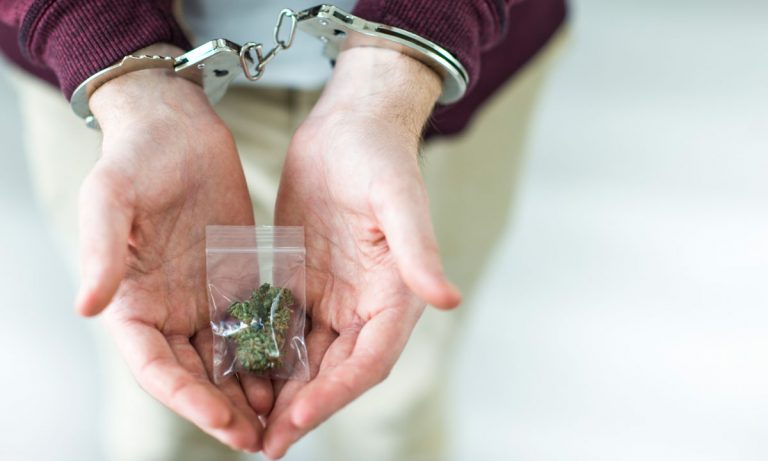
Ninety year old Willie Hugh Nelson is country singer, guitarist and songwriter. He was one of the main figures of the outlaw country subgenre that developed in the late 1960s as a reaction to the conservative restrictions of the Nashville sound. Nelson has been arrested several times for marijuana possession and has become one of the OG the legalization movement.

Uber Acquires A Bike-Share Start Up And It Will Change The World

Uber just bought Jump, an electric bike sharing company. But the two companies had been working together for more than two months to integrate the bike option on the Uber app — well before the acquisition announcement was made on Monday.

Jump Bikes began in 2010 under the name Social Bicycles. They were founded in New York, and provided the first dockless and shareable bikes in the industry. Unlike Citi Bikes, these bikes don’t need to be docked on a special port for them to work, giving users much more freedom when it comes to traveling. This marks a new era for Uber, where they take a leap into a new industry that’s rumored to be very important in the near future.

Photo courtesy of Jump Bikes

According to The Verge, there was a lot of competition to purchase the bike company. CEO Dara Khosrowshahi claims that this partnership is meant to develop Uber further, “bringing together multiple modes of transportation within the Uber app—so that you can choose the fastest or most affordable way to get where you’re going, whether that’s in an Uber, on a bike, on the subway, or more.” 

This new partnership will give Uber access to Jump Bikes located all over the country with the goal of enlarging the amount of bikes and including more cities into their business plan.

Jump Bikes are designed with a built-in motor to easily travel large cities, and a U bar lock that allows the bikes to be locked onto racks, light poles and benches. People who are using the bikes through the Uber app only need to lock the bikes onto the app’s “bike zone”, which is displayed on the Uber map, so other people can find the bikes with ease and reuse them.

Legal States Prepare For Driver Safety On 4/20 Weed Holiday

April 20 is known as 4/20, the national “high holiday” for marijuana enthusiasts everywhere. But just like any other holidays that encourages excess, like New Year’s Eve, acting without caution can have devastating consequences.

A recent study in JAMA Internal Medicine determined that fatal car crashes significantly increase following 4/20 parties. Using 25 years of fatal US car crash data, researchers compared the number of deadly accidents between 4:20 p.m. and midnight on April 20 with accidents occurring during the same time frame one week before and one week after 4/20.

What they found is not really surprising. There were 12 percent more accidents leading up to midnight on April 20 compared to the other dates. You can reasonably conclude those celebrating the 4/20 holiday by consuming marijuana were responsible for the increase, though, the study doesn’t indicate a direct correlation.

“These crashes really don’t have to happen,” the senior author, Dr. Donald A. Redelmeier, a professor of medicine at the University of Toronto, told The New York Times. “In the Netherlands, they’ve had legalized marijuana for years, but they have many more interventions—speed cameras, radar, sobriety checkpoints. The roads in the Netherlands are now much safer than those in the U.S.”

But there are efforts being made. This year the Colorado Department of Transportation launched The Cannabis Conversation, in hopes of better comprehending behaviors behind the driving under the influence of marijuana. CDoT will host open houses across the state to survey individual attitudes regarding marijuana and driving, as well as asking residents to submit to an online survey.

In addition, cannabis capitals like Denver have public transportation options and My 420 Tours, which will pick up and drop off partiers at grow facilities, breweries, dispensaries, and more. Last year, ride-sharing app Lyft and CDoT partnered to advocate planning for safe rides before consuming cannabis and will be running the same promotion. From March 20 to April 20, you can visit www.320movement.com to claim discounted ride codes.

Oregon police departments too hope to curb impaired driving on 4/20. Law enforcement will increase impairment patrols throughout the month of April in hopes of discourage drunk and high driving.

What’s The Deal With Cannabis Lounges In California?

As more cities begin to allow for and regulate commercial cannabis businesses, the state of California is seeing an influx of cannabis tourism. We’ve written before about the touchy relationships governments have with the idea of “cannabis lounges” (see here and here) and often questioned who will lead us in regards to cannabis tourism (our bets have often been on California).

Consumption of cannabis in public is illegal in the State of California, and many hotels and Air B&B’s do not allow smoking or “drug use” in their guest rooms. Nonetheless, MAUCRSA (the Medicinal and Adult Use Cannabis Regulation and Safety Act) allows local jurisdictions to authorize the on-site consumption of cannabis by state-licensed retailers and/or microbusinesses, which gives tourists at least one legal way to consume.

Specifically, so long as your city or county okays it, retailers and microbusinesses can have on-site consumption if:

  • Access to the area where cannabis consumption is allowed is restricted to persons 21 years of age and older.
  • Cannabis consumption is not visible from any public place or nonage-restricted area.
  • The sale or consumption of alcohol or tobacco is not allowed on the premises.

However, most local governments have explicitly prohibited “cannabis lounges” and on-site consumption by licensees (including the City of Los Angeles). Some cities, however, are capitalizing on the tourism potential in The Golden State. We have compiled a list of notable locales below.

West Hollywood is the only city in the Los Angeles area that allows for on-site consumption. The City plans to permit eight on-site consumption businesses for smoking, vaping, and ingesting, and it will also allow eight on-site consumption businesses for edible ingestion only. The window for submission for on-site consumption applications (and for other commercial cannabis businesses) is expected during the month of May, so we may see on-site consumption up and running for the busy summer months. Los Angeles, which is an area already known for tourism, will see a lot of its cannabis tourism go to the City of West Hollywood.

San Francisco has been California’s leader when it comes to the cannabis lounge concept (and cannabis businesses in general). San Francisco’s regulations outright permit retailers and microbusinesses to allow customers to engage in on-site consumption. Unlike other cities that have placed strict limits on consumption lounges or outright banned them, San Francisco is fully embracing the cannabis lounge model.

Oakland allows medical and adult-use cannabis dispensaries the opportunity to apply for and “obtain a secondary on-site consumption permit in order for cannabis to be consumed on the premises of the dispensary.” See Oakland Municipal Code §5.80.025. The City has not disclosed any limits as to how many on-site consumption permits may be issued, but the City has thus far only allowed eight dispensary permits and, as a result, there won’t be more than eight on-site consumption permits available (because only retailers and microbusinesses are allowed to undertake on-site consumption under state law).

Alameda will only issue two dispensary/retailer permits. The City’s ordinance allows those retailers to have on-site use or consumption of cannabis or cannabis products in interior areas of the licensed premises. The City has made it relatively easy for those granted a dispensary/retail permit to also capitalize on on-site consumption.

Palm Springs has expanded its cannabis regulations to allow for cannabis consumer lounges. “Cannabis Lounge Facility” permits are available in the City, and those holding the proper permits may additionally sell medical and adult-use cannabis and cannabis products. With festival activities fast-approaching in the desert cities, many tourists will flock to the Palm Springs area looking to partake under California’s new cannabis laws. Palm Springs will likely see a high demand for cannabis and cannabis products from tourists looking to consume during festival time.

Other California cities that have explored the idea of cannabis lounges are Cathedral City and South Lake Tahoe, but nothing official has happened in either city as of yet. Over time, as legalized cannabis becomes more normalized (and socialized) in the state, California will likely see an increase in cities that allow cannabis lounges. For now though, on-site consumption is a rare occurrence and a political hot potato. And for the few on-site consumption lounges that exist, we expect nothing but success and increased tourism.

Alexa Halloran is an attorney at Harris Bricken, a law firm with lawyers in Seattle, Portland, Los Angeles, San Francisco, Barcelona, and Beijing. This story was originally published on the Canna Law Blog

Why The Obamas Weren’t Invited To Royal Wedding

The guest list for the wedding of Prince Harry and Meghan Markle has been a source of endless debate, with people wondering which celebrities are going to be invited and if the Obamas, who were invited to William and Kate’s wedding in 2011, would make the cut.

Prince Harry has been photographed a few times with Barack and Michelle Obama, with many sources claiming that they’re friendly with each other.

But Kensington Palace recently announced that no world leaders were going to be invited to the royal wedding because they were prioritizing close friends of the couple, so while you can expect a few celebrities, you can rule out the Obamas.

According to Rebecca English, royal correspondent for the Daily Mail, inviting political leaders is not required for this wedding since Prince Harry is not in direct line to the throne. This is also why the couple’s wedding has a smaller guest list and relatively lower stakes.

English claimed that even though the Obamas weren’t invited, the royal couple was very much looking forward to seeing them soon. Still, no invite? Come on. Guess it would’ve been too awkward to invite the former President of the U.S. without inviting the current one.

World’s Oldest Man Reveals Cake Is Secret To Longevity

World’s oldest man reveals cake secret to longevity. During his Guinness World Records certificate ceremony at his home in Ashoro, Japan, Masazo Nonaka dug into his secret to longevity: a big cake with berries. The 112-year-old was named Tuesday as the world’s oldest living man. He turns 113 in July.

Nonaka was born on July 25, 1905, and credits the feat with not only eating sweets, but regular soaks in the hot springs and reading the newspaper every morning. He also loves watching samurai dramas on TV.

https://www.instagram.com/p/BhY4ZAinD0r

Nonaka’s family says he’s still very able, though he uses a wheelchair.

According to TIME, Nonaka is one of about 67,800 centenarians in Japan, which also has the highest average life expectancy: 80.98 for men and 87.14 for women, according to the Ministry of Health, Labor and Welfare.

Born in July 1905, Nonaka was also the oldest person ever born in Hokkaidō. He had two brothers and three sisters; Nonaka married Hatsuno Nonaka in 1931. He ran the family onsen, which opened in 1905.  Guinness says Nonaka, who has survived all seven of his siblings, his wife and two of his five children, replaced their former oldest living man: Francisco Olivera of Spain, who died earlier this year at age 113. The current oldest living woman is 117-year-old Nabi Tajima from Japan, who is also the world’s oldest person (and is expected to be certified by Guinness).

Emma Morano of Italy, born in 1899 died in April 2017 at the age of 118, swore by her “two raw eggs a day” diet, but said the real secret to her old age was her independence. At the time of her death, she was also the last living person verified to have been born in the 1800s. She is the oldest Italian person and the third-oldest European person ever.

Craig Glenday, Editor-in-Chief of Guinness says “Mr. Nonaka’s achievement is remarkable — he can teach us all an important lesson about the value of life and how to stretch the limits of human longevity.”

Medical Marijuana Can Allow For A Lower Dose Of Prescription Opioids

Marijuana is legal in over half the nation for medicinal use. It is in these jurisdictions that patients are permitted to use cannabis for a variety of ailments ranging from anxiety to chronic pain.

Meanwhile, the US is smack dab in the middle of one of the worst drug epidemics to ever sweep the land. Somewhere around 60,000 people a year are succumbing to fatal overdoses from opioids, according to the latest statistics from the Centers of Disease Control and Prevention. This is more death than the whole of the Vietnam War.

It is a situation that has all sides looking for answers. And while some studies have suggested that medical marijuana could pull the nation out of the pits of the opioid epidemic, federal officials have so far rejected the idea. Many of them, namely US Attorney General Jeff Sessions, find it absurd that switching one drug for another will remedy the problem.

Although medical marijuana may not be a salvation’s wing for the entire scope of the opioid scourge, there is evidence that it could help people who rely on pain medications.

The scientific minds from the University of California Center for Medicinal Cannabis Research published a report back in 2010 suggesting that cannabis medicine “may allow for opioid treatment at lower doses with fewer [patient] side effects.” The study went on to explain that “inhaled” marijuana safety enhanced “the analgesic effects of opioids.”

In 2015, a separate study determined that medical marijuana is being used as replacement for opioids. The study, entitled “Do Medical Marijuana Laws Reduce Addictions and Deaths Related to Pain Killers, found that 80 percent of medical marijuana patients are using cannabis as a substitute for prescription medications. This was especially true for those suffering with pain conditions. The consensus of the report was that most pain patients would likely make the switch to marijuana if given legal access.

It was just last week that two studies emerged pointing to medical marijuana as the great green hope in curbing the opioid problem. “Medical cannabis laws are associated with significant reductions in opioid prescribing in the Medicare Part D population,” the authors concluded. “This finding was particularly strong in states that permit dispensaries, and for reductions in hydrocodone and morphine prescriptions.”

Although cannabis advocates are eager to push the story about how medical marijuana saved the world, not all pain patients are excited about the possibility of this alternative treatment. Some of them claim that medical marijuana simply isn’t strong enough to cut through severe pain.

“Trauma and battlefield injuries could not be managed without the analgesic effects of opioids,” said Roger Chriss, a Washington-based technical consultant, who suffers from a connective tissue disorder known as Ehlers Danlos syndrome. “The same is true for tens of thousands of cancer surgeries, organ transplants and hip replacements. And for the neuropathic pain caused by chemotherapy or the pain of a sickle-cell crisis. The list goes on and on. Opioids are an invaluable medical resource.”

But no one is suggesting that opioids be eliminated all together — only that patients be given a legal alternative to painkillers that does not come with the risk of addiction or overdose. After all, this is America. Citizens should be given the freedom to use every tool in the shed.

John Boehner Turns Over A New Leaf, Joins Cannabis Company

Former House Speaker John Boehner, the chain-smoking, wine-loving Republican, announced on Wednesday via Twitter that he is joining the green rush.

Boehner, who had been quietly enjoying his retirement since retiring in 2015, will be joining the board of advisers at Acreage Holdings, a cannabis business that aims to “make cannabis available to any patient who can benefit from safe and reliable access.” Boehner is the most recent public official to reverse his position on marijuana and endorse legal reform.

For years, Boehner, the son of a bar owner, railed against any type of cannabis legislation. In a 2011 letter to a constituent, the Ohio Republican wrote:

“I am unalterably opposed to the legalization of marijuana or any other FDA Schedule I drug.  I remain concerned that legalization will result in increased abuse of all varieties of drugs, including alcohol.”

On Wednesday, he officially altered his stance. “Over the last 10 or 15 years, the American people’s attitudes have changed dramatically,” he told Bloomberg. “I find myself in that same position.

“When you look at the number of people in our state and federal penitentiaries, who are there for possession of small amounts of cannabis, you begin to really scratch your head,” Boehner continued. “We have literally filled up our jails with people who are nonviolent and frankly do not belong there.”

During his 25-year career in the House, the hard-drinking Boehner was a key ally of the alcohol industry. The Distilled Spirits Council of the United States, Wine and Spirits Wholesalers of America, and the National Beer Wholesalers Association were generous donors to Boehner’s political action committee.

Joining Boehner on the Board of Advisors of Acreage Holdings will be Bill Weld, the former governor of Massachusetts. In the 2016 election, Weld ran as the Libertarian vice presidential candidate alongside Gary Johnson, a longtime cannabis advocate.

In a joint statement, Boehner and Weld wrote:

While we come at this issue from different perspectives and track records, we both believe the time has come for serious consideration of a shift in federal marijuana policy. Over the past 20 years a growing number of states have experimented with their right to offer cannabis programs under the protection of the 10th amendment. During that period, those rights have lived somewhat in a state of conflict with federal policy. Also, during this period, the public perception of cannabis has dramatically shifted, with 94 percent of Americans currently in favor of some type of access, a shift driven by increased awareness of marijuana’s many medical applications.

Kevin Murphy, the founder and CEO of Acreage, now has two powerful political insiders to help the company — and the industry — gain acceptance among lamakers on the fence. “The addition of Speaker Boehner and Governor Weld to our Board will lead to even greater access for patients by changing the conversation overnight,” said Murphy.  “These men have shaped the political course of our country for decades and now they will help shape the course of this nascent but ascendant industry.”

New York-based Acreage Holdings is a multi-state owner of cannabis licenses and assets. So far, the company has operations in 11 states.

Apple Runs on 100 % Renewable Energy, But Is The iPhone Truly Zero Waste?

Apple released an ad claiming that their iPhone is zero waste, which sounds great, but it’s not accurate. Even though the company has been working hard to build a better world, announcing that they’re now run by 100 percent renewable energy, presently, it’s impossible for a smartphone to be made out of zero waste.

According to Mashable, everything about smartphones is damaging the environment, from their business model to their materials, no matter how clean and green Apple is. Smartphones contain precious minerals that are in limited supply on the planet, including gold, cobalt and copper. Some of these precious rocks, according to a Yale study, are irreplaceable, meaning that tech might have some troubles in the future. 

Materials from smartphones are really hard to recycle, especially from iPhones. Most devices from Apple are built with proprietary screws that require special tools to open. That’s why Apple charges you an arm and a leg whenever you want to switch batteries or change a cracked screen. It’s insane that Apple is claiming to be “zero waste,” when they’re one of the companies that make recycling harder than it already is.

Another thing that perpetuates waste is the current smartphone business model, which is all about short term performance. Most smartphones are designed to have short lifespans, with companies releasing new and upgraded devices every year.

Where does all this waste go? To your drawer? Best case scenario, your old phone will end up in a store where it’ll be refurbished and resold. Still, new phones won’t stop coming out and dozens of minerals would have already been wasted. It’s an endless cycle of waste that Apple would like to hide from you with a cute ad.

What Does Legal Cannabis Have To Do With Life Expectancy Rates?

What’s the life expectancy for the average American? It depends on where you live. And according to a study released in the Journal of the American Medical Associationthere is a wide disparity among the states.

The report found that Hawaiians have the longest life expectancy at 81 years and Mississippians the shortest at 75. The Atlantic took a deeper dive into the study and found:

Most startlingly, since 1990, 21 states have seen an increase in the death rate among people aged 20 to 55. In five states—Kentucky, Oklahoma, New Mexico, West Virginia, and Wyoming—the probability of early death among young adults rose by more than 10 percent in that time frame. Meanwhile, in New York and California, young and middle-aged people became much less likely to die in the same time period. The authors note that opioids, alcoholism, suicide, and kidney disease—which can be brought on by diabetes and alcoholism—were the main factors leading to the increases in early deaths.

But what about marijuana? Do state cannabis laws make a difference? The report did not break out this variable, but it is interesting to see the states at the top of the list and the bottom of the list.

The 10 states with the lowest probability of premature death were: California, Connecticut, Hawaii, Massachusetts, Minnesota, New Hampshire, New Jersey, New York, Vermont and Washington.

The 10 states with the highest probability of premature death included: Alabama, Arkansas, Kentucky, Louisiana, Mississippi, New Mexico, Oklahoma, South Carolina, Tennessee and West Virginia.

In the first list, most of the states have either legalized recreational use or have progressive medical marijuana programs. The second list includes all southern states with a more draconian view of cannabis.

It is not accurate to make the claim that cannabis will increase your life expectancy based on this study. But it certainly raises the question.

The study did find that opioid use was partly responsible for the problem. According to the report:

Opioid use disorders moved from the 11th leading cause of disability-adjusted life-years (DALYs) in 1990 to the 7th leading cause in 2016, representing a 74.5 percent change.

And alcohol was another big problem:

Age-standardized death rates due to alcohol increased by 17.50 percent from 1990 to 2016 in the United States, and alcohol use disorders accounted for 2.89 deaths per 100 000 persons in 2016. Previous studies have shown that alcohol consumption and binge drinking have increased in the United States, especially among females. Alcohol is a major risk factor for burden in the United States and is associated with adverse outcomes including sexually transmitted diseases, violence, and accidents.

Don't Miss Your Weekly Dose of The Fresh Toast.

Stay informed with exclusive news briefs delivered directly to your inbox every Friday.

We respect your privacy. Unsubscribe anytime.