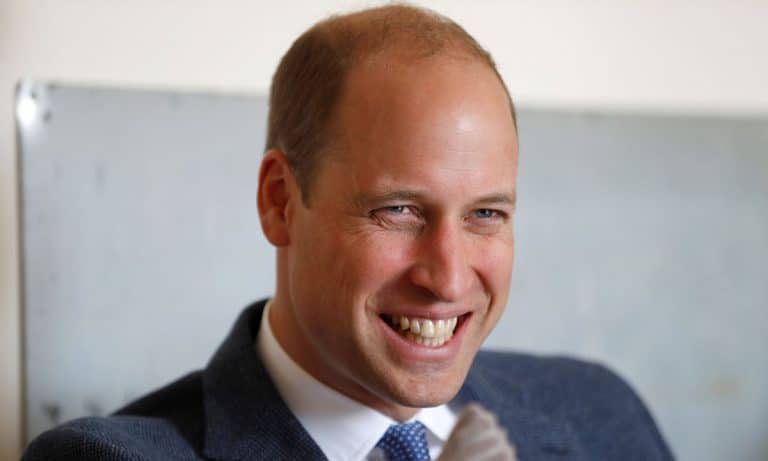
Middleton was poking fun at her husband’s lack of tresses back in 2014, she quipped, “The Prince was interested in the alpaca and as I showed it to them the Princess said he should put it on his head,” a farmer at the event told reporters. “She said, ‘You need it more than me,’ and pointed to his head and he laughed.”
“Meghan has been talking with a lot of designers but has decided that she wants to wear a Stella McCartney design. Stella is British with a legendary father and Meghan has been talking with the designer about what she wants. She wants it to be modern and young and cool but also very stylish,” sources tell NAUGHTY GOSSIP. “Meghan wants to be a new type of Royal and wants to support British designers, but she also wants to be young and hip and not follow the more tradition sense of style that Kate has.”
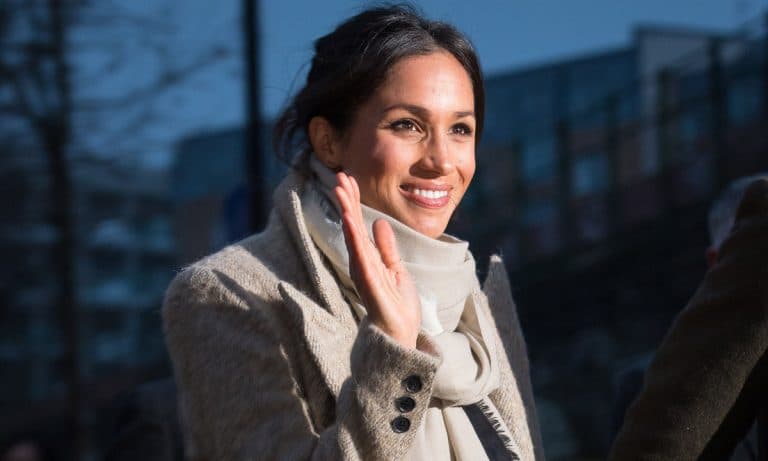
For the day in Cardiff, Meghan went for an all-black look, royal protocol be damned. It’s believed that most royal women are encouraged to NOT wear a lot of black, because all-black looks seem funereal. Meghan doesn’t care – she thinks all-black looks chic and modern. Meg wore black skinny jeans by Hiut Denim (a Welsh brand), boots by Tabitha Simmons and a coat by Stella McCartney. The purse is by DeMellier London.
Love the fresh dirt we bring over daily from Naughty Gossip? Let us know in the comments!
California is the largest cannabis market in the world and legalization is less than three weeks old. Just wait until the state regulators work out the kinks in the system and watch the industry skyrocket. If 2017 is any indication, the first year of legal marijuana in the state will be stellar.
And who is fueling this incredible growth? Baby boomers and women, according to a report released this week by Eaze, a marijuana technology company. The report, titled Eaze Insights: 2017 State of Cannabis, examined consumer trends driving the marijuana industry year over year. The report, which draws insights from the user behavior of more than 350,000 Eaze consumers and 15,000 survey respondents across the state of California, reveals that 2017 was a landmark year for marijuana acceptance and normalization.
“This year’s State of Cannabis report reveals a turning point in the industry toward mainstream acceptance. After Californians voted for adult use in November 2016, many consumers shifted their mindset and became more open to using cannabis to improve their everyday lives,” said Jim Patterson, CEO of Eaze. “Americans are becoming better educated about the wellness benefits offered by cannabis. As prohibition ends and a new era of marijuana emerges in 2018, we’ll see increased awareness drive diverse product adoption among new groups of people and continue to change lives for the better.”
According to the report:
While women have always enjoyed the benefits of marijuana, the vast majority of marijuana buyers have traditionally been men. But improved access and safety, combined with an expanding menu of brands and products specifically for women, has enabled women today to easily get the products they want. Women’s monthly spending increased by 20 percent last year and continues to rise.
The total percentage of orders from Baby Boomers increased 19 percent year-over-year — the largest growth among any generation on our platform. Followed closely by Gen X who increased by 13 percent year-over-year. This trend suggests that a significant portion of the industry’s growth is due to people looking for wellness and therapeutic options.
Other key findings from the report include:
Marijuana’s going mainstream: In 2017, marijuana was ordered via the Eaze platform every 10 seconds, a 200 percent increase from the frequency of deliveries in 2016 (every 30 seconds).
Inauguration Day sales spiked: On Inauguration Day, sales increased 21 percent, making it the seventh most popular holiday for ordering cannabis, more than Cinco De Mayo, Memorial Day weekend, and Mother’s Day. Other popular days? Three-day weekends like President’s Day and 4th of July, which ranked as the third and sixth most popular delivery days, respectively.
Convenient marijuana products will win out: The modern day consumer favors ready-to-use, convenient consumption methods like vaporizers, edibles, and prerolls. In the past year, vaporizer sales increased 191 percent and preroll sales increased 267 percent. Flower sales, on the other hand, are wilting, having dropped 43 percent over the past year.
A wellness solution: Consumers are reportedly turning to marijuana as a wellness product for things like sleeplessness, anxiety, joint pain, and other ailments. In fact, 45 percent of survey respondents replaced sleeping pills with marijuana.
With the knowledge that adult use would be legal at the start of 2018, consumers set aside preconceived stigmas and became increasingly comfortable using marijuana to enhance their everyday lives — whether to sleep better or celebrate popular holidays. In anticipation of this demand, Eaze added several brands to its platform so consumers could conveniently select from a wide variety of products to meet their needs.
Federal lawmakers are hoping to drag marijuana out of the pits of prohibition during the 2018 session. To do this, however, the conversation over the legalization of a nationwide cannabis trade must happen in both the US Senate and the House of Representatives. A group of democrats from the lower chamber did their part earlier this week by introducing a companion measure to Senator Cory Booker’s infamous Marijuana Justice Act.
The proposal, which was brought to the table by Representatives Barbara Lee and Ro Khanna of California, is designed to eliminate the cannabis plant from the confines of the Controlled Substances Act. It would also establish funds for communities of color, which are statistically those most affected by marijuana-related arrests. Representative Lee calls the bill “ a bold proposal to reverse decades of discriminatory drug enforcement and bring federal marijuana policy in line with the wishes of the people.”
The latest Gallup poll shows that 64 percent of the American population believes marijuana should be taxed and regulated in a manner similar to alcohol and tobacco. Considering that only a third of the population had the guts to come out in favor of marijuana legalization at the turn of the new millennium, there has been a huge shift in attitude over the past twenty years.
By all accounts, if the latest bill were put to a public vote, it would have no trouble seeing the light of day. The citizens of this great nation are good with the concept of marijuana being sold in dispensaries like beer. And they would jump at the chance to castrate US Attorney General’s mission to crackdown on cannabis and pull marijuana offenders out of the prison system.
According to Senator Booker, the proposal does the complete opposite of what federal lawmakers set out to so in 1994 with the crime bill. The Marijuana Justice Act gives states the incentive to end marijuana prohibition and launch fully legal pot markets.
Although there is more support these days for this issue on Capitol Hill, there is still not nearly enough to bring marijuana into the realm of national commerce. Some of the same polls indicating public enthusiasm for changing the country’s pot laws also show a great deal of apprehension on the part of Republicans. Only around half of the party supports legal weed as an ethos. Yet, that doesn’t mean these folks are prepared to take a stand on the subject in DC.
Even Democrats are holding back the gates of federal marijuana reform. While many of them are fully prepared to crack skulls if the Justice Department actually does crackdown on marijuana states, many of them want very little to do with passing this reform nationwide.
And then there is President Trump. If the bill were to clear Congress, chances are the Donald would not sign it into law. Neither he nor his administration has shown a willingness to end prohibition.
But it would make America great again.
Some of the latest data shows that marijuana legalization in all 50 states would create over one million jobs and contribute more than $131 billion in federal tax revenue. All in, the nation would experience billions in economic growth each year following this reform.
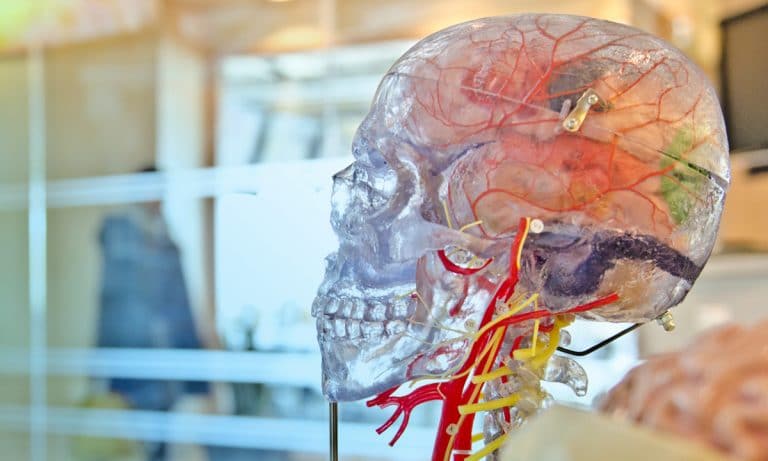
Last year, Sen. John McCain revealed that he has been diagnosed with glioblastoma, an aggressive tumor that forms in the tissue of the brain and spinal cord. The Arizona Republican underwent a four-hour surgery to remove a blood clot and is currently in good condition.
McCain’s home state of Arizona, fortunately, has a medical marijuana program and cancer is a qualifying condition. Could cannabis help McCain? Yes, and there is a significant body of scientific evidence to support the claim.
Earlier this year, in what was heralded as a breakthrough for cancer research, GW Pharmaceuticals announced positive results from a study using a combination of cannabidiol and tetrahydrocannabinol to treat an aggressive form of brain cancer.
Glioblastoma multiforme, or GBM is a “particularly aggressive brain tumor, with a poor prognosis,” according to the British-based biopharmaceutical company focused on developing proprietary cannabinoid medicine.
According to the study, patients with documented recurrent GBM treated with THC:CBD had an 83 percent one year survival rate compared with 53 percent for patients taking a placebo.
Said Professor Susan Short, principal investigator of the study:
“The findings from this well-designed controlled study suggest that the addition of a combination of THC and CBD to patients on dose-intensive temozolomide produced relevant improvements in survival compared with placebo and this is a good signal of potential efficacy. Moreover, the cannabinoid medicine was generally well tolerated. These promising results are of particular interest as the pharmacology of the THC:CBD product appears to be distinct from existing oncology medications and may offer a unique and possibly synergistic option for future glioma treatment.”
“Studies in mice and rats have shown that cannabinoids may inhibit tumor growth by causing cell death, blocking cell growth, and blocking the development of blood vessels needed by tumors to grow. Laboratory and animal studies have shown that cannabinoids may be able to kill cancer cells while protecting normal cells.
“A laboratory study of cannabidiol (CBD) in human glioma cells showed that when given along with chemotherapy, CBD may make chemotherapy more effective and increase cancer cell death without harming normal cells. Studies in mouse models of cancer showed that CBD together with delta-9-THC may make chemotherapy such as temozolomide more effective.”
Marijuana’s effect on cancer cells is not new. In 2006, results of a study were published in the British Journal of Pharmacology. The team of Spanish scientists led by Manuel Guzman conducted the first clinical trial assessing the antitumoral action of THC on humans. Guzman administered THC into the tumors of nine patients with glioblastoma, who had failed to respond to standard brain-cancer therapies. The THC treatment was associated with significantly reduced tumor cell proliferation in every test subject.
Also in 2006, scientists at Harvard University found that THC slows tumor growth in lung cancer and “significantly reduces the ability of the cancer to spread.” The research showed that THC selectively targets and destroys tumor cells while leaving healthy cells unscathed.
While Meghan Markle has been an established actress in Hollywood for over seven years, the current Meghan Markle craze—the Markeinassance if you will—is like nothing we’ve ever seen before. People are obsessed with the fact that an American celebrity is marrying Prince Harry and joining the Royal family. It’s totally understandable, but this has pushed some people to the point of insanity.
Marie Clare reports that some women want Meghan Markle’s nose so bad that they’re undergoing surgery – it’s a nice nose, but that seems a little extreme – and that they’ve scoured all over the web to purchase her clothes and jewelry items. There’s also a business on the rise — women who look like Meghan Markle, who are impersonating her, and who are getting some profit out of it. Wait, what?
For 400 pounds, you get faux Meghan for a couple of hours. If you want her for a day, it costs you around $3000. While it’s unclear what these ladies do when people or an event purchases their services, this industry is growing and is meant to boom after the royal wedding in May 2018.
The Sun interviewed Sarah Mlanga, a woman who’s become a Meghan Markle lookalike, and who’s had a lot of success in the business.
When Prince Harry announced his engagement my life changed overnight. All of a sudden my husband and friends were telling me I resembled his bride-to-be but I had to google Meghan to see what all the fuss was about. I went from being a typical school-run mum to being stopped half a dozen times a day by strangers asking for selfies, or people on social media contacting me. I didn’t plan to try lookalike work but I started getting contacted by lookalike agencies and journalists. Now I’m inundated with offers from around the world. I’ve been booked for bridal shows, modelling jobs and photoshoots.”
According to Sarah, Meghan has taught her to love her features, her skin, her body type, and she looks up to her when it comes to her personal style. This is weird, but as long as everyone’s happy it’s cool, right?
Written in clean, factual, and often humorous prose, this book is a must-have for anyone interested in the subject of CBD, medical marijuana, or alternative health solutions. The first thing we learn is that CBD, the “other” ingredient found in the cannabis plant or in hemp, will not get you “stoned.”
Research across the globe is beginning to show that CBD has the potential to benefit users in ways most of us might find unimaginable. Ms. Adler explains the many ways CBD has brought life-changing improvements to patients with depression/anxiety, autism, childhood epilepsy, chronic pain, early onset dementia, arthritis, and much, much more.
In this extensive, always entertaining read, The ABC’s of CBD also explores the many questions most people might have surrounding CBD: Is it legal? Is it safe for my kids? Where does CBD come from? Why do we need it? Why now? What exactly does it do?
The ABC’s of CBD also covers CBD’s history, its growing impact on alternative health care, and the possibilities it has to offer for real, quantifiable lifestyle enhancement. These and plenty of other topics reside at the heart of Ms. Adler’s impressive and accessible work.
The ABC’s of CBD provides the most-up-to-date information on CBD, how it is grown, sold, and packaged, and what to look (and look out) for when buying or contemplating using CBD. Included within the book are interviews from some of the brightest voices in the cannabis and CBD field.
Every day sees a growing number of the canna-curious, as we deal with our own health concerns and those of our children and aging parents. Disorders, addictions, and diseases like anxiety, ADHD, Autism, Alzheimer’s, Colitis, Chronic Pain, Cancer—this is our new reality. And as we realize that Western medicine alone doesn’t hold the answers, science is finally recognizing and examining the ancient healing properties of CBD. The ABC’s of CBD cuts through the stigma, fear, social injustice, and misinformation that have kept this medicine out of patients’ hands for far too long.
Last week we wrote about how New Jersey legislators had established a path to legalizing recreational marijuana, thanks to Democratic State Sen. Nicholas Scutari introducing a key measure to allow its sale and usage. Scutari had introduced a very similar bill last session and back in 2014 when Chris Christie was at the helm.
The differences between now and then? The New Jersey Senate is filled with a Democratic majority following recent elections and Phil Murphy, who campaigned in part on legalizing recreational marijuana, assumed the New Jersey gubernatorial role this week.
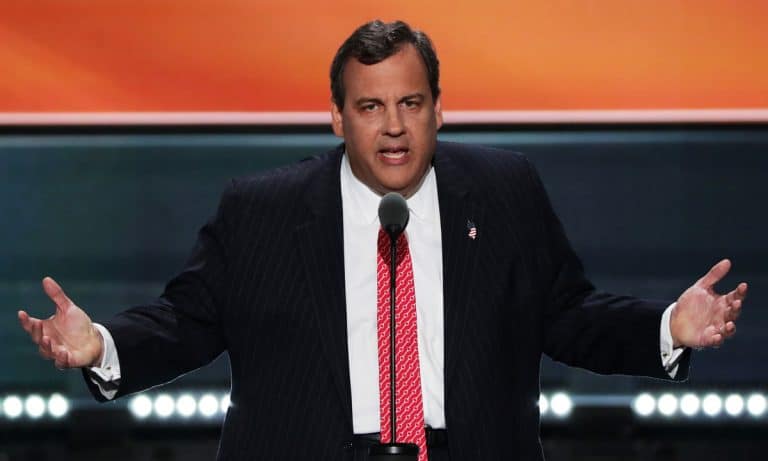
Murphy’s predecessor needs no introduction but we’ll give him one anyway—Mr. Chris Christie, the Bridgegate disaster artist and fierce cannabis opponent. To commemorate Christie’s departure, let us recall the former governor’s five worst takes involving marijuana.
Colorado’s ‘Head Shops’—April 2014
Responding to a caller during his radio program asking about money created by marijuana legalization:
I don’t care about the tax money that may come from it. And I don’t care, quite frankly, that people think it’s inevitable. It’s not inevitable here. I’m not going to permit it — never — as long as I’m governor.
“You wanna elect somebody else who’s willing to legalize marijuana and expose our children to that gateway drug and the effects it has on their brain, you’ll have to live with yourself if you do that — but it’s not going to be this governor who does it.”
Christie wasn’t finished. He later added:
“For the people who are enamored with the idea with the income, the tax revenue from this, go to Colorado and see if you want to live there,” he said. “See if you want to live in a major city in Colorado where there’s head shops popping up on every corner and people flying into your airport just to come and get high. To me, it’s just not the quality of life we want to have here in the state of New Jersey, and there’s no tax revenue that’s worth that.”
Marijuana ‘Crackdown’ As President—April 2015
As part of his presidential campaign, Christie sat down with Iowa conservative radio host where the topic of cannabis came up. Here’s the key exchange:
Hewitt: Right now, we’ve got the states of Colorado and Washington flaunting federal law by allowing people to sell dope legally. If you’re the President of the United States, are you going to enforce the federal drug laws in those states?
Christie: Absolutely. I will crack down and not permit it.
Hewitt: All right, next …
Christie: Marijuana is a gateway drug. We have an enormous addiction problem in this country. And we need to send very clear leadership from the White House on down through the federal law enforcement. Marijuana is an illegal drug under federal law. And the states should not be permitted to sell it and profit from it.
Cannabis Industry’s ‘Blood Money’—Nov. 2016
Though Christie’s 2016 presidential bid was every bit of a disaster, he didn’t go quietly into that good night. Because thanks to Trump’s election, America had entered a national nightmare and Christie relished his role as the boogeyman.
During his “Ask the Governor” radio program, a caller asked Christie about the tax revenue generated by recreational marijuana sales. The caller referenced other states like Washington, Oregon, and Colorado where that exact outcome occurred. Christie didn’t see it that way.
“Are you high right now?” Christie asked the caller. “To me, legalization of marijuana for tax purposes, and you can’t justify it any other way, is blood money.”
Cannabis Will ‘Lead To More Death’—Oct. 2017
Speaking in Indianapolis as part of America’s opioid commission, Christie said:
Marijuana legalization will lead to more drug use, not less drug use, will lead to more death not less death, and the national institute of drug abuse has proven it. There is no reason, if I told you today that anything would make your child two and a half time more likely to be addicted to opioids, you would be getting them as far away from it as you possibly could.
The ‘Crazy Liberals’ Who ‘Poison Our Kids’—Nov. 2017
In the moments leading up to New Jersey’s 2017 gubernatorial race, Christie attempted to use whatever influence he had left to sway the election. Knowing recreational marijuana was a major point in Murphy’s platform, he tried to color legalization supporters as “crazy liberals” who want to “poison our kids,” according to Politico.
“They want that blood money? Let them do it,” Christie said, repeating his favorite flashy phrase about cannabis tax revenue.
As more former NFL players speak on the medicinal benefits of cannabis, it grants others the safety to step forward and join the ranks. The latest former football athlete to announce his pro-cannabis stance is Willis McGahee, the once-prolific running back.
The American Medical Marijuana Physicians Association will host “The NFL and Medical Cannabis Conference” in May of this year, with the aim “to merge two highly controversial and popular topics, connecting traditional western medicine and medical marijuana in a professional, educational environment.”
This conference helped physicians expand and update existing knowledge and skills regarding ever-increasingly sophisticated diagnostic and practice guidelines, to share new ideas for evaluation and treatment techniques, and to increase the practitioner’s knowledge and ability to act and advocate for patients within the current medical legislative and regulatory environment.
McGahee, who hasn’t previously announced any association with the cannabis community, will speak as part of a roundtable discussion with a panel of former players about using marijuana to treat medical conditions. Joining McGahee is Treyous Jarrells, the former Colorado State running back who quit football to continue using marijuana.
Dr. Bennett Omalu, the doctor responsible for discovering CTE and portrayed by Will Smith in Concussion, will serve as the conference’s keynote speaker.
McGahee played for the Buffalo Bills, Baltimore Ravens, and Denver Broncos throughout his career. As an NFL player, McGahee carried the ball 2,095 times for 8,474 yards and scored 70 TDs both rushing and receiving.
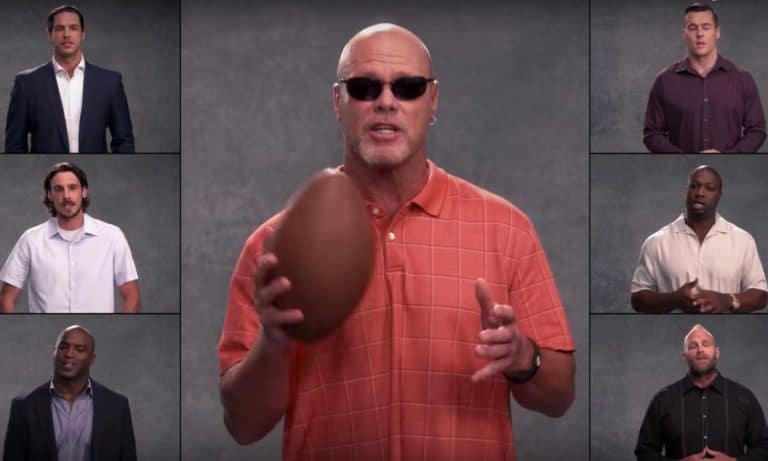
Former NFL players from the league’s history have joined forces in a public service announcement to call out the hypocrisy and backwards policies regarding athletes using medical marijuana.
Included among the players is Ricky Williams, Jim McMahon, Mark Restelli, Chris Kluwe, Eben Britton, Kyle Turley, and Boo Williams. The PSA cuts between the players stating snippets of their overall message, demonstrating their unity in delivery and thought.
“The men who play American football are subject to a life of injury, pain, and disease both during and long after their careers are over,” they collectively say.
“That’s why I smoke cannabis,” each of them says.
The only problem with the PSA—it isn’t technically real. It’s a fictitious advertisement meant to serve within the Netflix sitcom Disjointed, which tells the story of a Los Angeles dispensary woman owner and her loose collective of associates. The show is known for devising false ads to break up an episode and further expand the universe of the show.
It’s interesting, however, because it doubly services as an actual PSA for the real-life Gridiron Cannabis Coalition. The group’s message still spreads with a raised profile thanks to its attachment to a Netflix-produced show, regardless of its inception.
For some reason the major North American, non-Canadian football league refuses to allow players to use cannabis. Instead of allowing for safe, natural healing, the sport pushes players to addictive narcotic painkillers with serious side effects. So “let’s get real, Roger,” the GCC says, referencing NFL commissioner Roger Goodell.
“Football players should be allowed to use medicinal marijuana without the stigma of it being a banned substance. Cannabis isn’t a drug, it is a medicine.”
Thanks to Disjointed and Netflix, that message has now been heard.
It’s a new day, which means there’s some new gossip regarding the Royals. Take a seat, Meghan Markle. For once, it’s not about you. Some eagle-eyed Royal watchers think they’ve figured out the sex of Kate Middleton’s baby, thanks to her outfit choices.
In December, Daily Star reported that Kate was expecting a boy when she, Prince William, and their two kids posed for their annual holiday photo all wearing a different shade of blue.
https://www.instagram.com/p/Bc14E7EAS3j
But since the photo was taken in July 2017, nearly a full year before Kate is due (April 2018), Kate probably didn’t even know she was pregnant when the picture was taken, let alone the sex of her unborn child.
The same type of gender speculation happened in October, when Kate stepped out wearing another blue ensemble. While it could have been a simple clothing choice for Kate, others believed (or wanted to believe, more like it) that she was dropping a hint that she was having a boy.
Fast forward to Tuesday and now, once again, people think they’ve cracked the royal Da Vinci Code of clothing. It appears Kate is now trying to cryptically tell the world she’s having a…girl.
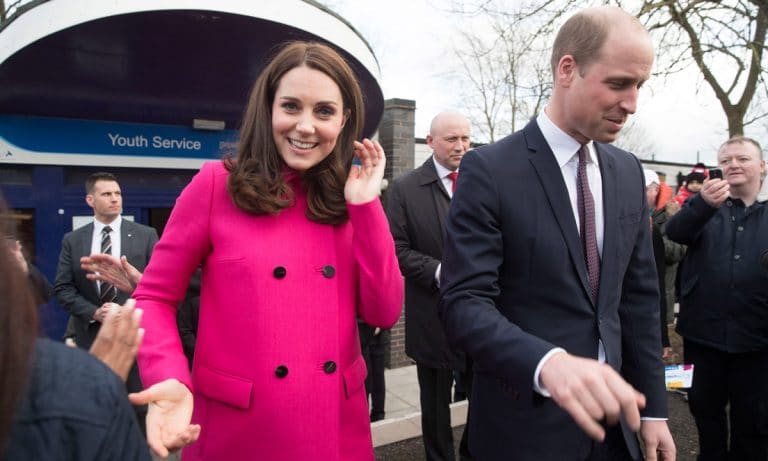
As the Daily Staronce again speculates on the sex of the newest Royal baby, they point out that the bright pink coat that Kate wore recently was the same coat she wore while pregnant with Princess Charlotte. In fact, that last time she was seen wearing it, was her last official public outing before giving birth.
Either Kate’s the Dan Brown of outfit algorithms or, more realistically, she just wears what she feels like when she wakes up in the morning, like every other woman on earth.