Saturday, May 9, 2026
Home Blog Page 1085

The Once-A-Week Rule And How It Can Help Your New Relationship

0

If you’ve met the love of your life, or even just someone whose clothes you want to rip off every time you see them, experts have some advice if you’d like to see the infatuation stage last past the first month: here’s the deets on the Once-A-Week Rule.

Psychologist Seth Meyers recommends limiting your time together to just once per week. He tells Psychology Today:

While the drive to want to be with that person is understandable, the real-world realities often ultimately stress the new relationship and cause it to end.

He says seeing each other too often “intensifies emotions,” which could lead to heartbreak if it’s with someone you don’t know very well.

“The problem with this dynamic is that seeing each other too frequently at the very beginning forges an illusion of intimacy and dependence, even though each person does know that it takes months — or even years — to truly get to know someone.”

Same deal if the person you’re crushing on doesn’t have the same relationship goals as you — you could end up heartbroken and/or feeling lonely. But if the two of you are on the same page? Great! It’s just that that rarely happens.

Meyers recommends that new couples see each other once a week for the first month and then increase the frequency after that. And to those who believe new lovers should throw caution to the wind and go with what feel natural, Meyers disagrees: “I would respond by saying that two people who are meant to be together will end up together, regardless of whether they see each other once a week or five times a week.”

5 Marijuana Stocks We’re Watching Today: December 4th, 2017

Out of over 200 marijuana stocks, there’s 5 that we’re going to be watching as the markets open due to breaking news out this morning and more.

Here’s 5 cannabis companies to watch today including Aurora Cannabis Inc. (TSX:ACB) (OTC:ACBFF) and more.

22nd Century Group Inc. (NYSE:XXII)

This morning, 22nd Century Group, Inc. announced the hiring of Juan Sanchez Tamburrino, Ph.D., as the Company’s Vice President of Research and Development. Dr. Tamburrino was previously the head of the Plant Biotechnology Division of British American Tobacco.

Aurora Cannabis Inc. (TSX:ACB) (OTC:ACBFF)

This morning, Aurora Cannabis Inc. had two major announcements that are moving shares of the company. Aurora announced that further to the investor rights agreement between both companies, as announced on November 6, 2017Aurora will make a further investment in Radient Technologies Inc. for a total of $12 million. Also, Aurora announced that it is increasing its ownership stake in Cann Group Ltd.from 19.9% to 22.9%.

Cann Group Ltd. (ASC:CAN) (OTC: CNGGF)

This morning, Aurora Cannabis Inc. announced that it is increasing its ownership stake in Cann Group Ltd. from 19.9% to 22.9% by participating in Cann’s latest, fully underwritten Placement of Shares, priced at $2.50 AUD per share.

Emblem Corp. (TSX:EMC) (OTC:EMMBF)

Today, Emblem Corp. announced its growth plans for 2018. Incoming President and CEO, Nick Dean, will be moving forward under a new paradigm focused on building capacity to meet the expected surge in demand, ramping up patient acquisition on the medical cannabis market, and embarking on a number of strategic partnerships that will position it well for the adult-use cannabis market.

GW Pharmaceuticals Plc. (NASDAQ:GWPH)

This morning, GW Pharmaceuticals Plc. filed its financial results for the fourth quarter and year-ended 30 September 2017 with the SEC in a form 20-F.

These Minor Instagram Celebs Were Arrested For Showing Their Butts At A Temple

0

A San Diego couple known to thousands on Instagram as “Traveling Butts” is now infamous for a very different reason: they were arrested for baring their bottoms at a holy site.

Joseph and Travis Dasilva were in Bangkok when they decided to snap a pic of their bare butts at Wat Trai Mit Witthayaram (Golden Buddha temple) and post it to their 14-thousand followers (since then, they deleted their account and reactivated it). The publicity drew lots of attention, including that of local police who arrested the duo at the Bangkok airport.

https://www.instagram.com/p/BcEjyrWH_ga

The pair face charges of public indecency and possible prison time, according to the Bangkok Post, which reports that the pair was fined 5,000 baht (about $153) for their nakedness, the heaviest permissible amount for the offense.

The station chief told Bangkok Post police are preparing more charges against the couple, “because they posted their photos on the internet and took photos of their naked body parts at a religious site.” The couple face charges for posting pornographic pictures online and insulting a religion — the former carrying a punishment of up to five years in jail and/or a fine of up to 100,000 baht ($3,066) and the latter carrying a jail sentence of up to 7 years and/or a fine of up to 40,000 baht ($1,226).

https://www.instagram.com/p/BcEkOk0n61S

Back in San Diego, the two men reached out to City Commissioner Nicole Murray-Ramirez for help. He says he’s currently talking to American authorities on what to do next.

He tells San Diego Gay & Lesbian News: “Though I am very disappointed in their actions, I am talking to U.S. government officials to see what assistance we can give them.”

Col. Choengron Rimpadee, deputy spokesman with the Thai immigration police, told the BBC: “Once they are through with the charges, the Thai immigration police will revoke their visas and push for deportation,” and that they would not be allowed to return to Thailand.

The Fresh Toast Marijuana Legislative Roundup: Dec. 4

Last week was a busy time for marijuana legislation from Maryland finally allowing medical marijuana sales in the state to San Francisco approving a regulatory framework for recreational retail. There were also key developments in North Dakota and Minnesota.  Read all about these developments and more in The Fresh Toast’s Marijuana Legislative Roundup for Dec. 4.

National: 

On Thursday, Senator Cory Gardner (R-CO) withdrew an amendment to the Senate tax reform bill that would have removed tax penalties for state-legal marijuana businesses. Section 280E of the tax code prohibits businesses associated with “trafficking” federally controlled substances from taking tax deductions granted to all other businesses, effectively forcing cannabis businesses to pay up to 90 percent of their earnings in federal taxes. Gardner’s amendment, known as the Small Business Tax Equity Act, would have exempted marijuana businesses from Section 280E as long as they remained in full compliance with state law. The final version of the tax reform bill passed without the amendment by a narrow majority in the early hours of Friday morning. 

 Maryland: 

On Friday, medical marijuana sales began in Maryland after years of delays following the state’s 2014 medical marijuana reform. Under Maryland law, physicians, nurse practitioners, dentists, and some other healthcare workers can be certified by the Medical Cannabis Commission to prescribe cannabis for patients with a wide variety of ailments. Patients suffering from any severe condition for which other treatments have been ineffective can seek medical marijuana authorization, as well as those suffering from a condition that causes severe or chronic pain, appetite loss, seizures, or other debilitating symptoms. Glaucoma and PTSD are also included on the list of qualifying conditions. Maryland’s first medical marijuana law was enacted in 2013, but quickly failed due to a lack of interest among the academic institutions charged with running the program. A series of scandals, judicial challenges, and regulatory delays have further delayed the program’s implementation since the 2014 reform.   

 California: 

On Tuesday, the San Francisco Board of Supervisors approved a regulatory framework for recreational cannabis businesses to operate in the city starting next year. The regulations approved by the Board include a 600-foot buffer zone between marijuana businesses and schools, licensing preference for businesses that commit to hiring locally and mentoring people from communities that have been most harmed by the War on Drugs, and other basic licensing rules that localities are required to implement under California law. If Mayor Ed Lee approves the rules quickly, sales could begin as soon as January 5. So far, very few California cities and counties have approved the necessary regulations for recreational sales to begin within their jurisdictions, which will delay the beginning of recreational sales across much of California beyond the state’s official January 1 start date.   

North Dakota: 

On Tuesday, supporters of marijuana legalization submitted a draft petition to the North Dakota Secretary of State to put the question of recreational marijuana before voters. If passed, the initiative would legalize the growth, consumption, and sale of cannabis for adults 21 and older. It would also seal the records of anyone convicted for marijuana-related offenses made legal by the measure. Secretary of State Al Jaeger will review the petition and decide whether or not to approve it. If approved, supporters would need to gather a minimum of 13,452 signatures for the measure to be placed on the ballot next year. Supporters failed to garner enough signatures for the 2016 ballot, but voters did approve a medical marijuana initiative that year.  

Minnesota: 

Last week, the Minnesota Health Commissioner announced that the state would add sleep apnea and autism to the list of qualifying conditions for patients to obtain medical marijuana authorization. Every year, the Health Department takes public input on conditions that should be added to the list and reviews each condition in coordination with a citizens’ review panel. Suggested conditions that were rejected this year include anxiety, dementia, and Parkinson’s disease. The addition of autism and sleep apnea in July 2018 will bring the total to 13.  

Pokémon Is Opening A Full-Time Restaurant And People Are Freaking Out

As a millennial kid, I watched Pokémon. It’s what you did. Not knowing the program was an import from Japan, I always wondered what in the world Ash, Brock, and Misty were eating amidst their travels.

I also wondered why they always devoured food whole like they were stranded on a desert island for three months, but that’s a different conversation.

But intrepid fans will soon have the chance to taste the same food as their favorite heroes as the Pokémon franchise is entering the food business. A Pokémon Café will open in Tokyo, Japan early next year and will be the company’s first brick-and-mortar restaurant. The café will be located at the Takashimaya store in Nohonbashi prefecture.

Those who have visited Tokyo know the city’s overflowing Pokémon love with stores that are metropolises unto themselves. They’re called Pokémon Center Mega stores and there you can find every Pikachu and Pokémon toy you could ever desire.

However, the new restaurant will be officially called Pokémon Center Tokyo DX, and feature themed food and drink from the Poké-universe. In addition, fans will find merchandise exclusive to the location.

See The Oregon Video Campaign That Urges Cannabusinesses To ‘Go Legal’

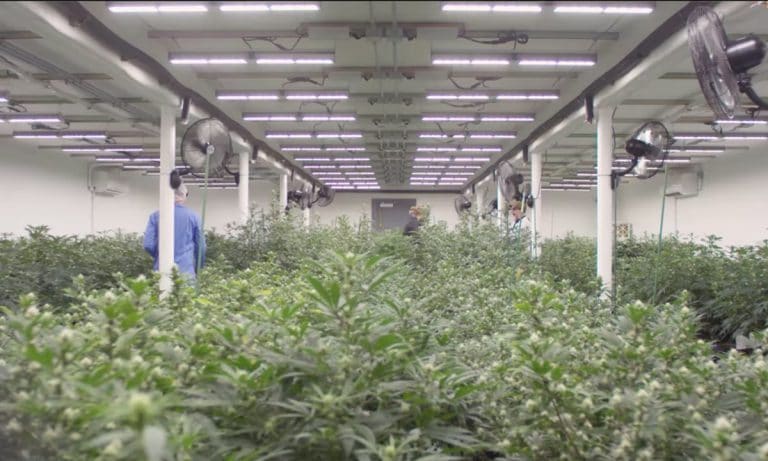
The message is simple: If you’re growing or processing or selling marijuana in Oregon, go legal. The Oregon Liquor Control Commission released a series of seven videos last week featuring some of the legal players in the state’s nascent cannabis industry.

The “Go Legal!” videos highlight how participation in the regulated cannabis industry ensures public safety, creates consumer confidence, and contributes to economic growth for businesses and the state. OLCC licensees share their stories and explain in their own words the value of the regulated marketplace.

Part of the agency’s Go Legal! industry and public awareness campaign, the videos feature licensees from around Oregon, up and down the cannabis supply chain, from seed to sale. Footage captures sprawling operations, craft enterprises, and everything in between; and the message is consistent: businesses see value in the regulatory structures that the state has put in place.

“This is a very modern and scientific industry, one that values community and transparency,” said Steve Marks, OLCC executive director. “We hope that prospective cannabis business owners will appreciate hearing directly from their peers about the importance of operating within the regulated market. And we hope the public will better understand the industry and embrace the regulatory structure we’ve developed that supports public safety, the industry and consumers.”

Beyond improved public safety, many featured licensees note the windfall of tax dollars—$70 million in fiscal year 2017, according to the Oregon Department of Revenue, which will directly benefit schools, state police, and provide funds for alcohol and drug prevention services, among other things.

“Since 2016, we’ve been working in partnership with this business community to build a strong and fair regulatory framework, and to provide information and guidance that supports their compliant participation in it,” noted Mark Pettinger, OLCC spokesperson. “So we were pleased to hear our licensees connect the dots between how rules governing this industry are indeed working to improve public safety, curb illegal activity on the ground, and contribute to their communities and Oregon’s economy.”

The Go Legal! video series can be found at GoLegalOregon.com.

4 Things You Need To Know About Massachusetts’ Cannabis Laws

It’s been a year since Massachusetts voted in legal cannabis, but legal sales of the plant are still more than a few months away. Regulations are still being put in place and lawmakers just produced a new law that changes the one voted in by the People in 2016.

Here’s a list of the top four things you need to know about Massachusetts adult use cannabis law in its current state:

You Can Give The Gift Of Cannabis

Although there’s still nowhere to buy it, it is legal under state law to gift someone up to an ounce of cannabis, there must be no compensation, however. Once actual sales start, between local and state taxes, there will be up to a 20 percent sales tax. That is if you don’t end up in a dry area: in towns and cities where the majority of voters voted against legalizing pot, the municipal council can prohibit cannabis sales. In the same vein, if an area that voted for legalization still wants to prohibit cannabis, they’ll need a popular referendum.

Don’t Light Up In Public

Once you’ve got your hands on some good, beast coast nuggets, where can you smoke them? Not in public, that’s for sure. You can go home or to a friend’s house to smoke, but renters beware: the landlord can explicitly ban tenants from smoking or growing cannabis onsite. They can’t, however, say “no edibles” or keep you from ingesting smokeless products.

You Can Grow Your Own

As long as you own or have a hip landlord, you can grow your own. Six plants is the maximum per adult over 21, and twelve is the max for a household. The grow must be locked and not visible to those on the outside, including by aircraft. If the plan is to use homegrown to make concentrates, remember that there’s a law about that, too. The only liquid or gas able to be used is alcohol and it must have a flashpoint of under 100.

Your Going To Wait A While For Recreational Sales

While possessing small amounts of cannabis has been legal since December, according to South Coast Today, actual sales of the plant aren’t expected to go into effect until July 2018. As of now, adults 21 and over may possess up to an ounce of flowers or five grams of concentrate on their person. Nicely enough, one can have up to 10 ounces in the home, but it must be locked away in a secure place.

Grassachusetts may have a little ways to go before they’re a viable recreational marketplace, but as the laws get shaken out, it sounds like they’ll have a robust cannabis program, soon(ish).

Gossip: Kendall Jenner Wants To Get A Gun; The Details On Meghan Markle’s Engagement Ring

On Sunday’s all-new ‘Keeping Up With the Kardashians,’ Kendall and Khloe Kardashian sat down with Kim to talk guns.

“Kendall and I were talking earlier and she just feels really unsafe. She says she has literally a different stalker outside of her house every few days. She’s a single girl who lives alone, like someone’s already broken into her home, what if she was there?” Khloe explained. Kim, an advocate for gun safety laws, insisted that a gun just isn’t necessary.

“Well, that’s what you have security for,” Kim shot back. In an effort to help Kim understand, Khloe asked Kim if she thinks having a gun would have helped her during last year’s Paris robbery.

“In your situation, say that gun, you were able to get access to it, would you know what to do?” Khloe asked. Even if she did know how to use one, Kim wasn’t so sure a gun would’ve changed the outcome of that fateful night.

“I would not shoot these, it was three against one, or six, you know, or seven, I didn’t know about. There was no way I was gonna get out of there, I’m not like, Laura Croft,” Kim said.

At the end of the day, guns are a no go for Kim. “I’m not comfortable with it. I wouldn’t want my kids around it. I wouldn’t want sleepovers going on here, with the kids here and I know there’s a gun,” Kim insisted.

The Details On Meghan Markle’s Engagement Ring

Reyne Hirsch who is a luxury goods and collectible expert (13 seasons on ‘Antiques Roadshow’ and now hosting ‘Ridiculous Ranches’ on RideTV) tells all about Meghan’s engagement ring.

The center stone is estimated between 4-5 carats in size. The two side stones approximately
.50 – .75 carats each.

The market value of the ring greatly depends on the quality of the stones used. Average stones
of this size and shape could cost about $75-95,000. However, I would have to assume that with
two of the stones being Princess Diana’s – and the center stone he picked out as well, they are probably
above average, and perhaps nearly flawless. That would place the value of the ring in the $300-400,000 range.

Then again, any diamonds with Princess Diana as the provenance would be priceless.

If you want to design a custom ring, it is best to meet with a respected jeweler in your area who can
help design something special for you with a stone size, shape and metal in mind. This would NOT
be a jeweler you find in your local mall. A custom ring, depending on how intricate, can take anywhere
from a week to a month to create.

Reyne Hirsch, an expert in 20th century decorative arts and current host of RideTV’s “Ridiculous Ranches,” has a lot under her belt. When not appraising antique watches, $20 million paintings or other highly sought out collectibles, Reyne is also a regular contributor to Huffington Post with her “Celebrity Collector” column where she interviews celebrities about their unique collections. Hirsch rose to popularity as on-air talent for 13 seasons of PBS’ Emmy Nominated series, Antiques Roadshow and is a repeat guest on some of America’s highest rated morning shows such as CBS This Morning Martha Stewart Radio and more. As if that wasn’t enough, Reyne is a 2-time published author and has been interviews by publications such as The Los Angeles Times, TV Guide, Home and Garden, The Washington Post, Time Out New York and many many more. She currently resides in Houston Texas where she is continuously expanding her expertise into new areas such as television development, trade book contributing and connecting with her loyal fans and fans of her incredibly interesting industry through social media.

Love the fresh dirt we bring over daily from Naughty Gossip? Let us know in the comments!

Meet The Special Interest Groups That Are Keeping Cannabis Illegal

In this era of political polarization, when Americans seem to agree on absolutely nothing, let me reassure you. We overwhelmingly agree that cannabis should be legal. So what is keeping cannabis illegal?

One in five Americans have (state) legal access, 1 in 2 have experimented with it, and more than 1 in 10 smoke regularly. Southern California yuppies are publicly winning prizes for growing the same plant that landed Georgia teenagers in prison.

Half of states allow at least limited use, and a few attract elite cannabis tourism. Federally, the drug remains fiercely criminalized, despite irrefutable evidence of its medical value. 

So what’s the hold-up?

Being in the anti-marijuana business is astonishingly lucrative for bureaucrats and campaign donors. Here are just a few of the heavy hitters addicted to federal prohibition:

Big Booze:

The makers and distributors of America’s top-selling beers, wines, and liquors are already facing stiff competition from newly deregulated microbrewers and craft distilleries.

Cannabis prohibition shuts out a zero-calorie competitor with far fewer short- and long-term health risks. The industry donated (read: invested) $19 million to re-election campaigns in 2016, and another $4 million to soft money groups like “Public Safety First” which specifically oppose cannabis legalization efforts.

Cannabis legalization does reduce alcohol sales, and its regular use reduces alcoholism and alcohol-related deaths. Each year 37,000 deaths in the US are attributed to alcohol, compared to zero deaths from cannabis use, ever. Brewers and distillers are eager to point “public health and safety” attention in another direction. 

The Boys In Blue:

Local law enforcement has become highly dependent on federal and state money devoted to the War on Drugs. Civil asset forfeiture – a legacy of the 1984 drug war omnibus crime bill – allows local police departments to keep 80 percent of property seized in suspected (not proven) drug activity. Local cops regularly auction off homes and cars connected with small marijuana sales, pocketing the proceeds without convicting anyone of any crime. Drug raids “were no longer just about putting on a good show and terrorizing the counterculture. Now the raids could generate revenue for all of the police agencies involved.” (Randy Balko, Rise Of The Warrior Cop). Property stolen from innocent Americans (the Washington Post found 80 percent of victims of asset forfeiture were never even charged) has paid for military-grade equipment and SWAT teams used in still-more-terrifying drug raids for profit.

National Fraternal Order of Police, National Association of Police Organizations, Federal Law Enforcement Officers Association, and literally dozens of smaller interest groups and political action committees represent the interests of law enforcement officers. Drug testing laboratories, prosecutors, drug court lawyers and judges, rehab centers, counselors, and other unionized social services also depend on marijuana arrests to keep numbers up.

For them, the nation’s outdated marijuana policy means guaranteed revenue, low-risk, peaceful “offenders” to fill arrest quotas, and easy excuses to search or detain citizens.

Big Brother: The Prison Industrial Complex

Private prison companies and state institutions alike lobby for longer mandatory sentences; stricter enforcement; younger, healthier, and less violent prisoners. Corrections jobs are a major source of rural employment. 

Prisons contract for an occupancy rate, charging taxpayers for unmet quotas. More Americans are arrested for marijuana annually than for all violent crimes combined. More Americans are in prison than ever before, and since 1985 at least half the increase is drug offenders alone.

Increasingly, lobbyists for drug testing centers and addiction treatment providers have sought to have marijuana dependence (for which there is limited medical evidence) perceived – and insured – as a medical condition. Compulsory and court-ordered treatment for this “addiction” is a reliable source of revenue for unscrupulous operators.

What violent crime remains is largely a product of drugs prohibition. Cash-oriented transactions between known lawbreakers (drug deals) don’t make for peaceful business practices.

All smuggled goods and illegal sales share the same vulnerability to violence. Now, Budweiser and Coors might sue to resolve a contract dispute; in 1929, criminal rum runners settled scores with Molotov cocktails and Tommy guns. Violent deaths of police officers peaked during prohibition and fell rapidly after its repeal; the number of officers wouldn’t approach that level again until the year Nixon declared the War on Drugs.

The violence of black markets still unnecessarily mars American neighborhoods, and unprecedented mass incarceration plagues the conscience of the Land of the Free.

Big Pharma:

Pharmaceutical industry products are expensive, and many have life-altering side effects. Cannabis can be grown by the patient and has far fewer and less severe side effects.  

Before President Ford shut down cannabis research at universities, scientists had noticed cannabis’s effectiveness in reducing seizures, relieving pain, even shrinking tumors. Specialized strains are bred to treat depression, anxiety, nausea, Parkinson’s, and dozens of other common conditions for which patients currently take patented pills.

Despite continued denials by the federal government that marijuana has any accepted medical uses, the government’s own researchers have patented a synthetic cannabinoid called Marinol. Patent No. 6,630,507 credits “The United States of America as represented by the Department of Health and Human Services” and lists federal researcher as “inventors” of “cannabinoids as antioxidants and neuroprotectants.” The patent reads “cannabinoids are found to have particular application as neuroprotectants, for example in limiting neurological damage following ischemic insults, such as stroke and trauma, or in the treatment of neurodegenerative diseases, such as Alzheimer’s disease, Parkinson’s disease and HIV dementia.” A dozen other derived chemicals are in development to treat nerve pain, memory loss, traumatic brain injury, arthritis, hypertension, and obesity.

Since this patent was granted in 1999, The Drug Enforcement Administration has twice renewed its stance that cannabis has “no currently accepted medical use.”

Big Government:

Marijuana prohibition is a $20 billion annual federal jobs project. Departments and agencies will not give up power or budgets voluntarily. The DEA seized $27 Billion in assets in 2014 through its cannabis enforcement program, in excess of its $3 Billion annual budget. 10,000 DEA employees, 63,000 Federal Prison System employees, border guards, and thousands more “interagency” positions funded by the expansive, failed War on Drugs don’t want to see their budget downsized or authority curtailed.

Similarly, the CIA, NSA, State Department, and Department of Defense also rely heavily on public acceptance of the War on Drugs as a pretense for overriding national sovereignty around the world. In their bullying of Latin American leaders and control of opiate fields in the Levant, drug suppression money is often both carrot and stick.   

Liberty Vs. Lobbyists

Doing battle against big government and corporate cronies like the criminals above is more satisfying than punching Nazis and more practical than protesting. The American people are fed up with prohibition and the failed War on Drugs.

Ending prohibition has something for everyone:

What can possibly unite an impossibly divided America? A serious push to end prohibition.

This article was originally published on FEE.org. Read the original article.

 

Watch When This Parkinson’s Patient Smokes Marijuana

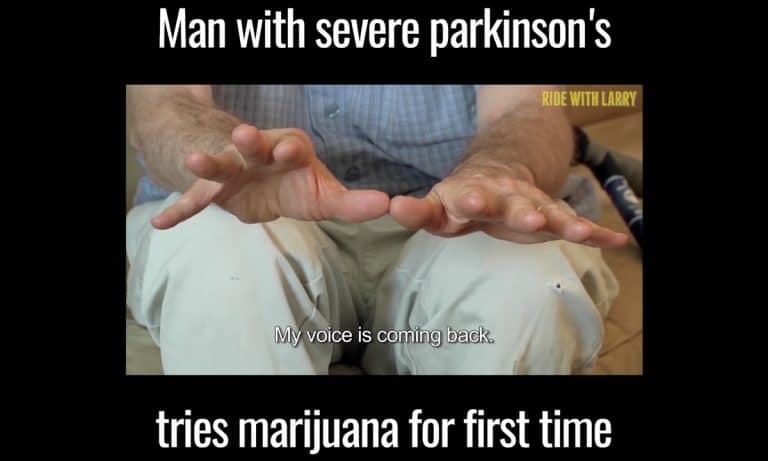
With a few drops of cannabis oil under his tongue, this man’s severe dyskinesia (uncontrolled movements), loss of voice, and tremors are calmed within in minutes.

It is a horrible disease trapping a mind inside of a body which no longer works correctly, but watch when this Parkinson’s patient smokes marijuana. Larry Smith’s video appeared on YouTube and Facebook and has received millions of views and his Facebook post has been watched tens of millions of times.

Larry Smith Is A Lot Of Things:

The ultra-viral video shows Smith, aided by a fellow Parkinson’s patient and marijuana advocate, trying medical marijuana for the first time. With a few drops of cannabis oil under his tongue, Larry’s severe dyskinesia (uncontrolled movements), loss of voice, and tremors are calmed within in minutes. It’s an astonishing must-see video of how cannabis treats the crippling effects of Parkinson’s.

RELATED: Cannabis And Parkinson’s Disease: What We Know

Smith began feeling the onset of Parkinson’s about 20 years ago, shortly before his retirement. For nearly two decades, Smith tried an assortment of conventional pharmaceutical treatments with no real success. Finally, he gave medical marijuana a try. For Smith, it was truly a last-ditch effort. Since South Dakota is home to some of the most draconian anti-cannabis laws in the nation, he traveled to California for cannabis treatment.

In the video, Smith says:

“These are not the days of Reefer Madness. Yet I and millions of other people can’t have it without facing serious jail time.”

Indeed. His wife, Elizabeth, is more concerned about the escalation of pharmaceuticals than cannabis. “Larry’s at the point where he’s having so much trouble walking, now he takes 20 pills a day,” she said.

And those pills aren’t cheap. Medication costs for an individual person with Parkinson’s disease average $2,500 a year. Therapeutic surgery, another risky option, can cost up to $100,000 dollars per patient.  Smith, according to the family, spends $3,000 per year on his pills, slightly above the national average.

Elizabeth supported her husband’s unconventional treatment, despite the legal hurdles.

“I do not like the idea of breaking federal law even though it’s the state law. In California, it’s very clear that it’s permissible. I’m still uncomfortable, but … as far as I know we have tried everything, this is the only thing that’s left. We are going to give it a go and see how it goes.”

As the video demonstrates, it went very well. As the video describes:

“With a few drops of cannabis oil under his tongue, Larry’s severe dyskinesia (uncontrolled movements), loss of voice, and tremors are calmed within in minutes! We didn’t even edit the footage because the results were so startling.”

As the video ends, Larry wryly states:

“A person like me could really use marijuana. And it makes me pretty angry that I can’t get it in my home state.”

Buy the movie “Ride With Larry

More Stories

[soliloquy id=”24090″]

Don't Miss Your Weekly Dose of The Fresh Toast.

Stay informed with exclusive news briefs delivered directly to your inbox every Friday.

We respect your privacy. Unsubscribe anytime.