Sunday, December 21, 2025
Home Blog Page 1143

Are Marijuana Business Leaders The New-Wave of Politicians?

The political state of the United States consistently goes through evolution, more often than not these changes manifest by way of social, cultural, and economic influences. These powers, in turn, directly influence those individuals who are chosen to lead the country: politicians. To put this notion in context, many see the election of President Trump as a direct result of an infusion of pop-culture into the U.S. political sphere, as Trump is undoubtedly the first president to be a modern-day media icon as well as reality television power-house. Point being, the-state-of-the-union directly influences who is in charge of the union.

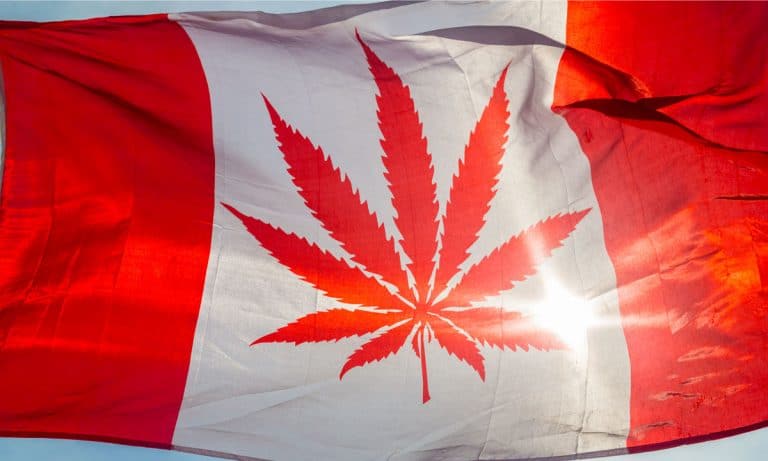
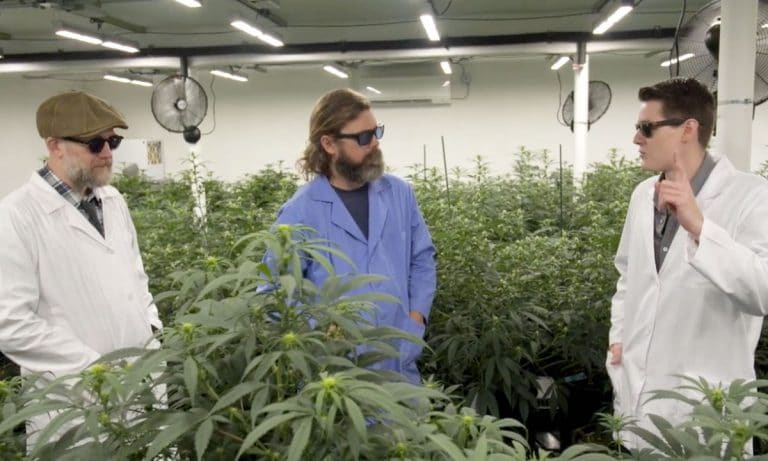
As the cannabis industry continues to grow and gain a foothold as a legitimate field of business, it is also beginning to influence the sociopolitical environs of the United States. The state-of-affairs concerning medical and recreational marijuana is constantly receiving media attention in relations to both economics and politics. Business leaders from the cannabis space are taking notice, and beginning to utilize this attention by transferring into politics.

One cannot overstate just how rapidly the marijuana industry has established a foothold in contemporary America—it is easy to lose perspective of how quickly this is happening. For example, just 25 years ago President Clinton was deep in the thresholds of controversy concerning whether or not “he inhaled” cannabis smoke. Point being, for politicians past, during elections as well as terms of office, any affiliation with drug-culture—especially in capitalistic or business context—almost guaranteed controversy with career-ending damage.

Old Stigmas And Novel Representations

Cannabis industry leaders and advocates around the nation are noticing that their hard-won comfortability with controversial public-relations is directly transferable to roles as politicians. Why not? The history of the United States has largely been dictated by those forward-thinking politicians who have not been afraid to go against the established norms of the country—embodying the progressive thinking necessary in any healthy democracy.

As anyone familiar with the cannabis industry knows, business owners in this novel market are by necessity intimately acquainted with the ins-and-outs of bureaucratic movements within state and federal government. In a similar vein, attention to detail concerning public relations, legal maneuverings, and public awareness is essential to the success of any cannabis business—this traits are also directly applicable to political careers.

Cannabis Business Political Hopefuls To Watch

In coming elections industry, experts have identified 5 cannabis oriented political hopefuls to keep an eye on:

  1. Dylan Schwartz is running for NY City council—Schwartz has a number of years of cannabis industry consulting related to government dealings in his history.
  2. Bob Morgan is pursuing a spot in the Illinois House of Representatives—Morgan helped devise the IL State medical marijuana program in its infancy, leaving to pursue private industry interests in the last few years.
  3. Judy Appel is bidding for a position in the California State Assembly—Appel is a longtime cannabis advocate as well as promoter of the industry.
  4. Todd Mitchem is running for the second Congressional District in Colorado—Mitchem is well-established in CO as an industry consultant.
  5. Kayvan Khalatbari is hoping to win the mayoral election in Denver, CO in 2019—Khalatbari is professionally involved with both Cresco Labs and Denver Relief Consulting.

Gossip: Teresa Giudice Running For New Jersey Governor; Kylie Jenner Calling The Twitter Police

Real Housewife Teresa Giudice, isn’t happy just being a reality star, now the New Jersey girl is getting advice that she should run for governor.

“Teresa couldn’t do a worse job than Chris Christie. At first it was suggested that she run for Governor as a press stunt but now she is really thinking about it,” sources tell Straight Shuter. “She has a massive social media following to get her message out and she has a lot of good ideas about how to help her State. Plus, she isn’t going to be shutting down any access to bridges. It’s about time real people took back political power and after her stay in jail, Teresa isn’t frightened of anyone.”

Kylie Jenner Calling The Twitter Police

Be careful what you say about Kylie Jenner on Twitter because you might end up in social media jail.

Twitter-user Zimmerman tells Straight Shuter that after retweeting a naughty item titled “Kylie Jenner Is A Nipple-Freeing Space Queen In New Photo Shoot (NSFW)” that included a note to Kylie to show some class, her account got suspended.

“Isn’t that weird!” Zimmerman told Straight Shuter. “Maybe she marked it as offensive? Twitter said if I deleted it, they’d lift the suspension, so I did.”

Kylie and Twitter need to calm down. Let’s remind them that it was Jenner herself who posted the nipple free picture in the first place!

Love the fresh dirt we bring over daily from Naughty Gossip? Let us know in the comments!

First African Marijuana License Could Lead To Continental Gold Mine

While African countries are known to produce profitable cannabis product—including some of the most sought-after strains in the planet—no one has ever participated in the trade legally. That will soon change thanks to Lesotho’s Ministry of Health. The department recently bestowed one South African Medical Company an official license to cultivate marijuana medicinally.

Verve Dynamics characterizes itself as “a dedicated Vegan friendly manufacturer of highly purified botanical extracts and specialty ingredients sourced exclusively by us from around the world.” Utilizing proprietary technologies, they develop and manufacture extractions and compounds for users.

“Access to medicinal cannabis on the African continent has taken another major step forward today and Verve Dynamics is honored to be the first company in Africa to have been granted regulatory approval to begin the process of growing and producing high quality cannabis extracts commercially,” Verve Dynamics Managing Director Richard Davies stated in a release.

Lesotho is a small, high-altitude country in the heart of South Africa. Residents have already been producing cannabis they would export across country lines to South Africa. The country’s decision to view marijuana as a possible revenue instead of illegal activity demarcates a shift in thinking. Africans regularly consume and export cannabis, but now Lesotho might participate in the burgeoning global cannabis industry if its country can regulate its product, something few African countries have managed to do.

“The Government’s decision to move forward with this historic decision means that Lesotho will play a significant role in developing this industry, both locally and internationally, as well as establishing itself as a pioneer on the African continent with regards to state of the art extraction equipment,” reads the statement.

Other African countries already participate in the cannabis trade. Swaziland growers have relied upon the plant to support their families for year while Malawi legalized chamba, what they call marijuana, after realizing the lucrative opportunities.  Zimbabwe too is considering legalizing production of mbanje—their local dialect for marijuana—after a Canadian firm approached the country with an offer.

In the United States alone, the cannabis industry produced $6.7 billion in North American sales and American sales are expected to reach $37.3 billion by 2024. If Africa becomes serious about cannabis, the continent could blossom into a gold mine. The efforts in Lesotho could be the signal of those potential changing tides.

Watch This Barber In China Shave People’s Eyeballs

0

If you’re squeamish about eyeballs, this is not a story you want to hear about. RUN AWAY NOW!!

For some reason, shaving eyeballs is a thing — and ancient art — that a barber in China continues to practice And yes, shaving is the correct word here, because the dude literally takes a straight edge to the actual eyeball to clean off the residue. No matter that eyes are self-cleaning machines, because who doesn’t need a sharp blade to the retina once in awhile to show it who’s boss?

Xiong Gaowu, now 62-years-old, claims he’s never hurt anyone in the 40 years he’s been practicing. But it’s a technique professionals warn against. The practice was widely used in hospitals in the early 20th century to treat a bacterial infection called trachoma known to cause blindness. But in the wrong hands, it can cause eye damage and even spread infection.
Sichuan barber Liu Deyuan, now in his 50s, has been practicing the art of eyeball shaving since he was 17-years-old. One of his customers says that he’s still a little nervous going under Liu’s knife (who wouldn’t be???): “I do not dare to move even a bit during the process,” but admits it’s not an unpleasant experience and that his eyes “feel moist and my vision is clearer.”

Now, give your eyes a nice rub, because they are about to witness something truly nerve-racking.

Reno Is Hosting A ‘Bud And Brew’ Festival Without The Bud

Um, okay Reno. We get you. You want to boats you’re getting your own marijuana and beer festival, but not break the law. Smart move. Boring as hell, but smart.

When the Reno Bud and Brew Music Festival debuts September 23 in Wingfield Park, police will be one of the first guests, making sure nobody actually indulges in the consumption, sale or purchase of weed. You know, because who goes to a Bud and Brew festival expecting both? Amateurs.

Instead, the festival will be more of an educational affair, teaching event goers about medical and recreational marijuana use, both of which are now legal— medical since 2000 and recreational since January 1, 2017.

What the riverfront festival will have plenty of is beer and music. More than a dozen acts will perform and there will be a beer village composed of local craft beers.

This event could have had marijuana if a bill had passed earlier this year (authored by Sen. Tick Segerblom) that made it legal for events and businesses to have marijuana on their premises.

The bill also aimed to give local governments the ability to issue licenses that allow people to smoke weed in designated public areas. The proposal (Senate Bill 236) was intended to provide the locals, as well as the tourism community, with “marijuana safe-havens,” which would most likely operate in bars, dispensaries or even yoga studios, Sorry, Reno. Maybe next year?

Hi-Tunes: Buy A Joint, Get A Music Download For Free

Some things just go naturally together … as if they were made for each other: Peanut butter and jelly. Cheese and crackers. Marijuana and music. A Seattle-based company wants to give cannabis consumers a chance to combine the last pair. Hi-Tunes, a new marijuana-focused music distribution service, announced this week it will begin offering pre-rolled joints with a QR code for free music downloads. Scott McKinley, co-founder of Hi-Tunes, said the concept will originally be unveiled in the state of Washington.

“Hi-Tunes is music distribution through marijuana”, McKinley told the website Complete Music Update“We are giving artists their own branded marijuana lines to push. If they do well with joints and participate with stores in our Washington market, we will put out more products on that artist’s line, and we can get really creative and fun.”

A study released earlier this year suggests that the euphoria you experience while enjoying music is triggered by the same brain chemical system that gives humans pleasurable feelings associated with sex and recreational drugs. “This is the first demonstration that the brain’s own opioids are directly involved in musical pleasure,” says cognitive psychologist Daniel Levitin, senior author of the paper.

Yoshi Gish is one artist willing to jump on board this innovative concept. “Scott approached me in 2016 with the concept of selling music with marijuana,” Gish told Complete Music Update. “I was looking for something new, just like this. Records, tapes and CDs are now so slow and bulky compared to our network, but now a simple scan on a smartphone can connect people with my music. I feel cannabis can influence many new avenues of distribution.”

McKinley sees the concept as the next iteration in music retail. “Music used to sell sheet music, then records and record players, tapes and tape players, CDs and CD players, MP3 players — and now music has nothing to sell. We intend to change that by matching music with marijuana. Smoke this, listen to that. It’s a beautiful concept,” he said.

Gossip: Rosie O’Donnell’s Estranged Daughter Is Pregnant; Mariah Carey Has Very Expensive Taste In Liquor

Rosie O’Donnell’s estranged daughter, Chelsea Alliegro, is pregnant.

The 19-year-old revealed that she is expecting in an interview with Daily Mailon Tuesday, but said that she doesn’t want O’Donnell to be a part of her baby’s life.

“I’ve always wanted a family and I’m looking forward to it. But Rosie will not be in my child’s life — and no, I do not feel sad about that to be honest,” Alleigro said.

Mariah Carey Has Very Expensive Taste In Liquor

The singer recently ordered a case of Dom White Gold, which cost more than $2000 a bottle! And she polished it off in a WEEK! Sources say Mariah has been “guzzling it like it’s water!”

Love the fresh dirt we bring over daily from Naughty Gossip? Let us know in the comments!

You May Soon Be Able To Board A Marijuana Party Bus In Boston

Loopr, a Denver-based bus service designed specifically for cannabis consumers, wants to bring its “Puff Bus” experience to Boston. The company offers a “mobile cannabis lounge” in which cannabis lovers can enjoy the herb as the bus tours local dispensaries, hotels and bars.

According to the company’s website, the service is hoping to expand to Las Vegas, Los Angeles and “wherever else the American people choose to end prohibition.” In Boston Herald report, Loopr CEO Bryan Spatz said:

“Because Massachusetts is on a less aggressive schedule to launch recreational sales, we are not as far along in our planning there. I intend to begin reaching out to state and local officials to discuss our model and make sure we can bring the same safe, reliable transportation service that doubles as mobile cannabis lounges to Massachusetts as we have in Denver now and hopefully LA & LV in early 2018.”

On its website, Loopr boasts: “Besides using the biggest, baddest party buses loaded full of custom features for the ultimate cannabis experience, Loopr offers a unique network with curated routes that is fun, affordable and convenient for your transportation needs. … Aboard the bus, Loopr offers the opportunity to consume cannabis any way you choose in an ultra-comfortable multimedia environment with curated music videos and laser light shows stimulating the senses.”

Riders must first download the Loopr app and then purchase passes good for one day, three days, one week or one month. Once you have registered, the bus becomes your rolling social cannabis club. The bus makes scheduled, planned routes throughout the town.

Riders can’t buy marijuana while on the bus, but the Loopr has partnered with select on-the-route dispensaries that offer riders discounts on their choice products. Food and non-alcoholic beverages are available for sale inside the bus.

For a detailed FAQ, visit the Loopr site.

CBD From Hemp: Here’s What You Need To Know

There is a lot of confusion among cannabis consumers about CBD found in industrial hemp. Is it the same as medicinal marijuana? Will I flunk a drug test if I consume hemp-based CBD?

These questions and others are addressed here by Project CBD:

Does it matter if CBD is extracted from cannabis or industrial hemp?

We recommend CBD-rich products made using only organic, whole plant cannabis because this offers the best safety profile and superior medicinal benefits. CBD products derived from industrial hemp potentially have several potential problems: Industrial hemp typically contains far less cannabidiol than CBD-rich cannabis strains, so a huge amount of industrial hemp is required to extract a small amount of CBD. This raises the risk of contaminants as hemp is a “bio-accumulator,” meaning the plant naturally draws toxins from the soil. Additionally, hemp-derived CBD and refined ‘pure’ CBD powder lack critical medicinal terpenes and secondary cannabinoids found in cannabis oil. These compounds interact with CBD and THC to enhance their medicinal benefits.

I have heard that CBD is the dominant cannabinoid in hemp plants. Can I just smoke or ingest hemp or ditch weed to get the healing effects of CBD?

It is true that hemp fiber or seed strains will be relatively high in CBD compared to THC, but the overall cannabinoid content of industrial hemp will probably be low. Industrial Hemp is genetically bred to produce fiber for various products or seed for omega oil and nutritional supplements. Industrial hemp is generally not bred for resin production. Without selective breeding for CBD content, CBD yields from hemp are likely to be low.

Will I flunk a drug test if I medicate with CBD-rich cannabis?

Yes, you may fail a drug test even if you experience no mood-altering affects from your CBD-rich medicine. Drug tests are geared toward identifying THC, not CBD or another cannabinoid. If one medicates with CBD-rich cannabis that has a small amount of THC, the THC may register on the drug test.

If CBD is non-psychoactive, does that mean it is legal?

Cannabidiol and all other plant cannabinoids are Schedule I drugs in the US (per code 7372). So, technically, CBD is forbidden in any form (as an isolate or plant-based derivitive) in the states despite its lack of addictive potential and strong safety profile. In other words, although CBD is not psychoactive, it is still illegal in the eyes of the federal government. That said, there are exceptions. American scientists with a DEA license in some cases are permitted to experiment with pure synthetic CBD.

Some online businesses falsely claim that CBD oil derived from industrial hemp grown abroad is legal in all 50 U.S. states, as long as the THC content of this oil is less than .3 percent (in accordance with federal rules regarding industrial hemp products). Currently, it’s against federal law to use hemp leaves and flowers to make drug products. Hemp oil entrepreneurs attempt to sidestep this legal hurdle by claiming they extract CBD only from hemp stalk before importing it to the United States, a grey area activity at best. Although the FDA has issued warning letters against some CBD hemp oil companies for making false claims about their products, thus far the federal government has not take action to halt these illegal business operations. The situation is different in Europe, where CBD is not a controlled substance.

This article was originally posted on Project CBD.org

Attorney General Jeff Sessions Still Threatening Marijuana

On Wednesday Attorney General Jeff Sessions reminded us that federal laws still stand and marijuana is still illegal, despite voter-approved pro-marijuana state laws. While revealing record breaking seizures of narcotics by the Coast Guard in fiscal 2017, Sessions responded to a reporter’s question about pot, saying, “I’ve never felt we should legalize marijuana,” he continued to say, “It doesn’t strike me that the country would be better if it’s being sold at every street corner.” He also added that medical groups were opposed to cannabis and federal law still prohibits it.

The top priorities for Sessions have been and will likely remain illegal immigration, violent crimes and, of course, drugs. It remains a mystery, however, how his feelings and rhetoric will affect states that have gone the legal route. All his hinting is frustrating, but action would be catastrophic to the cannabis community, patients across the nation and local economies.

The Cole Memo was a document produced by former Deputy Attorney General James Cole, which outlined an approach to handle states that had voted in legal cannabis and medical marijuana. Said memo recommended the department continue enforcing federal laws, but to leave legal states with regulatory systems alone, or at least not prioritize them.

In his own remarks last week, Deputy Attorney General Rod Rosenstein spoke at the Heritage Foundation, saying that the guidance given by the Cole Memo was under review.

“We are looking at the states that have decriminalized marijuana,” said Rosenstein. “I think there is some pretty significant evidence that marijuana turns out to be more harmful than a lot of people anticipated and it is more difficult to regulate than I think was contemplated by some of those states. We are going to take that all into consideration and then determine whether to revise that policy.”

Sessions assembled a task force in February to look for the harm and the rise in crime due to marijuana. When their findings were reported by the AP, they were “tepid” at best. How Sessions and Rosenstein will show marijuana’s harm without any proof or pudding is anyone’s guess, but their efforts are a frightening prospect indeed.

Don't Miss Your Weekly Dose of The Fresh Toast.

Stay informed with exclusive news briefs delivered directly to your inbox every Friday.

We respect your privacy. Unsubscribe anytime.