Tuesday, May 5, 2026
Home Blog Page 1184

Texas Needs To Expand Conditions Under Limited Marijuana Program

The Texas Compassionate Use Act, which opened the door for medical marijuana in the state, will go into full effect Sept. 1. The bill allows for patients to be prescribed “low-THC” cannabis as medication. By Sept. 1, the Texas Department of Public Safety must license at least three business, known as “dispensing organization.” These licenses will authorize those businesses to cultivate, process and dispense low-THC cannabis to prescribed patients.

However, the only medical condition that allows doctors to prescribe this “low-THC” cannabis is intractable epilepsy. Marijuana advocates have openly questioned if the bill is too limiting in nature, and if it will change in the future.

One North Texas couple hopes that change comes sooner rather than later, as they recently told NBC DFW.

The Zartlers have an autistic daughter, Kara, who regularly has violent fits. As her father, Mark Zartler, said, “She closed-fisted punches her cheeks and her ears, drawing blood.”

His wife Christy added: “It’s painful. I feel like I’m in hell on Earth.”

Both parents said their daughter was on over a dozen of prescriptions, but nothing would cure her violent fits. That’s when a neighbor suggested trying cannabis. Though they initially contemplated the stigma revolving around cannabis, they followed their neighbor’s advice and the medicine did its job.

“This is safer than allowing her to hit herself, and she has a better day,” Mark said. “It always works.”

Now Kara has been taking cannabis treatments to calm her fits since 2013. The Zartlers have gone public with the treatments, posting online videos displaying the before and after effects of when their daughter receives the medicine.

But when the legislative session ended this year, their daughter remained excluded from participating in the Texas Compassionate Use Act. Treating their daughter with the medicine she needs wasn’t decriminalized. The bill remains entrenched in its limiting form, though that won’t stop the Zartlers from continue to advocate for change.

“[Kara’s] pharmacy medications are more harmful than marijuana,” Christy said, also noting her daughter only takes two prescriptions and two over-the-counter medications since using cannabis. “I want to help people. I want parents of children like her to know there’s a better life.”

Looks Like Jeff Sessions Might Leave Marijuana Alone

Okay, we all know that Attorney General Jeff Sessions hates weed. Many also know that he assembled a hand-picked DOJ panel called the Task Force on Crime and Public Safety, whose main purpose was to find crime spikes and other negative aspects in states that have legalized marijuana.

The AP called the Task Force’s findings “tepid” at best, but it still seemed Sessions was out on an anti-pot mission. Now, it looks like he’s digested the findings and may even be heeding the Task Force’s advice, that it, “has come up with no new policy recommendations to advance the attorney general’s aggressively anti-marijuana views,” as quoted by the AP.

The 2013 Obama era “Cole Memo” is Sessions current guiding light, and that’s a good and not so good thing. The memo is vague, and though it does imply that the status quo, the laws that The People voted in, should be left as is, it also leaves more than enough wiggle room for prosecutions.

Sessions has called the memo “truly valuable.” Inside said memo, there are eight “enforcement priorities” that could potentially give the go ahead to hassle state-licensed cannabis operations, but they’re muddy at best. One even reads as vague as, preventing “adverse public health consequences associated with marijuana use,” which also smacks of reefer madness. Sorry, Cole.

Basically, Sessions really could do harm with the Cole memo as is. It ranges from lackadaisical policy to scary criminal forfeiture, which could really put manufacturers and purveyors out of business. Sessions seems content, however, with something of a compromise.

He’s had six months in office to start implementing any anti-cannabis protocols, and though the task force was a step in that direction, it pretty much fizzled out. Plus, Sessions has gone after the drug war and hard drug trafficking without implicitly including marijuana in the mix during his time in office.

Maybe Sessions realizes that a full-scale pot crackdown isn’t in his best interest. From not getting the support he needed from the task force to launch a marijuana massacre to not wanting to upset his already unpopular boss, he may just leave well enough alone. For now.

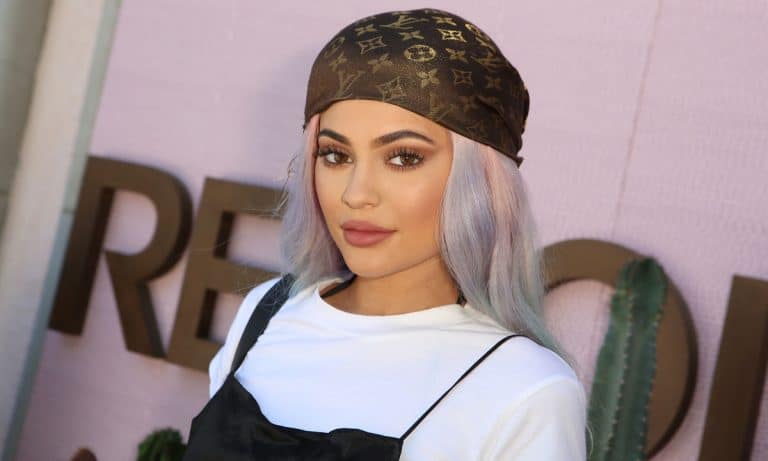
Gossip: Kris Jenner Wants Kylie To Get Married; Kourtney Kardashian Going To Law School?

When you’re a Kardashian, everything you do is captured on camera. From their most intimate moments (hello, sex tape) to their biggest milestones, nearly every moment of their lives has been filmed for television. So naturally, the Kardashians will always have a cameraman present at their family weddings.

Over the ten years Keeping Up with the Kardashians has been on the air, fans have seen not one, but two lavish weddings that ended in divorce: Khloé Kardashian’s 2009 wedding to Lamar Odom and Kim Kardashian’s multi-million dollar nuptials to Kris Humphries in 2011. Both had a film crew present and were broadcasted for viewers on TV specials.

Though you’d think this so-called Kardashian curse may deter momager Kris Jenner from having her kids’ future weddings filmed for TV, you’d be wrong.

In the family’s new tell-all interview with The Hollywood Reporter about their E! reality series, the Kardashian-Jenner matriarch revealed she had previously joked about wanting to see her youngest daughter, Kylie Jenner, get hitched on screen.

Now that the reality starlet is all grown up and dating Travis Scott, the little innocent remark seems like a huge possibility for a future story line. After all, Kylie is so popular these days that she’s even spawned her own Keeping Up with the Kardashians spin-off, Life of Kylie!

“When we first started, I jokingly said, ‘We’ll be on season 32, Kylie gets married.’ I was kidding, and here we are, and it’s season 14, so be careful what you wish for,” Kris teased.

Kourtney Kardashian Going To Law School?

While her youngest sister is set to become a billionaire by slinging lip gloss, Kourtney Kardashian has reportedly set her sights on law school.

via Radar Online:

“She probably doesn’t have to work for the rest of her life, but that’s not how she rolls,” an insider told Radar. “She’s always wanted to go back to school and nearly signed up for another college degree last year.”

Unfortunately for 38-year-old Kardashian, the timing was wrong for her to go after her new career dream.

“She really wishes she had, but things were falling apart with her and Scott so she put it off,” explained the insider of the implosion of Kardashian’s relationship with her baby daddy, Disick.

But now that they’ve both moved on, Kardashian is ready to honor her late dad, Robert Kardashian, who successfully helped defend O.J. Simpson on murder charges in 1995 and passed away almost eight years later from esophageal cancer.

“She’s very proud of her father’s achievements and she knows he always wanted her to be a lawyer,” said the source.

“She’s already looking into doing a course online so she can still be around the kids.”

Love the fresh dirt we bring over daily from Naughty Gossip? Let us know in the comments!

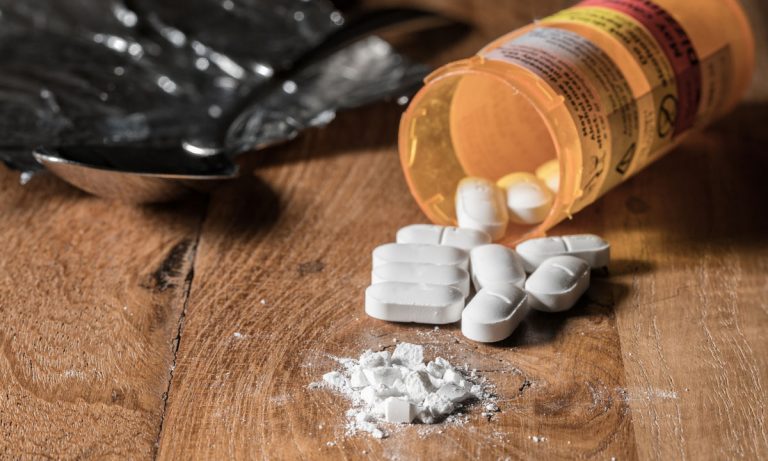
Hey, DOJ: Focus On Opioid Crisis, Not Cannabis Reform

U.S. Attorney General Jeff Sessions is worried about this country’s “historic drug epidemic and potentially long-term uptick in violent crime.” Because he is so worried, Sessions has spent the past month doing things like:

  1. Asking his old colleagues for funds to prosecute the War on Drugs, including medical marijuana.
  2. Writing letters to state Governors with “serious questions” about their local cannabis programs (which letters the states have politely observed are misleading and inaccurate).
  3. Disseminating bogus weed statistics far and wide. Every day that Sessions perseverates on cannabis enforcement, an average of 142 Americans die from opioid abuse, per the Centers for Disease Control. And since 1999, a total of 560,000 drug overdose deaths have occurred. That number is accelerating.

If Jeff Sessions were truly concerned about our nation’s historic drug epidemic, he would not be scheming to shutter state cannabis programs. Instead, he would be taking action against the bad actors who have fueled the opioid epidemic. Specifically, he would be filing public interest lawsuits, like last week’s bombshell filed by Multnomah County (the home of Portland, Oregon). As it stands, however, the federal government has done little to engage the opioid crisis apart from commissioning a report, and Sessions has done nothing. It tends to boggle the mind.

As with cannabis law and policy, the federal government has been terribly slow and backward in its consideration of the opioid crisis. This means that once again, states and local jurisdictions are being forced to take the lead. Lately, these localities have been doing so with gusto: a growing number are suing pharmaceutical companies and doctors for causing a public health hazard by pushing opioids on their citizens. Fundamentally, this is the same strategy that states first pursued in the 1990s with lawsuits against Big Tobacco. The local governments are essentially saying: you guys knew what you were doing all along with opioids; we are going to make you stop and make you pay.

In legal terms, the allegations in these cases include tort claims like public nuisance, fraud, conspiracy, negligence, gross negligence, etc. These lawsuits contain jarring and memorable lines, such as “the Purdue Frederick Company, Inc., is a convicted felon and admitted liar.” The filings also detail the methods used by the defendants to push their highly addictive products, and they contain demoralizing statistics, such as:

  • Opioids are now the most prescribed class of drugs, generating $11 billion in revenue for drug companies in 2014 alone;
  • Since 1999, the amount of prescription opioids has nearly quadrupled;
  • In 2010, some 254 million prescriptions for opioids were filled in the U.S. – enough to medicate every adult in America around the clock for a month;
  • In 2010, 20% of all doctors’ visits resulted in the prescription of an opioid;
  • While Americans represent only 4.6% of the world’s population, they consume 80% of the opioids supplied around the world and 99% of the global hydrocodone supply; and
  • By 2014, nearly two million Americans either abused or were dependent on opioids.

And Jeff Sessions is concerned about marijuana.

According to its website, the mission statement of the Department of Justice (DOJ) is to “…ensure public safety against threats foreign and domestic; to provide leadership in preventing and controlling crime; [and] to seek just punishment for those guilty of unlawful behavior…”. With respect to controlled substances in general and opioids in particular, DOJ should be doing all of these things. It is not. Instead, it is beating about the bushes with states on cannabis.

The opioid crisis kills 146 Americans every single day; conversely, even the U.S. Drug Enforcement Administration acknowledges that no one has ever died of a cannabis overdose. If Jeff Sessions and DOJ continue to waste valuable federal resources investigating state-legal weed and not the opioid crisis, it will be an American travesty. In fact, it already is one.

Vince Sliwoski is an attorney at Harris Bricken, a law firm with lawyers in Seattle, Portland, Los Angeles, San Francisco, Barcelona, and Beijing. This story was originally published on the Canna Law Blog

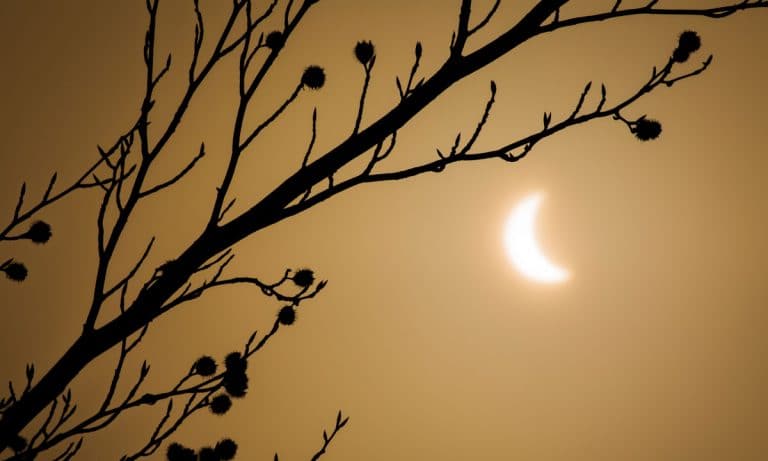
Photograph The Eclipse With Your Smartphone: 5 Tips

With the upcoming Solar Eclipse 2017 around the corner, people have made numerous plans to witness the once-in-a-lifetime event. At this point, you probably already know where and how you’re watching.

However, you may still need tips on capturing photography of the eclipse. Using any general smartphone like an iPhone likely won’t produce great images. But thanks to the folks over at NASA, there are a few modifications you could make to radically improve your eclipse photography.

Focus Your Image Properly

Most smartphones have an auto-focus feature that should properly expose the photo, but that won’t cut it for the eclipse. You will need to manually focus the shot, which can be done by a simple tap of the screen on the eclipse itself. If you want to practice, NASA suggests using the moon.

“Practice photographing the full moon to get an idea of how large the sun-in-eclipse will appear with your smartphone’s lens, or with a telephoto lens attachment.”

Buy A Lens

Believe it or not, your smartphones’ camera lens is highly adjustable with the right accessories. Numerous companies make lenses, and NASA recommends a “zoom lens attachment that will give you 12x to 18x.” If you don’t, and instead use the camera to digitally zoom, the eclipse will appear grainy and unclear. It’ll be an image you won’t want to post on Instagram or Facebook.

However, if you can’t afford the extra attachment, most smartphones have a wide-angle lens. So zoom out and don’t focus on getting a close up. That way “you will be able to see the bright corona surrounding a black spot in the sky,” NASA writes.

Which leads us to our next point.

Use The Landscape Around You

The eclipse is a rare once-in-a-lifetime event. It paints the sky fantastical colors rarely seen and causes people to travel from all over the world to be in its path. So instead of focusing the camera on the eclipse itself, aim your camera at the landscape and people around you. If utilizing only your basic smartphone setup, capturing how the eclipse affects the world you will be the best approach with the camera lens you have.

“Take a time-lapse photo series of the scenery as the light dims with the smartphone secured on a tripod or other mounting so that you can watch the eclipse while your camera photographs the scenery,” NASA suggests. “You might even want to shoot some video in the minutes before, during and after to record people’s reactions and the invariable oohs and aahs!”

Stabilize Your Phone

Sometimes the simplest efforts mark the biggest results in photography. In that vein, mounting your phone on a tripod or setting it along a flat surface will produce a far clearer image than if you’re holding the camera in-hand. “The vibration of your hands will be enough to smear the image and make it very difficult to focus on it,” NASA writes.

Put The Phone Down

This is a once-in-a-lifetime event and you should treat it as such! View the eclipse through the best lens you’ll ever have: your own eyes. Of course you should be wearing proper sun-viewing glasses so you don’t damage your retinas, but don’t forget to watch the eclipse yourself. Blink and you might miss it.

4 Stories You Need To Read About Medical Marijuana’s Effect On Chronic Fatigue Syndrome

Chronic Fatigue Syndrome is a devastating but elusive disease, characterized by severe fatigue, memory problems and headaches. Approximately 2.5 million people in America suffer from it, and no exact cause has ever been pinpointed. Recent research discovered that people with CFS have a significantly slower metabolism and that their bodies enter a state of almost hibernation. While these people are not actually hibernating, their metabolisms undergo similar processes that are seen in other animals that go through this seasonal event, leaving them in hazy state where they’re awake but not present.

The biggest problems patients face is the fact that CFS is misunderstood and that there are few treatments and options available. Sue Curry, a victim of CFS, claimed that her quality of life improved dramatically when she discovered cannabis. The plant is known for controlling muscle spasms and treating chronic pain and insomnia, which are all symptoms that CFS victims face. 

Other studies have concluded that even though there’s still a lot to learn about marijuana and its properties, there’s been some conclusive evidence that cement the plant as as a viable option for people who suffer from chronic pain and multiple sclerosis. A Canadian team conducted a clinical trial that showed that patients who took 3 puffs a day of marijuana coped better with their pain than the patients who belonged to the placebo group. All of the patients were still taking their prescribed medication, suggesting that the plant works best as an addition to an ongoing treatment.

Learn More About Medical Marijuana And CFS:

3 Whiskeys Perfect For Watching The Solar Eclipse

We’re in the final countdown for the 2017 solar eclipse, which takes place on Monday, August 21st. The path of totality crosses Oregon smack dab in the middle, which means we’re gearing up for a massive influx of visitors, epic traffic, and crazy crowding by stocking up on essentials like gasoline, food, and (duh) whiskey.

Most people don’t get many chances in life to experience a total solar eclipse, so we’ve put some thought into selecting a sufficiently special whiskey to toast the occasion. Here are three ideas, each linked somehow—some way—to the unexpected darkness that will race across the nation next week.

Marketed as “the darkest Ardbeg ever,” this committee release from 2016 is described as having notes of “treacle toffee, coal tar, squid ink, noodles, and toasted coffee grounds.” What better way to celebrate the darkening of the sky than with a shadowy pour of the only whisky I’ve ever heard being described as tasting like “squid ink?”

https://www.instagram.com/p/BXqG8VPgbwj

Buffalo Trace White Dog

There’s something fitting about drinking moonshine while the moon takes the shine out of the sun. Technically, moonshine needs to be made illicitly to warrant the name, but we’re willing to overlook that quibble for Buffalo Trace’s unaged White Dog, which we suspect is just as above-board as all the other whiskeys made at the Sazerac-owned distillery.

There are three different White Dog expressions to choose from: Wheated mash, rye mash, and something called Mash #1, which Buffalo Trace describes as having “a sweet aroma.”

https://www.instagram.com/p/BSZKtpIhGg_

Yamazaki 18-year-old

There’s no link to moons, darkness, or outer space here – just a damn delicious whisky, and one that—like eclipses—can be infrequently available and cause crowds when it does surface.

The 18-year-old Yamazaki single malt has been recognized with many awards, including double gold at San Francisco and Gold at the International Spirits Challenge, and fans love its resinous, fruity flavor. There’s no getting around the fact that it’s also quite expensive—but hey, you don’t get many chances at this.

https://www.instagram.com/p/BX75lU2DaBD

This article originally appeared on The Whiskey Wash.

Did Marijuana Kill This Young Marijuana Advocate? Um, Nope

The headline from TODAY.com was alarming. It was equally odious. “Did marijuana kill this young man? Doctors may never know for sure” screamed the NBC-owned website known for its clumsy muchie jokes and outdated Cheech and Chong references.

The story details the death of Michael Ziobro, a 22-year-old New Jersey marijuana advocate. The story shares that Michael’s parents found medical-grade marijuana in his room, and the medical examiner found evidence of cannabis in his blood. Kristina and her husband are convinced the highly active marijuana caused Michael’s heart to go into arrhythmia and killed him.

‘He was such an advocate,’ Kristina Ziobro told TODAY.com. ‘He thought it was wonderful. He thought it was safe. He just thought it was natural and organic and it ended up killing him.”

Ending up killing him? There is no doubt that the parents are upset and grieving over the tragic loss of their son and they are grappling to understand how it could happen.

The 1,600-word story is chock full of somber quotes and cherry-picked studies, but nowhere in the story does the reporter provide these helpful informational nuggets:

  • Earlier this year, the DEA published its 2017 resource guide Drugs of Abuse. The report states: “No deaths from overdose of marijuana have been reported.” The guide goes on to warn that cannabis may cause “merriment,” “happiness,” “enhanced sensory perception,” “increased appreciation of music, art and touch,” and “heightened imagination.”
  • In 1988, a DEA judge wrote that a user would have to ingest somewhere between 20,000 to 40,000 times the amount of THC contained in a single joint to approach lethal toxicity. “A smoker would theoretically have to consume nearly 1,500 pounds of marijuana within about fifteen minutes to induce a lethal response,” wrote Judge Francis Young.
  • Every single day, the opioid epidemic kills 146 Americans.
  • Every single day, alcohol poisoning kills 6 people every day. This does not include alcohol deaths due to accident or disease. Just alcohol poisoning.

The click-baiting headline does not match the facts in the story. Nowhere in the story is there any data that would suggest that the young man died from cannabis.

Even the medical examiner says so:

Michael Ziobro’s death certificate does not list cannabis as the cause of death and Union County Medical Examiner Dr. Junaid Shaikh said he cannot say what caused the young man’s heart to start beating so erratically that it stopped.

Victor and Kristina Ziobro are unhappy with the explanation and asked state legislators, as well as the police, to investigate.

“Although there is scarce research that indicates smoking cannabis can evoke cardiovascular complications, one is unable to attribute the ‘Cause of Death’ was due to smoking cannabis,” Shaikh wrote in a letter to New Jersey state senator Thomas Kean after an inquiry.

“In my opinion, it is highly warranted that family members consult a geneticist and possibly consider cardiovascular genetic testing for hereditary causes of cardiac arrhythmia,” Shaikh added in the letter, which the Ziobros provided to NBC News. His office did not immediately respond to NBC’s request for further comment.

In this case, the alarming headline simply does not jibe with the 1,600 words below it. Perhaps a more accurate headline would read: “Did marijuana kill this young man? Grieving parents say yes, but science says no.”

If You Like Skunky Beer, You’ll Love SuperCritical

If, like me, you are the type of person who enjoys to unwind with a cold beer and a few hits of marijuana, you will be drooling over a new ale from Lagunitas Brewing Company. The cannabis-friendly California brewery announced this week that it is releasing SuperCritical, a full-bodied ale made with hops from Washington state’s Yakima Valley and terpenes from California’s Sonoma Valley.

You read that right. Lagunitas, the brewery that sponsors the 420 Games and whose founder, Tony Magee, unabashedly says he wakes and bakes every morning, is making a beer that will be skunky by design. The only bad news: It will be available in California only.

How is it made? Here is how Lagunitas explains it:

With the help of our friends at AbsoluteXtracts, we pulled the terpenes from some of NorCal’s Finest Cannabis (sans THC) and brewed it with some of Yakima’s Finest Hops… Together, it’s like giving our brewers a whole new set of colors to paint with!

Take note of the parenthetical sans THC: If you drink too many of these beers in one sitting you will get drunk. But no matter how much you drink you will not get stoned. The THC has been stripped out; the beer contains only terpenes, the molecules that provide taste and smell.

Heineken — famous for its skunky taste — earlier this year bought Lagunitas for an undisclosed sum. It purchased the remaining stake after buying 50 percent of the company two years ago.

If you are in California, you may want to check out where SuperCritical will be sold.

How Scott’s Miracle-Gro Is Helping Make Marijuana Legal

The cannabis industry is expected to contribute roughly $25 billion to the U.S. economy by 2025 — and many experts suggest that forecast may be a little too modest. With that kind of explosive economic future, it is not a surprise to find out that a lot more money will be spent in an attempt to shape federal policy. According to a report from the Center for Responsive Politics, the cannabis industry in the first six months of 2017 spent $450,000 on lobbying efforts in the nation’s capital — a 100 percent increase from the same period a year earlier.

The Center for Responsive Politics, which tracks federal campaign contributions and lobbying data, released its findings earlier this month on OpenSecrets.org.  According to the report:

The industry that saw the largest percent difference between the first six months of 2016 and the first six months of 2017 was the marijuana industry with a 100 percent increase. The marijuana industry reported more than $450,000 in lobbying money for the first half of this year — its highest amount yet and double what it spent in the same time span for 2016.

A recent supporter of marijuana legalization and growth, Scott’s Miracle-Gro, increased its lobbying in the first half of 2017 by 250 percent compared to the first half of 2016. The company, known for its lawn and garden products, is now capitalizing on marijuana by developing new products to improve cannabis growth.

“Whenever you see industry that didn’t used to be regulated becoming regulated, you are going to see a lot of people wanting to influence those regulations,” Sarah Bryner, the Center for Responsive Politics’ research director, told the Washington Examiner.

As OpenSecrets notes, Scott’s Miracle-Gro, known for its lawn and garden products, is “now capitalizing on marijuana by developing new products to improve cannabis growth.”

The cannabis expenditure is just a tiny portion of the lobbying going on in the nation’s capital. According to the analysis, overall spending for the first six months of 2017 was $1.66 billion — the highest it has been since the first half of 2012. The Pharmaceuticals & Health Products industry spent the most on lobbying with a whopping $63.8 million. This total is nearly $2.7 million more than what Big Pharma spent last year.

Don't Miss Your Weekly Dose of The Fresh Toast.

Stay informed with exclusive news briefs delivered directly to your inbox every Friday.

We respect your privacy. Unsubscribe anytime.