Sunday, April 26, 2026
Home Blog Page 12

What Does the Public Think About Rescheduling Cannabis

What does the public think about rescheduling cannabis in a post-prohibition era driven by data, not stigma.

What does the public think about rescheduling cannabis? Long before federal officials formally moved to reschedule cannabis, they  had already made up their mind. According to a widely cited poll from Pew Research Center, 88% of Americans supported legal cannabis in some form—either for medical use, adult use, or both—prior to the rescheduling announcement. The overwhelming consensus set the stage for what many see as a long-overdue policy shift catching up with reality.

RELATED: 5 Ways Microdosing Cannabis Can Boost Work Performance

Post-rescheduling polling shows public opinion has only grown more confident, particularly around cannabis’s medical potential. A December 2025 survey from YouGov found more than three-quarters of U.S. adults believe cannabis has legitimate medical uses, while just a small minority disagreed. Notably, the poll also showed broad approval for rescheduling specifically because it allows expanded medical research—an issue which resonates across party lines.

Feds Reveal Medical Cannabis Is Very Popular With The Disabled

Another YouGov medical-focused poll reinforces the point. Large majorities said cannabis should be studied and made available as a treatment option, especially where conventional therapies fall short. This is not abstract support; it reflects lived experience. Veterans coping with PTSD consistently report medical cannabis can help manage anxiety, nightmares, and sleep disruption when traditional medications fail or cause harsh side effects. For many, rescheduling represents validation rather than experimentation.

Patients with cancer, IBS, and chronic pain echo similar sentiments. Poll respondents frequently cite cannabis’s ability to ease nausea from chemotherapy, stimulate appetite, reduce inflammation, and improve sleep quality. Sleep, in particular, stands out as a near-universal concern—one where many Americans say cannabis has helped them fall asleep faster and stay asleep longer.

RELATED: There’s No Known Cure For Arthritis, But Marijuana Works Wonders

The impact extends beyond people. Everyday pet owners increasingly report using CBD products to calm anxious dogs during fireworks, ease joint pain in aging pets, and improve overall quality of life. While veterinarians urge careful dosing and further study, public acceptance of pet-focused CBD mirrors the broader shift toward viewing cannabis as a wellness tool rather than a cultural wedge issue.

Taken together, these polls paint a clear picture. Americans are not debating whether cannabis belongs in modern medicine—they are asking how best to regulate, research, and responsibly use it. Rescheduling did not change public opinion; it aligned federal policy with a public already convinced cannabis can help real people, and even their pets, live better lives.

Marijuana Can Help You Feel Refreshed

How marijuana can help feel refreshed and energetic at the end of the holidays, easing stress and helping recovery from seasonal burnout.

By the time the holidays wind down, many Americans are running on empty. The nonstop socializing, travel, shopping, and disrupted routines can leave people mentally foggy and physically worn out. While the exhaustion is nearly universal, it often shows up differently by age group. Gen Z frequently reports elevated stress, anxiety, and burnout from financial pressure and social expectations, while older adults tend to feel physically drained after weeks of hosting, traveling, and juggling family obligations. But with a week + left of activities, marijuana can help you feel refreshed.

RELATED: 5 Ways Microdosing Cannabis Can Boost Work Performance

Contrary to outdated stereotypes, cannabis is not only about sedation or couch-locking effects. When used intentionally, certain strains and products are associated with clarity, motivation, and a lighter mental state—qualities many crave after the holidays.

For Gen Z, stress is often the dominant issue. Surveys consistently show younger adults reporting high levels of anxiety tied to finances, work uncertainty, and social pressure amplified by constant online comparison. For this group, cannabis is often used as a tool to decompress and quiet racing thoughts. Lower-THC products, balanced THC-CBD options, and terpene-forward strains are frequently chosen for their ability to ease tension without overwhelming the mind. When stress levels drop, energy often returns naturally.

Marijuana Can Help You Feel Refreshed

Older adults, on the other hand, tend to describe the post-holiday slump as physical fatigue rather than mental overload. Late nights, rich foods, long drives, and packed schedules can leave the body feeling stiff and depleted. Many older consumers gravitate toward cannabis varieties associated with gentle stimulation and body comfort. By easing aches, supporting relaxation, and improving sleep quality, marijuana can help the body recover—making mornings feel lighter and days more manageable.

Terpenes play an important role in this experience. Compounds such as limonene and pinene are often linked to uplifting, clear-headed effects, while others like caryophyllene may help take the edge off physical discomfort. When people feel less tense and better rested, energy follows.

RELATED: Consuming Cannabis Before Workouts Can Help

Importantly, moderation matters. The goal is not escape, but restoration. Microdosing—using small, controlled amounts—has become especially popular among professionals and older consumers who want subtle benefits without impairment. This approach aligns well with New Year intentions focused on balance, wellness, and productivity.

As the holiday season fades, marijuana is increasingly viewed not as a party indulgence, but as part of a thoughtful reset. For stressed Gen Zers seeking calm and clarity, and for worn-down older adults looking to recharge their bodies, cannabis may offer a way to step into the new year feeling refreshed, focused, and energized—rather than exhausted.

Feds Reveal Medical Cannabis Is Very Popular With The Disabled

Feds reveal medical cannabis is very popular with the disabled, according to a new federal study examining pain relief, access and policy implications.

In a move displaying the practical use of marijuana, the feds reveal medical cannabis is very popular with the disabled for a sound reason. A newly released federal study finds  Americans living with disabilities are increasingly using cannabis to manage pain, stress and other chronic symptoms, underscoring a growing gap between patient behavior and federal drug policy.

The research, published in the Disability and Health Journal and funded by the National Institute on Disability, Independent Living, and Rehabilitation Research, draws on data from nearly 2,000 adults who self-identify as having a disability. About 22 percent of respondents reported current cannabis use, a rate notably higher than estimates for the general adult population.

RELATED: 5 Ways Microdosing Cannabis Can Boost Work Performance

Pain relief was the most frequently cited reason for use. More than 70 percent of participants said they use cannabis to manage pain, while roughly 60 percent reported using it to relax or reduce tension. Others cited relief from migraines, nausea, muscle spasms, sleep disturbances, seizures and mental health symptoms. Participants represented a wide range of disability types, including mobility, cognitive, vision, hearing, self-care and independent living limitations.

Researchers note the data is self-reported and not nationally representative, with respondents skewing toward white, female and college-educated individuals. Still, the authors concluded cannabis use is prevalent across disability categories and warrants greater attention from public-health officials and policymakers.

Feds Reveal Medical Cannabis Is Very Popular With The Disabled

The findings arrive as the administration weighs whether to follow through on plans to reschedule cannabis under the Controlled Substances Act. Marijuana is currently classified as a Schedule I substance, a category reserved for drugs with no accepted medical use, despite growing evidence and widespread patient use. Moving cannabis to Schedule III would formally acknowledge its medical value and reduce barriers to research.

For patients with disabilities, rescheduling is not an abstract policy issue. Federal classification affects everything from clinical research and physician guidance to affordability and access. Because cannabis remains federally restricted, doctors often lack clear guidelines, large-scale clinical trials remain limited, and insurance coverage is nonexistent. Patients are left navigating a patchwork of state rules while managing complex health needs.

Advocates say the study highlights how policy has lagged behind reality. Millions of Americans with chronic conditions are already using cannabis as part of their care, often after conventional treatments failed or caused severe side effects. Many report turning to cannabis to reduce reliance on opioids, muscle relaxants and sleep medications, which can carry significant risks with long-term use.

RELATED: There’s No Known Cure For Arthritis, But Marijuana Works Wonders

Public-health experts warn continued delay has consequences. Without expanded research and standardized medical guidance, patients rely on trial and error rather than evidence-based care. For people with disabilities, who frequently manage multiple conditions at once, the uncertainty can be particularly harmful.

Rescheduling would not legalize cannabis nationwide, but it would ease research restrictions, encourage clinical studies focused on disability-related conditions, and provide clearer guardrails for physicians and patients alike. Supporters argue it would move cannabis use out of the shadows and into a more accountable medical framework.

As federal officials debate next steps, the study adds urgency to the discussion. For people living with daily pain and functional limitations, cannabis is not about recreation. It is about relief. The question now is whether federal policy will catch up with the patients already depending on it.

Festivus Grew From A Quirky Holiday To A Meaningful Celebration

Festivus grew from a quirky holiday to a meaningful celebration for people who want humor honesty and less holiday pressure.

Every December, amid the glitter of Christmas trees and the glow of menorahs, a quieter—but far more opinionated—holiday makes its annual return. Festivus, often dubbed “a holiday for the rest of us,” has evolved from a sitcom joke into a genuine cultural tradition celebrated by millions who crave humor, honesty, and a break from seasonal perfection.  Who would guess how Festivus grew from a quirky holiday to a meaningful celebration.

RELATED: 5 Ways Microdosing Cannabis Can Boost Work Performance

Festivus first entered the public consciousness in 1997 through the iconic TV series Seinfeld. In the episode “The Strike,”viewers learned Festivus was created decades earlier by the father of George Costanza as an alternative to the commercial pressures and emotional expectations of traditional holidays. Its symbols were refreshingly minimal: a plain aluminum pole instead of a tree, a Festivus dinner, the “Airing of Grievances,” and the climactic “Feats of Strength.”

What began as satire struck a nerve. Audiences instantly recognized the underlying truth: the holidays can be stressful, expensive, and emotionally loaded. Festivus offered something radical—permission to opt out.

Festivus Grew From A Quirky Holiday To A Meaningful Celebration

In the years since the episode aired, Festivus has grown steadily in popularity. Office parties, family dinners, bars, and even corporate Slack channels now mark December 23 as a day for candor and comedy. Social media has amplified its reach, with aluminum poles proudly displayed and grievances humorously aired in posts and memes.

Part of Festivus’ appeal lies in its flexibility. There are no religious requirements, no gifts required (or even encouraged), and no pressure to perform cheer. It’s anti-commercial, anti-pretentious, and proudly self-aware—qualities resonating deeply in a hyper-curated world.

Festivus has strong multigenerational appeal. Gen Xers and older Millennials who grew up watching Seinfeld enjoy the nostalgia and irony. Younger Millennials and Gen Z, meanwhile, embrace Festivus as a countercultural statement—a holiday which values authenticity over aesthetics and humor over obligation.

It also resonates with people who feel excluded or overwhelmed by traditional celebrations. Singles, blended families, introverts, skeptics, and anyone burned out on forced merriment often find Festivus refreshingly inclusive. You don’t have to believe in anything—except maybe telling the truth with a smile.

RELATED: Marijuana Use And Guy’s Member

Beneath the jokes and grievances, Festivus carries a few surprisingly timeless lessons. First, it reminds us the celebration doesn’t have to be expensive or elaborate to be meaningful. A simple meal and honest conversation can be enough.

Second, Festivus encourages emotional transparency. The “Airing of Grievances,” while exaggerated for comedy, reflects a real human need to be heard. When practiced with kindness and humor, it can foster connection rather than conflict.

Finally, Festivus teaches us traditions are allowed to evolve. You can honor the season in ways which suit your values, your energy level, and your sense of humor. Celebrating doesn’t have to mean conforming—it can mean choosing joy on your own terms.

In a season often defined by excess and expectation, the magic behind Festivus lies in its simplicity. It’s a reminder sometimes the best holiday gift is permission to be real—and maybe to wrestle a loved one before dessert.

Has Cannabis Claimed Its First Alcohol Victim

Has cannabis claimed its first alcohol victim? Jim Beam’s production pause may reveal shifting drinking trends.

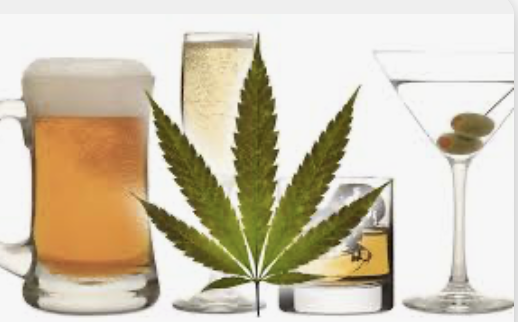
Cannabis has surged in popularity across the United States in recent years, cutting across age groups from older medicinal users to younger adults who increasingly embrace it for recreational and wellness purposes. As cultural attitudes shift and legal access expands — now with major moves at the federal level to reschedule cannabis — traditional alcohol consumption patterns are visibly changing too. Emerging data show younger generations, especially Generation Z, are drinking far less than their predecessors, opting instead for alternatives like cannabis or choosing moderation for health and lifestyle reasons. Drinking rates among adults under 35 have steadily declined over the past two decades, underscoring a generational shift away from habitual alcohol use.  And the question is has cannabis claimed its first alcohol victim?

RELATED: 5 Ways Microdosing Cannabis Can Boost Work Performance

At the federal level, the United States is on the brink of historic change in how it views and regulates cannabis. The current administration has taken formal steps toward rescheduling marijuana, acknowledging its accepted medical uses and easing long-standing federal restrictions. While rescheduling does not equate to full legalization, it would reduce regulatory barriers, expand medical research opportunities, and significantly alter the financial and operational landscape for the legal cannabis industry. These moves reflect a broader cultural shift in which cannabis is increasingly normalized, while alcohol faces mounting competition for consumer attention and dollars.

Photo by 2H Media via Unsplash

Those changing preferences are now rippling through the alcohol industry. A striking example emerged with the announcement Jim Beam will pause production at its flagship distillery in Clermont, Kentucky, beginning in 2026. The move was made by parent company Suntory Global Spirits as part of a strategic adjustment to address slowing demand and an oversupply of aging bourbon barrels. While bottling, warehousing, and visitor operations will continue, a full production pause at one of the most iconic bourbon sites in the world is an unusually strong signal the industry is recalibrating.

Multiple pressures are converging at once. Kentucky warehouses are holding record levels of bourbon, domestic spirits consumption has softened, and international sales have been hit hard by tariffs which have significantly damaged export markets. Canada, historically one of the most important destinations for American whiskey, has been particularly affected, with higher costs and retaliatory trade measures sharply reducing demand. Together, these forces have made it harder for even legacy brands to justify uninterrupted production.

RELATED: Marijuana Use And Guy’s Member

To fully grasp the significance, it helps to revisit the history of Jim Beam itself. Founded in 1795 when Jacob Beam sold his first barrels of whiskey in Kentucky, the brand is one of the oldest continuously produced bourbons in the world. Jim Beam survived Prohibition, rebuilt under James Beauregard “Jim” Beam in the 1930s, and went on to become a global symbol of American whiskey.

At the height of its popularity in the late 20th and early 21st centuries, Jim Beam was ubiquitous — a staple on back bars, a fixture at family gatherings, and a cultural shorthand for bourbon itself. While the brand remains strong, the current pause suggests a changing landscape where tradition alone is no longer enough. Whether cannabis has claimed its first true alcohol casualty remains up for debate, but the shift in American consumption habits is no longer theoretical — it is playing out in real time, barrel by barrel.

Which Of These Two Industries Contribute More To The Economy

The Feds support shipbuilding but compared to marijuana which of these two industries contribute more to the economy.

In recent months, the current presidential administration has made shipbuilding a visible national priority, citing economic security, defense readiness, and the need to rebuild American industrial capacity. Federal speeches, policy directives, and funding discussions have elevated shipbuilding as a symbol of manufacturing revival. At the same time, the cannabis industry continues to receive cautious, uneven federal attention. While it has moved forward on rescheduling, Mmarijuana remains illegal at the federal level. Reform legislation advances slowly despite strong public support. The contrast between robust federal backing for shipbuilding and the tepid, uncertain approach toward cannabis shapes a broader debate over which of these two industries contribute more to the economy?

RELATED: What Does Cannabis Rescheduling Mean

Measured purely by scale, the two industries look very different. U.S. shipbuilding today is a relatively small and highly specialized sector. The country currently produces roughly three large commercial ships per year, with shipyards concentrated in a handful of coastal states. According to commonly cited labor estimates, including those referenced by industry analysts and public employment data, the average shipbuilding salary is about $59,000 annually. While some skilled welders, engineers, and managers earn more, an average reflecting a workforce closer to the national median wage than many assume.

marijuana dispensary
Photo by smodj/Getty Images

The cannabis industry, by contrast, operates at far greater scale. Legal marijuana supports more than 400,000 jobs nationwide across cultivation, manufacturing, retail, compliance, logistics, and technology. Industry revenues exceed $30 billion annually, with legal sales spread across more than half the states. Average wages vary widely, but many full-time cannabis workers earn salaries comparable to shipbuilding employees, particularly in regulated states with established markets.

One of the most important economic differences is time. Even with full federal support, shipbuilding cannot expand quickly. Building new shipyards, modernizing facilities, training skilled labor, and securing supply chains takes years, often decades. Workforce pipelines require long-term investment in apprenticeships and technical education, and new production capacity cannot be switched on quickly. Economic benefits from expanded shipbuilding, while real, will be gradual and regionally concentrated.

Cannabis growth follows a very different pattern. Because the industry is already operating in dozens of states, economic expansion can happen rapidly when regulations change. New licenses, retail stores, and cultivation sites can open in months, not years. Tax revenue flows immediately once sales begin, and employment grows alongside local demand. This speed matters at a time when states are looking for near-term economic relief and job creation.

RELATED: Who Is Rep. Andy Harris And Why Does He Hate Cannabis

Another key distinction is ownership. Shipbuilding is dominated by large contractors and defense-linked firms. Cannabis, on the other hand, has supported thousands of small and mid-sized businesses. Many dispensaries, farms, manufacturers, and ancillary companies are locally owned, creating opportunities for entrepreneurs and keeping profits within communities. These mom-and-pop operations contribute to neighborhood employment, commercial real estate occupancy, and local tax bases in ways large industrial projects often do not.

From a tax perspective, cannabis already delivers significant returns to state governments through excise taxes, sales taxes, and licensing fees, funding schools, infrastructure, and public health programs. Shipbuilding generates tax revenue primarily through payroll and corporate activity, but its overall footprint is smaller due to limited production volume.

Shipbuilding remains strategically important and worthy of investment, particularly for national security and industrial resilience. But economically, cannabis already touches more workers, more states, and more local economies, despite operating under federal restrictions. The comparison suggests while shipbuilding represents a long-term industrial project, cannabis is a functioning, revenue-generating sector whose economic contributions are already being felt across much of the country.

Democrats Hand The Administration Another Win With Cannabis

Democrats hand the administration a huge cannabis win due to their inability to understand voters 

For more than a decade, cannabis reform has stood out as one of the few political issues with overwhelming bipartisan support. Recent surveys show nearly 88% of Americans are open to expanded legalization or meaningful reform, including rescheduling marijuana under federal law. Yet despite controlling the White House during critical moments, it seems the Democrats hand the administration another win with cannabis, allowing the current President to have another landmark victory. That failure now risks becoming another durable point of contrast credited to this administration, while reinforcing a broader pattern of Democratic miscalculation.

RELATED: What Does Cannabis Rescheduling Mean

Cannabis reform once appeared to be an inevitable Democratic victory. Under President Barack Obama, federal enforcement softened in tone, but marijuana remained classified as a Schedule I drug—grouped alongside heroin and defined as having “no accepted medical use.” While states rapidly legalized medical and adult-use cannabis, the Obama administration chose to manage the contradiction rather than resolve it. Executive authority existed, but it went unused.

The same hesitation carried into the Biden era. President Joe Biden campaigned on acknowledging the failures of the drug war and the need for reform, yet once in office, decisive action stalled. Reviews were ordered, agencies were consulted, and timelines stretched. What could have been a clear, popular, legacy-defining achievement—rescheduling cannabis—was instead delayed into political limbo. The moment narrowed, then passed. This lead some in the industry to see it was just an election tool with no real support, despite public opinion.

Democrats Hand The Administration Another Win With Cannabis

The cost of the delay is not merely policy-based; it is political. In today’s environment, contrast matters. By failing to deliver a concrete, broadly supported reform, Democrats allowed Trump to position himself again—however imperfectly—as more open to change through a states’ rights framework. Even symbolic momentum can define a win, and Democrats surrendered the narrative space.

This failure mirrors a recurring pattern within the Democratic National Committee. Time and again, leadership has struggled to translate clear public opinion into federal action, particularly on issues where Washington caution collides with voter urgency.  Often ignoring mainstream businesses, issues and concerns, the DNC focuses on “beltway buzz” rather than voters. The collapse of support from rural areas so how far away DNC leadership is away from the electorate. Cannabis reform, supported across age groups, regions, and party lines, should have been an exception. Instead, it became another example of internal hesitation and indifference overriding external consensus and popular support.

That disconnect is now reflected in the numbers: the DNC and congressional Democrats are registering historically low approval ratings in the most recent Quinnipiac poll, underscoring growing voter frustration with inaction on widely supported issues.

The disconnect is further underscored by the actions of party leaders, especially Senator Chuck Schumer and Cory Booker. Both have spent years presenting themselves as champions of cannabis reform, unveiling sweeping legalization proposals and high-profile press events meant to demonstrate urgency and moral clarity. Yet with rescheduling still unresolved, those efforts now risk appearing performative rather than effective.

RELATED: Who Is Rep. Andy Harris And Why Does He Hate Cannabis

By attempting to lead with comprehensive, all-or-nothing legislation, Schumer and Booker arguably misread the political moment. While full legalization remains a worthy goal, rescheduling was achievable, popular, and immediately meaningful. Securing that step first would have delivered tangible relief to businesses, patients, and workers. Instead, the emphasis on symbolism over sequencing allowed momentum to dissipate.

For everyday Americans and the thousands of mom and pop industry businesses, the consequences remain concrete. Legal cannabis businesses are still locked out of banking. Patients face conflicting laws. Workers remain vulnerable to outdated federal classifications. These are not failures of public will, but of political execution.

In the end, cannabis rescheduling stands as a cautionary tale. Democrats had public support, executive authority, and time. By inaction, they lost a clear win—and reinforced a growing perception the party too often listens last to voters who are increasingly disenfranchised with the party.

The Best Merry Cocktails For The Season

Hosting this holiday or just hanging out? Here are the best merry cocktails for the season, including classic spirits and festive recipes

The holidays are the one time of year when indulgence isn’t just allowed — it’s encouraged. From twinkling lights to clinking glassware, a truly festive gathering deserves cocktails that feel celebratory, cozy, and just a little decadent. These are not everyday drinks; they are the best merry cocktails for the season! They are designed to evoke warmth, sparkle, and seasonal cheer. Here are five crowd-pleasing holiday cocktails.

RELATED: Frosty The SnowMan’s Life Lessons

Maple Old Fashioned Cheer

This winter-ready twist on the classic Old Fashioned leans into deep, warming flavors. Maple syrup adds seasonal sweetness while orange and spice keep it elegant and comforting — ideal for fireside sipping.
Ingredients
  • 2 oz bourbon
  • ½ oz pure maple syrup
  • 2 dashes aromatic bitters
  • Orange peel
  • Cinnamon stick (optional)

Create

  1. Stir bourbon, maple syrup, and bitters with ice until well chilled
  2. Strain over a large ice cube in a rocks glass
  3. Express the orange peel over the drink
  4. Garnish with cinnamon if desired

Cranberry Cinnamon Margarita

Bright, festive, and jewel-toned, this margarita brings holiday flair to tequila lovers. Tart cranberry balances citrus, while cinnamon adds subtle seasonal warmth.
Ingredients
  • 2 oz tequila blanco
  • 1 oz cranberry juice
  • ¾ oz fresh lime juice
  • ½ oz orange liqueur
  • Cinnamon sugar rim (optional)

Create

  1. Shake all ingredients with ice until cold
  2. Strain into a rocks glass over fresh ice
  3. Garnish with a lime wheel or floating cranberries

Mulled Holiday Red

Few drinks feel as instantly seasonal as mulled wine. This slow-simmered classic fills the room with holiday aroma and delivers comfort in every sip.
Ingredients
  • 1 bottle dry red wine
  • ¼ cup brandy
  • ¼ cup honey or sugar
  • Orange slices
  • Cinnamon sticks
  • Whole cloves
Create
  1. Combine all ingredients in a saucepan over low heat
  2. Warm gently for 15–20 minutes without boiling
  3. Strain
  4. Serve warm in mugs or heatproof glasses

RELATED: The VFW Stands Up For Marijuana

Pomegranate Sparkler
Elegant and celebratory, this cocktail is perfect for holiday toasts. The ruby hue and crisp bubbles make it visually stunning and refreshingly light.
Ingredients
  • Champagne or dry sparkling wine
  • 1 oz pomegranate juice
  • Fresh pomegranate seeds
Create
  1. Pour pomegranate juice into a flute
  2. Top with chilled champagne
  3. Garnish with a few seeds for sparkle

Peppermint White Russian

Decadent and dessert-like, this holiday version of the White Russian feels tailor-made for December nights. Creamy, minty, and indulgent, it’s pure seasonal comfort.
Ingredients
  • 2 oz vodka
  • 1 oz coffee liqueur
  • 1 oz peppermint schnapps
  • Heavy cream

Create

  1. Fill a rocks glass with ice
  2. Add vodka, coffee liqueur, and peppermint schnapps
  3. Float cream on top and stir gently before sipping
Whether you’re hosting a lively party or enjoying a quiet night by the tree, these Merry Cocktails bring warmth, indulgence, and unmistakable holiday atmosphere to every glass. Cheers to the season.

Who Is Rep. Andy Harris And Why Does He Hate Cannabis

Who is Rep Andy Harris and why does he hate cannabis, his role in blocking rescheduling and shaping federal marijuana policy debates.

While the marijuana industry holds its breath on whether the President will finally take long promised action, a new foe has emerged. Who is Rep Andy Harris and why does he hate cannabis. Harris (R-Md.) is a physician-turned-congressman who has represented Maryland’s 1st District since 2011. A staunch social and fiscal conservative, Harris has made a name for himself as a showdown-willing member of the House Freedom Caucus and one of Congress’s most vocal opponents of loosening federal marijuana rules.

RELATED: Officials Cling To Personal Moral Codes Despite Public Opinion

His opposition has become especially visible as the federal government weighs reclassifying cannabis under the Controlled Substances Act. Harris has repeatedly pushed back against rescheduling, arguing the change would be a public-health mistake even if it helped his party politically — famously telling reporters he “doesn’t care whether it’s good for the party or not” and his personal beliefs drive his position. He has used his medical credentials and committee access to press the DEA and Justice Department to reconsider or slow any move to move cannabis out of Schedule I.

His stance has put Harris at odds with many in both parties who frame rescheduling as modest administrative relief — a shift to would mainly ease research barriers and allow ordinary tax deductions for state-legal businesses rather than instant national legalization. Harris has been among the Republicans publicly urging caution and in some cases urging rollback, saying he would prioritize what he sees as public safety over political convenience even if the president favors change.

Beyond cannabis, Harris has a long record of blocking or resisting measures on several fronts. In the Maryland Senate he led a lengthy filibuster against anti-discrimination protections for same-sex couples; in Congress he’s pushed amendments to limit federal funding for wind-farm projects, opposed mask and lockdown policies during COVID-19, promoted unproven treatments early in the pandemic, and used appropriations levers to press social-policy goals. As Freedom Caucus chair, he’s also been a key dissident voice on spending and budget negotiations, at times voting “present” or leading objections making compromise more fraught.

What the combination means politically is straightforward: Harris is less a moderating institutionalist and more an ideological gatekeeper. When the nation debates incremental steps on cannabis policy — rescheduling which could ease research, banking and taxes for state legal businesses — he’s been a high-profile obstacle. For advocates and entrepreneurs who say rescheduling would relieve tax and regulatory burdens on thousands of small, mom-and-pop cannabis operators, Harris’s resistance signals administrative changes alone may not be enough; legislative and political fights will persist.

RELATED: The VFW Stands Up For Marijuana

Whether Harris’s position will bend depends on the balance of power in Congress and the White House. For now, his mix of medical credentials, social conservatism and Freedom Caucus influence makes him one of the most consequential critics of any federal move to ease cannabis restrictions — and a reminder rescheduling debates are as much political theatre as they are technical.

What Does Cannabis Rescheduling Mean

What does cannabis rescheduling mean for patients, doctors, retailers and small businesses as the President weighs federal action.

The last few days have been a rollercoaster for the cannabis industry with a press release was released on Friday saying the President is going to use an executive order on cannabis.  The market soared and then crashed and then rebounded now he has he commented he is considering it when directly asked a question. When the President says he’s “considering” rescheduling cannabis, that’s not the same as legalizing it — but it could still be the single biggest federal shift for the industry in decades. But what does cannabis rescheduling mean? The act would change marijuana’s place on the federal Controlled Substances Act (CSA) from Schedule I — the category reserved for drugs the law says have no accepted medical use and high potential for abuse — to a lower schedule, most often discussed as Schedule III. The practical effects would be immediate for researchers and investors, consequential for doctors and patients, and potentially life-changing for thousands of mom-and-pop retailers drowning under today’s tax rules.

RELATED: Mike Johnson And Marijuana

Moving cannabis out of Schedule I would remove a major administrative barrier to clinical research. Researchers say rescheduling would simplify access to plant material for federally-funded studies and could speed trials on cannabinoids for pain, epilepsy and other conditions — because Schedule III substances are treated more like prescription medicines that can be studied with fewer legal hurdles. That said, rescheduling is not an FDA approval: doctors would still lack the uniform, FDA-style prescribing framework that exists for most pharmaceuticals, and states would continue to control patient access under their own medical cannabis rules. In short: more and better science is likely, but a medical-practice revolution would depend on follow-up regulatory and clinical work.

Photo by Aaron Kittredge via Pexels

Rescheduling would not erase state laws or create a nationwide retail market overnight. Consumers in states with legal sales would still use the existing retail channels, and in states where cannabis is illegal, possession and sale could remain crimes under state law. But at the federal level, rescheduling could unlock easier banking access and attract mainstream investment: Schedule III status reduces the shadow-banking risk that currently forces many operators to run primarily in cash and stay out of regular capital markets. That improved access to banking and capital could make stores safer and give established local operators better options for growth.

For many small cannabis retailers the single most consequential change would be tax relief. Under current law, Internal Revenue Code Section 280E prevents businesses trafficking in Schedule I or II substances from deducting ordinary business expenses — meaning rent, payroll, advertising and professional fees are largely nondeductible. As a result, effective federal tax rates for some retailers have been extraordinarily high. If cannabis were reclassified to Schedule III, 280E would no longer apply — allowing businesses to deduct ordinary expenses like any other small business. That could free up cash flow, lower effective tax rates dramatically, and determine whether many family-run shops survive or shutter.

RELATED: Marijuana Use And Guy’s Member

An administrative rescheduling (for example by executive order or DEA action) could be challenged in court or limited by Congress. Some lawmakers argue a President cannot unilaterally rewrite statute; others note that Congress could respond, creating new limits or tax rules. And rescheduling alone will not erase criminal records automatically — separate policy steps would be required to address convictions and resentencing. So while rescheduling is a powerful and pragmatic lever — speeding research, unlocking banking, and ending the worst tax penalties — it is not a one-click path to full legalization or automatic amnesty.

If the President moves ahead, which is still up in the air, rescheduling would be a structural shift: better science, easier finance and crucial tax relief for operators — especially small, mom and pop retailers. But legalization, standardized medical prescribing and answers about criminal records would still require follow-on legislative and regulatory work. For mom-and-pop shops, rescheduling could mean the difference between surviving another year and finally having breathing room to compete.

Don't Miss Your Weekly Dose of The Fresh Toast.

Stay informed with exclusive news briefs delivered directly to your inbox every Friday.

We respect your privacy. Unsubscribe anytime.