A video sent into KHOU shows the woman walking around her parked car and shouting, “I’m an angel, I’m an angel, where are the rest of them?”
The woman then picks up what appears to be her shoe and her bra before casually walking back to her car and calmly drove off like she didn’t just run around naked and shout about angels in front of dozens strangers. KHOU said it caused “quite the traffic jam,” which sounds about right.
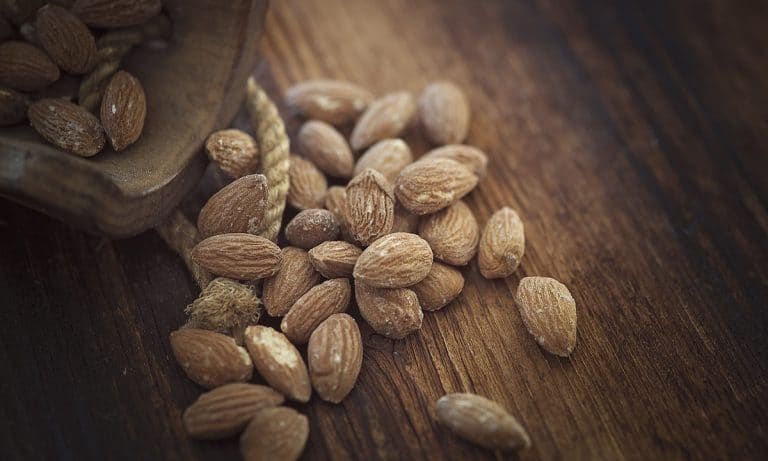
Aficionados bemoan and explain why almond milk and coffee suck together. You may have noticed recently that soy milk isn’t really a thing anymore. Where the bland, chalky by-product of soy beans once reigned supreme in the world of non-diary coffee-related beverages, over the course of the last two to three years it’s fallen out of favor. For good, if not entirely scientifically proven reasons (soy is a phytoestrogen and was thought to have estrogen-like effects on its fans — i.e. men growing boobs, etc.), soy has been tossed in the waste bin next to banana-flavored syrup and Rice Dream. In it’s place, we — the non-diary latte consumers of the world — have crowned almond milk as the new king. And to be frank, we’ve made a poor decision.
If soy milk was a passively disgusting alternative to animal’s milk, then almond milk is an aggressively poor substitute for the palate-savvy coffee drinker.
Even worse, as more and more coffee drinkers become fans of almond milk, more and more coffee shops are offering it as the only non-dairy option, leaving those lactose intolerant latte lovers without a leg to stand on.
My argument isn’t a complicated one: almond milk, regardless of your enjoyment of non-dairy options, pairs poorly with espresso or coffee in general. Sure, almond milk, when steamed to utmost perfection, is a fine, even decent tasting plant-based milk to mix with your espresso.
https://www.instagram.com/p/BPxkjZjhy50
That said, when almond milk is not steamed to perfection it takes on a bitter flavor, gritty texture, and inconsistent thickness that completely subsumes any nuance or flavor profile your 2.2 ounces of espresso might have lingering within it. What you get instead of a smooth, creamy drinking experience is something similar to licking the side of an antique cauldron that hasn’t had time to cool down — rusty, flecked with non-soluble chunks, a flavor made for cartoon spit-takes.
Yet, the non-dairy coffee consumers amongst us seem to genuinely enjoy steamed almond milk as much as they once enjoyed the boob-growing delights of soy. Just like with soy before it, the lactose averse drinkers of the world are forced to claim allegiance to almond milk’s astringent flavor because they don’t really have any other option. Sure, you could bring in your compostable carton of hemp, rice or coconut milk for the barista to half-assedly steam, but be realistic: none of these are viable espresso pairings. Rice milk is like a milkier gruel, hemp milk is like rice milk but slightly less gruel-y, and coconut milk should be reserved for curries and tropical beverages with tiny flags sticking out the top.
Those who enjoy a non-animal milk beverage are left with the new crop of other nut-related “milks” like macadamia and cashew currently trying to push their way into the market. If you haven’t tried macadamia milk, it’s a less acrid, far sweeter version of almond milk — one that’s lacking the gnarly thickness that makes its grosser cousin more palatable to latte drinkers.
So why haven’t we bid adieu to almond milk and its brutal dismantling of all things good about espresso? Because macadamia milk — or cashew milk or whatever “milk” we deem worthy of assuming almond milk’s heavy crown — hasn’t pushed far enough into the public consciousness. Yes, you can get an excellently prepared macadamia milk latte from a handful of coffee shops (San Francisco’s St. Frank and Los Angeles’ Go Get ‘Em Tiger to name two) but because of the implied novelty of the beverages, they’re both hard to find and overly expensive.
https://www.instagram.com/p/BONqj59gHUL/
And here’s the greater rub: macadamia and cashew milk are delicious dairy alternatives, when prepared correctly. If and when one of these non-dairy options becomes popular enough to usurp almond milk’s throne, to get it’s own mass-produced compostable, plastic bottle, it will once again be subject to the whims of ill-trained baristas. It will once again be subject to poor preparation and the harsh flavor profiles that come with it.
If there’s a solution to the non-dairy problem, I don’t have it.
Know you know why almond milk and coffee suck together. Instead, maybe it’s our destiny to float from one acceptable milk alternative to the next, always hoping that we’ll find that unicorn beverage that stands up to a shitty baristas over-steaming and still tastes good when dumped atop coffee. Until then, well…there’s always the abandonment of your lifetime philosophy of not eating animal-based products. Or you could just try drinking your coffee black.
Most rappers don’t keep secret their enjoyment of marijuana and Run the Jewels’ duo Killer Mike and El-P are square in that camp. If you followed either of their solo careers or just fans of RTJ, their raps are full of weed references. And Killer Mike isn’t one to miss a 4:20 celebration.
But whereas cannabis produces a drowsy flow in other artists, Run the Jewels make music that’s, well, pure rage. Aggression, fighting-the-system raps. Weed affects all of us differently, we guess.
For the production of their most recent project RTJ3, the duo absconded to upstate New York create their album in peace. As El-P said in a recent DIY Magazine profile of the group, ““a place where we can forever escape and have a Run the Jewels world.”
As Killer Mike told the magazine, “After I figure out how to get marijuana, and accept there are no strip clubs, man, I get really focused on the work. […] In the woods it allows you to focus what you’re thinking. And the weed supply up there is great, now, thankfully.”
So it begs to reason: Just how much marijuana does the pair consume during their creative endeavors? Thankfully, we have the answer.
Run The Jewels have no qualms with admitting to their recreational habits, but can they roughly estimate how much weed was consumed during the making of ‘RTJ3’?
Killer Mike: Yes. You can do it like this. We average ’bout a quarter pound a week to ten days. So, that’s on average about a pound a month. I’d say—give or take a pound—and we’re looking at a year here, I’d say honestly no less than six pounds to record an album.
In case you didn’t just read that, we’ll repeat it, “no less than six pounds to record an album.” And that’s an estimate that includes the words “no less.” So that’s six pounds between two people, a.k.a. an average of no less than three pounds per person consumed. We don’t need to tell you that’s absolutely bonkers news.
It just shows how outdated the old-school image of weed users is. These guys can consume no less than six pounds and produce some of the rawest hip hop around. Old-school hippies, these men are not.
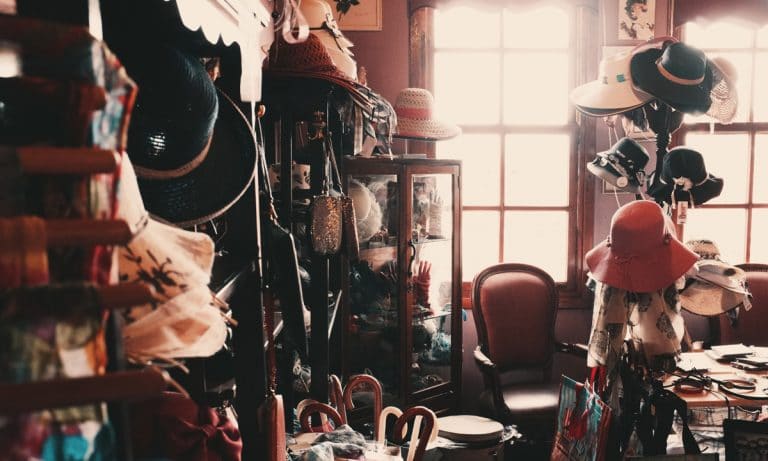
One of my favorite things to do after vamping with my vape is to wander my neighborhood to take in the diversity that remains of the artist enclave known as Alphabet City of NYC. On my walk, I make it a point to stop in at my local vintage store: The East Village Vintage Collective. Here I am free to meander, often for hours at a time, between the two floors of colorful (sometimes corny and kitsch, but always diverse and lively) collectable items and vintage finds.
East Village Vintage Collective is run by two ingenious entrepreneurs, Maegan Hayward and Melanie On, who curate a group of vintage vendors that have joined forces to run a super-successful shop that hosts fun and interesting events on a regular basis. I’ve had the good fortune of producing performances here in the past, and I have had incredible success finding the perfect gift (they host guest vendors each week to keep the shelves and racks fresh) for friends and family.
So the last time I floated in, I asked “how does a non-expert do second-hand vintage shopping right!?” Here are a few tips that the experts at EVVC advise!
The Number One Tip Is: Do you like it? Then buy it! It’s that simple.
Kitschy Vintage Artwork – is it a Picasso, or a Steve Martin knock-off?
When buying vintage artwork you’ll always be charged more for original and authentic art, but how do you know if it’s real or not? Always look for a date, check for a signature, and if it’s in a frame, take the frame off and find a signature and/or date. This is proof of authenticity that the piece may have, or lack. Also you can look online for others like it to detect if it’s a copy, fraud, or simply a knock off.
Vintage Jeans: How to get the correct size without access to a fitting room
Levi’s & Wranglers are popular brands but anything from the 70’s, 80’s and 90’s are good jeans to find right now. Light to dark wash is good all depending on your personal preference. If you’re at an estate sale, flea market, or just a place with no fitting room, a cool trick for figuring out your size is to take the waist of the jeans and wrap it around your neck. Doesn’t wrap all the way around? The jeans are too small for you. Way overlaps? The jeans are too big? Overlaps a little or fits just right then 9 times out of 10 that’s your size. Body symmetry is pretty amazing stuff!
Vintage Glassware: Only put your lips to something that is bona fide
Vintage glassware is fun to find and can span multiple decades. Some come in large sets for major in home entertaining like those from the 40’s and 50’s and some you’ll find the perfect fit to sit on the back porch with your matching pitcher and set of glasses, sipping lemonade on a steamy summer day. Most lemonade sets were produced in the 50’s and 60’s when entertaining guests was a popular pastime and having the appropriate glassware for the occasion was put at a premium. Another type of popular glassware is character or themed glasses of the 60’s 70’s and 80’s. These glasses were usually given away with meals at fast food restaurants or in the early days when you would stop to fill up your car with gas. From Star Wars, Peanuts, Care Bears, The Flintstones, Garfield, to McDonald’s characters, and E.T. – if there was a character on TV or in a film, they were probably printed on a glass. When you find these glasses the best thing to do is again, look for a date. Usually the older they are the more valuable they are and there are certain themes that are more valuable than others, some fetching up $300 or more!
Vintage Vinyl: What’s up the sleeve, may surprise you!
Record collecting is it’s own art. Many albums have different pressings and of course the older or more limited the pressing the more valuable it is. For instance you might see a record that has been released several times so it has different dates on the back. The earlier the date the more hard to find the album is. Vinyl wears and scratches over time, so finding an old record that is in great shape is quite a feat. The most important part of the record is the actual record and taking it out of the sleeve when you find it to check for obvious scratches is key. Ask if you can play the record to test it if you can. What makes it worth even more is if the cover is also in good shape or even better if it still has the original poster or extra artwork that might have come with it inside. It’s always interesting to look inside of records because you never know what you might find. We have found everything from old playbills, to concert tickets, to actual autographs and pictures of the records original owner, with the band.
Vintage Rock T-Shirts: See the very first rule: if you like it, buy it!
Vintage Rock T-Shirts have been all the rage over the last 10 years and the truth is, they are becoming more and more difficult to find, especially at a decent price. So, if you find one that you think might be the real deal and it’s affordable (under $20) scoop it up and take your chances. Right now shirts from the 90’s are very popular and they are going on Ebay for hundreds of dollars (sometimes more!!)! But shirts from the 70’s like David Bowie, Led Zeppelin, Thin Lizzy, etc. can also fetch a pretty penny and are even harder to find because of the fact that t-shirts do eventually turn into shreds after years of being exposed to the elements, sweat, and multiple washings.
Keep in mind that Ebay and the Internet at large is a good place to check but you can’t confirm items value based on Ebay. There are lots of items that are priced high that sit on Ebay for ages and don’t ever sell or sell to someone that doesn’t really understand what they are paying for. Some times items had a limited release or sometimes they are bootleg versions of a licensed product and other times they might be handmade versions of someone’s favorite art or product. You have to be thorough in your investigations if you’re serious about not getting taken.
According to the Wine Institute each U.S. wine-consuming resident knocked back an average of 2.83 gallons that year. But what about the packaging?
There are nearly 9,000 wineries in the United States. According to the Wine Institute, the amount of wine produced in 2015 almost tipped the scale at eight million gallons, with each U.S. wine – consuming resident knocking back an average of 2.83 gallons that year. The industry brings in upwards of $60 million in sales revenue and, according to 2016 Nielsen data, a lot of that isn’t coming from a bottle — it’s being poured from a tap, out of a can or from the spout of a box.
The times, they are a’changin’. Eno-critic Robert Parker is to the wine industry what a Nokia flip phone is to Verizon: a distance, outdated memory that Baby Boomers are still having a hard time giving up. Wine drinkers are coming in all shapes and sizes and, in recent years as they come of age, millennials are the largest population of wine drinkers, with disposable tech-fueled incomes and a thirsty for something good, different and not their father’s packaging.
Pop A Top Again With Canned Wine
Nielsen reported a 125 percent increase in sales of canned wine in 2015, with sales skyrocketing from $6.4 million in 2014 to $14.5 million, which, if you do the math, is over 24 percent of the industry’s overall takings. And why shouldn’t it do well: it’s easy to access, effortless to pack and provides a single-serving option wine bottles cannot. Although Trader Joe’s has been repping the package since 2009 and Francis Ford Coppola’s Sofia Mini blanc de blanc four-packs of bubbles (with a straw included) have been on major retailer shelves since the turn of this century, this is still a relatively new packaging phenomenon for the wine world.
For Andrew Jones, owner and winemaker at Field Recordings on California’s Central Coast, he was looking for a way to get the spotlight on his modest venture. “I thought it was something fun and different,” Jones says of his Fiction and Alloy Wine Works canned brands. “I’m a small winery in a relatively new area for wine in California. It was worth a shot.”
And it worked. The wine received coverage in everything from major wine rags to the Today show, twice. Jones estimates the winery sells four 16-ounce cans retail to every one sold on-premise (restaurant or bar) but those that have embraced the packaging have done well with it, showing room for growth in both areas of canned wine consumption.
Tapping Of The Wine Keg
Photo courtesy of Proletariat
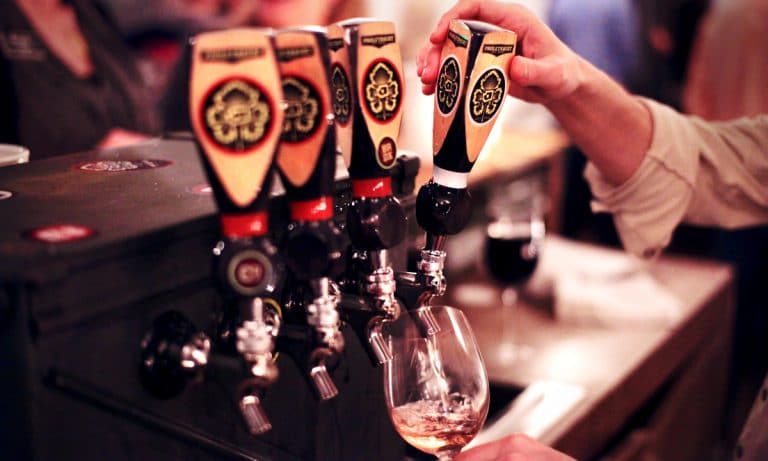
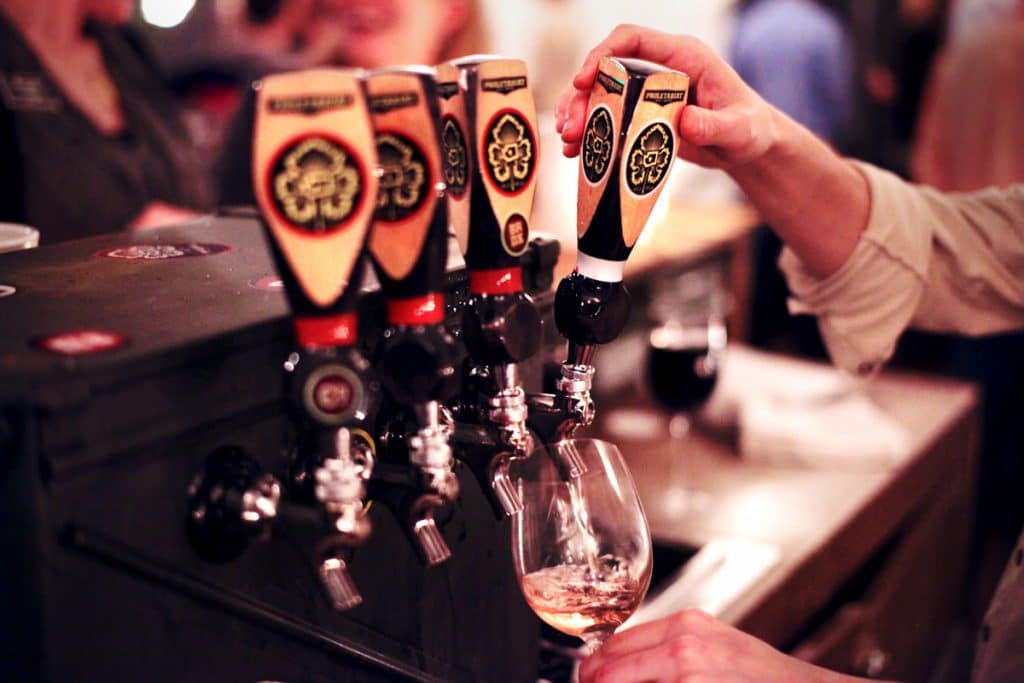
Wine poured from the tap might not only be a smarter method for wine sold at restaurants and bars, but it also reduces the drink’s carbon footprint. For Proletariat Wines, one of Washington State’s inaugural makers of draft wine, the move to alternative packaging was just good, sustainable business. Now with more than 300 locations pouring their kegged wine on tap, the draft-only winery estimates it has saved nearly 400 tons in discarded glass.
In addition to a smaller eco-imprint, co-founder Darin Williams says Proletariat’s reason for kegging was to deliver freshness and consistency. “Draft systems are designed with that in mind for beer,” he says, noting how they worked with beer industry colleagues to determine the most efficient method for successful kegged wine. “The category is steadily growing across the U.S. so we’re cautiously optimistic that opportunities will continue to present themselves.”
The strategy is simple: wineries fill kegs of wine instead of bottles (with roughly 26 bottles in one keg), restaurants and bars dispense the juice via their draft system, skipping the bottling altogether. On tap, waste is eliminated — instead of having to dump a too long-opened bottle down the drain, the airtight seal of draft lines from keg to tap provide a steady stream of freshness and quality to the glass. Plus, there isn’t a need for glass bottles, labels or cardboard cases; even transportation costs are reduced, downsizing the overall environmental impact.
The Box Is Back
https://www.instagram.com/p/BO7zKprDsx1
If you didn’t learn how to drink wine from a box with a bladder of booze strapped inside it, then you didn’t live in college. It’s not just Franzia that’s on the shelf anymore; the box is back in retailers in the form of a carton package. The material, like the popular Tetra-Pak brand, is lightweight, eco-friendly and easy to transport. Although it does have a shelf life, often times expiring after a few years, it is a friggin’ squeeze-style juice box of wine.
“The alternative packaging and intrinsic personality of the Bandit brand has made these wines an instant hit with a number of outdoor enthusiasts, as well as those who simply appreciate the convenience of having great wine on-the-go,” says Brie Baltzell, director of marketing for Bandit Wines’ and parent company Premium Brands.
Classic varieties are “boxed” in the container package, sans bladder bag, and cracked open with a simple twist-seal similar to a carton of milk. Stuff it in a purse for movie theater outings, pack it in a picnic basket or splash it into a glass under your desk at the office, the one-liter boxes also give about eight ounces extra than a typical bottle of wine.
Height Doesn’t Matter
Photo courtesy of Corta
Heralded as the heritage bottle, the short and stout “stubby” bottle has been making a comeback in the beer industry, with mega-makers like Coors, Rainier and Budweiser bottling shorties. In the ever-competitive wine market, a handful of wineries have fashioned bottles modeled in a similar style, akin to the glassware that holds Port or rustic Chianti. The bottle, which is seen both in 500- and 750-milliliter options, also uses less glass than regular bottles, requiring less resources to produce and to ship.
For Paul Englert, director of marketing for Ca’ Momi Wines in Napa Valley, this custom bottle came into fruition as a combination of the winery’s Italian heritage and the environmental benefits that pushed the winery to differentiate itself with its squatty 750-milliliter “Corta” bottle. “It’s getting harder and harder to stand out simply with label design,” Englert says of the ancient Italian-inspired design that is used for two proprietary Napa blends. “The unique bottle instantly catches your attention and your curiosity takes over. Whether it’s on a retail shelf or a back bar, it begs the question: what’s that? … We use this as a great opportunity for a conversation, which is what wine is all about.”
Marijuana is now officially legal throughout the state of Maine.
As of Monday, it is absolutely copasetic in the Pine Tree State to cultivate, possess, use and give away marijuana without fear. No longer will adults 21 and over be forced to seek out a medical marijuana recommendation from a doctor just to get their hands on legal weed. The new law effectively snuffs out prohibition statewide, giving all of Maine’s grown-ups the same freedoms previously only enjoyed by those plagued with serious health conditions.
“The era of marijuana prohibition in Maine is finally coming to an end,” David Boyer, Maine political director for the Marijuana Policy Project, said in a statement. “Responsible adult marijuana consumers will no longer be harassed and treated like criminals. Police will be able to spend more time addressing serious crimes rather than punishing adults for using a substance that is safer than alcohol.”
But there are still a few rules that will need to be adhered to when it comes to taking advantage of the state’s new marijuana law. For instance, while pot possession is legal, individuals are only permitted to carry up to 2.5 ounces on them at a time. Yet, individuals can now legally grow up to six plants at home. These folks are free to give up to 2.5 ounces of their homegrown to friends, family or total strangers, as long as no money changes hands. Selling marijuana remains illegal under the language of the law.
Of course, public consumption is still against the rules. Anyone caught smoking weed in public can be slapped with a $100 fine. However, eventually, cannabis lounges will start to appear throughout the state. The new law provides an opportunity for social marijuana use to happen at some point under the guidance of the state. This aspect of the law was created in an effort to provide the tourism community with places to hang out and get stoned.
But don’t smoke and drive.
Much like every other state that has made weed legal, Maine’s new law strictly prohibits driving under the influence of marijuana. Although there is no definitive testing method for determining whether a motorist is driving high, police are expected to conduct field sobriety tests, similar to those used with respect to alcohol impairment, in order to bust people for this offense. The good news is, however, in other legal states, reports shows that the majority of stoned driving cases are being dropped as long as the accused goes to trial. It seems that prosecutors are having a difficult time proving to juries that suspected high drivers were actually impaired at the time of their arrest.
You’re at the gym feeling unmotivated and about to just give up and go home. You click the next button on your playlist a few more times hoping for a little inspiration and then, as if it was destiny, it happens. All of a sudden that one song that can always get you to push yourself further precedes to play.
The key to a successful workout, or movie, or actually most moments in life, can be as simple as the setting the right soundtrack. Gyms around the world emphasize the importance of a solid playlist, and many have transformed their programming to reflect the niche music tastes of their members. Even so, sometimes your gym’s playlist doesn’t reflect your mood. It can be hard to curate your own playlist every time you get sick of the songs you’ve had on replay for the past ten days, which is why we’re about to give you a few suggestions.
While these may be the most popular, trendy isn’t always terrific. If what’s hot right now isn’t enough to make you break a sweat, here are five of our favorite playlists of the moment:
For the hip-hop lovers:
For the rock n’ rollas:
For those who like to keep it old school, but not too old:
Two Burger King employees were arrested last weekend for allegedly selling marijuana through the fast food chain’s drive-thru to customers who used the proper code words.
Police in Epping, New Hampshire say Garrett Norris, 20, and Meagan Dearborn, 19, would sell the weed to anyone who asked for the “nasty boy.”
“Once it was verified he was working they had to ask for their fries extra crispy,” Epping Police Chief Mike Wallace told NH1.
“We obtained enough evidence that pointed to the employee, Norris, was selling marijuana though the drive-through,” he added. “It was substantiated with the with sting operation. We went in later that evening and arrested him and the shift manager.”
The operation was apparently a bit of an open among locals. “We always heard rumors that employees were selling illicit drugs through some fast food restaurants,” Wallace said. “It was never substantiated until Saturday night.”
Norris is facing charges of possession of a controlled drug with intent to distribute. Dearborn was nabbed on conspiracy to distribute charges and an unlawful possession of alcohol charge.
Under new legislation moving through the Virginia General Assembly, Virginians convicted of marijuana possession for the first time would no longer automatically lose their driver’s license for any period of time. As the law stands now, people convicted of any drug offenses in the state have their license suspended for six months.
Capital News Service reports that under the new legislation, the provision wouldn’t apply to adults convicted of simple possession of marijuana on a first offense. Juveniles would still lose their licenses, and judges would be able to suspend the licenses of adults on a case-by-case basis.
The bill, SB 1091, passed through the state Senate easily by a vote of 38-2. It was sponsored by Democratic Sen. Adam Ebbin of Alexandria and Republican Sen. Bill Stanley of Franklin County. It’s also expected to clear the House.
Many people consider Virginia’s penalties for marijuana possession severe. A first offense for possession of less than a half ounce is a misdemeanor punishable by up to 30 days in jail and a $500 fine, plus a six-month suspension of the individual’s license to drive a motor vehicle.
A first offender may receive a deferred disposition and dismissal of the charge upon completion of probation and community service. But such defendants still lose their driver’s licenses for six months.
About 39,000 Virginians lose their licenses each year because of drug convictions, according to Ebbin, who added that surrounding states have much more lenient policies.
“What we’re trying to do with this very good statute is give someone the opportunity of a second chance for making a dumb mistake,” Stanley told Capital News.
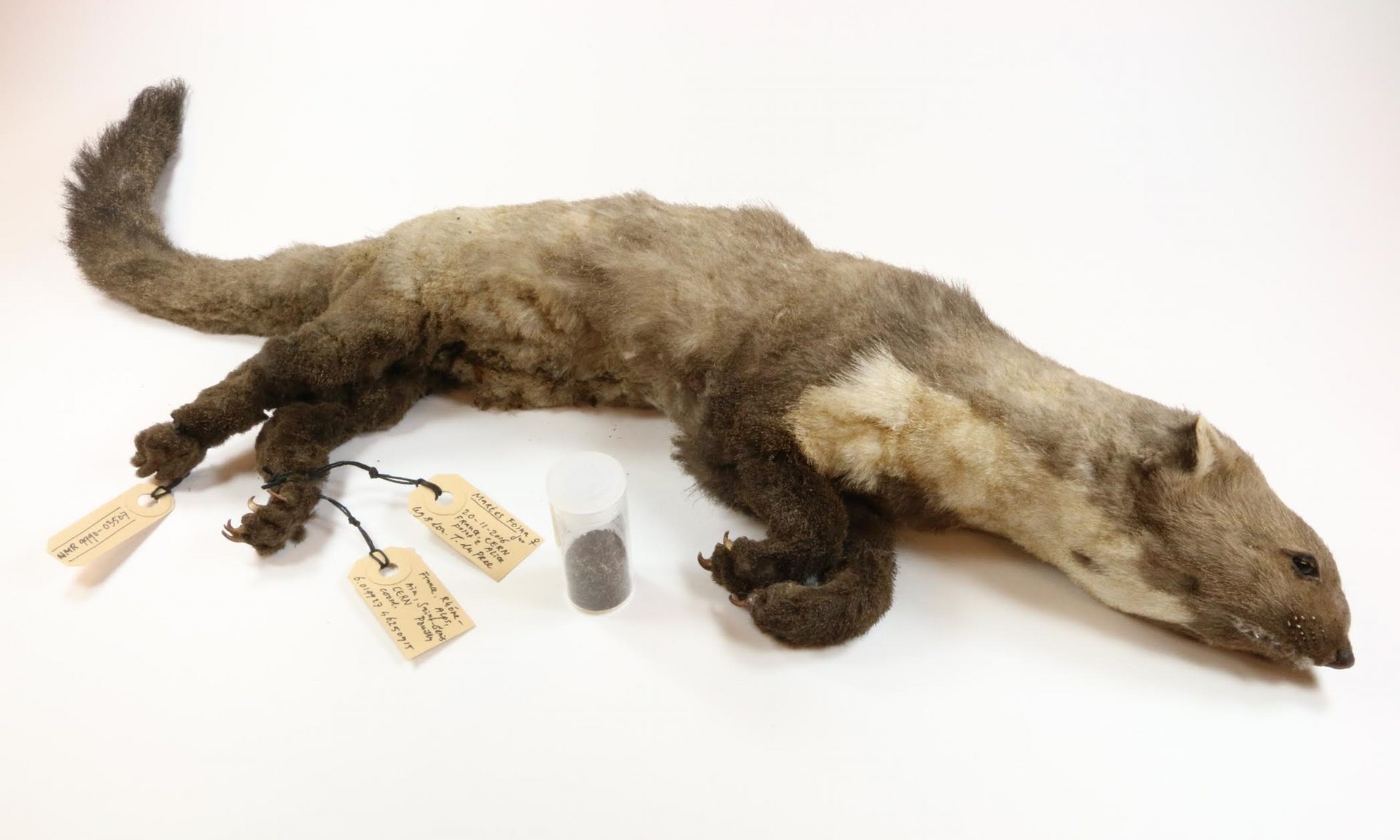
There are all sorts of cruel ways that animals die in nature. Some are ripped apart and eaten, some starve to death, and some—or at least one unfortunate weasel—get electrocuted by an 18,000 volt transformer at the Large Hadron Collider near Geneva, Switzerland.
The incident took place last April, when the stone marten hopped a fence by the vast particle accelerator—the most powerful machine on the planet—and was killed instantly after coming in contact with the transformer. But he wasn’t the only victim: The fury little critter’s mistaken leap knocked out power to the LHC, which, as The Guardian put it, “recreates in microcosm the primordial fire that prevailed at the birth of the universe.”
To commemorate the weasel’s unusual end, the Rotterdam Natural History Museum is displaying its taxidermied body as part of its Dead Animal Tales exhibition.
“It’s a fine example of what the exhibition is all about,” Kees Moeliker, the director of the museum, toldThe Guardian. “It shows that animal and human life collide more and more, with dramatic results for both.”
Photo via Rotterdam Natural History Museum
Other animals on display at the museum include a hedgehog that died while stuck inside a McDonald’s McFlurry cup and a sparrow that was shot after ruining a 23,000 domino display.
In a bizarre twist, Moeliker started the exhibit after watching a duck rape the corpse of another duck who had just crashed into the museum’s glass windows for 75 minutes.
“I was the one and only witness,” he said. “I’m a trained biologist but what I saw was completely new to me.”