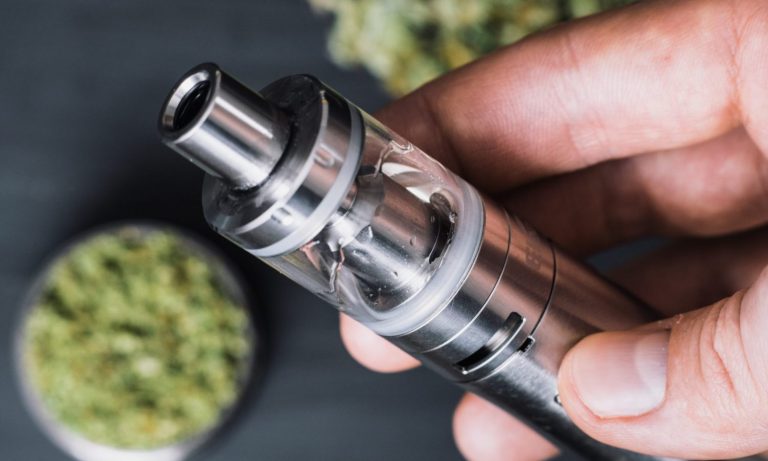
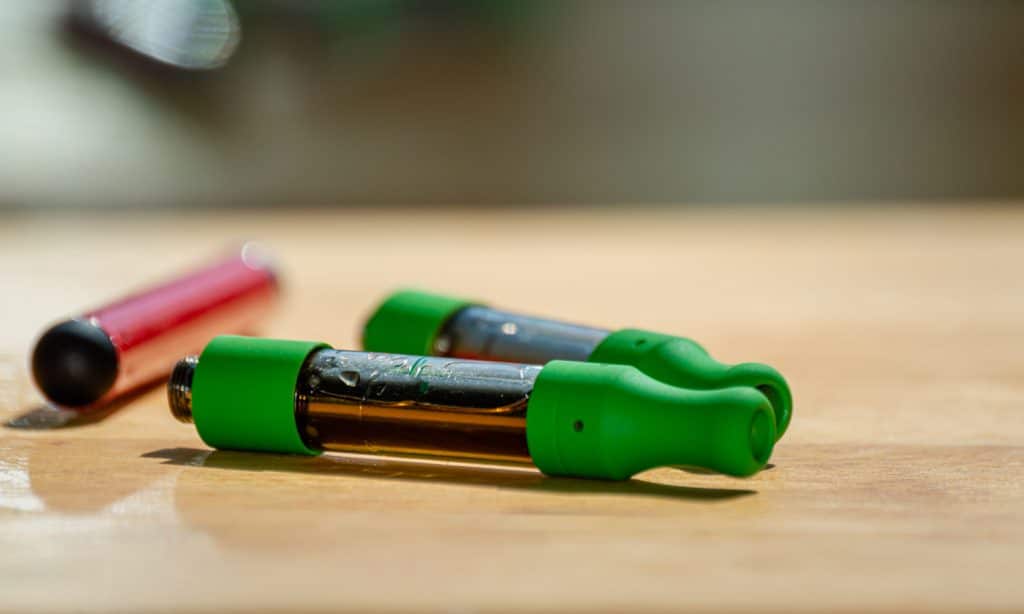
Any cannabis consumer hoping to catch a stronger buzz without increasing the amount they spend should look into vaping weed instead of smoking it the old fashioned way.
One of the best aspects of consuming cannabis in 2021 is the fact that there are so many more consumption methods to choose from than there were several years ago. While stoners in the past may have been restricted to bowls and blunts, nowadays cannabis can be enjoyed using all types of elaborate bongs, pipes and vaporizers.
In recent years, no method has gained more steam among consumers than vaping. There’s good reasons for the rise in popularity, too.
By now, the consensus is clear about how much healthier vaping cannabis is than smoking, but another reason vaping cannabis has increased in popularity is because vaping can generally produce a different experience entirely than smoking. A few differences between smoking cannabis and marijuana include:
Photo by Ivan-balvan via Getty Images
Vaping Provides a Better Taste
One of the downsides of smoking marijuana the old fashioned way is that so much of the taste goes to waste. After taking a drag of a joint or a blunt, the taste is either that of smoke or the faint flavor of the sweet tobacco of a blunt wrap. Since vaporizers eliminate the use of a traditional flame, it’s easier to pick up on the natural flavor of the buds. For consumers who aren’t used to the natural taste of their cannabis without the accompanying smoke, a vaporizer could be a game changer. There’s no replacing the natural taste of cannabis, especially when it’s not coupled with the harmful toxins smoking produces.
Vaping Can Produce a More Consistent High
A functionality that most dry herb vaporizers provide is the ability to change the temperature the cannabis is being vaporized at. This provides consumers with unprecedented control over how high they get.
Additionally, that functionality provides consumers with comfort in the fact that they know exactly how much of a punch each draw provides. That makes for a vastly different experience than relying on papers, bowls or bongs to do the job. While those traditional methods may be enjoyable, anyone with enough experience using them knows there’s no way to control how they make you feel.
Photo by Itay Kabalo via Unsplash
Vaping Is More Efficient Than Smoking
Last but not least, vaporizing cannabis is the best way to get as much bang for your buck as possible. Combustion can lead to wasting up to 30% of the THC present in marijuana. By choosing to vape marijuana instead, it’s nearly guaranteed that users can expect a more intense high. Essentially, any cannabis consumer hoping to catch a stronger buzz without increasing the amount they spend should look into vaping marijuana instead of smoking it the old fashioned way.
Although it’s true that vaporizing weed is a healthier alternative to smoking, there are recreational benefits to getting familiar with vaporizing cannabis, too. There are many different vaporizers on the market with different capabilities, so all it takes is finding one that works for you to change the way you consume marijuana forever. Once you get comfortable using a vaporizer of your choice, you may never smoke another joint again!
Time will tell, but if cannabis is like the hundreds of worldwide industries before it, U.S. weed may be outsourced.
While the U.S. cannabis industry anxiously waits for federal legalization, presumably the beginning of a new age of marijuana, the final chapter has already been written, taken from a book we have read many time before. But will US grown marijuana exist in 10 years?
The U.S. cannabis industry has a “U.S.” problem. The high cost of labor, water, electricity, possibly tariffs, and taxation on exports could make the cannabis industry look a lot like the auto industry and manufacturing. It is just too darn expensive to grow marijuana in America compared to the rest of the world.
Photo by Hoptocopter / Getty Images
One interesting fact from the recent Benzinga Cannabis Capital Conference was that the price of growing cannabis is constantly coming down as people look to improve margins and efficiency. The lights get better, the soil gets better, the drying systems get better, but in the end the costs associated with doing business in America present a daunting task to the U.S. cannabis industry.
One new up-and-coming in the international cannabis scene is Colombia. South American countries create a nice “sweet spot” for growing cannabis due to their moist climate, lack of Winters, and cheap labor forces. The stunning numbers I saw during Luis Merchan’s presentation at Benzinga’s conference last week showed that his company, Flora, can grow a gram of cannabis for $0.60. That is before Colombia gets a few years under their belt in experience, better lights, seeds, soil, and techniques. The cost to grow a gram of marijuana in North America is between $1.50 and $2.35. Public reports show Canadian company Aprhia spends $1.85 to grow one gram of marijuana, while Tilray spends $2.36 a gram of produced flower.
What happens when Colombia, let alone Brazil, Costa Rica, Uruguay, etc., gets good at this stuff in two years? Will they bring costs down to $0.03 a gram?
The problem that could happen with full legalization in the U.S., and then around the world, is that low-cost cannabis producing countries can flood the North American markets with good, low-cost, marijuana. Remember too, that Colombia is a developed, and semi-affluent South American country, when poor countries with lower cost of living standards start exporting, the amount of outdoor grown high-quality cannabis could flood markets in Asia (think Cambodia and Thailand), North America (think Colombia, the Caribbean, Brazil), and Europe (think North Africa’s labor costs).
Even if all cannabis growing moved out of high-cost states like California and Colorado and moved to low-cost manufacturing and agricultural states like Alabama and Mississippi, the minimum wage is still $7.25 an hour. The minimum salary in Bogotá Columbia for a month is $500. With even lower-cost workers in the U.S., the difference is stark, $72.50 a 10-hour day in Alabama and $15 dollars a day roughly in Colombia.
The cost of water in the U.S. is much more expensive in cannabis grow areas than in South America, and while electricity is more expensive on islands and smaller areas than in the U.S., much of South America can grow year-round crops outdoors and never have to turn on a single grow light. Colombia also recently approved exporting home-grown cannabis, as well.
Photo by SEASTOCK/Getty Images
I don’t see a day when a senator stands up and wants to put a large tariff on imported cannabis and marijuana to “protect our U.S. cannabis farmers!”. That would means exported U.S. cannabis would face tariffs, hence raising the price even more, and it’s counter-party imports would most likely face little or no tariffs.
So where does that leave the U.S. cannabis industry? The U.S. can’t compete on labor, electricity (with few exceptions that get to grow outdoor all year anyway), water costs, and government lack of support. At some point economics and maximizing margins will dictated that all our oils and edibles are made from non-U.S. or Canadian weed. Will it get to a point where places like the Emerald Triangle have to compete on price? What if their pre-roll is $12 and a similar pre-roll from El Salvador is $2. Are you willing to “buy American” even at 6 to 10 times the cost?
Time will tell, but if cannabis is like the hundreds of worldwide industries before it, U.S. weed may be outsourced.
A new study provides a timeline of COVID-19 infection and reinfection, once again proving that you can get the virus more than once.
Unvaccinated people are, obviously, more likely to get COVID-19. But when it comes to having a timeline, this wasn’t clear until recently. A new study provides a more concrete answer, claiming that unvaccinated people can expect to get COVID-19 every 16 months.
Vaccines protect people against the COVID-19 virus, not only drastically reducing the odds of contracting it, but also reducing its mortality rate. While you may get breakthrough COVID-19, it’s very unlikely for you to die from it unless there are other forces at play.
The study, conducted by the Yale School of Public Health, and published in The Lancet Microbe, analyzed the data that’s available on natural immunity in order for researchers to be able to accurately calculate a timeline of COVID-19 infections and reinfections.
“The overall goal of the study was to provide an answer to a question that at this point in the pandemic would be impossible to answer empirically, which is how long after you’ve been infected by SARS-CoV-2 can you expect to possess immunity against the virus before you become vulnerable to reinfection?” study co-author Hayley Hassler told the Yale Daily News.
The study reiterated some findings we were already aware of, while also painting a clearer picture of COVID-19 reinfections. Within three months, researchers predicted, unvaccinated people are 5% more likely to get reinfected with COVID-19. Within 16 months, this number jumps to 50%. Hassler states that these numbers can change from person to person. “Any one of those individuals may experience longer or shorter durations of immunity depending on immune status, cross-immunity, age and multiple other factors.”
As a variety of studies have demonstrated, natural immunity doesn’t last very long and those who’ve had COVID-19 infections and full immunization have a stronger immune response than anyone else. While there’s still much we don’t know about COVID-19, every day it becomes more obvious that having the infection once doesn’t ensure you won’t get it again.
“Random marijuana testing in the workplace, such as pre-employment drug screening, has never been an evidence-based policy.” — NORML deputy director Paul Armentano
New York residents need not fear losing their jobs due to recreational marijuana use anymore. The New York Department of Labor confirmed that employers are now prohibited from testing their employees for the presence of cannabis, reports Marijuana Moment.
While employers are still allowed to penalize workers for being impaired on the job, the threshold to proving impairment has been significantly raised — the odor of weed is now not sufficient evidence on its own. Also, under the New York Department of Labor’s new guidance, a positive drug test for cannabis also does not make for an “articulable symptom of impairment.”
Photo by 400tmax/Getty Images
The First State To Make “Seismic” Policy Change
New York became “the first state to essentially prohibit cannabis testing in all but narrowly defined situations,” according toQuest Diagnostics, which offers employment drug testing services.
Faye Caldwell, an attorney and advisor who specializes in drug testing laws, said this move presents a “seismic” policy change.
“This is the first state in the nation to ever enter this,” she said. “In most other states, there may be no ability to take action in many circumstances, but there was no prohibition on testing,” wrote the outlet. “So this will make some massive changes for employers who have employees in the state of New York and have drug testing policies.”
In 2019, some two years before officially legalizing cannabis in the state, New York City regulators created a local ban on pre-employment drug testing for marijuana.
“Random marijuana testing in the workplace, such as pre-employment drug screening, has never been an evidence-based policy. Rather, this discriminatory practice is a holdover from the zeitgeist of the 1980s ‘war on drugs,’” NORML deputy director Paul Armentano told Marijuana Moment.
“But times have changed; attitudes have changed, and in many places, the marijuana laws have changed. It is time for workplace policies to adapt to this new reality and to cease punishing employees for activities they engage in during their off-hours that pose no workplace safety threat.”
Amazon And Others Agree
What’s more, one such huge corporation, Amazon (NASDAQ: AMZN), announced in June that it supports marijuana legalization and that it will stop testing for workplace cannabis use in most positions.
More recently, the Office of Personnel Management issued a memo to federal agencies confirming that previous cannabis use should not automatically disqualify people from being employed in the federal government. The NBA also announced it is extending its policy of not randomly drug testing players for marijuana through the 2021-2022 season.
Marijuana can be vary dramatically in terms of pricing. Here’s how to stretch your stash and save some money.
Now that weed is legal across a growing number of states, there’s more availability than ever. Still, legalization hasn’t done much to solve weed prices, which vary dramatically from state to state and can leave you feeling very confused if you don’t know where to search. Here are tip to help you stretch your weed and save money.
While asking your budtender for quality recommendations is always a good bet, you can’t fight the price. The good news is, stretching your stash is possible, helping you save some money and make more out of your weed experience.
Buy in bulk and grow your own
Photo by Add Weed via Unsplash
Buying in bulk is a good way of saving money and its a tip that applies to all sorts of products, from toilet paper, to weed. While it’s not great to shell out the full amount in one go, if you think about it, buying in bulk helps you save and eliminates the amount of orders you make. A helpful tip to consider is to keep an eye out for deals and offers from your dispensary or seller; these can help you save up and become perfect opportunities for buying in bulk.
Growing your own weed is hands down the best way to save money. While it might take you some time to learn the ropes, in a few months time you’ll have harvested your own product for a very cheap price.
Consider vaping
Photo by Antwon McMullen/Getty Images
Another hack you can try is to take up vaping. Cannabis in flower form tends to be used more quickly, even if you’re very careful with your joints. Vape pens and concentrates last for longer periods of time since they provide stronger highs per hit. Still, if you want to save some money, it’s important to pace yourself and keep track of your smoking.
Edibles tend to be cheaper than other forms of cannabis, while also providing strong highs. By splitting up your edibles into the dosages that work for you and storing them properly, you might be able to stretch your stash. You can also make your own edibles.
Lastly, get creative with your weed consumption. Make sure to use every part of the joint, including extracting the leftover weed from the roaches from your joints and putting all of them in one. You can also switch to some glass and give joints a rest, stretching your weed further by saving stems and kief from your grinder and reusing.
The MCMA has come under fire for supporting legislation that would license and regulate medical marijuana caregivers by limiting the total number of plants a caregiver could grow.
The Michigan Cannabis Manufacturers Association (MCMA) is encouraging its members to provide free or low-cost cannabis products to patients with severe or terminal illnesses.
“Just like any other form of medicine, patients with cancer and other severe or terminal illnesses deserve to know their cannabis has met the highest standards for testing, tracking, licensing and safety — and our members’ products do just that,” said MCMA executive director Stephen Linder in a recent press release.
Photo by LPETTET/Getty Images
Several words in the resolution — “testing, tracking, licensing” — have created a mini-war between the MCMA and Michigan’s medical marijuana patients and their caregivers.
Despite the MCMA resolution and its plea to encourage each of its members to develop their own program to offer low-cost or free medical marijuana products to those in need, storm clouds are brewing in the heart of Michigan’s highly lucrative legal cannabis program.
Caregiver Conflict: The MCMA has come under fire for supporting legislation that would license and regulate medical marijuana caregivers by limiting the total number of plants a caregiver could grow to 12 after scaling back the number of patients from five to one. As a result, some opponents are calling for a boycott of MCMA’s members, saying the legislation is intended to monopolize the industry.
A six-bill package introduced in September in Lansing seeks stricter state oversight of medical cannabis caregivers, which critics say is a veiled attempt by commercial growers to increase their retail market share.
Michigan’s MMJ Caregivers Until Now: State law allows licensed caregivers to cultivate up to 12 plants or purchase up to 2.5 ounces of cannabis product for up to five patients — enabling a harvest of up to 72 plants if the caregiver is also registered as a medical marijuana patient.
Unlike retailers, caregivers are not required to submit any lengthy business plans to state officials or pay as much in licensing fees. Their products also don’t have to be tested at one of the state’s 17 licensed laboratories.
Photo by Mike Kline/Getty Images
Hence, the proposals to clamp down on medical marijuana caregivers’ freedom to grow cannabis and work essentially unhampered have provoked fierce opposition from caregiver advocates as well as some vertically integrated cannabis companies, according to the City Pulse.
Critics say caregivers helped supply the state’s medical marijuana patients for nearly a decade before Michigan’s current regulatory structure was created in 2016, which was then followed by the 2018 law for recreational cannabis.
“Knowing all of the drafters of the 2018 legalization bill, I don’t know a single one of them who support any changes to the state’s caregiver law,” said Josh Hovey, vice president at a Lansing-based public relations firm who also served as spokesperson for the 2018 ballot initiative.
“That is a pretty good indication that the intent of legalization was to create a law where caregivers and the licensed industry could live side by side,” he added.
State records showed there are about 30,000 caregivers servicing more than 250,000 patients outside of the $1.47-billion licensed retail market in Michigan. State officials have reported that about 72,000 patients statewide are connected to a licensed caregiver.
Being someone who has been dealt mental health cards from day one — going through hell, and making it out while spending 11 years as a professional athlete — has given me the courage to stand up for others who are going through their own internal battles.
By Rodney Wallace, former pro soccer player and founder of CBD brand Rewind.
At first, I was skeptical about sharing my thoughts and giving my opinion on “the Simone Biles saga”. The word saga in itself makes it seem as if pulling out of a major Olympic event due to personal reasons has become not so personal. It is a draining process for the viewers to go through, some might think of it as exhausting. The world saga takes time away from viewers’ schedules and from their own personal agenda.
The word saga is appealing for networks and media outlets around the world to flip a brave and heroic action and be able to stand up for their own mental health. The word has negative connotations and it works against the athletes. It would be so nice to wake up to refreshing articles, leads about a young black olympian who is a human being and that she had the power to step up to her own podium. She was able to treat the mental aspect of existence like the gold that it is worth.
Photo by Buda Mendes/Getty Images
Real is putting yourself first, above anyone else’s beliefs. Real is knowing the true worth of self. At the end of the day, athletes are praised when it is convenient to the fanatic, not when it sparks up their own childhood trauma that they currently carry with them in the present moment. Being someone who has been dealt mental health cards from day one — going through hell, and making it out while spending 11 years as a professional athlete — has given me the courage to stand up for others who are going through their own internal battles.
Let’s talk about bravery. Bravery is a word that has become a term used to describe someone’s actions that lead them to hold on to something they feel they will eventually lose. Being brave is a term that has been thrown around in many different contexts, which leads to misuse or miss comprehension of what true bravery really is.
Vulnerability is brave, being so open that you can sit calmly in a room full of reporters and speak to the world about what it means to put the team first. Not only did Simone Biles put team USA first by knowing the importance of a healthy mental state to compete, Biles also gave the viewers an in-depth play-by-play on what was going on inside the mind of a top human and competitor. We have been witnessing human greatness and we are blessed by young icons who are practicing mindfulness during 2021, Tokyo Olympics.
It didn’t come easy for Simone, she had to sit there and explain to young children and adults that idolize the craft of gymnastics that, “if you don’t take care of our mental health then you are not going to enjoy your sport, let alone succeed as much as you want to.”
When I look back at my career I don’t regret much; I look at all the highs and lows as the valleys that brought me to where I am now. There are moments when I daydream, what would it have been like to have had the resources that I use now to handle my depression, anxiety, suicidal thoughts, fears, and insecurities I have been coping with heavily since 2014. When I used to put on my cleats and compress all of my feelings, that was how I looked at it initially. Somehow I was able to hush 70,000 fans in my head while scoring a last-minute goal, representing my country in international matches. This led me to win an MLS Cup when I was going through the darkest times of my life.
This seems not only draining, but a recipe for disaster. Life gave me another chance, it opened up another window for me to climb in and realize that I was much more than a comment on Twitter, much more than a picture and an autograph.
With the help of professionals, I was able to see myself as more than just a soccer star. For the first time, I was able to see myself as a human being who was blessed and was given the chance to play the very same game I played on the streets in Costa Rica after school. I was making a living doing what I loved, playing soccer. This allowed me to build a family and share with them what it really means to be brave. Getting the help I so desperately needed and showing up for myself at rock bottom. This honesty gave me the opportunity to show that vulnerability can bring you face to face with your childhood dreams. The feeling of having my wife, Haley, and daughter, Ivy, support me at the 2018 FIFA World Cup was a complete turnaround and helped pave the way to get back to living again.
Photo by Tevarak Phanduang via Unsplash
My life seemed to be moving nowhere fast; I found shelter in the superficial world where I could put on a mask and pretend everything was alright. In 2015, I had a manic breakdown before a match. Our family tickets were placed in our lockers to be collected after training. It had been a difficult week filled with a combination of sleepless nights and self-medication to slow my negative thoughts: Percocet, tequila, and a few painkillers did the trick.
I remember being angry about not winning a practice match. I was always the one talking shit if I won, and ready to get into it when I lost. That day, I guess I wasn’t having it. When I came back from a shower ready to go home, I saw that two of my tickets were missing. I usually don’t take something like that seriously, but I could feel the rest of my teammates’ chatter and laugh about my confusion. My big ego was shattered and I felt exposed.
I reacted by going outside in my towel and grabbing a leaf blower. I yanked the chain three times, finally, the motor started, and walked into the locker room demanding to see my remaining two family tickets. As expected, no one said a word, just laughter from my ridiculous look of a towel, flip flops, and a leaf blower. I began walking, blowing everything off the first locker and it gave me a sense of control and power. I found more joy in seeing papers going everywhere, jewelry flying in the air, people climbing on chairs to protect their belongings. I can still recall that I knew something was not right.
One of my closest friends on the team asked me if I was feeling ok. The next day, I didn’t start the game, and it had been many weeks that I wasn’t in the starting eleven. This is probably what led to these shameless actions. After the game, as usual, I got wasted pretending that I was fine, hoping to hide my manic depression from others. I wish I had known then what I know now, but it took time to uncover the deep-seated truths and face my demons. Later that year, I lifted the most important cup of my career and scored the winning goal in the MLS Cup.
All of the mental anguish I suffered could have been avoided if I had realized that there was help out there. I want everyone to know that there is help for all of us, you just have to go after it! I feel that most of the time we act based on what has been recorded in our minds. The traumatic experiences stay with us and they manifest themselves in different ways at different times and then it quickly veers out of our control.
Photo by Laurence Griffiths/Getty Images
Simone Biles had the courage and knowledge to check herself during one of the most important events of her career. The act of checking yourself and realizing that being grounded and mentally healthy is heroic. Simone had so much self-awareness with the decision to drop out of the competition. To know yourself so well that you are able to not put your body in physical danger is remarkable. Growing up, I was brought up to think that I had to toughen up and just do it. However, in the later stages of my life, I learned how to cope.
Wrestling champion and former two-division UFC titleholder, Henry Cejundo said that the media and fans played a role in building Biles up to a standard that she may have struggled to match. Cejudo wondered if this was something Biles could have overcome. Cejundo suggested the gymnast needs a kick in the arse, sprinkled with a little tough love.
An individual’s personal trauma does not need to become someone else’s burden to carry. If growing up you only got through because of kicks in the arse, maybe it’s time for Henry Cejundo to “check himself” and break free from whatever was mentally or physically instilled. By reacting to another Olympic champion’s actions of mindfulness in a negative way, he is not seeing the gymnast as a human. Instead of lifting each other up, we continue to use the old-school bravado method that is slowing down and hurting many athletes.
In 2020, after dealing with two hip replacements at the age of 31, I knew it was time for me to pay it forward to the game that gave me so much. Using my life experiences, my downfalls, my struggles I was able to turn Rewind into my own gold medal and created a CBD line based on the principle of taking a step back in order to move forward.
CBD changed my outlook on life from a mental and physical standpoint. From 2017 to 2019, I was hiding in the locker room trying to figure out how to consume CBD without my teammates understanding what I was doing. I didn’t want the trainers to know since it also contained a percentage of THC which is banned in Major League Soccer. I found myself hiding once again and I was not happy about it. I had done so much work over the years to get to the happiest place in my life, it was unfathomable to have to go back into hiding mode again.
My doctors told me that my injuries were career-ending and I was grateful because my heart felt full. I had created a product to give others a chance to feel the way I feel now. Physically, my aches and pains were immensely reduced and I could enjoy the park with my kids, mentally I became limitless. Staying active is still a part of my life and taking care of my body is important and that’s why I know I can depend on my own proven recipe. My family and I learn from each other now. We try to improve our lives and help others along the way.
Let’s lead the way for the next generation so that our present is just as beautiful as what lies ahead. I salute you Simone Biles and Naomi Osaka for taking the lead and giving mental health a face that will be part of a new and evolved culture for years to come. They are the brave billboards who stood up for themselves and for their own lives because inevitably no one else will. When Simone won the bronze on balance beam, she told USA Today, “It meant the world to be out there, I didn’t expect to walk away with a metal. I was doing it for me, and whatever happens, happens.”
Two heroic souls made the conscious decision to change the trajectory of what it means to be an open blueprint for the next generation to learn from; these are the paths Olympic champions should continue to strive toward; exposing their deepest and darkest experiences to their triumphant winning moments for the world to admire and understand. These are not easy tasks but Ms. Biles and Ms. Osaka took the responsibility head-on at the most pivotal time in their careers and for that, we are thankful for their bravery and their honesty.
For Naomi to showcase her life on a Netflix series and Simone expressing her beliefs to the world means that we are headed for change. There is no doubt that this generation is moving in the right direction and soon the rest of the world will catch up.
My outlet for change mentally and physically is CBD. I don’t need to rely on anybody else, let alone any other substance.
For the time being, COVID-19 cases are spiraling downwards. Here are the most common places where the disease is currently spreading.
There was a big surge of COVID-19 cases over the summer. Now, cases are spiraling downwards, although some trouble states remain, like Colorado, Alaska and Michigan. A variety of factors impact these trends, from vaccination rates to the surge of infections themselves, which ebb and flow.
As we all know by now, COVID-19 is a communicable disease, transmitted through contact with others. There’s a variety of activities that make the virus more likely to catch on, which makes certain places more dangerous than others.
All of this is dependent on where you live and your community’s current rate of infection, which can be easily found by googling your city and the phrase “COVID cases.” Here are some of the most common places for COVID-19 to spread right now.
Restaurants and bars
Photo by Jay Wennington via Unsplash
Restaurants and bars have often been linked with COVID-19 clusters, although, again, where you’re eating is very important. While cities like New York ask for proof of vaccination in order to eat indoors, other places don’t, exposing people to more risk. When dining or drinking indoors, consider all of your options: Are you in a crowded spaces and are people wearing mask for the majority of the time? Are you seated near an open door or window?
While data from small get togethers is hard to track, it’s believed that the Delta variant makes it riskier to have gatherings with others, even if they’re small. Buildings like schools and offices have more strict COVID-19 guidelines, making it less likely for people to catch the disease there. It appears people are catching the disease during their off times, which is why it’s important to meet up with people who are vaccinated if choosing to spend time indoors and without masks.
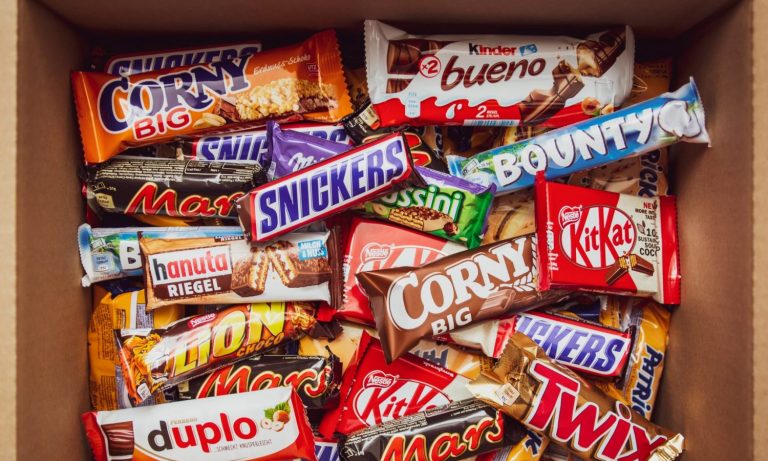
Healthy Halloween candy? It’s a thing. Here’s what nutritionists think about giving this type of candy to kids.
Handing out Halloween candy that’s nutritious is a thing that many adults consider, especially considering that they are likely the ones who are going to be stuck with that candy once the festivities are over. But should you subject your children and your neighbor’s kids to your dark chocolate alternative or simply hand out M&M’s and Snickers?
Healthy sweet alternatives can be delicious, but you have to be prepared for this change. When offering a kid some popcorn or a snickers, although popcorn is usually healthier, they may understandably be upset, especially considering their expectations of Halloween and the fact that they’re kids and don’t regulate their emotions as well as adults do.
Making kiddos feel bad about wanting to have candy on a date that’s associated with candy could result in bigger problems later on, much more complicated than simply having a sugar rush when the day is over.
The Huffington Post spoke with some nutritionists on the matter, who were mostly pro-normal Halloween candy. “Sugar-free or buzzwords like ‘keto,’ ‘low-carb’ or ‘superfood’ don’t necessarily make sweets healthier,” said nutritionist Amanda Frankeny. “While these labels sound nutritious at face value, too much candy of any type can lead to cavities and poor nutrition.”
They also spoke about the importance of not pushing children to look for the good candy somewhere else and then developing a negative relationship with food, creating a problem that can have long term implications. “Overeating candy in secrecy can short-term lead to belly woes or worse, potentially create long term disordered eating issues with candy or sweet treats,” said Tracy Lockwood Beckerman, author of “Better Period Food Solution.”
While some kids with diabetes or blood sugar control issue can benefit from these type of low sugar sweets, the majority would be better off simply carrying on with their standard Halloween celebrations. When it comes to your kids and their everyday consumption of sweets, having healthier candy options around can diminish their long term damage. Still, it’s important to keep in mind that candy is still candy, no matter how it’s packaged, and other foods, like veggies and grains, should always be the priority.
The cannabis plant has literally come out of the closet and become acceptable to talk about. Combine that with something else people like to talk about (food!) and you can’t lose!
As a nutritionist and the co-founder of the Holistic Cannabis Academy, I get asked a lot of unsolicited questions about food and cannabis. After all, we imbue all of our social interactions with food. As a society, we have become intrigued with food and everything that pertains to it including cooking and, of course, my favorite topic — nutrition.
Cannabis is a great conversation starter for so many reasons. For one, it’s not federally legal, yet it’s legalized by individual states for medical or adult use (recreational) purposes in more than half the country. And, of course, the plant has literally come out of the closet, so cannaphobia is mitigated, and it’s become acceptable to talk about the plant. Combine talking about food with cannabis and you have a winning combination!
In that spirit, here are five winning combos for food and cannabis.
Avocado
Photo by Thought Catalog via Unsplash
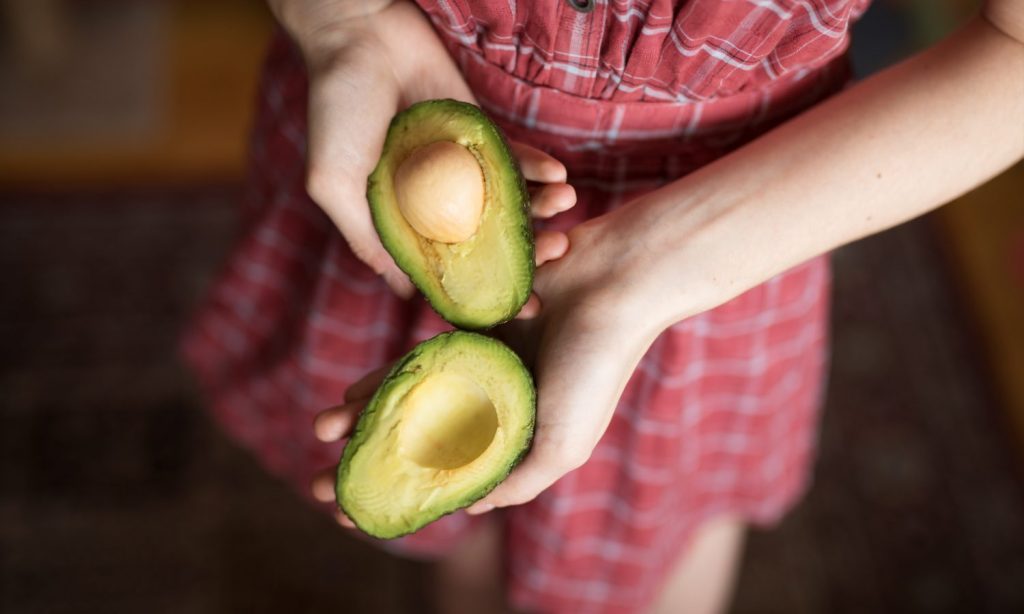
Though thought of as a vegetable and often categorized as a fat, avocado is actually a large berry with a single seed.That means that avocado is a fruit, according to botanists. And, an amazing and versatile fruit it is. Of course, there’s the ubiquitous avocado toast found in hipster neighborhoods beyond Brooklyn. Guacamole was, of course, the first introduction to avocado to Americans.
Though many add banana to smoothies, mostly to add sweetness, avocado is my #1 smoothie go-to because it’s an emulsifier. That means that it helps to blend the other ingredients together, creating a smooth smoothie. And, unlike banana, the avocado does not overtake the flavor of the smoothie. It’s a great match with cannabis oil because of its fat content and flavor profile.
Hemp Seed
Photo by KarpenkovDenis/Getty Images
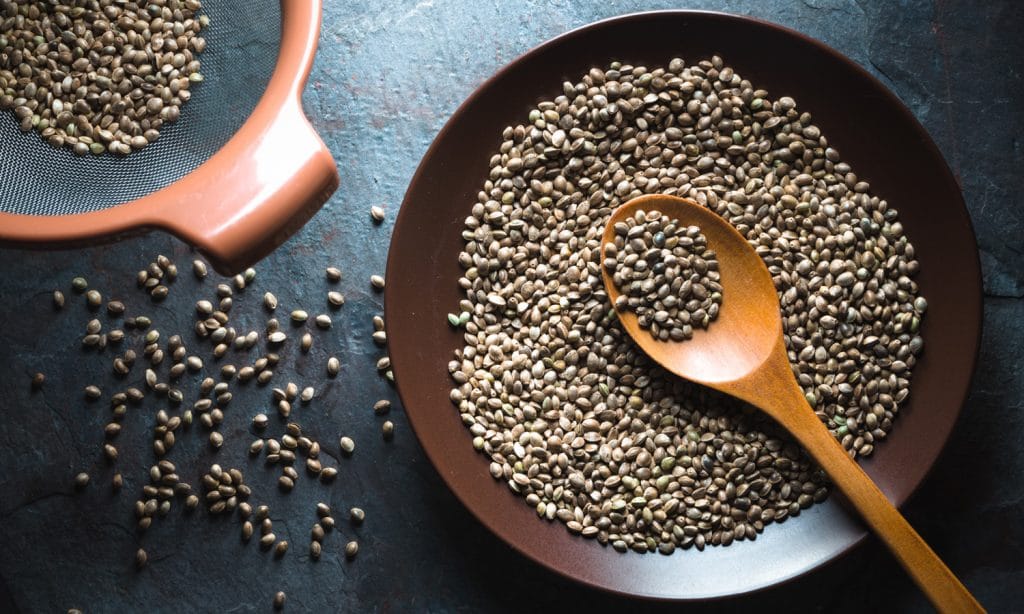
Combining two cannabis plant ingredients together is a no brainer. Hemp as a food is from the seed portion of the cannabis plant and contains little to no THC. Hemp foods include protein powder, milk, hearts, flour, butter (which can also be used for skin), and pressed juice. Hemp oil as food from the seed of the plant is completely different from hemp-derived CBD oil processed from the aerial parts of the plant.
Hemp seeds, which are marketed as hemp hearts, are an excellent source or protein, a vegan food, a wonderful source of fat (always good to pair with cannabis), and a great source of vitamin E and minerals, such as phosphorus, potassium, sodium, magnesium, sulfur, calcium, iron and zinc.Sprinkle on basically anything from avocado (see above) to salads to smoothies or have alone.
Cacao
Photo by Charisse Kenion via Unsplash
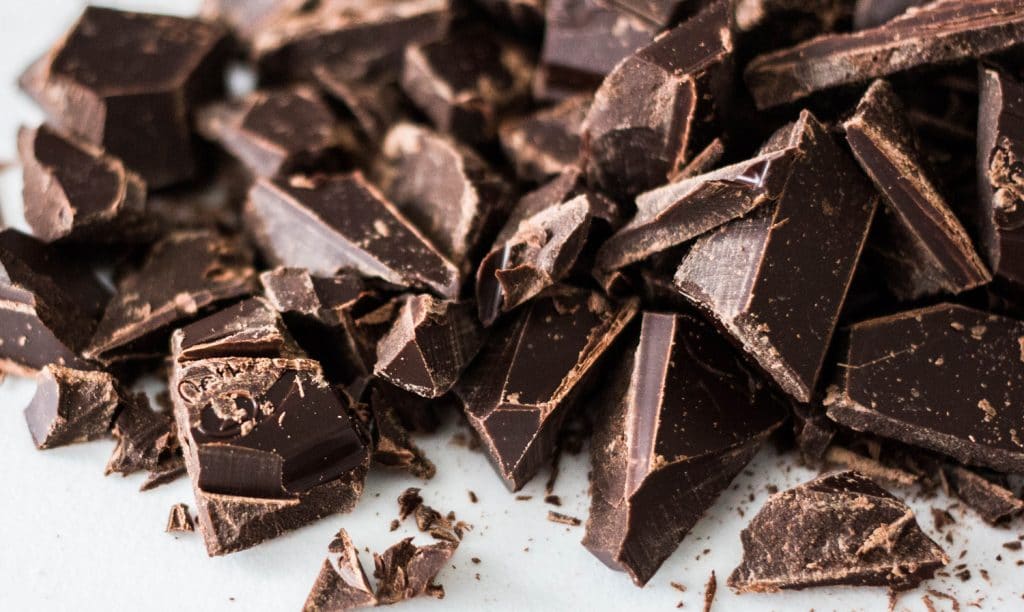
Cacao, also known botanically as Theobroma cacao, is one of the most popular trees on the planet. Cacao is the plant from which cocoa and chocolate is derived.Higher percentages on chocolate bars typically mean less sugar. Raw cacao boasts 300 different compounds including antioxidants, which are vital to wellness. Anandamide, the “bliss” molecule that our bodies produce is one of the compounds found in small quantities in cacao.
More significantly, cacao features two others chemicals in higher concentrations that inhibit the breakdown of anandamide, as well as phytocannabinoids in cannabis including THC and CBD, potentially intensifying their effects. On top of this is the is theobromine, which also amplifies the effects of anandamide. Talk about a match made in heaven!
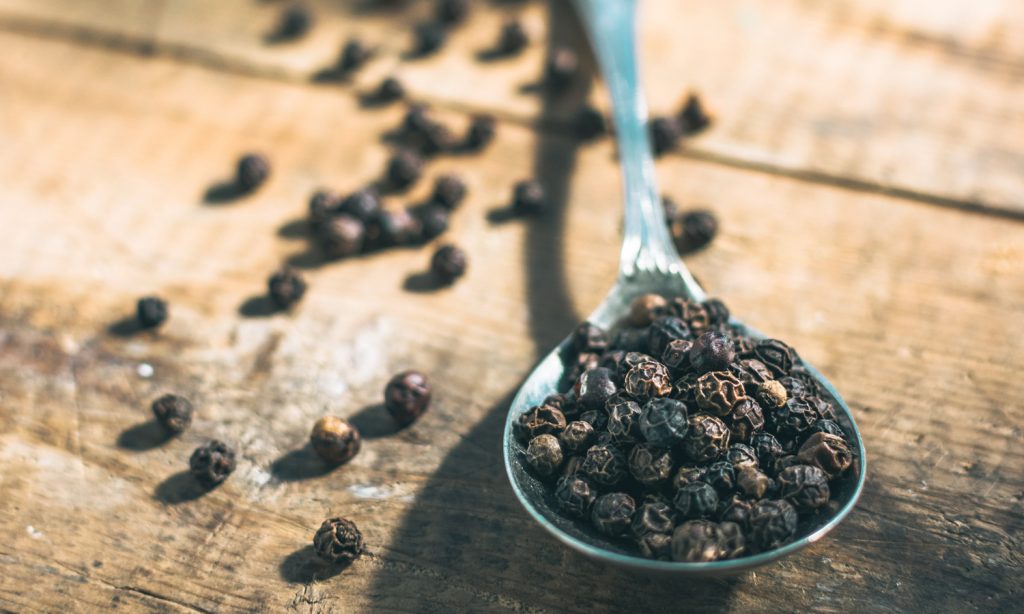
Black Pepper
Photo by Calum Lewis via Unsplash
Black pepper features a terpenoid called beta-caryophyllene,which is also a component of some cultivars (strains) of cannabis. Known as a dietary cannabinoid because its binds directly to CB2 receptors found in the peripheral endocannabinoid system, as opposed to THC which binds to CB1 receptors in the brain, beta-caryophyllene does not contribute to euphoria. In fact, this terpene does the opposite, modulating the effect of the cannabis “high.”
Black pepper is one of the solutions offered for mitigating overconsumption of THC. Chewing a few peppercorns or simply sniffing on ground black pepper can provide relief from THC-induced anxiety and paranoia. This is a good thing. To top it off (get it!), both black pepper and cannabis have anti-inflammatory properties. Clearly, the second most popular condiment after salt, pepper is a natural accompaniment for cannabis.
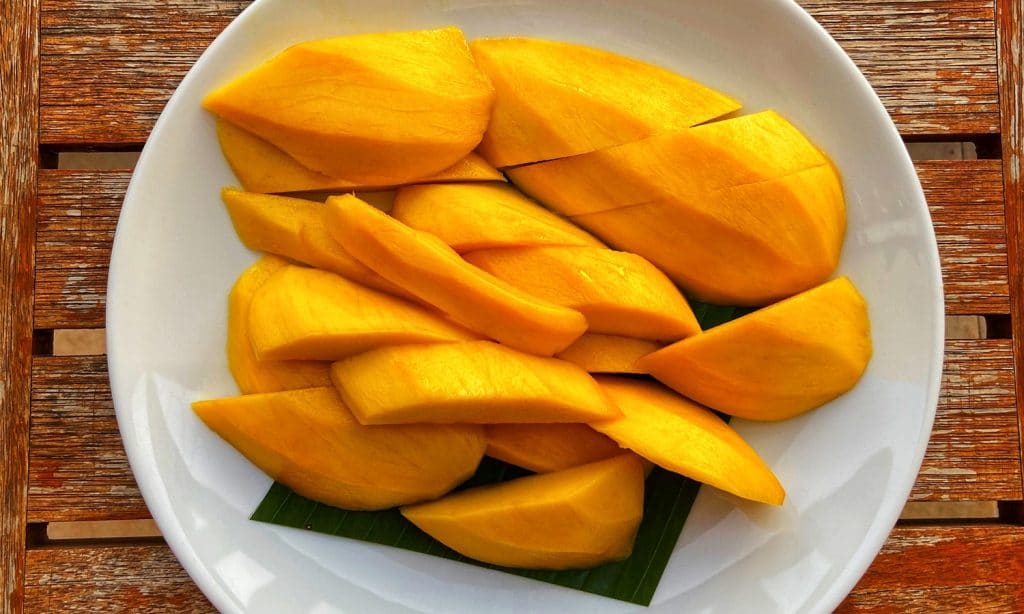
Mango
Photo by Fedor via Unsplash
On the opposite end of the spectrum from black pepper is mango. Both feature terpenes that react with THC in cannabis. While the terpene called beta-caryophyllene in black pepper mitigates its impact, the terpene myrcene in mango elevates the effect of THC. It does this by changing the blood-brain barrier to allow cannabinoids to enter the brain more quickly and effciently. The ultimate impact is to prolong and increase the intoxicating effects of THC.
This can be clinically advantageous for patients who require more immediate pain relief or mood modulation, for example. Cannabis and mango only do this together. As with all food, the impact of mango on the cannabis “high” depends on the individual’s metabolism. That’s called bioindividuality.So, it’s a good idea to know your sweet spot. Be mindful about the optimal amounts of mango and THC for your personalized portion.