Mediatonas UAB published fake interviews with the actor that gave the impression he endorsed the company’s CBD and was considering retirement from filmmaking to focus on the CBD industry.
Clint Eastwood may have stumbled at the box office with the release of his latest film “Cry Macho,” but the 91-year-old actor/director scored a $6.1 million victory against a Lithuanian cannabidiol (CBD) company that used his name and image in their product marketing without his permission.
What Happened: According to a New York Times report, Eastwood and Garrapata, the company which owns the rights to his likeness, was awarded $6 million in damages, $95,000 to cover legal fees and a permanent injunction against the future use of his name or image by Mediatonas UAB, which published fake interviews with Eastwood that gave the impression he endorsed its CBD and was considering retirement from filmmaking to focus on the CBD industry.
Photo by Slaven Vlasic/Stringer/Getty Images
“In truth, Mr. Eastwood has no connection of any kind whatsoever to any CBD products and never gave such an interview,” said the lawsuit, which was filed in Los Angeles federal court in July 2020.
Eastwood’s legal victory was a default judgment because Mediatonas UAB did not respond to a summons issued in March to appear in court to answer the charges.
What Else Happened: Eastwood filed two additional lawsuits in this matter. The first was against three CBD companies — Sera Labs Inc, Greendios and For Our Vets LLC — that he accused of creating the fraudulent interviews and distributing them in spam emails with the subject line: “Clint Eastwood Exposes Shocking Secret Today.”
The second lawsuit was aimed at 10 U.S. companies and individuals he accused of inserting his name in hidden metatags designed to direct online searches to their CBD-related webpages.
“Like many of his most famous characters, Mr. Eastwood is not afraid to confront wrongdoing and hold accountable those that try to illegally profit off his name or likeness,” Eastwood’s lawsuit stated.
However, Eastwood was unable to get the court to side with him on his claim that the unauthorized use of his name and image accounted for defamation claims.
“It requires additional context to understand what CBD products are and why a person like Clint Eastwood would not endorse a marijuana-based product,” Judge R. Gary Klausner wrote in his ruling, adding that the language used “was not libelous on its face.”
Though many states now have some form of legalized cannabis, its status under the Controlled Substances Act means marijuana businesses cannot deduct standard business expenses.
The Internal Revenue Service correctly anticipates the continued growth of the cannabis industry and wants its share of the green. Who can blame them? It’s what they do.
To that end, the IRS is providing some useful suggestions to cannabis businesses who, by the way, are in the conflicting position of having to pay taxes to a federal government that continues to classify cannabis as illegal.
Photo by Nikolay Ponomarenko/Getty Images
Nevertheless, the IRS is nothing if not persistent. Here is what the 159-year-old government body that was basically set up to fund the Civil War has to say to cannabis companies about paying their taxes.
In a blog post, De Lon Harris, an IRS exam commissioner who clearly has a flair for the obvious, referred to the situation as “evolving and complex” and “tricky from a business perspective.”
Regardless of the fact that many states now have some form of legalized cannabis, its status under the Controlled Substances Act means marijuana businesses cannot deduct standard business expenses. This provision, known as Section 280E, states that businesses selling cannabis — or any other federally illegal controlled substance — cannot deduct any expenses incurred in the production, distribution and sale of that product.
Section 280E of the IRS tax code essentially keeps cannabis entrepreneurs “locked out of valuable tax credits available to other businesses and should proceed with caution when it comes to business expense deductions,” says the Hoban Law Group.
What’s To Be Done?
Harris said that marijuana firms “can deduct their cost of goods sold, which is basically the cost of their inventory. What isn’t deductible are the normal overhead expenses, such as advertising expenses, wages and salaries, and travel expenses, to name a few.”
Harris added that he understood “this nuance can be a challenge for some business owners, and I also realize small businesses don’t always have a lot of resources available to them.”
Photo by Hillary Kladke/Getty Images
Online Class
Despite this disadvantage, a speaker at a recent online tax tête-à-tête presented by the National Association of Tax Professionals said the legality doesn’t matter from the IRS’s perspective — all income from any source is taxable.
At this meeting, and also mentioned on Harris’s blog, was the IRS’s new website that was set up last year to tax state-compliant cannabis dispensaries.
This IRS initiative is hoping to make things clear and easy, sort of, for cannabis companies, because we all know how uncomplicated paying one’s taxes can be!
“I’m very focused on the success of this strategy because it’s very important for business owners to understand that under our nation’s tax laws, and specifically Internal Revenue Code 61, all income is taxable, even if someone is running a business that’s considered illegal under federal law,” Harris said. “This is a truly groundbreaking effort for our agency.”
What is also groundbreaking is that, with any luck, the recent passage of the Marijuana, Opportunity, Reinvestment and Expungement (MORE) Act of 2021 will soonrepeal the long-standing federal prohibition of marijuana, thereby ending the state/federal conflict over cannabis policies.
When — not if — that happens, cannabis companies will pay their taxes just like the rest of us and no longer be locked out of the system that should be protecting them.
They do exhibit certain characteristics that make it fairly easy to differentiate the two, but sun-grown cannabis is usually bigger. Here are other ways you can tell the difference.
If you’re a cannabis connoisseur, it can be easy to tell the difference between weed that’s been grown outdoors versus those that are grown indoors. But to the untrained smoker, the difference between the two isn’t noticeable.
There are advantages and disadvantages with each of these cultivation methods, so whether you’re looking to grow your own or simply want to become better at identifying your cannabis, learning about them is beneficial even if you prefer one to the other – or may not even care, until you find out how they differ.
At this point, no one really knows when indoor cannabis operations began though it’s safe to assume that people began looking for ways to do so when cannabis became illegal. During the later 20th century, more people began growing cannabis indoors for many reason and because of its popularity as well as the ability to customize many aspects of the plant’s growth, more people began believing that indoor cannabis is superior than those grown outdoors. But that simply isn’t true; there are more things that constitute what makes cannabis “good quality” than simply where it’s grown.
Photo by Anton Petrus/Getty Images
Besides, “good cannabis” is extremely subjective; what one consumer prefers due to its high THC content may differ for someone else because they want a rich aroma and complex terpene profile. They do exhibit certain characteristics that make it fairly easy to tell between the two, but the general rule of thumb is that sun-grown cannabis is usually bigger. Here are other ways you can tell:
Color
One of the easiest ways to differentiate them is that outdoor grown cannabis are usually darker. So if the strain results in green flowers, its nugs will be a darker green, or even brown if it hasn’t been cured properly. On the other hand, indoor grown cannabis will exhibit bright colors. If the cultivar yields purple flowers, the outdoor cannabis will have a striking violet color while indoor grown cannabis will have lighter purple shades.
Size
Typically, outdoor grown cannabis means everything will be bigger including the buds and the stems. Indoor buds tend to have smaller buds that are more dense than the chunky nugs of the outdoor grown cannabis.
Trichome density
Indoor cannabis is grown closer to the light source in a controlled environment, resulting in smaller buds that have really dense trichomes. For this reason, it’s not uncommon to see indoor nugs that glimmer with sparkly trichome crystals yet they don’t have much plant material. But outdoor nugs are bigger and the trichomes have more surface area to cover which is why their trichome density is significantly less.
But before we go any further, here are the main differences between growing sun-grown and indoor cannabis.
Photo by Lumppini/Getty Images
Sun-grown
Environment-friendly: Growing cannabis outdoors results in a lower carbon footprint and will also be much cheaper to produce. It requires less resources and electricity to grow because it maximizes what the natural environment has to offer for the growth of marijuana. Indoor grows are notorious for high electricity costs associated with the artificial light which is also high intensity.
Additionally, sun-grown cannabis plants will need less adjustments in its soil, pesticides, fungicides, and fertilizers. If the grow is a naturally fertile area, there will hardly be any need to add nutrients to the soil. For example in Jamaica, where some of the best cannabis in the world can be found, it grows so well with hardly any environmental amendments because of excellent soil, rain fall, and sunlight. The sun’s very own broad light spectrum already provides all the lighting it needs in the plant’s own habitat and they can co-exist with other animals, plants, and even pests.
Good, fertile soil is also an important factor because when you use the right soil, meaning it already has loads of macro and micronutrients such as phosphorus, potassium, nitrogen, copper, and iron to name a few which is essential to the growth of healthy cannabis, then the plant has almost everything it needs to thrive.
Resilient plants: If you plant landrace varietals on the kind of growing conditions they have adapted to, they are much more resilient to threats such as pests and thus, grow stronger. Over time, outdoor crops including cannabis grow flexible to temperature changes and other things constantly changing in the ecosystem.
These types of plants are healthier and more resistant to mold and mildew. Organic farming can also integrate the use of certain methods such as companion planting, which are natural techniques that intentionally plant other crops that compliment it to introduce bugs that are beneficial for their growth. As a result, monoculture is avoided while the beneficial bugs provide natural pest management and you get a healthy ecosystem.
Photo by Bloomberg Creative/Getty Images
Indoor
Year-round grow: Since indoor cultivation can be controlled and customized, it can be done all year long no matter what the season is. Indoor growers can literally grow any varietal anywhere in the world at any time, provided that they have the right equipment and tools. Whereas outdoor growing would be limited by the season and growing conditions that affect farmers, indoor grows can happen anywhere.
Though indoor cannabis typically yields less than outdoor grows, you can still make it a lucrative business if you have several indoor grows in a spacious operation.
High energy consumption: Growing cannabis indoors has been notorious for the massive energy it consumes because of electricity and all the light you need to customize for the plants. This means you’ll have to shell out a lot for your monthly electricity bill. This in turn means indoor grows have a bad impact on the environment.
Control: Many of today’s growers prefer indoor operations because it offers you much more control when it comes to light, temperature, water, and other aspects that are involved in growing cannabis. Whereas, growing cannabis outdoors means you have to deal with varying factors such as unforeseen weather changes.
One of the best things about cannabis is that there are so many strains that are grown both indoors and outdoors. Each of them delivers a unique experience for consumers, so there’s no such thing as a superior weed for everyone – it’s all dependent on what you like. But knowing the differences involved in each type of grow is helpful for people that are interested in learning how to grow their own cannabis.
According to a research study published by the University Of New Mexico and Releaf App in the Yale Journal of Biology and Medicine, cannabis flower may be effective in providing immediate relief for the symptoms of depression — a condition affecting roughly 1 in 5 adults in the U.S., and often leading to other ailments like cancer, substance use disorders, anxiety disorders, schizophrenia, dementia, diabetes, cardiovascular disease, and chronic pain.
Photo by Fernando @cferdo via Unsplash
“The findings suggest that, at least in the short term, the vast majority of patients that use cannabis experience antidepressant effects, although the magnitude of the effect and extent of side effect experiences vary with chemotypic properties of the plant,” the paper reads.
The Research
The study, titled “The Effectiveness of Cannabis Flower for Immediate Relief from Symptoms of Depression,” was led by the founders of University of New Mexico’s Marijuana Research Fund, Jacob Vigil, Psychology Associate Professor at UNM, and Sarah See Stith, Economics Assistant Professor at UNM.
After reviewing 5,876 outcomes reported anonymously by 1,819 individuals tracking their cannabis use for treating depression through the Releaf App, the researchers concluded that, on average, patients reported an improvement in symptoms of nearly 4 points on a scale of 0 to 10, just moments after consuming whole, dried, natural cannabis flower – widely known as cannabis buds.
By means of comparison, readers should know that conventional pharmaceuticals used for the treatment of the symptoms of depression (like monoamine oxidase inhibitors, tricyclics antidepressants, selective serotonin-reuptake inhibitors, and selective norepinephrine reuptake inhibitors) normally take several weeks, or even months, to start causing significant relief. Furthermore, the study notes that the potential side effects associated with these traditional pharma products include sedation, agitation, anxiety, anorgasmia, demotivation, and suicidal ideation.
“One of the more interesting findings from this study is that cannabis flower with relatively high levels of tetrahydrocannabinol or THC is particularly associated with immediate reductions in the intensity of depressive feelings,” said Jacob Miguel Vigil. “The differences in time-to-effect and relative side effect prevalence across products and users could arise from other antidepressant and synergistic compounds in the plant beyond THC or cannabidiol (CBD), including minor cannabinoids, terpenes and flavonoids.”
Photo by Arif Riyanto via Unsplash
Further Detail
Per the study, most of the patients using natural cannabis flower products to treat their depression symptoms reported antidepressant effects. However, the magnitude of these effects and extent of experienced side effects varied alongside the properties of each plant.
The investigators also discovered that up to one in five individuals who used cannabis flower containing high levels of THC experienced some negative side effects, such as feeling unmotivated. Having said this, the report adds individuals in the study were three times as likely to experience positive effects like happiness, optimism, peacefulness, and relaxation.
“Over the past few years it is becoming clear that individuals using Releaf App are tracking their mental health symptoms in more detail to better understand how cannabis may help provide them with relief,” said Keenan Keeling, CEO of MoreBetter the company behind Releaf App. “Historically, we’ve seen cannabis efficacy studies related to chronic physical ailments such as pain, cancer, and epilepsy. It is becoming increasingly important and relevant to better understand how cannabis affects mental health disorders like depression.”
“With no end to the depression epidemic in site, and given the limitations and potential severe negative side effects of conventional antidepressant medications, there is a real need for people to be able to treat mood disturbances with natural, safe, and effective medications, and cannabis checks off all three boxes,” concluded Vigil.
Counting calories doesn’t work for everyone, and can often lead to restriction. Here are some tips that can help you eat better and lose weight without all the negative baggage.
Terms like dieting and calories are triggers for many, often associated with calorie restriction and obsessive eating patterns. But a healthy lifestyle can be fun and delicious, especially when you work hard to create a separation between your weight and the health of your body.
Counting calories is never helpful, but it’s a tool many use to lose weight. While it might work for some, for the vast majority of people it’s a stressful measure and unnecessary when following other ways of measuring how much and how healthy you eat. Here are 3 tips to help you eat better without resorting to counting calories:
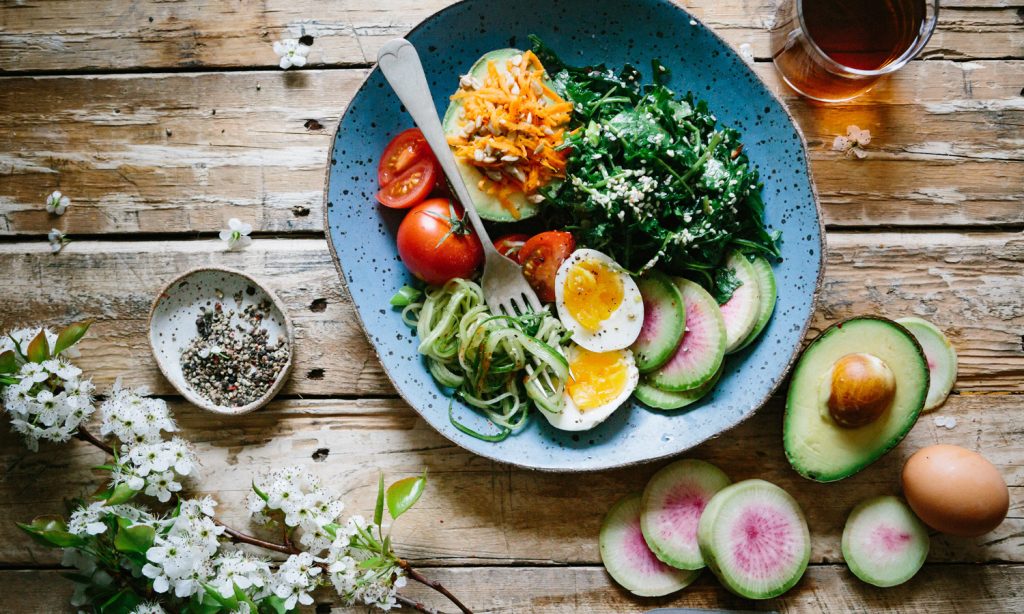
The sooner you start viewing healthy eating as something healthy and nourishing over something annoying and painful, the better. In order to reap long-term benefits, it’s important to enjoy eating healthy and to develop a healthy relationship with food. Tricks like stocking up on healthy foods you love and trying out new recipes can help make this transition more easy and sustainable.
Try very hard to love vegetables
Photo by Anna Pelzer via Unsplash
You don’t have to know about nutrition in order to know that vegetables are good for you. They provide nutrients, fiber and vitamins that make your body function properly while also helping you feel full. So, when in doubt and faced with breakfast, lunch or dinner, go with a side of veggies… or make plants the base of all of your meals, if you’re feeling really inspired!
While it sounds a little silly, a smaller plate tricks your brain into thinking you’re eating more and prevents you from eating larger portions, which can sometimes be difficult to grasp when not actively measuring your portions. When putting food on a large plate, your brain thinks it’s less food than it actually is; the reverse is also true, something you can use to your advantage.
This trick won’t do all of the work for you, but it can help you eat smaller portions in a way that’s less aggressive than simply cutting down on carbs and other caloric foods.
With consumers sticking to trusted brands, spending less, shopping less often and sticking closer to home, the cannabis industry’s gamble on immersion retailing faces some significant obstacles.
The impact of COVID-19 on shopping behaviors is a matter of great concern not only to retailers but economists, city planners, public health officials and a whole slew of other interested parties. A 2020 survey of online consumers in nine different countries produced by The United Nations Conference on Trade and Development and titled “Covid-19 and E-Commerce”, found that the pandemic has accelerated a shift towards online shopping.
The survey also suggests that the shift towards a digital retail world may be permanent. This news has sparked some intriguing innovations in the cannabis retail space, including the rise of “immersion retailing”, which seeks to create all-inclusive, multi-sensory shopping experiences that lure customers off of their couches and back into stores.
Photo by Kevork Djansezian/Getty Images
Planet 13
Planet 13‘s (OTC: PLNHF) flagship store in Las Vegas recently added a new 80-foot wide LED wall in the expanded dispensary showcasing immersive entertainment (like lions breaking through the wall, vines growing up to the ceiling, and much more creating an incredible visual experience for customers).
The dispensary also has a Willie Wonka style production window where customers watch edibles and beverages being produced and interact with products on flat screens. There is a choreographed Orb drone show over the dispensary floor, an interactive floor in the grand hallway, and a giant laser graffiti wall.
Planet 13’s Santa Ana, California store is the largest cannabis store in the world at 112,000 square feet, is not actually a store in the conventional sense but more of an “entertainment concept”. This concept includes Budtender greeter/concierges, beautifully merchandised products, and a sensory bar that invites customers to indulge in a cannabis experience reminiscent of a tour of wine country. Future plans for the as-yet-unmaximized space include a coffee shop, pizzeria, event space, and a customer-facing production facility that provides a real-time look at the manufacturing process behind Planet 13’s products.
Alchemy
Toronto-based Alchemy an independent retailer offering an immersive and experiential shopping alternative. It is the brainchild of former triathlete Richard Browne, who envisioned Alchemy as “a museum where you can touch, feel, and interact with the elements.” This is accomplished, in part, through a playful approach to interior design which eschews the conventions of dispensary aesthetics and focuses instead on what Alchemy’s multidisciplinary designer Paolo Ferrari refers to as “a cerebral experience infused with artistry, nature, and technology.” From the kaleidoscopic visuals on display for waiting guests to flower showcased in custom “smelling-globes”, Alchemy’s creators leave no stone unturned when it comes to enticing the senses and giving the in-person shopping experience an edge over the convenience of click-and-pay.
Cannaffornia
Cannaffornia, one of the newest immersion retail experiences to make the scene, offers two of California’s largest consumption lounges at 5,000 square feet each, situated on a 100-acre campus in southern California’s Imperial Valley. The location is strategic in its attempt to capture travelers transiting through Arizona, California, and Mexico.
Cannaffornia boasts two large retails stores, Queen of Dragons and The Other Guys, which stock top brands and invite consumers to sample the goods in one of their spacious lounges before committing to a purchase.
Global management firm McKinsey & Company attributes the shift towards digital retail in the COVID era to three change forces — economic downturn, preference shifts, and digital acceleration. With consumers sticking to trusted brands, spending less, shopping less often and sticking closer to home, the cannabis industry’s gamble on immersion retailing faces some significant obstacles. Some industry innovators are turning those obstacles into opportunities to change the retail landscape.
It appears that Gov. Hochul will be attending. If she does, it is yet another sign that the Governor is actually prioritizing the establishment of a functioning cannabis industry in New York.
In yet another positive development since Governor Kathy Hochul took the reins and started pushing the roll out of New York’s cannabis industry, on Wednesday the Office of Cannabis Management (OCM) announced the first meeting of the Cannabis Control Board (CCB). The meeting will take place on Tuesday, October 5, 2021, at 1:30 pm and will be publicly available via the link embedded in this press release.
We will provide a summary of the meeting, along with our thoughts on any public comments and anything else we can glean in terms of the timeline for the CCB’s rules and regulations.
A few things that are notable from the press release itself:
It appears that Governor Hochul will be attending. If she does, it is yet another sign that the Governor is actually prioritizing the establishment of a functioning cannabis industry in New York. Obviously, public appearances don’t mean much without rules, regulations, applications received, and licenses issued, but it certainly looks good.
The CCB’s meeting will be the first substantial public appearances made by CCB Chairwoman Tremaine Wright and OCM Executive Director Chris Alexander since their respective appointments (we covered that here). We are excited to hear where they stand on the critical issues for the CCB’s rules and regulations, social equity, and the timeline for the OCM’s issuance of licenses.
To that end, notably absent from the meeting agenda is anything related to a timeline for the issuance of the rules and regulations. We hope that the timing will be discussed as part of the “Executive Director Report.” With everyone clamoring for a timeline for the rules and regulations to be released (it’s really all anyone in New York’s cannabis industry talks about), it would be frustrating (to say the least) if the CCB and OCM do not provide any details.
Stay tuned for our summary of the CCB’s first official meeting and all updates on developments in New York’s cannabis industry!
The change of season is usually a sign for a much-needed closet spruce up.
A city with changing seasons is a city with an evolving sense of fashion. No matter how small the change, whether the temperature will be dropping soon or you’ll simply be experiencing more rain, a change of clothes is a nice motivator. And there’s no better way to stay motivated than to make sure everything is running smoothly in your closet.
Cleaning out your closet is never the most fun of activities, but it’s one you’ll be thankful for later. Here are 6 pro tips to prep your closet for fall.
Clean out items you don’t use
The first step in cleaning out your closet is having an idea of everything that’s in it, from the useful pieces to the things you’ll no longer be using. Make sure to donate items that are still serviceable and to throw away those that are old or ripped. Be honest with your clothes and don’t hoard things simply because you’re too lazy to go to your nearest Goodwill. At the end of the day, clothes are just stuff, and they’re pretty easy to forget and replace.
Don’t be surprised to find stains and weird-looking stuff on your new season clothes. Go over these items and run them through the washing machine, ensuring that they’re ready to wear the moment you need them. Now that you’re washing, make sure to also wash the clothes you’ll be storing, that way you avoid pests, mold, and damaging your clothes.
Make sure your clothes are prepped
Photo by Anastasia Zhenina via Pexels
Fall and winter clothes are more elaborate than summer clothes, having more parts that need attention. Make sure your buttons are in place and that your boots and shoes are weatherproof. Make an appointment at the dry cleaners for items that need extra attention, like expensive sweaters and coats.
Clean your shoes
Photo by Dương Nhân via Pexels
While we tend to wash our clothes more often, our shoes don’t get the same treatment. Take advantage of this opening to clean them, making sure that there are no holes or damages. If there are, make sure you buy what you need, something that will prove useful and that you’ll also want to wear during the coming season.
Now that you’ve organized your clothes and have your stuff ready for the season, try your best to keep it that way. While this doesn’t mean that you can’t shuffle things around every now and then, limit the mess you make every time you visit your closet. Something that works, at least when it comes to work outfits, is to take stock of your closet at the start of the week and plan a few outfits ahead of time, eliminating a lot of time spent deliberating on outfits and providing openings for disorganization.
Store clothes in a dry and dark place
Photo by Sarah Brown via Unsplash
Lastly, once you’re putting your out-of-season clothes away, make sure you store them in a dry and dark place. This will help you preserve your space, something especially advantageous for people who live in apartments with limited closet space and will also preserve your clothes. Good storage options include clean and unused suitcases and garment bags for delicate items, which you can hang in an out-of-the-way section.
The COVID-19 pandemic has taken a toll on most of humanity. However, frontline workers were among the most exposed to the gravity of such a dire situation, and therefore, among the most impacted by it.
According to The Lancet’s EClinicalMedicine, 61% of healthcare workers reported “fear of exposure or transmission, 38% reported anxiety/depression, 43% suffered work overload, and 49% had burnout.” The figures came from a poll conducted between May 28 and October 1, 2020, among 20,947 healthcare workers from 42 organizations.
Photo by Vladimir Fedoto via Unsplash
Seeking to help improve frontline clinicians’ situations, psychedelics-focused biotech company Cybin and the University of Washington are co-sponsoring a randomized, placebo-controlled clinical trial of psychedelic-assisted psychotherapy with psilocybin for frontline clinicians experiencing COVID-related distress.
The main goal of the study is to evaluate the efficacy of psilocybin-assisted psychotherapy in the treatment of symptoms of depression, anxiety, burnout and post-traumatic stress among frontline doctors, nurses and healthcare professionals.
The Trial
The trial, led by Dr. Anthony Back, will take place in Seattle, Washington, a city that was substantially impacted by COVID-19 in its early days.
To support the initiative, Cybin and its scientists, Alex Belser, Ph.D. and Bill Brennan, Ph.D. candidate, developed EMBARK, a “transdiagnostic psychotherapy model that can be adapted to address a range of clinical indications and populations.”
“EMBARK is a ground-breaking psychotherapy model that integrates leading clinical approaches to promote supportive healing with psychedelic medicine,” management explained.
Commenting on the study, Dr. Anthony Back added, “There is tremendous potential in a collaboration between the University of Washington and Cybin to move the field forward, and this project is an incredibly valuable initial step towards a productive future.”
“Our nation’s doctors, nurses and clinicians have been shouldering the burden of COVID-19 by taking care of the sickest among us. They’re experiencing high levels of anxiety, depression and burnout. Now it’s our turn to help them,” concluded Dr. Alex Belser, Cybin’s chief clinical officer. “We are sponsoring research to see if psychedelic medicine, when used with EMBARK’s supportive therapy, can help clinicians recover from COVID-related distress.”
Innovative companies that are committed to the sector may be in a stand-out position to capitalize on a rise in demand along with long-term trends toward growth and maturation.
With the production of hemp legalized under the 2018 Farm Bill, some mainstream supplement companies are positioning themselves to get into CBD-infused vitamin products — a market that was estimated at $1.64 billion in 2020 and is expected to reach $13.9 billion by 2028, according to a report from Grand View Research.
While the Farm Bill did not legalize the extraction of cannabidiol (CBD) for infusion into food, beverage and nutritional supplements, some mainstream vitamin and supplement manufacturers believe it’s only a matter of time. Rather than wait until the CBD supplement market is saturated, they’re carving out their niches now.
Photo by HenrikNorway/Getty Images
Many CBD companies also are enlisting the help of former professionals in the mainstream consumer packaged goods businesses in their efforts to gain legitimacy. Aurora Cannabis Inc., for example, appointed Procter & Gamble Co. Director Nelson Peltz as a strategic adviser, and Los Angeles-based Ignite International Ltd. tapped former P&G executive Curtis Hefferenan as global head of sales.
Hemp is a cannabis plant, but it’s different from marijuana in that it cannot contain more than 0.3% of THC — the compound in the plant that’s associated with getting high. CBD can be extracted from both the hemp plant and the marijuana plant, which contains a higher concentration of THC.
CBD is often sold on its own because it doesn’t cause the high that comes with THC. It’s available through many mainstream retailers, including grocery stores, pharmacies and online. Many people believe it’s an effective remedy for pain and other health conditions, including inflammation, multiple sclerosis, epilepsy and Crohn’s disease.
As supplements infused with hemp-derived CBD become more mainstream, companies like Nevada-based Grove Inc. are banking on consumers recognizing the benefits of the compound and incorporating it into their daily lives.
Since its initial public offering (IPO) in June, Grove has embarked on a journey that will establish it as a leading manufacturer of hemp-derived CBD-infused nutritional supplements. The Nevada-based company offered 2.2 million shares at $5 per share to raise about $11 million in its IPO.
Photo by BATCH by Wisconsin Hemp Scientific via Unsplash
Grove used the proceeds to acquire VitaMedica, an online seller of nutritional supplements, in an effort to gain access to the global nutraceuticals market.
The gummy vitamin market is estimated at $5.9 billion this year and projected to grow to $10.6 billion by 2025, according to a recent report from ReportLinker, which attributes the rising incidence of vitamin deficiencies, undernourishment and growing demand for on-the-go supplements that taste good.
The overall landscape of the market has taken shape rapidly. Innovative companies that are committed to the sector, like Grove, may be in a stand-out position to capitalize on a rise in demand along with long-term trends toward growth and maturation.