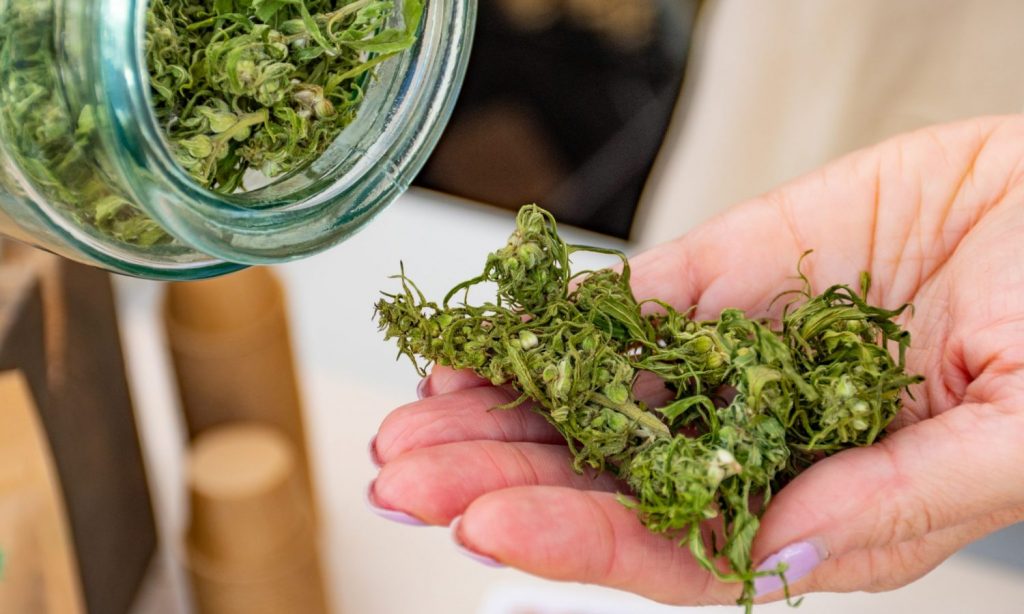
Innovative companies that are committed to the sector may be in a stand-out position to capitalize on a rise in demand along with long-term trends toward growth and maturation.
With the production of hemp legalized under the 2018 Farm Bill, some mainstream supplement companies are positioning themselves to get into CBD-infused vitamin products — a market that was estimated at $1.64 billion in 2020 and is expected to reach $13.9 billion by 2028, according to a report from Grand View Research.
While the Farm Bill did not legalize the extraction of cannabidiol (CBD) for infusion into food, beverage and nutritional supplements, some mainstream vitamin and supplement manufacturers believe it’s only a matter of time. Rather than wait until the CBD supplement market is saturated, they’re carving out their niches now.
Photo by HenrikNorway/Getty Images
Many CBD companies also are enlisting the help of former professionals in the mainstream consumer packaged goods businesses in their efforts to gain legitimacy. Aurora Cannabis Inc., for example, appointed Procter & Gamble Co. Director Nelson Peltz as a strategic adviser, and Los Angeles-based Ignite International Ltd. tapped former P&G executive Curtis Hefferenan as global head of sales.
Hemp is a cannabis plant, but it’s different from marijuana in that it cannot contain more than 0.3% of THC — the compound in the plant that’s associated with getting high. CBD can be extracted from both the hemp plant and the marijuana plant, which contains a higher concentration of THC.
CBD is often sold on its own because it doesn’t cause the high that comes with THC. It’s available through many mainstream retailers, including grocery stores, pharmacies and online. Many people believe it’s an effective remedy for pain and other health conditions, including inflammation, multiple sclerosis, epilepsy and Crohn’s disease.
As supplements infused with hemp-derived CBD become more mainstream, companies like Nevada-based Grove Inc. are banking on consumers recognizing the benefits of the compound and incorporating it into their daily lives.
Since its initial public offering (IPO) in June, Grove has embarked on a journey that will establish it as a leading manufacturer of hemp-derived CBD-infused nutritional supplements. The Nevada-based company offered 2.2 million shares at $5 per share to raise about $11 million in its IPO.
Photo by BATCH by Wisconsin Hemp Scientific via Unsplash
Grove used the proceeds to acquire VitaMedica, an online seller of nutritional supplements, in an effort to gain access to the global nutraceuticals market.
The gummy vitamin market is estimated at $5.9 billion this year and projected to grow to $10.6 billion by 2025, according to a recent report from ReportLinker, which attributes the rising incidence of vitamin deficiencies, undernourishment and growing demand for on-the-go supplements that taste good.
The overall landscape of the market has taken shape rapidly. Innovative companies that are committed to the sector, like Grove, may be in a stand-out position to capitalize on a rise in demand along with long-term trends toward growth and maturation.
Since the start of the pandemic, there have been shortages of products in grocery stores across the country. Here’s what might be sold out during your next shopping trip.
Food shortages started appearing once the pandemic set in, with people’s shopping habits shifting and adapting to the new world. While now things are much better and more balanced, depending on the location, there are still some items that are difficult to find.
Taste of Home asked Facebook users about the items in their local grocery stores that were missing, and people were quick to pitch in with their experiences. Here are some of the most common missing items on grocery shelves:
Bottled water
Photo by Steve Johnson via Unsplash
Bottled water is an item that’s missing from a lot of grocery store shelves. Since the start of the pandemic, this has been a recurring problem, with a lot of people stocking up on water in case of an apocalyptic emergency.
Pasta is a pantry staple, and since more people are cooking at home, there’s currently a shortage, just like there was late year (specifically, Bucatini). According to Eat This, Not That, there might be another pasta shortage coming soon, this time due to extreme weather, which has affected the production of Durum wheat, the flour needed to make pasta.
Toilet paper
Photo by icarmen13/Getty Images
Toilet paper is a hot commodity in a pandemic. Last year, there was a serious shortage of this product, with stores putting a cap on how much toilet paper people were able to purchase. Costco recently brought back the cap on TP and other cleaning products.
Paper towels
Photo by Universal Eye via Unsplash
Probably for this same reason, paper towels are also difficult to find.
Due to the changing demands of shoppers, companies have had to adjust the quantities of the products they make. According to Kraft, Lunchables have been very much in demand right now. “Compared to 2019, nearly 2 million more households bought Kraft Heinz brands in the second quarter of 2021,” the company revealed. “We are also seeing all-time high demand for many of our brands, including Lunchables.”
One of the most recent cases involved a 12-pound Chihuahua-terrier mix named Bentley, who for the first time ever turned down French fries offered by his owner.
According to the American Society for the Prevention of Cruelty to Animals, reports of marijuana toxicity in dogs have notably increased following widespread marijuana legalization.
The national call volume for cannabis ingestion jumped from 1,436 to 3,923 cases between 2017 and 2020 said Tina Wismer, a veterinarian and senior director of the New York-based ASPCA Poison Control Center, as reported by the Los Angeles Times.
It is important to note that these numbers are just a small percentage of the total number of cases due to the reports being voluntary. In California, for example, where adult-use cannabis became legal in 2016, call numbers jumped 276% between 2016 and 2020, and in Colorado, the numbers have grown eleven times since the state legalized cannabis in 2012.
Effects Can Be Critical
The problem is much more serious than it may sound because if a dog ingests THC-infused edible crafted for humans, who weigh several times more than dogs, the effects can be critical. What’s more, some of those treats may also contain other chemicals, not just THC.
And while probably most of the incidents are happening at home with the owner’s stash, the number of dogs getting intoxicated by cannabis outside is definitely growing at a rapid pace.
Karl Jandrey, a professor of veterinary sciences at UC Davis, and Wismer of New York pointed out some of the standard symptoms of cannabis toxicity in dogs: “unsteadiness on their feet, depression, dilated eyes, dribbling urine, sensitivity to touch and sound, slow heart rate and even low body temperature.” These signs tend to occur around 20 to 40 minutes after ingestion.
Wismer also highlighted that if a dog owner suspects marijuana ingestion, they should call their veterinarian immediately.
The Case Of The “Stoned” Chihuahua Terrier
One of the most recent cases involved a 12-pound Chihuahua-terrier mix named Bentley, who for the first time ever turned down French fries offered by his owner.
“He wouldn’t take them, so I knew something was wrong. He was just out of it,” said Dana Long, a resident of Tiburon, per the LA Times.
Photo by Sarah Pender/Getty Images
Realizing that Bentley was not himself, Long quickly took him to the veterinarian where he was told that most likely Bentley had scooped up a chocolate edible from the sidewalk while walking near a neighborhood middle school.
“If you ask any of our emergency room veterinarians, they would all say that the number of cannabis-intoxicated dogs has increased by leaps and bounds since legalization of medical and then recreational marijuana for humans,” Jandrey said.
The Solution? Dog Training
According to Jandrey, “Avoidance is the only prevention.” This means that dog owners should really seriously take dog training, and teach their dogs how to behave both inside and outside the home.
People are quitting their jobs left and right, and the cannabis industry is reaping many of these benefits.
COVID-19 made us face the shocking reality that working from home was possible. It also highlighted how undervalued many employees are. Now that companies are back in their offices again, employers are reckoning with the fact that many of their workers would rather quit than return to a job that never valued them in the first place. And many of these workers are discovering their passion in an unlikely place: the cannabis industry.
According to The Washington Post, many disgruntled retail workers have turned to cannabis. While 2020 was a horrible year in the country’s economy, the cannabis industry grew by 32%. As of this year, the cannabis industry is the fastest-growing industry in America, with 320,000 full-time jobs according to a report conducted by CannabizTeam.
The Washington Post spoke with a variety of employees that had left their jobs in retail and were now involved in the cannabis industry. “I am so much happier,” said Jason Zvokel, who used to work in a pharmacy and now is employed in a dispensary. “For the first time in years, I’m not miserable when I come home from work.”
While Zvokel is making 5% less than he used to, his hours and his work expectations are more manageable. “People were quitting left and right and I was being asked to do a lot more than I physically could,” he said.
The “Great Resignation” wasn’t only prompted because people prefer to work in the comfort of their homes — a vast majority of employees felt undervalued. And it only got worse as the pandemic progressed, and employers asked for more and more of their time and energy without providing proper remuneration.
While pay in the cannabis industry is likely minimum wage when first starting a position, the industry is brand new, meaning that there’s more of a chance to grow and stand out, earning better pay and better hours over the long haul. There’s also the fact that more and more states are legalizing the drug, providing for job openings and opportunities in a variety of positions, taking in applicants with a variety of applicable skills and backgrounds.
As more time passes, cannabis continues to prove that it’s a strong industry that is here to stay, despite the hurdles it still faces.
“The continued criminalization of marijuana by the federal government is an affront to our professed ideals of freedom, liberty, and justice.” — Justin Strekal, political director of NORML.
Members of the House Judiciary Committee on Thursday afternoon advanced HR 3617: the Marijuana, Opportunity, Reinvestment and Expungement (MORE) Act of 2021. The bill was approved 26-15, with 24 Democrats joined by two Republicans.
The MORE Act repeals the long-standing federal prohibition of marijuana by removing it from the Controlled Substances Act — thereby ending the state/federal conflict over cannabis policies and providing state governments with greater authority to regulate marijuana-related activities, including retail sales.
Photo by drnadig/Getty Imges
“Never before has public support from every corner of the political spectrum been so aligned as to demand that Congress take action to end the shameful experiment with marijuana prohibition,” said Justin Strekal, political director of NORML. “The continued criminalization of marijuana by the federal government is an affront to our professed ideals of freedom, liberty, and justice.”
Strekal called on House Speaker Nancy Pelosi, leader Steny Hoyer, and House Whip Jim Clyburn to schedule the MORE Act for a full floor vote.
The MORE Act facilitates the expungement of low-level federal marijuana convictions. It also:
Creates pathways for ownership opportunities in the emerging regulated industry
Allows veterans to obtain medical cannabis recommendations from their VA doctors
Removes the threat of deportation for immigrants accused of minor marijuana infractions
Provides critical reinvestment grant opportunities for communities that have suffered disproportionate rates of marijuana-related enforcement actions
Photo by strelov/Getty Images
Reactions Among Legalization And Social Justice Advocates
“We are thankful that the House continues to pursue sensible cannabis policy reforms and is once again moving on this important bill,” said Aaron Smith, co-founder and CEO of the National Cannabis Industry Association (NCIA).
Maritza Perez, director of national affairs at the Drug Policy Alliance, said in a statement that, “Despite all the progress we have made on reforming state marijuana laws across the country, it tragically still makes up the lion share of drug arrests in this country, resulting in one arrest every 90 seconds in 2020. And it should come as no surprise that it continues to be one of the—if not the single—biggest drivers of racial inequity in the U.S.”
Perez further noted that Thursday’s vote in the House Judiciary Committee “sends a clear message that they understand the injustices that have burdened Black, Latinx and Indigenous communities for far too long.”
Perez called passage of the MORE Act “a concrete and tangible step towards repairing the harm, providing new opportunities for participation in the legal market, and ensuring critical reinvestment in these communities.”
Working from home tends to mean less movement throughout the day. Here’s what you can do to move more without making any big changes in your life.
If you have a fitness tracker, you’ve likely noticed the sudden drop your body experienced when you started working from home. It’s intense. Whether you used public transportation or relied on your car to get you from point A to point B, working from home means that you likely move a lot less, something that affects your waistline to your mental health.
Here are some simple tips that can help you move more when working from home.
Try different workout videos
Photo by Karthik Thoguluva via Unsplash
The good thing about working from home is the large amount of time you have at your disposal. When used productively (easier said than done), this means you can get laundry done, cook some food and even get a workout in before the end of the work day.
Workout videos are useful ways of getting your body to move. There are all sorts of options, from hour long workouts to 15 minute sessions that you can fit in as you take a quick work break. Take advantage of these opportunities and try to move a little bit. The more you do it, the more you’ll like it and reap benefits.
Walk during meetings
Photo by Ben Collins via Unsplash
Aside from getting your steps in, walking allows you to think better and approach problems more creatively. Thanks to Zoom, we rarely have phone calls. Still, when you get a phone call, use that time to walk around, whether you’re indoors or outdoors. Just remember to mute when it’s appropriate.
If you have a dog, you’ll know that walking them is a very useful workout, especially when you take the time to enjoy yourself and spend some time actually walking. Heading to the dog park or simply walking alongside your dog in different directions will give you some much needed space, and will also work for some effective exercise.
The goal of this list is to walk more, by any means necessary. Whether you have a dog or not, it’s important to fit in a walk whenever you can, especially if you’re not working out regularly or commuting to work. Use videos, reminders, and whatever you think might work to keep you motivated and willing to move a little bit more than you used to.
Cannabis is not a quick fix for declining revenues over the short term; it’s an opportunity for the long term.
By Barbara Pastori, Prohibition Partners.
A few weeks ago, Philip Morris CEO Jacek Olczak made the news with a series of seemingly counterintuitive remarks. Namely, that the tobacco giant may soon stop selling cigarettes in the UK, while urging the government to ban smoking altogether. Olczak said the Marlboro brand will “disappear”, and that “the first choice for consumers is they should quit smoking.”
While this might seem like a deliberately provocative stance — to some extent — it’s also broadly in line with the direction the tobacco industry has taken over the last few years. It may also prove to be a sensible business strategy. Most enduring companies do, at some point, have to reinvent themselves to survive.
Photo by Mathew MacQuarrie via Unsplash
Technological developments are a common driver of change, but pressure can also come from wider changes in consumer behavior. It’s more difficult, for example, to find a company still selling the same product after 100+ years than it is to find a company that successfully changed its line of business. In some cases, the best way to protect shareholders’ interest is to imagine different approaches and embrace change, rather than drifting comfortably on a sinking ship.
Tobacco and Cannabis: A Perfect Match
The global exodus of consumers from the tobacco market means this industry is now at a turning point, where alternative or additional product lines are vital to the future security of its companies. Among the many alternatives that the tobacco industry is exploring as part of its broad reimagining of its future, cannabis surely represents an opportunity. Numerous tobacco companies have already made investments in the cannabis industry over the past few years, including Altria, Imperial Brands, and most recently British American Tobacco.
But why does cannabis seem to be particularly appealing for Big Tobacco? The first association that comes to mind is smoking, but there is a lot more to the story. Here are a few key points that, in my opinion, make cannabis a particularly compelling case for tobacco companies.
1. Technological Advances
The two industries have shared the benefits of certain technological advances. Whenever a breakthrough is made in facilitating the consumption of combusted organic material in a more safe and efficient way — as is the case for vaporising and e-liquids — both industries stand to gain.
2. Diverse Products
Big Tobacco’s interest may also go well beyond smokables. Investments are still at an early stage but, from our vantage point, we’re noticing interest in products from the entire cannabis range. Tobacco is looking to offer consumers an alternative to smoking; the cannabis industry’s evolution, which has brought a huge variety of products to the market — like edibles, oils and topicals — can serve as a reference point. At Prohibition Partners, we’re noticing increasing interest in these alternatives. This is quite remarkable for an industry that, for so many decades, thrived on a relatively limited range of products.
3. Production Processes
Cannabis and tobacco rely on similar production processes (i.e. cultivation of a warm-climate crop and subsequent processing). This explains the interest in cannabis of countries such as Andorra or Malawi, who have in the past relied heavily on tobacco cultivation as their prime farming product.
Photo by Jamie Grill/Getty Images
4. Supply Chain and Distribution
Both industries share similar distribution channels as products are usually sold in brick and mortar shops, which sell regulated products, such as tobacconists, off licences and dispensaries. In all of these points of sale, retailers need specific permits and are bound to strict codes of conduct.
Likewise, the marketing for both cannabis and tobacco products is highly restricted as countries and states have specific rules on where (i.e. print, radio, digital communications, television) and how (i.e. health claims, free sample restrictions, sponsorships) companies can advertise. Thus, by having previous experience with heavily regulated products it would be fairly easy for Big Tobacco to transition into the cannabis retail market.
5. Marketing Opportunities
Investing in cannabis could also be a huge marketing opportunity for tobacco brands. After all, fundamental product differentiation in the tobacco industry is slight, so fortunes have been built primarily on iconic advertising. However, in recent years, regulatory crack-downs and changes in consumer perception have made it more and more difficult to promote tobacco brands. Investing in cannabis would not only be a way to spend some marketing budget in a less regulated environment, but the mere association to cannabis could help the industry improve its reputation in some key strategic segments of its target audience, particularly among younger people.
6. Highly-Regulated Markets
The tobacco industry knows how to operate in a complex and heavily regulated environment. Because of that, it has been forced to develop strong public relations and lobbying capabilities — and by applying that influence to cannabis, tobacco could have a significant impact in shaping a regulatory framework that is still nascent. Altria activism in the U.S. is a clear example of that.
7. ESG Rating and Sustainability
Finally, a transition into the cannabis market has its advantages for publicly traded tobacco companies as it would enable them to improve their environmental, social and corporate governance (ESG) ratings. ESG ratings have become increasingly important for publicly traded companies, as investors and analysts factor in these ratings when they are determining the long-term risk of a company’s stock. Adding products such as CBD from outdoors-grown hemp (a carbon negative crop) to their range could improve Big Tobacco’s ESG ratings, and enable them to take part in shaping the progress of the emerging industry towards more positive environmental and social outcomes.
Photo by an dooley via Unsplash
Investing for the long term
When you consider all these factors together, the relationship between tobacco and cannabis could become more than just a marriage of convenience. Tobacco corporations have many of the requisite skills and resources needed to succeed in the world of cannabis, while cannabis manufacturers have overseen a process of transformative innovation that tobacco giants would do well to learn from — the relationship could be symbiotic.
Cannabis cannot and will not be a substitute for tobacco. This is not, however, what the tobacco industry needs. It critically needs new products to diversify its business, so the incorporation of legal cannabis seems like a logical step for tobacco corporations to consider.
Tobacco has a long enough shelf life to remain hugely profitable for some time. Cannabis is not a quick fix for declining revenues over the short term, rather, it’s an opportunity for the long term. It could be a critical forward-looking investment for an industry that wants to remain the lifestyle staple that — for better or worse — it has been over the past 100 years or more, and not become the next great empire to go up in smoke.
As the cannabis industry matures, it begins to face the same issues as traditional retail. Some markets in Canada are now dealing with saturation issues.
High Tide Inc. (TSXV: HITI) (Nasdaq: HITI) just hit a milestone when the Canadian cannabis retailer announced that it has opened over 100 stores. High Tide said that its total number of branded retail locations across Canada numbered 101, and the company has 30 stores in Ontario. In addition to those stats, High Tide also noted that it has launched eight organically-built stores in the month of September alone. While this is a laudable event, could Ontario be reaching dispensary saturation and is that a bad thing for cannabis companies?
Competition is the lifeblood of capitalism. It is survival of the fittest. Retailers that don’t hit the mark will lose customers, while those that can deliver the right products at the right prices in an environment shoppers like will be winners.
Photo by Aditya Chinchure via Unsplash
In the cannabis industry, like other more traditional industries, there are only so many consumers for the product. The industry is limited in its ability to advertise and there is some discomfort at trying to woo new cannabis consumers. The stores are left to wait for the new consumers — often called the “canna curious” — to explore on their own. This has resulted in a plateauing of sales in some areas. Cannabis consumers can only consume so much within a week or month.
Too Much Competition
The Canadian market is beginning to see the effects of market saturation in some areas. Both Fire & Flower (OTC: FFLWF) and High Tide recently mentioned in their earnings announcements that sales were affected by this. Fire & Flower said that its same-store sales decreased 14% for forty-eight (48) stores in operation during the second quarter of 2021 due to a surge in newly licensed retail cannabis stores in Ontario. According to the company, in just three months the number of licenses went from 665 at May 1, 2021 to 981 at July 31, 2021. The company’s sales also dropped — despite the reopening of stores — to foot traffic due to the pandemic. Fire & Flower also pointed out that competitors had engaged in deep discount pricing.
On The company’s earnings call, CEO Trevor Fencott said, “We saw this in Alberta where there was a mass licensing. I think the record at the time was 20 licensed a week. And it expanded. It’s got a lot of kind of mom and pops in the queue that, unfortunately, even though there isn’t really a lot of room for single players anymore in the market, they have to kind of launch to market because they’ve signed a lease. And so, they’re coming, come — no matter what, they’re going to launch. And then, you’ve got the overcrowding and then a pairing back as businesses, unfortunately, can’t compete. So, all these things resolve themselves. I doubt they resolve themselves in a quarter, but they eventually do.”
High Tide noted in its recent earnings call that the number of stores open in Ontario rose to over 1,000 roughly 10 times the number open about a year ago. CEO Raj Grover said, “This increased competition has resulted in it taking longer for new stores to ramp up to the point where they are contributing to consolidated EBITDA. The number of retail licenses in Alberta also increased 60% versus a year ago. And during this time, a few value players have arisen which have driven the retail gross margin for cannabis lower.”
Saturation
As the cannabis industry matures, it begins to face the same issues as traditional retail. Some markets in Canada are now dealing with saturation issues. Grover said in the earnings conference call when asked about saturation, “When you compare the populations between Alberta and Ontario, you’ve got 4.3 million people in Alberta versus 15.5 in Ontario, and Alberta already has 700 stores approximately 700 versus Ontario still has about 1,000 but triple the amount of people. So we still feel that there’s good growth ahead in Ontario. I do agree with you that there are certain markets in Ontario, especially in Toronto, where there’s an extreme saturation of stores.”
His plan is to go into retail plazas with strong anchor tenants to keep his traffic strong. High Tide has also created a customer loyalty program called the Cabana Club to combat discounters.
Deep Discounts
In addition to those moves, High Tide is creating its own deep discount brand called Cannabis Chop Club. Grover said on the conference call, “We are seeing very aggressive pricing from select value players. They’re not profitable today and intend to clean up the market before raising prices to a level where they can be profitable. Unfortunately, this will be at the demise of many independents and small chains.
“We will be positioning our own value brand in more value-sensitive markets and neighborhoods under the Cannabis Chop Club name. This will be done on a micro-market basis depending on the competitive dynamics in each area. We have identified markets where launching our own value brand makes sense. So we can keep our retail concepts differentiated and increase our market share in price-sensitive markets.”
Photo by Matthew Henry via Unsplash
The stores will have a smaller footprint, lower building costs and a different assortment of products and accessories. The locations will be targeting value sensitive areas.
Grover added, “To be clear, we will not be the one starting a price war but we just won’t sit on our hands and lose market share. We will fight fire with fire when necessary. Given our unique positioning in accessories, our lean operations and national scale of growing loyalty plan and our strong capital markets profile and balance sheet strength, we are well-positioned to continue to lead the market regardless of competitive dynamics. And our new Cannabis Chop Club concept will be another tool we have to keep driving value for shareholders.”
Diminishing Returns
Stifel analysts believe the overexpansion of dispensaries will result in diminishing returns for the market. Andrew Carter wrote in a recent report titled September 2021 Cannabis Update, “We outline an uneven environment in which some areas are past the point of saturation, while others have no access: 21% of Canadians live in areas with one store or more per 10,000 residents, while 25% of Canadians live in areas without a licensed dispensary (defined as five miles from the population center).
Expanding legal access is likely to be difficult, with 30% of the addressable market in areas where the Provinces own and operate all retail stores, while municipal restrictions prohibit stores in some areas (most notably Mississauga, Ontario, with over 700,000 residents). For the retail operators, the Canadian market is extremely competitive in some areas, with the average Ontario retailer facing 20 stores within a two mile radius. Absent unlocking underserved areas, continued retail growth will not likely be a tailwind for category growth, given the diminishing returns.”
To be fair, sales are still rising for many. Stifel said that Headset suggested robust growth from the Canadian market as lockdown restrictions are easing. Stifel cautioned that there are elevated retail inventory levels, continued pricing compression, and increasing category fragmentation in what “we regard as a structurally difficult market for private operators.”
Carter wrote, “We count over 200 producers, and the market share outside the top-10 producer has grown to 37% in the latest three months, up 12 ppt from the end of 2020. Through July, we highlight the sequential market share performance across our coverage for the trailing three months: Aurora Cannabis down 145 bps, Canopy Growth down 320 bps, Cronos Group up 34 bps, HEXO down 170 bps, and Tilray down 170 bps.”
Ultimately, Stifel said it has an overall negative bias towards Canadian producers.
In 2019, an earlier version of the bill was vetoed by Gov. Newsom due to confusion related to possible implications connected to allowing cannabis consumption in health facilities.
California Governor Gavin Newsom signed a bill on Tuesday requiring hospitals and other health care facilities to allow terminally ill patients to use medical marijuana, Marijuana Moment reported.
The governor approved the legislation, also known as “Ryan’s Law,” sponsored by State Sen. Ben Hueso (D), who had been pushing for this measure for years.
Photo by National Cancer Institute via Unsplash
“It is inconceivable to me that, in a state where medical cannabis was legalized more than 25 years ago, those in deepest suffering receiving treatment in our state’s healthcare facilities cannot access this proven, effective and prescribed treatment,” Hueso disclosed in a press release. “Instead, terminally-ill patients in California healthcare facilities are given heavy opiates that rob them of their precious last moments with family and friends. This is a simple, yet critical, move that will provide relief, compassion, and dignity to terminally-ill Californians.”
In 2019, an earlier version of the bill was vetoed by Newsom due to confusion related to possible implications connected to allowing cannabis consumption in health facilities.
The issue arose over whether medical facilities in legal marijuana states can legally allow certain patients to use medical cannabis without jeopardizing the facility’s federal funding.
Hueso recently asked the head of the U.S. Department of Health and Human Services (HHS) to clarify the subject.
The Centers for Medicare and Medicaid Services (CMS) responded in a letter to Hueso that there are no federal regulations that specifically address the issue and that the agency was not aware of any cases where funding had been pulled due to a hospital or long-term facility allowing patients to use medical marijuana.
“With this confirmation from CMS and the safeguards in the law, we are confident that healthcare facilities have the necessary authority to implement these provisions while ensuring the safety of other patients, guests, and employees of the healthcare facility, compliance with other state laws, and the safe operations of the healthcare facility,” Senator Hueso said.
Morning routines can be easily disrupted. Here are some tricks that can help you nail them and get to work on time.
Mornings are rough, especially after having worked from home for the better part of the pandemic. If your boss is asking you to return to the office and you’re freaking out because you forgot what it feels like to put pants on, stop spinning — it’s possible to get back on track, you just need to be a little more organized.
The key to a good morning is having a good amount of sleep, something that’s already difficult enough. But, if you plan ahead of time and change some small common behaviors, your mornings might not be well-rested, but they might be quick and efficient, which is all you need sometimes. Here are 5 tricks to help you get ready faster in the mornings.
Plan your morning routine at the start of the week
Photo by Daria Shevtsova via Unsplash
The earlier you start planning the better. Adapt these plans as works best for you, being as thorough as you want to. While it might be annoying and take a good chunk of time, try planning at least three to four outfits during your Saturday, eliminating all of that stress in one swoop. If you want some wiggle room, choose key pieces of outfits and pick the finishing touches the night before.
Making coffee doesn’t take a lot of time, but, in the mornings, when you’re feeling sleepy, you might not want to be making coffee. Programming your coffee maker will allow you to skip that step and will also let you smell coffee first thing in the morning, which is an added perk.
Delay checking your phone
Photo by Retha Ferguson via Pexels
Checking our phone first thing in the morning is something many of us do. But morning phone check-ins can turn into wasted minutes and even hours, something you don’t want when you have a busy day ahead of you. Resist temptation and put off checking your phone until later in the day, whether that’s your lunch break or your commute to work.
Before you start planning outfits, it’s important to know what’s in your closet. Pick a day of your week when you have free time and go through it, taking the opportunity to put stuff away for donation and items that you’d like to wear throughout the week. Knowing what’s in your closet will help you have a better time when picking out clothes and will also let you know of the stuff you need to buy in order to plan cute and functional outfits.
Don’t wash your hair every day
Photo by 955169 via Pixabay
Lastly, there’s no need to wash your hair every day. Aside from being time-consuming, washing your hair every day also ruins your hair, getting rid of the natural oils that make it shine. People who wash their hair every day often have greasier hair, since it tries to make up for all of the oil that its losing with so many repeated washes. According to hair experts, three or four hair washes a week are more than enough.