Wednesday, May 6, 2026
Home Blog Page 354

How To Get A Bank Loan For Cannabis Real Estate Before SAFE Banking Passes

With the right connections, qualified cannabis businesses can obtain much lower rates and longer terms than what the cannabis industry has experienced in the past borrowing from private lending sources.

By Scott Jordan

There are several factors at play that are contributing to the low-rate lending environment for cannabis businesses. Since March 2021, with the new administration in place in the U.S., rates have come down for some cannabis real estate borrowers as the more aggressive banks, credit unions and life insurance companies are getting involved quietly in the industry with the excess liquidity from PPP and EIDL loans and other circumstances surrounding the pandemic.

Banks are seizing the opportunity to receive additional yield for their portfolios and realizing risks of federal seizure (which I have not seen one happen where the cannabis company is following all state guidelines) have been minimized in the minds of the lending institutions or are able to be mitigated with structuring the transaction as one that is between a landlord (with different ownership) than the state-licensed marijuana company.

Photo by nattanan23 via Pixabay

Many lenders that I have spoken with want to be in the market prior to the anticipation of the SAFE Banking Act passing, which as of the date of this article, has passed the House. Banks, credit unions, and life insurance companies are also interested in increasing their loan portfolios’ average yield and cannabis represents a marketplace for accomplishing that.

RELATED: How Cannabis Banking Bill Fares In Senate Will Dictate Future Of National Marijuana Reform

When you combine all of those factors and the fact that the actual risk is much lower than the perceived risk, we are seeing more banks willing to quietly and discreetly lend to cannabis companies. You likely won’t see them advertising or being public with this type of lending, but with the right connections, qualified cannabis businesses can obtain much lower rates and longer terms than what the cannabis industry has experienced in the past borrowing from private lending sources.

So who is getting these bank rates?

The larger cannabis companies that are showing positive EBITDA or profits are the main recipients on the low-rate loans. Why? It’s never just one factor, but generally speaking, it will come down to the value of the property and borrower profile. Most cannabis businesses are receiving these rates on traditional warehouses and retail centers in urban areas. For instance, in California, Hollywood is lendable, but Adelanto is not. Banks do not want a foreclosure that will take them a long time to sell and don’t want to have to consider managing a cannabis warehouse.

Why The Cannabis Industry Is Perfect For Socially Responsible Investors
Photo by Ivan-balvan/Getty Images

Another critical factor to consider is that most banks will look at normal commercial value versus cannabis value. Even though cannabis owners have to spend a lot of money upgrading facilities, on specialized equipment and power upgrades that a normal business would not need, when a bank underwrites the loan and considers the risk of repossessing and foreclosing on the property, they are looking to sell it as quickly as possible and therefore will give you the lower of the commercial value versus the cannabis value.

RELATED: How Long Before The Senate Approves The SAFE Banking Act?

Also, if you’re looking for a cap rate valuation, many times the rents are increased to shift profitability over to a real estate company and banks will only use the normal commercial rent to figure out what the value is using a cap rate analysis to determine the value. One other factor to keep in mind is that when a cannabis business forecloses on a warehouse, many of the small rooms that have been created for the typical cannabis grow will have to be torn down and so the foreclosure process is actually more expensive for a bank when they’re repossessing cannabis real estate.

In keeping with the conservative nature of banks, most will be looking at somewhere between 50 to 65% loan to value. They are also going to be looking for a personal guarantee(s) on the loan in order to secure these lower rates. A personal guarantee is not always required, but they will almost always ask. The only time I have seen this as an exception is for a public company.

Why Investors Are Taking A Closer Look At Cannabis Real Estate Nationwide
Photo by Kindel Media from Pexels

In general, banks would also like to have your deposit business as well because they are seeking a “relationship” not just a transaction and want to have the opportunity to provide additional products and services. Loan sizes generally range from $1 to $15 million at a 50 to 65% loan to commercial value and a five- to 10-year fixed rate. Those are typically amortized over 20 years for rates that start at 5.5% and go up to 7.5% annualized interest rate with a three- to five-year prepayment penalty.

The following are three tips for securing the lowest rates available:

  1. Be realistic in your valuation and look at other commercial properties and comparable rents and values versus cannabis values.
  2. Have up to date financials available, including P+L and rent roll if it is multiple tenants, as well as copies of the lease(s) available
  3. Be legally banking and in compliance with all state laws as the bank will perform substantial due diligence before issuing a loan

It is critical to do your due diligence on the current rate environment, what’s needed to apply for the loan, and who to consider working with. Also, understand that it’s not the property type that determines the loan amount, but the bank’s underwriting criteria and guidelines and the borrower’s financials. Using a source who knows the state and banks within it is key to securing the lowest rates available and arranging the right loan before rates head higher.

Author Bio: Scott Jordan is known as The Marijuana Money man and has been helping cannabis business owners obtain debt capital to grow their businesses since 2009. He is a frequent speaker at industry events and has completed over $70 million in loans for cannabis companies. You can reach Scott at sjordan@altfinnet.com or 720-546-6574.

This article originally appeared on Benzinga and has been reposted with permission.

Will Hemp Be The Next Cash Crop For Farmers And States?

0

The world is moving towards eliminating synthetics and going back to using biodegradable materials.

The global industrial hemp market is expected to grow at a compound annual growth rate of 34% from 2019 to 2026. In addition, industrial hemp is an agricultural plant that uses all the byproducts of the plant such as seeds and twigs in the production of hemp seed, hemp fiber, and other eco-friendly products pushing it to the top of sustainability products. So, will hemp the next cash crop for farmers and states?

July 20 marked the beginning of Hemp History Week, the largest educational campaign about hemp in the United States, with July being National Hemp Month. The hemp and CBD industry has evolved at a rapid pace since 2014, from a niche curiosity facing constant threats of punitive regulatory crackdowns to a mainstream lifestyle movement fueled by enormous innovation and mounting consumer adoption.

Are High-CBD Hemp Flowers The Next Big Thing In Cannabis?
Photo by BATCH by Wisconsin Hemp Scientific via Unsplash

CBD is now a $2+ Billion industry and is sold on Amazon and in Target, Walmart, CVS, Walgreens, and other mainstream retailers. Hemp History Week is meant to raise awareness about the environmental sustainability, health benefits, regenerative agriculture potential, and new technological applications of industrial hemp. 

Following the passing of the Farm Bill in December 2018, legalizing the cultivation and sale of hemp products, CBD stole the spotlight as the main use-case for hemp. Surprisingly, only 3% of hemp is made into CBD; 98%  is used in building materials, biofuels, bio textiles, bioplastics and more.

RELATED: Is Transporting Hemp Really Worth The Risk?

From synthetic blood proteins to clothing, building materials and more, hemp offers another world of alternatives. ECS Brands, a provider of unique whole-plant extracts has found a way to extract hemp protein in such a way that is much more affordable than other hemp protein brands. ECS Brands helps hundreds of brands, manufacturers and processors enhance their product development. Their hope is the plant-based alt-meat universe, which in part depends upon protein solutions, will turn to their affordable hemp protein, rather than pea and soy proteins, which now dominate.  

4 cbd questions researchers should answer
Photo by Tinnakorn Jorruang/Getty Images

“We believe that hemp can solve some of the most complex and pressing challenges we face today, and as an industry we’ve just begun to scratch the surface of the potential of this plant,” said Arthur Jaffee, founder and CEO of ECS Brands. “While we’ve seen the industry evolve at a rapid pace, there is a huge deficit for innovation around hemp research and development, and we’re working to fill it by exploring all the unique applications for hemp plant extracts. From alt-meat protein to even weight loss supplements, we’re conducting new research that backs hemp as the leading ingredient for healthier lifestyles.” 

RELATED: Cannabis Investors Should Know The Difference Between Marijuana And Hemp

There is no doubt that replacing meat or plastic with plant-based options is key for dealing with climate change and the health of life on our planet, but that only scratches the surface of hemp’s capabilities for replacing various textiles and accelerating a circular economy. Unlike synthetic textiles​, which are the source of 35% of microplastic pollution, hemp textiles are biodegradable, breathable, durable, and antimicrobial.

The Effects Of Smoking Low-THC, High-CBD Cannabis
Photo by OpenClipart-Vectors via Pixabay

“Hemp is an environmentally superior material because it is essentially a carbon sink, plus almost every part of the plant can be used to make a range of different industrial materials including bioplastics, bio textiles, building materials and paper from its fibers,” said Hebah Saddique, Founder of Green Takeover, an educational platform simplifying the complex worlds of climate action and industrial hemp, and demonstrating  why together, they are the real power couple of sustainability. 

RELATED: 8 Things You Must Know About Hemp

As construction material, hemp shows great promise. Hempcrete, for example has a range of desirable thermal, structural, and moisture-handling properties that make for an excellent insulation. Depending on the mix variables, hempcrete can be used as roof, wall and/or slab insulation.

Today industrial hemp can be made into more than 12,000 items we use every day including clothing, shoes, insulation, paper and more.

Whether green or circular economy, the world is moving towards eliminating synthetics and going back to using biodegradable materials. What does this mean? moment it seems  Will hemp be the next cash crop for farmers and states, it seems to be on the right track.

5 Things To Do If You Get COVID-19 While Traveling

A COVID-19 positive test result is stressful under any circumstance. While alone and abroad, it’s really not great. Here are some things you should do if you get COVID while traveling.

COVID-19 cases are on the rise in different parts of the world. While countries have been slowly reopening their borders, over the past weeks the Delta variant has been steadily infecting more and more people. Even though the ones that are at most risk are unvaccinated, there’s also been more and more cases of breakthrough COVID-19.

Traveling is safer than it was a year ago, but it remains a complicated activity depending on the place you’re visiting and whether you’ve been vaccinated or not. The odds of getting COVID-19 on a trip are unlikely and very unlucky. Still, it could happen.

Here are 5 things you should do if you get COVID-19 while traveling:

Reschedule your flight

Missed Your Flight? Here's What You Can Do
Photo by Joyce Romero via Unsplash

RELATED: COVID-19 Delta Variant: 4 Things You Should Know

Getting COVID on your trip means that you’ll have to spend some extra time there. The best way to avoid any extra fees is to reschedule your return as soon as possible. Based on your COVID positive test, account for the amount of time you’ll be ill.

You should also book accommodations that allow you to isolate yourself comfortably. Make sure that the place you’re staying has a kitchen and other options for food nearby. A pharmacy or convenience store is also ideal.

Write down everything

your phon is listening to you just not the way you think
Photo by NordWood Themes via Unsplash

Monitor your symptoms and whether they’re improving or worsening. Be sure to visit a doctor if your symptoms start getting worse with time. You should also keep track of the times and dates you were tested, how long these tests are valid in your home country, the people you came in contact with, and your expenses.

Order what you need

5 Tips That'll Help You Save Money On Groceries
Photo by rawpixel.com

Make a list of the things you’ll need, from medicines to your favorite snacks when you’re feeling sick. Since you can’t shop in person, be thorough on your list. Remember to add vitamins and Pedialyte to keep yourself hydrated. Be sure to have a thermometer handy, so you can monitor your symptoms.

Tell someone you trust

Pandemic Pods Aren't Automatically Safe — Here Are Some Facts To Consider
Photo by Ben Collins via Unsplash

RELATED: When Can We Expect A COVID-19 Booster?

Testing positive for COVID-19 is stressful under normal circumstances, much more when alone and abroad. While you should be careful with this sensitive information, you should still tell people you trust in order to make you feel safer and better. Be clear with your feelings and don’t be afraid to ask for support

Take care of yourself

The Best Weed TV Shows You Should Watch
Photo by Erik Mclean via Unsplash

While being sick and self-isolated in a new place isn’t anyone’s ideal vacation, you should still put some effort into making the most of it. Watch your favorite TV show or a movie you’d been looking forward to or buy some flowers and decorate the place you’re staying at.

Top 10 Jobs In The Cannabis Industry Right Now

If you are keen on jumpstarting your career in this industry, these top jobs are great suggestions on how and where to start.

Ten years ago, if you had a pot brownie, you would have had to close your curtains and lit an incense to mask the scent of cannabis. You could have even been arrested for marijuana possession. But today, you can boldly write “cannabis expert” on your social media page without fear.

Marijuana laws are also rapidly changing across America as more states are legalizing weed. The cannabis industry is now a multi-million dollar industry, and wherever you find money in any sector, that industry is bound to create jobs for people.

Increased Demand For Top Talent As Cannabis Industry Salaries Continue To Surge
Photo by Darren415/Getty Images

The marijuana industry has provided jobs and numerous well-paying positions for people who are passionate about it. As the industry grows, so do the job opportunities, and if you are interested in thriving in this sector, you will want to know the best-paying jobs in the industry.

Here is a list of some of the highest paying and most fulfilling jobs in the cannabis industry:

Chief Financial Officer (CFO)

This is a highly skilled position with the individual required to drive the cannabis company’s financial planning, implement investment strategies, and evaluate its cash flow. The CFO also manages other financial aspects of the company and is seen as one of the top officials of any company. The cannabis CFO earns an annual salary of $260,000-$330,000.

Manufacturing Director of Operations

Cannabis companies are all about operations and production. The manufacturing director ensures all production runs smoothly and meets the company’s target as this will impact sales. Since it is an executive position, you will need long-standing experience in manufacturing, facility management, and inventory control with an in-depth knowledge of cannabis industry practices. Salary range is $130,000-$177,500.

Director of Cultivation

The director of cultivation is the master grower at the core of the company: without the cultivation of cannabis plants, there will be no company. He needs to have a background in horticulture and experience managing a greenhouse. The smaller the operation, the lesser the pay for a master grower and director of cultivation. But large scale operations offer larger pay, and this is the best way to go. Salary is at $128,000-$189,000.

RELATED: 32% Cannabis Job Growth In 2020, Despite COVID-19

What Can Marijuana Strain Names Tell You About A Product?
Photo by Kindel Media from Pexels

Chief Scientific Officer (CSO)

This role is an executive one, and he is saddled with the responsibility of overseeing all the research, science, and tech operations at the company. The CSO should have a master’s degree or a Ph.D. with extensive experience in the cannabis industry. He is also expected to train and supervise laboratory staff while keeping the company updated on industry insights. Salary range is $150,000-$225,000.

Agronomist 

The agronomist is an expert grower who is also a soil expert. He should know how to cultivate and genetically change marijuana plants for new strains. Agronomists are also called crop doctors or “Weed doctors” in this case. They are responsible for improving the crop yield and its durability. You need a solid knowledge base of chemistry, earth science, biology, and other related fields. According to recent research, the agronomist got a 7% salary increase from 2019-2020, which was $80,500-$86,750.

Cannabis Dispensary Manager

All pot shops need retail managers, the dispensary manager trains, hires, and fires employees. She also manages an inventory of products, interacts with customers, and implements company policies. It is her responsibility to ensure that everything goes well within the dispensary. You will need some experience in retail management, particularly in the cannabis industry. Salary range is $75,000-$85,000.

RELATED: Cannabis Is Stealing Workers From Just About Every Other Industry

Vermont Kills Bill To Tax And Regulate Recreational Marijuana
Photo by Heath Korvola/Getty Images

Tissue Culture Manager

This is the individual in charge of other tissue culture techs and overseeing all parts of the micropropagation process. He documents proper practices and provides direction for the micropropagation team. You will need some experience in tissue culture management and supervisory experience as well. Salary range is $73-400-$77,450.

Compliance Manager

A crucial aspect of cannabis production is ensuring that everything is done according to the law and local and federal regulations. The compliance manager keeps all team members up to date on regulatory issues and ensures that everything is done right. You will need in-depth knowledge of cannabis regulations ad all compliance-related experience. The salary range is $71,000-$110,500.

Microbiologist

The cannabis microbiologist in a marijuana company analyzes samples and evaluates data. He also interprets his findings to the company’s management and other team members. You will need a bachelor’s degree in microbiology or a related science field to qualify. Salary ranges from $66,000-$80,500.

RELATED: Increased Demand For Top Talent As Cannabis Industry Salaries Continue To Surge

Best States For Medical Marijuana Dispensaries
Photo by CasarsaGuru/Getty Images

Extraction Lab Managers

This is a position best suited for a large-scale cannabis company. The position entails supervising other people working in the lab and ensuring that their day-to-day lab operations are in sync with its goals. You will require a bachelor’s degree in chemistry, engineering, or other related courses and experience working as a lab manager. You need to be familiar with the cannabis extraction process and all its compliance laws. The salary range is $65,000-$80,000.

Territory Sales Manager 

The territory sales manager works with prospective business clients, trains sales employees, and reports sales-related data. His responsibility is to travel to the dispensaries and retail locations, figure out the highly sought-after products, and facilitate events that will boost sales. The sales manager must know a lot about the industry and other competing enterprises. Earnings are at $65,000-$75,000.

Bottom Line 

The cannabis industry is here for the long haul, and it will continue to grow by leaps and bounds. If you are keen on jumpstarting your career in this industry, these top jobs are great suggestions on how and where to start.

Don’t worry about starting from the bottom; so many people earning the six figures you see today started from the base many years ago. They started when it wasn’t “cool” to be in the industry, and today they are at the top.

As the world moves towards fully embracing cannabis through state legalization, you have a sure career pathway that is fulfilling and financially rewarding.

*Please note: these are just a few of the best jobs in the cannabis industry as there are many more positions set up in different marijuana companies.

COVID-19 Delta Variant: This Could Determine Whether Or Not You Get It

The COVID-19 Delta variant has resulted in rising cases all over the country. Here’s something that could protect you from it.

The COVID-19 Delta variant is prompting a nationwide surge of the virus. Despite vaccinations and case numbers that had greatly improved, the Delta variant is highly contagious and we’re all experiencing a little bit of deja vu. According to a former FDA commissioner, having the right face mask could protect you from it.

In an interview with CBS’s Face the Nation, Dr. Scott Gottlieb, former commissioner of the FDA, said that quality face masks are key in protecting us from the Delta variant.

RELATED: COVID-19 Delta Variant: 4 Things You Should Know

The Majority Of Hospitalized COVID-19 Patients Have This In Common
Photo by Dollar Gill via Unsplash

“Delta is so contagious that when we talk about masks, I don’t think we should just talk about masks,” he said. “I think we should be talking about high-quality masks. Quality of mask is going to make a difference with a variant that spreads more aggressively like Delta does, where people are more contagious and exude more virus, and trying to get N95 masks into the hands of vulnerable individuals in places where this is really epidemic, I think is going to be important.”

Gottlieb was so emphatic on the benefits of high quality masks that he suggests that even people who are fully vaccinated should consider wearing them. “It could be something that we start talking about getting better quality masks into the hands of people, because I think it’s going to be hard to mandate these things right now,” he said.

5 Tips To Help You Work Out With A Face Mask
Photo by Willie B. Thomas/Getty Images

The Delta variant is extremely contagious and results in serious infections. Gottlieb believes that in the near future, all people in the U.S. will fall within these three categories: they’ll be vaccinated, they’ll be protected due to a previous infection or they’ll catch the Delta variant. “And for most people who get this Delta variant, it’s going to be the most serious virus that they get in their lifetime in terms of the risk of putting them in the hospital.”

RELATED: Those Who Get COVID-19 After Getting The Pfizer Vaccine Also Suffer From This

COVID-19 vaccines are very effective at protecting people from the different strains of COVID-19, including the Delta variant. Cases of breakthrough COVID-19 are very rare, but even if they occur, the disease is likely to be mild. So, for everyone who’s yet to be vaccinated, what are you waiting for? Get to it.

Cannabis Investors Should Know The Difference Between Marijuana And Hemp

For hemp to actually be legal, it must fall below a 0.3% THC threshold, which means farmers must understand specific strains and genetics to avoid the destruction of entire crops that do not meet this criterion.

By Jessica N. Abraham

Canada, France and China are the leading manufacturers of industrial cannabis in the U.S. today. Yet our nation has seen a dramatic increase in hemp farming across the entire continent.

Research and Markets estimates that the global industrial hemp market will reach $17.4 billion by 2027, up from $5.6 billion in 2020.

New Study Finds Hemp Oil Can Help Treat Chronic Neuropathic Pain
Photo by rezkrr/Getty Images

A Short History of Hemp

As a people, we have been using hemp for more than 10,000 years. There were traces of it found in Asia as early as 8000 B.C.

The forefathers of this country used hemp. The Constitution and the Declaration of Independence were written on hemp. The first 4 presidents grew their own hemp. Benjamin Franklin was a hemp farmer in Kentucky.

RELATED: Hemp: Marijuana Or Not Marijuana?

Hemp is excellent for revitalizing and improving the soil. It has always been a rotation crop of choice — even for farmers who weren’t farming for hemp on a regular basis.

England considered it a high crime should any of the original U.S. colonies refuse to grow hemp as a staple crop for the crown. People used hemp to pay their taxes. They used it as living currency. During World War II, it was even said that farming for hemp was a patriotic duty!

Every Good Story Begins With a Dilemma

By the 1930s and ’40s, those who stood to lose the most from the manufacturing of hemp and marijuana launched flagrant propaganda and rampant smear campaigns. Families like the DuPonts and Rockefellers feared competition against their own industrial products, refusing to compete against the farmers who relied on it for a living.

The Marijuana Tax Act of 1937 soon came along and essentially blocked the right to farm it altogether. The Controlled Substances Act of 1970 labeled it as a controlled substance.

Will Congress Boost Hemp Total THC Limit To 1%?
Photo by anankkml/Getty Images

It wasn’t until the Agricultural Act of 2014 and the 2018 Farm Bill that federal interest in hemp farming would be reignited, providing this country with new opportunities for health, sustainability and infrastructure.

Although marijuana is still illegal at the national level, various states have permitted card-carrying citizens to obtain it for medical use, and a number permit it for recreational use. Hemp, on the other hand, is federally approved and backed by the U.S. Department of Agriculture, which will establish the legal obligations for farmers going forward.

Major Differences Between Hemp and Marijuana

That hemp and marijuana are the same things is a common misconception. While both the hemp and marijuana plants are considered cannabis, hemp won’t get you high. The sister plants are related, but marijuana is known to have higher tetrahydrocannabinol (THC) content and a more psychoactive effect on users than its hemp counterpart.

For hemp to actually be legal, it must fall below a 0.3% THC threshold, which means farmers must understand specific strains and genetics to avoid the destruction of entire crops that do not meet this criterion.

RELATED: Hemp-CBD Legislation: Will Congress Boost Hemp Total THC Limit To 1%?

While farmers won’t be charged with criminal negligence if their crops fall below the maximum restriction of 1%, this could be devastating, especially when it could mean a loss of an entire crop and millions of dollars.

For this reason, it’s imperative that farmers track key data:

  • Seed variety and genetics
  • Plant information, location and harvest data
  • Moisture levels, temperatures and dry times
  • CBD and THC presence
Not All CBD Topicals Are Treated Equal
Photo by BATCH by Wisconsin Hemp Scientific via Unsplash

Although CBD, one of many cannabinoids found in both hemp and marijuana plants, is the current focus for many consumers, one must understand that it is found in both marijuana and hemp plants and that it also must fall below the 0.3% threshold to be considered legal and sold without a prescription.

CBD is a derivative of the flower byproduct and used in many different food and beauty products on the market. Hemp-derived CBD is non-psychotropic and is known to relieve pain, anxiety and nausea in its users. It’s also found in many FDA-approved drugs for seizures and epilepsy.

The 2018 Farm Bill is the first piece of federal legislation to officially remove hemp and CBD from the Drug Enforcement Administration (DEA) Schedule I controlled-substance designation, legally reinstating it for industrial and agricultural purposes.

What Exactly Did the 2018 Farm Bill Do for Hemp?

The 2018 Farm Bill, otherwise known as the Agricultural Improvement Act of 2018, diminished existing bans on the sale, transport and possession of hemp-derived products. Congress explicitly approved the transport of hemp-derived products for commercial use and lifted pre-existing limitations put into place by previous bills that criminalized it.

RELATED: American Hemp Farmers Will Continue To Struggle In 2021

The Marijuana Tax Act 0f 1937, for example, had placed a tax on all cannabis sales, including hemp, which was projected to become a billion-dollar commodity by Popular Mechanics Magazine. While the country would see a temporary lift of this ban during WWII, it was reinstated after the war ended.

Similarly, the Controlled Substances Act of 1970 classified hemp as an illegal Schedule I drug. It allowed farmers who wanted to grow hemp to register, apply and be approved by the DEA. The irony of this act was that only 1 farmer ever received approval under the strict regulations for production and operations. Instead, most farmers faced imprisonment, hefty fines and other penalties.

The 2018 Farm Bill ultimately removes the roadblocks that have kept an entire industry from blossoming. It authorizes federal agencies to provide funding for research and removes banking restrictions that many companies still face when establishing their legal businesses, processing sales or obtaining loans that could push their enterprises to the next level.

The GenH Halcyon Facilities via Halcyon Thruput LLC

It also authorizes institutions to provide crop insurance to businesses that farm hemp. As a result, those same businesses now can take deductions that once were forbidden.

According to Generation Hemp Inc. (OTCQ: GENH), “Industrial hemp has the power to change this world.” That’s why they’ve made it a mission to do just that. Generation Hemp helps businesses scale hemp processing operations, put excess biomass to use and develop products that lead to a better tomorrow.

To find out more about the hemp industry and what Generation Hemp is doing for hemp businesses everywhere, visit their website.

This article originally appeared on Benzinga and has been reposted with permission.

5 Summer Activities To Do While High

0

Sunshine, weed and free time make for a great combination. Here are 5 activities you can do while high this summer.

Summer is a great time for the outdoors. While the heat can get overbearing, summertime usually brings along a lot of relaxation. While people are still working and carrying out their day-to-day activities, workdays are shorter and people are looking for ways to get their bodies to the sun as soon as possible. It’s all made better with a little weed.

All seasons pair well with marijuana, but summer is particularly great. Weed is a great pairing for social and outdoor activities, making it the perfect addition for time spent sharing with friends or for engaging with the world in a way that’s deeper and more rewarding. Here are 5 summer activities you can do while high:

Go on a hike

heres what you should do if you want to hike with marijuana
Photo by Colton Duke via Unsplash

Hiking is not for everyone. While some people love to surround themselves with nature as they sweat and climb, others prefer their workouts to have a higher pace. Weed can make a big difference for everyone involved, making the hikes more engaging while helping you appreciate the nature aspect.

Spend a day on the beach

5 ways to add cannabis to outdoor summer fun
Photo by Chanikarn Thongsupa via rawpixel.com

RELATED: Americans Love Trying New Drugs In Summer, Says Science

While smoking on the beach is usually not very pleasant (too hot!), there are other forms of cannabis worth exploring, especially if you prepare ahead of time. The use of cannabis can help you have a better time with your friends or even relax more if you’re spending the day alone.

Watch a movie while blasting the AC

Photo by JESHOOTS-com via Pixabay

A big part of summer is that time when you finally manage to escape the heat and you’re welcomed by a strong burst of air conditioning. Adding in some weed and a great movie in the mix is sure to be an experience just as good as any day spent outside.

Visit an art gallery or museum

5 Summer Activities To Do While High
Photo by Igor Miske via Unsplash

RELATED: What Is The Best Time Of Day To Get High?

Weed makes visual experiences better and emotional ones deeper, which is why watching a movie while high can feel much stronger than if you were to watch it sober. The same applies to a visit to a museum or an art gallery. While you might annoy your friend or whoever you’re with your deep musings, you will for sure be having a great time.

Have a picnic at the park

picnic
Photo by Nils Stahl via Unsplash

Picnics are great, but high picnics are the best. Plan for a day alone or with friends spent at the park of your choosing, sharing a joint and eating delicious finger food. The more you plan it, the better, giving you the chance to bring speakers, a better selection of food, and more.

For Better Or Worse, Tourists Now Have To Deal With Marijuana

Ready or not, cannabis is growing increasingly popular and very difficult to avoid when visiting another city.

2020 was an atypical year. While it put a hard stop on most things, it was also an election year, opening the door to a lot of change. One of these changes was marijuana legalization, something that is increasingly becoming harder to ignore as more and more demographics embrace it.

While a lot of policies and parties were in contention during last year’s election, it was surprising that the one thing that most states agreed upon was cannabis. The legalization of the plant was expanded and supported by a variety of states, and the change is noticeable everywhere you go, especially if you’re in a city that has enforced some kind of marijuana program. This is great news for some travelers, and not so great for others.

RELATED: Report: Americans Expanding Cannabis Consumption While Legislators Catch Up

Travel Is Getting A Much Needed Boost From Older People Who've Been Vaccinated
Photo by Vidar Nordli-Mathisen via Unsplash

“I didn’t expect to be in a family-friendly hotel in Chandler, Ariz., and get a vague waft of marijuana in the room,” traveler Judi Durand told the New York Times. “People are getting bolder with it. “It’s not very fair.”

In 2021, lawmakers filed forms to legalize cannabis in 31 states, including New York, Connecticut, New Jersey and Virginia, which have passed these bills and plan to enforce them soon. States like Louisiana have decriminalized the drug, abruptly challenging many people’s perceptions. While cannabis advocates have known and expected these changes for a long time, the opposition and those who remained isolated from legal cannabis conversations have not.

RELATED: You’ll Never Guess Which Iconic City Wants To Ban Cannabis Tourism

Cannabis attractions are still in the works, but compared to a few years ago, the improvement is marked. There’s an audience for activities like cultivation tours, cannabis-themed spas, and a growing number of dispensary spaces.

Whether you’re for or against marijuana, it’s a reality that you’ll soon be smelling weed on your next trip, if you’re not doing so already. While the laws are just starting to reflect this change on a federal level, it’s one that’s spent years in the making.

US Surgeon General Vivek Murthy: There Is ‘No Value’ Incarcerating People For Cannabis Use

“I do think that, in terms of our approach to marijuana, I worry when we don’t let science guide our process in policy-making.”

U.S. Surgeon General Vivek Murthy said on Sunday that he does not think there is value to incarcerating people for marijuana use and that science should be our guide in policymaking.

“When it comes to decriminalization, I don’t think that there is value to individuals or to society to lock people up for marijuana use. I don’t think that serves anybody well,” Murthy told host Dana Bash on CNN’s “State of the Union.”

Photo by Caspar Benson/Getty Images

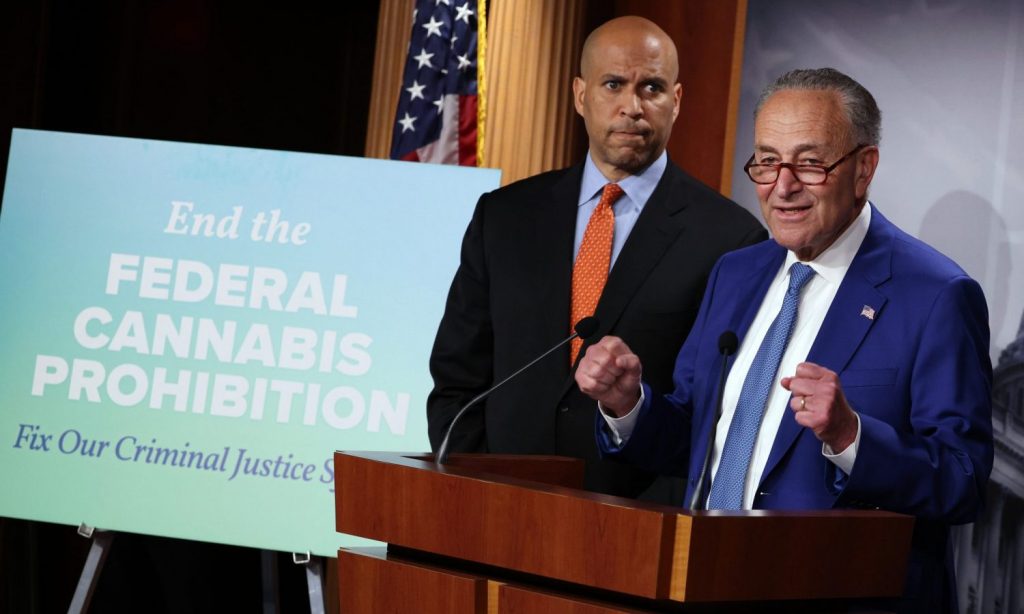
Dash asked Murthy if he supported, from a health perspective, the draft bill unveiled last week by Senator Majority Leader Chuck Schumer to legalize cannabis at the federal level. Murthy replied that, when discussing marijuana, science should be at the forefront.

RELATED: Sports Star Arrested For Ridiculous Amount Of Weed — And Other Reasons We Need To Legalize Marijuana

“I do think that, in terms of our approach to marijuana, I worry when we don’t let science guide our process in policy-making,” Murthy said.

“And we know the science tells us that there are some benefits to marijuana from a medical perspective but there are also some harms that we have to consider—and we have to put those together as we think about the right policy.”

Murthy, the 19th and 21st Surgeon General who also served under President Obama, said he is concerned about the effort to change cannabis laws getting ahead of the science.

RELATED: Pete Buttigieg Says Incarceration Is Not The Answer To Drug Possession

“And as Surgeon General that’s my role, is to work with policymakers who work with members in the community and the general public to help people understand what science tells us and where there are gaps, to help fill those gaps with research and with honest inquiry,” he said.

In 2015, during his first term as Surgeon General under Obama, Murthy appeared to be open-minded about the possibility that cannabis could be beneficial as a treatment for various conditions. At the time, Murthy said in a television interview that “preliminary data showing that for certain medical conditions and symptoms, that marijuana can be helpful,” and that such information will likely drive legislation governing marijuana use.

President Biden?

Very shortly after the marijuana legalization draft bill was made public last Wednesday, White House press secretary Jen Psaki reiterated that President Joe Biden was still opposed to the reform although she added that the president would be “encouraged” by efforts to advance incremental reform such as decriminalizing possession, in that he pledged to do that while on the campaign trail.

This article originally appeared on Benzinga and has been reposted with permission.

My Cannabis Brand Was Shut Down By Instagram, Here’s How We Rebounded

Cannabis companies remain compliant on social media by framing themselves as a lifestyle brand.

By Andrew Ward

Cannabis companies have never had a stable relationship with social media. The tense status has made cannabis a bit scrappier regarding social marketing, coded language and geotagging.

However, all too often, brands still face shadow bans, suspensions and account deletions. Pot-focused social media platforms and advertising options have come online but haven’t gained traction like powerful platforms to date.

instagram chief says app is not listening in on you for targeted ads
Photo by Digitalpfade via Pixabay

A recent wave of suspensions, deletions and warnings came about on Instagram, with brands, marketers and journalists reporting similar issues. Depending on the source, the reason for the actions varies.

With the issue ongoing, cannabis social media experts offered tips on avoiding the issue and recovering an account.

Social Media Shut Down my Cannabis Business Account. Now, What Do I Do?

In late June, Cannaclusive found their account suspended by Instagram, a Facebook, Inc. Common Stock (NASDAQ: FBcompany.

Director of National Projects and Social Media, Kassia Graham, said this was the first time the company had an issue since launching in 2017.

RELATED: Cannabis And Sex: Two Things Social Media Doesn’t Want You To See

Graham thinks the ban may be the result of a popular post. She said the content, a 4/20-themed guide for finding brands through the company’s Inclusivebase tool, did not include sales links. She added that the ban might also have been because the company tagged accounts that previously had run-ins with Instagram.

“I just don’t get it,” Graham said of the rationale.

After several days of appeals and campaigning, Cannaclusive had their account restored. Since then, the company has posted a guide for other brands that find themselves in the same spot. Tips include:

  1. Backup followers using a third-party tool
  2. Download and backup data
  3. Have a file of all company documents, including business license, invoices, utility bills and other documents
  4. Submit a daily report about the account in violation
  5. Launch a “Bring us back campaign” similar to #FreeThePlant

Since the ban, Cannaclusive has continued using Instagram. They are also exploring additional ways to leverage their reach through existing newsletter and website efforts. Others have followed similar steps to restore their accounts.

hers all you need to know about tiktok the next big social media app
Photo by ROBIN WORRALL via Unsplash

Alice Moon is a cannabis marketing professional. In 2016, Instagram shut down her account of over 14,000 followers. She had her current account suspended again this summer. This time, she was advised by a colleague to wait 48 hours then submit an appeal. Instagram restored her account two hours after submitting the request.

How To Best Avoid A Social Media Ban For Cannabis

No clear solution exists beyond remaining as compliant as possible.

Moon believes her latest run-in was caused by verbiage, specifically “cannabis social media” in her headline. She’s since taken the title out and has refrained from posting cannabis content.

She and others agreed that cannabis companies remain compliant on social media by framing themselves as a lifestyle brand. Burns said that accounts looking to use social media as a conversion tool should instead consider forming emotional connections with followers.

Brett Fink, Managing Partner at GRTR has worked with various cannabis brands in the space. Before entering the market, he worked on special projects for Snap Inc (NYSE: SNAP).

RELATED: Social Media’s Effect On Cannabis Stocks

He advised brands to look at social media differently. “If you look at other brands that haven’t been pulled down, it basically is just a landing page for them,” he noted.

He touched on the importance of stories and reels as well. “Ephemerality is key to this because the stories are the things that don’t get flagged as much because they are basically a private page.”

study people wont swipe right on users with emojis in their bios
Photo by Minty via rawpixel.com

Moon suggests cannabis companies keep links out of their biographies, remove any location information and never use prominent cannabis hashtags.

“That is what their algorithm is picking up,” she cautioned.

Rather than sales and marketing material, Grasslands CMO Burns suggested focusing on behind-the-scenes looks and company values. He recommends focusing on Linktree, blogs, web content and experiential activations as more concrete ways of attracting and converting business.

“Social media is a very valuable tool, but it’s not the end-all, be-all,” he said adding that he found a remedy through Facebook company verification. Once verified, his company linked their Instagram to the account. The company also set up a Facebook advertiser account but never launched any ads, a practice that often gets cannabis bans shut down.

This article originally appeared on Benzinga and has been reposted with permission.

Don't Miss Your Weekly Dose of The Fresh Toast.

Stay informed with exclusive news briefs delivered directly to your inbox every Friday.

We respect your privacy. Unsubscribe anytime.