Thursday, May 7, 2026
Home Blog Page 392

Illinois Hits $109M In Marijuana Sales In March, Marking New Record

Illinois could generate over $1 billion in adult-use marijuana sales in 2021, resulting in substantial tax revenue.

By Jelena Martinovic

Illinois has hit another record in marijuana sales, surpassing $100 million in March.

According to the state Department of Financial and Professional Regulation, a total of 2,317,315 marijuana items worth $109,149,355 were sold over the period.

  • March sales have beaten February ones by over $28 million, and those in January by slightly over $20 million.
  • In March, the adult residents of the Praire State spent $75,744,092 on recreational cannabis products.
  • In addition, out-of-state resident sales amounted to $33,405,263.
  • On average, $3.5 million worth of cannabis was sold daily, Chicago Sun-Times reports.
Ahead Of Marijuana Legalization Cannabis Arrests Decrease In Illinois' Largest Suburbs
Photo by Pedro Lastra via Unsplash

Illinois could generate over $1 billion in adult-use marijuana sales in 2021, resulting in substantial tax revenue, Marijuana Moment writes.

RELATED: Analyst Projects $7B New York Cannabis Market

In the first six months of marijuana sales, following the legalization of recreational use on Jan. 1, 2020, Illinois’ marijuana tax revenue totaled $52 million.

In January, the state opted to support social justice initiatives with $31.5 million from cannabis tax revenue, including $28.3 million granted to service delivery and $3.1 million assigned to “assessment and planning initiatives.” The funds were provided to communities that suffered the consequences of the War on Drugs.

RELATED: These States Enter The Billion Dollar Cannabis Club For 2020

These grants are part of Illinois’ Restore, Reinvest, and Renew (R3) program. The initiative requires 25% of the marijuana tax revenue to end up in the fund.

This article originally appeared on Benzinga and has been reposted with permission.

Getting The Vaccine After Having COVID-19? Here’s What You Should Know

People who’ve suffered from COVID-19 might be wondering if their case is different when it comes to getting their immunization.

COVID-19 vaccines are on the move, getting into more and more arms with each passing day. Vaccines have been one of the best developments of 2021, offering light at the end of the tunnel that has been this whole pandemic. While eligibility is being granted to more people every week, those who’ve had COVID-19 are more likely to stop for a bit and think about the effects that the vaccine could have on their bodies. But what about getting the vaccine after having COVID-19? Where’s what you should know.

COVID-19 is a strange virus, affecting people in widely different ways. While some experienced the illness and made a full recovery, many are still coping with long term side effects. Should people who had COVID-19 still get their shot? Here’s what you should know:

Most people should get their shot

You Can Still Test Positive For COVID-19 After Getting The Vaccine
Photo by Gustavo Fring via Pexels

RELATED: What’s The Deal With The AstraZeneca Vaccine?

Even if you’ve already been infected with COVID-19, you should still be able to get the shot and immunity. People who’ve had COVID-19 may already have some protection from the virus, but it’s important to pair that with the vaccine since that ensures there’s full and rounded out protection, one that was designed in a lab and not subject to your body’s specific response.

Studies suggest that people who’ve had COVID-19 may only need one shot to be fully immunized when compared to others. There’s no reason to think that having the disease and later getting the shot would result in any negative side effects.

Timing does matter

Sleep Well With Weed: How To Use marijuana to fall asleep effectively
Photo by Acharaporn Kamornboonyarush via Pexels

People who’ve suffered from COVID-19 should have timing in mind when it comes to getting their vaccine. If your COVID-19 case was recent, you should wait between 90 to 120 days in order to get your immunization. Your protection against COVID-19 is said to last for this amount of time, making a vaccine not necessary. Once this amount of time has passed, a vaccine can provide a more robust protection.

People who’ve had COVID-19 and take their vaccines too soon might experience some adverse reactions, being twice as likely than others to experience adverse reactions when exposed to the vaccine. This is likely due to the fact that they still have the virus in their systems.

Vaccines could help COVID-19 long haulers

Why Do We Procrastinate Sleep Even When We're Tired?
Photo by rawpixel.com

RELATED: COVID-19 Vaccine: Why Are Women Experiencing Worse Side Effects Than Men?

COVID-19 long-haulers who struggle with symptoms like fatigue, headaches, shortness of breath and more could experience extra benefits when exposed to the vaccine. “There are some emerging reports of some patients’ symptoms improving after vaccination,” Dr. Hana Akselrod M.D. told Bustle. Explaining the issue further, Dr. Akslerod says that the COVID-19 vaccine might redirect the body’s initial immune response to the virus while flushing the remainders of the original infection that might still be producing those symptoms.

Weed in Candy Bags Sign of Bad Policy

Florida officials are on “high alert” as THC edibles “are making their way into the hands of children and teens.” Of particular concern is the fact that the goods in question “bear a striking resemblance to ordinary candy.”

An image shared by the Charlotte Country Sheriff’s Office shows bags prominently featuring the trademarks of well-known candy brands such as Skittles and Nerds. At first glance, these items look just like genuine products. However, irregularities emerge upon closer examination. For instance, a “Cheetos” bag has a small label indicating THC content, as well as a triangle with a cannabis leaf.

?Hey Parents!

Without looking closely, you would never know that these candies, that bear a striking resemblance to…

Posted by Charlotte County Sheriff’s Office on Tuesday, March 16, 2021

Given these telltale signs, it is reasonable to assume that the target market for these products is not the regular consumer of the candy or snacks in question. The main purpose of the infringements appears to be the concealment of the true nature of the products from parents, teachers, and other authority figures. Of course, there are still risks that someone will ingest these THC edibles by accident. For instance, a person might recognize the Skittles brand, but not know what real Skittles look like. Moreover, some consumers might conclude that brands like Cheetos and Nerds are entering the cannabis market. In fact, Frito-Lay (the makers of Cheetos) felt the need to clarify that the company “does not manufacture edible cannabis snack products and any packaging containing THC claims is not associated with our company or brands.”

RELATED: Unlicensed Shops in NYC Are Doing Better Than The Naked Cowboy

CBD Edibles Not All They Claim To Be
Photo by SageElyse/Getty Images

The use of iconic brands’ trademarks is likely to trigger alarms for many consumers. However, companies in the cannabis space arguably face greater risks. Consider a scenario where THC edibles of unknown provenance were introduced in bags that looked like those used by a legitimate company that sells hemp CBD edibles. In that case, the risk of confusion would be much greater than where famous brands are infringed, yet the hemp CBD company will have less protection against counterfeits than a snack maker like Frito-Lay. As it notes in its cannabis guidance, the United States Patent and Trademark Office (USPTO) “refuses to register marks for goods and/or services that show a clear violation of federal law, regardless of the legality of the activities under state law.” That includes hemp CBD edibles, since, as USPTO explains,

The use in foods or dietary supplements of a drug or substance undergoing clinical investigations without approval of the U.S. Food and Drug Administration (FDA) violates the FDCA [Federal Food, Drug, and Cosmetic Act]. 21 U.S.C. §331(ll); see also 21 U.S.C. §321(ff) (indicating that a dietary supplement is deemed to be a food within the meaning of the FDCA). The 2018 Farm Bill explicitly preserved FDA’s authority to regulate products containing cannabis or cannabis-derived compounds under the FDCA. CBD is an active ingredient in FDA-approved drugs and is a substance undergoing clinical investigations.

It can be argued that the public interest is not well-served by the USPTO’s current stance. Ultimately, a product subject to regulation by a state government is much less likely to present safety issues than one subject to no regulation at all. At the very least, cannabis companies operating legally at the state level should be afforded some legal tools to defend themselves against counterfeiters of cannabis products, if only because by doing so they are also helping protect consumers.

Fred Rocafort is a former diplomat who joined Harris Bricken after more than a decade of international legal experience, primarily in China, Vietnam, and Thailand. This article originally appeared on the Canna Law Blog and has been reposted with permission.

Can Marijuana Help With High Blood Pressure

Cannabis has proven itself a vital and essential aspect of the health sector because of the abundance of medicinal properties it embodies.

Two things are rising at the same time in America: blood pressure and cannabis legalization. More states in America are legalizing cannabis because there is an increased amount of data on its benefits and medicinal properties. But hypertension is also increasing in America, with more people experiencing blood pressure issues yearly.

Does cannabis lower blood pressure? There are no definite answers to this question because there is so much to understand about the impact of cannabis on your blood pressure.

High blood pressure issues

The high blood pressure crisis in is going through the roof. One survey shows that one in three adults deal with hypertension. Do you know that high blood pressure contributes to cardiovascular disease if it is left unmanaged? A person could face the risk of stroke, heart failure, and heart attack. All of these risks explain why people are actively seeking solutions.

Unlike most health conditions, high blood pressure is caused by a variety of factors, including:

  • A poor diet
  • Excessive alcohol intake
  • Stress
  • Physical inactivity, etc.

Consuming small amounts of marijuana gives people a deep feeling of relaxation and calmness, which makes a lot of people wonder if it affects blood pressure. Can it lower blood pressure, or can it manage it?

Does marijuana have an impact on high blood pressure? 

The answer is multi-faceted because there are certain factors to consider. Some important factors include:

  • The kind of cannabis strain used.
  • The person’s underlying health condition
  • The person’s experience with THC
  • The way cannabis is administered

A recent study was conducted to shed light on this subject. Two different strains were used: one strain was high in psychoactive cannabinoid THC while the other strain had higher levels of the non-intoxicating cannabinoid CBD.

When participants took the cannabis strains, the THC made them experience an increase in heart rate and a decrease in blood pressure. Some others used THC while lying down and had slightly elevated blood pressure, but when they stood up, their blood pressure dropped.

RELATED: What You Should Know About Cholesterol, Marijuana And CBD

The low blood pressure that happened while standing is called “Postural hypotension which is not good as it can cause the individual to feel faint. So the study by Dr. Melanie Bone suggests that the positive impact of cannabis on blood pressure happens when the person lies down while taking it and lies for a while before standing up.

CBD also relaxes the blood vessels and decreases anxiety which ends up lowering blood pressure. This experience with CBD for lowered blood pressure is more favorable because it is connected with reduced levels of anxiety.

Is Marijuana Use Risky For Your Heart?
Photo by Khwanchai Phanthong/EyeEm/Getty Images

Both THC and CBD can lower blood pressure in different ways, but based on recent research, neither CBD nor THC is a medical treatment for high blood pressure. So what’s the difference?

Well, the difference lies in understanding one of the root causes of high blood pressure: anxiety. Some people experience heightened blood pressure when they are anxious, worried, or full of fear. In that anxious, worrisome, and frightful state, their blood vessels start to contract and tighten, which may lead to a heart attack.

RELATED: Marijuana And Heart Attacks: What New Research Reveals

Now when they take cannabis in that state, the CBD relaxes those blood vessels such that the person lies down and feels relaxed, thus preventing the potential for high blood pressure. But this realization doesn’t mean that someone who has a long history of high blood pressure can suddenly start taking cannabis for healing.

If you have been dealing with high blood pressure for a long time with a challenging history, please always speak with your doctor and stick to your medication. You can take cannabis (with your doctor’s permission), but don’t expect instant relief.

Yes, cannabis can minimize your risks, reduce inflammation and decrease anxiety, thus keeping the blood vessels stable. But it is NOT a standardized treatment for high blood pressure yet.

Cardiovascular effects of cannabis 

Herat attack is often a result of unmanaged high blood pressure, so it poses the question, “Can weed cause a heart attack?” Well, we have first to understand the distinguishing features between cannabinoids THC and CBD.

CBD oils contain trace levels of THC, which varies in the effects it has on cardiovascular health. CBD is beneficial for the heart as it treats cardiovascular disorders. CBD reduces inflammation which is a condition that damages the blood vessels, arteries, and other vital organs.

RELATED: Demystifying Marijuana And Heart Health

However, the way you take it also matters. For example, if you apply CBD oil to your skin, you will enjoy the benefits it offers the skin. So if you want the CBD to impact your heart and improve heart health, you will have to take it orally or through vaping.

Smoking cannabis while dealing with heart issues is not advised because smoke contains carbon monoxide. The gas will bind the hemoglobin in your red blood cells ad displaces oxygen from it. So your body’s tissues have less oxygen going to the heart, which can lead to a heart attack.

Lower Blood Pressure
Photo by frolicsomepl via Pixabay

This realization is the reason why people with heart diseases or high blood pressure quit smoking. Hence the reason other methods of taking cannabis are recommended: sublingual tinctures and edibles are also healthier alternatives to smoking, especially for individuals with heart problems.

Remember to monitor your blood pressure regularly and report any sign of dizziness you may feel while taking cannabis to manage high blood pressure. If you inform your doctor early enough, he/she will adjust your cannabis doses to match your needs.

Bottom line 

Cannabis has proven itself a vital and essential aspect of the health sector because of the abundance of medicinal properties it embodies. Yes, you can use CBD to manage your blood pressure levels, but it is not meant to act as a particular drug.

More so, if you have a long history of blood pressure challenges and vulnerability to heart attack, you may have to discuss with a doctor first before taking cannabis. The way you take cannabis also matters as it determines how effective or ineffective the regimen will be. Don’t smoke it, and always seek a doctor’s approval before using it.

This article was created in partnership with Cannabis.net

How To Talk To Someone Hesitant Of Taking The COVID-19 Vaccine

0

Vaccine hesitancy might be a bigger problem than anti-vaxxers. Here’s how to talk to someone you know who is experiencing this.

International authorities and medical experts have been adamant about the COVID-19 vaccine’s safety. While it’s not something related to political parties, it’s a topic that has been exploited and manipulated. A loud minority of people don’t trust the vaccine and are tainting the opinions of many who may believe in them, but who might want to wait to get the shot after more of the population has received it.

Vaccine hesitancy puts everyone at risk, preventing herd immunity and slowing down the vaccination process significantly. Kolina Koltai, who studies conspiracy theories at the University of Washington, spoke with The Atlantic and explained this problem further. “I call it vaccine dissent,” she said. “And it’s way more complicated than being anti-vaccine. It goes from highly educated parents who are interested in holistic, naturalistic child-rearing to conspiracy theorists who want to abolish vaccines entirely.”

This problem envelops people who are uninterested in the vaccine, who are afraid of it, who mistrust the government, etc. There’s no one way of addressing it, but there are things that can help you establish better communication with these people, hopefully changing some opinions on the way.

Consider what makes them hesitant

Here's What You Can Do If You Disagree With Loved Ones On Social Distancing Guidelines
Photo by Anna Shvets via Pexels

RELATED: What’s The Deal With The AstraZeneca Vaccine?

Vaccine hesitancy can have many roots, and it’s important to consider them before trying to change someone’s mind. Try to have a conversation with people, choosing your words and direction depending on their reasoning. If they think COVID-19 is a virus like the flu, try your best to remain calm and illustrate how this is a situation that has only happened once before, 100 years ago. If they’re afraid of the side effects, focus on the large amounts of people who’ve been successfully vaccinated over the minority that has reported side effects. It’s unlikely that you’ll change someone’s mind in one conversation, so try your best to be patient.

Don’t talk down to anyone

burnout is now an official medical condition
Photo via rawpixel.com

Talking to people with different opinions on politics and nowadays vaccines can be a highly stressful topic, one that can quickly transform into a combative situation. If you want to preserve a relationship or have a hand in changing someone’s mind, it’s important to resist this impulse. Just like you, these people might have strong opinions on something, and likely believe that they’re right.

Pick your battles

Photo by LoboStudioHamburg via Pixabay

RELATED: Dr. Fauci Says You Should Avoid Doing This Right Now

Lastly, it’s important to know who to have these conversations with. Don’t waste your time trying to convince a bot on Twitter to reconsider their stance on vaccines. Spend your energy on things you care about, that you actually have a chance in influencing, whether that’s a fearful or hesitant friend or family member.

Biden’s Anti-Marijuana Stance Is Perfect For America Right Now

We should be welcoming the president’s anti-marijuana stance. It is the perfect publicity for America as it inches its way out of pot prohibition.

The cannabis community is miffed as all get out at President Joe Biden over his latest drug war shenanigans. Although he gave them a smidgen of hope during his campaign that they’d see some kind of modest marijuana reform when he took office, all they keep getting is the same run-around anti-marijuana malarkey that they’ve experienced for decades.

The president is still in his first 100 days, and already he’s fired a slew of staffers for using marijuana (reminder: it’s legal to grow, possess and use in Washington D.C.), and there’s been no indication that he’s lifted a finger to create more research opportunities, legalize for medicinal use, and eliminate criminal penalties. Mind you, Biden included all of these matters in his campaign platform early last year.

Meanwhile, the polls show that Americans are ready for marijuana to be legalized nationwide. The latest poll from Gallup shows 68% believe weed should be taxed and regulated like alcohol and tobacco. Other polls have demonstrated similar results. It has been said that once public opinion ranks favorably at 65% or above for several years, Congress would be forced to at least give the issue some consideration. And it appears lawmakers are finally going to examine the possibilities. 

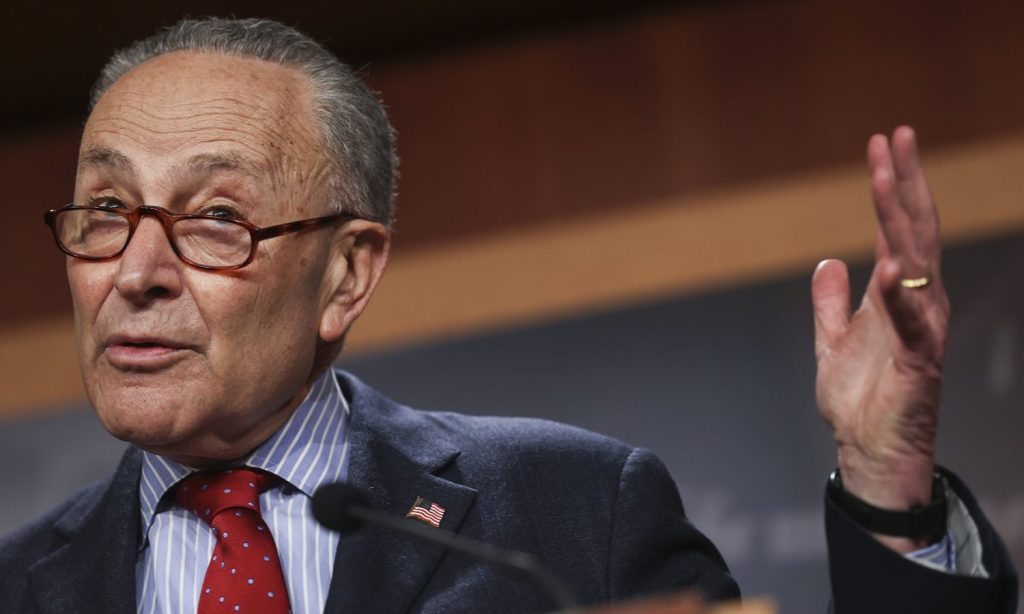
Senate Majority Leader Chuck Schumer and two other senators plan to introduce legislation soon designed to end marijuana prohibition in the United States once and for all. The problem is President Biden never signed on to support widespread cannabis reform. In fact, Senate Democrats and Biden aren’t at all on the same page when it comes to how national marijuana reform should be designed. The Dems want to make it fully legal at the federal level, while Biden only wants to decriminalize. 

You see, pot makes Biden nervous. 

A recent video from a former member of Biden’s criminal justice task force claims that he refused to make federal marijuana legalization part of his campaign for fear that it would cost him the election. He maintained this attitude even though the task force showed him that supporting legal weed would actually help him. “Biden wanted to commit more study,” the video states.

Still, considering the outpouring of support for legalization in the latest polls, Biden could be forced to change his tune — and fast. Either that or he might actually risk losing his bid for reelection. 

It is for this reason that we should be welcoming the president’s anti-marijuana stance. It is the perfect publicity for America as it inches its way out of pot prohibition. Sure, there are plenty of legislative cobwebs that will make it difficult to pass this kind of far-reaching reform in 2021 — even with Democrats holding the majority — but the more national jibber-jabber on this issue, the better.

Will We Finally Have Free Trade For Marijuana After Legalization?
Photo by Aleksandr_Kravtsov/GettyImages

Right now, understanding that Biden’s legislative agenda is crippled by the filibuster, Senate Democrats are urging Republicans to work with them. If they don’t, the Democrats are threatening to leave the filibuster in pieces out behind the Capitol. Republican leadership has sworn that any move to amend or kill the filibuster will lead to a scorched Earth Senate. Yet, Democrats know that legislative destruction means that Republicans won’t be able to fulfill any of their agenda either. So it’s either deadlock, or adjustments that allow both parties to get some work done.

If the negotiations were to go in the favor of Democrats, marijuana reform could persevere this year. Biden might even support it. 

RELATED: When Will Marijuana-Hating Mitch McConnell Retire?

The Biden Administration halfway admitted last week that they might be open to allowing marijuana to be made fully legal. During a recent press briefing, when asked about the Biden pot firings, Press Secretary Jen Psaki said, “So that isn’t about anyone’s personal point of view—it’s about working through the process, the history and modernizing and taking steps to address the fact that marijuana is legal in a number of states across the country. It is still illegal federally.”

Senate Democrats And President Biden Not On Same Page With Cannabis Reform
Photo by Drew Angerer/Getty Images

So, if Congress could just get a marijuana bill in front of President Biden that would change the law, he would surely sign it, right? If he didn’t, the pro-pot beasts, which are breeding like rabbits, would emerge to call him out. It would be huge news. The fact that his cannabis-related firings have made headlines in every major news outlet over the past few weeks shows that more of the nation find his latest actions a bit antiquated. If Senate Democrats can get a marijuana measure through both houses and to President Biden’s desk for a signature, the pressure will be on him to sign it. Biden is already feeling the heat on this issue.

RELATED: Senate Democrats And President Biden Not On Same Page With Cannabis Reform

It is conceivable that he will be soon forced to really listen to his roundtable and get a grip on the realities of the marijuana issue in this day and age. Of course, the more negative press he gets on this subject as his party prepares to go full steam ahead on it, the more he will have to defend his belief in maintaining prohibition. More than half the nation has legalized for one reason or another and while there might be some downsides, none are as tragic as continuing to uphold prohibition for another eighty years.

And let’s face it, after Biden spaced his thoughts during his first formal press conference last week, there’s a good chance that he doesn’t remember ever having an anti-marijuana stance in the first place.

Should New Moms Stop Using Cannabis?

0

Postpartum anxiety and depression are common issues that trouble moms after the joy of birth. CBD and marijuana have been shown to be effective in dealing with these conditions.

The global acceptance being enjoyed by cannabis has increased the demography of people that use the medicinal herb. Gone are the days when those who use cannabis are known as stoners and potheads, now, professionals, elites, and parents all use cannabis for different reasons.

The increase in the number of legal markets has also resulted in more women using cannabis for a myriads of reasons. With the peculiarities of women as mothers and the scenario of pregnancy, different questions are being asked on how marijuana and its cannabinoids can be beneficial to moms especially after pregnancy.

General use of marijuana and CBD by women

Marijuana has been beneficial to women in a number of ways. Aside from the euphoric high promoted by THC, marijuana strains high in CBD help to promote calm and relaxation from stress, relief from pain and overall wellness. CBD oils and tinctures have also been used to reduce inflammation, promote quality sleep and boost mood. These are the common effects of CBD and marijuana that are well-known, however, works of research are ongoing into the possible usefulness and effectiveness of CBD during the postpartum period. Dr. Marina Yuabova FNP, DN, and an Associate Professor in Health and Science Department at CUNY is spearheading an inquiry into this application for CBD lotions and creams.

CBD has already been properly established as a remedy for pain. The incorporation of medical marijuana in a number of states has also promoted the reality of CBD as a substitute for opioids. Some studies are tapered along this line as they seek the full incorporation of CBD use for pain as a solution to the opioid epidemic. This was supported by a recent study by the University of Washington where the usefulness of CBD in decreasing overdose and dependence risk of opiates was weighed. Some other studies however are not in total agreement with this position as they claim CBD still has a long way to go before it becomes an alternative to opiates

Marijuana and CBD in Postpartum  Depression

The postpartum period for women is very delicate as it comes with a myriad of emotional and physical strains on the body. The joy of a given birth after about 9 months of pregnancy truly is a sight for every mother but some hormonal effects take place after birth that are not so palatable. Anxiety and depression are two of the major concerns that plague the postpartum period which is why different studies have been carried out on the effect of CBD oil and marijuana to remedy the situation.

RELATED: The Impact Cannabis Use During Pregnancy And Breastfeeding Has On Newborns

Marijuana for example is known to be effective in dealing with depression thanks to the entourage effect of THC, CBD, and other cannabinoids in the plant matrix. This has led to its use in a number of mental health disorders like PTSD and major depression. This serves as the basis for inquiry into its use for postpartum depression but the available research is still limited in terms of accurate dosage and frequency of use to attain this effect. Another worrisome angle is the fact that such mothers can also develop apathy and lack of motivation by using marijuana making the use of marijuana very complex for postpartum depression.

Marijuana Effects On Pregnancy and Breastfeeding
Photo by Wes Hicks via Unsplash

CBD oil on the other hand is more directed towards dealing with issues of anxiety. Though an extract from marijuana itself, isolated CBD has a better spectrum of activity in terms of promoting relaxation and calmness. This is the basis for which CBD oil has been purported as a solution to anxiety problems that plague some mothers after giving birth.

RELATED: After Baby And Beyond: How CBD And Marijuana Can Help Moms

Unfortunately, the lack of concrete clinical evidence and concrete research is still limiting the use of CBD for this purpose on a large scale. It should  be noted that some will also argue that this is hormonally driven thus making the use of CBD seem less effective. Though iy may be valid, these questions can only be answered with concrete clinical studies.

Arguments for and against marijuana and CBD

Breastfeeding women are naturally advised to stay off marijuana products because 10 to 30% of the concentration of THC in the body is delivered into breast milk. This is then aggravated by the fact that some studies have shown that THC in infants can give rise to issues like gross motor delay in children. CBD oil on the other hand is less contraindicated because it does not sip into breast milk and it has not been linked to dependence or abuse. One major issue that hangs over the head of CBD oil use is the production process as some are known to contain residues of pesticides and extraction materials.

Photo by rawpixel.com

The need for more studies and extensive works of research

The lack of sufficient medical research also limits how much marijuana and CBD oil can be used to help mothers dealing with postpartum anxiety and depression. The absence of results on interaction between marijuana products and prescription drugs like antidepressants limits the scope of medical recommendations that can be offered. With so many unknown variables and different pointers for and against the use of marijuana and CBD oil for lactating mothers due to their infants, it is hard to draw a concrete conclusion. One thing is for sure, there is a need for more studies to show how CBD oil or marijuana can be used to help women dealing with postpartum issues.

RELATED: Here’s What Pregnant And Breastfeeding Women Need To Know About CBD

Another issue that is limiting this scope of CBD and marijuana use is that many women are still reserved to discuss cannabis use with their physicians. Such reports are important as they serve as anecdotal evidence to help physicians understand the full scope of the role CBD and marijuana play with mothers having postpartum depression.

Bottom line

Postpartum anxiety and depression are common issues that trouble moms after the joy of birth. Though hormonal, the usefulness of CBD and marijuana in dealing with similar conditions shows it can also be effective in this case. With more studies and detailed research, science is bound to make headway on how CBD and marijuana can be used to alleviate the problems of postpartum anxiety and depression.

This article originally appeared on Cannabis.net and has been reposted with permission.

5 TikTok Spring Cleaning Hacks

0

Spring cleaning is upon us. Here are some vital TikTok shortcuts to make it a little less dreadful.

Spring is here, which, in addition to being outside more, means less puffy jackets and more warm weather, blooming flowers and vaccines. Also spring cleaning, an annoying yet intensely rejuvenating experience for some.

Much like showering when you were little, once you get started with this yearly task, it’s kind of hard to stop. Plus, unlike last year, we actually have time to clean this season, instead of hunting down hand sanitizer and toilet paper. Here are 5 TikTok spring cleaning hacks to get you through:

Soak your oven racks

@mama_mila_Love these hacks #hack #momsoftiktok #cleaning #springcleaning #lifehack #kitchenhacks #kitchentips #tipsandtricks♬ Hold On – Moguai,Cheat Codes

While attentive cleaners will periodically scrub their oven racks, the majority of us forget about them until our oven starts to smell like something is burning. Soak your racks and solve the problem quickly.

Give new life to your old mattress

@lesliezimmerman8Step 1: wash your bedding!!! #quaranCLEAN #springcleaning #foryou #hack♬ So Fresh, So Clean – OutKast

RELATED: TikTok Is Filled With Mental Health Advice — Here’s Why You Should Be Wary

Mattresses are expensive. Buying a new one only happens about once every decade. Still, it’s important to clean them to maintain their lifespan. Spraying your mattress with white wine vinegar and baking soda will clean it all up. To sop up the water, simply use your vacuum.

Clean your oven and microwave with minimum effort

@mama_mila_Oven cleaning made easy ✨ follow for more home tips and tricks ✨ #cleaningtiktok #cleaninghacks #homehacks #homerefresh #cleaningtips♬ I’m So Pretty – chunkymonkeeyy

A mixture of soda, dish soap and water is capable of cleaning up your microwave and oven with minimum effort. No more scrubbing enclosed smelly spaces.

Eliminate container stains

@cleaningfevermuch more efficient! Also happy Halloween ? stay safe! #cleaningtok #cleaningtiktok #cleantok #germs #fyp #foryoupage♬ WAP x For The Night – carneyval

RELATED: Why CBD Companies Are Sprung On TikTok

Container stains are smelly and ugly, but they can be solved with a soak containing the right ingredients. Here’s how to do it.

Finally learn how to fold towels

@vaneamaro91#crucialcatch #smallbusiness #housekeeper #byvanesa #cleaningtiktok #cleaninghack #dontbenasty #cleanfreak♬ sonido original – Vanesa Amaro ♥️

Lastly, this isn’t limited to spring cleaning but it’s a great skill to have in your life, learn how to fold your towels like spa towels. Who says no to that?

Not All CBD Topicals Are Treated Equal

The term “topical products” refers to several categories of products, namely, “cosmetics” and “OTC drug products,” which are regulated very differently under the FDA.

Last week, the Food and Drug Administration (“FDA”) released its latest round of warning letters to “cannabidiol” (“CBD”) companies. In letters dated March 15 and March 18, the FDA took issue with the sale and marketing of topicals commonly known as  “over-the-counter” (“OTC”) (i.e., non-prescription) drug products that listed CBD as an “inactive ingredient,” yet represented the substance as having purported pharmacological properties, such as relief pain.

Although this latest FDA’s enforcement action is consistent with previously issued warning letters, all of which were triggered by the use of unsubstantiated medical claims (see herehere and here for some examples), this latest round of warning letters also suggest that the agency strongly disapproves of the use of CBD in this category of topicals. Specifically, the FDA deemed the OTC drug products infused with CBD as “unapproved new drugs” because these products were not reviewed and approved for their safety and effectiveness before being introduced in interstate commerce and because they were not manufactured in compliance with applicable current good manufacturing practices (cGMPs).

Here's What You Should Know About CBD Topicals
Photo by vadimguzhva/Getty Images

If you follow our blog, you have read us explain that “topical products,” more precisely “cosmetics,” are the least risky category of products with which CBD may be infused, so you may wonder why the FDA now takes strong issue with these products.

The reason is simple: the term “topical products” refers to several categories of products, namely, “cosmetics” and “OTC drug products,” which are regulated very differently under the FDCA, and thus, by the FDA. The following is a brief summary of these regulatory differences.

Cosmetics

Cosmetics are products intended to be applied to the human body for cleansing, beautifying, promoting attractiveness, or altering the appearance, except for soap which is treated differently.

RELATED: EU Adds CBD To Its List Of Legal Cosmetic Ingredients

Unlike foods, dietary supplements, and drugs, cosmetics are not subject to pre-market approval. Instead, the FDA relies on consumer complaints to monitor this self-policed industry – for example, recalls of cosmetics are voluntary actions taken by manufacturers or distributors.

pink and black makeup brush set
Photo by pmv chamara via Unsplash

RELATED: CBD Cosmetics: Unregulated, Yes. Risk-Free, No.

Nevertheless, some federal laws and regulations apply to cosmetics marketed in interstate commerce. Both the FDCA and the Fair Packaging and Labeling Act (“FPLA”) mandate that cosmetics be safe and properly labeled. You can read more on these requirements here.

OTC Drug Products

OTC drug products are drugs that are safe and effective for use by the general public without seeking treatment by a health professional. Unlike cosmetics, OTC drug products are more heavily regulated by the FDA; they must be generally recognized as safe and effective (“GRASE”) before they may be lawfully sold and marketed in interstate commerce.

OTC products that conform with a final OTC drug monograph – monographs are lists of ingredients, doses, formulations and labeling that have been reviewed and approved by the FDA – may be marketed without further FDA review. However, new OTC products that do not conform to a final monograph must be reviewed through the FDA’s “New Drug Application” (“NDA”) process to assess their safety and efficacy before they may be lawfully introduced in interstate commerce.

RELATED: Largest Human Trial To Date Will Review Safety Of Full Spectrum Hemp Products

Given the regulatory differences between cosmetics and OTC drug products, it is clearer why the FDA took such a strong position against the use of CBD in OTC drug products in its last round of warning letter. Indeed, to date, CBD has not been approved as an active or inactive OTC ingredient by the FDA – in other words, CBD does not conform with a final monograph – therefore, CBD cannot be lawfully sold and marketed as an OTC drug product.

Although CBD companies manufacturing, selling, and marketing OTC drug products infused with CBD should be able to mitigate the risk of enforcement actions by refraining from making any medical claims (expressed or implied) about their products, they should understand the heightened level of risk associated with engaging with this particular category of products.

 is an attorney at Harris Bricken. This article was originally published on the Canna Law Blog and is reposted with permission.

Why Does Social Media Still Ban Cannabis?

While it may seem tempting to blast sales promotions and your new products online, stop. You can get red flagged or even have your account deactivated.

Anyone who handles the marketing or social media side for a cannabis business can tell you that social media is a huge pain in the @$$.

With ever-changing regulations and “Community Guidelines”, hemp and cannabis companies struggle with marketing. Advertising online is like walking on eggshells, you just never know when you’re going to get a shadow ban, which is when TikTok, Instagram, or Facebook suddenly hides your posts or restricts them from followers which you worked so hard to get organically.

Once your brand has been shadow banned, this leads to a significantly reduced interaction and reach. Worst of all, companies aren’t warned or given any formal notifications when they are shadow banned. In some cases, posts can even be deleted if the social media giants suddenly decide that they go against community guidelines.

And even worst of all, you can have your account deleted permanently if all these happen multiple times. Months, years even, of hard work online can all be wiped out without you knowing it.

But all of these risks haven’t stopped hemp and cannabis businesses from using these platforms to find their new customers, so even if Facebook and other social media giants don’t allow ads for cannabis products, they do hacks to work around the bans.

RELATED: Cannabis And Sex: Two Things Social Media Doesn’t Want You To See

Here’s what you need to know about the big 3 platforms to work around the bans:

Facebook: There is a differentiation between prohibited and restricted content, but for cannabis businesses, Facebook strictly prohibits the promotion of any drug or related products even if it’s a legal or recreational drug. For this reason, text and images can’t be included in ads. Federal restrictions also mean that cannabis companies can’t run ads including in states where the drug is legal. When you fail to comply with the advertising guidelines on Facebook, your ads will not only get shut down but you can face the risk of your account getting deleted.

study people wont swipe right on users with emojis in their bios
Photo by Minty via rawpixel.com

Twitter: Twitter states that “illegal drugs, recreational and herbal drugs, accessories associated with drug use, drug dispensaries, and depictions of hard drug use” are prohibited in its advertising policies under the Drugs and Drug Paraphernalia section.

Instagram: Since Facebook acquired Instagram in 2012, they apply the same kind of restrictive advertising policies which say, in many words, that there is no kind of advertising allowed for cannabis companies on the platform.

So what can be done to work around these?

Since cannabis businesses can’t advertise on social media, they have to resort to reaching their audiences organically the hard way – by creating amazing content. However, that has its own caveat: social media platforms limit the organic reach of cannabis posts BUT that doesn’t mean that you can’t reach a large audience; you just have to be clever in your strategy and always stay up to date with the changing restrictions.

Here’s what you can do:

Post educational content on cannabis: This type of content is almost guaranteed to be a sure hit because it gives value to your followers by educating them on topics that they care about. For example, cannabis brands can educate their customers by sharing informative and helpful articles about medicinal uses of the plant or how to use their product.

RELATED: Social Media Bans On CBD Ads Make No Sense

If your brand is just starting out online, it might take a few posts to see which topics strike a chord with your followers. After a while you can then identify which topics will get a good response from your audience. Just remember not to post sales promotions with educational content because this can cause your post to be removed or get red flagged; use other channels for sales promotions.

hers all you need to know about tiktok the next big social media app
Photo by ROBIN WORRALL via Unsplash

Diversify your channels: Don’t put all your eggs in one basket applies to cannabis marketing too. You’ll see greater success if you work with more platforms as long as you are strategic about your platforms to ensure that all posts align well with your brand mission. Additionally, study the psychographic and demographic profile of your target audience to determine which platforms you should be using. For example, industry news and corporate information on your brand are best shared on LinkedIn while educational posts can be shared on Facebook.

If you aren’t sure about which platforms will provide you the best engagement and results, then do some testing.

Videos: Video is one of the most engaging types of content on social media, just be sure that you are using some subtitles for people who watch videos with the sound off.

Brand ambassadors/Influencers: Partnering up with brand ambassadors or influencers is a popular and efficient way to reach new audiences. It’s a great way to organically grow your reach to the larger audiences of influential people.

Cannabis And Sex Two Things Social Media Doesn’t Want You To See
Photo by PhotoMIX Company from Pexels

Last but not least, if you have spare money to burn and don’t want to be bothered with the nitty gritty, you can always outsource your work to marketing agencies that are well-versed in the cannabis space.

RELATED: What Does Instagram’s Ban On Vaping Influencers Mean For Cannabis?

While it may seem tempting to blast sales promotions and your new products online, stop. You can get red flagged or even have your account deactivated. Remember that your followers want to patronize accounts that give them valuable content because truly valuable content stands out in a sea of many other cannabis brands that are already trying to do the same thing as you are.

People don’t want to be pitched to all the time. Don’t post images of the cannabis plant heavily since this won’t appeal to everyone (such as seniors who are looking for information) and this can also get your page red flagged.

Follow the best practices and eventually you’ll get the hang of what you should and shouldn’t do on social media to grow your business. Social media rules may never change, so it requires adaptability in part of businesses who want to succeed on their platform.

This article originally appeared on Cannabis.net and has been reposted with permission.

Don't Miss Your Weekly Dose of The Fresh Toast.

Stay informed with exclusive news briefs delivered directly to your inbox every Friday.

We respect your privacy. Unsubscribe anytime.