Sunday, June 14, 2026
Home Blog Page 466

Why What You Drink First Thing In The Morning Is So Important

0

What you drink in the mornings can have an impact on the rest of your day. Here’s what nutritionists have to say on the kind of drinks you should consume and avoid.

Morning routines are important, determining the outcome of your first hours of the day. Many factors influence your moods in the morning – your bedtime routine, how much you slept, your level of stress – but one thing that always helps is to figure out a morning set of behaviors that make you feel happy.

According to some nutrition experts, what you drink in the morning has some influence over the rest of your day, encouraging hydration, healthy blood pressure and more. The Huffington Post spoke with several nutritionists who provided them with their best answers as to morning drinks. Unsurprisingly, their first choice was water.

RELATED: 5 Foods That Will Energize Your Mornings

“You may not necessarily feel thirsty first thing in the morning, but drinking water can be a health habit that you prioritize to stay adequately hydrated throughout the day,” says nutritionist Vicki Shanta Retelny.
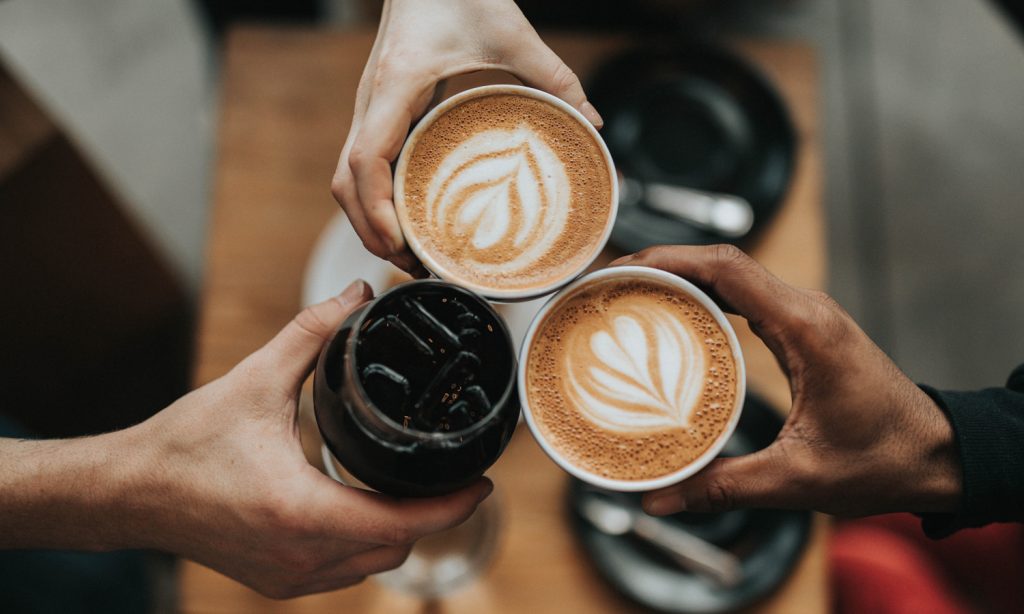
Should You Mix CBD With Your Morning Coffee?
Photo by Nathan Dumlao via Unsplash

Most nutritionists are also skeptical of fad drinks and detoxes, claiming that there are few scientific researches out there that can support these claims. They also warn against consuming drinks with a lot of calories or a lot of caffeine, since these can make your body crave them through the rest of the day and could even make your body feel heavy and likely to crash.

“The last thing you want to do is start the day off with a sugary, highly processed drink like soda or an energy drink that will flood your system with sugars. These may deliver a quick shot of energy, but that’s guaranteed to be followed by a significant mid-morning low,” says nutritionist Karen Ansel.

Despite the doubt that surrounds coffee and caffeine, most nutritionists agree on morning coffee, especially since it fosters the development of a morning routine that can boost productivity and make people’s mornings easier. Tea provides a similar effect with an added burst of benefits, being linked with diabetes management and prevention on people who have a morning tea drinking habit formed.

RELATED: 5 Things To Help You Wake Up And Feel Great

Mornings are sometimes difficult for people and they’re important. What you eat and what you drink having an influence over your mood and the kind of day you’ll have. If you start your day by consuming junk food and sweet drinks, you’re setting a high and unhealthy bar for your body the minute it’s conscious. Push these impulses until later and try to keep your mornings clean and simple.

How To Relax When You Don’t Know How

0

Trying to relax when you’re stressed isn’t easy to do, but here are some tips that can help.

Some people have an easy enough time pushing their worries aside, no matter the state of the world or how stressed they are. While this is a healthy and necessary coping method, it’s not something that everyone can do. Some people, no matter their age, gender or profession, simply have a tougher time allowing themselves to unwind.

Relaxing is a skill, one that we should all try to cultivate throughout our lives. But first, it’s important to ask, “What is relaxing, anyway?”

A lot of people think that relaxing is anything that they do that isn’t actively doing something. This means that scrolling on your phone after a full day of work could be seen as a relaxing activity, which could be true if you’re not the kind of person that gets stressed over social media. Before you try relaxing, you need to know what works for you. There are no wrong answers; relaxing can mean journaling, cooking, meditating, taking a bubble bath, reading, etc.. Once you know your sweet spot, here are some steps that can help you get started:

Plan for your relaxation

5 CBD Products For When You Need To Relax
Photo by cottonbro via Pexels

RELATED: How To Develop Routines That Reduce Anxiety

It may sound counterintuitive to plan relaxation, but it works in the same way that you schedule workouts, dates and phone calls. Carving out this time not only creates value, is forces you to dedicate a part of your day to you, regardless of how busy you are. The more you do this, the more you’ll realize that relaxation and productivity go hand-in-hand, feeding off one another and creating a more joyful you!

Create a routine

If you’re someone who’s working from home, a routine can make it easier for you to schedule time to relax. It’s common for work days to grow longer than expected, especially when we’re working from home. Scheduling in relaxation will help you shake off the feeling of obligation, at least for a moment. Going for a walk, meditating, and doing mindless chores can all signal that it’s time rest. Reinforce these cues by avoiding checking your email and thinking about pending work tasks.

Make your rest a priority

Watching for the sweet, relaxing brain tingles. | Photo by
skyNext/Shutterstock.com

RELATED: 3 Simple Ways To Practice Self-Care Throughout Your Day

Your rest should be as important as your other activities and you shouldn’t feel bad about using it or needing it. While most of us tend to frame our rest as a reward, this can make us feel like we have to work extra hard to get to do the things we want to do to relax. Ideally, we should find a way to balance the two. In the meantime, take your rest even if you still have pending chores and stuff to get done. Internalize that rest is necessary for you to feel productive and do good work.

Look for help

If your inability to relax is causing problems and making you feel exhausted, ask for help. Try to find a therapist or seek the advice of a friend. Your problem might be more complex than feeling like you’re unable to relax; once you know why you’re behaving this way, you’ll have a path you can follow that will help you get to where you want to get.

Top 5 Fresh Toast Stories Of The Week: Sept. 25, 2020

0

ICYMI: Here are the headlines making news this week on The Fresh Toast.

What you drink in the mornings can have an impact on the rest of your day, and nutritionists are chiming in on what to avoid; With no end in sight to pandemic-driven demand, the ascent of cannabis-inspired care packages is poised to continue its current trajectory; and new data breaks down how millennials are spending their money on marijuana.

Let’s dive into these stories and more as we round up the top five headlines on The Fresh Toast this week:

Why What You Drink First Thing In The Morning Is So Important

A Deep Dive Into What Cannabis' THCA Can Do For You
Photo by rawpixel.com

Morning routines are crucial, determining the outcome of your first hours of the day. Many factors influence your moods in the morning — your bedtime routine, how much you slept, your level of stress — but one thing that always helps is to figure out a morning set of behaviors that make you feel happy.

According to some nutrition experts, what you drink in the morning has some influence over the rest of your day, encouraging hydration, healthy blood pressure and more. The Huffington Post spoke with several nutritionists who provided them with their best answers as to morning drinks. Unsurprisingly, their first choice was water.

Continue reading >>>

Cannabis Subscription Boxes Grow By 550%

brown gift box on white surface
Photo by Leone Venter via Unsplash

Weed-related subscriptions have jumped by an eye-popping 550% on the subscription box service Cratejoy during the pandemic, and box companies like Hemp Crate Co., Cure Crate, and The Stoney Babe Box are at the forefront of this surging popularity. Cratejoy offers subscription boxes for any enthusiasm, need, or DIY endeavor (current picks include lesson planning boxes to make in-home schooling less onerous and multiple iterations of the “date night” theme). COVID-19 has been a major driver of the subscription box boom, allowing Cratejoy and the weed companies it features to cash in on cannabis in a big way.

Continue reading >>>

This Is How Millennials Prefer To Consume Their Cannabis

three men and one woman laughing during daytime
Photo by Helena Lopes via Unsplash

A new report from analytics company Headset found millennials to be the biggest category for cannabis consumption in California and their overwhelming choice for form factor is smoking. The latest report on August sales read, “Millennial Males contributed to the most sales with 37.5% of the market share.” Millennials in general spent 43% of their money on flower, 9% on pre-rolls, and another 23% on vape pens. Making almost two-thirds of all purchases in the inhalant category.

Continue reading >>> 

Federal Courts Are Going Backward On Cannabis

closeup photo of gavel
Photo by Bill Oxford via Unsplash

A few weeks back, the Cannabis Law Institute invited me to discuss contract drafting for cannabis deals. A focal point for the panel was whether courts are willing to enforce cannabis contracts. The last time I had really looked at that issue was early 2019, when I wrote: Cannabis Dispute? Courts are Open. As the title indicates, my research (and our law firm’s experience) showed that both state and federal courts were generally open to resolving cannabis contract disputes at the time. And I assumed the trend had held. Unfortunately, it has not!

Continue reading >>>

The Link Between Cannabis And Autoimmune Diseases

close photo of woman's back
Photo by Romina Farías via Unsplash

Project CBD defines autoimmune diseases as “diseases in which your body’s defense system triggers an abnormal inflammatory response that causes damage to the body’s own tissues. Many conditions fall into this category, including multiple sclerosisCrohn’s disease, lupus, and celiac disease.

Symptoms may include fatigue, pain, swelling, fever, nausea, numbness, rashes, or hair loss.” These conditions are widespread with about 20% of the populations suffering from some sort of autoimmune disease, the majority of whom are female.

Continue reading >>>

How To Develop Routines That Reduce Anxiety

0

 Experts believe daily routines can reduce anxiety and improve your mental health. Here’s how to get started.

Anxiety is a highly fluctuating behavior, affecting people at random points in their lives. While some might experience strong bouts of it at different points in their lives, others wake up with some degree of anxiety every day, and have to learn how to function and manage it.

Patterns and routines are some of the most effective ways of coping with anxiety. These behaviors can help us prepare and avoid anxiety bouts, giving us a path to follow on days when we’re feeling particularly anxious, whether this is prompted by something going on in our lives or some chemical imbalance.

Dr. Steve Orma, a cognitive behavioral therapy (CBT) clinical psychologist, spoke with Headspace about the importance of routines, and how these can help treat a variety of mental health impairments, such as anxiety, bipolar disorder, ADHD, stress, and more. “To manage anxiety, you need to consistently check in with yourself about what you’re worrying about, then address it,” said Orma. “Just as we create routines with exercise for our physical bodies, we should do the same for our mental health. One way to do this is scheduling ‘thinking time’ to think through any problems or worries weighing on you instead of letting them build up.”

Routines provide a framework for you to do many things, from chores and office tasks, to waking up and going to bed. Any actions you tack onto a routine become more likely to happen when done repeatedly and preceded and followed by the same behaviors. “Once this becomes your normal routine, it’s easier to accomplish everything, because it becomes a habit,” explains Orma.

Here are some tips that can help you form routines to reduce anxiety:

Be realistic with your goals

5 healthy morning habits that are not healthy
Photo by rawpixel.com

RELATED: Why What You Drink First Thing In The Morning Is So Important

Start off slow, adding a simple habit to your morning or night routine that doesn’t alter much of your life. Having a glass of water when you first wake up may sound like a silly thing to do when it comes to anxiety management, but adopting this behavior can help you stay hydrated and encourage you to drink more throughout the day. Drinking water first thing in the morning has been correlated with a better mood and higher levels of energy. You can place a glass of water on your nightstand on the night before and have your coffee right after you drink it in the morning.

Make it enjoyable

5 Online Bookclubs To Join Now That You're Spending More Time At Home
Photo by Thought Catalog from Pexels

Try to find habits that you enjoy, that don’t demand much of your time and that are also calming and therapeutic, such as reading before bed or journaling in the mornings. The point of this whole thing is to manage your anxiety in a way that’s fun and that encourages you to be happier and more productive. They can also help you cut anxiety inducing and time consuming activities like checking your phone first thing in the morning and right before you go to sleep.

Forgive yourself

Journalist Sy Hersh Admits Smoking Weed With Eugene McCarthy, Jerry Brown
Photo by 6689062 via Pixabay

RELATED: 5 Ways To Prep For The Winter Blues

Routines are difficult, especially when you’re first trying to develop them. While it’s important to push yourself to do them even when you don’t want to, it’s okay to forgive yourself every now and then, either because you were feeling too lazy to commit or because you forgot about them.

Remember that your routines help your days run smoother, pushing you to workout and do healthy things at specific times instead of waiting around for when you feel like doing them. Once the habit settles in, it becomes much easier for you to remember these actions and for all of them to pile up. Without realizing it, you’ll have adopted a bunch of helpful behaviors that will reduce your anxiety and will make you feel better.

Study Finds Marijuana An Effective Migraines Treatment

Research about the benefits of cannabis use among migraine patients is slowly emerging, but more must be done to properly inform individuals about the use and dosage of medical marijuana.

Nearly 1 in 4 U.S. households and about a billion people worldwide suffer from migraines, according to the Migraine Research Foundation. But new data shows 30% of U.S. migraine patients have turned to cannabis for pain relief with 83% of them reporting improved symptoms.

Researchers used data collected through Healint’s Migraine Buddy, a global migraine tracking app that records the frequency and intensity of attacks, as well as sleep and dietary triggers. Patients used a variety of cannabis delivery methods, including smoking, vaping, edibles, and tinctures. None were shown to be more effective than others.

RELATED: Marijuana May Heal Migraines Better Than Prescription Drugs

“Cannabis is becoming a prominent treatment option for chronic pain patients, especially for migraineurs,” said Healint CEO and co-founder Francois Cadiou.

“Research about the benefits of cannabis use among migraine patients is slowly emerging, but more must be done to properly inform individuals about the use and dosage of medical marijuana to treat migraines.”

5 Ways To Beat A Hangover That Actually Work
Photo by fizkes/Getty Images

Several past studies back up these newest claims. Researchers behind a recent study published in the journal Brain Sciences found that sustained cannabis consumption led to decreased migraine frequency over time. “These findings indicate that medical cannabis results in long-term reduction of migraine frequency in >60% of treated patients and is associated with less disability and lower antimigraine medication intake.”

Similar research published last year in the Journal of Pain found inhaled cannabis reduced headache and migraine severity by half. And a study published earlier this year concluded that using cannabis with THC levels greater than 10% benefited patients the most, with 94% experiencing lowered pain levels within two hours of consumption.

RELATED: The Science Behind Marijuana And Migraines

“Migraines have a debilitating impact on tens of millions of Americans and, in many cases, are poorly addressed by conventional therapies,” said NORML Deputy Director Paul Armentano. “Therefore, it is not surprising to see a significant percentage of migraine sufferers turning to cannabis as a therapeutic option.

“Those that do so are consistently reporting it to be safe and effective at reducing both migraine symptoms and migraine frequency.”

3 Simple Ways To Practice Self-Care Throughout Your Day

0

Self-care is more important than ever. Here are some simple and effective ways to put it into practice and boost your mental health.

These days, when things are so stressful and difficult, there’s no limit to the amount of self-care activities we can practice. It’s just tough to remind ourselves to commit to them, especially since it’s easier to spend our free time scrolling through our phones.

Still, no matter how much life has changed over the past year, it’s important to carve space out for yourself. Going on workouts and eating healthy are worthy goals, yet ones that aren’t easy to comply with when going through a rough or busy time. Priroitzing yourself can be practiced when and wherever. Here are 3 simple ways to practice self-care throughout your day.

Meditate 

How Cannabis Can Help You Take Your Meditation Practice To The Next Level
Photo by Lua Valentia via Unsplash

Meditation can be practiced whenever you have some quiet and the ability to close your eyes and breathe deeply for a few minutes. If you live with roommates or with kids, the shower is the perfect space to do this, setting aside a couple of minutes where you can contemplate life in silence. Focus on the feel of the water and avoid turning on music or podcasts. Use this time to stay in the present, reconnect with yourself and let your feelings and thoughts roam.

Go outside

RELATED: 5 Ways To Prep For The Winter Blues

Sometimes what we need most, especially when feeling particularly stagnant, is to go out of our homes and hit the road. There’s no need to over complicate things by inviting friends over or finding a good spot to hike. Take a walk outside when feeling stuck at work, after eating a meal or as a way of getting some me time. Do anything that makes you happy, whether that’s reading a book, listening to music or talking with a friend. Just use this time to get outside and connect with yourself. This means avoiding scrolling through Instagram and looking at your phone when you should be practicing some mindfulness.

Avoid your phone

Photo by Matthew Henry via Burst

Again, one thing we could all do more of is to spend less time looking at our phones. Find a time of day when you don’t need it, like when you’re focused on something, such as reading, stretching or watching a show. Put your phone down near you or keep it out of sight completely. While our world demands us to be constantly connected, when you’re at home, there’s no need to spend all of your time there. Your anxiety levels will dramatically decrease by limiting your screen time.

Why Cannabis Juicing Can Be Good For You

Some people report a dramatic change after just one serving of raw cannabis juice, while others may take four to eight weeks to see full results. 

Cold-press juices enable one to partake of the nutrients present in raw fruits, vegetables, and herbs that get lost once the products are heated or cooked. In a similar vein, consuming raw cannabis leaves and buds as a dietary aid increases the anti-oxidant and neuroprotective properties of this plant.

Raw cannabis can contain 500mg to 1,000 mg of non-psychoactive THCA, CBDA, and CBGA. In comparison, the same amount of cannabis once heated contains 10 mg THC. Also, as the THC in cannabis only becomes psychoactive when heated, consuming raw cannabis allows one to get the benefits of the plant in a non-intoxicating way.  

In particular, raw cannabis appears to be particularly beneficial in treating inflammation and autoimmune disease. As reported by Project CBD, “Unheated CBDA and unheated THCA (THC-acid) both have medicinal attributes, but there has been comparatively little scientific research into cannabinoid acids.” Hence, while the anecdotal accounts about cannabis’s benefits as a dietary supplement look very promising, further scientific research is needed. 

RELATED: The Awesome Health Benefits Of Raw Cannabis Explained

As with any other cannabis product, results vary according to an individual’s unique endocannabinoid system. Some people report a dramatic change after just one serving of raw cannabis juice, while others may take four to eight weeks to see full results. 

Also, juicing is not for everyone. Speak with a medical doctor before starting a cannabis juicing routine if one has any pre-existing medical conditions. People at potential risk include patients with kidney or gallbladder problems, as well as those taking blood-thinning drugs or medications that can be blocked by pomegranate or grapefruit juice. 

Photo by Jose Soriano via Unsplash

Cannabis juicing tips 

Odds are local dispensaries will not carry fresh leaves and buds. More dispensaries are carrying clones, so growing cannabis at home is becoming a viable option in those states where home grows are legal. 

Look for fresh organic cannabis plants grown without pesticides. Store leaves and buds in vegetable bags placed in the freezer or refrigerator to keep them fresh if not using them immediately. 

RELATED: 3 Top Reasons Why Cannabis Is A Powerful Superfood

Juice approximately 2 large buds and 15 to 20 large leaves. The buds should be clear not amber with the leaves picked while the plant is in the full flowering stage. 

Soak the leaves for approximately five minutes, then juice them in a cold-press juicer or blender. 

Adding freshly juiced organic fruits or vegetables to the cannabis juice will help cut the harsh taste of raw cannabis, and dilute the mixture so it goes down more smoothly.

Divide the cannabis juice into three servings and drink one serving with each meal. 

Store freshly juiced cannabis in a tightly sealed container and put in the refrigerator where it should last for up to three days. 

Vermont Is This Close To Legalizing Recreational Marijuana Sales

A new measure would prioritize minorities, women, and those disproportionately affected by the War on Drugs for a marijuana business license.

A bill that would create a licensed recreational marijuana market in Vermont is headed to Gov. Phil Scott’s office. Residents could legally possess and consume marijuana for the past two years, but had no legal means to acquire it. This legislation would change that.

When Vermont Legislature introduced and passed cannabis legalization in 2018, the state became the first to end prohibition through lawmaker impetus instead of a ballot initiative led by advocates. However, Vermont lawmakers failed to create a legal system of cannabis sales in the process.

RELATED: GOP Voters Support Weed Decriminalization More Than Democratic Lawmakers

The new measure underwent a lengthy back-and-forth between the Vermont House and Senate. Following compromises by both sides, the bill passed each chamber and still requires Scott’s final approval. The Republican Governor hasn’t indicated whether he’ll sign the bill, though commented that lawmakers addressed many of his concerns and have “come a long ways.”

“Vermont legislators should be applauded for their hard work fine-tuning the cannabis regulation bill and sending it forward to the governor’s desk,” Matt Simon, New England political director at the Marijuana Policy Project, told The Fresh Toast. “This was a difficult compromise, but legislators worked hard to ensure that a wide range of concerns were addressed.”

Vermont Expected To Legalize Recreational Marijuana Sales
Photo by Andrew Worley via Unsplash

One such condition requested by Scott was roadside testing for driving under the influence of cannabis. The House proposed a roadside saliva test obtained with a warrant, which received approval from the Senate. Other notable aspects of the bill include a 20% total tax on all products, a 30% THC limit on flower and 60% THC on concentrated oils. A ban would be placed on flavored vape cartridges.

Minorities, women, and those disproportionately affected by the War on Drugs will receive priority for cannabis business licenses as part of the package.

RELATED: Could Legal Marijuana Fund Medicaid Programs? This Gov. Thinks So

“If Governor Scott signs S. 54 and S.234, Vermont will take the next critical steps towards truly fair and sensible cannabis policy,” said Laura Subin, director of the Vermont Coalition to Regulate Marijuana. “Tens of thousands of individuals—disproportionately Black and Brown people—will no longer bear the burden of criminal convictions for possessing small amounts of cannabis.”

She added, “Now is the time for Vermont to move forward.”

5 Things To Keep In Mind When Using Cannabis For Sleep

0

Cannabis and sleep go great together. Here’s a few things you should keep in mind when using the herb to help you rest.

Marijuana can be a great tool for sleep. Just talk to any friend who smokes weed at night or who found themselves nodding off in the middle of a party because the herb they smoked was a little too relaxing.

Anecdotal evidence from people with varying degrees of insomnia shows how effective marijuana can be for sleep by helping users feel relaxed and allowing them to achieve hours of uninterrupted rest.

Despite marijuana’s powerful sleep inducing effects, it’s important to understand that the relationship between cannabis and sleep isn’t as clear cut as so many believe it is.

Here are 5 things you should keep in mind when using marijuana as a sleep aid:

Dosage

Dosage, along with your level of experience with marijuana, matters when it comes to using the herb before bed. If you smoke too little, you might feel no effects. If you smoke too much, you might find yourself tossing and turning with weed-induced paranoia. If it’s your first time using marijuana for sleep, try your best to create a relaxing environment and avoid overstimulating yourself with too much screen time or alcohol. Pace yourself with your marijuana intake and be aware of your body and its cues; that way you’re better equipped to jump into bed once it feels right.

Method of consumption

Weed Edibles Have Sold Really Well During The Pandemic
Photo by Jonathan J. Castellon via Unsplash

RELATED: Let’s Talk About Why Sleep Is Important — And How To Get Some

The way in which you consume marijuana will affect how fast or intense your reaction will be. If you consume an edible, be sure to give your body a few hours to experience effects. If you’re vaping or smoking, there’s more control and less planning necessary.

The type of cannabis matters

Whether you’re consuming a product that’s THC or CBD based, or you’re consuming sativas or indicas, it’s important to know that all types of cannabis provide different effects. Indicas are the strains that tend to affect the body in relaxing and heavy ways, producing sleepy effects. Still, it doesn’t mean that a sativa strain or a hybrid won’t make you feel sleepy. Marijuana is a trial and error type of substance; try different options and keep track of what works for you and what doesn’t.

Marijuana hangovers

RELATED: How Using Marijuana Can Affect Your Sleep Patterns

If you’re not much of a night time marijuana consumer, the groggy feeling you might experience when you wake up can be puzzling. Although not as strong or common as regular hangovers, weed hangovers exist. Although not completely understood, these are more likely if you’ve been consuming low quality marijuana. To cope with them, be sure to drink lots of water, eat healthy goods and monitor your cannabis intake through the day.

Changes in sleep and dreams

One of the most noticeable effects that cannabis has on sleep is the lack of dreams. This is due to cannabis  limiting REM sleep, which is the stage of sleep where dreams are likely to occur. Scientific studies have found that REM sleep is important for learning and resting. There’s much we don’t understand when it comes to the relationship between cannabis and sleep. It’s important to monitor your marijuana usage and your sleep habits, especially if you feel like the sleep you’re having is not restful or good for you.

Wildfires Expected To Impact Hemp Crops

Evacuations mean that plants cannot be tended, irrigated, and harvested and high winds can be just as deadly to plants as fire, as well as debris.

The West Coast wildfires may finally be slackening a bit thanks to kinder winds, merciful rain, and the heroic efforts of firefighters from Canada to Mexico, but the fight is far from over for cannabis growers whose crops went up in smoke and cannabis companies who will be struggling to stay afloat due to the diminished supply. The one-two punch of COVID-19 and the historic fires that ravaged (and in some cases are still ravaging) huge swaths of the western states may prove to be more than some businesses can withstand despite some industry leaders stepping up to lend a hand.

High winds, hurricanes, and these record-smashing fires are painting an even grimmer picture for 2020-21, particularly for states such as Oregon, one of the country’s top hemp-producing regions. Prior to the onset of the fires, Oregon farms were anticipating bumper crops. However, data from the Oregon Department of Agriculture, the National Interagency Fire Center, and Oregon’s Office of Emergency Management analyzed in a recent report by Hemp Benchmarks estimates that as of September 15, 17% of grow sites statewide were facing imminent danger from wildfires.

The latest report from Hemp Benchmarks said, “According to a September 11 update from the Oregon Department of Agriculture (ODA), 35% of the state’s 26,365 acres registered for outdoor hemp cultivation are located in the two aforementioned jurisdictions.” (Jackson and Josephine Counties, located in Oregon’s Southwestern Valleys.)

RELATED: The Oregon Fires And Cannabis

Unfortunately, actual burning is not the only threat that the fires pose to the cannabis industry. Evacuations mean that plants cannot be tended, irrigated, and harvested and high winds can be just as deadly to plants as fire, as well as debris, not to mention the myriad risks to human safety. A reduction in lab availability and capacity will slow required testing turnaround while supply chain disruption in the face of increasing demand and the natural end of the cultivating season means fewer chances for growers to recoup their losses and replenish the shortfall.

California Fires
Photo by Elijah Nouvelage/Stringer/Getty Images

But farmers, workers, and entrepreneurs need not face these challenges alone. San Diego-based Platinum Vape donated $5000 to the CalFire Benevolent Foundation, while Mondo, the brand known for its dissolving CBD powder, is giving away free jars of the stuff to firefighters, healthcare workers, and government workers. Henry’s Original in Mendocino, California is offering to store other grower’s licensed products as moving products to unlicensed areas, even in evacuation scenarios, is restricted.

Given the fact that cannabis growers are ineligible for crop insurance and have far less access to bank loans, who better than the cannabis community itself to identify problems and extend solutions to help its own? With months of backbreaking recovery efforts and supply chain fluctuation ahead, one can only hope that this brand of intra-industry aid continues.

RELATED: The California Fires and Cannabis

Wild weather is hardly a new threat to the agricultural sector, but the past year alone has seen a truly remarkable level of destruction wrought on crops and companies alike. A year ago in October, a catastrophic hailstorm and early freeze in Colorado caused 200,000 mature plants to be lost from one outdoor cannabis farm (Los Suenos) alone. A rogue derecho leveled 43% of Iowa’s crops in August, and Hurricane Laura walloped cannabis crops in Louisiana that same month.

Hemp Benchmarks wrote that as of September 11, the following grow sites and cultivation areas were within fire perimeters or Level 2 or 3 evacuation zones.

Grow Sites within Fire Perimeters

  • 50 sites (1% of statewide total)
  • 103 acres (0.4%)
  • 99,976 square feet (1%)

Grow Sites within Level 3 Evacuation Zones (Leave Immediately)

  • 196 sites (4%)
  • 650 acres (2%)
  • 721,716 square feet (7%)

Grow Sites within Level 2 Evacuation Zones (Be Set – Prepare to Leave at a Moment’s Notice)

  • 576 sites (12%)
  • 2,097 acres (8%)
  • 1,142,955 square feet (12%)

This article originally appeared on Green Market Report and has been reposted with permission.

Don't Miss Your Weekly Dose of The Fresh Toast.

Stay informed with exclusive news briefs delivered directly to your inbox every Friday.

We respect your privacy. Unsubscribe anytime.