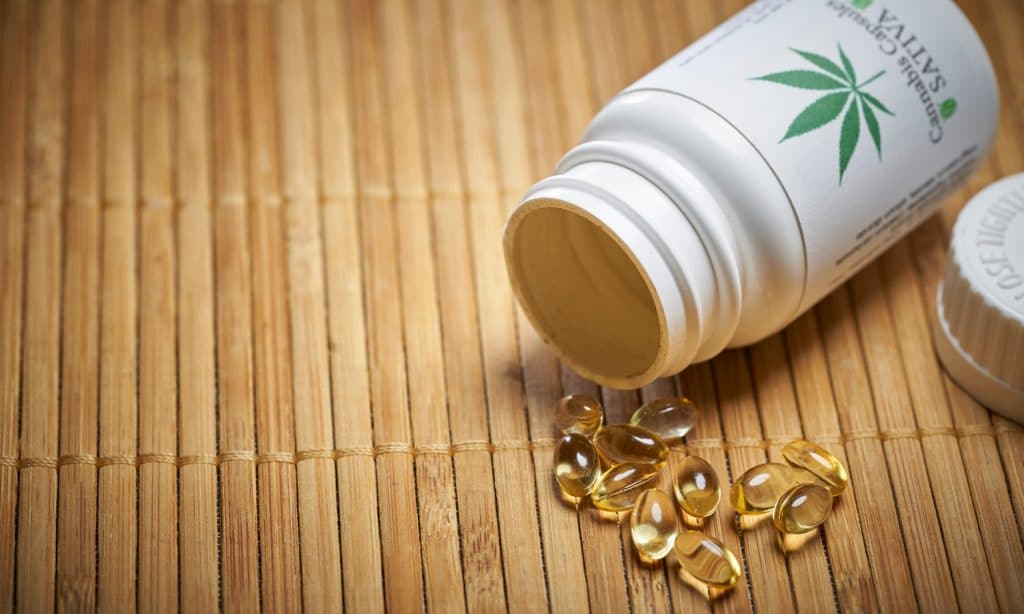
Research finds that CB1 receptors do have an impact on urination, and their manipulation with cannabinoids from marijuana has promise for treating OAB.
More than 50% of individuals with OAB also struggle with Urgency Urinary Incontinence (UUI), which affects the quality of life for both men, women, and non-binary individuals. Studies have shown that many assume that OAB and UUI are part of the aging process and live with the conditions, not realizing that there are treatment options and often treatment options come with risks that make patients hesitate.
The two medicines often prescribed for OAB are powerful and can cause constipation, blurred vision, hallucinations, seizures, and coma. Could CBD and THC have a place in addressing the disorder, without troublesome side effects?
While OAB can’t be pinpointed to a single root cause, the central nervous system (which regulates impulse control and muscle memory) has a significant part to play. Often, damage to nerve fibers and receptors in the bladder can make the body more susceptible to bladder overactivity. From childbirth to aging, sports injuries to long-term illness, OAB can piggyback on another condition wreaking havoc with every sneeze or surprise.
“Researchers found that the body has receptors for the cannabinoids CB1 and CB2 in the brain and bladder, as well as in other parts of the body,” she said. “CB1, and to a lesser extent CB2, work at various levels on the detrusor muscles. Research is pointing toward the conclusion that CB1 receptors do have an impact on urination, and their manipulation with cannabinoids from marijuana has promise for treating OAB.”
Even more impressive, a study conducted in 2014 by the American Academy of Neurology (AAN) found that cannabis helps relieve some symptoms of multiple sclerosis (MS), such as OAB, pain, and spasticity. More recently, a 2018 study published in Neurological Sciences found that “THC/CBD oromucosal spray has shown to be effective in improving overactive bladder symptoms in MS patients demonstrating a favorable impact on detrusor overactivity.”
Marijuana appears to have positive effects on the bladder system as a whole, as well. A 2013 study found that cannabis may have a hand in reducing a man’s risk for developing bladder cancer.
Who knows how serious Kanye is about becoming president, but at least he wants free weed for everyone.
The rapper is sweetening the presidential pot, so to speak. After announcing his intention to run for POTUS on July 4, the Grammy Award-winning rapper, producer and fashion designer gave his first campaign speech Sunday evening, where he detailed various policy views in his trademark free-associative (some say “rambling”) manner. Yes, Kayne West promises free and legal marijuana as president.
Marijuana legalization was among the topics discussed during the rally, notably that the substance should be “free.” He also admitted to personally consuming the herb, a topic he’s never shied away from.
“I must tell you at my first rally that I did smoke a little bit last night,” Kanye told the crowd in North Charleston, South Carolina. “Every black man on trial for marijuana will be freed.”
This is not the first time Kanye discussed his marijuana use in this way. Back in 2016, Kanye was awarded the VMA Video Vanguard Award at the MTV Video Music Awards. His speech followed a similar stream-of-consciousness pattern as his campaign rally did. He paused at one point, like he did in South Carolina, and copped to smoking marijuana earlier that night.
It remains unclear just how serious Kanye is about running for president. He arrived onstage with “2020” shaved into his head, but has missed the ballot deadline in several states already. Kanye did qualify for the Oklahoma ballot but failed to collect the 10,000 signatures required for South Carolina.
Photo by Dimitrios Kambouris/Staff/Getty Images
While the crowd cheered along with many of Kanye’s statements, there was noticeable pushback to some of his more controversial opinions. He claimed that Harriet Tubman “never actually freed the slaves, she just had them work for other white people.” Kanye, who has four children with his wife Kim Kardashian, became emotional discussing abortion. He believes abortion should be legal, but added that women who want to proceed with birth should have more support throughout the process.
The odds of a second wave of COVID-19 suggest there will be plenty of divorces in the near future.
The issues faced by couples throughout the pandemic have been widely reported. Increased friction between partners, isolation from family and friends, and a stressful environment have contributed to tensions, causing many couples to consider the counsel of mental health experts or find ways to end their relationships altogether.
As the pandemic progresses and we learn more about the virus, the odds of a second wave of COVID-19 are becoming more likely. So is the stress that this produces, as well as the uncertainty of longterm emotional, physical and economic stability.
Countries like China, which encountered the virus earlier on in the year, have experienced rising rates of divorce after the first wave of COVID-19. Western countries like the U.S., which have divorce rates as high as 50%, are expected to experience an even more pronounced rise in divorces, according to Psychology Today.
This kind of familial stress causes ripples across all sorts of statistics. Data shows that this year there have been rising numbers of domestic abuse reports, stress and depression, all of which will likely translate into lower birth rates and more mental health issues post pandemic.
Photo by Kelly Sikkema via Unsplash
If a second wave of the virus were to hit, many couples, especially those who’ve already been experiencing difficulties during the first lockdown, are at higher risk for experiencing even more stress.
When lockdown first started, experts advised couples to avoid making any rash decisions, explaining that quarantine life is not an equivalent to real life, and that it’s unfair to judge a partnership when viewed under this set of constrictions. Still, as time passes and couples who used work, gym time and travel as ways of decompressing, these people will continue to struggle with their partners; the pandemic has made it impossible to ignore the lingering issues that plague them.
When it comes to facing a second wave, it appears that singles have an advantage over couples. Those who have experienced loneliness during the first lockdown might be more mentally equipped to face a second. Couples who’ve managed to keep their relationships afloat for the past couple of months might find continued social distancing guidelines much more demanding.
A sound explanation comes from a report by the World Health Organization, which examined many, many aspects of CBD, including its potential for abuse.
With CBD pens, edibles, shatter, medicines and oils continuing to crop up across the United States and around the world, a vehement anti-cannabis strain of people look for the “bad” in anything marijuana. That extends to cannabidiol, or CBD, a non-psychoactive wonder component of the cannabis plant.
In all reality, a completely reasonable person with no experience with marijuana besides what’s been institutionally taught could also wonder the same thing. People are puffing on CBD vape pens left and right and pretty much every retailer in America offers some type of CBD product. If it’s so appealing so often, is it habit forming?
The simple answer is. A sound explanation comes from a report by the World Health Organization (WHO), which examined many, many aspects of CBD, including its potential for abuse. “Single dose administration of cannabidiol has been evaluated in healthy volunteers using a variety of tests of abuse potential as well as physiological effects in a randomized double blind placebo controlled trial,” reads the report.
“An orally administered dose of 600mg of CBD did not differ from placebo on the scales of the Addiction Research Centre Inventory, a 16 item Visual Analogue Mood Scale, subjective level of intoxication or psychotic symptoms,” in continued.
Photo by rgbspace/Getty Images
In other words, it passed the tests for addictiveness or of the potential for abuse with flying colors. There are simply no negative attributes to report. This is a very good thing for those who use CBD for a number of conditions that range from anti-anxiety to anti-seizure medications and whose ages also range wildly, from small children to senior citizens.
The WHO decided to do a second inspection of the data, this time with oral ingestion of CBD alongside placebos. The report concludes that, “The results of this analysis demonstrated that CBD was placebo-like on all measures (including visual analogue scales, psychomotor performance such as the digit symbol substitution task, heart rate and blood pressure)…”
The fact that it is as innocuous as a placebo, yet is powerful enough to combat serious disorders and ailments, makes CBD as safe as it gets when it comes to choosing a non-habit forming, holistic medicine.
While the debate as to the habit inducing qualities of full spectrum cannabis rage on in lingering Drug War themed discussions, one thing is for certain: the plant’s cannabinoid CBD is without any worry for dependence or abuse.
After a small decline in 2018, drug overdose deaths have been on the climb since last year and the pandemic might make things worse.
Preliminary data from the Centers for Disease Control and Prevention (CDC) show drug overdose deaths are on the rise once again in the United States. There were just over 70,000 deaths in 2019, the CDC reports. That represents a 4.9% increase from a year before and those numbers could continue to climb, according to the Drug Policy Alliance.
“While the increase in overdose deaths in the U.S. in 2019 is devastating, it is not at all surprising, and there is reason to believe that these deaths will continue to climb in 2020 as a result of the COVID-19 pandemic, which has increased isolation, disrupted the drug supply and reduced access to harm reduction and treatment supports,” said Sheila Vakharia, Deputy Director of the Department of Research and Academic Engagement for the Drug Policy Alliance.
Overdose deaths saw a small decline in 2018, the first such decrease since 1990. Lawmakers, including President Donald Trump, celebrated the drop at the time. This was a mistake, Vakharia said, as a closer scrutinization of the data indicated the U.S. had achieved a hollow victory.
“Last year, as legislators tried to do a victory lap over a 4.5% decrease in overdose deaths from the year prior, we warned that the data did not account for the fact that there were states where overdoses continued to climb, nor did data make clear the racial and other demographic discrepancies or the troubling increases in stimulant overdoses in recent years,” she said. “This is still true today.”
Photo by FotoKrzyzanowski via Pixabay
Since 1990, more than 700,000 people have died due to drug overdoses. This has mostly been driven by the opioid epidemic and the 2019 data reveals not much has changed. Of the 70,980 people who died from drug overdoses last year, 50,042 involved opioids.
Another recent CDC report found that 6.6% of women had used opioid pain killers while pregnant last year. One in five women admitted to misusing the opioids, the authors reported, and they suggested improved screening for opioid misuse and treatment of opioid use disorder in pregnant patients.
Harm reduction strategies across the United States is vital right now, Vakharia added. The COVID-19 pandemic has disrupted many ways of life, with a disorientation effect on communities hit hardest by increase drug overdose deaths. All of which has revealed the health inequities of the system, according to Vakharia.
“More than ever, it is essential that we double-down on overdose prevention approaches that work, as outlined by DPA’s COVID-19 policy recommendations, said Vakharia, “including improving substance use disorder treatment and increased access to harm reduction services — such as keeping loosened regulations for methadone and buprenorphine in place, allowing overdose prevention sites to legally open and allocating federal funding towards syringe exchange and naloxone access.”
Despite all the quality time dogs are getting with their owners, the pandemic could be affecting their stress levels and mental health.
If there’s one demographic that’s had fun over the past couple of months, it’s dogs. While our mental health has been severely challenged by the pandemic and all of the stressors that go along with that, puppies have finally gotten what they’ve always wanted: unlimited time with their owners and really, really long walks. Like, extremely long.
Despite your dog’s happy face every morning, some new data finds that they might also be influenced by the pandemic. We know CBD works to calm anxiety in humans. But could CBD also provide relief for our furry friends?
Pets are much more perceptive than we give them credit for. Sleep Standard conducted a survey, hoping to learn more about pets’ experiences over the past couple of months. When speaking with pet owners, data shows that these people are experiencing anxiety, loneliness, stress and uncertainty over their future, and that they might be passing on these feelings to their dogs. Despite all of this, 91% of pet owners were happy to have a pet while quarantined, since these animals can help them feel less lonely.
Pet owners also said that their pets were showing anxious behaviors, likely because of the large amounts of time that pets and their people have been spending together.
Photo by Mark Zamora via Unsplash
Dogs’ anxiety is hard to spot, but it can present itself through aggression, biting on furniture, barking, urinating indoors, and all sorts of behaviors that aren’t “normal” for your dog. Data collected on CBD and its effect on pets is not that extensive; there’s some anecdotal evidence, but not a lot of scientific research behind it.
Some of the research that’s available suggests CBD could help dogs control anxiety, pain, stress and even depression. “Dogs have endocannabinoid receptors within its body called CB1 and CB2 receptors. These receptors regulate the release of cytokine (signaling proteins) that are a contributing factor for helping regulate mood disorders, such as depression. When dogs ingests CBD, it stimulates their CB1 and CB2 which give them the sensations of wellbeing and a calm state of mind,” says Andreana Pena, founder of pet CBD brand Blooming Culture.
Some veterinarians, however, aren’t ready to say that CBD is a viable option for dogs, explaining that there’s no enough evidence to discard any potential health hazards for pets. They advise on being careful and in monitoring your pet closely if you decide to give them a dose of the product.
“However, we are truly unsure of its true safety and potential drug interactions with traditional medications. Therefore, there’s a very gray zone on this,” Dr. Adam Christman told the Huffington Post.
While CBD might work for your dog, whether you’re looking to provide them some calm as you go back to work or just want to take the edge off of some strange behavior, it’s important to be very careful. Talk to your vet and look for a product that has good reviews and a certificate of analysis (COA).
Watch as these experts discuss the cutting edge, multidisciplinary studies underway to explore just how cannabis and CBD deliver their diverse health benefits.
While there is mounting anecdotal evidence on the therapeutic benefits of cannabis and CBD, including their anti-inflammatory and anxiolytic effects, we still don’t fully understand the underlying biological mechanisms leading to their efficacy, or why they can be effective for some people, but not for others.
Groundbreaking new human studies from UC San Diego, University of Utah, and the Wholistic Research and Education Foundation are about to change all that:
How do THC and CBD influence large-scale brain networks involved in pain, stress, attention, executive function, emotion regulation, and cognition?
Why do CBD and THC have different effects for different individuals?
Does CBD hold a therapeutic promise for Autism and other neurodevelopmental diseases, and if so, how?
Watch the expert panel put together by Trailblazers, moderated by Benzinga Cannabis Managing Director and El Planteo CEO Javier Hasse, to learn about the cutting edge, multidisciplinary studies underway to explore just how cannabis and CBD deliver their diverse health benefits.
Dr Alysson Muotri, PhD – Professor of Cellular and Molecular Medicine + Director of the Stem Cell Program at the Institute for Genomic Medicine at UC San Diego/
Dr. Gabriel Silva, Ph.D. – Professor of Bioengineering and Neuroscience + Founding Director of the Center for Engineered Natural Intelligence (CENI) at UC San Diego + Associate Director, Kavli Institute for Brain and Mind.
Dr. Jeff Anderson, M.D. Ph.D. – Professor of Radiology and Imaging Sciences + Director of Functional Imaging at the University of Utah.
Mindful movement puts an emphasis on moving your body and not on the workout itself.
The word “mindful” is used in all aspects of everyday life, whether we’re talking about eating or meditating. It refers to a state of mind where you pause and listen to your body. Feeling hungry or anxious? Mindfulness allows you to have a better understanding of your feelings, so you get to provide your body what it needs — maybe it’s food, maybe it’s just sleep.
Mindfulness allows people to stay present and it’s a skill that has been successful in making tons of people feel happier and healthier, shifting their approach to a lot of hot button issues. It’s a term that applies to fitness, too.
Many people have complicated relationships with their bodies and, thus, with their fitness. They equate working out with a form of punishment, utilizing movement as ways of burning calories and changing their bodies.
While working out is important due to its mental and physical benefits, mindful movement puts an emphasis on moving your body and not on the workout itself. It gives people the opportunity to swap running for walking, if that’s what their bodies are telling them to do.
Photo by McKinsey via rawpixel.com
“Don’t buy a spin bike because a commercial told you it is ‘the best.’ Stop going to classes you dread showing up for. The easiest way to make movement more of a regular thing is to enjoy what you do,” fitness coach Lauren Leavell tells Huffington Post.
While you might still need to push yourself to work out and move more often during your day to day life, a focus on mindfulness allows you “permission” to give yourself a break, fostering a healthier relationship with your body and your appearance.
Our relationships with fitness and our bodies are personal and often challenging to upgrade, but tuning in to your body and trying to do what feels good, at least on occasion, can provide a much needed break for anyone who’s ever felt pressured to work out or to look a certain way.
The Seventh Circuit’s ruling is important because courts and legislatures may follow its interpretation of the 2018 Farm Bill with respect to smokable hemp.
The Agriculture Improvement Act of 2018 (“2018 Farm Bill”) legalized hemp by removing hemp and its derivatives from the definition of marijuana under the Controlled Substances Act (CSA). The 2018 Farm Bill also provided a detailed framework for the production of hemp and directed the U.S. Department of Agriculture (USDA) to promulgate regulations and permitted states to maintain primary regulatory authority over hemp cultivated with their border by submitting a plan to the USDA.
In 2019, Indiana passed Senate Enrolled Act 516 (“Act 516”) to bring Indiana’s definition of hemp in line with the 2018 Farm Bill and to establish a regulatory framework for hemp production. Act 516 criminalized the possession of “smokable hemp,” which it defines as any industrial hemp product “in a form that allows THC to be introduced into the human body by inhalation of smoke.” Ind. Code § 35-48-1- 26.6. The law provides that “[a] person who knowingly or intentionally manufactures, finances the manufacture of, delivers, finances the delivery of, or possesses smokable hemp … commits dealing in smokable hemp, a Class A misdemeanor.” Ind. Code § 35-48-4-10.1.
In short, Act 516 made it a crime to manufacture, deliver, or possess smokable hemp.
Days before Act 516 was to go into effect, a group of hemp sellers and wholesalers (collectively referred to here as “CY Wholesale”) filed a federal lawsuit challenging Indiana’s prohibition on smokable hemp (we first covered that here). In its filing, CY Wholesale sought a temporary injunction to stop Indiana from enforcing the smokable hemp ban.
CY Wholesale argued that the ban was preempted by the 2018 Farm Bill’s mandate that provides that states must allow all forms of industrial hemp to be transported through their territories. CY Wholesale also argued that the ban violated the commerce clause of the constitution. The district court found CY Wholesale was likely to succeed on its preemption argument and issued an injunction blocking portions of the smokable hemp ban. The State of Indiana appealed.
Last week, the Seventh Circuit ruled that the district court’s injunction swept too broadly and it remanded the case for further proceedings. The Seventh Circuit’s ruling is important because courts and legislatures may follow its interpretation of the 2018 Farm Bill with respect to smokable hemp.
So what did the Seventh Circuit have to say about the 2018 Farm Bill and smokable hemp bans? I’ll try to simplify the arguments and try to avoid legalese for non-lawyer readers.
Photo by Bloomberg Creative/Getty Images
The part of Act 516 that prohibits the manufacture of smokable hemp does not fall within the 2018 Farm Bill.
This means that Indiana (and other states) are free to prohibit the manufacture of smokable hemp. According to the Seventh Circuit, the 2018 Farm Bill authorizes states to regulate the production of hemp and its preemption clause places no limitations on a state’s right to prohibit the cultivation or production of industrial hemp. The Seventh Circuit reasoned that Indiana’s smokable hemp ban did not conflict with the 2018 Farm Bill because the federal law expressly permits states to enact regulations that are “more stringent” than the federal rules. The upshot of this holding is that other states considering smokable hemp bans may rely on this ruling for support.
The part of Act 516 that prohibits the possession of smokable hemp is likely preempted by the 2018 Farm Bill’s provision concerning interstate transportation.
This means that Indiana (and other states) cannot enact laws that criminalize the interstate transportation of smokable hemp. The State of Indiana argued that one could transport smokable hemp through the state (e.g. from Ohio to Illinois) without violating the ban on possession of smokable hemp. Indiana tried to draw a distinction between possession of hemp and just “moving it around.” The Seventh Circuit rejected this argument – noting that a defense that “I was not in possession heroin, I was just moving heroin around” would be laughed out of court.
The Seventh Circuit ruled that any injunction must be narrowly tailored to address “transit through state, along with ancillary restrictions on the possession and delivery of smokable hemp to the extent that those provisions interfere with that transit.” This, said the Court, “is the most that would have been warranted on express preemption grounds.” What the Seventh Circuit is saying is that states cannot enact laws that have the purpose or effect of criminalizing the transportation of hemp through the state’s territory.
The argument that Act 516 violates the Commerce Clause does not show a sufficient likelihood of success on the merits to warrant a temporary restraining order.
The Commerce Clause of the Constitution prohibits states from enacting laws that clearly discriminate against interstate commerce, unless the discrimination is justified by a valid reason unrelated to economic protectionism. In layperson’s terms, the Commerce Clause works to prevent states from enacting laws that operate to protect businesses within a state by burdening out-of-state operators. For example, in Kassel v. Consolidated Freightways, the Supreme Court held an Iowa law imposed an undue burden on interstate commerce by prohibiting double trailers on its highways. In Oregon Waste Systems v. Dept. of Environmental Quality, the Supreme Court found invalid under the Commerce Clause an Oregon law placed a higher charge on waste coming into Oregon’s landfills from out-of-state.
One question courts examine when deciding whether to issue a temporary restraining order is whether the argument is likely to succeed on the merits — once the facts are more developed. The Seventh Circuit hold only that CY Wholesalers commerce clause argument was not a sufficient ground to issue a temporary restraining order. This does not mean the Commerce Clause claim is dismissed, only that CY Wholesale had not shown a likelihood of success sufficient to warrant an preliminary injunction.
Final thoughts
The Seventh Circuit was careful to say that it should not be misunderstood as saying that a properly tailored injunction is not warranted. The Court specifically referenced whether Indiana, in proscribing the possession of industrial hemp, has illegally prohibited the transportation of interstate shipments of hemp.
The Seventh Circuit further noted that Indiana has enacted a new law (“Act 335”) that attempted to fix the issues with Act 516 by clarifying that the prohibition on the delivery and possession of smokable hemp does not apply to interstate hemp shipments passing through Indiana. Nonetheless, the court questioned whether Act 335’s language permitting interstate shipments “from a licensed producer in another state . . . to a licensed handler in any state” still violates the Farm Bill’s express preemption clause. It left that question to the district court.
“I always say ‘someone,’ but Miley suggested I smoke weed. Because someone gave me an Ambien and it made me feel terrible,” Tish Cyrus recently revealed.
Miley Cyrus and marijuana have had a very public on-and-off-again relationship. They’re in an off stage right now, after Miley underwent vocal cord surgery in November of last year. Miley had to go sober prior to surgery and has remained sober ever since, according to her mom, Tish Cyrus.
“Everybody thinks Miley is like this wild thing…” Tish said on the Chicks in the Office podcast. “First of all, Miley doesn’t even smoke pot anymore. She smokes CBD only. She doesn’t drink. She’s the cleanest person I know. She’s like, she’s just so solid.”
Tish, meanwhile, never smoked marijuana until she was 42-years-old. Nowadays, her and Billy Ray Cyrus keep a weed stash that could knock out the Italian Army hidden in a safe. So how did Tish go from never using cannabis to becoming a rabid consumer?
The now-sober Miley had something to do with that, of course. Tish had trouble sleeping on tour with Miley, and her daughter suggested something special to achieve a good night’s rest.
“I always say ‘someone,’ but Miley suggested I smoke weed. Because someone gave me an Ambien and it made me feel terrible,” Tish told the podcast hosts.
“So [Miley] said, ‘I’m telling you, Mom. That’s a chemical. Why are you willing to put that in your body, but you’re not willing to smoke weed, which is natural?’ She said, ‘Mom, just come in the bathroom. Just sit right here. No one is going to know.’”
Photo by Amy Sussman/Staff/Getty Images
Assuming they were safe in the bathroom alone, Tish accepted a joint rolled by her daughter. Reader, I’m here to tell you, they were not alone.
“I took one puff and Miley opened the bathroom door. Her entire band was standing in the door. And Miley’s like, ‘Mom’s smoking pot!’”
Tish later returned the favor in 2018, when Miley had experienced another off period with cannabis. During a SiriusXM interview Miley said her mom, who “smokes a ton of weed,” convinced her to pick up the habit again.
“My mom got me back on it,” said Miley. “When I’m just working I don’t think I function at my highest, most intelligent, most being-able-to-be-as-aware-and-as-present, so I don’t smoke when I work.”