After the trial, Congress will want to get back to its actual legislative priorities and cannabis is nowhere on this list.
By Gretchen Gailey
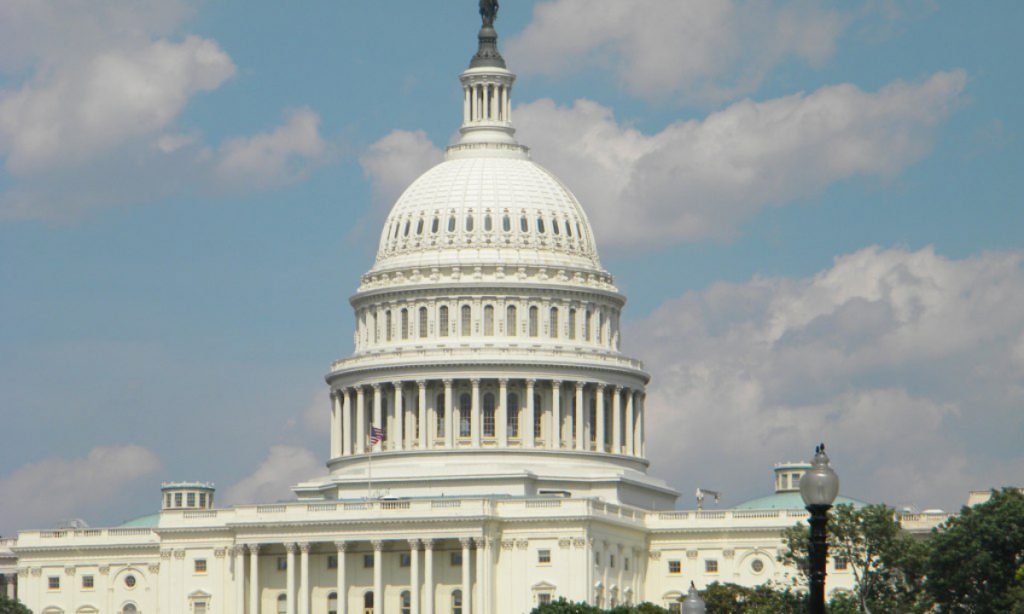
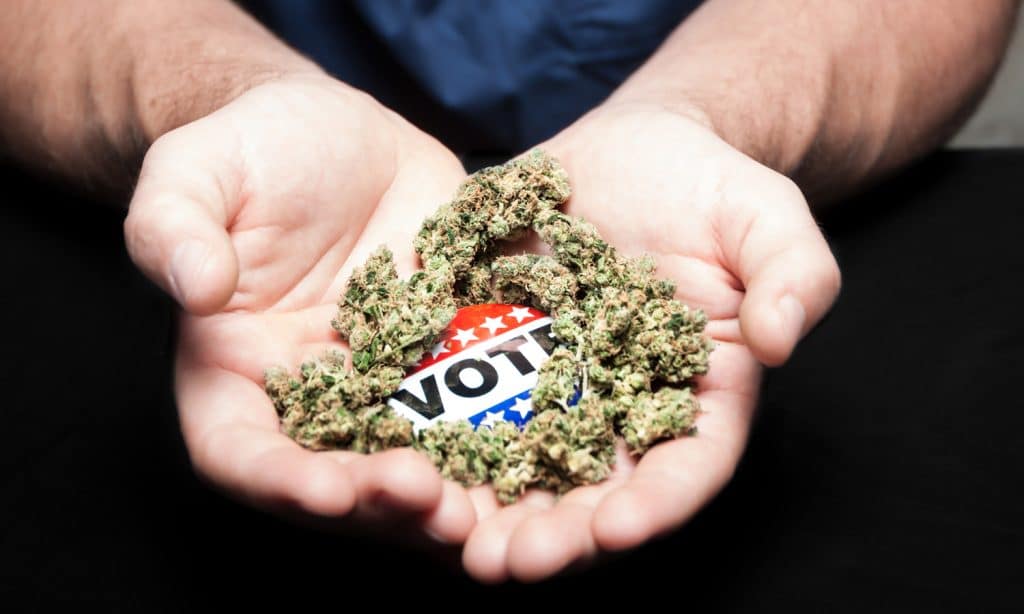
With the start of a new legislative session kicking off this week, cannabis enthusiasts are hopeful for a year of progress on cannabis bills like the SAFE Act to jumpstart the industry out of its current lull and bring more legitimacy to its legalization movement. Well, keep waiting.
Despite Congress’ holiday break, President Donald J. Trump has been impeached by the House of Representatives and the Senate is going to have to act at some point, leaving cannabis and every other possible issue on the back burner. I take that back, cannabis won’t be on the back burner, it won’t even be in the kitchen.
When Speaker of the House Nancy Pelosi’s stops stonewalling Senate Majority Leader Mitch McConnell and turns over the Articles of Impeachment, which many expect will happen this week, Senate rules state that the trial must commence the next day by 1 pm and all Senators must be in their seats for the entirety of the trial. Meaning – all other legislative business in the Senate comes to a standstill and cannabis is an afterthought.
Photo by Flickr user ttarasiuk
If the Senate trial is anything like President Clinton’s trial which went for six weeks, all of January will be sucked up and run us deep into February, (which opens a whole other can of worms for cannabis that I’ll come back to in a later post, stay tuned.) Congress will want to get back to its actual legislative priorities, the U.S.-Mexico-Canada Agreement, surveillance reform, funding the government and not to mention, now a potential war with Iran. Cannabis is nowhere on this list, especially in the Senate where it needs to find support.
While it may seem that Trump and McConnell want to bring the Senate trial to a quick close and end this “witch hunt,” it’s in the President’s and the Republicans’ best interest to drag it out and use it for every ounce of PR fuel that it’s going to provide for the upcoming election. In the meantime, cannabis bills will be set aside, and their fate sealed like 96% of all other legislation introduced during a Congress – a slow, quiet, unnoticed death.
Sexting is a very popular way of bonding with your significant other. Here are some tips that can help you out.
Sexting can be awkward, but it can also be a fun way to explore your sexuality and make you feel closer to your partner. The distance involved with texting makes for perfect foreplay and can also allow you to explore sexual fantasies that you’d be too shy to bring up in person, especially after meeting new people.
Although there are people who are more comfortable with expressing their desires than others, the vast majority of us aren’t born knowing how to sext. It’s always a little awkward and it demands some imagination and a willingness to participate in a fantasy.
Here are 5 tips that can help you become a better sexter:
Remember timing
Keep in mind that people have jobs and meetings and other important stuff going on throughout their days, which is why it’s important to know what they’re up to before you send them a nude. Before you send anything, ask your partner what they’re doing and if they’re busy.
While nudes are an important part of sexting, there’s a lot of stuff you can incorporate to make the whole thing more fun and personal. When sending texts, try to be detailed and use descriptive words without stressing yourself out. You can also use memes or gifs — anything that allows you to have fun and express yourself.
Get creative
While you should never feel uncomfortable, when sexting it helps if you fantasize a bit and put some effort into it. You can keep a library of sexy photos in your phone, which will allow you to send your responses quickly, without disrupting the mood. It’s also just a good general rule to keep a small bank of flattering photos (better angles) versus photos taken in the heat of the moment.
Take it slow
If you’ve never sexted before or are just sending out that first sexy message, it’s probably best to avoid a page long description of a sexual scene. Take it easy and get a feel for your partner, sensing their mood and what they’re up to. One very important thing to keep in mind is the degree of trust and intimacy that you have with your partner.
A sexy picture or flirty text can be the simplest way of grabbing their attention. Then you can go further by mentioning a previous sexual encounter or a favorite sex position, and taking it from there.
Have fun
Sexting should never make you feel stressed, grossed out or ridiculous. Remember that no one is forcing you to participate and that you can always call it quits if it gets too weird or awkward. Try to have fun with it, do something different and to use it as a way of bonding with someone else.
Old weed is not going to get the user sick or anything, but it will not pack the same punch that it once did (i.e. it probably won’t get you high).
There was once a time when a shortage of marijuana meant that someone was going to start scraping the resin from every bowl and bong in sight, while others dug behind the living room furniture to try and scrounge up enough spare change to score a joint from the guy across the way. But then, just about the time the couch looks as though it’s getting its annual pelvic exam, someone pulls a bud from the back cracks. “I found something!” they say. “It might be weed!”
The entire group congregates around the bud to try and figure out 1) exactly which bag the lone nugget may have disappeared from and 2) is the weed still good enough to get them stoned without sending their stunt toker to the emergency room?
In this type of situation, we are sad to report that the years-old marijuana extracted from its final resting place underneath the couch is not going to be much fun to smoke. Old weed is not going to get the user sick or anything, but it will not pack the same punch that it once did. So, if someone in the group identifies the POW (Piece of Weed) as a member of that insane sack of Kentucky homegrown, it probably will not have the strength to get them high this time around.
But marijuana doesn’t go bad in the same way as, say, a leftover tuna sandwich that has been lingering in the refrigerator for six months. Rather than transform into some foul, Tupperware-contained beast, old weed goes the opposite direction.
Because marijuana is a plant, it is destined to degrade. The herb that once blew everyone’s mind with its aromatic seduction will eventually lose its ability to stink up the room. This happens because the terpene oils dry up and the overall potency of the weed (THC content) deteriorates to a wad of grass that is even less impressive than the Mexican brick weed of the 1980s.
Photo by MmeEmil/Getty Images
The only salvation for old pot is if it was lost while contained in optimal conditions. Marijuana that is stored in a glass jar and in a dark place is poised to have a longer shelf life. Yet, this weed is only safe to smoke if it has not been contaminated by mold. This can happen easily if the marijuana was put away in damp conditions. Under no circumstances is moldy weed fit for human consumption. So if there are white blotches all over the bud, it is best to just toss it in the trash. Otherwise, someone could get sick.
But what about marijuana edibles? Well, this is cut and dry. While smoking old weed (mold free, of course) will not make the user sick, consuming food products beyond their expiration date certainly can. Marijuana edibles are no exception. So if someone digs a pot brownie out from behind the couch that is covered in lint and toenail clippings, avoid it like the plague. While its disgusting appearance should be a turn off for some (lets hope most), edible pot contains other ingredients that can flip a person’s stomach inside out without proper handling. Keep edibles refrigerated and treat them as you would any other food item. Getting stoned is fun, food poisoning is not.
Cats, one of the biggest movie box office flops in recent memory, is getting a second chance thanks to weed.
The Fresh Toast – With a song titled the Magical Mister Mistoffelees, it make sense people are getting high to see Cats, despite it being a box office dud.
Cats, based on the popular Broadway musical and directed by Academy Award winner Tom Hooper, was supposed to be great. Starring some of the biggest names in the industry, the movie should have made millions of dollars. It didn’t.
The minute the Cats trailer was released, things were already going wrong. The internet began to mock how ridiculous it looked and made it into one of the biggest jokes of the year. Then, when it hit theaters on December 20, it became one of the biggest box office flops of 2019 during its opening weekend and was withdrawn for Academy Award consideration due to the awful reviews that were published.
The release of the film has been so plagued by mistakes and embarrassments that a new version of the movie was sent out to theaters because the original cut contained Judi Dench’s real hand instead of a paw. Yes, these characters have cat paws and human noses. It’s called suspension of disbelief.
This isn’t a joke: CATS was rushed into theaters before being finished so a new version is being sent to theaters with updated effects. How do you know if you have the old version? Look for Judi Dench’s human hand, wedding ring and all. pic.twitter.com/VDUOevePU9
Now, a couple of weeks after the initial release of Cats, plenty of people are approaching the movie from a different angle. How can you make a movie about singing and dancing cats tolerable? With the help of drugs, of course.
Photo courtesy of Universal
The Washington Post published an article discussing people’s experiences while watching the film stoned. The responses were varied, ranging from terrified to delighted. All agree that it was a crazy and singular experience though.
“The most terrifying experience of my life. I swear to God my soul escaped me,” said someone. “I was so delighted. I was like, ‘Is this genius? Is this the best thing I have ever seen?'” said someone else. “Three-quarters of the way through the movie, I was like, ‘I hope I don’t hate my own cats when I get home.” Anyway, you get it. Cats is crazy and Cats on weed is like a portal to another dimension.
Weed or no weed, I’m not sure if I’m strong enough to submit myself to two hours of this:
Despite voter approval, the marijuana ballot initiatives face stiff opposition among state leaders, including Governor Kristi Noem.
For the first time in United State history, a state will vote on both medical and recreational marijuana legalization in the same election. This week, South Dakota’s Secretary of State Steve Barnett certified an adult-use marijuana initiative, stating there were enough valid signatures to add the proposal to the November ballot.
The initiative would legalize recreational marijuana for adults 21 and older in the state, while also creating a system for regulated sales of marijuana. In addition, the proposal would force the state legislature to establish a hemp cultivation law in South Dakota. The Marijuana Policy Project and New Approach PAC, two national marijuana advocacy groups, have announced support for both the medical and recreational marijuana initiatives.
“The adult-use legalization initiative will greatly benefit the people of South Dakota by ending the injustice of arresting otherwise law-abiding adults for marijuana offenses,” Matthew Schweich, deputy director at MPP told The Fresh Toast. “It will focus law enforcement resources on fighting serious crime, generate new tax revenue for the state, and create jobs.”
Photo by KellyJHall/Getty Images
South Dakota ranks among the most punitive states with regards to cannabis, despite voter proposals like the ones now on the 2020 ballot. All forms of CBD oil and industrial hemp are illegal in the state, except the FDA-approved drug Epidiolex, a cannabis-derived drug that treats rare forms of epilepsy.
In March of last year, Governor Kristi Noem vetoed a bill legalizing hemp production in the state. Noem added later in the year that she would veto any hemp bills in 2020 as well. In the past, she has cited concern that legalizing hemp was a gateway to eventual recreational marijuana legalization and would undermine law enforcement’s ability to enforce marijuana laws in the state. Marijuana-related prosecutions have dropped by more than half in Texas, as prosecutors now must prove in possessions cases that defendants were carrying cannabis with THC levels above 0.3%, which requires expensive lab testing.
“At this point, it appears increasingly unlikely that Congress will pass legislation this year to fix our nation’s broken federal marijuana laws,” Schwein said. “Therefore, it is crucial that our movement win as many ballot initiative campaigns as possible this November and increase the pressure on Congress to take action. That is how we will ensure success at the federal level in 2021.”
Forty-three percent of investors have the impression that the marijuana industry is growing at a rapid pace and 34% believe there’s a lot of uncertainty in the cannabis stock market and the industry as a whole.
Opposition to cannabis legalization has been on a decline for years, with a majority of Americans in favor of some form of legal marijuana, recreational and/or medicinal. Surveys such as Pew’s are often used as a barometer for the subject of legalization, but the sentiment surrounding cannabis’s status can be measured through a different lens — investor confidence.
A recent survey by personal financial news site GOBankingRates.com found that 1-in-10 people have already invested in marijuana companies and another 40% would consider it in the future. About a third of respondents said they would consider investing in pot stocks if marijuana were made federally legal, with 35% saying they’d never invest regardless of legal status.
The sentiment against marijuana stocks was highest among those aged 65 and older, and a higher proportion of men compared to women respondents would consider investing in cannabis. Over 64% of investors aged 65 and over said they would never consider investing in cannabis stocks and forty-one percent of women responded that they would never consider pot stocks, while only 32% of men felt the same way.
The volatility of the current cannabis market is not lost on investors; only 10% of those surveyed considered marijuana stocks as safe investments. Much of the uncertainty is likely due to the continued criminalization on the federal level. This status casts a pall of uncertainty on any firm operating in the U.S., despite complying with local marijuana laws.
Photo by Bloomberg Creative Photos/Getty Images
Forty-three percent of investors have the impression that the marijuana industry is growing at a rapid pace and 34% believe there’s a lot of uncertainty in the cannabis stock market and the industry as a whole.
Other reasons holding investors back from putting money into pot stocks include the current stigma surrounding the industry, the small number of public companies, profitability, and lack of recommendation from friends, family, or a financial advisor.
Even if open to investing in cannabis stocks, most, about 57%, would invest under $5,000 in the sector. So while two-thirds of respondents felt marijuana should be federally legal, not all of those pro-pot investors are quite yet ready to include cannabis in their financial portfolio.
Even if it’s a hassle to have different devices for professional and personal use, it’s important to have some boundaries. Here’s why.
It’s easy to blur our professional and personal worlds, since most people spend the majority of their days in an office, surrounded by coworkers. It doesn’t get much more private than your computer, which, when it’s work-issued, becomes a problem of sorts. This device, which we use to access everything, is also one of the easiest to trace and keep tabs on.
You don’t have to be doing anything scandalous or crazy to want to have some sort of privacy on the digital realm, especially when it comes to sensitive information such as your passwords and log ins. Here are 5 things not to do when using your work computer. And it will keep you information safe from your employer, at least.
Avoid Google Docs, Slack, Teams, etc.
Some of these sites, which are online and not stored as apps on your computer, can be accessed by your employer. Wirecutter explains that administrative users of G Suite, popular software that includes services like Gmail and Google Docs, can look and search through emails and documents. Although it’s unlikely that your employer will be actively looking through your stuff, it’s embarrassing if someone were to stumble upon your texts whining about work. Use your personal device for all of that personal stuff and save yourself the hassle.
Although it’s tempting to save your log ins and passwords in the computer you spend eight hours of the day interacting with, security experts advice against this. Glassdoor explains that many companies have a clause in their computer, email and internet policies that explain that employers have the right to look through all the communications and data stored in the device.
Avoid public Wi-Fi
Public wi-fi is always problematic, but it’s even more troublesome when you’re using your work laptop and are accessing sensitive information. You could install a VPN, which will protect your browsing and internet activity from third parties, and, of course, lock your computer when you’re away from it.
This is like the case with personal passwords and log ins, only it makes even more common sense. There’s no need to store your personal documents, photos and data in your work laptop. Why would you want anyone to see them? Also, if you get fired or quit you’ll likely have to return your devices; transporting this data to your personal laptop or phone is a pain. Save yourself the worry and create some boundaries as soon as you can.
Don’t work on your side job while at the office
Nowadays, it’s very common to have several jobs that can be accessed remotely, but it’s important to not fulfill these duties while in your primary work office. Most of the activity you do on your work computer can be monitored and accessed by your IT department, creating a possible problem if your superiors feel that you’re slacking off at work of if you work for someone who is not very nice.
Customers feeling cheated by CBD are suing some of the largest companies in the industry.
Despite controversies and plenty of people predicting the end of the CBD industry — or at least a decrease in its popularity — the world’s interest in the cannabinoid continues to grow. But now, there are lawsuits being thrown around, and this might actually mean trouble for the industry.
Just like the other dietary supplements that came before them, lawsuits are targeting companies that sell CBD products without any scientific evidence that supports the medicinal benefit claims that accompany CBD.
According to a report from Stat, the companies that have been targeted include two of the largest in the industry: Charlotte’s Web and CV Sciences. These lawsuits use a language that demands a refund for all American customers who’ve purchased a product from one of these companies.
Photo by IRA_EVVA/Getty Images
Plaintiffs argue that the products sold are illegal because they contain CBD, which, having no scientific support, is a sham. If judges were to agree with this opinion, manufacturers would have to issue refunds for all the profits made from CBD products, a surely devastating blow for these relatively new companies.
Consumers who issued the lawsuit explain that the targeted companies engaged in “false, fraudulent, unfair, deceptive, and misleading” marketing of their CBD products by suggesting that the cannabinoid was similar to a dietary supplement.
“The implications are huge,” says Daniel Fabricant, CEO of the Natural Products Association. If the companies were to lose the lawsuit, he speculates that the blow would be catastrophic. “I’m not going to say [the CBD industry] goes away, but I think it gets pretty close to going away.”
While it’s hard to find an unbiased opinion regarding CBD — most people are either for it or against it — this is a problem that has been influenced by the FDA’s inability to make a decision regarding the compound. As long as there’s no legal framework for CBD, the industry will remain on shaky ground and subject to plenty of more accusations and lawsuits.
Though marijuana-related arrests have risen in recent years, those cases aren’t being prosecuted at the same rate.
Data complied by the FBI suggested last year that the War on Drugs wasn’t over. Using numbers submitted by 18,586 law enforcement agencies at the federal, state, and local level, the data showed that drug-possession arrests were on the rise following a nine-year decline. Furthermore, the New York Police Department released data to the public that found New York cops still disproportionately arrested people of color for marijuana-related offenses, despite mainstream acceptance of marijuana in all communities.
As disheartening as these statistics may be, indicating the War on Drugs may never end, something curious happened at the same time. Another piece of data tucked away in a federal report by Supreme Court Justice John Roberts indicates that history may not be repeating itself. In the report, he reviewed the trends of various crimes tried at the federal level and noted this about marijuana.
“Drug crime defendants, who accounted for 28% of total filings, grew five percent, although defendants accused of crimes associated with marijuana decreased 28%,” Roberts wrote.
Let’s break that down. The number of people charged with drug-related federal crimes is on the rise, which is commensurate with the FBI’s data. But Roberts reveals that federal prosecutors aren’t pursuing these charges at the same rate. Instead, federal prosecutions of marijuana-related crimes dropped significantly.
Photo by FatCamera/Getty Images
A couple educated guesses as to why that’s happening. One, even though cannabis remains illegal at the federal level, various states have legalized recreational and/or medical marijuana. Two, support of marijuana reached an all-time high last year despite concerns over the national vaping crisis. There’s also the complication of the 2018 Farm Bill, which allowed for the production of hemp at the federal level, creating a loophole for the proliferation of CBD products.
This complication has caused marijuana prosecutions to plummet in Texas as well, when lawmakers legalized hemp last year in the state. Prosecutors now must prove in possession cases that defendants were carrying cannabis with THC levels over 0.3% and that requires expensive lab testing. Marijuana prosecutions in Texas have dropped by more than half as a result. According to the Texas Tribune, there were 5,668 marijuana misdemeanor cases in May 2019 (right before the state legalized hemp on June 10) to 1,919 cases in November of the same year.
Katharine Harris, a drug policy fellow at Rice University’s Baker Institute for Public Policy, told the Tribune that “it means that there are fewer Texans that are getting slapped with a criminal record for marijuana possession, something that is already legal in other states.”
A recent study found that psychedelics proved to have a strong effect on nature relatedness, promoting a prolonged appreciation for nature in the two-year follow-up.
The world is hurting right now, and many are feeling the pain of a planet in destruction. We’re dealing with climate change (and climate change denial), forest fires are ravaging homes and destroying nature around the world, and we all know that Mother Nature sure likes to toss a giant natural disaster in there from time to time. Humans have both lost control of and lost touch with their natural environment.
It’s time to get back to nature, and psychedelics may be what get us there.
Researchers in London, England, investigated the association between psychedelic use and a concept they termed “nature relatedness,” or one’s level of self-identification and subjective sense of connectedness with nature.
The study entitled “From Egoism to Ecoism: Psychedelics Increase Nature Relatedness in a State-Mediated and Context-Dependent Manner” was published in December 2019 in the International Journal of Environmental Research and Public Health. The study was conducted at the Centre for Psychedelic Research’s Department of Brain Sciences at Imperial College in London, UK, and was led by Hannes Kettner and Sam Gandy.
While the study wasn’t restricted to one psychedelic, the researchers looked at the “healing and divination purposes” for which substances like DMT, LSD, psilocybin (“magic mushrooms”), mescaline, ayahuasca, iboga, and salvia are used, hypothesizing that the use of these substances, especially in the long term, are strongly correlated to nature relatedness or that feeling of being “one” with our natural environment. The researchers cite “ego-dissolution” as one of the catalysts of this connection between psychedelics and nature relatedness and further hypothesize “a positive effect of natural settings on psychological outcomes following psychedelic use.”
The Methodology
The researchers conducted their study through an online survey, asking people who planned to use psychedelics in the near future to complete a survey. The beginning 634 participants received baseline assessments looking at demographics, psychological well-being via the Warwick–Edinburgh Mental Wellbeing Scale, a nature relatedness scale, and the amount of lifetime psychedelic use.
One day after the psychedelic experience, participants were asked to complete surveys that looked at some pretty incredible things about the human experience. These measures included a mystical experience questionnaire, which assessed positive mood, perceived transcendence of time and space, a sense of ineffability, and mystical feelings as key components of mystical-type peak experiences; the ego-dissolution inventory, measuring acute disintegration of the sense of self; and the challenging experience questionnaire, which includes items about fear, grief, physical distress, insanity, isolation, death, and paranoia.
The audio-visual effects of the psychedelics were also measured to understand the extent to which the substance altered sight and perception. Participants were asked to identify whether their psychedelic experience took place in nature, with an additional item measuring to what extent access to nature was perceived to have influenced the overall quality of the experience.
Photo by RapidEye/Getty Images
The participants also were invited to complete surveys two and four weeks after the psychedelic experience, and then two years after that, for the researchers to understand the longitudinal effects of nature relatedness. Sixty-four participants participated in the two-year follow-up.
Psychedelics Increase Nature Relatedness
“Our primary hypothesis of increased nature relatedness following a psychedelic experience was confirmed,” concluded the researchers in the Discussion section of the study; the researchers “providing the first empirical evidence for a causative role of psychedelic use in the enhancement of nature relatedness in a large sample of healthy participants.”
Across all participants, psychedelics proved to have a strong effect on nature relatedness, with this sentiment being elevated directly post-use and promoting a prolonged appreciation for nature in the two-year follow-up.
Why Is This Important?
We all know that taking time to be in nature is part of a healthy lifestyle. You can’t deny that taking time to feel the sun on your face, breathe in the smells of nature, and sit still in the quietness of solace stimulates serotonin and makes you feel simply incredible. However, not enough of us take time to connect — truly connect — to our natural environment as a method of healing and self-discovery.
As the authors note, previous researchers have argued that “experiences in natural settings can foster an empathic connection to nature and the humble positioning of one’s self within it, which is less likely to apply to man-made environments.” The authors note that previous accounts of psychedelics in nature represent the opportunity to find “profound levels of identification or merging with the natural world.”
Other researchers have uncovered that those who use psychedelics within a natural setting experience “dissolution of boundaries and awe-inducing feelings of unity with nature during peak psychedelic effects.” The authors have also observed that even one experience with psychedelics can produce an “enduring” change in one’s perception of nature.
Spending time in nature and its benefits for health have been studied for years, with meta-analyses pooling data from almost 150 studies, looking at 290 million participants, showing that time in nature can have significant physical health benefits, including reduced risk of type II diabetes, cardiovascular disease, premature death, preterm birth and reductions in stress, high blood pressure and cholesterol.
Photo by Wikipedia user Erik Fenderson
In addition to these physical benefits, exposure to nature also produces incredible mental health benefits, including increases directed-attention abilities, increased attentional capacity and positive emotions, and the ability to reflect on a life problem. Nature exposure has been associated with decreased anxiety, decreased stress, a decrease in rumination, increased vitality, psychological restoration, and enhanced prosocial orientation.
Researcher Conclusions
The researchers conclude that their data “imply a reliable and robust positive association between psychedelic use and nature relatedness” with the correlation between psychedelics use and nature relatedness getting stronger with continued use among nature experience.
They observed increase in nature relatedness correlated with increases in psychological wellbeing, which remained significantly elevated two years after the psychedelic experience. The researchers finally conclude that “these findings point to the potential of psychedelics to induce enduring positive changes in the way humans relate to their natural environments.”
The Way Forward with Psychedelics
The psychedelics industry, as we know it, is relatively new, and some insiders of the psychedelic movement credit cannabis as what paved the way for psychedelics to gain momentum.
Green Market Report has been following the psychedelics movement closely, eagerly watching our friends in psychedelics make amazing strides. Late last year, we reported on Field Trip Ventures, co-founded by cannabis industry veteran Ronan Levy, which announced that they’d be opening a psychedelics research center in Jamaica. We also reported on Orthogonal Thinker, who had announced a capital raise of $4 million to help bring psilocybin to more people.
We are yet to see a projected worth of the emergent psychedelics industry, but if the buzz is any indication, this new industry is one to get in on while it’s just beginning to take hold.