Monday, December 22, 2025
Home Blog Page 606

What To Do With Leftover Marijuana Rosin Chips

0

You’re going to need a whole lot of leftover rosin chips to reap the benefits, so the flatiron pressed buds will have to collect over a long period of time or not be used at all.

Rosin presses have rapidly gained in popularity since their debut around four years ago. In that time, the press itself has evolved and the heat, pressure and time components that it takes to make this solventless goodness have been tweaked to perfection. Sort of. Even with all the new technology in place, not all THC is being extracted.

Unless you’re straight ballin’ and needn’t be bothered, the leftover weed, or rosin chips, don’t have to be a conundrum. There are a few good ways to get every last bit of THC extracted or at least into your system.

RELATED: Which Is More Effective For Marijuana Patients, THC Or CBD?

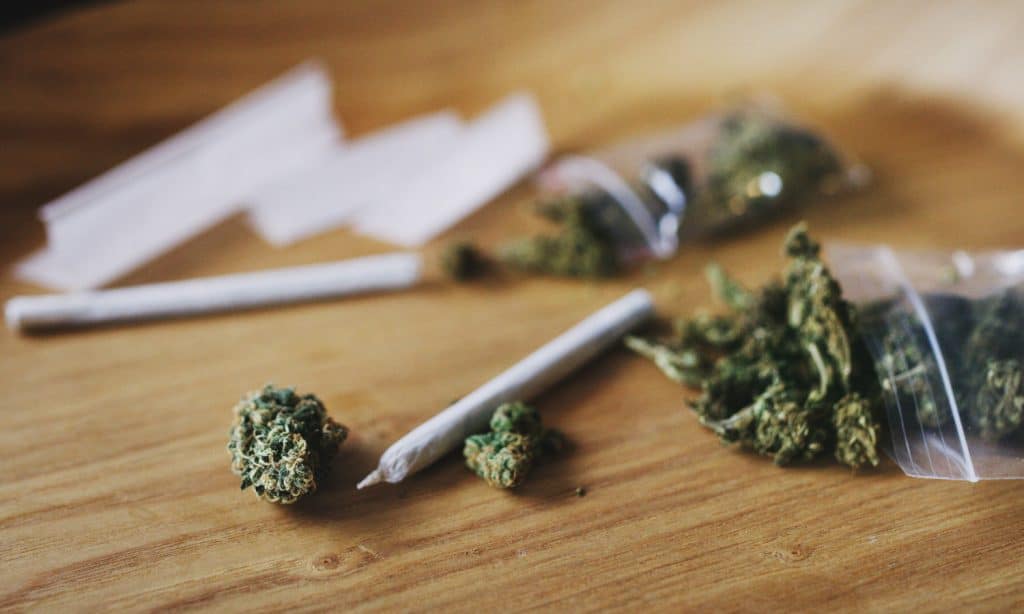
First, remember that you’re going to need a whole lot of leftover rosin chips to reap the benefits, so the flatiron pressed buds will have to collect over a long period of time or not be used at all. The main event is going to come with an actual press that is in fairly constant use.

Photo by Nisangha/Getty Images

One popular method is making a tincture out of high proof alcohol, which extracts the remaining THC and concentrates it into a digestible liquid held under the tongue for a minute or so. To make the tincture, first grind up the leftover product and decarboxylate it. You can do this by putting it in an over on low heat (225 F° ballpark) for 40 minutes. Put the decarboxylated crumbs in a jar and just cover with the liquor. Shake vigorously a few times a day for a month to three months and voila! Place the tincture into dark colored medicine droppers and enjoy!

RELATED: 5 Ways To Utilize Leftover Marijuana Pulp From Cannabutter

Though it won’t taste like the souped up nuggets that once were, vaping your rosin chips is another viable option. Grind them up fine and them pack your vape. The irony is that often vape crumbs are reused to make edibles, so we have a whole lot of recycling going on! No vaporizer? You can always just smoke them, just expect to smoke a lot of not so yummy pot.

Speaking of edibles, they are yet another way to use up your rosin leftovers. You’ll want to decarboxylate ground up rosin chips again before making your cannabutter, coconut oil or other edible carrier oil. Again, the taste isn’t going to be the same as if you were using fresh buds, but with cooking you can get creative with flavors and that means even the leftovers can taste gourmet.

Photo via 

Science Says This Is The Best Way To Train Your Dog

0

Positive reinforcement (giving treats and kisses to your dog when they behave correctly) is one of the world’s most popular ways of training dogs. But is this the best way?

There are a million ways to train your dog but nothing beats a treat. Although this method has been criticized because it encourages giving out food after every good deed, a growing body of research continues to prove why this method is the easiest and most effective way of reinforcing positive behaviors.

We tend to give too much credit to our relationship with our pets, believing that they’ll do anything we want just because we love them and they presumably love us. It’s a cute thought, yet not the most practical one when you want your dog to pee in the proper place and not on your expensive rug.

RELATED: This Is Why We Value Dogs More Than Cats

“If your boss stopped paying you, you’d probably stop going to work pretty quickly. You need to motivate your dog too,” Zazie Todd, author of “Wag: The Science of Making Your Dog Happy,” tells Huffington Post.

dogs know when youre upset and want to help
Photo by Alvan Nee via Unsplash.

One of the most common and effective methods of preventing bad behaviors is punishment. Although this method works in changing bad behaviors, it also comes with a batch of side effects. “The risks include fear, anxiety and stress,” says Todd, “and they include an increased risk of aggression, because the dog may react badly to punishment or the threat of punishment.”

RELATED: 5 Subtle Signs Your Dog Is Depressed

Try to find creative ways to positively reinforce your dog with treats, walks and play time. Get creative with what you give to your dog, ensuring that treats are varied and keep them interested, and that they fit the activity that your dog is doing. You can give your dog a basic treat when it behaves correctly within the house, and a more special treat when they’re out and really deserve it.

Ration out foods, making sure that your dog is not overfed, and avoid punishments even if it seems like the easiest way to prevent bad behaviors.

Meghan Markle Just Confirmed That Baby Archie Does Indeed Have Red Hair; Kylie Jenner & Travis Scott Reunite For ‘Family’ Time

0

Kylie Jenner and Travis Scott, who called it quits recently, are putting their family first; The Duchess of Sussex reveals what we all suspected: Archie has his dad’s red hair.

Meghan Markle Just Confirmed That Baby Archie Does Indeed Have Red Hair

Via Town & Country:

Baby Archie just turned five months old, and hit another important milestone. Meghan and Harry’s son recently attended his first playgroup class in Windsor.

“I just took Archie for his first [playgroup] class,” Meghan said at the annual Wellchild Awards in central London this evening. “It was a lot of fun. He loved it.”

The Duke and Duchess spoke with 11-year-old Milly Sutherland and her mom Angela, 50, at a reception for winners of the awards, and after their conversation, Angela said: “[Meghan] took him to one of these baby classes today, and she said they had loads of fun together. She said it was really good fun.”

The mum and daughter, from Liverpool, also asked the couple whether Archie has red hair.

“Meghan said he has, and Harry said he definitely has. You can see it in his eyebrows,” Angela said.

She added, “Harry said he’d had no hair for five months, but Meghan told him she had taken him to the playgroup, and there were other children there with the same amount of hair or even less.”

Watch Kylie Jenner & Travis Scott Reunite For ‘Family’ Time

Via iHeart Radio:

Kylie Jenner and Travis Scott are putting their family first.

While the former couple called it quits on their two-year relationship earlier this month, the exes are making sure their relationship as co-parents remains on track. Kylie and Travis’ first step in ensuring that their 20-month-old daughter, Stormi Webster, remains their priority is setting aside family time like they did on Sunday (October 13).

A source told E! News that the former couple spent the day together with their baby girl at Kylie’s home. “They got along well and were so happy being a family with Stormi,” the insider shared. “It looked like nothing has changed with them.”

Travis even shared a cute moment from their family day to his Instagram Story. The “Highest In The Room” rapper posted a video of Stormi dancing to one of his songs as someone, who sounded a lot like Kylie, cheered on the baby girl off-camera.

Despite their time together as a family, a source previously told E! News, Kylie and Travis “still separated, however, they’ve started having “conversations about getting back together.”

“They both know it’s inevitable, they just needed some breathing room to work out a few of their issues,” the insider explained. “They want to make it work and have both expressed they miss each other and are still in love with one another.”

https://www.instagram.com/p/B3mWDY_gtkx/


You Should Be Listening To These Cannabis Podcasts

Whether you’re looking for something all about marijuana business or the history of cannabis, these podcasts will keep you entertained and informed.

Content is king and no media format contains more creativity and niche information than the world of podcasts. Most of us listen to podcasts through headphones, which makes the listening experience more intimate and personal than binging Netflix on a Sunday morning. Thanks to America’s newfound interest in all things cannabis, a wealth of cannabis podcasts have emerged to satiate the growing demands of audiences.

Here are some of our favorites, all of which still produce fresh episodes.

On Something

This new NPR-associated podcast from Colorado Public Radio focuses on how life has changed in various parts of the country following legalization. Hosted by journalist Ann Marie Awad, On Something narrows down to the personal narratives that occur in the wake of so much political and cultural change. Recent episodes include “CBD: The Hype And The Reality” and “Legal Weed As Reparations?”

GrowCast

For the folks interested in the nuances behind the growing and processing of cannabis, this show is for you. Don’t worry, GrowCast doesn’t exclusively discuss growing techniques. The podcast also dives into the history of cannabis and some of marijuana’s biggest pop culture moments, all while expanding your knowledge of all things weed.

RELATED: 5 Tips To Help You Spot Wellness And CBD Knockoffs

Photo by underworld111/Getty Images

CannaInsider

As you might expect by its name, CannaInsider is a very industry-centric podcast. You’ll enjoy this show if you’re interested in the business of marijuana, as well as the trends and individuals shaping the cannabis industry. With nearly 300 episodes, this is a must-listen for anyone who wants to make it big in marijuana.

RELATED: Debunking 6 Popular Myths About Today’s Marijuana

Great Moments In Weed History

Who doesn’t love a good deep dive? That’s what keeps us returning to this show, which highlights some of the most improbable and hilarious moments in cannabis history. Whether hosts Abdullah Saeed and David Bienenstock discuss Barack Obama’s weed years, or when Bob Dylan first introduced The Beatles to marijuana, you’ll learn how cannabis indirectly and directly shaped some of America’s greatest figures.

Is Hemp-CBD Pet Foods Legal?

While there are many hemp-CBD pet products on the U.S. market, here’s a brief overview of the regulatory framework surrounding hemp-CBD pet foods.

According to recent reporting, pet industry spending is expected to reach $96 billion by 2020 with CBD as one of its fastest growing sections. Following the enactment of the Agricultural Improvement Act of 2018 (“2018 Farm Bill”), there has been a huge interest in the use of hemp-derived cannabidiol (“Hemp-CBD”) for our furry friends. Yet, public demand for Hemp-CBD pet products may be pushing the market ahead regardless of legal requirements. But is hemp-CBD pet foods legal?

While there are many Hemp-CBD pet products on the U.S. market, this blog post provides a brief overview of the regulatory framework surrounding Hemp-CBD pet foods.

FEDERAL POLICIES

Hours following the passage of the 2018 Farm Bill, Scott Gottlieb issued a statement in which the then-FDA Commission clarified that the federal legalization of the crop did not strip the agency of its regulatory authority over products containing hemp and its derived compounds, including Hemp-CBD pet foods.

Waking up to this every morning would surely give you more will to live. Unsplash/jonathan daniels, CC BY-SA

Pursuant to Sections 301(ll) and 201(ff)(3)(B) of the Food, Drug and Cosmetic Act (“FD&CA”), food cannot contain an ingredient also found in an approved drug. Because the FDA approved CBD as an active ingredient in Epidiolex, a drug used in the treatment of epilepsy, for which substantial clinical investigations have been instituted, the FDA posits that it is unlawful to use CBD as an active ingredient in human and pet foods.

There is an exception to this rule if the substance was “marketed as” a conventional food before the new drug investigations were authorized; however, based on available evidence, FDA has concluded that this is not the case for CBD. Consequently, the sale and marketing of Hemp-CBD pet foods currently violates FDA policies.

The FDA has limited its enforcement actions against Hemp-CBD products for pets by issuing warning letters to companies that have been making unsubstantiated, egregious claims about the therapeutic value of their products. Therefore, if a company decides to enter the Hemp-CBD pet market regardless of FDA policy, it should, at a minimum, refrain from making any health claims.

STATE LAWS

Although the FDA prohibits the sale and marketing of Hemp-CBD pet foods in interstate commerce, several states have enacted legislation that expressly legalized the sale of these products. Oregon, for example, authorizes the manufacture, distribution and sale of Hemp-CBD pet foods, which are limited to “dog and cat” foods containing no more than 0.3 percent total THC. In addition, Hemp-CBD pet foods manufactured, sold and marketed in the Beaver State must meet other testing requirements imposed by the Oregon Health Authority, including but not limited to microbiological contaminants.

RELATED: The Truth About CBD For Your Pets

Other states have not taken a position on the sale of these products, rendering these products illegal at worse and unregulated at best.

So similarly to Hemp-CBD human foods, Hemp-CBD pet foods cannot lawfully be sold throughout the United States. As such, manufacturers, distributors and retailers of Hemp-CBD pet foods should consult with regulatory attorneys to understand and mitigate the risk of enforcement action by the FDA as well as state and local enforcement groups that prohibit the sale of these products.

For more information on this issue, please contact our hemp regulatory team.

This article originally appeared on Canna Law Blog.

Cannabis Capsules Are Not Your Mother’s Marinol

Because Marinol is the synthetic form of THC, it comes with a host of side effects not normally associated with full plant cannabis.

Even if weed were to be legalized nationwide tomorrow, there will always be times when smoking — and even vaping — are not appropriate. For patients with respiratory conditions, smoking may not even be an option and edibles may be too filling. All excuses to use THC pills aside, they definitely have their place at the cannabis table, much more so than the synthetic Marinol.

Marinol was and remains a THC pill given to cancer, HIV/AIDs and other patients with wasting syndrome. Unfortunately, because it is the synthetic form of THC alone, it comes with a host of side effects not normally associated with full plant cannabis. And that includes, sadly and ironically, nausea and stomach pain.

Now when you visit your local dispensary, cannabis capsules are everywhere. Full spectrum, CBD, high THC and other variations on the themes of cannabinoids. While some CBD oils may be made with CBD isolate, which has its merits, the full plant version of the pill has an entourage effect that relieves more symptoms.

RELATED: Federal Study Aims To Learn More About Marijuana And Weight Loss

There are a few things to be aware of, however, such as the carrier oil and cannabinoids will be processed through your liver — a much different experience than smoking cannabis. It still gets you lifted, that’s for certain, but it also has additional medicinal properties, like a full body high and increased munchies, and lasts longer than traditional smoking or vaping.

Photo by Maren Caruso/Getty Images

If you don’t live near a dispensary or don’t have a caregiver, making your own capsules is a fairly easy process. Take an amount of cannabis that you would normally ingest in one sitting, multiply it by the amount of capsules you want to make, grind up the bud and proceed to the very important step of decarboxylation.

To decarboxylate your weed, simply spread it across the bottom of a baking pan and set the oven to 225℉. Put the pot pan in the oven and let it bake for around 45 minutes. Once your THC has been made active in this manner, you’re ready to add the oil. Grind the weed up fine and cover it with coconut oil in a crockpot. Stir it up. After 4 hours and 20 minutes, cool the liquid and start inserting gel caps with the magical oil using an oral syringe.

Store your ultimate chill pills in the fridge and take when needed. A perfect method is to smoke or vape prior to or right after taking the capsules. You’ll slip right from one high to another. Just remember to start with one pill, wait an hour, and see where your body and mind have landed before taking another.

How Silicon Valley Is Helping Overturn Marijuana Convictions

Marijuana expungement is an often laborious, bureaucratic process, but algorithms have eased the process.

Following marijuana legalization, states and cites have emphasized correcting the records of those affected by the War on Drugs. An estimated 20 million people were arrested for a marijuana-related offense over the past 30 years. When individuals have cannabis convictions on their record, it limits their opportunity to acquire employment, access stable housing, and participate in their children’s school activities.

While cities like Seattle have offered opportunities for individuals to clear their records, the process is often laborious and bureaucratic. Take San Francisco, for example. In 2017, the city announced more than 9,000 residents were eligible to expunge marijuana convictions from their records. But only 23 people petitioned for that to happen.

RELATED: Illinois Pot Offenders: How To Get Your Marijuana Offense Wiped Clean

“The way the legislation was written really kind of put it all on the people that had been convicted,” San Francisco District Attorney George Gascón told Reason. “It didn’t prohibit us from doing anything about it, but then it also didn’t spell out that you should.”

Technology Helping To Wipe Marijuana Convictions Off The Books
Photo by eskymaks/Getty Images

As Gascón explained, those able to take advantage of expungement were those already “well off” and “sophisticated” enough to jump through the necessary hurdles. But the San Francisco District Attorney believes the government should play a more active role in assisting “people that were harmed by decades of bad policy.” In other words, to make a kind of reparations.

That’s why Gascón recruited Silicon Valley to help with the process. He partnered with Evonne Silva, Code for America’s senior program director, and her team, which aims to clear a quarter million cannabis convictions in California before 2020. Silva’s team created an algorithm that combs through prior convictions and flags any cases possible for expungement. Then, the program automatically follows the paperwork on the individual’s behalf.

RELATED: Can California Employers Still Test For Marijuana?

“The difference is, it on average takes an attorney 15 minutes to review one criminal record and evaluate eligibility and prepare the paperwork,” Silva told Reason. “We were able to process over 8,000 convictions in San Francisco in a matter of minutes.”

Other California jurisdictions plan to follow San Francisco’s lead and partner with Silva’s team, which is part of Code for America’s Clear My Record campaign. Los Angeles and San Jose are among the participating cities, but the program eventually aims to take its efforts nationwide.

“The technology is actually really simple. It also starts to shift the way in which people relate to their government, because now this is a service provided [by] government as opposed to government being seen as an obstacle,” Silva said.

Transporting CBD Into Canada Is Not OK

It’s illegal to take cannabis and cannabis products, including those with CBD, across the Canadian border, whether you’re leaving or coming to Canada. This applies to all countries.

In a recent tweet, the Canada Border Services Agency (CBSA) reminded us that transporting CBD oil into Canada remains illegal. While in most places south of the 49th parallel what CBSA has to say is of little consequence, it certainly matters here in Washington State, where you’re never too far away from the Canadian border. The full text of the tweet reads:

#DYK that transporting #CBDOil across the border remains illegal? Transporting any form of #cannabis across the border without a permit or exemption authorized by @GovCanHealth remains a serious offence. #DontBringItIn #DontTakeItOut

With the coming into force of the Cannabis Act on October 17, 2019, recreational marijuana use became legal on both sides of Washington State’s 427-mile border with British Columbia, as well as other stretches of the U.S.-Canada boundary. This created a situation ripe for confusion. The man (or woman) on the Amtrak Cascades might reasonably conclude that there is nothing wrong with taking a cannabis product bought legally at a Seattle shop to Vancouver, where it can also be purchased legally.

However, as the Canadian government made clear in the information sheet it sent to every household in the country prior to the Cannabis Act’s effective date: “It’s illegal to take cannabis and cannabis products, including those with CBD, across the Canadian border, whether you’re leaving or coming to Canada. This applies to all countries, whether cannabis is legal there or not.”

With CBD products also on the hook, the potential for confusion extends to much of the borderlands. For instance, while Montana has a much stricter cannabis regime than Washington State, THC-free CBD products are not illegal in Big Sky Country. This puts not just the marijuana aficionado from Tacoma on his way to party in Van at risk of border trouble, but also the arthritic retiree from Helena heading up for a weekend in Banff.

RELATED: Going Postal: USPS Provides Guidance On Mailing Hemp-CBD

To be fair, it’s not uncommon at all for products that are legal on both sides of a border to be subject to customs controls, for revenue and/or regulatory reasons. That said, the situation with cannabis along the U.S.-Canada border is more fraught with risk because it is still an illegal drug as far as the U.S. federal government is concerned.

Photo by Mark Spowart/Getty Images

It is perfectly understandably for U.S. Customs and Border Protection (CBP) to be on the lookout for cannabis products. The agency is tasked with enforcing federal law, and logically their officers in Metaline Falls, Washington should not go about their duties any differently that their colleagues 55 miles away in Eastport, Idaho. However, it is clear appears that the Feds are going far beyond that—with Canadians feeling much of the pain.

The CBC is likely not exaggerating when it reports, “Thousands of Canadians have been denied entry to the U.S. simply for admitting they’ve smoked a joint once in their lives.” As my colleague Akshat Divatia recently explained:

U.S. law will not recognize any amnesty or pardon by Canadian authorities for cannabis-related convictions. Admitting to a CBP officer that you used marijuana any time before legalization is the equivalent of a formal court conviction for that crime and you will likely be denied entry into the United States.”

The same CBC article notes that an “unsuspecting CBD oil user”—remember our arthritic retiree—could be “banned from entering the [U.S.] for life.” But you don’t even need to carry or even have used cannabis products to get in trouble. As Akshat notes:

Those who legally work in the Canadian cannabis industry must provide details about their role and convince U.S. border officers that their trip to the U.S. is purely personal. Cannabis workers will likely need to prove that while in the U.S., they will not engage in any networking or strategic meetings, presentations, marketing efforts, or any manufacturing or distribution activities with customers or cannabis industry colleagues.”

Stated less elegantly, coming to the U.S. for cannabis-related business is a no-no. Even investing in cannabis businesses could theoretically get you banned for life from the United States. With this kind of onslaught, even innocuous activities such as changing planes at a U.S. airport to attend a cannabis conference in a third country are causes of concern.

It doesn’t stop there, though. In at least one instance that we know of, CBP took away NEXUS privileges from someone who wrote a reference letter for a fellow Canadian applying for a waiver for a marijuana-related ineligibility. This is worth repeating. They did not take away NEXUS privileges from someone who him or herself had a marijuana ineligibility, but rather from someone who wanted to help that person by writing a letter. This would be akin to a lawyer getting sanctioned for serving as a character reference for a bar applicant who had a run-in with the law in the past.

RELATED: Are CBD-Infused Alcohol Beverages Legal?

You might think, well, it’s just NEXUS—wait in the regular line like the rest of us. But the ability to avoid long waits at the border can be critical for persons engaged in cross-border business activities. And, again, the privileges are being taken away for writing a letter.

I wish I could say that the bottom line is as simple as not taking any cannabis products—whether THC, CBD or somewhere in between—with you when you cross the border. However, the risks run much deeper for Canadians and other foreigners with any cannabis involvement heading south. And to be sure, this includes foreigners living in the United States, who are pretty much subject to the same ineligibilities.

If in doubt, talk to a lawyer before you go anywhere near the Peace Arch. DON’T take chances: The consequences can be as serious as they get.

This article originally appeared on Canna Law Blog.

How CBD Oil Can Help You Quit Smoking

Smokers treated with a CBD inhaler significantly reduced the number of cigarettes they smoked by a surprising 40% during treatment.

Tobacco smoking, cannabis, and alcohol are the most commonly abused drugs by young adults and teens in our country, and worldwide. There’s a gateway theory of drug use that suggests a progression from common, easy to find drugs, like cannabis, alcohol, or tobacco smoking, to more serious forms of drug use like MDMA, cocaine, or heroine. But, while tobacco use oftentimes occurs at about the same time as cannabis use, recent research is suggesting that marijuana may not be a gateway drug into ecstasy, heroine or cocaine, but really, only to tobacco use.

Kids that start using cannabis seem to also start smoking or vaping tobacco at a similar time in their life. And this isn’t exactly reassuring. The CDC reports that tobacco is not only the leading cause of preventable disease in the US, but the 14% of US adults who are cigarette smokers are costing our country 300 billion a year in smoking related illness. But is it possible that some components of the cannabis plant may actually be effective in curbing nicotine use? Or helping people that are trying to quit, be more effective? That may be true. The role of the endocannabinoid system in nicotine addiction is being increasingly acknowledged, and in one study, shows a very supportive position for helping people to control their nicotine addiction.

RELATED: How To Naturally Beat Nicotine Addiction With Cannabis

In a small study of 24 smokers who were in a randomized controlled situation, they were given either an inhaler with CBD, or an inhaler of a placebo. They were instructed to use their inhaler when they felt the urge to smoke. The placebo treated smokers showed no difference in the number of cigarettes smoked. In contrast, those treated with the CBD inhaler significantly reduced the number of cigarettes they smoked by a surprising 40% during treatment. And in follow-up, that reduction appeared to be sustained. So, this preliminary data suggests that CBD could be a potential treatment for nicotine addiction that warrants for their explanation.

Cannabis Is Much Safer Than Cigarettes
Photo by Philippe Goulet via Unsplash

In fact, so much so, that the United States Patent and Trademark Office (USPTO) has issued a notice of allowance for Vireo Health’s patent application titled Tobacco Products With Cannabinoid Additives, And Methods For Reducing The Harm Associated With Tobacco Use. So, it appears that CBD may be beneficial for reducing the anxiety and stress associated with withdrawal of nicotine use, and it may also have potential benefits when combined in tobacco products, as it has shown in previous studies for reducing irritation, inflammation, and even carcinogenicity.

This post originally appeared on CBD & Cannabis Info.

Here’s How Long It Takes For CBD To Kick In

Each CBD product comes with its own dosage and instructions on how to use it, but one of the biggest influencing factors is CBD’s method of consumption.

CBD is one of the most popular compounds for wellness and beauty products, even if it remains very mysterious. Although CBD doesn’t get you high, it does affect your body in relaxing and therapeutic ways, reducing inflammation, anxiety, stress and more. Depending on how you consume it, the compound can take different amounts of time to kick in.

One of CBD’s main problems is that it’s not FDA regulated, meaning that there’s not a lot of scientific research in progress or an official standard dosage. Without this, it’s hard to judge how the compound will affect people and how long it’ll take to kick in.

Each CBD product comes with its own dosage and instructions on how to use it, but one of the biggest influencing factors is CBD’s method of consumption. Real Simple spoke with Boris Shcharansky, COO of Papa & Barkley cannabis company, who said that how you consume CBD is key for determining when it’ll affect you.

RELATED: 5 Ways To Incorporate Effective CBD Products Into Your Everyday Life

Here’s how long the compound takes to kick in depending on how you use it.

cbd regulations might come sooner than expected
Photo by OlegMalyshev/Getty Images.

Topicals

Lotions, creams, balms, ointments and all of those types of products should be the fast acting. Once applied, relief should kick in within 15 minutes.

Edibles

This category encompasses a larger branch of products. Tinctures, capsules, gummies, chocolates and candies are all consumed orally and have different ways of affecting you. Sublinguals like tinctures are applied under the tongue and should kick in within 15 minutes. Products that are digested, like gummies and capsules, take longer, kicking in within a 45 minutes to two hours time frame.

Always be careful and start off slow

While CBD is a safe product to consume, you should still be wary of doses, avoiding overdoing it and consuming more than you should. Overdosing on the compound won’t cause anxiety bouts or paranoia, but it might make you feel very drowsy. The first time you use a CBD product you should start off slow and see how your body responds, waiting patiently until you notice the effects.

RELATED: How To: A Beginner’s Guide To Buying CBD Products

It’s also important to remember that many of CBD’s benefits are cumulative. Jesse Stanley, founder of Charlotte’s Web, says that CBD should be considered a supplement instead of a one-off product people consume whenever they need relief. While the positive change might not be immediate, after several weeks of use you will start to notice improvements.

Don't Miss Your Weekly Dose of The Fresh Toast.

Stay informed with exclusive news briefs delivered directly to your inbox every Friday.

We respect your privacy. Unsubscribe anytime.