Wednesday, December 24, 2025
Home Blog Page 631

Cannabis Flavonoid Could Provide Breakthrough Treatment Against Pancreatic Cancer

A new study finds that flavonoids, the chemical that gives cannabis its color, could significantly increase the life expectancy of pancreatic cancer patients.

While pancreatic cancer isn’t the most prevalent of cancers in the Untied States, it ranks highly among the deadliest. As the American Cancer Society reports, pancreatic cancer accounts for 3% of all cancer in the country, but is the cause of 7% of all cancer deaths. Furthermore, pancreatic cancer patients carry a one-year survival rate of 20% and could become the second-leading cause of cancer death by 2020.

A new study published in the Frontiers in Oncology journal, however, reports that a property in cannabis could provide “significant therapy potential” for pancreatic cancer treatment. That cannabis property would be none other than flavonoids, the plant chemical that makes up about 0.14% of cannabis and creates color pigmentation in the plant. Cannabis flavonoids recently made the news for their anti-inflammatory capabilities, which scientists discovered were 30 more times powerful as a painkiller than aspirin.

RELATED: Forget Aspirin, These Marijuana-Based Painkillers Are 30 Times More Powerful

The limitation of flavonoids is due to its small makeup of the plant. Scientists would have to grow vast fields of cannabis to unlock this therapeutic potential. But, as Yahoo Lifestyle reports, researchers have unlocked a methodology to genetically engineer flavonoids in laboratory settings, thereby opening up their possibilities.

That’s where researchers from Harvard University’s Dana-Farber Cancer Institute come in. They used the cannabis flavonoid FBL-03G against pancreatic cancer and found “major” results, Wilfred Ngwa, a Harvard assisntant professor and researcher on the study, told Yahoo.

“The most significant conclusion is that tumor-targeted delivery of flavonoids, derived from cannabis, enabled both local and metastatic tumor cell kill, significantly increasing survival from pancreatic cancer,” Ngwa said. “This has major significance, given that pancreatic cancer is particularly refractory to current therapies.”

Photo by Aphiwat chuangchoem via Pexels

Not only did FBL-03G target pancreatic tumors, it also successfully killed other cancer cells. This startled researchers. Since pancreatic cancer is often diagnosed in later stages, those cancer cells have the potential to spread throughout the body. Flavonoids, therefore, could significantly increase the life expectancy of pancreatic cancer patients.

RELATED: MDMA Could Reduce Alcoholism Relapse, Says Study

“We were quite surprised that the drug could inhibit the growth of cancer cells in other parts of the body, representing metastasis, that were not targeted by the treatment,” Ngwa said. “This suggests that the immune system is involved as well, and we are currently investigating this mechanism.”

Researchers will now conduct pre-clinical trials, which will hopefully be completed by the end of 2020.

4 Super-Discreet Ways To Use Marijuana

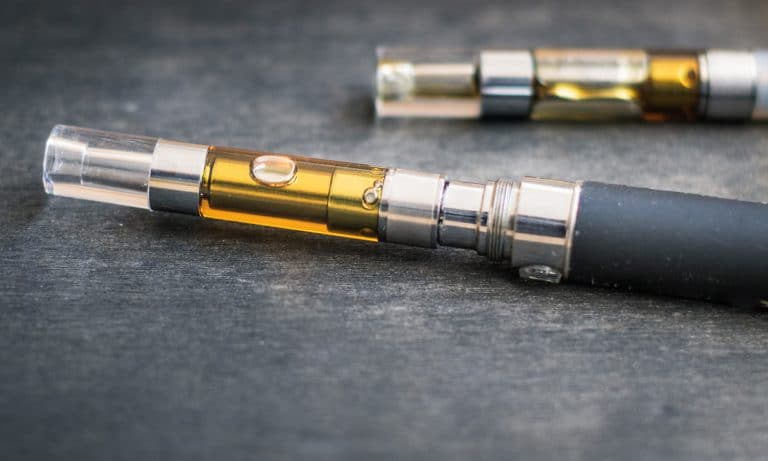
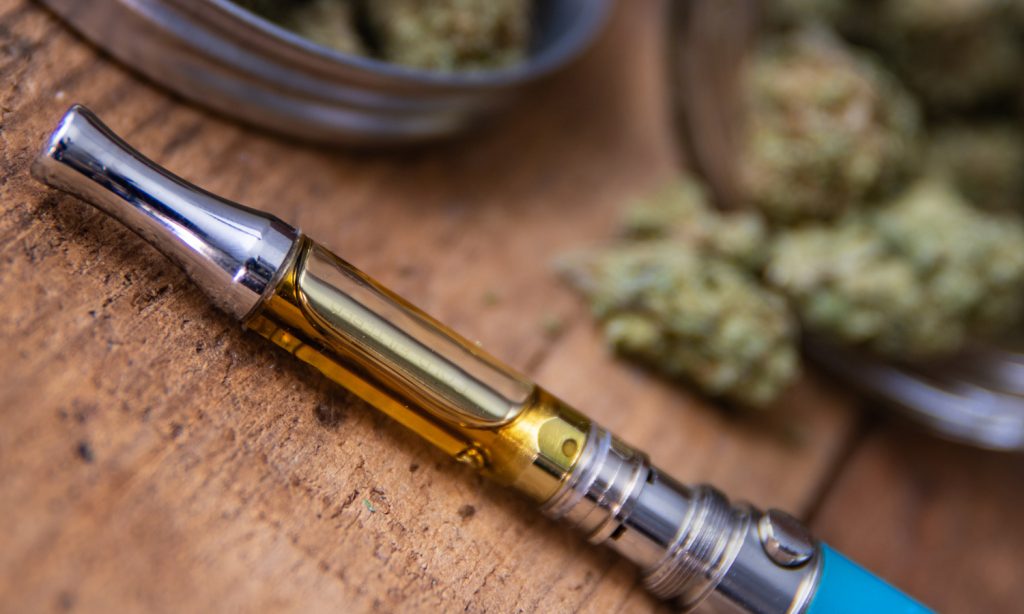
Even in states that have legalized the leaf for recreational purposes, there are still plenty of situations where smoking a joint or hitting a vape pen will not fly.

Marijuana is headed into the mainstream, no doubt about it. But that does not mean it is socially acceptable in all circles. Even in states that have legalized the leaf for recreational purposes, there are still plenty of situations where smoking a joint or hitting a vape pen will not fly. So, what is the outcast cannabis connoisseur supposed to do — stay sober, pop pills like the rest of the goons in the office, or watch along the sidelines as co-workers knock back bottles of booze after 5 p.m.?

The world today is rough enough without being forced to face it head on devoid of a buzzed mindset to help dismiss the lunacy of politics, water cooler chatter and other white noise reverberating around the asylum that is the daily grind. Thankfully, the scientific minds of the cannabis trade have found a solution to keeping America stoned on the down low.

Klear Cannabis Syrup

The best method for medicating inconspicuously is to do it in plain sight. It is for this reason that Klear Cannabis infused syrup is the perfect product for anyone looking to get high without being detected. This edible THC can be mixed in water, coffee or any other beverage for that matter. It can also be taken like regular cough syrup. But it is wise to figure out the preferred dosage before using this product at work. Each bottle contains 1,000 mg of THC, so it can be easy to over-consume. Experiment with this syrup over the weekend. You’ll be a well-versed THC mixologist by Monday morning.

Quigley’s Cannabis Shot

Another fine product for the secret stoner to keep in his or her arsenal is Quigley’s Cannabis Shot. This liquid THC delivery system is similar to the energy shots found in truck stops all across the country. Only instead of caffeine, this liquid comes packed with THC. These shots are “the fastest way to ease the day,” according to the product’s website.

RELATED: Vape Pens: So Stealth, Let Us Count the Ways

The high effects of the shots, which come in sizes ranging from 10mg to 50 mg, last for hours. They are also gluten-free, caffeine-free, and contain zero calories and no fat. It allows the user to be high and health conscious. What’s better than that?

Pot Shotz

In the days where almost everyone seems to be using protein and energy powders, it stands to reason that a THC-infused powder would be a great method for medicating without arousing suspicion. And we found a good one. Pot Shotz is a single serving THC powder pack that can be mixed with any beverage. Add it to your morning coffee at work to maintain a buzz during the day, and then add it to an after-work cocktail. The Pot Shotz packs come in 10 mg single doses.

The only snag with this product is it can take up to two hours to feel the effects. However, the slow and steady technique is sometimes better for beginners, as it does not blast them out of their minds all at once.

Photo by Nisangha/Getty Images

Make Your Own Tincture

Although a growing number of states have legalized marijuana for recreational use, not everyone has the luxury of shopping for pot products at their local dispensary. For these folks, getting stoned on the down low can prove a bit more challenging. But there is a simple solution: Homemade tinctures. Marijuana tinctures are old school. This is how pot was sold in pharmacies before the federal government moved to outlaw cannabis. Not only do these concoctions absorb into the blood stream rather quickly, they are versatile and super discreet.

Add a tincture to any beverage or simply drop it under the tongue. The easiest way to make a cannabis tincture is to use a Magical Butter machine. At around $190, it is a solid investment for anyone wanting to make cannabis oil, cannabutter and, of course, tinctures. You can find the recipe here.

Youths Smoke Less Weed, Adults Smoke More Following Marijuana Legalization

Federal data shows that adult marijuana use has increased by double since 2012, while youth use has dropped by a quarter.

A common refrain among Republican politicians against marijuana legalization is uncertainty around how normalizing cannabis use could affect teenage consumption. Rep. Dan Crenshaw (R-TX) made that argument earlier this week on Joe Rogan’s podcast. According to new data The National Survey on Drug Use and Health (NSDUH), marijuana legalization is driving more people toward cannabis. The catch—legalization increases adult usage, but decreases it among youth.

For several decades, the highest marijuana consumers was split generationally. Those ages 18-25 were the heaviest users, followed by teenagers ages 12-17. In dead last were adults, ages 26-plus. But around 2016 that clientele base flipped—adults now account for more marijuana use in the past month than teenagers.

RELATED: The Surprising Reason Many Teenagers Aren’t Smoking Marijuana

To put that into perspective, consider this. In 2002, teenagers used marijuana at more than double the rate as their adult counterparts (8.2% vs. 4%, respectively). NSDUH demonstrates adult consumption doubling to about 8% in recent years while youth usage dropped by a quarter in the same time. NSDUH data, by the way, is compiled by the Substance Abuse and Mental Health Services Administration (SAMHSA), a federal organization.

“The percentage of adolescents in 2018 who used marijuana in the past year was lower than the percentages in 2002 to 2004 and in 2009 to 2013, but it was similar to the percentages in 2005 to 2008 and in 2014 to 2017,” SAMHSA said.

Photo by Ankit Rawat/EyeEm/Getty Images

The data also shows how attitudes around marijuana has changed in the country. As The Shepherd Express reports, SAMHSA also polled subjects in their survey their perceptions on what risk smoking marijuana once a month carried. In 2002, they reported 39.3% believed smoking once a month carried a “great risk.” By 2017, that figure has dropped to 26.91%.

RELATED: Study: Marijuana Doesn’t Cause Bad Behavior In Teens

This data corroborates what others have previously reported—marijuana legalization does not significantly encourage youths using cannabis. A study published by JAMA Pediatrics earlier this year demonstrated that both medical and recreational legalization did draw teenagers into smoking weed.

“Consistent with the results of previous researchers, there was no evidence that the legalization of medical marijuana encourages marijuana use among youth,” researchers concluded. “Moreover, the estimates…showed that marijuana use among youth may actually decline after legalization for recreational purposes.”

These Congressional Republicans Support The Cannabis Industry

There are now more Republicans in Congress that support the cannabis movement in one way or another than ever before.  

The marijuana legalization movement has a lot of friends in high places these days that were not always there for the cause. It goes without saying that, despite just how popular cannabis has become over the past few years, it was not always the opinion of those who write our laws in the United States that we should embrace the herb similar to alcohol and tobacco and allow it to become a part of legitimate society.

It was the Democrats that initially took the reins on this issue, fighting for it on Capitol Hill without any success. But them something bizarre started to happen. Republicans, a group staunchly opposed to legal weed since the dawn of time, started to come out of the pot closet. There are now more Republicans in Congress that support the cannabis movement in one way or another than ever before. The following is a list of those fighting to give the cannabis industry more rights to operate without antiquated federal controls.

RELATED: WATCH: Where Does Every Presidential Candidate Stand On Marijuana?

Photo by Omar Chatriwala/Getty Images

Representative Steve Stivers: Republican Representative from Ohio, where medical marijuana is now legal. He is a co-sponsor on a bill designed to give banks permission to do business with the cannabis industry. It is known as the SAFE Banking Act.

Senator Cory Gardner: Republican Senator from Colorado, where marijuana is legal for both medical and recreational use. He supports bringing an end to federal marijuana prohibition and is considered one of the primary voices for the movement on the Hill. 

Representative Rodney Davis: Republican Representative from Illinois, where marijuana is legal for both medical and recreational use. In addition to his support for the SAFE Banking Act, he has also cast several votes in favor of giving veterans access to medical marijuana. 

Representative Duncan Hunter: Republican Representative from California, where marijuana is entirely legal. He is a co-sponsor on the SAFE Banking Act.

Senator Mitch McConnell: Republican Senator from Kentucky. He hates marijuana (at least for now) but played a huge role in the legalization of industrial hemp production last year, giving the agricultural community, as well as the CBD sector a boost. 

Representative Dan Newhouse: Republican Representative from Washington, where marijuana is legal for recreational use. He is a co-sponsor on the SAFE Banking Act and has voted in favor of medical marijuana access for veterans.

Representative David P. Joyce: This Republican Representative from Ohio is the co-chair of the Congressional Cannabis Caucus, a group pushing for marijuana reform at the national level. He is a supporter of several marijuana legalization efforts, including the SAFE Banking Act and the Marijuana Data Collection Act. 

Representative Don Young: Republican Representative from Alaska, where marijuana is legal for recreational use. He recently joined forces with Democrat Tulsi Gabbard to introduce the Ending Federal Marijuana Prohibition Act of 2019. He is a state’s rights supporter and a co-sponsor on the SAFE Banking Act. 

Representative Matt Gaetz: Republican Representative from Florida, where medical marijuana is legal. He recently introduced the Medical Cannabis Research Act of 2019 because, he says, “we cannot reform cannabis law without researching its safety, its efficacy, and its medical uses.” He is also a co-sponsor on the SAFE Banking Act.

Senator Kevin Cramer: Republican Senator from North Dakota, where medical marijuana was made legal by way of ballot initiative. He is part of a group working to give marijuana-related businesses access to comprehensive and affordable insurance coverage.   

Representative Denver Riggleman: Republican Representative from Virginia, which has a medical marijuana program. He is a supporter of all things medical marijuana and eliminating prosecutions for petty pot offenses. He is also a co-sponsor of both the STATES Act and the SAFE Banking Act. 

Senator Lisa Murkowski: Republican Senator from Alaska. She believes states should be permitted to make their own rules when it comes to marijuana, and that financial services should be made available to the cannabis trade. She is presently a co-sponsor of the Secure And Fair Enforcement Banking Act of 2019. 

Representative Mark Amodei: Republican Representative from Nevada, where marijuana is legal for adults 21 and over. He has called out the federal government for accepting tax money from the cannabis industry, all while refusing to legalize. He supports the SAFE Banking Act. 

Representative Troy Balderson: Republican Representative from Ohio. He is a supporter of medical marijuana. Balderson was part of the “yes” crew that legalized it for therapeutic purposes in his state in 2016. He is presently a co-sponsor for the SAFE Banking Act.

Representative Tom McClintock: Republican Representative from California. He is all about keeping the federal government out of state marijuana business. And while he admits that he’s not a big fan of the substance, he doesn’t believe prohibition is working. He has supported medical marijuana legislation and is presently a co-sponsor on the SAFE Banking Act. 

Representative Chris Collins: Republican Representative from New York, where medical marijuana is legal. Co-sponsor of the SAFE Banking Act.

Senator Rand Paul: Republican Senator from Kentucky. He is a huge supporter of medical marijuana. He has sponsored cannabis legislation from the CARERS Act to the STATES Act. He is also favor of eliminating policies that force pot offenders to be sent to prison. 

Representative Gregory Steube: Republican Representative from Florida. He is a supporter of giving veterans access to medical marijuana. In fact, he introduced the Veterans Cannabis Use for Safe Healing Act, earlier this year, aimed at preventing Veterans Affairs from denying patients the use of medicinal cannabis in states where it is legal. He is also a supporter of the SAFE Banking Act. 

Representative Thomas Massie: Republican Representative from Kentucky, which has a restrictive low-THC medical marijuana program. He is a big supporter of eliminating policies that prevent medical marijuana cardholders from owning guns. Massie has championed legislation to remove the cannabis question on the ATF forms. He is also a co-sponsor on the SAFE Banking Act.   

Senator Dan Sullivan: Republican Senator from Alaska. Not always a supporter of marijuana reform, but advocates for state’s rights and cannabis research. He is also a co-sponsor of the Secure And Fair Enforcement Banking Act of 2019.

Representative Guy Reschenthaler: Republican Representative from Pennsylvania, where medical marijuana is legal. In addition to being a co-sponsor on the SAFE Banking Act, he is also one for the Federal Clean Slate Act, which aims to seal the marijuana convictions of those involved in non-violent crimes.

Representative Fred Upton: Republican Representative from Michigan, where marijuana is completely legal.  He has received a B rating from NORML with respect to his position on cannabis. Upton is a supporter of the Congressional Cannabis Caucus and co-sponsor of both of the Ending Federal Marijuana Prohibition Act and the SAFE Banking Act.

Representative Jim Banks: Republican Representative from Indiana, which still locks people up for cannabis crimes. He is a co-sponsor on the SAFE Banking Act.

Representative Daniel Meuser: A newbie Republican Representative from Pennsylvania. He believes veterans should have medical marijuana access. He is also a supporter of the SAFE Banking Act.  

Senator Andy Barr: Republican Senator from Kentucky. He is pushing for industrial hemp and CBD companies to be given access to financial services. 

Representative Kelly Armstrong: Republican Representative from North Dakota. He is a supporter of ending federal marijuana prohibition. Armstrong is a co-sponsor of the SAFE Banking Act. 

Representative Bob Gibbs: Republican Representative from Ohio. He has supported widespread medical marijuana legislation in the past, including the dusty CARERS Act. He is currently a co-sponsor of the SAFE Banking Act.

Representative James Comer: Republican Representative from Kentucky. He is a massive supporter of legalized hemp. He worked closely with Senate Majority Leader itch McConnell to include the legalization of industrial hemp on the 2018 Farm Bill. He also supports allowing cannabis operations to deposit cash, which is just one of the reasons he is presently a co-sponsor of the SAFE Baking Act.

Representative Tom Graves: Republican Representative from Georgia, where low-THC medical marijuana is legal. He is a co-sponsor of the SAFE Banking Act.

Representative Anthony Gonzalez: Newbie Republican Representative from Ohio. He has signed on in support of the SAFE Banking Act.

Liam Hemsworth Officially Files For Divorce From Miley; Kim Kardashian Shares First Photo With All 4 Kids  

Liam Hemsworth pulls the plug on his marriage; Kim Kardashian shares Instagram photo surrounded by all four of her kids, saying wrangling them was ‘almost impossible.’

Liam Hemsworth is the one who’s pulling the plug on his marriage

Via TMZ:

Liam Hemsworth is the one who’s pulling the plug on his marriage, because TMZ has learned he just filed for divorce from Miley Cyrus.

Liam filed legal docs in L.A. … citing the standard, “irreconcilable differences.”Sources connected to the couple tell TMZ, Liam and Miley had a prenup, keeping their earnings during the marriage separate, so there won’t be a fight over money. And, since there are no kids, we’re told the divorce will be easy breezy.

Photo via mileycyrus/Instagram

Our sources say, despite appearances, Miley had made overtures as recently as this week, saying she wanted to work on the marriage, but Liam was steadfast that it was over. We’re told fact is, Liam’s people said he would be “insane” to jump back in.

Kim Kardashian Shares First Photo with All 4 Kids  

Via People:

Kim Kardashian West is surrounded by love … and the best kind of chaos.

The Keeping Up with the Kardashians star, 38, recently corralled all four of her children — Psalm, 3 months, Chicago, 19 months, Saint, 3½, and North, 6 — for a photo shoot on the beach during their Bahamas vacation this week, which she shared a couple of snapshots from on Instagram Wednesday.

Chicago and North match their mom in shiny silver one-piece swimsuits, while the boys sit on Kardashian West’s opposite side, dressed in dark-green trunks. (Dad Kanye West was not pictured.)

https://www.instagram.com/p/B1cCe6DgKHa

“Bahamas ?? Pics Coming Up! I thought taking a pic with three kids was hard OMG this is almost impossible!” the KKW Beauty mogul admitted in her caption.

Admittedly, both North and Chi are more interested in the sand than the photo session — and more than one fan noticed the white bandage around North’s leg in the second snap.

“Nothing lol. She wanted to wear that,” Kardashian West replied to a since-deleted comment that was presumably about her oldest child’s uniquely chosen accessory.

The Difference Between Medical And Recreational Marijuana

Aside from a difference in laws, the product is the same: It’s marijuana. We smoke it, eat it, drink it, rub it all over our bodies.

Marijuana is now legal in over half the nation for one reason or another. Some states have found it is acceptable for weed to be used for medicinal purposes, while others have taken it to the next level — allowing pot products to be sold in retail dispensaries in a manner similar to beer. This form of legalization has been deemed “recreational” marijuana.

Most folks support the medical marijuana movement wholeheartedly, as it can be used to help people with a wide range of health conditions from cancer to chronic pain. But others draw the line at the recreational stuff. Perhaps they’re worried that allowing adults 21 and over to smoke weed just for fun will lead to more debauchery than this country can handle. Or maybe they just don’t realize yet that there really is no difference between recreational and medicinal marijuana.

Photo by FatCamera via Getty Images

This is a controversial subject for sure. Diehard medical marijuana purists will wear themselves out arguing the difference between medicinal and recreational cannabis if engaged in a debate. But aside from a difference in laws, the product is the same: We smoke it, eat it, drink it, rub it all over our bodies — and we do it pretty much the same way regardless of whether we have aches and pains or just want an altered state of consciousness. There is no “special” brand of pot that has been set aside exclusively for people with legitimate medical conditions. Nope. We’re all getting the same weed.

RELATED: Are There Any Downsides To Marijuana Legalization?

The only real difference is that some medical marijuana patients are purchasing strains higher in cannabidiol (CBD), the non-intoxicating compound of the cannabis plant, and not paying taxes typically associated with the recreational sector. Other than that, it’s really a matter of semantics. Call it cannabis, weed, smoke, dope or pot. It all leads to the same place: stoned.

It has been said that all marijuana is medicinal. The idea is that in spite of the reason a person is using it, it is therapeutic in function because it is improving their quality of life though a safe and natural means. We can get onboard with that. The concept of medical marijuana is actually thousands of years old. It was used by ancient civilizations to treat a variety of conditions from absent-mindedness, constipation and gout. Hell, the Greeks even used the herb to treat injured horses. Interestingly, before it was outlawed in the United States through the 1937 Marihuana Tax Act, American drug stores were selling cannabis to cure all sorts of ailments, including “crazy” women with “abnormal sexual” appetites. It was even marketed at one time by drug company Wm. S. Merrell as a remedy for gonorrhea. Cannabis was considered a wonder drug.

Photo by Adrian Black/Getty Images

But alcohol, American’s favorite social inebriant, sold almost everywhere to adults 21 and older, was also considered to have medicinal properties at one time. It too was employed by ancient societies to for various health conditions, finding purpose as a disinfectant. And back in the years of alcohol prohibition in the U.S., doctors could were writing people prescriptions for “medicinal alcohol” for a variety of reasons, such as cancer, indigestion and depression. But it was all a scam just so people could “legally” drink.

“Presumably, doctors were doing examinations and diagnoses, but it was mostly bogus,” Daniel Okrent, author of Last Call: The Rise and Fall of Prohibition, told The Smithsonian.

Sound familiar? Eventually the country came to its senses and began allowing booze to be sold to citizens at the “recreational” level. These days, it doesn’t matter if a person consumes alcoholic beverages for therapeutic reasons or just for fun. It’s all leads to the same place – drunk.

RELATED: Marijuana Legalization: A Rare Issue Where Women Are More Conservative Than Men

Eventually, marijuana will adopt this ethos. It has already happened in a handful of states. Although “medical marijuana” was how legalization was originally packaged, it is now on its last leg. Just look to Canada, which has had a medicinal cannabis program on the books since 2001. The country is preparing to launch a fully legal recreational market late this summer. As soon as this happens, it will no longer be necessary for people to get permission from a physician to use the herb. It will be legally accessible to all adults, and the medical marijuana program will eventually collapse. We are already seeing signs of this happening in medical marijuana states that have passed recreational laws.

So it stands to reason that once the United States finally legalizes recreational marijuana nationwide, the medical marijuana label will forever fade into the footnotes of history. So what’s the difference between medical and recreational marijuana? Time.

Joe Rogan Battles Rep. Dan Crenshaw On Marijuana Prohbition

While Dan Crenshaw isn’t an opponent of marijuana legalization, his policy decisions aren’t helping anyone either.

When Joe Rogan hosts a politician on his podcast, you should expect the topic of marijuana legalization will come up at least once. Such was the case when Rep. Dan Crenshaw (R-TX), a former NAVY Seal, joined the podcast.

“I really thought we were going to do a whole show with Joe Rogan where you weren’t going to bring up marijuana,” Crenshaw joked.

Crenshaw embodies a unique perspective as a Republican on marijuana. Though Crenshaw admitted that medical marijuana should be federally legal, he believes recreational should be left for the states to decide. He is no staunch prohibitionist, but he isn’t opening any doors for anyone either.

RELATED: Bernie Sanders Tells Joe Rogan He’ll Legalize Marijuana If President

Crenshaw voted against legislation that would’ve protected states that have legalized cannabis from federal oversight. In addition, he hasn’t added his name as co-sponsor to any medical cannabis bills either.

Photo by Get Budding via Unsplash

“I can be convinced, but I’m not there yet,” Crenshaw said on the podcast.

“I’ll convince you right now,” Rogan responded, grinning. “Let’s spark one up.”

“I don’t like it,” Crenshaw said. “I can be convinced, but I’m not there yet,” he later continued. “I’m definitely more open to just the federal legalization of medical marijuana and all the benefits that come with that. The science backs that up pretty well. On the recreational side, I’m happy to leave that to the states.”

Crenshaw conceded that federal prohibition creates problems for states that have legalized recreational cannabis, particularly banking laws. But Crenshaw is a Republican, he explained, because he believes in “somewhat slower policymaking.” The fervor might be there to legalize now, but Crenshaw’s fine waiting.

“My issue with recreational marijuana still—and again this is not a strong opinion I have, this is not a hill I’m dying on, by any means—but if we’re going to change it, I want to understand what the point is, what the benefits are of it recreationally.” he said. “I understand the benefits medically very well. But I want to understand the recreational benefits and I want to see how this data plays out in places like California and Colorado.”

RELATED: Federal Government Still Disrespecting Veterans With Outdated Marijuana Policies

Part of what Crenshaw wants to see is whether recreational marijuana increases youth usage. That what he means by the data playing out. But in Colorado, that data has already played out. In fact, it’s been available for a couple years now. Analysis in 2016 and 2017 demonstrated no increased usage among teens. Earlier this year, a study from JAMA Pediatrics found that marijuana legalization might even discourage teens from using cannabis. So if Crenshaw is waiting for the data to play out, what data is he looking at?

“These conversations have to play out in society and we don’t always need to solve the problem right away,” Crenshaw said later in the podcast. “I think the medical conversation is the one we should be fighting for. I think the recreational side is a few steps beyond that.”

MDMA Could Reduce Alcoholism Relapse, Says Study

0

MDMA-assisted psychotherapy proved safe and more effective than tradition treatment approaches to alcoholism addiction.

The first study to examine the role MDMA could play in overcoming alcohol addiction has provided encouraging results. Not only has the treatment been found safe, but when used alongside psychotherapy, patients in the study recovered more effectively when compared to traditional methods.

To start, scientists first administered psychological and medical screening to determine if patients would be a good fit for the treatment. Then, they gave the subjects eight weeks of psychotherapy sessions, which included powerful doses of MDMA in weeks three and six. A psychiatrist and a psychologist were present when the MDMA was administered, while patients rested laying down, wearing headphones and eye masks.

RELATED: What You Should Know About Treating Alcoholism With Cannabis

“We let them lead the sessions as to where they want to go. What comes up comes up, so it’s not very guided by the clinicians,” Dr. Ben Sessa, who led the trial, told The Guardian. Sessa also serves as an Imperial College London senior research fellow and addiction psychiatrist in England.

However, this initial trial was conducted to first determine if MDMA-assisted treatment would be safe. Patients remained under doctors’ care the first night following the MDMA session. Afterwards, subjects received follow-up phone calls each night from medical experts “to collect data on sleep quality, mood and potential suicide risk,” reports The Guardian.

Alcoholism
Photo by Eaters Collective via Unsplash

To determine the efficacy of the MDMA, however, Sessa and his team said they need follow-up research that would include a randomized placebo control group.

“There is no black Monday, blue Tuesday, or whatever ravers call it. In my opinion, that is an artefact of raving. It’s not about MDMA,” said Sessa.

“If there was a craze of people going around abusing cancer chemotherapy drugs, you wouldn’t then think: ‘Oh well, it’s not safe to take cancer chemotherapy when doctors give it to you. Scientists know it’s not dangerous. The Sun newspaper thinks it’s dangerous because the tiny number of fatalities that occur every year all get on their front page,” he added, referencing the popular UK tabloid.

RELATED: On Ecstasy, Typically Loner Octopuses Just Want To Cuddle

This MDMA-assisted treatment could represent a breakthrough for England, not to mention worldwide. Under traditional recovery plans, eight out of ten alcoholics in England relapse. But among the trial’s patients, only one has relapsed to previous drinking levels, reported Sessa, while half remained sober and the other half “had one or two drinks but wouldn’t reach the diagnosis of alcohol use disorder,” Sessa said.

The researcher also offered an explanation for why MDMA could provide a breakthrough for patients where traditional therapy has failed.

“MDMA selectively impairs the fear response,” he said. “It allows recall of painful memories without being overwhelmed. MDMA psychotherapy gives you the opportunity to tackle rigidly held personal narratives that are based on early trauma. It’s the perfect drug for trauma-focused psychotherapy.”

Will I Get High Or Sick From Second-Hand Marijuana Smoke?

0

Tobacco smoke can temporarily impede the body’s ability to regulate the volume of blood it pumps through the veins — even through secondhand exposure for periods as short as one minute.

Judging from my daily strolls around Lake Merritt, smoking a joint in public — at least in hipster enclaves like Oakland — is now less stigmatized than enjoying a cigarette: Lighting a doob may attract some discrete side-eye, but that’s about it.

California may be ahead of the curve, but there is clearly a growing national acceptance of— even enthusiasm for — cannabis, fueled in part by a growing body of positive medical research. But researcher Matthew Springer of U.C. San Francisco is here to remind us that smoke is smoke, and none of it is good for us.

RELATED: Is Second-Hand Marijuana Smoke Harmful To Children?

Second-Hand Marijuana Smoke
Photo by Dominik Martin via Unsplash

Smoke, from any source, is a mix of gasses, tiny droplets of liquid, and minuscule particles of ash. These particulates irritate the nose and throat and can lodge in the lungs and infiltrate the bloodstream, where, over time, they can lead to cardiopulmonary disease. In addition to its familiar laundry list of health horrors, tobacco smoke can also temporarily impede the body’s ability to regulate the volume of blood it pumps through the veins — even through secondhand exposure for periods as short as one minute.

In a report published in the July 2016 issue of the Journal of the American Hear Association, Springer and his team showed that secondhand marijuana smoke has the same depressive effect on circulation as tobacco, but it lasts three times longer: After exposure to cigarette smoke, circulation returns to normal in half an hour; with pot, it takes 90 minutes.

RELATED: Will Second-Hand Marijuana Smoke Get Me High?

Springer’s study was prompted by the lack of research specific to marijuana smoke and a widespread perception that it is somehow more benign than tobacco. But he doesn’t hold a specific grudge against weed: “I think people should just avoid inhaling smoke whether it’s from tobacco or marijuana cigarettes, forest fires, barbecues—just avoid smoke.”

5 Videos Of Cute Animals To Get You Through This Week: August 19

0

This week’s column features a very unusual animal, a bunch of kitties and different kinds of playful and adorable dogs.

There’s no better pick-me-up than the one you get when you see a clip of an animal acting silly, which is why we’ve compiled this weekly column. These short videos feature all sorts of animals, providing you with that much needed mid-week rush of endorphins.

This week’s column features a bulldog in a bath, a bunch of kitties, a strange animal, two playful labs and the smallest dog you’ll ever see.

A bulldog having a bath

https://www.instagram.com/p/B1bZhGEnhu7/

RELATED: 5 Videos Of Cute Animals To Get You Through This Week: August 12

While the way in which this video is edited is questionable and distracting, bulldogs are great, especially when they’re in the bath. Just ignore the bad music and enjoy this peaceful and water loving big boy.

Too many kittens

https://www.instagram.com/p/B1T5Ac5AF_D/

While you can never have too much of a good thing, there’s a lot of kittens here. It looks delightful but also stressful.

What is this?

https://www.instagram.com/p/B1LO2LbnXrf/

After a brief Google search, I discovered that this animal is called a sable and that it is native to Russia. That’s about it. From the video, we can tell that it is very friendly, needy and that apparently its bites aren’t all that painful, because this girl looks super relaxed.

The tiniest dog

https://www.instagram.com/p/B1Wvy8VhQlG/

RELATED: 5 Videos Of Cute Animals To Get You Through This Week: August 5

This tiny tiny Pomeranian puppy can barely stand up. He looks like a turtle with all paws in the air, unable to get back on his feet.

Intense playtime

https://www.instagram.com/p/B1Ua32RjwSx/

This video is a little stressful, with the labs looking really angry and then really silly. They jump around, snarl and push each other, and then in the end they just walk away from each other. Nothing happens, it’s a good video.

Don't Miss Your Weekly Dose of The Fresh Toast.

Stay informed with exclusive news briefs delivered directly to your inbox every Friday.

We respect your privacy. Unsubscribe anytime.