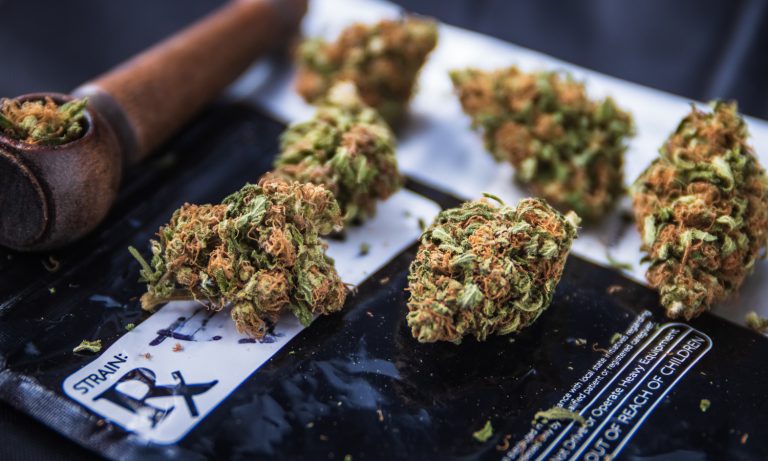
Adolescent cannabis use has long been a concern for users and activists of the drug.
Despite the proven benefits of medical marijuana and the low severity of its negative side effects, many studies have found connections between cannabis use in teens and changes in their brain matter. A new study adds another layer to the discussion, suggesting that this might not be entirely true.
Published in the journal Drug and Alcohol Dependance and conducted by researchers from Arizona State University, the study tracked the cannabis use of 200 boys with conduct issues in Pittsburgh during the late 80s. Researchers compared the subjects’ consumption rates with brains cans that were taken 20 and 30 years later. There was no apparent difference in brain structure.
Photo by rawpixel.com
“Even boys with the highest level of cannabis exposure in adolescence showed subcortical brain volumes and cortical brain volumes and thickness in adulthood that were similar to boys with almost no exposure to cannabis throughout adolescence,” say the authors of the research.
While the study has some drawbacks, like the small sample size and the fact that MRI scans might not be the most effective way of seeing the effects of cannabis on the brain, it does provide some valuable information and an interesting perspective.
Madeline Maier, lead author of the study and director of ASU’s substance use, health and behavior lab, says that the most significant part of the study is that it follows other researches in suggesting that cannabis’ influence on young brains isn’t permanent. “Reviews of these studies have revealed that, although a few studies have found evidence of an association between an earlier age-of-onset of cannabis use and adult brain structure, most studies have not.”
Marijuana reform inspired two serious clashes at the latest presidential debates, with Booker taking on Biden, and Gabbard going after Harris.
Sen. Cory Booker was “absolutely disappointed” cannabis reform wasn’t discussed at the first Democratic debates. But Booker and cannabis advocates got their money’s worth Wednesday, as marijuana reform was center stage for the debate’s more contentious moments.
After the fact, debates tend to be remembered for its showdowns—when two candidates square off directly against one another over a key issue. Wednesday’s debate in Detroit featured two such showdowns around cannabis reform. The contestants? In one corner, it was Booker vs. former Vice President Joe Biden. In the other, Sens. Tulsi Gabbard against Kamala Harris. Here’s what went down.
Biden vs. Booker
Tensions between these two had been broiling for weeks. When Biden unveiled his criminal justice platform last month, it included the former VP’s proposal to reclassify cannabis as a Schedule II drug, like cocaine and fentanyl. Booker slammed Biden, labeling it “an inadequate plan.” For his part, Booker has promised historic marijuana reform should he be elected President.
Photo by Ethan Miller/Staff/Getty Images
This prelude rendered any showdown between the two candidates as inevitable. Biden was the first candidate asked about criminal justice, and he attempted a reversal of his enduring image as an anti-drug crusader. Though Biden’s platform includes decriminalizing cannabis and expunging a portion of past marijuana convictions, he’s still against full legalization.
Right now, we’re in a situation where when someone is convicted of a drug crime, they end up going to jail and to prison. They should be going to rehabilitation,” Biden said, demonstrating change from his previous stance. “They shouldn’t be going to prison.”
But that didn’t satisfy Booker. When asked to explain why he found the plan inadequate by CNN moderators, he didn’t hesitate an explanation.
Photo by Paras Griffin/Stringer/Getty Images
“The house was set on fire and you claimed responsibility for those laws and you can’t just now come out with a plan to put out that fire,” Booker said. “We have got to have far more bold action on criminal justice reform.”
Booker used the opportunity to expand upon his own plans, demanding the need for “true marijuana justice, which means legalizing it on a federal level and reinvest the profits in communities that have been disproportionately targeted by marijuana enforcement.”
By the way, “true marijuana justice” was a phrase that tickled many online.
"True Marijuana Justice" is my next album.#CNNDebate
The second showdown of the evening wasn’t as telegraphed as the first. While others have pointed to Harris’ record as prosecutor, none have called her out on the debate stage as pointedly as Gabbard.
“Kamala Harris says she’s proud of her record as a prosecutor and she’ll be a prosecutor president, but I’m deeply concerned about this record,” Gabbard said, as Harris served as California’s attorney general between 2011 and 2017.
“There are too many examples to cite, but she put over 1,500 people in jail for marijuana violations and then laughed about it when she was asked if she ever smoked marijuana,” Gabbard added.
Gabbard is of course referring to Harris’ radio interview with The Breakfast Club, in which she admitted to smoking weed in college and bragged about listening to Snoop Dogg.
Harris didn’t back down from the accusation, however. She explained why she doesn’t shy away from her time as prosecutor, and how it will ground her policies as president.
“I did the work of significantly reforming the criminal justice system of a state of 40 million people, which became a national model for the work that needs to be done,” she said. “And I am proud of that work.”
“That is why we created initiatives that were about re-entering former offenders and getting them counseling,” Harris added. “And because I know the criminal justice system is so broken, it is why I’m an advocate for what we need to do to not only decriminalize but legalize marijuana in the United States.”
Not only did Nielsen dig into consumer data to attempt to predict the future of the cannabis industry, but they also released some interesting data-based insights on the average “canna-curious” citizen.
Cannabis was featured in Nielsen Company’s Total Consumer Report 2019, with the data and information company predicting the sales of cannabis consumer packaged goods to rise five times that of 2018’s sales.
They forecast that the sales of all legalized cannabis products in the U.S. could reach $41 billion by 2025. This includes all products manufactured from the marijuana plant and the hemp plant and all compounds derived from cannabis sativa.
This was just one tidbit of information revealed in the report and the accompanying analysis entitled “Brace for Impact: CPG Cannabis Sales to Rise by the Billions”. Through these reports, Nielsen gave some interesting insights into the cannabis market and “cannabis-interested” consumers, especially when comparing how the industry has evolved from 2014, when cannabis was legal only across two states, to 2018, when legalization became more widespread.
Photo by WeedPornDaily.com
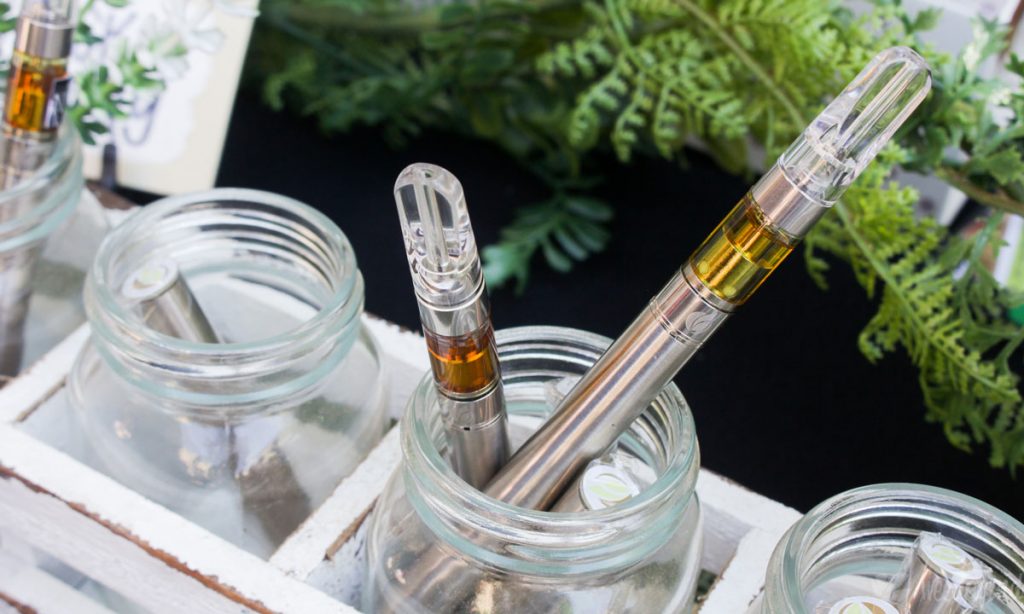
During this time period, as more types of products and methods of consumption became available, people’s tastes in how they were consuming became more diverse. In 2014, 77% of legal consumers were buying flower, compared to 48% of sales being attributed to flower in 2018. Vapor pen sales rose from 4% to 19% over this time period. Edibles remained relatively stagnant with a respective 9% and 11% of sales in 2014 and 2018. “Other formats”, like capsules, beverages, topicals, and tinctures rose from 10% to 22%.
There has also been a significant brand explosion over the last four years that can’t be ignored. In 2014, only 166 cannabis brands existed, compared to the 2650 that now make up the cannabis industry’s brand roster, growing 7x in 4 years.
Not only did Nielsen dig into consumer data to attempt to predict the future of the cannabis industry, but they also released some interesting data-based insights on the average “cannabis-interested” U.S. citizen:
They are 2x more likely to have tobacco products in their household, with cannabis-interested adults making up 65% of the population who is trying to quit smoking. 41% of which would consider using cannabis for smoking cessation;
They are 41% more likely to drink beer, with 1 in 5 cannabis consumers saying they spend less on store-bought beer as a result of consuming cannabis;
They are 36% more likely to have neck and back pain, with 65% of cannabis-interested consumers using over the counter pain medications to manage pain, and 35% of that group considering using cannabis as a replacement to these OTC medications;
Nielsen is a worldwide data and information global research firm that provides marketers reliable and objective information on marketing and sales program. Most widely known for the “Nielsen Ratings”, an audience measurement system, Nielsen also provides data and information for demographics, CPG and retail, and markets and finances.
Duchess of Sussex releases new pregnancy photos on Instagram and Jennifer Lopez can’t take the cuteness of fiancé Alex Rodriguez “twinning” with his son.
Meghan Markle announced on Tuesday that, in addition to guest-editing the September issue of British Vogue, she’s been hard at work on another special project. Later this year she’s launching a workwear collection with four brands—Marks & Spencer, John Lewis & Partners, Jigsaw, and Misha Nonoo—to benefit her patronage Smart Works, a U.K. charity that helps unemployed women get back into the work force.
On Wednesday, Markle provided a little more insight into the effort by sharing several photos of visits she made to Smart Works while she was pregnant with Baby Archie, whom she gave birth to in May. The images were posted to the official Sussex Royal Instagram account, and the caption states that Markle was moved by the “impactful work” she saw when she met with the charity. The organization not only helps women get the skills they need to feel job-ready, it also provides them with donated clothes they can use in their place of business. This is where Markle thought she could help.
Jennifer Lopez is gushing over her son and fiance!
On Tuesday, the 50-year-old singer took to Instagram to share a shot of Alex Rodriguez, standing with her son, Max. The duo are too cute for words in the pic, where they’re sporting matching red-and-black plaid pajama pants and white T-shirts while leaning up against a wall and looking at their phones.
https://www.instagram.com/p/B0jzR54goTt/
Despite their significant height difference, 44-year-old Rodriguez and 11-year-old Max — who Lopez shares with her ex-husband, Marc Anthony — look remarkable similar in the sweet shot.
“These two… ♥️♥️ #twinning,” Lopez captioned the pic.
While real life relationships are based on a combination of chemistry, common interests and physical attraction, online dating is mostly focused on looks.
When swiping, we might favor a profile with good picture over someone who shares some interests with us, at times ignoring potential red flags because of a bad angle. A new Chinese app plans on fixing this problem by making looks less important, at least in their algorithm.
Radii reports that the app, called Qiao Qiao, will force all users to get to know each other before allowing them to see pictures.
Qiao Qiao, a word that roughly translates to “quietly”, starts off the dating process by asking users to fulfill at least 60% of their profile, including information about their interests and personality.
Once you complete this and start communicating with potential matches, all images will be blurred out. The more users interact, the clearer the images will become, acting as an incentive for users to spend more time chatting.
Unlike Tinder and Bumble, which encourage swiping indiscriminately, Qiao Qiao puts a limit on the amount of people you can speak to on a daily basis. The app suggests five potential matches and gives users the ability to speak with a maximum of 10 different people. While these numbers are still high, they’re nothing compared to the amount of profiles users can swipe through when using more traditional dating apps.
Qiao Qiao has its sights set in the right place, providing something truly different and addressing one of the biggest drawbacks on dating apps. Still, it seems like a lot of work. We’ll have to wait and see if people are willing to prioritize getting to know someone over seeing their picture and swiping right.
Brazil researchers found that mice given various levels of CBD demonstrated less aggression, which could indicate similar results for humans.
It may seem like cannabidiol (CBD) is called a cure for everything nowadays, but a recent study led scientists to believe CBD really can help you chill out. According to new research, “angry mice” demonstrated less aggressive behavior when exposed to CBD and scientists behind the report believe humans could benefit from CBD in a similar manner.
The study, published in Progress in Neuro-Psychopharmacology and Biological Psychiatry, involved several male mice isolated for 10 days. Then, the Brazilian intruders conducted a “resident intruder test,” where they introduced a new friend to the isolated mice. Usually, isolating mice in this manner will provoke them to attack newcomers. The mice dosed with CBD, regardless of the amount, demonstrated less attacks and were less hostile overall.
According to the authors, their study demonstrates a link between lowered aggression and CBD.
“Our study shows that cannabidiol can inhibit aggressiveness and that it does so by facilitating the activation of two receptors: the 5-HT1A receptor, responsible for the effects of the neurotransmitter serotonin, and the CB1 receptor, responsible for the effects of endocannabinoids,” Francisco Silveira Guimarães, lead author on the study, said in a statement.
“Cannabidiol has been studied in various contexts for the past 20 years, but very little research has been done into its effects on aggressive behavior,” Guimarães said.
Photo by Jira via rawpixel.com
Guimarães and his team divided the mice in the study between five different groups. Four of the mice groups were giving varying degrees of CBD, ranging from five to 60 mg/kg. The last group, the control group, did not receive any CBD. What the control group of mice showed when an “intruder” came in was typical behavior — it attacked within two minutes of being introduced and did not stop until completing 20-25 assaults.
However, when the mice given the lowest amount of CBD (5mg/kg) were confronted by “intruders,” these mice took twice as long to first attack. In addition, they bit their “intruders” half the amount they usually do. For the mice given 15mg/kg, the first attacked occurred after 11 minutes passed. After that first attack, the mice only assaulted their “intruder” a few more times.
The last two groups were given 30mg/kg and 60 mg/kg. These mice were more likely to attack sooner and could indicate a relationship between too much CBD and raising aggressive behavior. That’s what the scientists expected, though.
“This reduction in the effect of cannabidiol at higher doses was expected from the results of other studies. In experiments to investigate its potential as an antidepressant, for example, higher doses led to lower effects after an initial gain. In our experiment, if we had tested 120 mg/kg on a group of mice, we might not have obtained any inhibition of the resident’s aggressiveness at all,” Guimarães said.
While more research is needed to replicate the study’s claims, especially CBD trials done with human subjects, it does back up anecdotal evidence that CBD does in fact help you chill out, dude.
Whatever the reason for your extreme highness, you find yourself couch locked, just sitting there seemingly unable to move. What now?
It happens. And it happens more often than you might think. People bite off more than they can chew, literally, when they attack a friend’s homemade weed brownies without realizing the potency of the cannabutter. Or, they lost control at a party and took one too many passed puffs. Whatever the reason, if your functioning is impaired, the impulse might be to sit and stare at the wall or sit on your couch (because you likely can’t move), but here’s what you should do instead.
First off, don’t freak out. Find a place to sit. Breathe in and out. Focusing on your breath will help to calm you down. Unless you were also consuming alcohol, you’re super stoned not drunk. Unlike alcohol, one has ever died from OD’ing on cannabis. And this should give you comfort in your time of need.
While you will be fine, that doesn’t mean you aren’t having a bad experience. Dr. Alison Draisin, Psychologist at the AIMS Institute in Seattle and founder of Ettalew’s Edibles, says that cannabis is one of the safest medicines in our modern pharmacopeia, “but it is by no means without negative effects.” As she observes, “Feelings of discomfort, anxiety, restlessness or even panic are possible, and breathing, heart rate, and blood pressure may change.”
Photo by Carlos Fernandez/EyeEm/Getty Images
Here’s a few practical pointers offered by Dr. Draisin to mitigate the effects of delta 9 (THC). Drink citrus drinks or juices especially products that contain lemons or oranges, which helps counteract the psychoactive effects of THC. Eat pistachios or pine nuts (the terpene pinene has been known to offer mental clarity) or inhale pine essential oil. Another option is to inhale black pepper. In fact, the combination of citrus and black pepper is a one-two punch when warding off the effects of THC. Also, while high-dose CBD products can be used to counterbalance the effects of THC, CBD takes longer to work than these other products since it is a cannabinoid and needs to metabolize.
Cannabis Consumer Safety
According to Dr. Draisin, “new patients are advised to ‘ease into’ medical/recreational cannabis to get a feeling for the sensory and mood changes they experience.” Always start small. You can always add more, as it is harder to minimize the effects once you have taken too much.
Prior to consuming any cannabis be sure some non-alcoholic beverage like wateris readily available to prevent dry mouth. Also, have some munchies around in case a given cannabis strain makes you really, really hungry.
Be mindful that the cannabis culture tends to be a social culture. Cannabis users may pass pipes, joints,and other dangerously-hot paraphernalia to each other without a care. You want to get buzzed not burned. Dr. Draisin suggests you should be be aware that placing your mouth on objects that have been in the mouths of others is akin to kissing that person on the mouth. “The best protection against communicable diseases is abstinence. Placing your hands between your mouth and the apparatus/joint keeps the germs away and you stay healthy!”
Finally, before heading out, pack along a to-go kit containing a few of Dr. Draisin’s recommendations along with a non-alcoholic beverage and a few munchies, so you can be prepared to practice self-care when couched.
While the exact mechanism of action for CBD is unknown, it is thought to generally increase inhibition of brain cell activity to stop seizures.
It can start with a vacant stare, what appear to be muscle twitches or a full-blown seizure. But no matter how it begins, any time a child is diagnosed with epilepsy is often a frightening time for families.
About 470,000 children are living with epilepsy in the U.S. While there are over a dozen anti-seizure medications that can be prescribed, approximately 30% of children don’t respond. These children have what medical professionals call intractable, or uncontrollable, epilepsy.
As a postdoctoral scholar in the lab of Chris Dulla at the Sackler School of Graduate Biomedical Sciences at Tufts University, I focus on researching a form of epilepsy called infantile spasms. These spasms in infants can develop into intractable epilepsy and other more severe forms if the seizures are not stopped.
Recently, promising advances have been made in the field of epilepsy treatment with the development of cannabidiol-derived drugs and the rise of genetic testing. I believe these advances are paving the way to provide treatment options for children with intractable epilepsy.
What is childhood epilepsy?
Epilepsy is usually diagnosed when a person has two or more seizures, greater than 24 hours apart. Medically, a seizure is defined as when abnormal electrical activity occurs in the brain but to an average person it sometimes can be difficult to detect. It might look like a blank stare, or in the case of infantile spasms, muscle twitching. Other times it might be easy to spot because the individual may collapse and shake.
Epilepsy can be genetic; there are over 500 genes that have been associated with the disorder.
The most common type of childhood epilepsy, juvenile myoclonic epilepsy (JME), tends to be inherited from family members but at least 50% of individuals with JME do not have mutations in genes associated with epilepsy. This makes JME hard to treat, because without a mutation to help guide treatment options, doctors may have to test multiple medications before finding one that stops the seizures. JME can also be intractable.
Epilepsy can also be caused by traumatic brain injury, infection, fevers and autoimmune disease, known as acquired epilepsy. In about 30% of all people, a cause for epilepsy cannot be identified.
Intractable epilepsy is particularly vexing for researchers and families. It is diagnosed after a physician has usually tried multiple anti-seizure drugs (ASD) without success. Sometimes, ASDs can decrease seizure frequency, but not completely stop them from occurring. In these cases, children still might be prescribed medication as well as alternative treatment options.
How Do We Treat Epilepsy?
In childhood epilepsy, it is especially important to diagnose and stop seizures as soon as possible because their severity can worsen over time and cause developmental delays.
Many ASDs act by decreasing the excitability in the brain. But some individuals can become tolerant to their ASDs over time, making the drugs ineffective. The exact reasons for this remain unclear. Severe side effects can also include mood swings, irritability, vision impairment and sleepiness.
Many ASDs also have to be taken multiple times a day. In children, this can make it difficult to stick to a treatment because it becomes disruptive to daily life.
Yet there is hope for children whose drugs stop working, or who have intractable epilepsy.
One increasingly prescribed therapy is the ketogenic diet. This is a medically prescribed, strict, high-fat diet that is an alternative treatment for children with intractable epilepsy. Researchers do not know exactly why the ketogenic diet stops seizures. It is thought that eating a 4:1 ratio of fat to carbohydrate forces the body to burn molecules called ketones for energy instead of carbohydrates. While this diet is effective, food preparation is very time-consuming and children may not stick to it because they cannot enjoy many popular snack foods.
Advances in epilepsy treatment
Advances in genetic testing technology have allowed for more genetic mutations to be identified in children with epilepsy. This can enable doctors to select ASDs that target specific mutations. Genetic screens could also identify previously undiscovered mutations associated with epilepsy and help lead to new drug development.
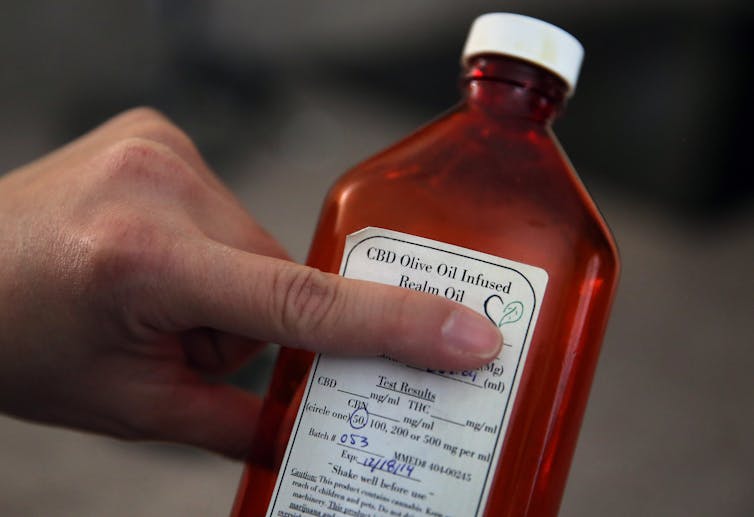
A parent holds up a bottle of cannabis-infused oil used to treat her 4-year-old daughter who suffers from severe epilepsy. Brennan Linsley/AP
Recently, the use of CBD derivatives has gained popularity as a treatment for intractable epilepsy. These CBD products are derived from hemp plants and do not contain psychoactive compounds. They have been shown to be effective in reducing seizures but it was not until last year that the Food and Drug Administration approved a CBD drug for childhood epilepsy, called Epidiolex. While the exact mechanism of action for CBD is unknown, it is thought to generally increase inhibition of brain cell activity to stop seizures.
Epidiolex has less severe side effects compared to current ASDs and is effective in reducing seizures in two types of intractable epilepsy. A 2019 study also showed that H2CBD, a similar drug, is able to reduce seizures with the same efficacy as CBD. This study, however, was only done on rats and much more research is needed before it is know if it will work on children with intractable epilepsy.
This year, the FDA approved a new form of a previously approved ASD. Midazolam was already approved for use in adults in pill form but is now available as a nasal spray for adolescents. It treats seizure clusters, which is a seizure emergency that can occur in children with intractable epilepsy. This is the first new medication that has been approved for this disorder in the United States in over 20 years.
It has been over 100 years since the first ASD was developed, and there is much more that needs to be done in treating and curing juvenile epilepsy. Some children can grow out of their medication, but others may need to take medications for their entire lives.
However, with the increased use of genetic screens and the approval of new drugs, like Epidiolex, there is hope that one day we can stop seizures and cure childhood epilepsy.
Seven Oklahoma dispensaries allege they’ve been placed in “Facebook jail” and are seeking reparations from the social media giant.
Facebook can’t decide if it loves or loathes cannabis. Around this time last year, reports indicated Facebook was “shadow-banning” companies associated with legal cannabis sales and advocacy. Facebook admitted it was wary of illegal cannabis sales occurring on its platform, and in October 2018, announced to MarketWatch it would allow cannabis-related profiles and pages so long as they had a verified blue or gray check mark. Facebook even seemed open to allowing marketing and advertising around legal cannabis products in March of this year.
Give the social media giant some credit. They even tried their hands at a pot joke during its F8 developer conference in May.
But now seven Oklahoma medical marijuana dispensaries are suing Facebook over allegations the platform has placed them in “Facebook jail,” and limited them from posting about their shops. Ye Olde Apothecary Shoppe and its owner Danna Malone first filed a lawsuit against Facebook—as well as CEO Mark Zuckerberg, COO Sheryl Sandberg, and executive team member Peter Thiel—back in May. Six other dispensaries joined as plaintiffs on July 18, reports Tulsa World.
When a page or profile is placed in “Facebook jail,” that page or profile is temporarily disabled due to a perceived violation of the platform’s standards. These dispensaries placed in “Facebook jail” are seeking a court order that would prevent Facebook from promoting their shops on the platform, and $75,000 in damages from “economic harm.” In addition, Facebook would have to pay their lawyer’s fees should the plaintiffs choose to hire one.
Photo by Mizter_x94 via Pixabay
“Facebook has an arbitrary, subjective, discriminatory and archaic policy and their policy does not apply to all,” reads the petition. “It is just random. Or at least it appears to be random. There is no way for an individual or a business to contact anyone within Facebook to get assistance. They hide behind their keyboards and mete out whatever punishment they feel if they find that you have committed an infraction to their subjective community standards.”
The lawsuit also alleges that “from the surface,” Facebook does not seem to be censoring cannabis companies in states with legalized recreational marijuana like California, Oregon, and Washington.
“The defendants pick and choose what is against community standards and what is not,” Malone told Tulsa World. “They do not have a set standard.”
On Tuesday, just two days after Gaga, 33, was photographed kissing her monitor engineer Dan Horton, 37, during a Los Angeles brunch date, Horton’s ex-wife, actress Autumn Guzzardi, shared one of her headshots to Instagram.
Alongside the professional photo, Guzzardi, 37, chose to quote lyrics from one of Gaga’s Grammy-winning tunes in her caption.
https://www.instagram.com/p/B0jfMBFJwaV/
“Poker Face ,” she wrote beside the image, seemingly referencing her ex-husband’s new relationship, before adding the hashtags “#actress #broadway #headshot #nyc #musicals #offbroadway #rock #beauty #pop.”
Guzzardi, who is currently starring in the off-Broadway musical Rock of Ages, was previously married to Horton for five years. The two tied the knot in 2013, and Guzzardi’s most recent Instagram post of her Nashville-based ex-husband is from 2017.
In Feb. 2018, Guzzardi filed for divorce from Horton, citing “irreconcilable differences,” according to Tennessee court documents obtained by Radar Online. A marital dissolution agreement was settled upon by April 4, 2018.
During an appearance on Jimmy Kimmel Live Tuesday night, host Kimmel asked Brown, 24, who she would choose to lead the next installment of the long-running series.
“A lot of people would think it might be Tyler [Cameron] but now it can’t be Tyler because you’re going for drinks with him,” Kimmel said, referring to the moment on Tuesday’s live After the Final Rose special where Brown asked runner-up Cameron on a date following her split with winner Jed Wyatt.
“We’ll see where the drinks go,” Brown laughed, before adding, “It’s so weird picking the Bachelor from my ex-boyfriends.”
“Do you think of them as your ex-boyfriends?” Kimmel replied. “Why don’t you think of them as people who were on a show you were also briefly on?”
“These men are not your boyfriends,” the late-night host, 51, joked. “A casting director found them and brought them to you and you kicked most of them off.”
“I did do that,” Brown replied. “I thought Peter [Weber] was really great. Mike [Johnson]‘s great. I want them to have happiness so maybe it’ll work out better for them than it did for me.”