Tuesday, December 16, 2025
Home Blog Page 711

Saying No Means Saying Yes To The Black Market

As I have discussed on previous occasions, I have operated an I-502 State legal retail Cannabis shop in Central Washington State, in my hometown of Ellensburg, since August 2014.

In those very early days, the Black Market was chuckling at the total ineptitude and ineffectiveness of 502 and beyond any reasonable doubt kicking our collective backsides. Prices were crazy and variety and consumer choice was an absolute joke. I myself had six (6) items on my “menu”, two types of pre rolls and four types of flower. And here’s the kicker…It was $30-$35 per gram out the door after all applicable State taxes.

So in the very beginning, we were no competition at all. But due to good old capitalism, this situation began to change in a very real way at the conclusion of the first quarter 2015. (More on this later, but even though our legislature preached early on their collective commitment to eradicating the Black Market, their policies and burdensome tax structure in Washington State have made this noble effort much more difficult to achieve.)

RELATED: Denver Dispensary Caught Red-Handed Trying To Have Its Cake And Eat It Too

In the interest of full disclosure, I am an Economics major from Central Washington University in Ellensburg, Washington, class of 1982. So I do understand market forces, consumer benefits of competition, laws of supply and demand and economies of scale.  However, even though I was a college student, my experience in marijuana, and therefore marijuana as an industry and a business, my working knowledge was practically zero.  In the very beginning,  I certainly did not consider myself a crusader against the evils of the Black Market. I was just trying to survive the strangling restrictions of my State’s regulatory framework and the choking tax burden that was upon us at the time. But I did quickly come to understand that competing with and and ultimately exterminating the Black Market, is and should continue to be one of our industry’s primary goals.

To a certain degree, there will more than likely always be a Black Market. As long as the definition of minor is 21 years of age in our State, there will be a Black Market of sort. However, while this is an aspect of the continued viability of what we call the Black Market, there are other factors that are within our control and it’s these conditions and items that we need to remain focused on.

In Washington State at this time, probably at least in part due to an oversupply of Cannabis but that’s another topic for another article, the prices are more than a match for the illicit market. Even though our State has sales tax AND a 37% rate of excise tax, by far the highest in the country, our out the door prices of product are lower than what illegal prices were on the street prior to 502.

The product is tested for a myriad of conditions and chemicals as well as moisture and THC, and much more so it’s a very good bet it is safe for the end consumer. The very fact it is taxed heavily at both the State as well as Federal level, is a selling point at least to those not currently in the industry!

In Washington State for example, our industry is contributing $250,000,000 per year to Medicaid. The guy selling weed to a minor in the unlit corner of the local grocery store parking lot doesn’t give a flying flip about what chemicals may be present in their product. They certainly don’t give a hoot about whether their “customer” is of age or not. And quite obviously, they do not nor have they ever contributed anything to anyone’s tax rolls.

RELATED: Marijuana Packaging Laws Are Causing More Harm Than Good

My point is we are competing, and winning handily where we are allowed to compete. Even with the huge tax burdens and the myriad of rules and regulations and restrictions, legal Cannabis in Washington State is viable and strong. And yet the Black Market still exists and in many locales is still successful.

The primary reason illegal Cannabis distribution still exists is due to bans and moratoriums across our State. Politicians, mayors, city councils, city managers, county commissioners, the public in general foolishly believe in many towns, municipalities, counties dotted all across Washington State they can say no to the existence of Cannabis in these areas. This is dangerous and foolhardy for anyone to believe that a government entity can merely say no and Cannabis will stay away. I have told many Cannabis haters who have said no to the State legal retail Cannabis industry coming to their town or county that in fact they have made the Black Market viable and healthier in their general locales.

Let me repeat that last statement: if anyone says no to legal, 502 State legal shops in their towns, you are inadvertently saying welcome to illicit Cannabis businesses.

You have to choose which way and under what conditions Cannabis is going to be made available to the people of your city or town. You can choose the bright lights of a compliance driven, product tested, taxed and regulated industry or you can choose the dark, untested, unregulated world that is the Black Market in which they sell to kids, include chemicals in the processing of their product that can do in many cases irreparable harm and/or contribute nothing good to society and communities.

Shortsighted, ill informed and under educated individuals are making these same types of frankly dumb decisions for the “good” of their citizens every day across the USA. It is past time we assign blame where and on whom it belongs.

RELATED: Here’s What Canopy Growth Investors Need to Know About the Houseplant Dea

When and where we are currently allowed to operate, we are dominating the overall market, the primary exemption being sale to minors by non State licensed individuals. It’s interesting to me as a political advocate in our State that has seen our industry achieve nearly undreamed levels of sales and by extension, tax revenues, that Congress will not change the rate of taxation for any reason, even the very achievable goal of the further eroding of illegal Cannabis sales.

The free market is powerful and has been successful in spite of and certainly not in any way due to politicians input. Regulation, compliance and public safety is and should be the Congress’ purview. However, all need to remember the stated goals of our legalization of Cannabis, one being the protection of our youth from predators in the Black Market.

The backdrop of all that we do, all that we discuss and all policy and regulations that we put in place should be the ultimate destruction of illicit Cannabis sales. Period. If regulators and lawmakers have and keep this idea in mind at all times as it relates to promoting a successful Cannabis industry in the Evergreen State, we in the legal Cannabis industry will be able to hammer the Black Market into a state of submission.

This story was originally published on Green Market Report.

You Can Now Buy CBD On Walmart’s Website

Back in October 2018, the Canadian division of Walmart said that it was exploring the idea of selling cannabis-based products on their shelves, sending shares of Walmart Inc. (NYSE:WMT) up roughly 3% despite no concrete plans to do so anytime soon.

A few months later in the U.S., the Agriculture Improvement Act of 2018, a.k.a. the Farm Bill was passed. This made a legal distinction between cannabis and hemp and defined hemp as “any part of the Cannabis sativa L plant, including all derivatives and extracts such as cannabidiol (CBD), provided that the plant contains less than 0.3% tetrahydrocannabinol (THC).”

RELATED: Is CBD A Rising Star Or Just Popular Fad?

Fast forward to today, and you can buy CBD supplements on Walmart.com, buy CBD beauty products on Ulta.com, and it’s rapidly spreading across the country in retailers ranging from Neiman Marcus and Sephora to CVS and Walgreens.

CBD at Walmart

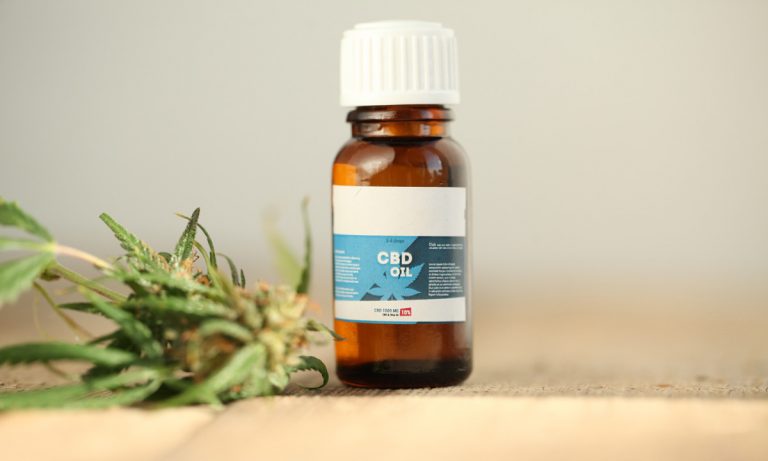
CBD Ultra Dropper 1500 mg from Procana Laboratories on Walmart.com

Currently, Walmart.com only offers a limited selection of CBD products from only two brands – Procannaand Medterra. That said, there’s a little of everything.


You can get CBD tinctures for humans or for animals. You can also get CBD softgels for humans or for animals. Also, surprisingly, you can get a disposable CBD vape pen.

RELATED: Drug Manufacturer For CVS And Walgreens Launches Line Of Hemp Supplements

It is worth noting that all of the CBD products available through Walmart are sold and shipped by discount vitamin seller VitaSprings, which also sells a wide variety of other vitamins and nutritional supplements through the Walmart Marketplace.

Conclusion

Chances are, it will be a little while before Walmart itself begins selling CBD. That said, there seems to be another major retailer going green every day. After all, shares of Walgreens Boots Alliance Inc.(NASDAQ:WBA) are already up and it has been one hour since the news broke.

This story was originally published on Daily Marijuana Observer.

Fast Food Chain Wants To Personalize Munchie Cravings

0


Capitalizing on our need for our desires to meet immediately, this fast food chain wants to personalize munchie cravings. McDonald’s wants to revolutionize drive-thrus by offering their patrons a menu that’s personalized and that changes depending on factors like the weather, current restaurant traffic, and trending menu items.

Techcrunch reports that McDonald’s recently acquired Dynamic Yield, an investment that rumoredly cost them over $300 million, making it the company’s largest acquisition in over 20 years. Dynamic Yield is a company known for its partnerships with e-commerce and travel websites in order to develop an Amazon-like personalized experience for users.

RELATED: 5 Sneaky Ways McDonald’s Tries To Get You To Order More Food

Dynamic Yield’s technology will be used to develop a McDonald’s drive-thru menu that’s personalized, capable of recommending orders depending on each user’s interest, the weather, and more. The feature was tested on several locations throughout 2018 and is planned to roll out within the US in 2019. International markets will presumably adopt these features soon after.

If successful, McDonald’s will incorporate this technology into their self-serve kiosks and mobile app software, making it even harder for you to resist a late McDonald’s craving.

Via Dynamic Yield:

Dynamic Yield will play a critical role in McDonald’s digital transformation, allowing it to become even more focused on the customer by deploying our technology in outdoor digital Drive-Thru menu displays, as well as other digital customer experience touchpoints, such as self-order kiosks and the McDonald’s Global Mobile App.”

The company has a history of being cutting edge. McDonald’s was the first central international fast-food restaurant. And it had the first drive-thru window. The restaurant chain has experimented with ways to speed up service and cut down on costs and order-taking errors. McDonald’s was among the few fast-food chains that experimented with order-taking kiosks, putting them in place in 2015.

So, fast food chain wants to personalize munchie cravings? How can you say no to a Big Mac if your app knows your tastes so well?

The White House Lying About Marijuana And Fentanyl?

For the past few years, one of the greatest new-level propaganda schemes to come spewing from the mouths of local anti-marijuana squads is that fentanyl is being found in black market pot supplies. And while these claims have been mostly discounted, that hasn’t stopped leading White House officials from perpetuating the scam. It was just last week that one of President Trump’s leading experts on the opioid crisis warned that people who use marijuana should be afraid. So why is the White House lying about marijuana and fentanyl?

“People are unwittingly ingesting it,” said Kellyanne Conway, who serves as the administration’s czar on the opioid epidemic. “It’s laced into heroin, marijuana, meth, cocaine, and it’s also just being distributed by itself.”

RELATED: Federal Government Suggests Marijuana-Laced Fentanyl Is A Concern

It is true that fentanyl is being used as an additive to black market dope supplies. There is evidence of it turning up in drugs from heroin to cocaine and even methamphetamine. This is happening, or so it has been said, because fentanyl, a substance that is up to 50 times more potent than heroin, is a cheap way to cut these drugs. Yet, considering the bizarre drug mixtures found in the United States over the past year, chances are people are seeking out fentanyl-laced drugs to achieve a unique, speedball type of buzz.

But drug experts argue that no weed is being sold like this in the underground.

“It’s crazy that this story is coming out from our leaders,” Dan Ciccarone, an epidemiologist at University of California, San Francisco, said in an interview with BuzzFeed News. “It shows that concerns about fentanyl have reached the level of moral panic. Fear outweighs rational evidence. There is scant evidence for cannabis laced with fentanyl.”

If the White House is pushing the murderous marijuana narrative to scare the living bejeezus out of the American population, it’s a solid plan. The opioid crisis is a lean, mean killing machine, responsible for dumping somewhere between 45,000 and 70,000 bodies every year. Some of the latest statistics show that fentanyl is responsible for a significant chunk of the death toll. And it’s a problem that is growing and spiraling more out of control with every passing year.

But even the U.S. Drug Enforcement Administration (DEA), a federal law enforcement agency that would love nothing more than to Make Marijuana Dangerous Again admits that fentanyl-laced marijuana is not something it has seen. Earlier this month, the DEA ‘s senior chemist, Jill Head, said a deadly drug mixture of this kind would contribute to a more cataclysmic death count than what the nation is presently witnessing. Marijuana is used by 22 million people across the United States.

So why is the White House lumping weed in with it fentanyl spiel? Well, it turns out that it is just pulling misinformation that was reported by the National Institutes on Drug Abuse (NIDA).

RELATED: White House Confirms Secret Anti-Marijuana Committee Exists

Last year, NIDA director Nora Volkow said: “Fentanyl is being used to lace a wide variety of drugs, including marijuana.” However, this claim was based solely on “anecdotal reports” from local police departments—none of which have been substantiated in any way. In fact, many of these reports were eventually determined to be false. The lesson here is we can’t trust police to be drug experts.

“There’s this mistaken belief that law enforcement are experts on the drugs they are seizing,” Northeastern University drug policy expert Leo Beletsky told BuzzFeed News. “That’s just not the case, and that’s part of the problem.”

How Medical Marijuana Can Help With ADD And ADHD Focus

Attention Deficit Disorder and Attention Deficit Hyperactivity Disorder (ADD/ADHD) is a chronic condition that affects over three million people per year.

From hyperactivity to impulses and inattentiveness, ADD and ADHD are most common in children but can persist in adult years. The chronic conditions is not curable, although treatment is available. Unfortunately, for some people, current treatment hasn’t been effective.

So what’s the next best contender? According to research, cannabis.

RELATED: How Marijuana Could Help Patients Quit Their Anti-Anxiety Meds

A 2013 study published in the Journal of Substance Use & Misuse found that people were self-medicating, in order to deal with and manage hyperactivity and impulsive—two major components of ADD/ADHD.

The study surveyed about 280 cannabis users and the main finding was that a higher proportion of users reported experiencing symptoms of ADD/ADHD when they were not self-medicating. This finding led researchers to push for more resources to study the link between the endocannabinoid symptom and cannabinoid.

Following the findings of the 2013 study, researchers in Germany sought to closely examine the relationship between cannabis and ADD in 30 patients. In the 2015 study, the researchers examined traditional treatment resistant patients from 2012 to 2014.

There were 28 male patients (as ADD/ADHD is more common in male) and two female patients, between the ages of 21-51 with the average age being around 30. In all 30 cases, patients reported improvements in a variety of ADD/ADHD symptoms including concentration and impulsivity. In other cases, patients saw an improvement in sleep. All patients used some form of cannabis flower and in eight patients, they used dronabinol, a THC drug used to treat nausea and vomiting.

RELATED: Why Blunts Are Bad For You: It’s Not About The Marijuana

Although the case study was small, researchers confidently concluded cannabis is “an effective and well-tolerated” treatment option – especially for patients where traditional pharmaceuticals fall short.

In reality, it should be no surprise that cannabis is a strong ally for people with ADD and ADHD. A study from almost 10 years ago examined the relationship between those with ADD/ADHD and dopamine levels.

People with the chronic condition experience lower levels of dopamine, the neurotransmitter responsible for mood and motivation. However, THC is known to increase dopamine quantities as well as the transmission of dopamine. Do you see the connection?

The most common ADD/ADHD treatments like Ritalin and Adderal may help sufferers concentrate or improve cognitive functions, but they have been noted to cause unappetizing side effects like nausea or vomiting. You know what’s good for that?

Cannabis.

Tom Brokaw Comes Out As Medical Marijuana User And Advocate

Add Tom Brokaw to the growing number of public celebrities embracing medical marijuana. Long an American symbol of stalwart and at times fussy newsmen, Brokaw is in remission from multiple myeloma (a cancer that grows in bone marrow). However, the pain sustained in his bones from the cancer has turned Brokaw to medical marijuana.

“I’m now on medical marijuana for my back, for the first time,” Brokaw told SurvivorNet, a cancer information site. “I’ve not done that before.”

RELATED: How Safe Is It To Smoke Marijuana Every Day?

Brokaw admits that he’s no less ambitious a journalist and currently working on a book about Richard Nixon. “Politics keep me distracted from cancer,” he says. But when he’s not working on that, trying to acquire medical marijuana in Florida, where he resides, is “complicated” and almost a full-time job in itself.

In coming out as a marijuana advocate, Brokaw engenders himself to a growing number of cancer patients using medical marijuana in treatment. According to SurvivorNet’s CEO Steve Alperin, more people are trying to learn more about medical marijuana and having someone like Brokaw open up about his experience will “help people understand there are alternative approaches to pain management.”

RELATED: A Beginners Guide To Reading Marijuana Labels

That said, Brokaw says he’s “keenly aware” how fortunate his cancer battle has been. When he was diagnosed with multiple myeloma back in August 2013, he was immediately medevacked to the Mayo Clinic with a room already available for him. He went through years of treatment—including chemotherapy and spinal operations—but all that cost tons of money.

“An extraordinary amount of progress has been made with drugs and treatment. We haven’t gotten the cost thing worked out yet,” he told SurvivorNetOpens a New Window.. “At one point, I counted up the price and it was something like $10,000 a day, you know, that I was spending on drugs. I have the blessing of having a great program through first RCA, then GE, and now Comcast. So the checks that I write for pharmacy are very, very small. And it makes — every time I do that, it makes me aware of the people who are not in the same position that I am, and how I think about them.”

CVS Will Now Sell CBD Oil In 8 States

After much mystery, CVS will now sell CBD Oil in 8 states.  They confirmed a partnership with Curaleaf, and will begin to sell CBD Oil in 800 of their locations. This number amounts to 10 percent of CVS shops, a huge step for cannabis since the drugstore is the largest one in America.

Cannabidiol has gained traction and recognition over the last couple of years, managing to weedle itself into all sorts of industries, primarily beauty and health. In terms of reach, CVS’s involvement is one of the most significant investments for the growing CBD industry.

CVS’s stores will market CBD oil as “relief source.” Products will be located in eight states, including California, Colorado and Nevada, which are some of the most cannabis friendly U.S. locations.

RELATED: 6 Mainstream Businesses Betting On CBD

“We are carrying hemp-derived CBD products in select states to help meet consumer demand for alternative care options,” said CVS’s Health Spokesperson Mike DeAngelis.

Yahoo Finance reports that CVS’ partnership with Ceraleaf has resulted in a 17 percent increase in the cannabis company’s shares.

Although CBD is still heavily monitored within foods and beverages by the FDA, this acceptance by the health industry is a symptom of a much larger and welcoming phenomenon, putting cannabis investors in an interesting and unpredictable situation. No one can really say when these restrictions will loosen up, but if businesses take a chance and federal laws work in their favor they could see a incredible returns.

CVS has an innovative history. The first Consumer Value Store selling health and beauty products is founded in Lowell, Massachusetts in 1963. A year later, the name is changed to CVS. In 1972,  CVS nearly doubles in size with the acquisition of 84 Clinton Drug and Discount stores. In 2015, CVS Health acquired Target’s 1,672 pharmacies across 47 states and will operate them through a store-within-a-store format, branded as CVS/pharmacy.

Pennsylvania Senators Unveil Bill To Foster An Adult-Use Cannabis Program

Pennsylvania Senator Daylin Leach and Senator Sharif Street recently unveiled their plan to introduce legislation, Senate Bill 350 (“SB 350”), that—if passed—would legalize adult-use cannabis and create a corresponding regulatory program. SB 350 would permit adults over the age of 21 to purchase and consume adult-use cannabis, and, to grow up to six plants per household.

The state regulatory authority will license cannabis businesses, including cultivation facilities, processors, dispensaries, public lounges and delivery services. There is no limit as to how many licenses the regulatory authority may issue. Additionally, licensees currently active under the state’s medical cannabis program will automatically be issued licenses to enter into the adult-use cannabis space.

Cultivation licenses will be separated into two categories: macro-growers and micro-growers. Macro-growers will be traditional cultivation facilities, reserved for larger growing operations. In order to receive a cultivation license, the applicant will need to meet certain regulatory and financial requirements.

RELATED: What States Will Legalize Marijuana In 2019?

Micro-growers licenses, on the other hand, are designed to provide entry into the adult-use cannabis sphere; specifically, these are intended to encourage growth for businesses in areas that have been directly impacted by cannabis prohibition. Micro-growers can only grow and only sell their product to processors and dispensaries.

SB 350 also contemplates a tax on adult-use cannabis transactions. However, the bill does not include the rate that the tax will be imposed. Instead, the bill provides a standard for which the tax rate shall be determined. Specifically, the rate must ensure tax generation sufficient to undermine the illegal market, to invest in the communities that have been harmed by prohibition, and to satisfy the need to pay for industry regulation.

The majority of tax money generated from cannabis sales under SB 350 will go to Pennsylvania public schools. School districts will, however, have the opportunity to decide whether to use these taxes as an investment into their schools, or, rather, to lower local property taxes.

If passed, SB 350 will automatically expunge all criminal convictions related to possession of cannabis, cannabis paraphernalia, and possession with the intent to deliver less than an ounce of cannabis. Any eligible pending cannabis charges will be dismissed. Those who are currently serving sentences for possession or intent to deliver less than an ounce of cannabis will be commutated, and eligible terms of parole or probation related to cannabis offenses will be ended.

RELATED: New Jersey Lawmakers Fail To Pass Marijuana Bill In Devastating Setback

SB 350 proposes some features that are unique relative to other state adult-use cannabis programs. Specifically, it would do away with “seed-to-sale tracking,” one method similar programs have used to track regulated cannabis. Additionally, it proposes environmental standards (for example, dispensaries selling vape pens must offer recycling programs), social lounges, and home delivery.

Additionally, SB 350 proposes public education initiatives about cannabis. It proposes a statewide cannabis business institute, which will provide, at no cost to the public, education as to how to start and run a small business, how to grow and process cannabis, and how to be compliant with state and federal law. Those who complete this course will be eligible to apply for state grants and interest-free loans to start a cannabis business. The program would further allow colleges and universities to offer classes related to cannabis, on subjects like growing and processing. These institutions will be able to grow and process cannabis in offering these courses.

Although the language of the bill itself has yet to be published, the framework of SB 350 provides a guide for regulators to implement a program, as well as regulations, that remedies the inequities surrounding the prohibition of cannabis, and, to establish a fair system for the taxation, consumption, and regulation of adult-use cannabis in Pennsylvania.

This story was originally published on Green Market Report. 

AUTHORS: Haley Keefer, Darren Kaplan and Garrett Graff – Hoban Law Group
PUBLISHER: CANNABIS LAW REPORT

What Canopy Growth Investors Need to Know About the Houseplant Deal

This morning, international cannabis giant Canopy Growth Corporation (TSX: WEED) (NYSE: CGC) welcomed a new Canadian cannabis brand called Houseplant to the company’s existing star-backed product lineup which includes Leafs by Snoop and more.

Founded by British Columbia-born comedian Seth Rogen and his childhood friend and screenwriter Evan Goldberg, Houseplant “has chosen each component of their offering to deliver the highest quality product to Canadians.”

With shares of CGC trading down over 4% in intraday trading following the news, many Canopy investors are left with a few questions unanswered.

How Much is Canopy’s Stake in Houseplant?

Canopy’s announcement notes that “through a minority ownership in the new business venture, Canopy Growth will help Houseplant scale quickly and support Houseplant’s long-term success.” This has left many wondering how large of a stake in Houseplant Canopy owns.

RELATED: Why Is Canada’s Top Cannabis Manufacturer Doubling Production?

According to a statement from Houseplant, “Canopy acquired 25 per cent of the business, and invested working capital,” but wasn’t willing to dive any deeper into the details.

Are There Any Other Cooks in the Kitchen?

In addition to Canopy, Rogen and Goldberg partnered with their talent reps, United Talent Agency, through its business ventures group.

Doesn’t The Cannabis Act Prohibit Endorsements?

Ever since Canada legalized adult-use cannabis in October 2018, Canadian licensed producers like Canopy are forced to abide by strict laws and guidelines regarding the marketing or promotion of marijuana products.

According to The Canada Press, “The Cannabis Act prohibits the promotion of cannabis, cannabis accessories or any service related to cannabis by means of a testimonial or endorsement or by means of the depiction of a person, character or animal, whether real or fictional.”

The Cannabis Act also makes it so that licensed producers may not “present cannabis or any of its brand elements in a manner that “evokes a positive or negative emotion” about a “way of life such as one that includes glamour, recreation, excitement, vitality, risk or daring.””

Lastly, and obviously, “any promotion that could be seen as appealing to young people is also forbidden.”

RELATED: NHL Alumni Association And Canopy Growth Partner On Marijuana Pain Relief Study

Houseplant clarified Rogen and Goldberg’s involvement, making clear that the two are real entrepreneurs and business-owners who have been decision-makers and business developers since day one.

The company said in an emailed statement to The Canada Press:

“Since inception the Houseplant team has maintained a strong focus on abiding by the regulations which is why, not due to a lack of opportunity both pre and post legalization, Seth and Evan have not participated in any cannabis related event or promotion in Canada. They are founders and owners, not spokespeople for the brand and have been very careful not to confuse that.”

What is Canopy’s Role in Houseplant’s Future?

Under the terms of the partnership, “Houseplant will lean on the production and distribution capabilities of Canopy Growth and its licensed subsidiaries to ensure an ample supply of Houseplant flower, Softgel, and pre-rolled formats are rolled out in Canada over the coming months.”

All of the Houseplant strains will be grown at Canopy Growth’s Smiths Falls, Ontario facilities, while Houseplant’s marketing and operational team are based in Toronto.


Seth Rogen Joins The Marijuana Industry Via Canopy Growth

Seth Rogen is known for making movies in which characters often explore their love of cannabis. It makes sense these movies, ones like Pineapple Express, This Is The End, and Superbad, all serve as touchstones for those who already love cannabis. But now Rogen wants to make it easier for people to learn to love cannabis. Seth Rogen joins the marijuana industry via Canopy Growth.

That’s why Rogen, along with his long-term creative partner Evan Goldberg, are teaming up to create Houseplant, which will be a recreational Canadian marijuana company. “The result of years of experience and dedication,” the company said in a press release, Houseplant is also backed in collaboration with the Ontario-based grower Canopy Growth.

RELATED: Seth Rogen Shares Priceless ‘Pineapple Express’ Stories For Movie’s 10th Anniversary

“Houseplant is a passion we’ve brought to life through drive and dedication,” Rogen said in the press release. “Every decision we’ve made for the business reflects the years of education, first-hand experience and respect we have for cannabis.”

The company’s first strain will be called Houseplant Sativa, which will be available for purchase this April in British Columbia, Canada. In addition, the company will release a Houseplant Hybrid and Houseplant Indica strains, as well as soft gels and prerolled joints, later this year.

RELATED: Why Does Seth Rogen Hate Marijuana Edibles?

“We are so proud to be launching in Canada, our home,” Goldberg said. “After spending five years diligently preparing for the launch of this company, we’re excited to be able to share our passion for cannabis with Canadians in this way.”

While Houseplant plans to make marijuana education “the center of its mission,” it’s unclear exactly how they plan to do so. However, it’s another win for Canopy. Last month the company tapped Martha Stewart to launch a line of CBD products for both animals and humans.

Don't Miss Your Weekly Dose of The Fresh Toast.

Stay informed with exclusive news briefs delivered directly to your inbox every Friday.

We respect your privacy. Unsubscribe anytime.