New York may have no choice but to put a rush on marijuana legalization in the upcoming legislative session. If not, the state could miss out on substantial tax dollars while also exhausting law enforcement resources, according to a recent report from Bloomberg News.
Lawmakers in New Jersey recently revealed a proposal designed to bring a recreational marijuana market to the Garden State. Governor Phil Murphy has been pushing for this reform since taking office at the beginning the year. So it is inevitable that New York residents will soon have the ability to take a short train ride across the state line to get their hands on legal weed. And you better believe this is going to happen. Of course, this puts pressure on state lawmakers to put similar legislation in place. The severity of the situation is compounded by the fact that neighboring Massachusetts, Vermont and Canada have ended marijuana prohibition, as well.
The good news is New York Governor Andrew Cuomo, who had voiced concerns in the past about weed being a gateway drug, is no longer opposed to legalizing marijuana for recreational consumption.
Over the summer, the state’s Health Department published a report, which was commissioned by Cuomo, saying, “The positive effects of a regulated marijuana market in New York outweigh the negative impacts.”
Since then, Cuomo seems to have developed a more progressive outlook when it comes to the issue. The state is expected to start discussing full legalization in the coming months.
History shows that conflicting adult use laws cause trouble in that part of the country. There was once a time when the legal drinking age was 18 and older in New York, while 21 and older in Jersey. This obviously sent more Jersey kids into New York for booze. A similar outcome is expected if the two states were to maintain differing pot laws.
But more importantly, New York doesn’t want to be in a position of missing out on the millions in annual tax dollars that is waiting to be claimed. Reports have shown that New York could see marijuana sales reaching $3.6 billion within the next few years by simply allowing adults 21 and older purchase weed in a manner similar to alcohol. This means the state would collect approximately $700 million per year in tax revenue. That’s not a bad haul considering the state would also save money by eliminating police resources for the bulk of pot-related crimes.
There are also federal implications associated with New York’s desire to end prohibition.
Some major players in the cannabis industry believe marijuana legalization in New York could be what leads to U.S. government legalizing nationwide. Daniel Yi, a spokesman for MedMen, says pot shops opening up in New York City would open up a more honest dialogue about the subject. This would eventually trickle down to Washington D.C. and inspire change.
“You cannot underestimate the impact that New York particularly is going to have on the legalization conversation,’’ Yi said. “It’s huge.’’
We can expect to get a better feel for New York’s response to marijuana legalization after the November election. By then, it is possible that a bill will have been submitted for review in the 2019 session.
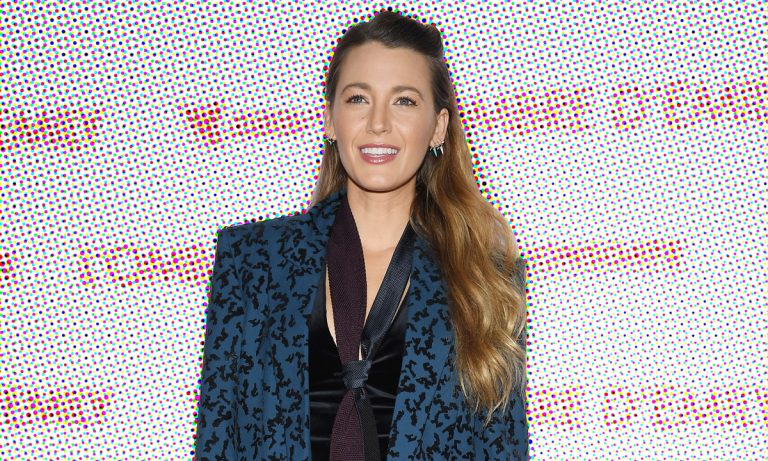
The 31-year-old actress has been rocking a series of pantsuit looks to promote her new film, A Simple Favor, in which her character Emily does the same.
One fashion blogger posted a photo of one of Lively’s red carpet looks, writing, “It’s suit number 1,356 for Blake Lively’s promotion of ‘A Simple Favor.’”
Lively responded to the post, writing, “@fashion_critic_ Would you note a man wearing lots of suits during a promo tour? So why can’t a woman? Just sayinnnn. No double standards ladies.”
How Donald Glover claimed Chevy Chase said racist sh-t all the time: He doesn’t deny delivering the line — “I could have said it” — but he denies the interpretation. It was a joke. Chase had been a fan of Glover’s since they filmed the pilot in 2009. How could anybody think he was racist?
On the current incarnation of Saturday Night Live: “First of all, between you and me and a lamppost, jeez, I don’t want to put down Lorne or the cast, but I’ll just say, maybe off the record, I’m amazed that Lorne has gone so low. I had to watch a little of it, and I just couldn’t f—— believe it.”
How SNL is still immensely popular: “That means a whole generation of sh-theads laughs at the worst f—— humor in the world. You know what I mean? How could you dare give that generation worse sh-t than they already have in their lives? It just drives me nuts.”
When was SNL last funny? “I’d have to say, that after the first two years, it went downhill. Why am I saying that? Because I was in it? I guess. That’s a horrible thing to say. But certainly I never had more fun. I really loved it and enjoyed it. I didn’t see the same fun thing happening to the cast the next year.”
But what about Will Ferrell doing George W. Bush? “Just not funny. Makes $25 million a picture.”
Tina Fey? “I liked Tina. I didn’t see what all the folderol was about. She was good.”
How about Kristen Wiig? “I liked her a lot. She had two things going for her. She had clear-cut chops, and she was pretty, too. But what happened to her? Where did she go?”
Eddie Murphy? “I thought Eddie Murphy was funny. Gumby. I found that funny and people loved that. . . . Stevie Wonder, he did well. [Pause.] It’s not that hard, for Christ’s sake. Your skin’s the same color. You just put on some sunglasses and do this.”
Kanye West might be making the move to Chicago alone. West announced his plans make a permanent return to the Windy City earlier this week, but a source tells PEOPLE that his wife Kim Kardashian West doesn’t plan to go with him.
“Kim plans on spending more time in Chicago, but she isn’t moving there full-time,” the source says. Kardashian West wants to continue to raise their three children North, 5, Saint, 2½, and Chicago, 9 months in Calabasas, California.
“She thinks it’s best for the kids to continue their schedule in LA. North is in school and everything is working great,” the source adds. “Kim doesn’t think a permanent move to Chicago benefits the kids. Also, Kim wants to be around her family as much as possible too. She loves their new house and it finally feels like a home to her.”
Regardless of what the family decides to do about their future living arrangements, Kardashian West is doing her best to support her husband.
“She will be supportive of Kanye’s plans and they do have a house in Chicago too. Kanye has a tendency though to change his mind quickly, so she is just going along with his plans because it makes him happy,” the source says. “Next week, something else might make him happier.”
A second insider confirms, “He changes his mind like he changes his underwear.”
Amazon is expanding their AmazonGo cashierless stores by an amount you’d only expect from the retailer. Within the next three years, the company is planning to open 3,000 of these stores, which, according to Bloomberg, could mean a lot of trouble for convenience stores and fast food restaurants.
Amazon CEO Jeff Bezos believes that the best way to revolutionize the shopping experience is to reduce the lines that occur during meal times, especially in fast food places where people go on their lunch breaks. According to insiders, Amazon still doesn’t know which direction to take. One of the options would be to build cashierless convenience stores, while another would be to build healthy fast food oriented spots for people who are in a rush.
Amazon plans to target populated areas that skew younger, betting that they’d spend a little more money for healthy food served quickly. “The key to success will be convenient locations. If it’s a quarter mile from where people are walking and biking, the novelty of the technology won’t matter. It’s too far away,” says Jeff Lenard, vice president of industry group NACS. If Amazon were to follow through on their plan, chains like Subway, Pret-A-Manger, and Panera Bread would be facing a lot of competition.
There’s currently four AmazonGo stores in the U.S., each requiring the use of the Amazon app. Once users have scanned their phones, they can take whatever items and groceries they want and leave without wasting any time on a cash register. The stores feature salads, sandwiches, snacks and a small selection of groceries, with Amazon relying on convenience instead of variety.
The first step in conducting online propaganda efforts and misinformation campaigns is almost always a fake social media profile. Phony profiles for nonexistent people worm their way into the social networks of real people, where they can spread their falsehoods. But neither social media companies nor technological innovations offer reliable ways to identify and remove social media profiles that don’t represent actual authentic people.
Fake profiles aren’t just on Facebook and Twitter, and they’re not only targeting people in the U.S. In December 2017, German intelligence officials warned that Chinese agents using fake LinkedIn profiles were targeting more than 10,000 German government employees. And in mid-August, the Israeli military reported that Hamas was using fake profiles on Facebook, Instagram and WhatsApp to entrap Israeli soldiers into downloading malicious software.
Although social media companies have begun hiring more people and using artificial intelligence to detect fake profiles, that won’t be enough to review every profile in time to stop their misuse. As my research explores, the problem isn’t actually that people – and algorithms – create fake profiles online. What’s really wrong is that other people fall for them.
My research into why so many users have trouble spotting fake profiles has identified some ways people could get better at identifying phony accounts – and highlights some places technology companies could help.
People fall for fake profiles
To understand social media users’ thought processes, I created fake profiles on Facebook and sent out friend requests to 141 students in a large university. Each of the fake profiles varied in some way – such as having many or few fake friends, or whether there was a profile photo. The idea was to figure out whether one or another type of profile was most successful in getting accepted as a connection by real users – and then surveying the hoodwinked people to find out how it happened.
I found that only 30 percent of the targeted people rejected the request from a fake person. When surveyed two weeks later, 52 percent of users were still considering approving the request. Nearly one in five – 18 percent – had accepted the request right away. Of those who accepted it, 15 percent had responded to inquiries from the fake profile with personal information such as their home address, their student identification number, and their availability for a part-time internship. Another 40 percent of them were considering revealing private data.
But why?
When I interviewed the real people my fake profiles had targeted, the most important thing I found was that users fundamentally believe there is a person behind each profile. People told me they had thought the profile belonged to someone they knew, or possibly someone a friend knew. Not one person ever suspected the profile was a complete fabrication, expressly created to deceive them. Mistakenly thinking each friend request has come from a real person may cause people to accept friend requests simply to be polite and not hurt someone else’s feelings – even if they’re not sure they know the person.
In addition, almost all social media users decide whether to accept a connection based on a few key elements in the requester’s profile – chiefly how many friends the person has and how many mutual connections there are. I found that people who already have many connections are even less discerning, approving almost every request that comes in. So even a brand-new profile nets some victims. And with every new connection, the fake profile appears more realistic, and has more mutual friends with others. This cascade of victims is how fake profiles acquire legitimacy and become widespread.
The spread can be fast because most social media sites are designed to keep users coming back, habitually checking notifications and responding immediately to connection requests. That tendency is even more pronounced on smartphones – which may explain why users accessing social media on smartphones are significantly more likely to accept fake profile requests than desktop or laptop computer users.
Illusions of safety
And users may think they’re safer than they actually are, wrongly assuming that a platform’s privacy settings will protect them from fake profiles. For instance, many users told me they believe that Facebook’s controls for granting differing access to friends versus others also protect them from fakers. Likewise, many LinkedIn users also told me they believe that because they post only professional information, the potential consequences for accepting rogue connections on it are limited.
But that’s a flawed assumption: Hackers can use any information gleaned from any platform. For instance, simply knowing on LinkedIn that someone is working at some business helps them craft emails to the person or others at the company. Furthermore, users who carelessly accept requests assuming their privacy controls protect them imperil other connections who haven’t set their controls as high.
Seeking solutions
Using social media safely means learning how to spot fake profiles and use privacy settings properly. There are numerous online sources for advice – including platforms’ own help pages. But too often it’s left to users to inform themselves, usually after they’ve already become victims of a social media scam – which always begins with accepting a fake request.
Adults should learn – and teach children – how to examine connection requests carefully in order to protect their devices, profiles and posts from prying eyes, and themselves from being maliciously manipulated. That includes reviewing connection requests during distraction-free periods of the day and using a computer rather than a smartphone to check out potential connections. It also involves identifying which of their actual friends tend to accept almost every friend request from anyone, making them weak links in the social network.
These are places social media platform companies can help. They’re already creating mechanisms to track app usage and to pause notifications, helping people avoid being inundated or needing to constantly react. That’s a good start – but they could do more.
For instance, social media sites could show users indicators of how many of their connections are inactive for long periods, helping people purge their friend networks from time to time. They could also show which connections have suddenly acquired large numbers of friends, and which ones accept unusually high percentages of friend requests.
Social media companies need to do more to help users identify and report potentially fake profiles, augmenting their own staff and automated efforts. Social media sites also need to communicate with each other. Many fake profiles are reused across different social networks. But if Facebook blocks a faker, Twitter may not. When one site blocks a profile, it should send key information – such as the profile’s name and email address – to other platforms so they can investigate and potentially block the fraud there too.
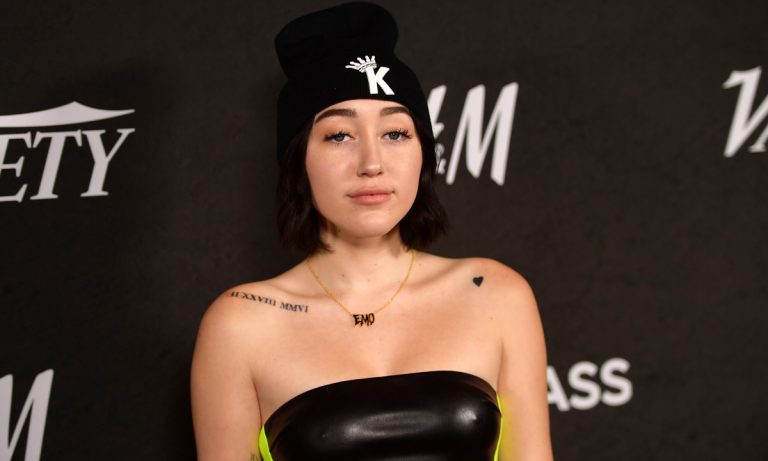
Noah Cyrus, known for her song “Again” and for being Miley Cyrus’s little sister, is planning on releasing her latest EP. As often happens with these events, she’ll also take the opportunity to release some merchandise that’ll be available for only 48 hours.
Billboard reports that Cyrus will be partnering with Pizzaslime, a company that’ll design and sell the sweatshirts and t-shirts, some of which will read, “sry i’m trash,” because low caps are cool and the generation that follows millennials is also very edgy.
Other accessories will be available, including shirts with Billy Ray Cyrus’s face and, most notably, a $12,000 bottle filled with “Noah’s Tears.” The product description reads:
This is approximately 12 tears made by Noah Cyrus as a result of sadness. Human digestion of these tears is not suggested ’cause tears are generally pretty salty and that would just be super fucking weird if you drank someone else’s tears.
So each tear is worth a thousand dollars, thanks for the clarification.
Noah Cyrus’ merchandise joins a long list of strange products from singers that are meant to make consumers “think” while also getting them to, you know, buy the clothes and the album. Jared Leto’s band “30 Seconds To Mars” recently made the news, not for their music, but for their sweatshirts that list out the income of America’s top female models. They’re pink and worth $75.
https://www.instagram.com/p/Bn9Y_jqH4JO
What happened to selling sweatshirts and products that say the band’s name or feature a picture of their faces? Is that too much to ask?
The Marijuana Policy Project has been instrumental in leading successful legalization initiative efforts in Colorado, Alaska, Massachusetts, Maine, and Nevada. Now the nonprofit organization will be throwing its weight behind Legalize ND, the group responsible for getting Measure 3 on the ballot this November. The measure would legalize adult-use cannabis in North Dakota.
“The Marijuana Policy Project supports Measure 3 and strongly encourages North Dakotans to vote in favor of this important initiative,” MPP Deputy Director Matthew Schweich said in a release. “North Dakota’s current marijuana prohibition laws are ineffective and wasteful, causing more harm to consumers and to the community than marijuana itself.”
MPP will support Legalize ND by offering guidance around strategy and fundraising efforts in the lead up to the election. The organization will also mobilize its supporters throughout the state to help.
Legalize ND made waves earlier this year, due to its grassroots efforts and mobility. The group collected 17,695 signatures and submitted the ballot initiative to the state’s office to qualify for the November ballot. The group was also responsible for pushing medical marijuana legalization in the state two years ago.
“We’re thrilled to have MPP’s support, and we look forward to working with them in the weeks leading up to Election Day,” Legalize ND Chair David Owen said. “With their help, we’ll continue to educate voters about the benefits of legalization and the harms of prohibition.”
If passed, Measure 3 would potentially create the most radical recreational cannabis program in the country. The measure would set no limits on cultivation or possession of cannabis for consumers, and also includes framework that would immediately establish legal sales and commercial cultivation of cannabis. In addition it would institute a process for those with prior marijuana convictions to have their records sealed.
“MPP is proud to throw its support behind this local grassroots effort,” Schweich said. “There is clearly a strong desire for change in North Dakota, and since state officials have not taken on this issue, it is up to the people to get it done. Voters will have a chance to make their voices heard this November, and we hope they will use it to say ‘yes’ on Measure 3.”
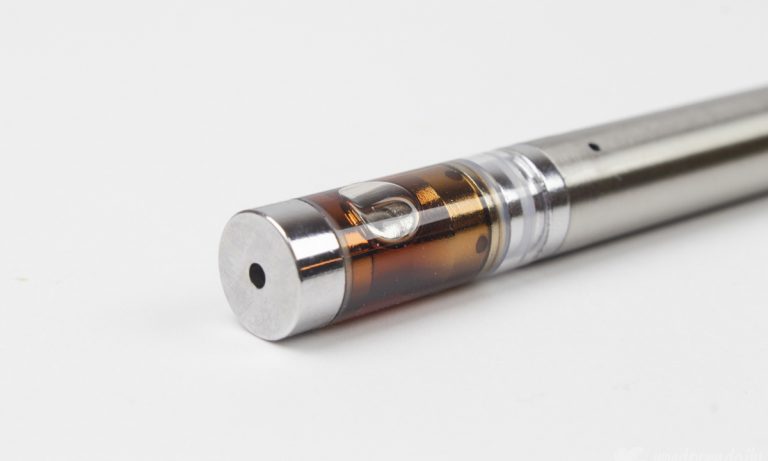
A new study called “Prevalence of Cannabis Use in Electronic Cigarettes Among US Youth” shows that not only are kids vaping at a high rate, but that quite often it’s cannabis being inhaled.
Published by JAMA Pediatrics, the research letter analyzed the 2016 National Youth Tobacco Survey results using data from over 20,600 students. Of the 6th to 12th graders, approximately one third of them were vaping, with around one third of that population using e-cigs for cannabis. All in all, about 9 percent of all students were vaping cannabis, which equals out to around 1 in 11.
It is noted that these numbers are higher than what was previously thought. In response, the FDA began a new campaign to combat youth vaping. The Centers for Disease Control and Prevention’s 2017 National Youth Tobacco Survey reports that over 2 million middle school, high school and college students are vaping. Plus, new findings indicate that vaping by high school students could be up by around 75 percent this year alone.
When the above numbers are combined, and when you take into consideration that the results were self reported, which could mean that they’re swayed by how much each student felt comfortable admitting to or bragging about their usage, they are indeed far reaching. But what are the implications?
Much more research needs to be done on vaping, whether tobacco or cannabis, as it is a fairly new way of inhaling vapor into one’s lungs and we don’t know exactly how that vapor may or may not be effecting us outside and inside of what it’s carrying.
Katrina Trivers of the CDC had this to say in an email to The Verge, “The use of marijuana in these products is of particular concern because cannabis use among youth can adversely affect learning and memory and may impair later academic achievement and education.” She was the study’s lead author.
Again, many more studies need to be conducted, not only on the effects of vaping, but on cannabis itself; how it affects youth who use it regularly and when it’s most appropriate (i.e. if the young person has seizure disorder or is suffering from cancer, the risk/benefit factor becomes clear).
One thing’s for certain: vape pen sales are through the roof and vaping is gaining in popularity across all demographics. What that means on many levels, only time will tell.
Guess who has added their name to the list of celebrities stepping out of the proverbial cannabis closet? That would be none other than Kristen Bell, who revealed on Marc Maron’s “WTF” podcast, that she is a recreational cannabis user.
“I like my vape pen quite a bit. I smoke around my husband and it doesn’t seem to bother him,” Bell told Maron. “Weed rules. Weed is my drug of choice, for sure.”
Bell added that she’s selective in her cannabis usage, opting to consume marijuana only on occasions.
“I can’t do it around my kids, which is a phenomenal amount of hours each week,” she said. “Once a week, if I’m just exhausted and we’re about to sit down and watch ’60 Minutes’, why not?”
You would probably classify this confession as another benign celebrity statement. If you were cynical, which I’m not, you could even poke fun that Bell was jumping on the bandwagon and was slightly overstating the taboo nature of being a parent who uses cannabis. All in all, Bell’s admission rendered, to this listener, as rather innocuous celebrity fun.
But, wow, did the celebrity press blow this interview out of mammoth proportion. Google “Kristen Bell marijuana” and you get everyone from People to Huffington Post tsk-tsking Bell. Why, you might ask? Well because her husband is Dax Shepard, a former drug addict who has been sober for 14 years.
Bell addressed this expected criticism on the podcast, too, saying that Shepard “doesn’t have a problem with anyone else partaking in anything, provided within reason that they’re not acting like a complete schmuck.”
“He’s fine if people do things. He likes drugs and alcohol,” she added. “He just is aware that he lost his privilege with them because he can’t handle it. His brain does not have the chemistry to handle it.”
Even Yahoo joined the ballyhoo reaction circus, adding expert quotes that explain that smoking marijuana once a week is potentially negative, even through a vape pen, as it will change your brain chemistry. “When we test them as far as memory and learning, they tend to score lower on these tests,” Jamie Allen, an assistant professor of pharmacology and toxicology at Michigan State University, told Yahoo. Allen also added that marijuana has “anti-inflammatory activities,” but more research need to be done on its benefits.
Hmm. Why is this necessary? I’d like to remind everyone that Yahoo published a litany of pro-marijuana content around “Weed & The American Family,” which included poll results that found 74 percent of Americans don’t care if celebrities smoke weed or not. The number was even higher among millennials (aged 18-34) at 81 percent.
So, why do all these media organizations care? Yeah, we’re not sure either. Enjoy your vape pen in peace, Kristen Bell.
When my brother and I were kids back in the ‘80s, we loved going to Long John Silver’s.
But it wasn’t just for the fish.
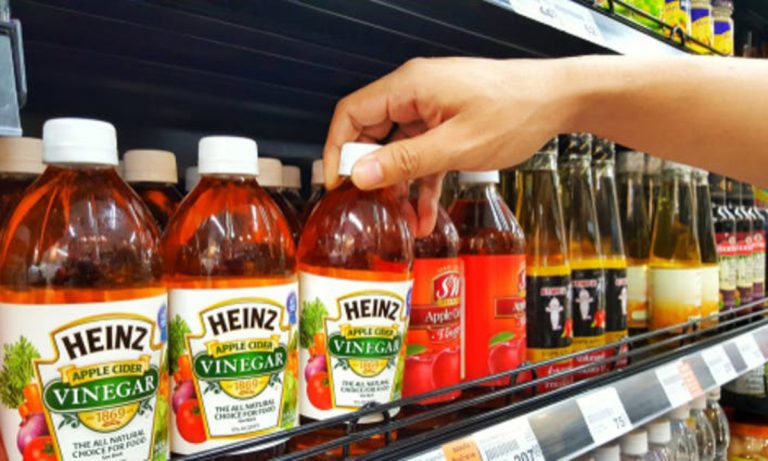
It was for the vinegar – malt vinegar. We would uncap a bottle at the table and swig that tangy, delicious nectar of the gods straight.
Are most of you repulsed? Probably. Were we way ahead of our time? Apparently.
Some social media and online searches would have us believe that drinking vinegar is a cure-all. Our friends and colleagues will regale us with stories of the healing power of apple cider vinegar for whatever problem we may have just mentioned. “Oh, that backache from mowing? Vinegar.” “That last 10 pounds? Vinegar will melt that right off.” “Syphilis, again? You know it – vinegar.”
As a practicing physician and professor of medicine, people ask me about the benefits of drinking apple cider vinegar all the time. I enjoy those moments, because we can talk about the (extensive) history of vinegar, and then distill the conversations to how it could, maybe, benefit them.
Vinegar and water has been a refreshing drink from the time of Roman soldiers to modern athletes who drink it to slake their thirst. Ancient and modern cultures the world over have found good uses for “sour wine.”
While there is plenty of historical and anecdotal testimony to the virtues of vinegar, what does medical research have to say on the subject of vinegar and health?
The most reliable evidence for the health benefits of vinegar come from a few humans studies involving apple cider vinegar. One study demonstrated that apple cider vinegar can improve after-meal blood glucose levels in insulin-resistant subjects. In 11 people who were “pre-diabetic,” drinking 20 milliliters, a little more than one tablespoon, of apple cider vinegar lowered their blood sugar levels 30-60 minutes after eating more than a placebo did. That’s good – but it was only demonstrated in 11 pre-diabetic people.
Another study on obese adults demonstrated a significant reduction in weight, fat mass and triglycerides. Researchers selected 155 obese Japanese adults to ingest either 15 ml, about one tablespoon, or 30 ml, a little more than two tablespoons, of vinegar daily, or a placebo drink, and followed their weight, fat mass and triglycerides. In both the 15 ml and 30 ml group, researchers saw a reduction in all three markers. While these studies need confirmation by larger studies, they are encouraging.
Studies in animals, mostly rats, show that vinegar can potentially reduce blood pressure and abdominal fat cells. These help build the case for followup studies in humans, but any benefit claims based only on animal studies is premature.
In all, the health benefits we suspect vinegar has need to be confirmed by larger human studies, and this will certainly happen as researchers build on what has been studied in humans and animals to date.
Is there any harm in it?
Is there any evidence that vinegar is bad for you? Not really. Unless you are drinking excessive amounts of it (duh), or drinking a high acetic acid concentration vinegar such as distilled white vinegar used for cleaning (consumable vinegar’s acetic acid content is only 4 to 8 percent), or rubbing it in your eyes (ouch!), or heating it in a lead vat as the Romans did to make it sweet. Then, yeah, that’s unhealthy.
Also, don’t heat any kind of food in lead vats. That’s always bad.
So have your fish and chips and vinegar. It’s not hurting you. It may not be doing you all the good that you’re hoping that it will; and it certainly is not a cure-all. But it is something that people all over the world will be enjoying with you. Now raise high that bottle of malt vinegar with me, and let’s drink to our health.
Since Hurricane Florence hit last week, giant bags of marijuana have been washing up on different parts of the Floridian shore. Each bag is unmarked and contains individually wrapped five-kilo bricks of weed that authorities assume belong to an airplane drop that went awry or a boat that lost its cargo amidst the storm.
The Washington Post reports that residents of Daytona Beach have been facing a conundrum. While some want to take the miraculous and untraceable marijuana packets for themselves, others are concerned about the authorities. As documented in one 911 call, a woman told the operator that, “We’re at Jungle Hut (Park) and a huge bundle of drugs or something just washed up on the beach and there are people like fighting over it. There’s like seven or eight people out here. And they’re all like huddling up against it, and my dad’s trying to take it so that you guys can have it all.”
While medical marijuana is legal in Florida its recreational use is still illegal, meaning that people who took marijuana from the spot would be charged with possession.
According to Flagler County officials, the police have managed to recover over 100 pounds of marijuana in the last couple of days. They all probably belong to the same shipment but there’s no way of knowing why they ended up floating in the sea. “There’s a plethora of possibilities,” says St. Johns Commander Chuck Mulligan.
To all the residents of Florida who thought that luck was on their side for once and decided to take a brick of weed home, authorities warn that the missing marijuana packets are all being looked for and ask that you strongly consider if free weed is worth a trip to the “Green Roof Inn.” We assume that means prison.