Sunday, December 21, 2025
Home Blog Page 897

This Bill Will Allow Cannabis Smoking In Federally Assisted Housing

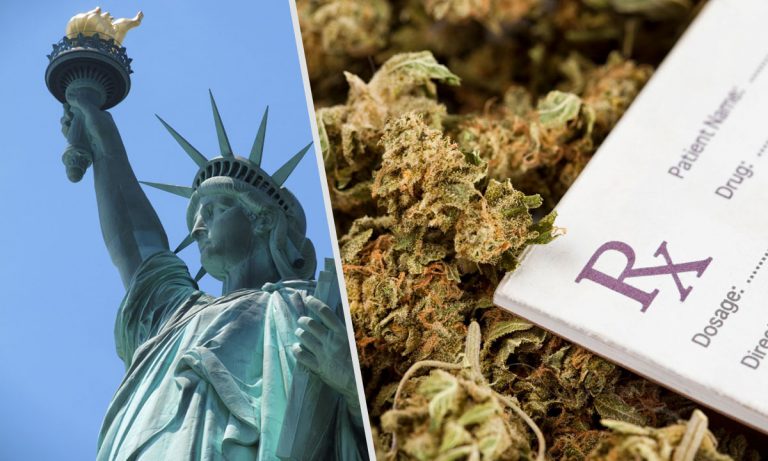
The “Marijuana in Federally Assisted Housing Parity Act of 2018” introduced by Rep. Eleanor Holmes Norton (D-DC) will protect people who use medical marijuana.

It’s an ambitious bill prompted by a D.C. resident’s need for cannabis medication who lives in federally assisted housing. As of now, no matter the law of the land you reside on, using cannabis products bars one from benefiting from federal housing, which is in many cases the difference between the streets and a home.

The D.C. resident’s name is Sondra Battle and Rep. Homes Norton is calling the Bill, “Sondra Battle Cannabis Fair Use Act.” Clearly, the Representative is greatly moved by Battle’s story and sees the healing benefits of cannabis as big enough to supercede Federal law in states that already allow for medical or recreational marijuana.

It’s valliant, and if it is to pass, it will be monumental. The problem is that cannabis is strictly illegal at the Federal level. Deemed a Schedule I substance as of yet, the plant is labeled as having no medical value and as a drug with high potential for abuse. That’s how it’s defined and, because of that, it may prove quite difficult to clear the hurdles ahead for such a Bill.

There’s been buzz all around about congress, Senators and even the possibility of President Trump wanting to re- or de-schedule cannabis to let all medically and recreationally legalized states take a deep, collective breath, get to proper banking and expand, expand, expand. As it stands, however, the current Federal status is like a brick wall.

Still, it’s encouraging to see government officials standing up for cannabis users’ rights one after the other in such meaningful ways. Like Rep. Holmes Norton declared, “Residents like Sondra should not fear eviction from federally assisted housing simply for using cannabis to treat their medical conditions.” It’s a hundred percent true now and it will be just as true when the Federal wall comes tumbling down.

Bills like these remove the bricks of prohibition one by one and, as we were all taught, anything is possible. Perhaps Sondra Battle and her Rep. will be the faces of federally funded housing becoming cannabis friendly in the near future. It could be a giant leap that would literally open doors for thousands of people and their families.

Uberfication: Moviepass Is Adding Surge Pricing

While Moviepass launched their business in 2011, it wasn’t until August 2017 that the subscription service became a nationwide sensation. During this time, Mitch Lowe, a former Netflix employee, was hired to run the company, which decided to switch things up, offering an unprecedented deal to their subscribers. For $10 a month, Moviepass customers would be able to watch one movie a day.

Ever since their big announcement, the conversation has revolved around the fact that the company’s Netflix-like business model isn’t sustainable when applied to movie theaters, and most people have been waiting for the other shoe to drop.

In an interview with Business Insider, Lowe said that Moviepass would introduce several measures that’ll ensure the company’s survival, including the ability to watch IMAX and 3D movies, surge-pricing, and an option to bring a friend with you to the movies. Surge-pricing will be very similar to what Uber does on hours where people request a lot of cars. These “high demand” movies would add a $2 fee to the $9.95 base price of the subscription, which is still a pretty cheap deal.

No matter what happens to Moviepass, it seems like subscription services are the future of the movie theater business even though movie theater chains were very much against them just a year ago. Recently, AMC announced their own subscription service that includes up to three movies a week, and costs $20 a month.

Moviepass’ surge pricing will appear during the month of July, while the “bring a friend” option, and the ability to watch IMAX and 3D movies, will show up in August.

4 Common Browser Problems And How To Fix Them

We all have browser preferences, choosing one over the other due to their critical reception, speediness, performance, load time, or cool logo. Still, no matter how respected or efficient they are, all browsers run into trouble from time to time, facing issues that have nothing to do with your computer.

Thankfully, modern browsers come equipped with tools that are easy to use and that give your the opportunity to fix the most common problems they face. Gizmodo compiled a list with some of these problems, including the most efficient ways of dealing with them. Here are four of our favorites.

Sluggishness

https://giphy.com/gifs/season-8-the-simpsons-8×10-3o6MbnqLhX5tJ5wNQQ

Once you’re sure your internet connection is fine, slow browser performance can be fixed in different ways. For starters, you should have the latest version of your browser installed. To check, in Chrome, go to “Help”, and then click on “About Google Chrome”. In Safari, check the “Updates” tab on the Apple Store. In Firefox, go to the menu and click on “About Firefox”. For Edge, go to “Windows Settings”, then to “Update & Security”.

Sometimes your browser is slow due to heavy extensions and add-ons. Be sure to deactivate the ones you don’t need. You can find these on your browser menu, labeled as “Extensions” in Edge, Chrome, and Safari, and as “Add Ons” in Firefox.

If your browser is still slow, try erasing the cache of data and the cookies. In Safari, these options are hidden. Go to the “Advanced” tab on “Preferences”, then click on “Show Develop” menu in menu bar. This will allow you to erase your browser’s cache.

As a last resort, you can always uninstall and install the browser.

Unhelpful URL suggestions

https://giphy.com/gifs/Bachelorinparadise-season-3-bachelor-in-paradise-bip-l2SpVpuOqiAR7H6H6

Sometimes browsers suggest sites that you don’t want to have display openly, and these are pretty simple to get rid off. To delete the entire list of suggestions your browser makes, delete your browsing history. If you want to get rid of one link in particular, you can do so quickly in Chrome. Start typing out the address you want to erase. Once you locate it, tap the down arrow key and hit Shift+Delete (Shift+FN+Delete on Mac).

To delete one link from your URL suggestions while using other browsers, go to your history and delete it manually.

Random and repeated crashes

https://giphy.com/gifs/SrTp2m4XDJc4M

If your browser keeps crashing, check to see if everything is okay. Be sure to: 1) have the latest version downloaded 2) clear your cache and cookies and 3) fix all of your add-ons and extensions. Most crashes are caused by websites and faulty extensions, so be sure that everything is running smoothly and check if a specific website is causing these problems. While it’s hard to determine the source of constant crashing, it helps to keep everything on your computer up to date, including your device drivers and all sorts of software.

Pop-up windows

While pop-ups are part of the internet, a really high number of them can mean that your computer has a virus or some sort of malware. Run your virus software and make sure that everything is running smoothly, and also purge your browser’s data cache and cookies. If the situation continues, install an ad-blocker app, which could also help you locate the source of the problem.

Businesses Are Losing Their Minds Over Millennials ‘Ghosting’ Them

0

Ghosting is generally used in terms of dating. It’s thrown around, often in disbelief, when a person just — poof! — disappear without so much as a text message, Dear John email or Instagram “like.” They simply…go away.

But now, the irritating, bad-mannered trend is happening to businesses. Promising job candidates are ignoring emails, texts and phone calls. And some don’t even show up for their initial interview. LinkedIn Editor, Chip Cutter, describes it like this:

In fields ranging from food service to finance, recruiters and hiring managers say a tightening job market and a sustained labor shortage have contributed to a surge in professionals abruptly cutting off contact and turning silent — the type of behavior more often associated with online dating than office life. The practice is prolonging hiring, forcing companies to overhaul their processes and tormenting recruiters, who find themselves under constant pressure.

And when your job is to find the right candidate to fill a position, this behavior is infuriating. “If you don’t love your job [as a recruiter], you’ll beat your head on your desk,” John Widgren, a recruiter for Central Florida Health, tells LinkedIn.

The act of ghosting a job is prevalent among younger generations, where it’s “almost become a new vocabulary” in which “no response is a response,” according to Amanda Bradford, CEO and founder of dating app The League.

Some candidates will actually show up for their first day of work before they ghost, never to return for a second shift without so much as an “I quit” text.

As Cutter explains, this behavior likely stems from inexperience and an abundance of job offers.

Professionals who entered the workforce a decade ago, during the height of the Great Recession, have never encountered a job market this strong. The unemployment rate is at an 18-year low. More open jobs exist than unemployed workers, the first time that’s happened since the Labor Dept. began keeping such records in 2000. The rate of professionals quitting their jobs hit a record level in March; among those who left their companies, almost two thirds voluntarily quit. Presented with multiple opportunities, professionals face a task some have rarely practiced: Saying no to jobs.

It could also be the fear of confrontation. “Candidates are winding up with multiple offers, and you can’t accept them all,” Dawn Fay, district president at Robert Half International in New York, tells LinkedIn. “Individuals just inherently don’t like conflict or disappointing people.”

Not that this needs to be said, but recruiters ask that job candidates simply communicate. “Don’t accept jobs if you’re not serious about taking them. If you do need to drop out of the process, say so.” Sending an “I decline your job offer” text isn’t ideal, but if that’s the only way you know how to communicate, it’s better than nothing.

Use Cannabis To Help Overcome Fears And PTSD

The common visual stereotype of American soldiers consuming cannabis looks like counterculture conscripts literally shotgunning pot smoke from U.S. military rifle barrels, captured enduringly in Vietnam War documentary photographs and conjured famously in Hollywood cinema.

Today, soldier-cannabis user optics are different and may have nothing to do with smoking, be it through a weapon, bong or joint.

Just as cannabis has come a long way from the jungle weed enjoyed by draftees in the Age of Aquarius to today’s pharmaceutical-grade formulations treating severely ill children and seniors in the era of legalization, political attitudes have evolved and cultural stereotypes have dissolved.

Today’s soldier-users are likely to be highly-skilled enlistees, men and women suffering from life-threatening post-traumatic stress disorder, or PTSD, after serving in Afghanistan, Iran or scores of other conflict zones and terrorism theaters in the Middle East and Africa.

And rather than smoking, today’s soldier-users are most likely vaping concentrated cannabis oils or consuming infused capsules and foods. Some may experience the therapeutic benefits of cannabis without any of the botanical drug’s heady effects, consuming non-psychoactive CBD rather than mind-altering THC to help balance their bodies’ endocannabinoid systems.

This is happening as more voices call for the U.S. government to allow the military to study cannabis’ effects combating PTSD and as mounting research shows cannabis can ease PTSD’s most chronic and lethal symptoms — depression and suicidal thoughts.

Dr. Michele Ross, a neuroscientist and author, believes the medical establishment appallingly overlooks and underrates cannabis.

By using cannabis, Ross explained in an interview for Green Flower’s Beginner Series, “you’re alleviating symptoms of anxiety and depression, you’re improving family dynamics because now there’s less drug use, or because there’s less anger, less depression, there are less issues at work, they’re not getting fired from their jobs because now they’re able to have normal interpersonal relationships.”

Without cannabis?

“They could be dead without cannabis,” Ross said.

The reason PTSD sufferers who use cannabis are alive is because cannabis has enabled them to forget. As Green Flower notes, active compounds in cannabis tap into a large neurotransmitter network in bodies’ central nervous systems that help people forget memories.

Some researchers believe patients suffering PTSD have an endocannabinoid deficiency, which may prevent them from extinguishing fearful memories.

“When you have an endocannabinoid deficiency or dysfunction, you’re no longer able to forget,” Dr. Ross said. “So, that’s why cannabis helps. It activates those cannabinoid receptors and helps you let go of those horrible memories that are keeping you up at night and are causing you not to be able to function.”

While some trials have presented more mixed results, a 2009 clinical trial in Canada showed that the nighttime administration of THC reduced frequency and intensity of nightmares in 72 percent of the 47 patients studied.

Despite the limited research, more scientists, are joining soldier-users not looking to get high, and are embracing CBD.

“Think of CBD as a shotgun,” Marcel Bonn-Miller, a psychology and psychiatry professor at the University of Pennsylvania’s Perelman School of Medicine, told Scientific American. “It hits so many receptors that people are still trying to understand it. If you want to actually treat PTSD, most of the evidence is pointing toward CBD. But most people with PTSD are gravitating toward [marijuana] products with high THC levels, which may help in the short-term but are likely to worsen their symptoms over time.”

Unlike the reality of opiates, there’s no scientific evidence THC-rich cannabis is addictive.

Fabian Henry, a veteran of the war in Afghanistan and founder of Veterans For Healing, a advocacy group that helps Canadian learn to use cannabis for PTSD, told Toronto’s Globe and Mail that cannabis is an important component of PTSD treatment but not the ultimate PTSD cure.

“At the end of the day, we want you to get off cannabis,” Henry said. “I shouldn’t need it forever. I should only need it until I get the tools to manage my illness.”

A report last year by The U.S. Department of Veterans Affairs found risk of suicide among veterans is about 22 percent higher than among non-veterans.

Currently, 23 U.S. states allow PTSD to be treated with medicinal cannabis. Starting July 1, PTSD will among the recognized condition in Georgia but since there is no state law in place for the harvest, transportation or dispension of any form of cannabis, patients cannot receive treatment in Georgia and must travel to a medicinally legal state, obtain the product and return to Georgia, risking penalties for bringing a controlled substance across state lines.

Meanwhile, an amendment that would direct the Department of Veterans Affairs to study the medical benefits of cannabis for military veterans is working its way through the U.S. and may come up or a vote soon.

Here’s Why The FDA Approval Of Epidiolex Is Significant, According To Dr. Green

The FDA has made a big step forward with the approval of Epidiolex, the first approved medication derived directly from the cannabis plant. This medication was studied in two rare forms of epilepsy, Lennox-Gastaut syndrome and Dravet syndrome. It was found to reduce seizure activity in both syndromes.

The drug had the psychoactive ingredient, THC, removed and is primarily composed of CBD.

This approval is significant for multiple reasons. The most important element is that it gives the patients with these syndromes new hope in controlling their seizures.

Epidiolex has not yet been approved for other forms of epilepsy. But this gives one a pause to think about the possibilities that this drug can hold. In 2015 2.4 million people had epilepsy. Generally, it is thought that 1/3rd of these patients will have refractory seizures; seizures which are not well controlled with medications. Could we now have a new medication to offer these people? This should be studied in the future.

We now have a medication derived directly from the cannabis plant. Now the FDA will have to make a decision as to whether this should be a scheduled Drug. Up to this time, cannabis is a schedule 1 drug, one without any medical benefit. Schedule 1 drugs cannot be prescribed by physicians. They are considered to have a high potential for abuse. We will have to see how the FDA approaches this new category of drugs. I am in the hope that it will either not be scheduled at all (I severely doubt that this will be the case) or will be schedule 3 (the same as Vicodin), schedule 4 (valium) or schedule 5 (cough syrup with codeine). This author certainly does not think CBD has the same abuse potential as Vicodin or valium.

Finally, it is my hope that the acceptance of a cannabis plant derived medication will allow the DEA to rethink its position on cannabis in general and change the schedule to one with a lower risk of abuse. I am also hopeful that we will be able to study cannabis as a treatment for other diseases without being confined by it being a schedule 1 drug.

Making Money On YouTube Just Got Easier

“Creators should have as many ways and opportunities to make money as possible.”

YouTube has announced it’s going to start adding new ways of enticing their most prolific creators to help them make more money. How? By monetizing their work via merchandising and paid memberships. Until now, the YouTube community only made money through advertising.

Neal Mohan, Chief Product Officer of YouTube, claims that even though advertising is the main source of revenue for Youtubers, they want to think beyond ads. “Creators should have as many ways and opportunities to make money as possible,” he said.

YouTube’s previous sponsorship program is being rebranded as paid memberships, giving viewers the opportunity to pay $4.99 a month so they can access member-only posts, badges and exclusive live streams. These perks are chosen by those creating the videos, who can market shoutouts, special emojis, and whatever they think might entice their viewers. Paid memberships, which will roll out in the coming months,  will be available for creators that have over 100,000 subscribers.

The company has also partnered with Teespring, an e-commerce platform, that’ll give creators with over 10,000 subscribers  the opportunity to sell their own merchandise, including t-shirts, phone cases, mugs and much more. While YouTube won’t take a cut from merchandise revenue, Teespring will charge a flat fee per product.

The last feature YouTube announced is called “premieres,” and it lets video creators hype up their content and schedule it for the future. According to Mashable, scheduling a premiere will allow YouTubers to have a landing page which viewers can see ahead of time. These viewers can join in and watch the video the moment it pops up and leave comments while watching.

While YouTube has had tons of problems in the past regarding their policies or lack thereof, these new features are great news for the most prolific video creators, giving them reasons to stick around, even though Instagram and Facebook are becoming stronger homes for them.

FDA Approves Cannabis-Based Drug For The First Time Ever

In a major milestone for medical marijuana, the U.S. Food and Drug Administration on Monday approved a cannabis-based drug, making it the first marijuana substance meeting the federal agencies stringent guidelines.

The drug, Epidiolex, was developed by GW Pharmaceuticals, a publicly traded British cannabis company. The strawberry-flavored syrup is a purified form of cannabidiol (CBD), a non-psychoactive component in cannabis. The approval is expected to spur additional research into cannabis, which is still illegal under federal law.

The FDA’s ruling clears the way for the drug to be used in patients aged 2 years and older suffering from Dravet Syndrome and Lennox-Gastaut Syndrome, two rare childhood-onset forms of epilepsy that are among the most resistant to treatment.

“The difficult-to-control seizures that patients with Dravet syndrome and Lennox-Gastaut syndrome experience have a profound impact on these patients’ quality of life,” said the FDA’s Dr. Billy Dunn. “In addition to another important treatment option for Lennox-Gastaut patients, this first-ever approval of a drug specifically for Dravet patients will provide a significant and needed improvement in the therapeutic approach to caring for people with this condition.”

The approval only covers use of the liquid drug for Lennox-Gastaut syndrome and Dravet syndrome. FDA advisers recommended the approval in April.

Dravet syndrome is a rare genetic condition that appears during the first year of life with frequent fever-related seizures. Children with Dravet syndrome typically experience poor development of language and motor skills, hyperactivity and difficulty relating to others.

Lennox-Gastaut syndrome begins in childhood. It is characterized by multiple types of seizures. People with Lennox-Gastaut syndrome begin having frequent seizures in early childhood, usually between ages 3 and 5. Most people with Lennox-Gastaut syndrome require help with usual activities of daily living.

Under the Controlled Substances Act, CBD is currently a Schedule I substance because it is a chemical component of the cannabis plant.

Japanese Lawmakers Discover Marijuana Growing Outside Their Offices

0

Four cannabis plants were discovered on the office building grounds of Japan’s Upper House lawmakers.

In a country with the world’s most draconian cannabis laws, and where adults who have experimented with cannabis surpassed those who abuse paint thinner for the first time, you wouldn’t expect marijuana plants growing unnoticed anywhere in Japan. So just picture the reaction when a crop of marijuana was found growing in Nagatacho, the Japanese equivalent of America’s Capitol Hill.

According to the Japan Times, Tokyo Metropolitan Government Staff confirmed Thursday that the reports were true. Four cannabis plants were discovered on the office building grounds of Japan’s Upper House lawmakers. Masahiro Hirai, an official with the health and welfare bureau of the metropolitan government, corroborated the story and added that the marijuana plants have since been removed.

How did the marijuana plants arrive there? Reports indicate the plants were around one to two months old, but were they sprouting naturally or the result of sneaky mastermind with a green thumb? The Tokyo bureau isn’t ruling out any possibility, but their explanation is rather interesting.

Check it, via the Japan Times:

[The Tokyo bureau] believes “the probability is higher that the plants were just growing naturally,” the official said, adding that it’s not entirely impossible that marijuana seeds landed there after being carried by the wind or being eaten and then defecated by birds. But such cases are rather rare, especially given Japan’s stringent anti-cannabis law prohibiting the unlicensed cultivation of marijuana.

“Because of our strict license system regarding marijuana cultivation, it’s not like the seeds fly around and sprout constantly,” Hirai added.

Under Japanese law, someone caught possessing marijuana is subject to up to five years in prison. while being charged with cannabis cultivation carries a possible seven-year prison sentence. So marijuana cultivation isn’t exactly an extracurricular activity in which many Japanese participate. Officials reported only four cases of marijuana removal, a total of 44 plants, in fiscal 2017.

“At this point, we can’t completely deny that someone was deliberately trying to cultivate marijuana there, so we’re looking into that possibility, too,” Hirai said.

6 Of The Most Helpful CBD Products

Cannabis and hemp-derived cannabidiol, or CBD, is renowned for providing pain relief, suppressing seizures, relieving muscle spasms, treating ADHD, combating insomnia, and easing stress and anxiety. CBD reduces inflammation, which is one of the primary causes of disease and disorders, including arthritis and migraines. New CBD companies are flooding the market faster than we can say “the latest fad.”

With tons of new products hitting shelves, here is a handy guide to help sort the helpful ones from the hype.

Charlotte’s Web

Hemp Plus Extract oil is twice the strength of their basic hemp extract oil. Each serving of 1ml contains 28mg of hemp extract. It comes in mint chocolate, so it includes 10 fat calories per serving of 1ml. It is also mixed with fractionated coconut oil and sunflower oil. Hemp Plus is a natural addition to smoothies, coffee, foods, or taken alone. CW claims its hemp oil plus can offer support for normal, everyday stresses, help provide healthy recovery from exercise, and support a sense of calm, for focus. It is manufactured in Boulder, Colorado.

A pharmacist at Columbia Care dispensary recently confirmed to a consulting patient that Charlotte’s Web makes high-quality CBD. The secret to their high-quality products is in the top-of-the-line, precision Hightech Extracts machine, which uses a fully automated recipe-driven process that meets pharma-grade standards. Hightech Extract provides CW Hemp with consistent, predictable and repeatable extractions.

Juju Royal

Julian “Juju” Marley is the latest Marley family member to get into the marijuana market, and rightly so. If anyone deserves to cash in on the myriad uses for cannabis, it’s the members of the Marley clan. Without Juju’s father, Bob, spearheading the movement, marijuana’s healing properties might not have received global, mainstream recognition in the modern age. As Juju’s brother Stephen is often fond of saying, “Education before recreation.” Juju’s CDB “vape juice,” comes in multiple flavors that smell like Fruity Pebbles, but taste like smoking a menthol cigarette.

Juju’s 10mg sublingual tablets are made with full-spectrum CBD oil from hemp grown in Colorado’s San Luis Valley. Because they are designed to be dissolved under the tongue by the mucosal lining of the mouth, they bypass the digestive tract, for quicker absorption. Incidentally, taking medical marijuana or CBD sublingually is the healthiest route to pursue.

What’s more, the company donates 1 percent of its proceeds to the Weed for Warriors project.

Patriot Botanicals

This company was developed by West Coast mom Roxanne Benton to treat her son’s ADHD and Tourette’s Syndrome. CBD worked so well to control and reduce his symptoms that she put it on the market to help other moms and kids. Their company slogan, “Relax, it’s just hemp,” makes it clear that their CBD oil doesn’t contain any THC. It comes in mint and vanilla flavors and is legal to ship across the U.S.

Sensi Chew

The company’s Insomnia Plus contains CBD and Melatonin, a combination that’s helpful for patients who struggle with insomnia due to chronic pain. It includes a total 60mg of organic CBD cannabinoid extract, and 4mg per dose of natural melatonin, suspended in a bedtime snack-sized, chewy chocolate caramel bonbon. The cannabinoid profile is primarily CBD, with .03% THC and small amounts of CBC, CBN, CBG, THCV, and other whole plant cannabinoids and terpenoids. Unfortunately, due to its trace amounts of THC, it is temporarily available only on the West Coast.

Sensi Chew has a whole line of CBD “candy,” from chocolate ches to gummy bears. But as Dr. Anna Folckomer, a licensed acupuncturist and board-certified herbalist, pointed out, “Regarding eating sugar at night, your insulin cycle follows circadian rhythms and light exposure. We are less sensitive to insulin at night, and it’s hypothesized that timing meals with insulin sensitivity would be a game changer in the onset of diabetes. Your body knows how to use glucose for fuel during daylight hours, but due to decreased sensitivity at night, it tends to store it for later.”

Tasty

Operated by husband and wife team Jeff and Lisa Gallagher, this Michigan-based store sells hemp oil extract in spearmint and vanilla flavors. Each bottle (40 servings) contains 1,000mg of CBD and contains MCT oil, organic Sunflower Oil, stevia and other natural flavors. Put half a dropper under the tongue and hold it there for 60 to 90 seconds before swallowing. A minute and a half may seem like forever to hold liquid under the tongue. It helps to use a stopwatch, or be distracted by a task.

Vita Canna

Vita Canna from Keef Brands seems to provide the most “science” behind their dietary supplement, which is derived from the whole hemp plant without the high. Vita Canna’s Colorado Hemp Oil has a citrus flavor which contains 40 percent CBD, encapsulated into nanoparticles by the nutraceutical industry’s leading liposomal delivery system. (Did anyone else imagine Borg Seven of Nine taking this stuff to regenerate?)

Vita Canna claims their patented phospholipid encapsulation system brings the power of intravenous delivery into convenient oral ingestion, which improves upon liposomal technology with smaller, more stable, single-layer spheres made from the highest-grade ingredients available. In addition to excellent absorption rates, nanospheres have demonstrated the ability to cross the blood-brain barrier, deposit their cargo intracellularly, and enhance lymphatic circulation of nutrients. Also, the phospholipids that compose the liposome shell feed the cell membranes; this helps ensure the proper function of the absorption of nutrients and the excretion of cellular waste products and toxins.

Science has identified two primary cannabinoid receptors in the human body: CB1 and CB2. These are embedded in cell membranes and present throughout the entire body. CB1 receptors are highly expressed in the hippocampus and other parts of the Central Nervous System, multiple organs, and glands, and have been shown to possess anticonvulsant properties. CB2 receptors, while commonly reported as confined to the lymphatic system, are also now being studied for their vital role in suppression of both pain and inflammatory processes.

With so many CBD products on the market, ultimately, picking the right type of product and dosage is a personal choice. As with any CBD oil, remember to store the bottle in a cool, dry place, away from light, shake the bottle before each use, and hold the liquid or tablet under the tongue for up to a minute and a half, for best results. It is relatively difficult to impossible to overdose on CBD, so trying a few different kinds until a favorite is found, can’t hurt.

Don't Miss Your Weekly Dose of The Fresh Toast.

Stay informed with exclusive news briefs delivered directly to your inbox every Friday.

We respect your privacy. Unsubscribe anytime.