It appears that some CBD products are now just as legal across the United States as over the counter medications. The U.S. Drug Enforcement Administration (DEA) recently published an internal directive that essentially gives the industrial-hemp industry permission to come out of the grey market and enter into the realm of legitimate commerce. The agency says its policy is consistent with a decision handed down in 2004 by the U.S. Ninth Circuit Court of Appeals in the case of the Hemp Industries Association v. DEA.
“Products and materials that are made from the cannabis plant and which fall outside the CSA definition of marijuana (such as sterilized seeds, oil or cake made from the seeds, and mature stalks) are not controlled under the CSA,” the directive reads.
“Such products may accordingly be sold and otherwise distributed throughout the United States without restriction under the CSA or its implementing regulations. The mere presence of cannabinoids is not itself dispositive as to whether a substance is within the scope of the CSA; the dispositive question is whether the substance falls within the CSA definition of marijuana.”
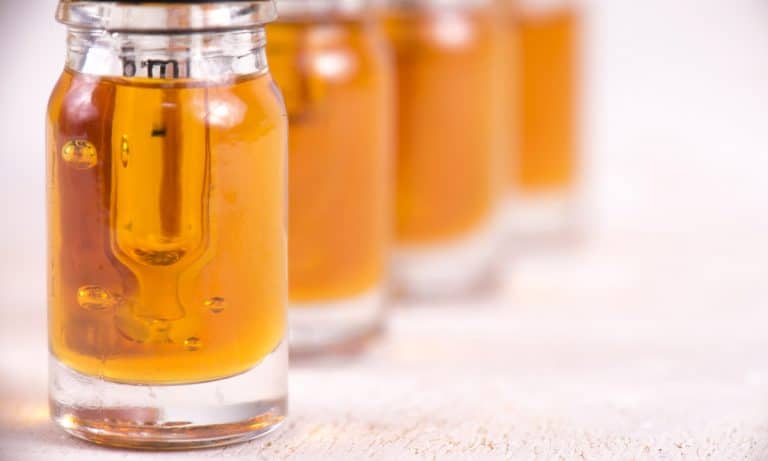
There has been a lot of confusion lately over the legality of this substance. This is because not all cannabidiol (CBD) products are created equally. In legal marijuana states, dispensaries are selling high-CBD strains of marijuana that can contain up to 30 percent CBD. These breeds also contain a measurable amount of THC, the compound that provides users with stoned effects. But in the case of the hemp-based CBD, these oils only have around 3.5 percent CBD and 0.3 percent THC – falling right in line with the law, according to the DEA.
The agency claims that as long as pot products are manufactured using parts of the cannabis plant that are not restricted under the Controlled Substances Act, they can be sold anywhere in the United States. But anything derived from parts of the plant that the DEA considers marijuana is a no-no.
But nothing has changed. The law is the same as always. The DEA is simply clarifying the law.
Still, the directive could open the national market up to higher quality CBD products. There is nothing written in the language of the directive that suggests these products must be hemp-based.
“Such products may accordingly be sold and otherwise distributed throughout the United States without restriction under the CSA or its implementing regulations. The mere presence of cannabinoids is not itself dispositive as to whether a substance is within the scope of the CSA; the dispositive question is whether the substance falls within the CSA definition of marijuana,” the directive reads.
If the situation sounds confusing, don’t worry – it is. Legal experts say the clarification continues to equate market instability and leaves the law open to interpretation.
“The logical and scientific inconsistency puts the DEA and purveyors of CBD goods in a precarious position: how will they determine which CBD products are subject to the CSA and will people really be prosecuted for trafficking a Schedule I controlled substance where the substance is chemically indistinguishable from one that is not prohibited by the CSA?” writes attorneys Justin Hobson and Lewis Horowitz of Lane Powell. “We anticipate that at least one outcome will be buyers insisting on statements or warrantees from sellers, and buyer quality control due diligence, that their CBD products contain only excepted marihuana oil.”
It’s no secret that Sen. Elizabeth Warren (D-Mass.) supports marijuana law reform. But late last week, the potential presidential candidate taped a full-throated endorsement in favor of cannabis legalization.
In a video message addressed to Americans For Safe Access, Warren discussed the importance of removing the stigma associated with cannabis. The progressive lawmaker also urged advocates of sane marijuana laws to continue fighting to be “on the right side of history.”
For years, Warren has been a champion for cannabis legislative reform. Earlier this year, she called Attorney General Jeff Session’s move to eliminate rules that allowed states to legalize marijuana “an incredibly destructive thing to do.”
Massachusetts legalized marijuana in 2016 through a voter initiative and is currently creating rules to regulate the industry. Retail stores are anticipated to open their doors this summer.
“States like Massachusetts are working hard to put sensible rules in place to deal with marijuana,” Warren said.
“Jeff Sessions has left it up to the individual U.S. attorneys, but that creates a whole new level of uncertainty that makes it much more difficult for a state like Massachusetts to be able to finish and implement rules that Massachusetts believes are the safest rules and the best ways of dealing with marijuana,” Warren said.
Warren recorded the pro-cannabis message to help launch the 2018 National Medical Cannabis Unity Conference in Washington D.C. Americans for Safe Access was founded in 16 years ago by medical cannabis patient Steph Sherer as a vehicle for patients to advocate for the acceptance of cannabis as medicine.
With over 100,000 active members in all 50 states, ASA is the largest national member-based organization of patients, medical professionals, scientists and concerned citizens promoting safe and legal access to cannabis for therapeutic use and research. ASA works to overcome political, social and legal barriers by creating policies that improve access to medical cannabis for patients and researchers through legislation, education, litigation, research, grassroots empowerment, advocacy and services for patients, governments, medical professionals, and medical cannabis providers.
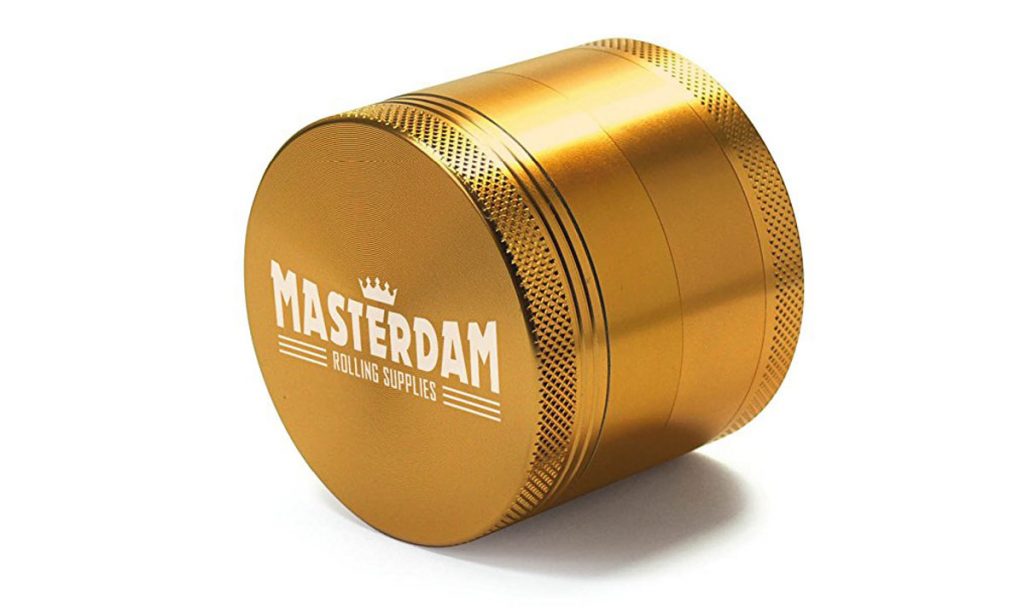
Before ever using the mostly standard three compartment model of grinder, I was using scissors, a mortar and pestle, my fingers, and generally wasting both kief and time. So unversed in the ease of using one I was, that I now realize I had been accidentally smoking everyone’s kief because I thought it all came from the nugget I just ground up. My bad everyone.
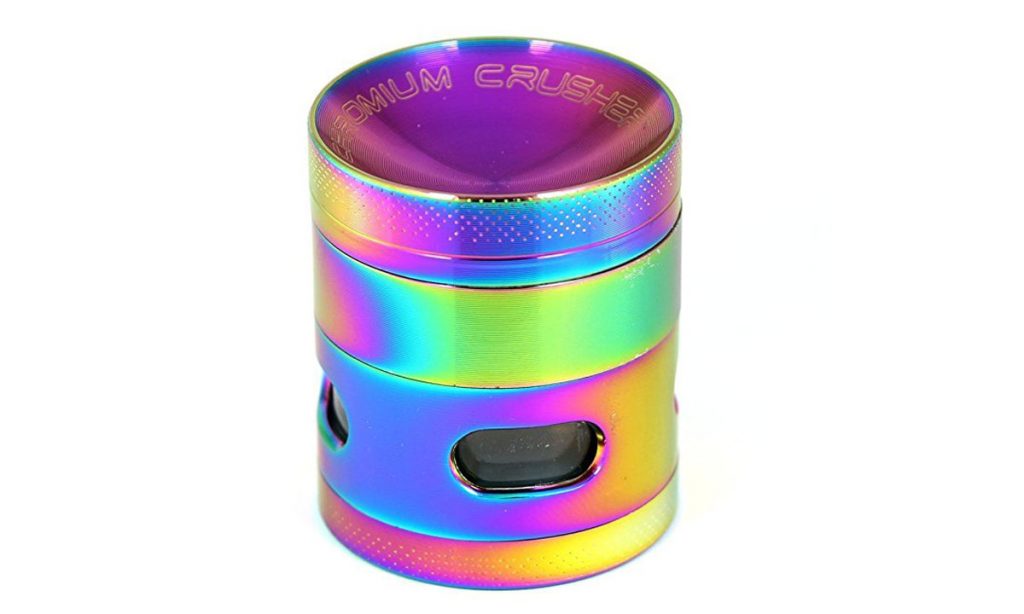
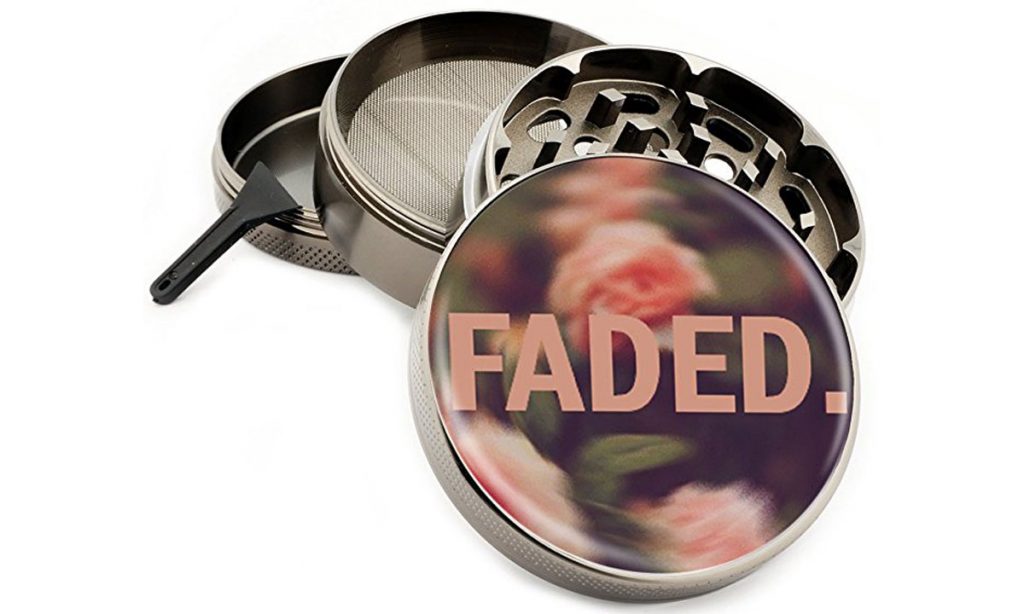
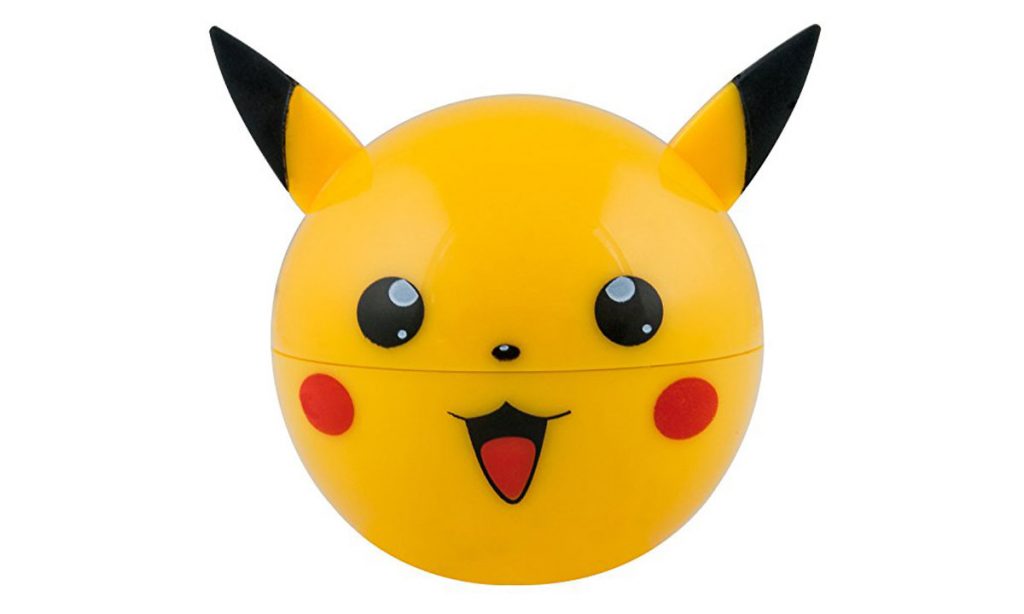
Now that I have entered the future and left the Stone Age of weed grinding, I consider myself an ambassador to other dorks out there. For quick and convenient flower grinding in the cutest possible packaging, as well as kief collection, look no further than the all convenient interwebs.
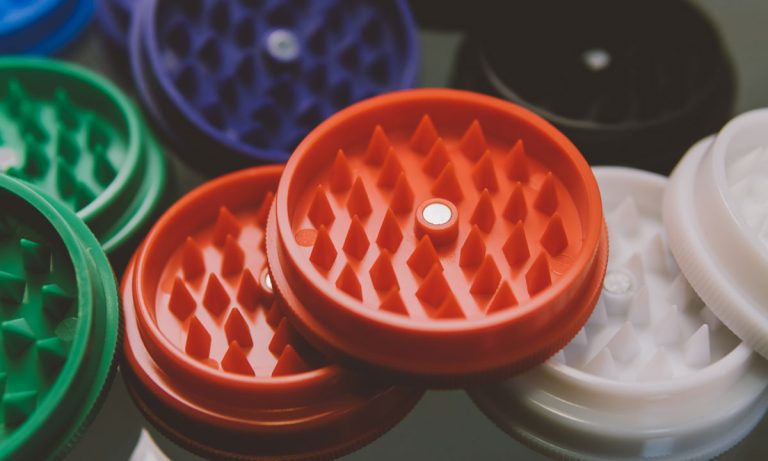
If you’re going to go basic at least do it in style. This model is zinc free if you are sensitive, and is equipped with an extra high quality kief mesh.
This petite and also zinc free model is a real looker. It goes perfectly with any rave-throwback accessories, which is now on it’s own bonafide second wave.
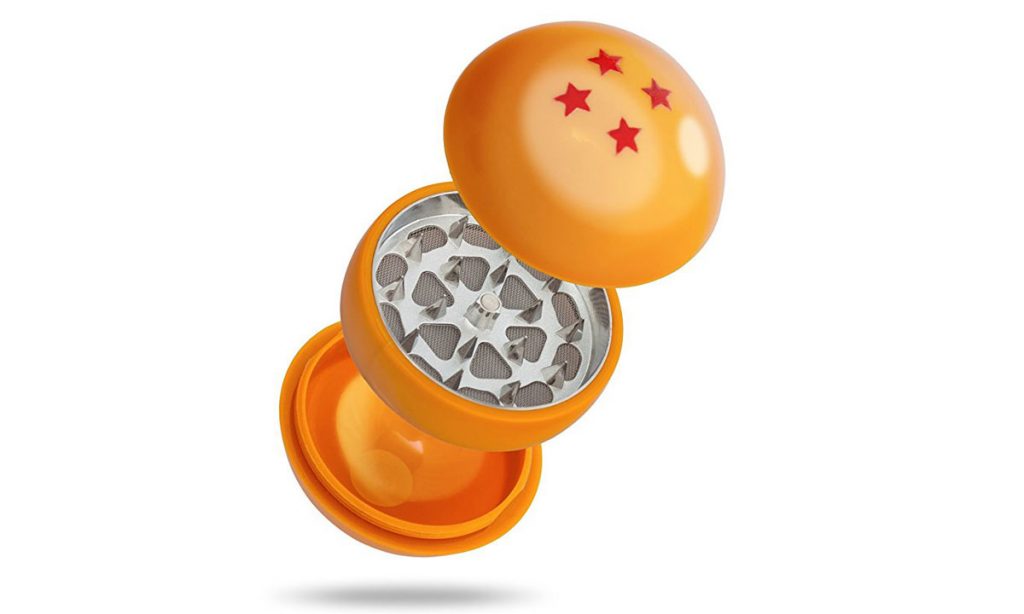
One of the latest Drake songs “Yes Indeed” featuring Lil Baby has an amazing Pikachu reference, and that’s more than enough reason to grab this grinder so you can summer jam with it.
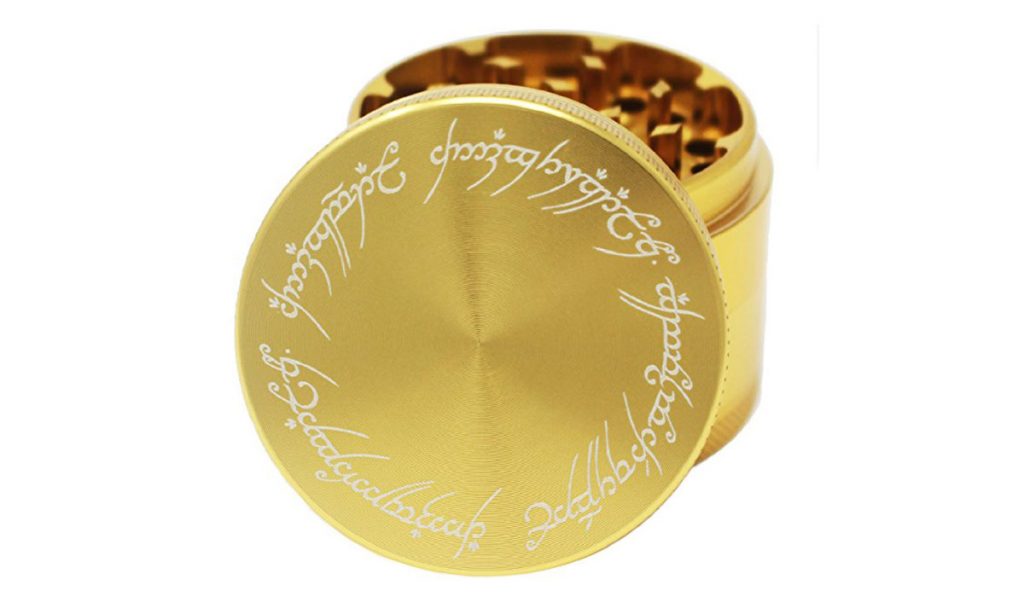
And in case I didn’t hit the some of the most important smokers in fandom, look no further than this Lord Of The Rings unofficial pipeweed grinder. This is likely how Gandalf grinds the ‘finest weed in the South Farthing’ that he scoops from the Shire.
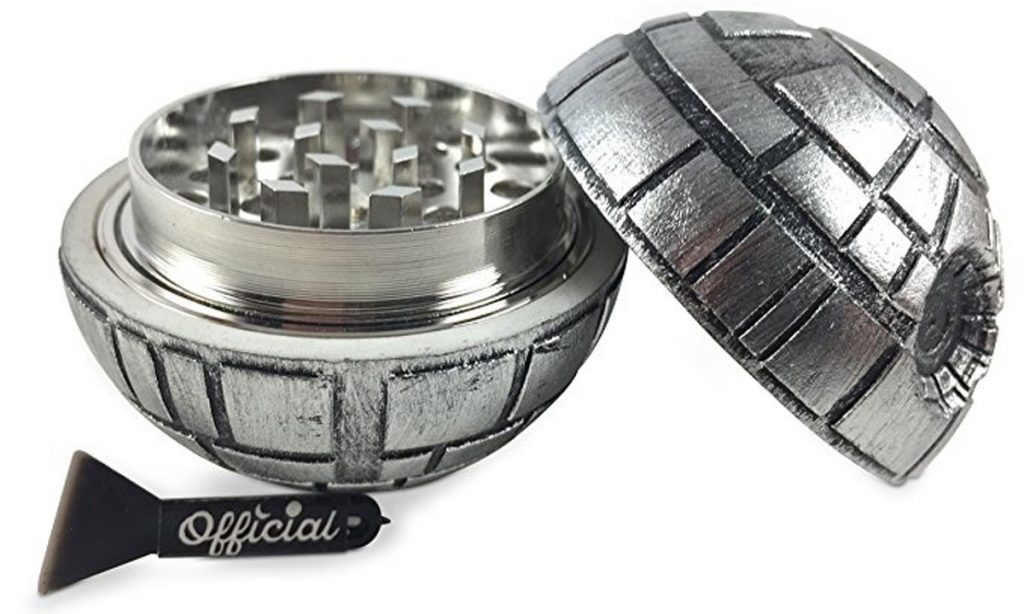
This is just the tip of the grinder iceberg. I bet there is even a titanium Titanic grinder or some even weirder tchotchkes to find if you dig deep. The beauty of grabbing it from big A is that you can order this gear alongside normal purchases, not the case for most cannabis gear, including electronic vape batteries and supplies, which they do not sell.
Get one, get them all, but you should definitely get your favorite, whatever you think constitutes a cute grinder, don’t use your hands like I did. I want to use the time stone to get all of those wasted moments back and buy an Avengers themed grinder.
Increased potency is exactly why the popularity of wax has skyrocketed in recent memory.
Before we can really get down to wax tacks, we have to make sure we are familiar with what, exactly, wax is. For starters, wax is also known as butane hash oil or BHO. Butane on its own is used in the process of extracting pure THC from the cannabis plant and concentrating it in this waxy substance. No need to worry; if done properly, there are no remaining traces of the butane. However, be warned — wax is rather potent. In fact, if you’re trying it for the first time, make sure to account for the higher concentration of THC per use. Next is the difference between dabbing wax vs. vaping wax.
This increased level of potency is exactly why the popularity of wax has skyrocketed in recent memory. Not to mention, for the regular smoker, a smaller quantity of wax delivering a greater concentration of THC means less hassle when in transit or even simply being at home. For the casual smoker, wax may appear to be too potent or more than they might be looking for, however, this is not necessarily true. As with anything, the potency is determined by the level of consumption and this is entirely in the control of the individual. The two most common methods of consuming wax are to either vape or dab it. In order to help you better understand which method is more preferable for you we will describe each method and the differences between them.
How Do You Vape Wax?
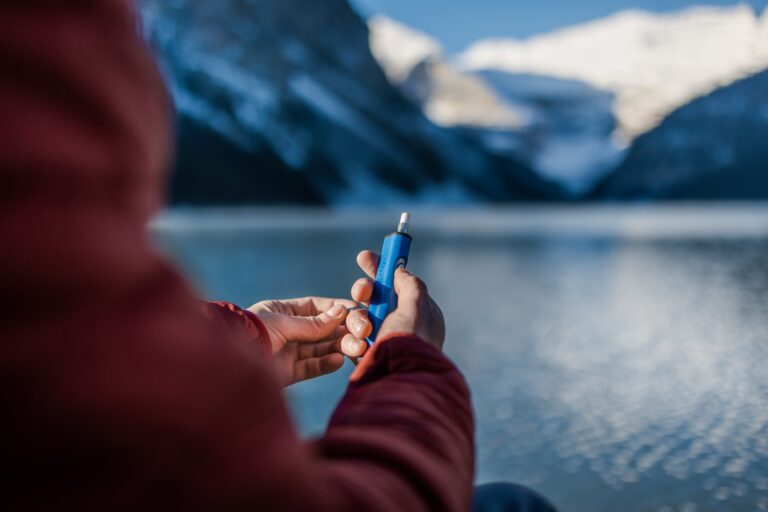
First and foremost, this may be the most popular way to go about consuming wax. Not to mention that there is a tremendous variety in the types of vapes, the accessories such as coils, and different temperature settings with which to cook your wax. This isn’t to say that this is necessarily the best – most people just tend to prefer vaping their wax over dabbing. One of the reasons for this is related to the portability of most vapes. There is certainly a convenience factor in being able to have your wax pen vaporizer in your pockets, comfortably.
Vaping wax involves placing the wax inside the heating chamber of the vape. Once this is done, the vape will heat the wax according to the temperature setting the vape is defaulted to (unless you are using a vape with different temperature options and you have changed them). Often, the pull of a vape tends to be smoother than dabbing giving the slower, even heating of the wax (this, of course, varies on the type of vape and pull of the user). The key difference to vaping is that you add the wax and then begin heating it inside the coil of the vape prior to consuming.
With vaping, branding is rather important. This is mostly due to the fact that your ability to cleanly vaporize the wax quickly and efficiently is going to be determined by your equipment. In this sense, treat your wax vape pen similarly as you would a nicotine vape – you are going to want to do some extensive research between different brands and styles of vapes to ensure that you are getting the best wax pen vape for the right type of vaping you plan to do. For example, smaller, compact vapes are available for purchase and are a great purchase if you plan on taking your vaping on-the-go (considering vaping is more mobile than dabbing already, this is probably the case). These smaller vapes will hold less wax and may be constricted by placing too much inside and lend themselves more towards personal use. Otherwise, too much compaction could lead to poor airflow or worse.
In addition, some vapes can have quite a few ‘moving’ parts that might not be conducive to the more casual vaper. Again, treat your vapes like you would any other piece of electrical equipment – it is better off to research individual brands before purchasing to ensure that you don’t end up with something that could end up costing you more in the long run. Also, you don’t want to purchase something that might be too complicated to use. If you are not interested in learning the ins-and-outs of your specific model or brand of vape, go with something less complicated or look into dabbing wax.
Dabbing Wax
Often, consumers will mention that they are “dabbing” or using a “Dab Pen” when in fact they are vaping. As noted above, vaping involved placing wax into a chamber to be heated. Dabbing, on the other hand, involves heating the area you place the wax first. Often, the heating is accomplished with a blowtorch although there are electric ‘nails’ available commercially that help to avoid the hazard of handling a blowtorch. The ‘nail’ is the delivery system for the wax – once you have heated the area up to the optimal temperature for consumption you simply place the waxy nail to the hot area and begin to heat the wax that way. In fact, outside of using the nail, the dab rig will operate and look much like a traditional bong. Keep in mind, however, that whichever type of heat you prefer to rely on you must make sure that the nail is extremely hot – otherwise the wax will not disintegrate properly and could potentially harm the rig. Just as with a bong, once the wax has been vaporized the user takes a large pull to clear the dab rig of the vaporized wax.
When researching your rig some of the same considerations apply like any other product – think about what you need it for, how you will use the dab rig, and where you will store and use the rig. In a lot of ways, purchasing a rig comes with the exact same considerations as any other glass piece – mobility, thickness and quality of glass, and the overall purpose of the rig (individual use or not). However, and this cannot be overstated, you must take into account the fact that with this particular glass delivery system you are also handling a blowtorch in order to ensure that the wax gets to the appropriate temperature. This should be first and foremost in your mind because the last thing you want is to purchase a rig and find that the design and your desired use specifications do not match up or are uncomfortable when handling the blowtorch. Safety is one of the greatest considerations when looking into dabbing – something not quite at the forefront of one’s mind when considering a vape pen.
Photo by OlegMalyshev/Getty Images
Main Differences
Vapes are not quite as hazardous and are easier to use. A dab rig requires some level of finesse to avoid injuring yourself or your equipment.
Vapes are rather portable.
Vapes allow you to consume wax, however, a dab rig is on an entirely different playing field. Comparable to the difference between other glass.
Vapes may require more research into specific models for particular requirements, preferences, or other performance-related needs
Should I Vape Or Dab Wax?
There is not one true answer for everyone except to decide for yourself. However, note the main differences listed above and what you think your overall need or preference in use will be. Dab rigs are better suited for a domestic environment without too much movement and plenty of time to become familiar with. Vape pens are tremendously versatile and are not as conspicuous or unwieldy to operate as a dab rig. However, vape pens may in the end be more complicated – as technology continues to surge ahead and different companies employ novel methods of vaping there are ever more complicated vapes. This is not to say that you cannot find a simple vape pen or brand to rely on – just make sure you do your research and look into the reviews to see just how complicated a particular vape pen may be.
No one wants to purchase a pen to find out they need an engineering degree to operate their pen. As for glass rigs, these are a bit easier to research especially if you have previous experience shopping for and using glass. The same general principles of quality apply.
Whichever you choose is likely going to be based on personal preference as well as how you intend to consume the wax. It is hard to imagine wanting to lug around a blowtorch on a backpacking trip or a hike just as it is difficult to see the utility in a small, compact vape pen at a social gathering or party with multiple people. Each has their own distinct advantages and disadvantages and both have their die-hard fans. Best of all, there is no rule (implicit or otherwise) that says you can’t simply have both! As many have found, wax is often preferable over dry herb products and more convenient (generally). Why not have the opportunity to use a rig at home and a pen on-the-go?
Regardless, the greatest takeaway beyond understanding the different methods for consuming wax is remembering that wax is much more concentrated and potent than other products on the market. Keep this in mind before you jump head first into the wonderful world of wax.
Everyone has been to their garden store and ogled over the herbs that you can grow on your windowsill garden, but here’s how to use it in craft cocktails.
Nearly everyone has been to their local garden store and ogled over the varieties of fresh herbs that you can grow on your windowsill garden. Who knew there were so many different kinds of basil? And how about all that mint? Are there enough days of growing season left for every different kind of mint, pared with all those incredible bourbons on your groaning shelves?
Well, worry not. I’m going to make a few suggestions of which herbs you should be growing in your mixology garden and some simple ways to use them.
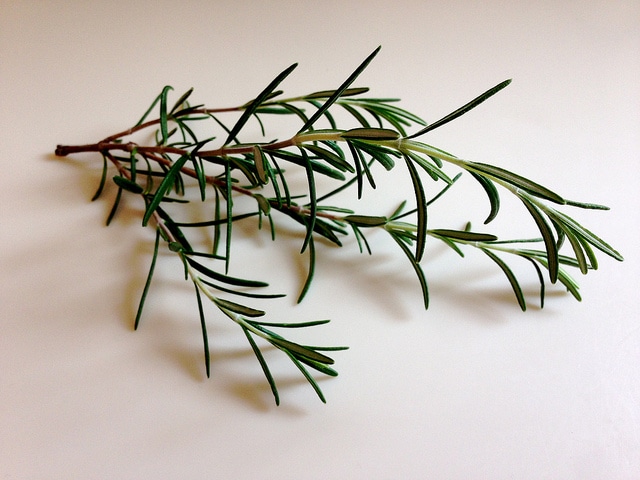
Rosemary
Photo by Flickr user Health Gauge
In my current release, The Craft Cocktail Compendium, I discuss the importance of subtlety of flavor over flash in craft cocktails. Digging deeper, I discuss being mindful of balance over loud and sometimes disparate flavors in carefully crafted drinks. When you’re using the best spirits that money can buy, why cover up their delicate flavors with the taste of wood and oil? Case in point: I call to view the idea of placing an entire branch of rosemary in a craft cocktail as purposefully destructive to the idea of subtly of flavor in a drink.
As a cook I’d never put an entire branch of rosemary in any dish that was meant to be subtly flavored. Why? Because rosemary is extremely potent. Just one or two little sprigs is enough to flavor a 20-pound pot roast, so why drop an entire branch of this wild shrub onto your tongue? That’s all you’re going to taste for the remainder of the day. Rosemary oil and the rosemary wood, over that costly bourbon or those lush freshly squeezed citrus juices is all you are going to taste. Rosemary is incredibly potent. I’ve been watching bartenders light it on fire too- and make little jokes about how it smells like weed when burnt further banishing any hope of tasting subtler flavors into the history books. May I please suggest using a just a couple needles instead. And if you want more flavor, perhaps you should consider using some rosemary bitters or prepare a rosemary tincture from alcohol and JUST a couple needles of rosemary? It’s super potent. Your cocktails wouldn’t miss it if you used less! Be mindful!
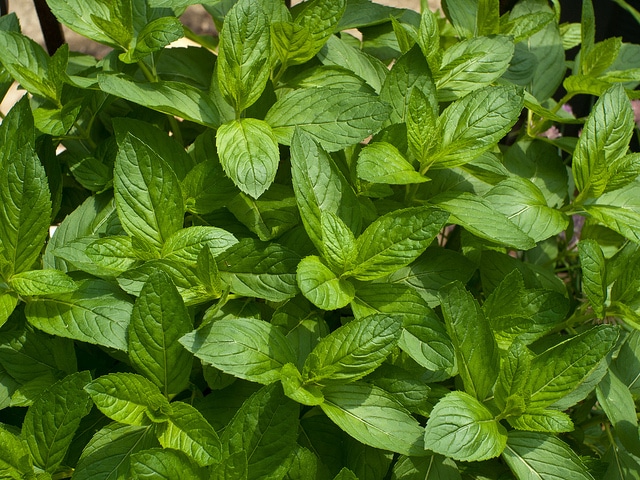
Mint
Photo by Flickr user Edsel Little
There are dozens of varieties of mint available today. It’s as if the entire country of England gave up their secret herb gardens and their rarest varieties of mint finally joined the legions of drinkers across the “pond”. I’m always interested in augmenting my cocktails with the freshest and crispest mint varieties as they are introduced. Some of these are: Orange mint, Chocolate mint, Thai and Vietnamese mint (oily and strong!) and the litany of spearmint, peppermint, apple mint and many more- with more coming out all the time. But my craft cocktails are defined by one specific type of mint. It is one that lives in a protected grotto, deep in the undiscovered woods. Its roots gently nourished by the cool waters that flow from beneath the ground at the foot of an old oak tree.
Branch water is what I call that pure water and Kentucky Colonel mint is the variety that I seek over all others. I’m pretty sure that the genus of this mint is from Kentucky and that the mint is Spearmint- through and through. I know from personal experience just how beguiling Kentucky Colonel mint is when spun into a mint julep, hand turned in an ancient copper-core, sterling silver julep cup. This cup that hopefully belonged to your great grand-pappy should always be polished to a soft shine and glistening with frost and possibilities. Don’t hold on to it for too long, your fingers will stick to the soft, semi-precious metal. Drink up while the ice is fresh and sparkling against your lips and the spear mint burns your nostrils slightly. Kentucky Colonel mint is what you should be growing in your mixology garden. Eschew all the rest! They’re just trendy.
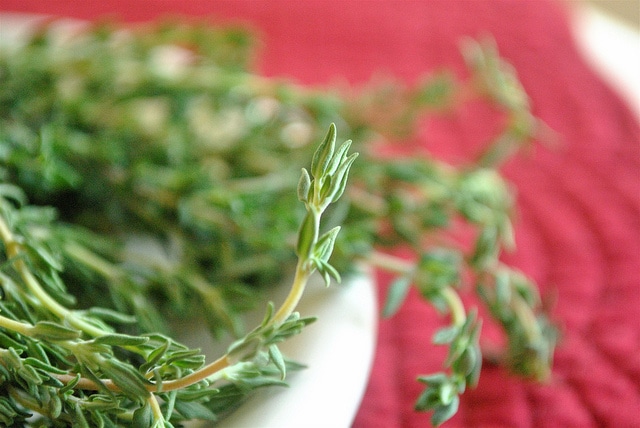
Thyme
Photo by Flickr user cookbookman17
I love using Thyme in craft cocktails and in punch. But I must warn you, the wood is dangerous! It wants to get caught in your throat-and if it does, you will certainly not be happy about it. So when using thyme in a craft cocktail may I suggest doing one of a few things to make your life- and that of your friends much better. First, wash all herbs that you use in your cocktails extremely well. There is nothing worse than discovering that the pigeons upstairs have made your thyme variegated from their left behinds. Wash the thyme well and get rid of all of the spindly wood. You can toss this into a chicken stock or in the compost as well. It’s up to you.
I like to burn a bit of thyme on a surface that is flameproof and capture the sweet smoke inside a cocktail glass. The sticky smoke will coat the inside of the glass leaving behind a tasty reminder of the French countryside. Build your cocktail from there. Gin works with a touch of Vermouth and a few tiny leafs of thyme. Quite salubrious and if I might say- add a slice of freshly cut cucumber to the mix and stand away! Briliant!
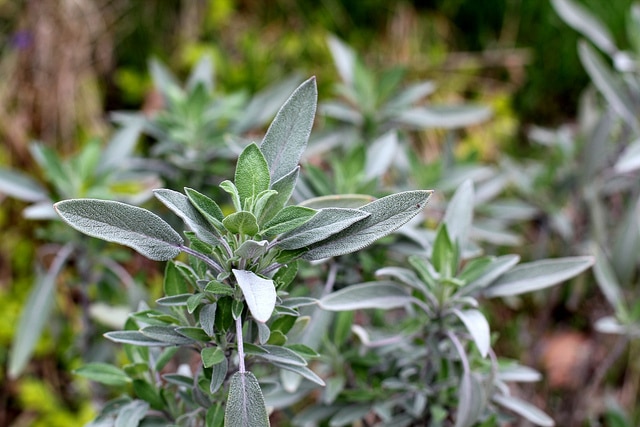
Sage
Photo by Flickr user Isaac Wedin
Oh my, sage. If there’s anything I like making margaritas with, it’s a burning leaf of fresh sage. Chris Milligan, the intrepid mixologist at the Secreto Lounge in Santa Fe, takes a smoldering leaf and places it under ½ of a Boston Shaker. The smoke lazily fills the space of the shaker, ice is added along with agave syrup, fresh lime juice and really fine tequila. The cap is placed on, and the Boston Shaker is thrust, back and forth, back and forth until the shaker is frosty and ice cold. Then the mixture is strained over ice into a glass and the procedure is repeated until the imbiber is feeling no more pain. Or much of anything else. And that is why we enjoy cocktails! Go visit Chris Milligan, and tell him I sent you.
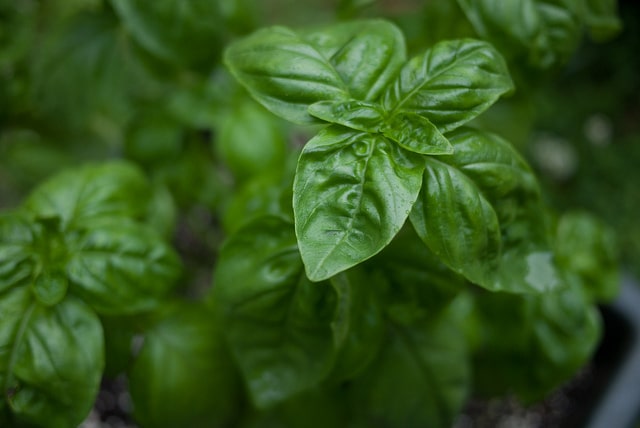
Basil And Thai Basil
Photo by Flickr user Nate Steiner
Basil is not just for pasta any longer. When gently slapped against your palm, the oils ooze out leaving the perfect foil for a Ramos Gin Fizz or even crushed against your cocktail glass before you fill the glass with your gin (never vodka) martini. Just gently crush the tender leaf or slap it against your palm- making for a lovely soft sound. I also like to make Vietnamese-style beverages like freshly crushed sugar cane juice with a chiffonade of Thai (or Vietnamese-style) basil. A touch of lemongrass and good Martinique pale or white rum will take your palate to another level with and infusion of condensed milk. You can even take this mixture to another level by infusing the condensed milk with decarbed cannabis. It’s up to you.
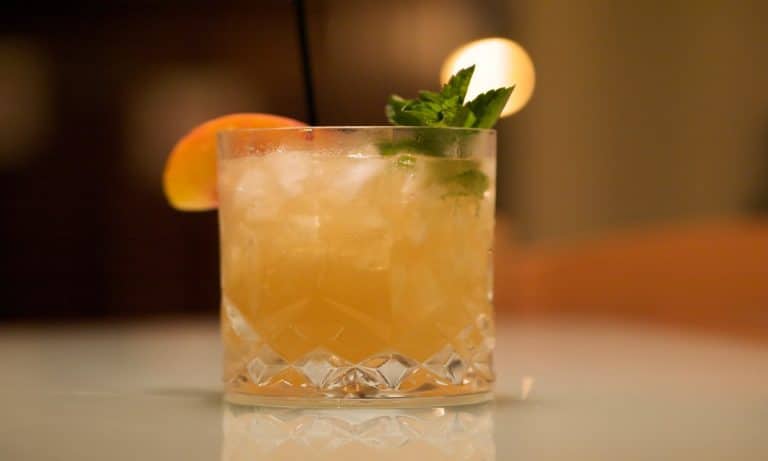
Here is a lovely cocktail that can use a leaf of slapped basil at the end.
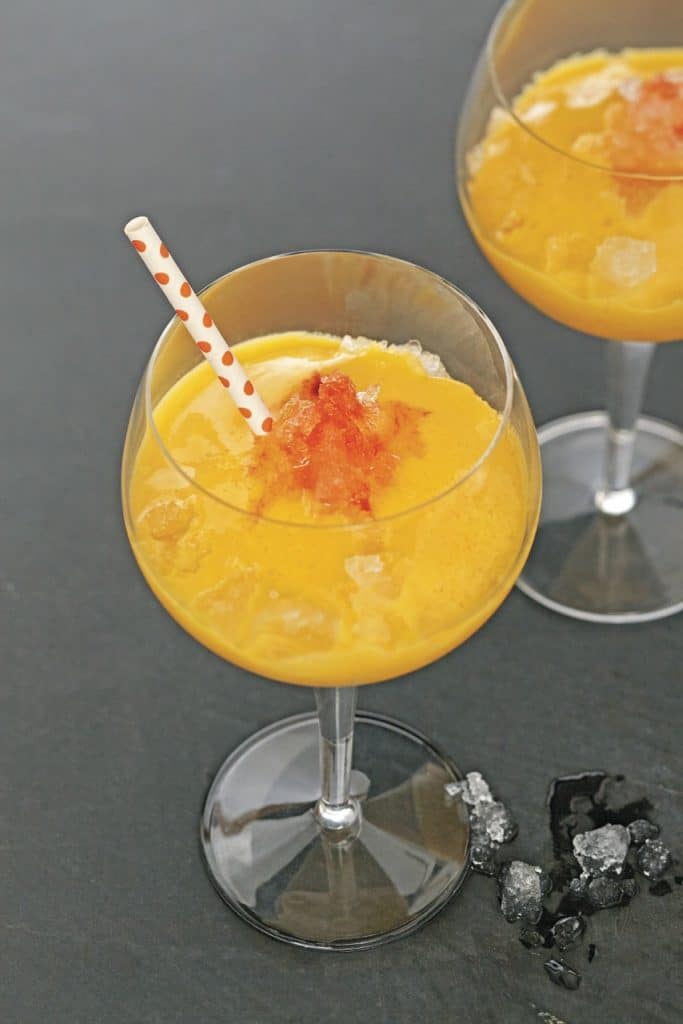
Hoochie Coochie Man
Serves 2
Photo by Glenn Scott Photography/Quarto Publishing Company
In India, where temperatures regularly hit three figures, cooling beverages are a must. Enter the lassi, a yogurt-based drink that’s akin to a smoothie. My favorite version features mango puree—or, in a pinch, mango sorbet or sherbet—paired with thick Greek-style yogurt and a snow shower of crushed coconut water ice. If you’re making a Hoochie Coochie Man, you’ll want to correct it with a little cannabis-infused light rum. Try infusing your rum with Critical Kush, a mostly-Indica strain. It has deep aromatics of Asian spices, freshly turned soil, and a concentrated pungency that’s the right contrast for the sweetness of the mango and the yogurt. And there’s enlightenment in each sip. (This strain of Kush is a powerful full-body relaxant, though, so no driving or bicycle riding allowed!) Top off your Hoochie with a couple drops of creole bitters, which were originally invented as a remedy for dysentery.
4 ounces (120 ml) mango puree
4 ounces (120 ml) Greek-style yogurt
1 ounce (30 ml) cannabis-infused light rum (I used Martinique rhum agricole)
1 cup crushed coconut water ice
1 basil leaf slapped gently (an oxymoron, right?)
Creole-style bitters
Combine all the ingredients in blender and process until smooth. Divide between two Burgundy wine glasses with plenty of freshly crushed coconut water ice. Dot each with a couple drops of the Ccreole bitters.
Slap a piece of basil and garnish or cut into a chiffonade and spin into your cocktail before pouring into the glass for a drink without any basil that you can see, but you will taste!
Whereas youth (12-17 year olds) cannabis usage has dropped in recent years with cannabis becoming less taboo and more mainstream, so has the senior population (55+) of marijuana imbibers increased substantially. Still, we’re talking about a generation who was raised and matured with vicious anti-cannabis propaganda and the “gateway” myth. Now may be the time to rehash the topic with someone in your life who could benefit greatly from the herb if they were to either pick it back up or pick it up for the first time.
This isn’t an easy topic to broach, whether you’re an adult child talking to your aging parents, a senior who has seen the light and wants to spread it to others or an ambitious millennial trying to pass on the good word, you’re likely to meet with resistance if resistance is what has been taught. Here are some tips on how best to broach medical or recreational cannabis with a senior who could really use it.
First, let’s get a few things out of the way, no patronizing, no arguing, no raising of the voice even and especially no talking over arguments that will likely arise. So yes, listen to the senior in question’s concerns and then address them gently, but head on.
Talking points can include cannabis prohibition’s racist roots, the inability to overdose and die on cannabis and that a plant with so many benefits has reestablished a place in society, and could possibly do so in the senior’s life. Ask about aches, pains, arthritis, inflammation, sleeplessness or any other discomforts that can come with age and can be treated with cannabis.
Don’t expect this to be a one time talk. Prepare yourself with the best knowledge you have, and then put in your time. Sometimes even a simple icebreaker about cannabis in the news can lead to greater discussion or at least set the stage for marijuana to be a topic that’s not so controversial anymore.
Cannabis is an enhancement plant and even if the senior in your life is in perfect health, they will likely still benefit from its – yes – daily use. Remember though that this is a journey and you can’t just say: this is the destination. Ease into the conversations and let them form naturally. You might even be surprised to find it’s not as difficult a subject to broach as you first feared.
Even though seniors may have been raised with scare tactics when it comes to the drug pot, there is enough publicity, studies and statistics to make a case for medical or recreational cannabis. The tides are turning and it’s up to those in the know to make sure no one gets left behind on the path to wellness.
Dating apps were created to get rid of the awkward first encounter; to give you the feeling that you’re not meeting up with a complete stranger, even though you are. It takes guts to walk up to someone and introduce yourself, making it clear that you want to date them or hang out with them with purposes other than friendship.
Tinder wants to create something new by pairing you up with people who hang out at the same bars and places than you with their new feature, aptly called “Places.” Currently undergoing its testing stage in Australia and Chile, Places is an attempt for the company to facilitate something more than a hookup, with the belief that people who go to the same places and events have similar interests and thus more potential for relationships.
Dating apps have become so pervasive and part of our day to day lives that they’re basically another side of social media. You swipe for a while, maybe with your friends or with a drink, and then you do something else. You might meet up with someone, but the odds of that resulting in a relationship are few. Samantha Stevens, Tinder’s director of location products claims that Places wants to “create more genuine connections and higher quality conversations,” deepening what other dating apps are offering nowadays.
Wired reports that Places is a collaboration between Foursquare and Tinder, gathering information from both apps and that it’ll be completely optional for users. Once someone decides to turn on the feature, the app will gather data from places you go, such as restaurants, venues, and bars, avoiding unromantic and potentially dangerous spots such as your doctor, your bank, and other non-social activities. The app is also designed to put your spots on the map once you’ve left the place and 30 minutes have passed, avoiding a current broadcast of your location.
For those who’ve never experienced it, acupuncture sounds kind of counter intuitive. The practice of having small needles inserted into different areas of your body shouldn’t lead to relaxation and stress relief, but it is what it is. Studies demonstrate that acupuncture does the job, providing benefits for patients’ mental health, blood flow, pain, stress and inflammation on the body.
Bustle reports that, for first timers, going to the acupuncturist should be a very similar experience than going to any other doctor. Daniela Freda, licensed acupuncturist, claims that first time patients should expect a discussion and review of their symptoms and an analysis of their medical history. After that, “the acupuncturist will perform a Chinese Medicine examination by taking the wrist pulse and looking at the tongue. Then, they will determine the treatment plan and administer the acupuncture.”
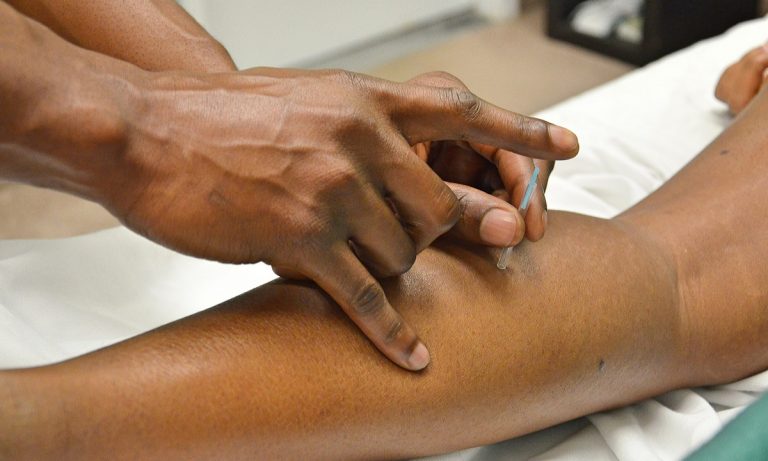
The most stressful part of an acupuncture appointment is obviously the needles. We’ve been conditioned to associate them with pain and discomfort, but acupuncture needles are much thinner than regular ones. According to Freda, the needles cause much less sensation than others. A lot of people also wonder about the risk of infection that comes with using needles, which Freda claims that is a moot concern since licensed acupuncturist are required to use sterilized needles only once.
A licensed acupuncturist will talk you through the entire process and will probably “insert about ten needles in different parts of the body and the needles are retained for twenty to thirty minutes.” The experience is also meant to be relaxing, where there rooms are private and filled with soft music and dimmed lights.
Like most alternate methods of medicine, acupuncture is a personal experience that largely depends on your level of comfort with the practice. For the most part though, patients claim that it produces almost magical results. “I went in expecting to see little, if any, improvement. Immediately after that first session, I felt calm and slightly pleasantly disoriented. I felt some immediate pain relief, but it was subtle. What had been a deep, throbbing pain was now more of a dull, steady ache,” said an acupuncture patient. A lot of people agree.
Nike’s Benassi slides are infamous. They’re overused, ugly and expensive, yet for some reason people still fight over them because they’re “comfy” and easy to slip on — no matter how bad they make people’s feet look. Now, because there’s not enough craziness in the world, Nike has decided to stick a fanny pack on top of them, resulting in flip flops with pouches, allowing you to store change, toe rings, and other small objects.
These Benassi slides will be called the “Fanny Pack” collection and will come in three different colors: green/blue, pink/black, and black. While the images of the flip-flops were first leaked though US11, Nike has yet to make an announcement regarding when the items will be available for purchase, or who the designer is behind this awful and unpractical idea.
The images and rumors sent the internet spinning, with many users wondering why the flip-flops were even created in the first place, and with other psychos claiming that they’re the best thing they’ve ever seen.
Crocs: we are the most embarrassing shoe the human species has created.
America is crazy for cannabidiol (CBD). Despite the fact that this non-intoxicating derivative of the cannabis plant is still illegal in the eyes of the federal government, much of the population is now at least curious about the therapeutic benefits of CBD products. The mainstream hype over this compound has contributed to an enormous market over the past few years, generating sales in awards of $820 million in 2107.
But this bizarre market is expected to increase exponentially, according to a new report from the Hemp Business Journal. It shows the CBD market could grow by 700 percent within the next two years.
The CBD market is interesting because the majority of consumers, while on a mission to experience the medical effects of the substance, have no idea what they are actually purchasing. Some CBD products, like those sold in dispensaries in legal marijuana states, are extracted from the cannabis plant. These items can contain up to 30 percent CBD. Yet there are hemp-based versions, arguably the most popular, which are sold in health food stores across the nation, containing only around 3.5 percent of the compound.
The market is so muddled that counterfeit CBD products are even showing up in states from Utah to Tennessee. A new report from the Centers for Disease Control and Prevention shows that these goods do not contain any CBD at all — they are manufactured in the same manner as K2 and Spice – and they are dangerous to the consumer.
Nevertheless, Americans are dropping large chunks of change on CBD products in search for a wonder drug to treat ailments from chronic pain to anxiety. Some people are even leaning on this substance to do more – cure cancer, stop their children from having epileptic seizures, slow down early onset Alzheimer’s disease and, perhaps, further their quest to live forever. It’s a weird world. The population has become convinced that CBD is wherewithal to medical downtrodden, and it is putting its hard earned money on it. The latest report shows the CBD market could be worth $2 billion by 2020.
The numbers are impressive considering that the U.S. government still considers CBD a banned substance. Even the hemp-derived CBD-lite products sold in 7-Eleven and Walmart are still technically violating the terms of the Controlled Substances Act. But that could soon change. There is a push in Congress right now to legalize industrial hemp nationwide.
Regardless of whether this happens or not, there is certainly no sign of a slow down in the marketing of CBD products in the United States. Yet there is much more to health and wellness than CBD. Although this compound is considered the most medicinal part of the cannabis plant, research has shown that it is more effective with THC.