Monday, December 22, 2025
Home Blog Page 967

Edibles Producers In WA State Have Been Slapped With New Annual Fee

If they want to continue making edibles, producers in Washington state must now pay for a special endorsement on their business licenses which costs $895 a year.

According to a press release, the extra money will allow the Washington State Department of Agriculture (WSDA) to focus on ensuring these types of cannabis operations comply with state sanitary processing requirements.

Since Washington’s recreational marijuana law began in 2012, the Washington State Liquor and Cannabis Board (WSLCB) has been responsible for regulating marijuana infused edible (MIE) processors.

And according to the WSDA:

Last year, the Legislature provided for WSLCB to share authority to regulate these businesses with WSDA through its Food Safety Program, which already licenses and inspects most types of food processing facilities in Washington to protect public health from risks in the food supply.

And while the Department of Agriculture will enforce sanitary standards, the WSLCB will continue to license and regulate marijuana processors and edible producers.

Businesses can visit www.bls.dor.wa.gov beginning March 29 to complete the application online. The change takes effect April 1, but businesses have until April 30 to obtain the endorsement and pay the fee

Edible makers can expect to see an increase in inspections and outreach under the new system, all covered by the additional fee.

Currently there are 127 edibles businesses listed in Washington state.

Why Is GOP Senate Leader McConnell Supporting Hemp Legalization?

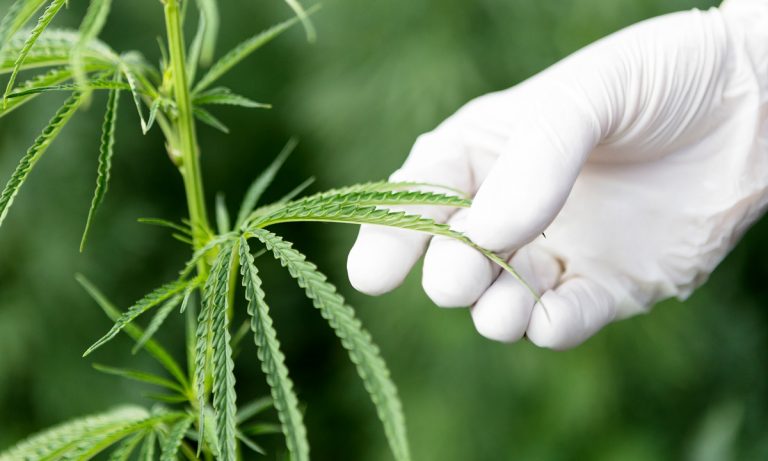
Senate Majority Leader Mitch McConnell will introduce legislation to make hemp — a variety of marijuana mostly associated with industrial uses that has a long history in the US — a cash crop nationwide.

Hemp is cultivated in some states legally in sanctioned programs, but is currently considered a controlled substance by the federal government.

During a stop in Frankfort, Ky., CNN quoted McConnell as saying:

I just had an opportunity to see some interesting and innovative products, some of which you see here on the table, made with Kentucky-grown hemp … Sunstrand, based in Louisville, contracts with farmers in Henry County to grow hemp that they process into a number of consumer products including home insulation.

Imagine, instead of pink fiberglass, we could use Kentucky grown, environmentally sustainable hemp to insulate our houses. This represents just one many uses that Kentuckians are finding for this versatile crop.

So I will be introducing, when I go back to the Senate a week from Monday, a bipartisan bill in the Senate to continue to support this important Kentucky industry; it will be the Hemp Farm Act of 2018. What will it do? First and foremost, this bill will finally legalize hemp, legalize hemp as an agricultural commodity and remove it from the list of controlled substances.

The federal government defines hemp as Cannabis sativa with a THC content below 0.3 percent. THC is one of the major compounds in marijuana and the one most associated with the euphoria a user feels when consuming it. Another compound, CBD, has eased pain in some medical users. Some hemp-based products such as ointments have been sold for such a purpose.

As one pundit put it, “you’d have to smoke a joint the size of a telephone pole to get high on it.”

Cultivation of Hemp in the Americas predates the United States. George Washington grew it at Mount Vernon and for much of the 18th and 19th centuries, it was common in rope and clothing.

Cultivation fell out of favor amid antidrug sentiment in the early 1900s and it was eventually made illegal federally. A 2014 law opened the door for cultivation in certain states. McConnell’s proposal would make growing it legal throughout the US.

Marijuana Vs. Methamphetamine: How To Best Treat ADHD

Could cannabis one day be the go to medicine for attention-deficit/hyperactivity disorder, ADHD? Approximately 10 million adults in the U.S. have been diagnosed with the condition.

Common symptoms include difficulty sustaining attention, inability to focus, being easily distracted or unable to perform quiet tasks. It can affect job performance, personal relationships and lead to a sense of frustration, guilt and even depression.

What is the typical medical treatment for children and adults troubled by this this condition? Speed. Not just speed, but professionally manufactured amphetamines and methamphetamines (meth), known by commercial names like Ritalin, Adderall and Desoxyn.

Why speed? Stimulants are known to improve dopamine and norepinephrine levels in the brain, helping the individual to focus attention. But long term stimulant use can lead to high blood pressure, heart attack risk, hallucinations, mood changes, addiction and a host of other complications.

There has not been a great deal of research on cannabis as a remedy for symptoms of ADHD.

Thirty adults in Berlin with ADHD who were unresponsive to typical meds were given cannabis in a scientific trial. Most reported feeling a better sense of control and focus. The researchers concluded that, “For adult patients with ADHD, who experience side effects or do not profit from standard medication, cannabis may be an effective and well-tolerated alternative.” 

The thought of cannabis being able to help someone “turn down the volume” of a condition is not unheard of. A leading theory of endocannabinoid deficiency explains that an imbalance of our body’s natural or endocannabinoids may be enough to cause migraines, irritable bowel syndrome, sleep disorders and a number of physiologic conditions. Cannabis as a medicine is known for being remarkably safe, a lower risk factor than common prescriptions for people with ADHD.

Duke researchers were drawn to a growing online library of anecdotal info from people self-medicating with cannabis. These scientists led a unique qualitative research study that scoured the responses of adult patients and caregivers in online forums discussing the impact of cannabis on their ADHD symptoms.

The test sample showed that three times as many respondents believed cannabis improved or reduced ADHD symptoms than believed it had an adverse effect. Comments such as “Cannabis helps me focus” and “I find I’m able to concentrate so much better after a bit of cannabis” were typical of participant feedback.  

Could cannabis be an effective and much safer alternative for adults with ADHD? Once again it seems that the patient feedback is ahead of the research as it has been in so much of the resurgence of medical marijuana.

If recent history is any indication, it means we must listen to patients as we advocate for more research. After all, patients aren’t usually trying to sell us a product, they are just sharing their experience in hopes that we learn from it.

Former Chief of National Republican Committee Fighting For Medical Marijuana

Add another Republican leader who is urging his party to do the right thing for patients seeking medical marijuana: Michael Steele, the former Republican National Committee chairman.

In an opinion piece published in The Hill, Steele took aim at fellow Republican and Attorney General Jeff Sessions, chastising the longtime drug warrior for rescinding the Cole Memo, the Obama-era guideline giving the legal marijuana states some breathing room.

In the story, Steele wrote:

I was dismayed to see Attorney General Jeff Sessions (AG) recently rescind the Cole Memo, a United States Department of Justice (DOJ) document providing guidelines to United States attorneys in states that have chosen to legalize cannabis. This memo provided protection to states whose voters and duly elected legislatures have legalized some form of marijuana use.

While I may not be in favor unfettered adult use for individuals over 21 years of age, I am a strong supporter of medical marijuana. Numerous friends and acquaintances benefit from the medicinal properties and pain relief provided by cannabis. I favor state-based access to medical marijuana from both a philosophical and policy standpoint. I also support the reform of our federal cannabis laws to bring conformity to federal regulations and state laws.

Steele is concerned that the politicians in his party are refusing to listen to the will of the people. He cited a Quinnipiac poll from last year revealing that 94 percent of Americans favor, “allowing adults to legally use marijuana for medical purposes if their doctor prescribes it.”

This same poll, Steele wrote, found that 73 percent opposed government interference into states that have legalized marijuana; basically, three out of every four Americans are against the federal government enforcing cannabis prohibition laws in states that have legalized some form of marijuana use.

Steele offered a shout out to the GOP leaders who have taken a stand with the majority of the American people on the issue:

Rep. Thomas Garrett authored the Ending Federal Marijuana Prohibition Act of 2017. Rep. Matt Gaetz (R-Fla.) introduced legislation to reschedule marijuana. Dana Rohrabacher (R-Calif.), a longtime GOP champion of reform, drafted the Respect State Marijuana Laws Act of 2017. Rep. Carlos Curbelo (R-Fla.) Small Business Tax Equity Act would bring tax equity to the cannabis industry.

Sens. Orrin Hatch (R-Utah), Rand Paul (R-Ky.), and Lisa Murkowski (R-Alaska) are leading the way in the United States Senate to increase research opportunities and allow marijuana businesses access to traditional banking services.

Steele, who now appears as a pundit on MSNBC, reminded us that President Trump said on the campaign trail that he supports medical marijuana 100 percent. It remains unclear if Trump will keep his promise.

Calling Your Parents Can Help Them Live Longer

For some aging adults, losing connection with their family is a huge hit to their mental well-being. As feelings of loneliness and depression creep in, not having regular contact with those closest to you can not only lead to isolation, it can have an effect on your physical well-being, too.

And that’s exactly why you should make a habit of talking to your parent(s), even if it’s just a phone call. The far reaching effects are numerous, according to  a study from the University of California-San Francisco that researched 1,600 seniors (average age of 71) for six years (2002-2008) to study the mental and physical effects of loneliness.

Related: 5 Reasons To Share Your Stash With Grandma And Grandpa

What they found was quite sad: 23 percent of adults who reported feeling lonely died within the span of the study, compared to 14 percent of those who had companionship. The study also revealed that 43 percent of those over 60-years-old reported feeling alone. And that among participants who were older than 60 years, loneliness was a predictor of functional decline and death.

They also found that while lonely subjects were more likely to live alone, the majority of lonely persons lived with someone. Moreover, while lonely subjects were more likely to be depressed, most lonely subjects were not depressed.

While persons who are lonely are more likely to experience depressive symptoms, feelings of loneliness are only weakly associated with enjoyment, energy, and motivation—emotions that are central to a diagnosis of depression. Loneliness is also distinct from several quantitative measures of social isolation such as living alone, marital status, and number of relationships. For example, it is possible for persons who live alone to not feel lonely, while some who are married or living with others will still experience loneliness. Loneliness can be explained as the discrepancy between one’s desired relationships and one’s actual relationships.

Researchers conclude that given the number of health and social issues that health care providers must prioritize, the identification and amelioration of loneliness may seem to be outside of the scope of medical practice. “Yet, by separating suffering and distress into medical and nonmedical spheres, health care providers may be missing a key risk factor for poor health.”

Is This The Future? Cannabis-Focused Co-Working Space In LA

Los Angeles is a city known for trend-setting innovation. One of the newest ideas coming out of the Tinseltown is a new cannabis-friendly co-working space.

Paragon Space — a facility for established companies, cannabis startups and individuals in the marijuana community — is scheduled to open by this summer.

The firm behind the venture is Paragon, a cannabis-centric blockchain technology company. Why a shared office for cannabis?

Here’s how Paragon sees it:

A place for the modern busy bee and like-minded individuals to cross-pollinate great ideas. Welcome to Paragon Space!

We know how hard it is for those in the cannabis industry to rent office or desk space, so we are providing you a helping hand. Even if you aren’t working in the industry, you are still welcome too 🙂

Paragon Space is a unique and bold concept, befitting to the modern crypto world. Paragon Spaces offer co-working desk and office space, as well as a café, conference spaces and an in-house lab.

The cost of membership is based on the amount of space needed, but the company promises that the average rent will be in the range of current similar facilities. According to the company website, space will be accessible to anyone who is part of the Paragon community, but services will only be available to PRG coin holders. PRG is the company’s cryptocurrency offering.

Members of the community will also have access to conference rooms to host their own events and meetings. The lounge and outside area of the building will function as an additional space for meetings, events, and a communal area for members to relax and network. Additionally, there will be a Paragon Café with food and drinks available for purchase in PRG.

Watch Tyler Perry Teach Seth Myers About Using Marijuana As Sleep Aid

Tyler Perry recently stopped by “Late Night with Seth Myers” to promote his upcoming movie with Taraji P. Henson called Tyler Perry’s Acrimony, where he spilled some details from the film and insights into working with the typically fierce Henson. But Perry also divulged about his short-lived experiences with marijuana and how it will inspire his next movie.

As you might expect from someone as prolific as Perry, his mind is always running, so he has trouble sleeping at night. To assist with the issue, he admitted to a friend he might drink some vodka for a sleepy-time nightcap. The friend then suggested cannabis and bought Perry a pink lemonade “weed drink,” as he called it.

Perry’s experience eventually turned gnarly, as he consumed too much before bed.

“I’m sitting there and my legs started growing,” Perry said. “I couldn’t open my mouth, and I was wondering if it was still there. The [my friend] facetimed me and I was hiding behind the camera because I didn’t want her to see me.

“I said to God, ‘If you get me out of this, I will never do this again in my life.’”

For fans of Perry and his Madea character, he told Seth Myers the experience would definitely spill into his films. Cannabis, of course, remains a helpful sleep aid if used properly. To learn more about marijuana’s potential to combat insomnia, read this.

State Marijuana Laws Are Safe From Jeff Sessions Until September

State medical marijuana laws and their implementation are safe until September 30th of this year. In a highly anticipated move, Congress extended the protections of the well-known “Rohrabacher-Blumenauer Amendment” (the “Amendment”) last week.

This extension is an important political and legal action after Attorney General Jeff Sessions threw the state-legal cannabis industry into a tizzy after rescinding the Obama-era Cole Memo in January (he has provided further, largely unhelpful guidance since then).

But what impact does the Amendment really have? It could be significant over the coming months, though I am confident that Sessions and other U.S. Attorneys may seek to undermine the spirit of that law as time goes on.

The Amendment first passed back in 2014 and has been consistently renewed and extended by Congress in the form of budget riders since then (and this last one is around 2,200 pages). The Amendment has been construed as stopping the federal government from prosecuting state-legal medical cannabis operators, but outside of the Ninth Circuit, it has not been tested.

The Amendment provides that:

None of the funds made available under this Act to the Department of Justice may be used, with respect to any of the States of Alabama, Alaska, Arizona, Arkansas, California, Colorado, Connecticut, Delaware, Florida, Georgia, Hawaii, Illinois, Indiana, Iowa, Kentucky, Louisiana, Maine, Maryland, Massachusetts, Michigan, Minnesota, Mississippi, Missouri, Montana, Nevada, New Hampshire, New Jersey, New Mexico, New York, North Carolina, North Dakota, Ohio, Oklahoma, Oregon, Pennsylvania, Rhode Island, South Carolina, Tennessee, Texas, Utah, Vermont, Virginia, Washington, West Virginia, Wisconsin, and Wyoming, or with respect to the District of Columbia, Guam, or Puerto Rico, to prevent any of them from implementing their own laws that authorize the use, distribution, possession, or cultivation of medical marijuana.

On its face, the law only precludes the Department of Justice (DOJ) from spending funds to “prevent” any of the foregoing states “from implementing” their medical cannabis laws. However, in the Ninth Circuit, as a result of the McIntosh case, the Amendment has some serious teeth. In that case, the Court ruled in favor of medical cannabis providers who disputed the DOJ’s enforcement of the federal Controlled Substances Act against them in their respective states (all of which have legalized medical cannabis) due to the Amendment. In doing so, the Court reaffirmed Congress’s intent to halt federal enforcement measures against medical marijuana providers in states that have legalized and regulated it.

To date, the McIntosh ruling represents the highest judicial approval of that legislation as an effective means of curbing federal crackdowns on state-legal medical marijuana programs. Nonetheless, the Court made clear that its ruling only applies to medical cannabis operators. And the Court remanded the cases back to the lower courts to investigate whether the appellants were, in fact, in full compliance with their states’ laws regarding medical cannabis. Notably, the DOJ didn’t appeal this ruling to SCOTUS, and it also dropped another major case—the Harborside Health Center forfeiture case that had raged on for years–after the McIntosh ruling.

Clearly, to avail yourself of the protections of the Amendment in the Ninth Circuit, you must be on the medical cannabis side and you must be in complete compliance with your state’s medical cannabis laws and regulations. While the McIntosh and Harborside cases show us that the Amendment can be used as an effective shield, those cases resolved before Jeff Sessions took the helm at the DOJ (and, in case you missed it, Sessions is a major marijuana hater).

Whether the Amendment will be interpreted as strongly in other U.S. District and/or Circuit Courts (or even by SCOTUS) in the future remains to be seen. At the same time, Sessions has already asked Congress in the past not to renew the Amendment (which Congress has continually ignored) and, back in 2015, the DOJ already instructed its personnel (prior to McIntosh) on how to soundly defeat in court any defense raised by a cannabis operator under the Amendment. Given that Sessions recently called for U.S. Attorneys to seek the death penalty for drug dealers of all kinds (which, under current federal law, includes cannabis business operators), I am confident that the DOJ is not going to lay down for use of the Amendment in Court so long as Sessions has any kind of influence.

Hilary Bricken is a partner at Harris Bricken, a law firm with lawyers in Seattle, Portland, Los Angeles, San Francisco, Barcelona, and Beijing. This story was originally published on the Canna Law Blog

Science: You’re More Likely To Land A Date If You Have A Dog

0

It’s kind of a cliche by now: a guy with a dog is more attractive. See: Must Love Dogs, You’ve Got Mail, and every other romantic comedy of the last 20 years. But now, it’s been scientifically proven that a dog can actually get you more dates.

In February, The New York Times reported, that “People with dogs are often perceived to be more approachable, happier, and more empathetic.” The article quoted Dr. Helen Fisher, a senior research fellow at the Kinsey Institute as saying, “Having a dog really says something about you.… It says you can care for a creature, that you can follow a schedule and get home to feed it, that you can walk it and love it and spend time with it.”

And when you are perceived as being more caring and loving towards a creature, you are more attractive…to everyone. Brides points to two studies that back these claims, revealing that when showed a photo of someone with a dog, they were ranked as being happier.

Overall, results of both Studies I and II indicate that people appear happier, safer, and make a better “picture” when seen with a dog. Also, the results show that people appear more relaxed when sitting or standing with a dog. Finally, when asked to place themselves in the scene, subjects would rather be in a scene with a dog than alone.

A final experiment showed that women find guys with dogs more attractive and, thus, are more willing to give them their phone numbers.

https://giphy.com/gifs/tvland-younger-youngertv-3osxYlbOsnUaJu83mw

 A survey of more than 1,200 Match.com pet-owning subscribers found that “women were more discriminating of a potential partner’s associations with pets than were men” and “dogs served more commonly as social barometers in the dating arena than cats did.” And according to Brides: almost one third of respondents said they had been “more attracted to someone” because they had a pet, more than half said they would find someone more attractive if they knew he or she had adopted a pet, the majority of respondents said they thought their date’s choice in pets said a lot about their personality, and over half said they would not date someone who did not like pets.

This doesn’t even touch on the fact that a lot of people prefer pets to people in general. So it makes sense that dogs are a strong barometer for actually introducing a human into one’s life. It’s not a small decision.

What Is A Bullet Journal And How Can It Organize Your Life?

If you were about to search the hashtag #bujo, what do you imagine would come up on your feed? A type of food? A place? It sounds like a sake brand, to be honest. But if you searched that tag, your eyes would be flooded with a sea of notebooks so colorful and well-designed that they border on being straight-up works of art. It is a new notebook, but what is a bullet journal?

They’re all the rage on social media right now (hence the #bujo hashtag that suddenly now makes a ton of sense.) It’s essentially a notebook that has been organized into a detailed diary-calendar-planner-Fitbit hybrid of sorts.

Bullet journals, like the name suggests, work like expeditious logging. People track their past, present, and future by writing down things like their feelings, goals, deadlines, reminders, appointments, habits, and anything else that you could record on a daily, weekly, and monthly basis (and in neatly spaced boxes). People often have an index page to decipher the different symbols, colors, and boxes used.

Turns out, bullet journals are ideal for those who procrastinate or lead busy lifestyles, a.k.a. most folks.

“It helps prompt and organize thoughts,” psychotherapist Kimberly Hershenson says. “Seeing your goals in concrete terms as well as tasks to get there will give you a plan to achieve your dreams.”

It’s true. To-do lists have been found to give people better feelings of structure and less feelings of chaos, according to the Guardian. But journaling past just errands and grocery lists can be incredibly beneficial as well. One 2001 study by Southern Methodist University of 81 undergraduate students found that writing down goals and thoughts, like their “most traumatic life event” and their “best possible future self,” did help more students feel happier and less stressed.

“It has really helped me to have my bujo because when thoughts are flying around in my head about things I can’t forget and things I need to do, I tend to become quite anxious and I always end up forgetting something, but to put it down on paper has helped me,” says photographer Georgia Penny, who has been bullet journaling since October 2016. She also says that she has tried regular planners and nothing really stuck.

The super visual aspect of bullet journaling really does take it one step further. As Hershenson says, the layout of bullet journals help people notice trends, triggers, and other patterns, which in turn make it easier to make positive change. That’s one thing a normal diary or planner typically doesn’t display.

Blogger Kayla Arnold, who has been bullet journaling for almost a year now, can attest to this. Her habit tracker—or when you fill in a box at the end of each day if you give into a habit you’re trying to kick or gain—has been “super motivating for me because I want to see them all filled in.” Now she drinks more water, has become more of a morning person, and even adheres to her cleaning schedule.

More than just motivating, having everything visually laid out can have a calming effect on people. “Think of how you feel coming home to a messy house versus an orderly house,” Hershenson adds. What a zen concept.

Creating and not just filling out the journal plays a part in its soothingness. Arnold looks forward to sitting down every Sunday night to plan out her week, a time she calls “relaxing.”

Penny agrees, saying that creating her BuJo is “therapeutic.” Like with Arnold, Penny, who says she has no drawing skills, enjoys sitting down after a long day and creating her next monthly spread. “…If I’m having a bad day and haven’t been able to leave the house, it’s nice to feel like I’ve achieved or completed something, even if it’s just my BuJo.”

But creating such a colorful spread takes time. To prepare for each new month, it takes Arnold about an hour. To some, that sounds like a nightmarish 60 minutes of measuring out perfectly straight lines and even boxes.

According to Hershenson, Type A peeps will probably enjoy making such lists and charts. Creative types who think journaling can be an all-around chore can also find a way to make bullet journaling enjoyable. They can think outside the box, and adorn their journal with drawings or magazine cut-outs. (For instance, Penny uses her journal as a chance to practice calligraphy.)  

In a way, that’s the best part about bullet journaling. You can personalize it to what you like and what works for you. Don’t like boxes? Draw circles or hearts. Don’t like writing vertically? Go horizontal. It’s not forcing yourself to fit into some app’s formula or planner’s design—it’s about fitting the design around your life. That’s a journal worth keeping.

Don't Miss Your Weekly Dose of The Fresh Toast.

Stay informed with exclusive news briefs delivered directly to your inbox every Friday.

We respect your privacy. Unsubscribe anytime.