Tuesday, May 12, 2026
Home Blog Page 1012

Everything You Need To Know About Cannabis Transdermal Patches

Among the thousands of ways to consume marijuana, there’s transdermal patches, a method that’s not as popular as smoking or consuming edibles, but that nonetheless delivers the goods. Transdermal patches are mostly medicinal, provinding relief for a myriad of conditions while offering reduced negative side effects.

Transdermal patches are different than smoking your average joint; instead of giving you an intense high that can last for an hour or two, these produce a steady effect that can last for longer periods of time and that may treat symptoms that you won’t even notice. Patches are more about reducing anxiety, pain, and nausea, than of getting you super high.

These patches should be placed in areas of the body where there are tons of blood vessels, making it easier for the THC to be delivered straight into your blood stream. This method of delivery is one of the most effective ways to get THC into your system, delivering it without any outside influence.

Patches are strong, unlike cannabis creams and lotions that affect the surface of your skin, they’re designed to go through all seven layers of the dermis.

Transdermal patches allow you to function really well, having limited psychoactive effects and producing long term relief. Once you use the patch, you’ll feel a steady stream of relief that’ll last hours. They’re are also easier to manage than other forms of cannabis, coming in with different dosages – 10mg or 20 – that you can simply remove if you’re not feeling comfortable with.

The patches normally kick in after a 20 minute window, and you can adapt them in any way you want, cutting them in half or in quarters if you want to consume a smaller dose.

Green Rush Blues: Why The Illicit Market Will Thrive In California

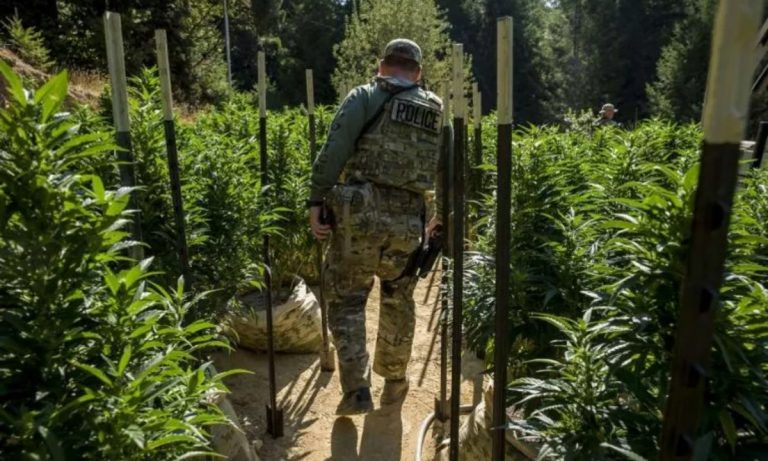
Old Kai is an Emerald Triangle-based distribution business licensed by Mendocino County to transport cannabis from the farms and brands it works with to the main marketplaces in cities to the south. The company took all the steps required by the state and county to make their business compliant with the new laws and regulations, and they were excited to provide product to Bay Area dispensaries in anticipation of the January 1st roll-out of legal sales.

But in late December 2017, just eight days before adult use commerce would begin, an Old Kai delivery truck was pulled over on Highway 101 in Mendocino County by the California Highway Patrol, which called in the Mendocino Major Crimes Task Force as backup. Old Kai’s drivers were arrested and cited and nearly 2,000 pounds of cannabis was impounded as evidence.

Technically, Old Kai was not yet in compliance with the new regulations, because the new regulations did not go into effect until January 1st. And if Old Kai had followed the old guidelines pertaining to Proposition 215, California’s loosely regulated medical marijuana provision, the company would not have been compliant with the new policy for adult use.

Why did the California Highway Patrol and Mendocino County cops even bother to arrest an employee of a licensed cannabis distribution company when legal adult sales were imminent? Hadn’t these law enforcement officials heard that marijuana prohibition in Mendocino County, and California at large, was supposed to be over?

The Old Kai bust was not an anomaly. Rather, it was one of several shakedown operations mounted against licensed cannabis companies in the Emerald Triangle prior to the start of legal sales for recreational use.

Drug raids involving seizures and forfeitures have long been a cash cow for police, and a spate of arrests in Mendocino County followed a similar pattern during the waning days of prohibition: money and product are confiscated, never to be returned, and the district attorney’s office discreetly indicates that a six-figure sum will make the problem go away.

Now that marijuana is officially legal for grown-ups to purchase in California, will the cops back off? Not necessarily. State and local law enforcement could be very busy for a while targeting cannabis cultivators and businesses operating outside the regulated market.

The Road To Legalization

Although cannabis has been a mainstay of California’s unofficial economy for decades, the road to legalization has not been easy. Efforts to legalize marijuana at the state level began in the early 1970s and grew into a grassroots social movement, especially in San Francisco, the following decade during the worst days of the AIDS epidemic.

The passage of Proposition 215 in 1996 legalized the therapeutic use of cannabis, and a disparate network of cultivation collectives cautiously emerged in Northern California to provide medical marijuana to certified patients who could now legally possess it under state law. The first storefronts sprang up in San Francisco and Los Angeles and spread to a few other cities during the Clinton-Bush II years.

The federal government, working in tandem with state and local law enforcement, responded by threatening doctors, raiding gardens and dispensaries, and prosecuting suppliers.  According to the Drug Policy Alliance, between 2006 and 2015 there were nearly half a million marijuana-related arrests in California, mostly for possession. State legislators, meanwhile, declined to regulate California’s nascent cannabis industry, which prospered, despite all, in a confusing legal limbo.

A pro-cannabis cultural shift in the United States was already well underway when President Barack Obama was inaugurated in 2009. Several TV reality shows featuring “marijuana millionaires” captivated a national audience in the throes of the worst economic downturn the nation had experienced since the Great Depression.

When Colorado and Washington voted to legalize recreational cannabis for adults in 2012, the Obama administration issued a memo outlining a look-the-other-way policy with respect to state marijuana laws. The four-page memo, written by Deputy Attorney General James M. Cole, basically asserted that marijuana businesses would not be subject to federal prosecution as long as they complied with state law.

Marijuana fever took hold in America, and the Green Rush went into overdrive. Growers, investors, scam artists, get-rich-quick schemers, and patients seeking relief began flocking to California and other Western states where a legal cannabis industry had taken root.

But the Cole Memo also asserted that each state, as a condition of avoiding federal interference, was required to originate its own cannabis supply and prevent it from leaving its borders. This has resulted in sky-high prices in Washington, “emergency shortages” in Nevada (which initiated recreational sales in 2017), and corrupt, pay-to-play medical marijuana legislation in Midwestern and East Coast states like Ohio and Florida.

Proponents of drug policy reform argued that a regulated adult market would generate significant tax revenues in states that legalized marijuana. They were right. From windfall taxes to job creation and increased tourism, the economic impact of legal cannabis commerce has exceeded expectations in Colorado, Washington, and Oregon.

Legislators in other states began to warm up to the industry. Several influential politicians in California endorsed Proposition 64, the successful 2016 ballot measure that allows adults to possess small amounts of cannabis and to cultivate as many as six plants for personal use. Prop 64 included anti-monopoly language that prohibited large-scale mega-grows for five years, while giving local jurisdictions considerable latitude to tax and regulate cannabis commerce, including onsite consumption at dispensaries and social clubs. 

Game Changer

In a surprise move, shortly before the new law was due to go into effect, the anti-monopoly provision was scrapped by state officials who had merged the medical marijuana program and adult use regulations into one system. Certain industry lobbyists got what they wanted, but this is not what California residents voted for.

There were no public hearings about the 11th hour reversal, which removed the cap on the number of cultivation licenses a single company could own. The rule-change directly contradicted an environmental impact report issued by the Department of Food and Agriculture a few weeks earlier.

Small and medium-sized cannabis growers felt betrayed, fearing a corporate takeover of the world’s largest legal marijuana market. The California Growers Association, which represents some Emerald Triangle growers, filed suit against the California Department of Food Agriculture hoping to overturn the rule that permits cannabis farms of near-unlimited size.

With a population approaching 40 million residents, the Golden State is an economic behemoth in both the cannabis industry and the nation at large. The staggering amount of money to be made has raised the stakes for farmers in the Emerald Triangle, the epicenter of domestic cannabis production, which produces much more marijuana than California residents can consume. Most of the marijuana grown in Northern California is smuggled across state lines and sold on the black market throughout the United States.

Caught between a voracious national consumer demand and recalcitrant federal law, the cannabis industry in California faces a precarious future. The same election that legalized cannabis for adult use in the Golden State also put Donald Trump in the White House and Jeff Sessions, an anti-marijuana ideologue, in charge of the Justice Department.

California’s Green Rush got a lot more complicated on January 4, 2018, when Attorney General Sessions announced he was rescinding the Obama-era Cole Memo, which had provided a measure of protection for cannabis cultivators and producers. The Attorney General’s drug war saber-rattling was a direct response to the legalization of marijuana for personal use and the advent of commercial sales in California.

Feeling The Byrne

 There are no reliable numbers on exactly how much cannabis is being grown in California, but recent estimates have put the total between $30 and $40 billion a year, with only about $5 billion worth consumed in state. The rest supplies an insatiable black market from sea to shining sea, despite ongoing law enforcement efforts to eradicate as many marijuana plants as possible.

Marijuana eradication efforts in the Emerald Triangle have been funded for over 25 years via the Edward Byrne Memorial Justice Assistance Grant (JAG) Program. This federal block grant program promotes collaboration between the DEA and local police agencies, which have raided numerous marijuana grow-ops and destroyed tens of thousands of illegal plants.

State law enforcement officials split the Byrne Grant funds 60/40 with local jurisdictions and have broad discretion on how the money is actually spent. The program has been criticized for financially incentivizing local law enforcement to focus on non-violent drug offenders in lieu of more serious problems like rape, murder and other violent crimes.

After nearly three decades, the Byrne Grant program has actually done very little to stem the supply or demand for illegal drugs, especially cannabis. And money for eradication shows no signs of drying up – even though marijuana commerce is now legal and licensed in California.

In 2017, the Department of Justice disclosed it would award 56 local grants that year worth about $17.7 million each, for a total of $174.4 million, through the JAG program. One of these grants has funded the County of Mendocino Marijuana Eradication Team (COMMET), which continues to participate in federal and state efforts to destroy unlicensed grow-ops – not just in Mendocino, but throughout the state.

Mendocino County officials set aside an additional $60,000 in asset forfeiture money (seized from drug suspects) to pair with $70,000 from JAG to underwrite COMMET in 2018. And COMMET is just one of several agencies participating in anti-marijuana busts and shakedowns throughout the state, despite legalization.

Costly Failure

Historically, the Byrne Grant program sponsored the efforts of the Campaign Against Marijuana Planting (CAMP), a law enforcement operation that used helicopters and paramilitary units to identify and eliminate marijuana grows in the sparsely populated hills and mountains of the Emerald Triangle. In recent years, COMMET and other eradication efforts have begun to focus on the massive illegal gardens being cut into the California hills, targeting polluters and other black market cultivators.

But state agencies won’t be able to fully protect the forests and water supply if marijuana remains a Schedule I Controlled Substance on a federal level. And that’s where it remains – despite all the science showing that it should never have been scheduled in the first place.

As long as there is an illegal demand for cannabis, there will also be an illegal supply made artificially more valuable by the prohibition meant to prevent it. And because it is federally illegal, cannabis is valuable enough to grow illegally in the middle of remote forests, the ecosystem be damned.

In 2016, the DEA spent $4.3 million in California to eliminate marijuana plants, $200,000 in Oregon, and $760,000 in Washington.

“That’s a huge cost when evidence has shown that these eradication efforts have not significantly reduced the total amount of illegal marijuana making its way to the market,” said Diane Goldstein, a former police officer. “We have to ask if local marijuana eradication is the best way for the federal government to spend its money.”

Goldstein, now retired, was the first female lieutenant at the Redondo Beach Police Department in Los Angeles County. During her career as a peace officer, Goldstein participated in raids to uproot illegal marijuana gardens on public lands. She witnessed firsthand the toll the drug war was taking in her community. After she retired from the force, Goldstein became a spokeswoman for the Law Enforcement Action Partnership (LEAP), formerly known as Law Enforcement Against Prohibition, which describes itself as “a nonprofit group of police, judges, and other law enforcement professionals who advance drug policy and criminal justice solutions that improve public safety.”

Goldstein says that California needs to lower barriers to entry for small businesses and pull back on taxes in order to bring the good actors into compliance and stabilize local economies. If not, the black market will flourish and anti-marijuana law enforcement operations will continue.

“There is no amount of money the federal government can give marijuana eradication task forces that is going to solve this problem,” Goldstein concludes.

The Cup Runneth Over

The Emerald Cup is one of the biggest cultural events of the year for the Northern California cannabis scene. The annual December gathering features big-name musicians, thousands of vending booths for all things hemp and cannabis, educational panels and workshops, and a prestigious competition with awards for the best products in a variety of categories. The contest drew over 600 product entrees in 2017.

From a marketing perspective, winning a highly coveted prize for best THC concentrate, CBD-rich flower, gourmet edible or topical salve at the Emerald Cup can make a huge difference for a cannabis brand. But there’s a good possibility that fewer contestants will participate in the next Emerald Cup, as many farmers and producers are opting out of the legal market.

Organized by Tim Blake, a former smuggler-turned-black market grower-turned legal entrepreneur, the Emerald Cup didn’t start out as a high-profile event. Disguised as a birthday party, the first Cup was held in 2003 at a community center in Humboldt County,

“Back then, the first place winners wouldn’t even pick up their awards,” Blake recalled. “People came in masks and there were only a couple dozen entries. Everyone was afraid they would be busted, but they weren’t.”

Blake bought property in southern Humboldt and installed a medical marijuana dispensary on the premises, called Area 101, which included meditative gardens, a 1500-pound statue of Ganesh (the Hindu elephant god), and other “religious deities.” Area 101 hosted the Emerald Cup until it outgrew the space a few years ago. Today, the Cup has become so large, attracting more than 25,000 weekend visitors, that it sells out the entire Sonoma County Fairgrounds, its current venue.

Writing On The Wall

In many ways the evolution of the Emerald Cup reflects the changes that have transpired in recent years as the underground cannabis community has evolved into an above-ground, multibillion dollar industry. Not everyone is happy about the transition. At last year’s Cup, anxiety and disdain for the new regulations were palpable among many of the vendors. “Black Markets Matter” signs appeared conspicuously at several vending booths.

Image

The message was unmistakable: Legalization won’t work unless growers and producers who wish to be compliant have an easier path – which means California legislators must reform the overly burdensome tax code and other policies that favor well-heeled investors over long-time veterans of the cannabis scene.

Blake saw the writing on the wall. For several years, he and others had been preparing for legalization. Blake rolled the success of the Emerald Cup brand into a popular line of hash products, a cannabis nursery, garden center, and manufacturing and farming company that markets top-shelf rosin and popular, pre-loaded vaporizer cartridges.

Despite the anticipated cultural and economic shift within the cannabis community, Blake still felt it was important to support the passage of Proposition 64. “I supported Prop 64 in 2016 because I felt like as long as people were still going to prison and patients can’t get their medicine, we have to put an end to this,” he said.

But as small farmers and boutique producers struggle to keep their businesses profitable while coming into compliance, Blake sees falling prices on the cannabis commodity market as a threat to the old way of life up north.

“Among my friends and family there is going to be more hardship and bankruptcy,” he predicted.

Even though it had been evident for some time that prohibition’s days were numbered, few expected profit margins to shrink so quickly as California approached legalization. Blake says a “perfect storm” of factors, including legalization in other states, has shrunk the transition window and left a lot of growers in a state of panic about what’s to come.

ALSO IN THIS SERIES

Part 1.  Eco-Crisis: Will Cannabis Legalization Save California’s Forests?

Angela Bacca is a Portland, Oregon-based freelance journalist with an MBA and 10 years experience in cannabis media. She specializes in coverage of cannabis in conservative states, science, medicine, politics, business, culture and media.

The ‘Five Guys’ Menu Hacks You Need In Your Life Immediately

Word is out that Five Guys has an epic secret menu.

Photos of secret menu items have been showing up on Instagram for some time, but more recently, New York Daily News has launched these crazy burger combos into the spotlight. And it appears that you can make anything out of a bun, patty and cheese.

Related Story: 8 Novelty Burgers That Might Kill You

A grilled cheese patty melt.  Ratherbeshopping.com revealed the “Presidential Burger,” is. reportedly a favorite of former President Obama’s. It’s a cheeseburger topped with lettuce, tomato, jalapeño peppers, and mustard.

There’s the In-N-Out Double Double hack that consists of a cheeseburger with extra cheese, lettuce, tomato, pickles, and grilled onions. Want some In-N-Out sauce with that? Just mix some mayo, relish, and ketchup together.

Related Story: How Much Cocaine Is In Domino’s Garlic Dip?

And as the New York Daily News points out, there’s also the “Quintuple Down,” which is compiled of two bunless bacon cheeseburgers, a grilled cheese with bacon, and two hot dogs (just to raise the likelihood of heart failure).
There’s even a healthier  “burger bowl” option that is just that: a deconstructed burger is two bacon cheeseburger patties, extra bacon, pickles, grilled onions, green peppers, mustard, and mayo. Served in a to-go container (not really a bowl at all).

Last year, a crew member of Five Guys went on Reddit for an AMA (ask me anything). Among disclosing her favorite thing to order (“Little cheeseburger all the way no ketchup but add BBQ. Extra mayo on there and maybe some grilled jalapeños if I’m feelin’ spicy. ALWAYS cut in half. Lil’ fry a little undercooked with a mix of mayo, BBQ sauce and some Cajun seasoning.”), she said there wasn’t really a “secret menu” at all, at least not an official one known to employees:

The other day though one of our crew members went on a lunch break leaving only myself and one other person in the kitchen. We ended up getting slammed so I’m taking orders and my co-worker is behind me making all of the food. This lady walks up and says “I’m going to order off of the secret menu so I’d like a presidential burger.” I had absolutely ZERO idea what that was and when I asked her what it consisted of, she got super grumpy and couldn’t even really tell me herself. We tried our best to make her happy but we also had 15 other guests that we also needed to make happy and in case one of those guests is a secret shopper we’re trying to get those orders out in 8 minutes or less.

More importantly, she said not to order “off menu” when the restaurant is slammed. That’s just inconsiderate.

We can’t pull out our phones on the line and look up secret menu items. If you want something “secret” make sure you know how to order it i.e. Grilled cheese with two patties and add onions, jalapeños etc…. And please, for the love of everything that is good, PLEASE don’t throw complicated secret menu items at us when we are in a lunch or dinner rush.

And if you want to try and replicate a FG burger at home, she says the trick “is to smash the patty after it’s cooked for a minute or two. This evens the patty out further, allowing the insides to cook completely without the outside charring or drying out.”

This Snowboarder Lit Debate About Olympian Cannabis Use 20 Years Ago

As the world looks to the frigid venues in Pyeongchang, so far the only major non-competition stories have been relatively minor, such as a potential ice dancing wardrobe malfunction, North Korea’s massive cheerleader invasion, and the Vice President getting shade from a figure skater.

But the 2018 games mark the 20-year anniversary when the bombshell was a snowboarding gold medalist from Canada who began the debate over whether Olympians can, and even should, use cannabis.

Ross Rebagliati won the men’s giant slalom competition at the 1998 Nagano, Japan games. It was the first time the sport had been included in the Olympics. The Canadian, then 26, had to take a urine test. He told Deadspin in 2013 he felt that the test, in a way, made him feel like he, and the sport, were being taken seriously: “It was an honor to do the pee test.”

Within a few days he learned he had tested positive for THC (the main psychoactive compound in cannabis), his medal was taken away, and probably the most terrifying part, had to have a sit-down with the Japanese police (a country with famously harsh drug laws) and spend a short time in jail. Rebagliati maintained that the result was from secondhand smoke. Despite the internet not being a thing then, he became a hero to … er … enthusiasts, even being parodied on Saturday Night Live soon after (although if a show claims that you listen to Smash Mouth, you should be able to sue for defamation).

The reason for getting the medal back? THC, though thought by some in the scientific and athletic communities to be performance-enhancing, wasn’t on the World Anti-Doping Agency’s banned substance list. It was subsequently added, but in 2013 WADA changed the amount that could set off alarms. Before the change, it was 15 nanograms per milliliter. The new standard is 150 nanograms per milliliter. Rebagliati’s test results after his championship run at the games, 17.8. Not even enough to warrant a raised eyebrow under the current rules.

But to those in Canada, Rebagliati hasn’t turned into an answer to a trivia question. He’s been an outspoken advocate in politics and for the mainstreaming of cannabis in Canada.

Rebagliati gave up a bid for Liberal Party candidate to be a federal representative in a district of his native British Columbia, citing his new cannabis business interests. But he told the CBC during the 2015 election season, “I mean, to think I can be involved in helping people and sharing the knowledge that I have and a lot of people have about cannabis to the mainstream public. I think it’s my responsibility.”

The herb isn’t legal, yet, in Canada, though there have been shops selling it out in the open for some time now. Prime Minister Justin Trudeau has previously said cannabis would be legal in July of 2018 though local and federal officials are still working out details.

Rebagliati told Civilized recently, “I feel that I represent tens of thousands of Canadians and citizens of the world that have unjustly paid different dues because of their cannabis use or their association with it. And I’m honored.” He has used that platform, and his reputation, to help promote his cannabis-related business ventures.

In 2013, he launched Ross’ Gold, selling cannabis for medicinal purposes — technically legal under Canadian law at the time. In 2014 the company merged with Green & Hill Industries and it is now publicly traded. As of 2015, he had expanded his offering to glassware and edibles that could be found in more than 100 stores across Canada. But he’s more than just a businessman.

And he’s still a strong advocate for making cannabis part of a training regimen, if it works for the athlete.

“As an athlete, there’s a lot of repetitive working out that goes on and going to the gym two, three hours a day for five days a week for years on end gets monotonous. To be able to spice it up in a natural way for an athlete is the best possible thing,” Rebagliati told the Washington Post in 2016.

Facial Recognition Software Has A Bias Towards White Men

0

New research from MIT reinforces the idea that facial recognition software is subject to biases due to the data sets provided, and the way in which these algorithms are created.

The data base for this study was built by Jay Buolamwini, a researcher from MIT Media Lab, who used 1,270 faces from politicians from around the world.

The results from the facial recognition software showed inaccuracies in gender identification dependent on the person’s skin color. According to The Verge, gender was misidentified in less than one percent of lighter-skinned males, in up to seven percent of lighter-skinned females, in up to 12 percent in darker-skinned males, and in up to 35 percent in darker-skinned females.

Buolamwini concluded that male subjects were more accurately classified than female ones, and that lighter-skinned subjects were more accurately classified than darker-skinned subjects. The subjects that fared the worst were darker-skinned females.

Since computer vision technology is being utilized in high-stakes sectors such as healthcare and law enforcement, more work needs to be done in benchmarking vision algorithms for various demographic and phenotypic groups.

This is not the first time that results like this have occurred, highlighting the need for more diverse data sets and more diverse people who create these technologies, so that there’s less opportunity for these biases to sneak in. This is particularly important in the law enforcement area, where biases could result in the incrimination of innocent people.

Why Does Alcohol Make Some People Mean?

You have seen it at parties, usually ending either in a fight or someone in tears. Why does alcohol make some people mean? Some people cry or get angry when they’re drunk, and no one really questions it. It’s all just chalked up to drunk behavior. Scientists in Australia decided to study the human drunk brain, and found some interesting results.

By studying brain scans of drunk men, researchers were able to pinpoint the areas of the brain that go weak when we drink, thus, making us act differently than normal. According to Gizmodo, our prefrontal cortex—responsible for planning, personality, and social behavior—dozes off while we drink alcohol.

tigers fighting on swamp


Related Story: Burger King Won’t Hire You If You Say You’re Smart

These discoveries are also backed by other types of studies that show between 35 and 66 percent of violent crimes involve alcohol. In instances that are less extreme, alcohol can make people fight and be more confrontational, lowering our tolerance towards others and thus facilitating problems.

It’s important to highlight that it’s not all alcohol’s fault; it’s the drink combined with a tense situation, a frustrated person, or someone with a naturally aggressive personality.

The participants of the Australian study were separated into two groups: one that was drinking vodka and another that was drinking a placebo. Afterwards, participants had to play a very frustrating competitive-reaction task as their brains were scanned by an MRI. Participants who’d had alcohol, whenever they got angry, displayed a dip in their prefrontal cortex.

The researchers of the study suggest that people who want to avoid aggressiveness should always drink in peaceful environments, where they’ll face fewer stressors. These people should also hang out with friends who they’re comfortable with. Always good advice.

Related Story: People Who Use Weed Also Do More Of Another Fun Thing

Another way to look at it from a data point of view is alcohol interferes with cognitive control functions and can lead to narrowed perception and therefore aggression. If you are one of the people this happens to, you must want to figure out a different strategy so this ugly side does not pop out.  If you know people like this, when they drink you have to be ready for the ride.

The Fresh Toast Marijuana Legislative Roundup: Feb. 19

Last week was a busy time for those fighting in legislatures across the nation for cannabis reform. In Berkeley, the city council passed legislation to make the liberal college town a “sanctuary city” for marijuana. Find out about that more in our weekly marijuana legislative roundup.

National:  

On Thursday, Rep. Lou Correa (D-Calif.) introduced the Sensible Enforcement of Cannabis Act in the U.S. House of Representatives. The bill would essentially enshrine the recently-rescinded 2013 Cole Memorandum in federal law by prohibiting the Department of Justice from prosecuting individuals engaged in state-legal use of cannabis for recreational or medical purposes.

The Cole Memorandum, which formed the foundation of the Obama administration’s hands-off policy toward state legalization efforts, instructed federal prosecutors to refrain from prosecuting those engaged in state-legal uses of marijuana and outlined eight public health and safety priorities with which states were expected to comply in exchange for the federal noninterference. Attorney General Jeff Sessions rescinded the Cole Memorandum in another memo circulated to U.S. Attorneys last month, which instead left enforcement of federal marijuana prohibition to the discretion of federal prosecutors.  

Connecticut: 

Lawmakers in the Connecticut House General Law Committee voted last week to hold a hearing on a marijuana legalization proposal in the coming months, though a hearing date has not been set. The topic of cannabis legalization has traditionally been handled by public health and judiciary committees in the state, but no legalization bill has made it past a committee vote in past years. Supporters hope that legalization will have a better chance of passage in the General Law Committee. However, the issue is unlikely to come to a vote during the election year.  

Virginia: 

On Monday, the Virginia Senate voted 38-2 in favor of legislation that would allow people to expunge some marijuana offenses. If enacted, the bill would allow first-time offenders convicted of possession of small amounts of cannabis to later have their convictions expunged. Those seeking expungement would be required to pay a fee, which would be used to create a database to prevent people from using the expungement process multiple times. Two more far-reaching marijuana decriminalization bills failed to make it out of committee in January. 

California: 

On Tuesday, the Berkeley City Council unanimously approved legislation to make Berkeley a “sanctuary city” for marijuana. The measure will prohibit city employees from assisting federal law enforcement in arresting or prosecuting individuals for cannabis-related activities that are legal under state and local law. The legislation is modeled after similar laws in place in numerous cities nationwide that bar public employees from assisting federal immigration enforcement in rounding up undocumented immigrants. Similar “marijuana sanctuary state” bills are being considered by lawmakers in Washington, California, and Colorado. 


Why Did Philadelphia Drop 51 Marijuana Possession Charges Last Week?

Philadelphia has now joined the cause of many cities fighting to decriminalize marijuana possession across the board. Philadelphia District Attorney Larry Krasner announced this week he was dropping dozens of marijuana possession criminal charges and would not pursue charges of that nature. Last week the city dropped charges against 51 people.

“We are going to tell them, yes, drop any cases that are simply marijuana possession,” Krasner said in a press conference.

Krasner revealed that such intentions would only involve basic marijuana possession cases. Charges of marijuana with intent to sell would still be pursued by law enforcement agencies. Krasner says the change in policy was in part because he believes police resources would be better utilized elsewhere.

“I did it because I felt it was the right thing to do,” Krasner said. “We could use those resources to solve homicides.”

Krasner’s announcement builds upon changes four years ago in local policies that allowed law enforcement to issue citations for marijuana policies. This allowed police to simply address the crime as a misdemeanor and issue a fine. Krasner said 90 percent of marijuana possession charges ended in citation.

Earlier this month, Seattle announced it would wipe away all misdemeanor charges left from before Washington legalized marijuana. San Francisco was the first city to initiate such change when the city announced it would retroactively apply California’s new legalized laws to dismiss thousands of previous convictions.

Gossip: The Spice Girls Have Reportedly Signed Contract For Reunion Tour; Olympic Athletes Cause Surge In Porn Traffic

Over the weekend, Victoria Beckham flatly denied that the Spice Girls were headed on tour — despite rumors.

According to TMZ, the girls ARE going on tour and have already signed contracts to do so.

Via TMZ:

Sources connected to the group tell us, Mel B signed on the dotted line last Friday and we’re told the other members signed as well.

TMZ broke the story … the girls have agreed to reunite for a series of concerts in the UK and the U.S. After our story posted, Victoria Beckham told Vogue there would be no reunion tour, but we know Mel B has signed the deal, as have others, and it spells out the specifics, including the number and location of concerts and compensation.

We’re told there will be a limited number of concerts in the 2 countries and the group is gearing up to make a ton of cash on merchandise too.

Olympic Athletes Cause Surge In Porn Traffic

Pornhub takes a closer look at traffic in Pyeongchang as a result of the 2018 Olympic Games.

The 2018 Winter Olympics opened February 9th in Pyeongchang, South Korea. As people all over the world tuned in to watch their favorite winter sports, the excitement soon flowed over to Pornhub where searches containing “Olympic” and “Olympics” grew by up to 561% compared to average levels.

Not only were Olympic athletes on people’s minds, but also increased interest in the hosting nation of South Korea. Searches containing either “Korea” or “Korean” grew by 38% above normal levels on February 9th and have continued to remain high.

Some interesting Olympic related searches that had big gains included “Nude Olympics” by +1801%, and a noticeable “Bulge” increase of +239%. “Figure Skating” was the Winter Olympic sport with the biggest search gain (+622%) followed by “Skiing” (+424%) and “Hockey” (+245%).

Korea/Korean (+112%) topped the list of gaining nationality searches, thanks to being the hosting nationality and also due to the news coverage of the North and South Korean teams coming together for the games. Worldwide searches for Russia/Russian grew by 78% and China/Chinese by 67%.

Love the fresh dirt we bring over daily from Naughty Gossip? Let us know in the comments!

Ostracizing Drug Users Is Not Going To Solve The Problem

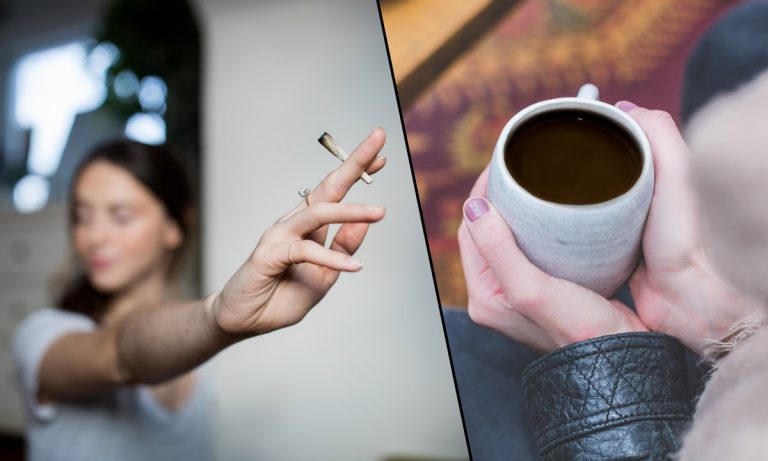
We are all drug users. Coffee, alcohol, cigarettes, weed, Viagra, ecstasy, anti-depressants, anti-anxiety pills and more – people are using these drugs on a weekly or even daily basis.

Why do we all use drugs? Because drugs work. We all have our personal reasons for using – whether for pleasure, or treating pain or otherwise. And of course, many people face challenges from their drug use.

Coffee helps me start my day and gives me a little boost in the afternoon. While I know how harmful my cigarette habit is, it also gives me pleasure. I enjoy my smoke breaks throughout the day, going outside and getting some space, clearing my head and doing my people watching as New Yorkers walk by. I really appreciate my vodka sodas after work. Whether I am kicking up my feet at home or hanging out with friends, it is pleasurable for me. Smoking weed can both relax me and also give me energy. I like watching movies or eating a nice meal after a smoke and also enjoy getting deep with friends or doing some creative writing while a little high.

It’s clear to me that some of my drug use is because of stress and an attempt to push down some anxiety and difficult feelings. Life can be hard. Most of us are stressed when it comes to jobs, money, paying bills and, god forbid, trying to save a little bit. Watch the news and you are inundated with scary, deadly fires, hurricanes and floods. There are wars happening around the world and people fleeing violence and oppression. We have a President who is constantly attacking women and marginalized communities and playing a game of nuclear war “chicken” with North Korea. We read about school shootings on a weekly basis. We are living in nerve-wracking times. I sometimes joke, if you are not self-medicating, you are not paying attention. There is a serious opioid overdose crisis in our country right now and the reasons are many and complex. But I would wager that people’s physical and spiritual pain is a major factor contributing to the widespread use and misuse seen today.

While most people use drugs, not everyone has the same relationship with these different drugs and some of us have different experiences with drugs depending on the night or what is going on in our life at that time. The majority of people can enjoy alcohol, but for some, alcohol is a harmful drug and causes real harm and destruction in their lives. Some people can enjoy a couple of cigarettes when they have a couple of drinks. For others, there is no moderation and a single cigarette easily turns into a pack a day habit. Some use their opioids in a healthy way for their pain, and for others it can lead to serious addiction that can become the focus of their life.

Despite being counterintuitive, it is worth pointing out that the overwhelming majority of people who use drugs don’t become addicted. Dr. Carl Hart, a neuroscientist and professor at Columbia University has done groundbreaking work around drug use and addiction and notes that, “80 to 90 percent of people who use illegal drugs are not addicts. They don’t have a drug problem. Most are responsible members of our society. They are employed. They pay their taxes. They take care of their families. And in some cases they even become president of the United States.”

While drug use and abuse don’t discriminate, our drug policies do. The war on drugs is a vicious war on people and African Americans and people of color feel the brunt of this war. Despite similar rates of use and sales, African Americans go to prison at 13 times the rates of whites for drugs. While marijuana legalization is becoming mainstream and entrepreneurs are getting rich, we still have hundreds of thousands of people getting stopped, frisked and arrested for marijuana – mostly young people of color. Last year, in “progressive” New York City, 18,000 people were arrested for marijuana possession with African Americans and Latinos making up 85% of the arrests. People who are arrested often face immediate and long-term consequences that can make it difficult to get and keep a job, maintain a professional license, obtain educational loans, secure housing, or even keep custody of a child or adopt.

So if we can agree that the majority of people in society are using drugs, and if most people who use drugs don’t have a problem, what should be done about it? The answer is not what Donald Trump is proposing. His proposals are building a wall along the border, telling people to “Just Say No” and doubling down on law enforcement and mass incarceration. I think it is pretty obvious that our 50-year war on drugs is not the answer.

How should our society deal with people who use drugs? I propose four simple solutions: 1) Offer treatment and compassion to people who want help for their drug problems; 2) leave people alone who don’t want or need treatment; 3) continue to hold people responsible for crimes that harm others; and 4) fight like hell to end the war on drugs and stop locking up our brothers and sisters.

1) Offer treatment and compassion to people who have drug problems

While our society gives lip-service to helping people struggling with drug misuse or addiction, 90 percent of folks who want treatment can’t get it. Meanwhile, thousands of people are forced into treatment every year simply because they were arrested for drug possession, even though many of them don’t meet the diagnostic criteria for substance dependence.

We should have free treatment available on request. We should remove barriers to entering treatment, which is far more effective and less expensive than putting someone in jail. We need to reduce overdose deaths by getting the overdose reversal drug Naloxone into the hands of people who use opiates and their family members. We need laws that allow people to call 911 when witnessing an overdose without fear of arrest. We need supervised injection facilities where people can use in safe places with medical staff on hand to make sure people don’t die from an overdose. We should make methadone and replacement therapy available to those who want it. We should acknowledge that relapse happens and not kick people out of treatment who slip up.

2) Leave alone people who don’t want or need treatment

As I mentioned earlier, the vast majority of people who use drugs don’t have problems from their use.

RELATED: What Does White Supremacy Have To Do With Marijuana Laws?

More than 1.5 million people are arrested every year in the U.S. simply for drug possession. The majority of these people don’t have drug problems and yet we are handcuffing them and saddling them with criminal records that will severely limit their opportunities in life.

3) Continue to hold people responsible for crimes that harm others

People who harm others, whether on drugs or not, need to be held responsible. Simply using or possessing drugs should not be cause for arrest, but if someone gets behind the wheel while impaired, or commits a predatory or violent crime against someone, they should continue to be held accountable.

4) Fight to end the war on drugs and stop locking up our brothers and sisters

The war on drugs is really a war on us. It is time to decriminalize all drugs and stop arresting people simply for using or possessing a certain substance. We are all using drugs, most non-problematically. How can we allow the police to target, arrest and lock up our brothers and sisters in cages for something we are all doing? Let’s help people with drug problems, leave in peace those without a problem, hold responsible those who harm others and end this tragic, inhumane war on drugs. Let’s get people to care about this.

Tony Newman is the director of media relations at the Drug Policy Alliance.


Don't Miss Your Weekly Dose of The Fresh Toast.

Stay informed with exclusive news briefs delivered directly to your inbox every Friday.

We respect your privacy. Unsubscribe anytime.