Tuesday, May 12, 2026
Home Blog Page 1011

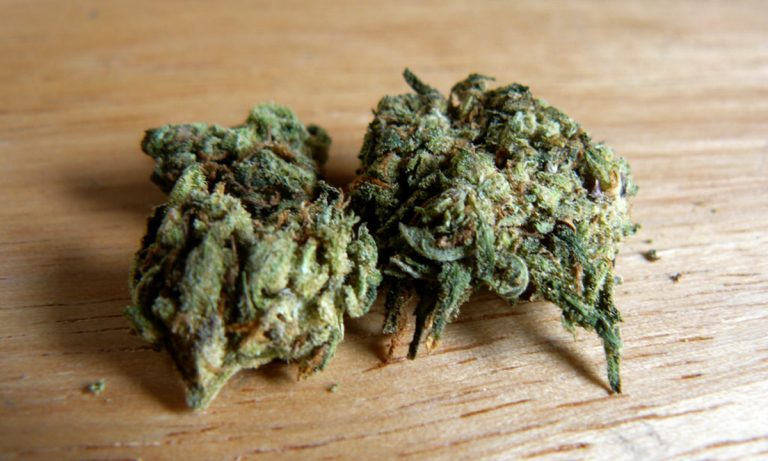
Why Eating Marijuana Edibles On An Empty Stomach Is Not A Good Idea

Much like alcohol, cannabis edibles are best taken with food. Not doing this can result in anxiety and a paranoia freakout. But why?

Some believe the Rate of Absorption Hypothesis that states edibles cause increased anxiety when taken on an empty stomach because THC is absorbed at a quicker rate.

But according to the Prof of Pot, who broke down some recent studies on the issue:

I call bullshit because compared to either fasted or fed, the absorption is 100 times faster when cannabis is smoked. Furthermore, plasma concentrations of THC after a meal don’t lag the fasted state by that much – the time to peak plasma concentrations is only much later after a meal because so much more is absorbed.

Others think that formation of the 11-OH-THC metabolite is responsible. Prof of Pot says though 11-OH-THC is probably more potent than THC:

It is true that 10 times more 11-OH-THC can be formed after taking cannabis edibles than any other route such as smoking. However, the peak concentration of 11-OH-THC in the fasted state is only 25% higher than in the fed state. That is not a big enough difference to convince me that 11-OH-THC is the culprit.

Prof thinks the extra anxiety is due to the ratio of THC to CBD under fasted conditions:

Because the activity of 11-OH-THC is at least as strong as THC, I summed the levels of THC and 11-OH-THC for a measure of ‘total THC’. I then examined the ratio with CBD and the results were surprising.

After a meal, the ‘total THC’ to CBD ratio was about 3 at the time of peak blood concentrations. This is already on the high side (no pun intended). However, this ratio after fasting was almost 9 –  nearly 3 times higher than after a meal.

So eating a cannabis edible on an empty stomach, even if it contains a 1:1 ratio, is the equivalent of smoking a cannabis strain with a 9:1 THC to CBD ratio!

Prof surmises that anxiety is “due to the relatively low absorption of CBD compared to THC when you haven’t eaten” and suggests taking edibles after a solid meal (preferably one with some fat to stimulate bile acid release), especially if you are taking edibles with CBD.

Medical Cannabis Combats Anorexia’s Obsessive Thoughts

With all the anxiety and obsessive thinking that can come with anorexia, many sufferers of the disorder are finding relief through cannabis. Not only does marijuana give out the munchies, it helps to slow down self-harming thoughts and loosens the obsession with control that some people experience.

A Colorado woman named Jessica told Cosmopolitan, “I’m able to step back and see my irrational thoughts for what they are — irrational — and it gives me the space to look at it and go, ‘Wow, that’s a ridiculous thought to have; nothing bad is going to happen to me if I eat this piece of pizza.’ It also makes food taste better and eating more enjoyable, which is nice because chronic anorexia messes with your digestive tract and can sort of break your natural hunger cues.”

And as far as feeling guilt once the munchies and high wear off, Jessica said that it just doesn’t bother her. She does not suffer from the “body distortion” issues that many others do. For her, anorexia is about control, and the feeling of being more flexible is one she enjoys.

A Seattle woman who was obsessed with counting calories to the point of degradation also credits cannabis with having moved her past her own behaviors. Though she did start off feeling guilty the day after using cannabis, she also realized that she felt better and that she could remember clearly how many calories she consumed without the obsessive factor.

Neither woman smokes to excess or even on the “stoner” level, but a hit of pot eases their anxieties. Another reason cannabis is so calming for those who didn’t use to imbibe is that its standing, worldwide, has eased over to the open-minded side of the equation. The stigma has fallen away and people are able to treat their disorders without feeling like a drug addict or social pariah.

Though some experts worry that cannabis is a bandaid to eating disorders, to the point that they aren’t learning coping mechanisms for the long run, conventional medicine hasn’t provided a better solution, certainly not a natural one. And since it’s working, more power to the people for expanding their horizons and letting go of destructive behaviors.

‘Plogging’ Is The Hot New Fitness Trend And You’ll Never Guess What It Involves

There’s a hot new trend in fitness and it’s not just about looking great. “Plogging” is about getting the environment in shape, as well.

From the land that brought us IKEA, Skype and Spotify, Sweden is once again responsible for getting Americans woke.

Plogging, which is basically the act of picking up trash while you jog — a mashup of the words “plucking” and “jogging” — has been making the hashtag rounds on Instagram, so you know it’s real.

https://www.instagram.com/p/BfNMwVLnwxj/

Certified personal trainer and behavioral change therapist Charles F. Porter tells Moneyish:

There are two great things about this type of exercise. You get the added benefit of carrying a few extra pounds and you’re bending over and doing squats, which is a move that’s fundamental to your everyday life. You’re getting a full body workout.

It’s also just about the least selfish physical activity you can do. Says Porter, “You’re helping the planet and that can encourage others to participate, especially if it’s a social media phenomenon, everyone wants to jump on that bandwagon.”

According to Moneyish, the Environmental Protection Agency estimates Americans generate 4.4 pounds of trash per person per day, with the most common items consisting of food, paper, plastics, wood, metals and yard trimmings.

Seattle-based ultramarathon runner Margaret Young tells Moneyish this is nothing new to runners, but it’s still cool:

It’s great that plogging is a trending word and people will think it’s Nordicly cool to pick up trash, but most trail runners and leave-no-trace believers have been practicing this already. My pockets are usually stuffed with other people’s trash when I get home from a hike or run.

She adds, “It seems silly that we need to have a special word for something that people should be doing anyway, but if it gets the trash picked up, I’m all for it.”

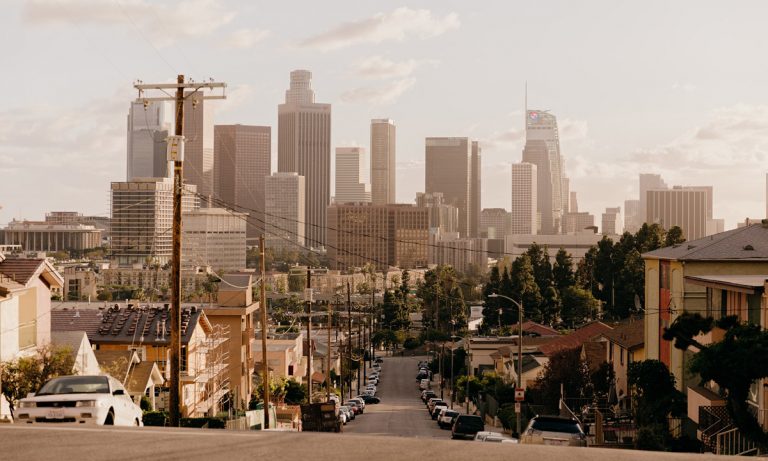
LA Cannabis Executive Director Answers City’s Most Pressing Questions

Cannabis legalization can be confusing. To run correctly, state and local governments need to erect various infrastructure to support the nascent industry. Furthermore, people need to be informed about how and what will change when it comes to their legal cannabis rights. All this causes questions, especially in a large state like California.

That’s why Cat Parker, Executive Director of the Department of Cannabis Regulation for Los Angeles, hosted a Reddit AMA (Ask Me Anything). Parker previously worked at the Drug Policy Alliance. When hired, she told the Los Angeles Times, “It’s extremely important that as this industry develops in the city of Los Angeles, that it’s done with consciousness.”

Parker and her staff are aiming to do just that. In her Reddit AMA, she spoke eloquently about the challenges of shaping the industry and how her staff is reacting to those challenges. Below some of her most revealing answers appear in abbreviated form.

What Does Her Department Oversee?

Our job is to get cannabis businesses licensed and to monitor compliance with new business standards to ensure our regulations protect communities and consumers within the City of Los Angeles. With the development of an entire new cannabis program and department, I largely focus on policy and citywide coordination. LAPD is the primary agency handling enforcement against illegal activity.

How Will Los Angeles Tax Cannabis?

The State of California will impose a 15% excise tax on the purchase of Medical and Adult-Use cannabis. Cultivators will also have to pay a tax on dry flowers ($9.25 per ounce) and dry leaves ($2.75 per ounce).

The City of Los Angeles will impose the following new business taxes as of January 1, 2018: 10 percent gross receipts from Adult-Use Sales; 5 percent gross receipts from Medical Sales; 1 percent gross receipts from Transportation, Testing or Research; 2 percent gross receipts from Manufacturing, Cultivation and Other Activities.

How Is LA Promoting Representational Equity In Cannabis?

The City of Los Angeles has adopted a Social Equity Program as a part of its larger cannabis regulatory program to allow individuals and communities most harmed by marijuana prohibition and its enforcement more equitable access to the new cannabis industry.

Within the City’s Social Equity Program, individuals who are low income, have a qualifying prior California Cannabis conviction, and those who have lived in a disproportionately impacted community may qualify for priority process and business and licensing assistance.

The City is also considering establishing a fee deferral program for qualifying social equity applicants.

Will LA Allow Cannabis Cafes In The Future?

Some members of the City Council have expressed interest in exploring the authorization of on-site consumption. Right now, we’re rolling out policy in stages to make sure that each step of the way we address the needs of businesses, customers, and government so that responsible consumers can safely get access to products at legal and well-run businesses. FYI: according to state law, consumption of any kind of cannabis in public is subject to a $100 fine — and smoking cannabis where tobacco smoking is prohibited is subject to a $250 fine.

Meghan Markle Is Reportedly Overwhelmed By Pressures Of Royal Life

As Meghan Markle prepares for her wedding in May, sources claim the retired actress has been feeling trapped and overwhelmed by the pressures of royal life.

Markle moved to London last year after she and Prince Harry announced they were engaged, and ever since, she’s been traveling to different parts of the UK for all sorts of meetings and charity events.

According to the Daily Mail, even though she seems comfortable and confident in her outings, she’s been missing the anonymity that came with her life in Toronto. And since the engagement was confirmed, it’s hard for her to leave the palace, where she lives in a two bedroom apartment with Prince Harry.

Via Daily Mail

Meghan may appear confident when on royal walkabouts, but she does have some pre-wedding butterflies – not about Harry, but about her new life.

She can’t potter about on the High Street, attend gym classes, or jog around Hyde Park. Instead she is confined to yoga at home or visits to Kate and William in Apartment 1A.

Markle has sought advice from the Duchess of Cornwall, Camilla, and from Kate Middleton, who’ve both helped her cope with the pressures of being part of the royal family.

Gossip: Pregnant Kate Middleton Goes Against Protocol; Angelina Jolie & Brad Pitt Divorce Talks Go Nuclear

Kate Middleton chose a dark green dress and many wondered if she would choose a black dress in solidarity with the Time’s Up movement. Many actresses tonight have chosen black dresses, and fans on Twitter were speculating if the Duchess would take a stand.

It is against royal protocol to take a stance on political issues, though Duchess Kate did wear a black ribbon around her dress.

Angelina Jolie & Brad Pitt Were Close To Finalizing Divorce But ‘Talks Blew Up’

They came this close. Brad Pitt and Angelina Jolie were just days away from finalizing a divorce and custody agreement in late January when talks blew up at the last minute, In Touch magazine has learned.
“They had been diligently going along privately and amicably, trying to keep the focus on the family,” an insider tells In Touch exclusively. “But suddenly, Angelina reversed course when she felt Brad was pushing too hard to resolve the situation to his benefit.”

Now both Brad, 54, and Angelina, 42, say they need more time to hash everything out. On Feb. 6, both asked to extend the temporary judge in their case — which remains sealed — while both parties continue to discuss custody and distribution of assets. “The completion date for all proceedings before the temporary judge is extended from Dec. 31, 2017, to Dec. 31, 2018,” reads the order (right), obtained by In Touch.

“This means their custody battle can drag on for another year,” says the insider.

Love the fresh dirt we bring over daily from Naughty Gossip? Let us know in the comments!

These Cities Consume The Most Marijuana In The World

Where marijuana is legal, people will not necessarily consume more of it. In fact, of the top five cities for cannabis consumption, it’s illegal in three. The U.S. was the only country to place two cities on the list (cue “U.S.A.!” chant if that’s your thing).

Seedo, a company that makes a device allowing users to grow cannabis plants at home, recently released a report that shows which cities around the world consume the most weed. They compiled the list through crowdsourcing and cross-referencing it with the World Drug Report 2017.

Important reminder: The cities were ranked by overall consumption, not per capita use.

5. Cairo, Egypt

  • Population: 7.8 million
  • Area: 117 square miles
  • Legal status: Illegal
  • Total consumption in metric tons: 32.59
  • Consumption per capita in grams: 4.17
  • Price per gram: $16.15

Hemp production in Egypt can be traced back as many as 5,000 years, though there exists no concrete proof that it has always been used for psychoactive purposes. But, numerous sources conclude enthusiasts there have been getting high for about 1,000 years.

Alcohol is illegal in the Islamic country. The book “Cannabis: A History,” claims that when Napoleon’s troops invaded in 1798 the troops turned to, and liked, hashish.

Users with weed caught by authorities face very long jail time. Though enforcement is considerably lax and judges have wide sentencing leeway.

Foreigners in the country’s largest and capital city will find purchasing cannabis relatively easy. Sample advice from webehigh.com: Strike up a conversation with a local, but watch out for inflated prices and camel dung.

4. Los Angeles, USA

  • Population: 4 million
  • Area: 469 square miles
  • Legal status: Legal
  • Total consumption in metric tons: 36.06
  • Consumption per capita in grams: 9.015
  • Price per gram: $8.14

Voters made recreational use legal effective the first of this year. Prior to that, California was one of the leaders in legal medical marijuana.

To buy weed in The City of Angels go to a state-licensed shop. You can search for those outlets on the state Web site. There are also many quasi-legal “co-ops” that were established to bend the medical weed rules prior to full legalization that operate around the city.

And, as with alcohol, check your watch and plan ahead for that big night. It is illegal for the shops to sell from 10 p.m. to 6 a.m.

3. New Delhi, India

  • Population: 11.7 million
  • Area: 178 square miles
  • Legal status: Illegal
  • Total consumption in metric tons: 38.26
  • Consumption per capita in grams: 3.27
  • Price per gram: $4.38

The history of cannabis use in India dates back at least 4,000 years. Common traditional uses include a milkshake-like beverage. Though illegal, the law is rarely and laxly enforced, due in large part to its long history of use in Indian traditions.

According to legend, Shiva, one of the main gods of Hinduism, called cannabis his favorite food. He discovered the plant while seeking rest from an argument with his family (wonder if it was on Thanksgiving).

The very low prices may seem enticing to the tourist, but webehigh.com cautions to watch out for weed that has been cut with shoe polish. The site’s travel guide suggests going to one of the city’s many “hippie” cafes and ask a fellow tourist.

2. Karachi, Pakistan

  • Population: 15 million
  • Area: 237 square miles
  • Legal status: Illegal
  • Total consumption in metric tons: 41.95
  • Consumption per capita in grams: 2.8
  • Price per gram: $5.32

The country’s largest city also ranks as the third-largest in the world by population. Possession or sales can lead to a seven-year sentence. The law is enforced but, as one travel guide says, most police can be bought off for less than $10.

Cannabis is widely available throughout the country from local dealers. That same report said throughout the country 6.4 million people (at the time roughly 6.5 percent of the adult population) used cannabis.

1. New York City, USA

  • Population: 8.5 million
  • Area: 690 square miles
  • Legal status: Partially legal
  • Total consumption in metric tons: 77.44
  • Consumption per capita in grams: 9.11
  • Price per gram: $10.76

The Big Apple has a long history of growing and using weed. In the 80s, the Green Aid movement supplied AIDS patients with cannabis — one of the first organized medical marijuana efforts in the country.

Recreational use in the city has largely been decriminalized and possession of a small amount is now a violation — a ticket with a fine, no jail time, and no criminal record. There are harsher penalties for amounts greater than two ounces. Medical use, from state-licensed outlets, was allowed last year.

Finding marijuana is easy for tourists. Weedmaps.com lists local dispensaries (some deliver and may only require a phone consultation to qualify) and storefronts.

Which Former Basketball Player Just Introduced A CBD Wellness Product?

Retired NBA great Al Harrington, who discovered the benefits of CBDs (Cannabinoids) at the end of his playing career, has premiered a new line of wellness products based on hemp, the non-psychoactive elements found in the plant. As an upscale consumer brand, Harrington Wellness will feature products that will foster healthy living and all the benefits that come from it.

Harrington introduced the new brand at a star-studded dinner in Beverly Hills at the start of the NBA’s 2018 All-Star Weekend taking place in Los Angeles.

“After more surgeries than I care to admit, my knee was shot, and I was in pain all the time,” said Harrington, CEO of Harrington Wellness and founder of The Harrington Group. “If I had the benefit of CBDs, like our Harrington Wellness Cream when I was playing, there’s no doubt I could have played two or three more seasons in the NBA.”

It was Harrington’s fall 2017 “Uninterrupted” online interview with retired NBA Commissioner David Stern, which has generated over 122,000 views on YouTube and more than one million total across various websites, that led to the creation of Harrington Wellness.

“David and I were talking about the benefits of CBDs and how NBA players could benefit from them,” added the former New York Knicks and Denver Nuggets forward. “That interview led to lots of interest and an outpouring of support, so I created Harrington Wellness to fill the unserved niche of upmarket, professional and premium CBD products that are legal anywhere in the country.”

Harrington initially discovered the recuperative power of Cannabis, and later CBDs, as a result of convincing his grandmother, Viola, to use extracts to help with her glaucoma. As a result, Harrington Wellness’ sister company, Viola Extracts, is named in her honor.

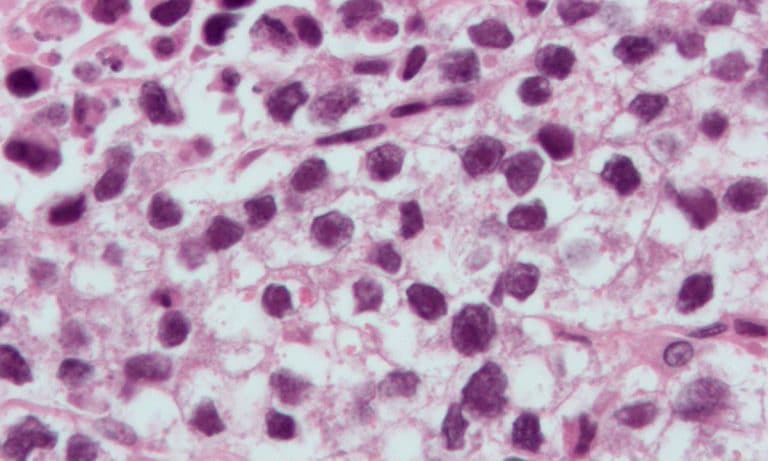
The Essential Facts About Marijuana And Testicular Cancer

One cannot overemphasize the impact of cancer on contemporary society. Regardless of an individual’s age group or socioeconomic status, they are bound to know someone who died far too young from this awful disease. Similarly, cancer is non-discriminatory in its victims—taking the lives of males, females, youths, and elderly. For the young male demographic, testicular cancer is a real threat to one’s longevity and quality of life. Because, “testicular cancer is the most common form of cancer in men between the ages of 15 and 35.” For the most part, testicular cancer propagates within the germ cells that comprise male sperm.

Depending on the “stage” (one through three) of testicular cancer development, there are a few options for treatment. For starters, this form of cancer is initially combatted with surgery, in which the cancerous testicle, and occasionally lymph nodes, are removed. After surgery, testicular cancer patients are treated with radiation or chemotherapy—depending on the severity of the case in question. It’s important to note, however, that testicular cancer has the highest survival rate of any cancer with survival rates as high as 95 percent .

Opposing Opinions: A Word Of Caution

As seen with the many facets of the novel medical marijuana field, there are opposing study results concerning the benefits of cannabis use in relation to testicular cancer. Most notably, some studies report that regular use of marijuana heightens “the HCG testicular cancer marker in men.” This means, during blood tests marijuana triggers the same chemical red flags seen with testicular cancer detection. While opinions on these findings vary, it’s worth noting that some studies report that regular cannabis use actually increases one’s chance in contracting testicular cancer.

Chemotherapy Ailment Relief

The use of medical marijuana to treat the side effects of chemotherapy is the most widely studied, and accepted, type of medical use for the herb. To elaborate, there have been a number of studies which investigate the benefits of cannabinoids in quelling physical ailments related to chemotherapy. These investigations show that “[t]he main beneficial effects reported from use of cannabinoids [for chemo patients] are a reduction in the incidence and severity of nausea and vomiting…and [the] stimulation of appetite”.

Cannabis As Preventative Medicine

There has been cutting-edge scientific work done on laboratory animals to test the effectiveness of cannabinoids in retarding cancer cell growth. Remarkably, these studies show that cannabis does in fact “induce tumor regression in rodents” by effecting the “proliferation and apoptosis of numerous types of cancer cells”. Therefore, through the systematic studies of various cannabinoids and their reactions to the human organism, it’s not unrealistic to feel that medical marijuana could one day be used as a preventative medicine regarding testicular cancer.

Kent Gruetzmacher M.F.A. is a Colorado based freelance writer and the Director of Business Development at Mac & Fulton Executive Search (www.mandfconsultants.com), an employment recruiting firm dedicated to the indoor gardening and hydroponics industry. He is interested in utilizing his M.A. in the Humanities to critically explore the many cultural and business facets of this youthful, emergent industry by way of his entrepreneurial projects.

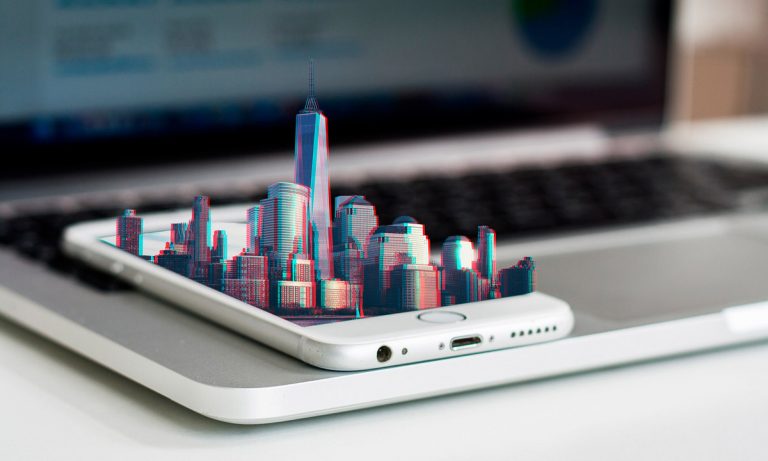
We’ll Have Live Streaming Holograms In The Next 5 Years

0

Magic Leap is a promising company that focuses on Augmented Reality and that wants to bring the digital world out of the screen and into our physical spaces.

Their most discussed product is their AR Goggles, a device that looks a little clunky and heavy, but that promises to merge the real world with the digital one. Recently, CEO Rony Abovitz announced that Magic Leap would partner with the NBA to bring basketball closer to their viewers in groundbreaking ways.

During an interview with The Verge, Abovitz claimed that within 3 to 5 years, people will be able to watch an NBA game live, in a holographic and interactive form. That sounds very stressful, and kind of cool, even though it’s a complete departure from the way in which people view and experience sports. Will you have to move your head around? What about if you want to eat some chips or have a beer? We have many questions.

Abovitz elaborated that for this to happen the stadiums and venues would have to install several camera sensors at different points, to capture all the necessary footage. This development could change broadcasting, and the way in which sports are aired. The necessary cameras required for this “volumetric capture” would be much smaller, with higher definition.

Magic Leap’s proposal, or dream, demands outfitting every space with these camera sensors and expecting every person to own the goggles. Which could happen. Everyone owns a TV, and a smartphone, what are a pair of glasses in the grand scheme of things? Still, five years sounds like too little time to adapt to such a radical change.

Don't Miss Your Weekly Dose of The Fresh Toast.

Stay informed with exclusive news briefs delivered directly to your inbox every Friday.

We respect your privacy. Unsubscribe anytime.