How do businesses run smoothly and legally when conducting operations permissible by state law, but are federally criminal? No this isn’t an introduction to a Martin Scorsese film. This is the reality of the cannabis industry.
Legalized in some form across 29 states, marijuana requires counsel in abiding by state business laws like any other industry. But there’s a small problem for lawyers, like the ones in Pennsylvania—they could face imprisonment, disbarment, or other harsh penalties for involving themselves with marijuana.
Still that hasn’t stopped many big-name Philadelphia firms from entering the cannabis space, despite the uncertainty. Firms like Duane Morris, Fox Rothschild, and Cozen O’Connor have recently set up marijuana practices, as Pennsylvania prepares to make medical marijuana available by early 2018.
Joseph C. Bedwick, partner at Cozen O’Connor, discussed the worry of the Trump administration, who has openly opposed marijuana. He told the Philadelphia Inquirer, “At any moment, theoretically, they can say, ‘We’re going to crack down on this.’”
The dilemma has initiated a cautious approach by Philadelphia lawyers. The Associated Press summarized the compromise made between counsel and state as such:
[A]lthough Democratic Gov. Tom Wolf signed the law legalizing medical marijuana in April 2016, attorneys had also been technically barred from offering advice to cannabis businesses under state law. After being petitioned, the Disciplinary Board of the state Supreme Court issued an opinion that state attorneys could counsel clients about the Pennsylvania law, but only if they made clear the consequences they might face for violating federal laws.
State attorneys are optimistic federal authorities won’t be busting down doors anytime soon. They’re also hedging their bets that marijuana will become federally legal within the coming years.
As Steven Schain of the Hoban Law Group told the Inquirer, “Sizzle aside, marijuana remains 100 percent illegal under federal law. Any real cannabis lawyer is exposed to massive federal and civil prosecution. But we’re willing to take the risk.”
The FDA and the American government have a long history of denying some cannabis-related facts, especially when it comes to the positive medical side effects that marijuana offers. The recent growth and popularity of marijuana’s CBD has caused the FDA to reconsider and to be a little more understanding of the herb. CBD is a non psychoactive plant that has proved to be beneficial for patients that struggle with different illnesses and symptoms, including those of epilepsy and seizures.
The FDA has recently put out a call for comments on the Federal Register, trying to find more information on CBD and wondering how it fits on the Convention of Psychotropic Substances that was developed in 1971. In doing this, the FDA recognizes some of the benefits that CBD has provided for different patients over the years; demonstrating that the organization is willing to gather more information on the matter and maybe opening the door for conducting some much needed research in the future.
Although the fact that they FDA is reconsidering CBD may not sound like a big deal, it is, especially considering the fact that last year the DEA tried to classify CDB as a Schedule I type of drug, which are those substances that, according to the government, provide no medical benefits in the US.
If you have some information you’d like to provide on CBD, you can do so on this website. The FDA will be accepting comments and research until September 17th.
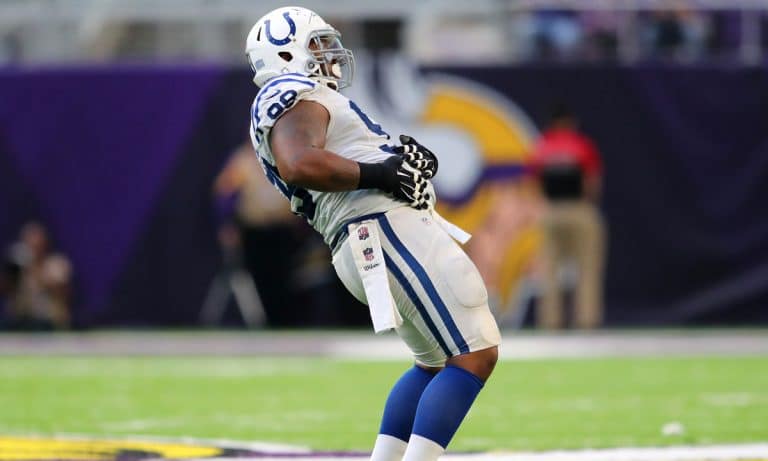
Recreational pot sanctions and medical marijuana have been hot topics in the NFL the last six years. Finally, on July 6th, the NFL reached out to the NFL Players Association to consider spending part of their “joint contribution amount” to study cannabis and its role in pain management.
Four terse letters were exchanged between the two entities. Two were from NFL general counsel Jeff Pash and the other two were from NFLPA’s union lawyer Ned Ehrlich.
The elephant in the room wasn’t pot politics, however, it was how prescription painkillers are affecting the NFL players.
In said letters, the NFLPA requested extensive data on how players are being distributed prescription painkillers. The NFL refused the request and the next battle began. The NFLPA responded that the union was “disappointed” and planned to pursue “all avenues to obtain this information.”
Sports Illustrated interviewed union chief DeMaurice Smith and provided takeaways on the matter. The most tantalizing of these started with the fact that the union will only consider medical cannabis as a form of pain management. They see all of this as the larger issue of dealing with chronic pain.
There’ve been rumors that the NFL has been “dangling” marijuana to get something back, but Smith put the kibosh on that assumption. “There’s not going to be a horse trade,” he insisted. “The minute you go down that road? You’re horse trading the health and safety of our players.”
This also implied that recreational cannabis is not a priority for the union.
Smith circled back several times during the interview to the threat of litigation to find out the information on pain pills. He explained further, “Dr. Brown, who is our joint administrator of the drug program, so far has refused our request to turn that information to us, and we believe that since we pay him and he’s our employee, he doesn’t have the right to turn to the NFL and ask their permission to abide by his contract with us. If that doesn’t get resolved, are we going to sue him over that issue? Most likely.”
The union hasn’t depended solely on the NFL for their information. They want to know what toradol does to one’s liver, if it exacerbates brain bleeds, what the impact is of taking multiple shots over multiple seasons or even weeks, and they’ve been doing their homework.
One thing is for certain, they aren’t going to find liver damage or brain bleeds with cannabis and this is just another example of where medical marijuana could potentially step in and help relieve another arena of the opioid crisis.
Emma Stone and Andrew Garfield—beautiful couple turned beautiful, amicable exes—really aren’t back together yet, despite Stone’s rumored visits to see Garfield in London. And although some sources say the duo are just friends, two others close to Stone tell People that “the feeling between them is still romantic” and that “they never stopped caring about each other.” They would date again only “if the timing is right,” one source said.
During a break from filming The Favourite in the U.K. back in May, Stone did see Garfield perform in his play Angels in America in London, an eyewitness tells People. She “left backstage with him,” the source said.
Romance aside, Stone and Garfield are definitely mutually supportive of one another: “They care about each other and encourage the other’s career,” a source close to Stone says. “They’re great friends.”
Garfield expressed a similar sentiment about Stone to Vanity Fair in January:
I’ll speak for myself: You know, I’m her biggest fan as an artist. I’m constantly inspired by her work. I’m constantly inspired by how she handles and holds herself. So for me, I’ve—it’s been bliss to be able to watch her success and watch her bloom into the actress that she is. And it’s also been wonderful to have that kind of support for each other. It’s nothing but a beautiful thing.
How Much Money The Game of Thrones Cast Make Per Episode
“Game of Thrones” is the biggest show on television by a lot of measures, and certainly the biggest hit in HBO’s history, so it’s no surprise that its actors—the ones who have managed to survive into the seventh season—are making bank. If you’ve ever wondered exactly how much a starring role in Westeros pays, Variety now has the answers for you.
In its 2017 salary survey, a “sampling of estimates” for the paychecks of TV’s most notable stars, the outlet revealed that Emilia Clarke, Nikolaj Coster-Waldau, Peter Dinklage, Kit Harington, and Lena Headey all make the same amount per episode: $500,000. Yes, that is per episode, meaning a full 13-episode season would bring in well over $6 million. Per their list, that’s the same as Kevin Spacey brings in for an episode of “House of Cards,” and slightly more than Claire Danes makes for an episode of “Homeland.”
Love the fresh dirt we bring over daily from Naughty Gossip? Let us know in the comments!
I have to imagine cannabis presents a tricky dilemma for the entertainment industry. As the modern cannabis consumer is rapidly changing, how to accurately portray that shift on-screen? Because the long-term cultural image of a cannabis user has been the stoner—usually a schlubby white male who “likes getting baked, man.” Think of Cheech and Chong or Seth Rogen comedies or The Big Lebowski. Sometimes the stoner character isn’t white, but still definitively male, like Half-Baked or How High or Friday.
But that lazy, hijinks-riddled stoner isn’t so prevalent anymore. The stoner has grown up, to a degree, and certainly evolved into something more diverse, as seen through recent TV shows like High Maintenance and Weeds. Storytellers shifted their focus from smokers to dealers, those navigating the underground to make an honest buck. Stoners were entrepreneurs, in other words, capitalizing on their favorite pastime.
Weed became a means to circumvent the system holding them back. Even a show like Trailer Park Boys, where each season the boys concoct plans to sell enough weed to escape their traditional trailer park lives, follows this conceit. This of course reached its apex with Breaking Bad, a show about selling crystal meth sure, but followed the same principle: To beat the system, sometimes you must work outside that system.
That was the direction cannabis-related entertainment mostly tracked, though other examples abound of cannabis’ shifting media perception. Broad City and Bored to Death and Workaholics showcased weed’s ability to connect individuals and groups. Marijuana wasn’t front and center, but a part of their lives. This, I imagine, symbolizes the relationship most users have to cannabis nowadays. The cannabis brand, like its users, matured.
All of which leaves Netflix’s Disjointed at an odd place. The show’s first trailer debuted this week and it’s unclear who this show might be for. Co-created by David Javerbaum (previously a writer at The Daily Show and the Colbert Report) and Chuck Lorre, it wants to strike the intersection between these two ideas of stoners and cannabis consumers. Early indications demonstrate a show out of touch and tonally confused.
For those unaware: The premise is strikingly 2017, as “cannabis legend” Ruth Whitefeather Feldman opens a Los Angeles marijuana dispensary and tries to go legit with her recently graduated son and fellow budtenders. It’s a diverse show, too: Kathy Bates stars as Ruth and also features Tone Bell, Elizabeth Ho, and Aaron Moten in lead roles. For a multi-cam traditional sitcom, Disjointed is commendably diverse.
That diversity, however, is about as evolutionary the show might be, as Disjointed‘s trailer is full of cliché one-liners and outdated hippie humor. When one character puffs some cannabis, he announces the strain’s name as, “Skywalker OG.” Then, in a boringly average Yoda impression, he says, “Stoned, I am getting.” Elsewhere, the show includes supporting characters with names like Dank and Dabby. Let me repeat: Dank and Dabby. Reading those names, you too might secretly pray they die in the first episode. They do not. A total of 12 episodes will incorporate Dank and Dabby.
Considering Lorre is on board, this shouldn’t be surprising. After all, he is the showrunner behind the hyper-successful Big Bang Theory and Two and A Half Men, which explains the cheap humor and goofy names. Lorre is an opportunist, more than anything, pilfering subcultures to present to a larger mainstream audience. Unfortunately a lot of necessary and interesting context get lost in that process, and Disjointed appears headed down that same road.
Perhaps I’m too quickly dampening expectations. But in its previews, it appears this show isn’t for stoners or the modern cannabis community. As the trailer showcase, it will likely appeal to the lowest common denominator, regurgitating old stereotypes and low-hanging fruit about cannabis for a quick laugh. I suspect those who love the show most won’t be cannabis consumers. Disjointed almost seems like an incubated alien, descending from a previous time and out of conversation with modern weed-related entertainment. The show lands Aug. 25 and could surprise. It could also just go up in smoke.
Every so often another scary piece about marijuana damaging the brains of babies and children crops up, just as it did on the front page of last week’s New York Times: “Pregnant Women Turn to Marijuana, Perhaps Harming Infants” the headline read and the piece cited several preliminary studies indicating that pregnant women who partake of the herb risk having babies that are underweight and possibly cognitively impaired.
Having spent the last three years writing Brave New Weed, I read many such studies on the “perhaps harmful” effects, many of which are suspect.
But the topic of in utero development is not to be taken lightly, so it’s crucial to parse myth from fact.
Of course, a pregnant woman should exercise caution when using any medication or substance that might affect the health of her baby as her blood is coming led with that of her fetus. But cannabinoids don’t function like other molecules and at this point there’s a small, but growing amount of evidence that they might actually might further a baby’s development, or at least do no harm.
It’s not the commonly expressed point of view, but it’s crucial to remember that most of the science in the US has been carried out by the National Institute of Drug Abuse, which has a mission to only investigate the harmful effects of the plant while ignoring the benefits. Twenty years ago, science assured us that the concept of medical marijuana was a joke. So, yes, science, too, can change its mind.
Here’s What We Know
The most prevalent cannabinoids found in cannabis, THC and CBD, are bioidentical to two chemicals produced by the human brain, anandamide and 2AG. This was discovered in 1992. The next question is: Why does the brain produce these chemicals? What is their function?
The answer, in part, was discovered by the late Dr. Ester Fride, an Israeli neuroscientist who was investigating the ways cannabinoids influence a newborn’s development. Her science showed that without a functioning endocannabinoid system newborn rats failed to suckle or begin maternal bonding. They died much sooner than babies with functioning endocannabinoid systems and Fride concluded that endocannabinoids are essential to a baby’s ability to thrive.
Equally compelling is the work Dr. Melanie Dreher, the Dean of Nursing at Rush Medical Center in Chicago. In the early 1990s Dreher traveled to Jamaica to investigate a group of rural and impoverished Rastafarian women and their infants. These “Roots Daughters” smoke ganja as a daily health ritual; they rely on it to maintain appetite, rest and allay nausea during pregnancy. They also serve a mild ganja tea to their families as a health tonic — when you’re poor it’s less expensive to forestall illness than to treat it once it hits.
Dreher followed 30 Roots Daughters and their babies for five years until the children entered school. She found that infants whose moms smoked ganja socialized more quickly, made eye contact more quickly, and were easier to engage than the babies of non-smokers. There were no developmental differences between the groups. In fact, on tests for verbal ability, motor, perceptual and quantitative skills, memory and mood, the kids of smokers scored higher.
“Given what everyone else was finding at the same time, we thought [our findings] were pretty darned interesting and a little counterintuitive,” said Dreher.
Though her findings were unprecedented they were published in 1994 to resounding silence. In the wake of that silence Dreher applied to NIDA for additional funding to return to Jamaica to follow the same children at age 10 but her request was denied. Instead, NIDA continued to commission more studies from which researchers concluded that exposure to (extraordinary quantities of) cannabis in the womb might harm the brain, lower IQ, and damage “executive function.” Different variations on these dire warnings are still being trumpeted today, which brings us to last week’s New York Times.
Life Not Matching Research
Women throughout the world have been using cannabis as a natural medicine for centuries with no apparent harm so for an alternate interpretation of the findings cited in the Times I spoke to Dr. Stacey Kerr, a family physician and cannabis educator in Santa Rosa, Calif.
Dr. Kerr is one of the rare physicians who openly discusses use of cannabis (probably because she works in a state that has had an operational medical marijuana program for 21 years).
“I grew up in the 1960s and we used cannabis when we were pregnant, and we were pregnant a lot,” Kerr, a mother of two, now in their 40s, tells me. “I delivered kids who were exposed in utero and watched them through childhood and into adulthood and I’m not seeing the results of these studies play out. I’m a physician and I want to believe these studies, but real life outcomes weren’t matching the research predictions.”
With the assistance of other researchers and a statistician, she examined the research most frequently quoted and found some notable discrepancies with the ways the samples were put together and the extrapolations of the findings.
In the study babies being born at lower weights, she discovered that all the women surveyed were asked if they had used any and all illicit substances (not specifically cannabis) and were also all from lower socio economic backgrounds at a public hospital. There were no long term followups. Kerr also points out, crucially, that there was no difference in the Apgar Scores the 5 key indicators of a baby’s health just after birth.
The other frequently quoted study by claims that kids of cannabist moms do less well in life and are slower in school. But this research, according to Kerr, was skewed by factors other than prenatal exposure. In addition to prenatal exposure, those kids had to have one of the following conditions: IQ problems by age 6; depression or inattention by age 10; or they had to be using cannabis themselves before age 14. “Clearly it wasn’t just cannabis exposure that led to these results,” says Kerr.
Are Cannabinoids The Same As Other Molecules?
The final claim is that prenatal exposure to THC somehow “miswires” the brain and impairs cognitive development. Indeed, endocannabinoids are active in the fetal brain. They help neurons grow in the correct direction and yes, using cannabis does add additional cannabinoids into to the equation, perhaps displacing those that occur naturally in the body. But there is no research to date showing that displacing those naturally occurring endocannabinoids could be problematic.
In fact there is another study hinting that additional cannabinoids seem to somehow protect neural functioning. Those researchers looked a complex neural process called “global motion perception” that is damaged in kids with abnormal brain developments, such as autism or fetal alcohol syndrome. (Kids with impaired GMP are characterized as “seeing the trees but not the forest.” They see individual details in their field of vision but not the entire frame.) This study found that kids exposed to alcohol during pregnancy had impaired GMP, but kids exposed to cannabis alone in absence of alcohol are have 50% more functionality than the general population. What’s more, exposure to both cannabis and alcohol seemed to cancel each other out.
Kerr’s conclusion: “It’s not ‘Drink alcohol and use cannabis and your baby will be just fine,’ but it is interesting that exposure to THC in brain made this indicator of neural development better.”
A Question Of Intent
Clearly, the mystery of cannabinoids and pregnancy is yet to be solved. In the meantime, I asked Kerr if she were pregnant again if she’d use cannabis? To my surprise she hesitated before answering.
“I hesitated because pregnant women today are going crazy — there’s always another article with more we can’t do, so for me it comes back to intent and how you use cannabis as a medicine. If I can’t eat or I’m nauseated or in pain, or if I have a two-year old who’s going crazy and making me so irritable that I’m yelling at the kids and my husband and if taking a puff relaxes me and makes me nicer then, sure, I’d use it.
“That said, there is also such a thing as cannabis abuse disorder so if a patient is using too much and the kids aren’t being fed or the house isn’t getting cleaned I’d think about it differently and advise them to stop.
“But making women afraid that something drastic is going to happen if they take a vapor hit or a puff on a joint based on the current science isn’t beneficial.”
Book Cover courtesy Harper Wave
Joe Dolce is the author of Brave New Weed. He is the former editor-in-chief of Details and Star. His book follows his adventures into the fascinating “brave new world” of cannabis, tracing its history and possible future as he investigates the social, medical, legal, and cultural ramifications of this surprisingly versatile plant. Rolling Stone magazine called it “one of the most fascinating accounts of the state of marijuana. A charming, honest look into pot’s past—and what that says about its future.”
There’s this super impactful moment in The Matrix, where Keanu Reeve’s character realizes that there’s a hole in the back of his head and that the world he thought he knew is not real. His entire reality has been fabricated and it doesn’t exist, it’s just brain stimulus. More than 18 years later, researchers at the University of Washington are taking this mind bending idea and applying it to the real world though video games, having test subjects experience alternate realities through direct brain stimulation, in less invasive ways, of course.
In this research, test subjects play a simple two-dimensional computer game where the objective is to navigate through different mazes. Players only rely on brain stimuli without using their other senses. They have two choices to navigate these mazes, allowing them to move up or down. These decisions are represented to them as phosphenes, articles that subjects perceive as little balls of light. The decision that subjects make – to move up or down – is done thanks to a magnetic coil that’s placed near their skull that non-invasively stimulates their brain.
This research is pushing the boundaries of humans and their limits in ways that have never been done before. Virtual and Augmented reality stimulate you in much more simple ways, taking advantage of your senses to deliver a different experience. This new research develops a reality through direct brain stimulation, without relying on your eyes, your ears, or any of your senses. Researchers explained why they were spending time and money on this and Darby Losey, an University of Washington graduate, explained that they’re trying to develop a “sixth sense” in humans.
“So much effort in this field of neural engineering has focused on decoding information from the brain. We’re interested in how you can encode information into the brain.”
The experiment is still in its initial stages and the mazes they’ve developed are very simple, but we can expect much more complexity in the coming years due to the success of the early trials. In the near future, there might be a tool or an app for everyday use that’ll be able to stimulate our brains in crazy ways, helping people who have deficits in their senses and also providing a cool experiences for virtual reality enthusiasts. Hopefully, we’ll become super humans and prevent machines from taking over the world.
Summer’s almost over but sharks can pop out at any time, especially if you’re someone who spends a lot of time on the ocean, like a surfer or diver. While death by shark attack is not all that common, there has been a recent surge of sightings and attacks along the west coast and on certain areas of South Florida, so it always pays to be prepared and informed. This recent increase in the shark population can be explained by the federal rules and guidelines that are trying to protect the species, which is a really good thing if only a little scary.
We all want to avoid a painful shark induced injury or death, so here are a few simple rules you should follow if you want to avoid a bite by a large and scary fish. Yikes:
Avoid swimming alone, at dusk, at night or at areas where there are a lot of fish around. Sharks like to go after isolated prey, so be sure to be with someone who can get help and keep you company. Sharks have also notoriously bad eyesight, and when it’s dark out they might think your leg is a seal or a really large fish. Stay away from areas where you see a lot of fish swimming around, because these are usually the prime spots where sharks find their meals.
Here’s when things get complicated. You can’t act like food around the shark, so swimming away in a panic is not an option. You also can’t treat it like a simple animal, trying to corner or shoo it. Keep your distance from the shark and maintain eye contact. This sounds weird, but if the shark starts to circle you, you should circle it back from a safe distance. This will let the shark know that you’re not harmless like the fish he normally eats. You’re also no match for a shark, so try to escape slowly, moving backwards and never taking your eyes off of it.
Try not to panic. Most sharks will bite and release you, and most of their bites are minor and not lethal. Try to strike the shark on its gills and nose so that he leaves you alone, and get to safety as soon as possible. Having a swimming buddy in this instance could save your life.
To what length would you go to save your pet? One British man answered that question resolutely this week by giving Freda, his 45-year-old pet tortoise, CPR and mouth-to-snout resuscitation for over an hour after discovering her limp body at the bottom of his garden pond.
Freda normally has free rein over the back garden of John Fletcher, her owner. But when Freda was nowhere to be found Saturday afternoon, Fletcher didn’t know where she had gone. That was, until he looked in the pond.
“It must have been in there for at least an hour. I took it out and it was looking quite dead and limp,” Fletcher told The Telegraph. “I decided to put my own mouth around the head and give a few short blows having stretched its head out a little.
“A small half teaspoonful of water came out of its mouth which I had opened.”
But Fletcher, a retired postman, had to continue his life-saving efforts for the next hour. He called his daughter, “very upset,” and decided to push on. He massaged the tortoise’s body and attempted to warm her with a blow dryer.
“I first did it and about a teaspoon of water came out. I didn’t think much of it, I thought it was just pushed out by my air, but then her leg twitched. I thought it was just a nerve or something but I decided to try again and its head went in like a tortoise does when it’s scared.
“I then massaged her chest for about an hour and the legs kept moving and finally she came back to life.”
Fletcher is happy to report that Freda has eaten two lettuce leaves and some tomato since recovering, and doesn’t seem to have suffered any brain damage. To prevent any future pond dives, Fletcher has installed a small fence around the pond.
But as Loz Bogaert, a herpetologist of 26 years, told The Telegraph, “It was certainly very lucky and a borderline miracle, definitely.”
“He’s married,” the former Spice Girl’s close friend tells In Touch exclusively. “He’s a cop with the Beverly Hills Police Department. He’s also younger than her.”
Though they haven’t been dating long, “She already seems to be in love with her new guy,” says the friend, explaining that the America’s Got Talent judge met her beau while dealing with law enforcement in the aftermath of her divorce.
“This guy is giving Mel a huge ego boost. He worships the ground that she walks on, and she loves it,” the friend tells In Touch.
However, friends are wary of him because of his marital status, but Mel has been assuring everyone that “he was unhappily married for a while,” adds the friend. “He had planned to separate from his wife prior to meeting Mel.”
Now she has to worry about Stephen using her new romance against her. “Her divorce from Stephen is still not finalized. He could absolutely use [her relationship with this married man] against her in court,” adds a source.
“Mel’s life is complicated enough right now,” says the source. “The last thing she needs is the over-the-top drama of dating a married man.”
Laverne Cox Announces Mystery Collaboration With Beyoncé
When Laverne Cox met Beyoncé at the Grammys earlier this year, she had an understandably hard time keeping it together around one of her biggest idols. But just a few months later, the Orange is the New Black star revealed she’s now working with the music superstar on a secret project.
Cox first broke the news of the collaboration on Access Hollywood Live, before confirming it for fans on Twitter.
The trans actress said more details won’t be available until September 6, but says she still can’t believe it’s even happening at all.
“I have no idea [how this came about] to be perfectly honest,” she said. “I’m like, ‘Does she pick out her biggest fans ever and let them work with her?’”
“A sense of calm comes over you when you meet the queen,” she added about her run-in with Bey at the Grammys.
Love the fresh dirt we bring over daily from Naughty Gossip? Let us know in the comments!