Sunday, December 14, 2025
Home Blog Page 1169

Meme Alert: Silly Outfits For The First Day Of School

Oh, teens. Memes and social media challenges have become the norm of the internet, especially for younger and more malleable generations who’ll do almost anything to get a video to go viral. We all remember the ice bucket challenge, the one-finger selfie challenge, the mannequin challenge, the list is endless.

The latest internet meme is limited to high schoolers, because they’re the only ones who can get away with making a fool of themselves publicly. The challenge  consists of wearing the wackiest and ugliest outfit to school, be that ’70s inspired, or just finding and wearing the mom-iest mom jeans you can find. Depending on the popularity of the image, how many likes and retweets it gets, the kid will have to wear that outfit for their first day of school, a day that’s kind of a big deal for all school goers. 

After pairing their craziest combinations, kids will set a goal that their image will have to break. If the picture gets, say 30 retweets and 12 likes, then they’ll proudly wear the outfit and make a fool out of themselves on their first day of school.

While this first day of school challenge may be a little silly and very dumb, it’s also safe and sort of harmless. That’s kind of great considering our record for 2017. 

Here Is A Cannabis Policy That Can Legalize Weed Safely

Twenty-nine states have already legalized medical marijuana and eight (plus the District of Columbia) have legalized it for recreational purposes as well. All suffer from Congressional inaction on marijuana policy. So long as marijuana remains prohibited under federal law, participants in legal marijuana markets are at risk of federal prosecution, states are unable to regulate effectively, and businesses are forced to operate on a dangerous all-cash basis.

Until recently, Congress appeared to have only two choices: continue to do nothing about the conflict as marijuana laws change across the country, or cede all federal control to the states, crossing its fingers that states do a good job of regulating a newly-legal vice without any authority to step in if they don’t. But a reintroduced bill offers a more responsible path forward. The State Marihuana And Regulatory Tolerance (SMART) Enforcement Act (H.R. 3534), sponsored by Congresswoman Suzan DelBene (D-WA), would establish safe havens to protect states without giving up all federal control.

What The Bill Does

The SMART Enforcement Act grants states the ability to apply for a waiver from the marijuana prohibition in the Controlled Substances Act for a set period of time — but only if they have strict regulatory systems in place. In order to qualify, a state that has legalized medical and/or recreational marijuana will have to show it can protect federal interests, including by:

  • Preventing the distribution of marijuana to minors;
  • Making sure criminal enterprises, gangs, and cartels don’t get their hands on marijuana markets or revenues;
  • Blocking the diversion of marijuana from a state where it is legal to other states;
  • Ensuring legal marijuana activity is not used as a cover for other illegal activity or trafficking in illicit drugs;
  • Preventing the use of violence or firearms in marijuana cultivation and distribution;
  • Stopping drugged driving and other possible negative public health consequences of marijuana use;
  • Prohibiting the growing of marijuana on public lands;
  • Keeping marijuana off of federal property; and,
  • Protecting consumers and patients from tainted marijuana.

Additionally, before receiving a waiver to get a safe haven from federal marijuana laws, a state would have to agree to track data on youth use, drugged driving, diversion to other states, and drug-related crime activity. That data would then be submitted in a report on the effects of legalization annually to the federal government. Each waiver would be good for three years and could be renewed indefinitely.

Why We Need It

The SMART Enforcement Act addresses the consequence of the current legal conflict, without abandoning the ability to step in if states make bad decisions around marijuana legalization.

  • The SMART Enforcement Act resolves the conflict between state legalization and federal prohibition by creating a safe haven for states with robust regulatory systems. Patients, consumers, and dispensary owners won’t have to live in fear of prosecution, now or in the future. States will be better able to regulate their markets effectively because they won’t be hamstrung by concerns that prevent state employees from being ordered to interact with marijuana — even for safety purposes like testing and labeling — for fear of being targeted by federal officials. And banks will be able to serve legal marijuana businesses, ending their need to rely on all-cash systems that are a magnet for violent crime and put communities at risk.
  • Not all state marijuana legalization laws are created equal. By maintaining a role in the waiver process, this bill gives the federal government a tool to incentivize states to establish strict and effective systems that protect federal interests. The other proposed solutions to the current legal conflict would leave the federal government unable to step in to prevent drugged driving, youth access, or gang violence. That could create a wild west of marijuana, where states establish wildly differing regulatory schemes that don’t take into account federal interests or public safety, and the government’s hands would be tied.
  • Because waivers need to be re-authorized every three years, this bill establishes a process for ongoing oversight, to make sure states are doing a good job of regulating marijuana responsibly, and to review the data on the longer-term effects of legalization — and course correct if necessary.
  • The safe haven policy in the SMART Enforcement Act is overwhelmingly supported by the American public. Our polling found that 67% of voters supported Congress passing a law to give states with strong regulatory systems a safe haven, including 78% of Democrats, 54% of Republicans, and 74% of Independents; 71% of men and 64% of women; and nearly a quarter (21%) of voters who oppose legalizing recreational marijuana.

Conclusion

Congress must act on marijuana — the political headwinds, the realities on the ground, and public opinion are clear. But it is also crucial to act in a smart way, not simply creating a national free-for-all. That means passing the SMART Enforcement Act to establish a safe haven for states with strong regulatory systems. Doing so would be both good policy and good politics.

This story was originally published by ThirdWay.org.

One Vet’s Opinion On Marijuana As Medicine For Your Pet

Any animal with a backbone (classified as a chordate) has an endocannabinoid system. The Kingdom of Chordata includes amphibians, reptiles, birds, fish, and mammals, including house pets. Many animal-owners treat their beloved pets like family members. When a dog or a cat gets sick and conventional options don’t work, people seek alternatives. In the realm of natural healing, cannabis for animals seems like a logical botanical pathway to explore.

When it comes to CBD, or cannabis in general, little research has been done on cats and dogs. Are cannabis preparations safe for use in animals? Does marijuana affect pets the same way as humans? Many pet-owners are looking for something to support their animal’s health, but there is little quality control with respect to the numerous pet-focused CBD products that are available in the medical marijuana sector and the hemp CBD grey market. And there aren’t many trusted, educated individuals who can provide professional guidance on cannabinoid therapies for pets.

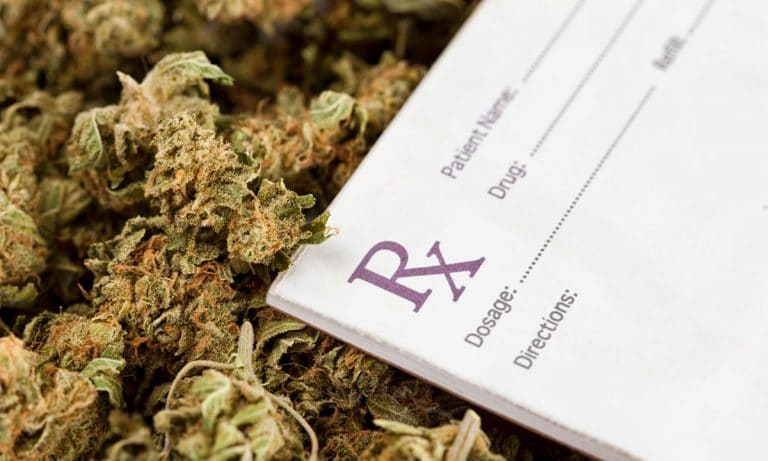
To help pet-owners become better informed about the use of cannabis for their four-legged companions, Sarah Russo of Project CBD spoke with Gary Richter, DVM, an integrative medicine veterinarian based in Oakland, Calif. Richter considers cannabis to be part of a holistic approach to animal medicine. Due to marijuana’s Schedule I status, veterinarians are not allowed to write letters of recommendation for their clients or tell them where to obtain cannabis medicine. But Richter is able to speak about the benefits of CBD and cannabis therapeutics for pets.

Project CBDCan you tell us about your work? Based on what you’ve seen in your practice, what types of conditions may cannabis medicine alleviate in pets?

Richter: My practice applies western, complementary, and alternative approaches. That could include acupuncture, chiropractic, Chinese and western herbs, nutritional supplementation, and more. Animals can benefit from medical cannabis for many of the same reasons it helps people—for pain, seizure control, gastrointestinal disorders, anxiety-related issues. We‘ve also seen positive results with cancer.

Project CBD: Why is there a lack of research studies on cannabis in dogs and cats? What areas of cannabinoid medicine in animals would you like to see investigated more deeply?

Richter: I think ultimately the reason for the lack of therapeutic-oriented research is because cannabis is federally illegal and there’s no funding. Generally, it’s pharmaceutical companies that are putting most of the money into medical research. Once there’s a legal pathway and money to be made in veterinary products, that research will happen. I would like to see more general research on the use of cannabis in animals, focusing on some of the ailments that it seems be the most effective for—especially gastrointestinal issues, pain, and inflammation. Many veterinary patients see dramatic effects with cannabis for these ailments. Cancer studies would be a much longer road and more challenging to put together.

Project CBDWhat is your response when veterinarians say: “There isn’t enough scientific data to show cannabis is safe and effective for treating animals. 

Richter: In a perfect world, we would benefit from more scientific information. However, the case reports and anecdotal evidence about the efficacy of cannabis medicine are already overwhelming. In veterinary medicine, practitioners typically have no problem using off-label medications—those not explicitly approved for use in dogs or cats. But mention medical cannabis, which has a mountain of evidence for efficacy in humans, and they suddenly say, “You can’t do that, there’s been no research on dogs!” It’s disingenuous.

Project CBDIs there a difference between the endocannabinoid system in a dog or a cat as compared to a human?

Richter: In the big picture, they’re very similar. One striking difference is there appears to be a greater concentration of cannabinoid receptors in the dog’s brain than there are in most other animals. This is significant because it makes dogs more susceptible to THC overdose, potentially giving them a certain amount of neurologic impairment in the short-term. This phenomenon is known as static ataxia. Otherwise, when cannabis medicine is used effectively, their endocannabinoid system will act in the same way it would for a human.

Project CBD: Is THC combined with CBD beneficial for pets? If so, what CBD:THC ratios do you suggest for your clients?

Richter: It depends on both the condition that’s being treated as well as the individual animal. Many people in the cannabis community have heard about the entourage effect. The ratio of THC to CBD is an important part of that. There are conditions that respond better to medicine with a certain amount of THC in it. The ratios that I have used include hemp-based CBD with very little THC, as well as CBD-rich marijuana with a 20:1 CBD:THC ratio and THC-dominant medicine with little CBD. The research suggests that patients with cancer and chronic pain benefit from products that have CBD and THC, rather than CBD alone. It really depends.

Project CBD: Do you see animals coming into the veterinary hospital after having too much THC? How much of a problem is that?

Richter: Obviously whenever we’re talking about THC and pets, dosing becomes very important. At no point is the goal for the pet to get stoned. If that happens, then it means they’ve gotten too much. The aim is to give them enough cannabis to be effective, but not so much that they’re going to be negatively compromised. It is extremely uncommon to see an animal show negative signs when they have been properly dosed with cannabis as medicine. The worst effect would be drowsiness. If that’s that case, the owner may have to decrease the dose. It’s not uncommon for a dog, or sometimes a cat, to show up at a veterinary hospital having eaten a cannabis-infused edible that belonged to the owner. The good news is that cannabis toxicity is nonfatal and does not cause long-term effects. However, those animals that get into their owner’s stash may require immediate medical care. I have seen and heard of a couple of cases where pets did not survive.

Project CBDBut you just said that cannabis toxicity in nonfatal. You’ve seen cases where an animal ate too much cannabis and actually died?

Richter: One case that I have personally seen was a dog that got into a bunch of cannabis edibles and the owner didn’t bring his dog to the veterinarian immediately. They called us the following day. Unfortunately, the dog had vomited and aspirated while at home, his lungs filled with fluid, and he wound up dying from a systemic infection related to that. To be honest, if this dog had received medical treatment the day he ate cannabis, he almost certainly would have been fine. It was only because the owner waited, and by that time it was too late. It was very sad. But this type of event is really quite rare.

Project CBD: What’s your preferred way to administer cannabis medicine to animals?

Richter: I prefer a liquid preparation, usually an oil. With liquids, it’s very easy to adjust the dosage. If you’re giving something like a pill or an edible, it can be difficult to figure out how to titrate the right amount. Furthermore, there’s every reason to believe that CBD and THC are going to be partially absorbed directly into the bloodstream through the tissues of the mouth, sublingually. If we put a liquid in an animal’s mouth, some of the medication will be absorbed directly and has a chance to be more effective.

Project CBD: A lot of people say they want to start giving cannabis or CBD medicine to their pet, but they’re not quite sure about the right dose. Is there a good way to calculate the ideal amount for your animal?

Richter: There’s a dosing range that you could start at. It’s best to begin at the low end. Every few days, slowly increase the dose. If you’ve achieved the desired effect for whatever is being treated, then you’re probably done. Just like people, animals will develop a tolerance for the psychoactive effects of the THC. Over time they will be able to take more medicine without any demonstrable side effects. Medical cannabis is not the answer for all pets. Some animals do better on it than others, just like people.

Project CBD: In general, how knowledgeable are veterinarians about cannabis therapeutics?

Richter: This is a big problem—the lack of education. The California Veterinary Medical Board is very much against the use of medical cannabis for pets. They don’t want veterinarians speaking with pet owners about it at all, except to say that it is bad and not to use it.

Project CBD: What is the legal status of CBD as a medicine for animals?

Richter: Cannabis is federally illegal across the board, including CBD from hemp. Even in California, a trailblazing medical marijuana state, as a veterinarian I’m not able to provide people with a medical marijuana recommendation for their pet. Nor am I able to provide them with cannabis products. But I can talk with people about how medical cannabis might benefit their animals. Unless something dramatic changes on the legal front, there’s still going to be access problems for people looking to get medicinal cannabis for their pets.

Project CBD: Any words of advice for someone who wants to treat their pet with cannabis or CBD?

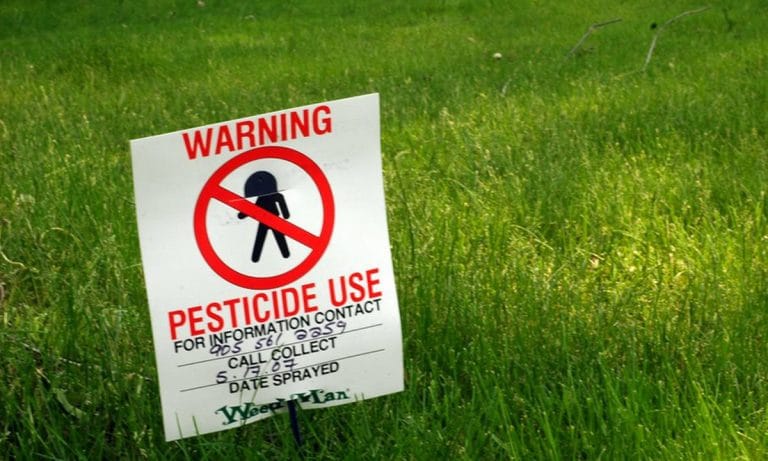
Richter: If at all possible talk to a veterinarian. Cannabis is medicine and its dosing should be carefully calculated. It’s important to know the concentration of THC and CBD in milligrams for one’s pet. Once you have that information, you can look for a product that suits your pet’s needs. When in doubt, err on the side of under-dosing because you can always slowly increase the dose and monitor the effect. And make sure the medicine is free of mold, pesticides, and other contaminants.

Project CBD: There are many hemp-based CBD products on the market for pets. How do you feel about the quality of these products in general? What are your thoughts about hemp-derived CBD?

Richter: I don’t want to disparage hemp-based CBD products because I think they do have a positive medical effect. Many people start with hemp products because of their relative ease of accessibility. But in many cases, we don’t know the source of the CBD in these products. I recommend that people do their due diligence as they should with any vitamin or supplement. Call the company and ask where the product is coming from and how it’s being produced. There is no government oversight to make sure that these companies are selling authentic and safe products. A pet owner’s only other option is to get a card and go to a medical marijuana dispensary if they want something that may be more effective than hemp-derived CBD. Ideally, you would look for a product that is organic and produced locally. You want to know how the CBD was extracted and the full spectrum of cannabinoids that are present.

Project CBD: Are there any guidelines or recommendations you have for people who want to make their own cannabis preparations for their pets?

Richter: That’s tricky. You won’t know the concentration of cannabinoids in what you make at home, unless you have it analyzed. If you do use your own preparation, start with extremely minute dosing and slowly work your way up. You’d much rather under-dose than overdose.

Project CBDSometimes people who don’t have medical complaints like to take cannabis as preventative medicine to maintain good health and well-being. Would you recommend something like that for an animal?

Richter: That’s an excellent question I have often asked myself. The purpose of the endocannabinoid system is to maintain homeostasis within the body. It’s logical to consider using cannabis as preventative medicine much in the same way that a person would take a multivitamin. If that’s the case, I would consider keeping the dosage toward the very low end. We need to see more research on the use of cannabis as preventative medicine in people as well as animals.

Project CBD: Are there any resources for people to educate themselves about cannabis medicine for pets or to find a cannabis friendly veterinarian in their area?

Richter: Firstly, I would say talk to your regular veterinarian about cannabis. Even if they can’t give you the information, they may know someone in the area that can. Additionally, there is a national organization called the American Holistic Veterinary Medical Association (AHVMA). It isn’t a given that a member of the AHVMA incorporates medical cannabis into their practice, but most people who are open to it are also holistically minded. That would be a good place to find a veterinarian and to begin a conversation. For resources, a colleague of mine and I taught an online course for Greenflower Media. The class provides a comprehensive description of how medical cannabis works in pets, ways to dose, and how to find a good product. And I have a book coming out later this year. It’s called Integrative Health Care for Dogs and Cats. It has a whole section on medical cannabis, with dosing guidelines. A colleague of mine, Rob Silver, released a book last year called Medical Marijuana and Your Pet.

Project CBD: Thank you for your time and information.

Take-Home Message: If you decide to give your pet cannabis medicine, get informed. The medicine you give your animal should have the same standards for anything you would put in your own body. Make sure the product is safe and tested for cannabinoid content, quality, and is free from any contaminants or additives. Seek guidance from a vet, if at all possible. Start your furry friend off on a low dose of cannabis medicine. And monitor the effects that cannabis has on their experience because, as George Eliot wrote, “Animals are such agreeable friends―they ask no questions, they pass no criticisms.” 

This story was originally published by Project CBD, a California-based nonprofit dedicated to promoting and publicizing research into the medical uses of cannabidiol (CBD) and other components of the cannabis plant. 

An 11-Year Old Girl Is Suing Jeff Sessions Over Marijuana Legalization

Alexis Bortell may only be 11 years old, but she’s already involved in the ongoing struggle to legalize marijuana nationally – and in one of its most auspicious arenas, the fight to get cannabis out of its Schedule I status. In order to do this, she’s suing Jeff Sessions, the Department of Justice and the Drug Enforcement Agency.

Bortell has major reasons for the lawsuit she’s joined, reasons that are difficult to argue against. Mainly, she has suffered from a recurring seizure disorder since she was a very little girl. After trying medication after medication and doctor after doctor, her parents finally moved them from Texas to Colorado to try medical marijuana almost three years ago.

Cannabis was the first thing to work and now Bortell has gone nearly two and a half years without a single seizure.

Another formidable activist has been born in Bortell and now she’s doing everything she can to help other people in her situation. Not to simply be able to utilize cannabis at home, but to also be able to live a full life and still medicate. As an example, the whole family can visit Bortell’s grandparents in Texas, but only for a day trip, not overnight, as Alexis Bortell needs her medication. She misses her grandparents greatly.

Bartell told ABC News, “I just want kids like me to be able to do what normal kids are able to do.”

While this isn’t the first lawsuit to challenge cannabis’ Schedule I status, meaning that it is a drug that causes harm and has no medicinal value, the suit is being uniquely argued. They are going after the 5th Amendment’s due process clause, they’re arguing under the commerce clause and are also utilizing the 10th amendment, which states that government power only has reach as far as the U.S. Constitution, with all remaining power reserved for the people.

Bortell is ahead of her time; she is a girl who got well after a harrowing battle and she is a warrior. We can all take example from her courage and fierceness in the faces of illness and government opposition.

Marijuana And Parkinson’s Disease: What We Know

Does cannabis actually treat the symptoms of Parkinson’s disease? Anecdotally, yes. Clinically, however, it’s not so clear.

Parkinson’s disease is progressive neurological condition in which the brain gradually stops producing dopamine, a neurotransmitter that helps us make smooth, coordinated movements. Its specific symptoms are slowness of movement, muscle stiffness, and trembling (dyskinesia)—which, ironically, can be worsened by Parkinson’s medication (in which case it’s called “levodopa-induced dyskinesia”).

Non-motor effects include sluggish thinking, sleep disorder, lack of appetite, in continence, and, obviously, mood disorders such as depression, irritability, and anxiety.

Surveys Of Parkinson’s Patients Show Medical Cannabis Has Benefits

Parkinson’s is an approved condition for medical marijuana in five states: Connecticut, Illinois, Massachusetts, New Mexico and New York. But does cannabis actually treat the symptoms of Parkinson’s disease?

Anecdotally, yes. Clinically, however, it’s not so clear.

RELATED: Little-Known Health Effects Of Medical Marijuana

Surveys of Parkinson’s patients who take medical cannabis tend to show a benefit—especially in the non-motor symptoms (primarily in mood and sleep), where there is already ample evidence from other medical areas. Two studies, however—one from 2004 and another from 2014—found significant reduction in tremors, stiffness, and slowness.

The trouble with self-reporting, of course, is that it’s extraordinarily vulnerable to bias. One of the few controlled studies, however, has found that cannabis improves Parkinson’s symptoms—but, in this case, the numbers were too small to be statistically significant.

One of the most recent reports—a 2015 report out of Colorado, the motherland of medical cannabis—manages to combine the unreliability of self-reporting with a tiny sample sized. While it did find that 78 percent of Parkinson’s patients who tried medical cannabis felt at least some improvement.

RELATED: Why Won’t My Doctor Prescribe Medical Marijuana For Me?

But context matters here: Out of a total 207 respondents, about 9 were pot users. Secondly, cannabis was being rated against other alternative therapies. While cannabis won in sleep improvement, in mood it finished third…after meditation and art therapy. In overall improvement, music therapy intervened to push cannabis down to fourth place.

Because of these methodological shortcomings, the prevailing clinical viewpoint (at least for the present) is, in the words of the Michael J. Fox Foundation for Parkinson’s Research, that “cannabinoids are probably ineffective for Parkinson’s motor symptoms and levodopa-induced dyskinesia.

These 11 Statistics Will Change Your Opinion On Marijuana

America is changing its opinion on cannabis. Despite the picture painted by some politicians in Washington, the country is changing its tune to marijuana. More people are in favor of legalizing marijuana nationwide and the cannabis industry has become a thriving economic market with exponential growth that won’t stop anytime soon. Opinions are fine, but numbers never lie. To showcase the changing perception of cannabis, we compiled 11 statistics that represent marijuana’s present and its future.

52 Percent Of Americans Have Tried Marijuana


via GIPHY

This equates to roughly 128,842,329 people and each percentage point is about 1,288,423 adults who have at least tried marijuana. This information comes courtesy of the Yahoo News/Marist College Poll.

55 Million Americans Used Marijuana Last Year

via GIPHY

Also from the Marist Poll, this statistic includes adults who are consistent consumers and those who use infrequently. Broken down, the 55 million figure regards about 35 million monthly users (once or twice a month) and 20 million annual users (once or twice in the past year).

57 Percent Of Americans Believe Marijuana Would Improve Society


via GIPHY

When asked “Do you think legalizing marijuana makes societies better or worse?” a new Harvard-Harris poll had 57 percent who responded “better.”

83 Percent Support Medical Marijuana Legalization


via GIPHY

An overwhelming majority of American support legalizing medical marijuana, according to the same Marist Poll. That figure dips to below majority, 47 to 49 percent, when considering legalizing recreational usage.

165,000 Cannabis Industry Workers


via GIPHY

According to Marijuana Business Daily, the cannabis industry employs between 165,000 to 230,000 full- and part-time workers. This puts the industry below pharmacists and above dental hygienists and bakers in terms of number employed.

76 Percent Of Americans Want Trump To Leave Marijuana Alone

via GIPHY

Most citizens would prefer President Donald Trump and Attorney General Jeff Sessions to respect state marijuana laws and not interfere. The Survey USA poll was commissioned by the national cannabis advocacy group Marijuana Majority.

74 Percent Of People Don’t Care If Celebrities Smoke


via GIPHY

The aforementioned Marist Poll revealed that most Americans don’t care whether their favorite celebrities consume cannabis. Among millennials, that figure rose to 81%.

Colorado Marijuana Sales Top $100 Million For 10 Consecutive Months

via GIPHY

Back in May, it was announced that marijuana sales had exceeded $100 million for 10 months in the state that first legalized marijuana. According to the state’s Department of Revenue, those sales created just shy of $23 million in tax revenue.

$5 Billion In California Marijuana Sales


via GIPHY

With the state legalizing recreational marijuana, it stands to question the sales such a move would generate. According to a new state-sponsored economic study released in June, California expects to make $5 billion by 2018, though 30% of state consumers will remain in the black market.

$6.7 Billion In 2016 North America Marijuana Sales


via GIPHY

Thanks to new legalized markets, North America witnessed a massive 30% growth in marijuana sales in 2016, according to an Arcview Market Research report.

$37.3 Billion In American Marijuana Sales By 2024


via GIPHY

The American cannabis industry growth will only increase in the years to come. By 2020, the American market could break the $20 billion threshold and $37.3 billion by 2024, according to Statista.

Say, What? We’ve Been Using The Oven Drawer Wrong All Along

Did you realize that the drawer below your oven is not intended to be a dumping ground for pans and other kitchen junk? It’s meant to be a warming drawer for food. A WARMING DRAWER!

Reader’s Digest points out that the new Samsung model comes with this description: “A Warming Drawer to keep food warm until ready to serve. Always serve food at the perfect temperature when entertaining.”

https://www.instagram.com/p/BO2xEooA8-Z

The warming drawer has a built-in heating device that ensures hot food stays at serving temperature. In fact, some models even warn against using the drawer for storage. And while the feature doesn’t apply to every oven, it’s pretty common.

https://www.instagram.com/p/BPc2jLuFF4T

How cool is that?

Millennial Pink Gin: The Newest Craze That’s Not New At All

0

Invented by millennials? Yes and no. The original incarnation of the Pink Gin was developed in the mid-1800’s in England and in the Colonies (Princeton University comes to mind) by collegians (millennials) dissatisfied by the flavor of their home-made ‘distilled’ gin. The classic preparation for a pink gin would have involved a heavier variety of gin. In this case it would have been the higher proof (sometimes called Navy strength, which is usually made to be bottled a bit north of 50% abv., or 100 Proof.) Plymouth Gin was a style made popular in Plymouth, England. The very name, Plymouth- is a protected name by provenance alone. No one else can make Plymouth Gin.

https://www.instagram.com/p/BTcA1WpB0YL

Angostura Bitters- the pink component date back to the 1800’s so it’s completely plausible that these healing bitters were added to the high proof (i.e. Navy Strength) gin was originally used to kill an acute belly-ache or lessen the ravages of seasickness while battling the oceans of the earth. This higher proof gin, also known as a Plymouth Gin or a Tom Cat style (like the brilliantly made Barr Hill from Vermont), would have been aged for a period of time in a barrel that may have held some kind of whiskey. This flavor of the strong grain based spirit would have deeply colored the inside of the cask and added deep sweetness from other ingredients like molasses in certain historic versions to the modern day, potent Navy-style gin.

This trend of making pink gin cocktails died out for about a hundred years due to changing tastes. The Pink Gin cocktail magically reappeared during the Roaring Twenties. The period known as the Jazz Era was a high living time during Prohibition. The rage during the 1920’s and 1930’s, involved drinking large quantities of ‘bathtub’ or cheaply made gin mixed into fruity concoctions, created or recreated as it was, to kill the foul taste of the intoxicating liquids.

https://www.instagram.com/p/BX3OxW8noKl

Gin was the cheap and fast drink of the Speakeasy, a place where booze could be bought for a small price and the mixers were always meant to cover up the flavor and scent of the cheap buzz. To hide it from the liquor agents, gin was often stored in a whiskey cask and submerged underwater until the revenuers moved on to easier marks. These used whiskey casks would go only so far to kill foul tasting gin reeking of seawater and odiferous ocean slime. The addition of Angostura Bitters would mask the foul gin and make it somewhat palatable.

The modern craze of drinking high proof, sweetened gin with Angostura Bitters or even cheap red food coloring (because there are no rules in booze), is nothing new. The current micro-trend of drinking a Pink Gin, as exemplified by the millennials in our current period is fun and fancy-free. The current incarnation is in no way, shape or form their invention, not even by name. Subtract about two hundred years and you’re a bit closer to the truth in the invention of the Pink Gin.

https://www.instagram.com/p/BX4L6qGjH2f

The cocktail is never going to be the ethyl alcohol cut, glycerin, sugar and food coloring added science lab experiments that grace the store shelves today. Drinking these mixtures sold in every liquor store in America, makes the imbiber no more intelligent than drinking the myriad of vapid and flat rose wines made from plonk grapes. Each bottle adeptly colored and sugared to please a generation of future diabetics, weaned towards a deeply sweet taste profile. They are solely gimmick liquids- an ethanol infused, sugar and glycerin enhanced-cheap buzz for a generation long accustomed to taking credit for other’s inventions, the facts being just out of reach their peers. Pink Gin? Hardly!

The classic manner of preparing the Pink Gin taught to me according to the brilliant barman Chris James is pretty close to the classic 1800’s methodology. Chris always stresses quality over quantity so pick a quality Plymouth-style gin. And make it one that is light years ahead of the gins of the original era. Chris would fire me if I used cheap, colored and sugared gin to make this potent and historically relevant-hand-held curative.

The classic Pink Gin cocktail is in no way the candy sweet-rose wine-style slurp-favored by the quick to drink, quicker to get drunk set.

The Pink Gin

  • 2 large Lemon Zests (wide cut with lots of oil intact. DO NOT USE A PEELER. use a paring knife and no pith, that is very bitter)
  • 3 oz. Plymouth Style or Tom Cat Style-Whiskey Barrel Aged Gin
  • 1 tsp Angostura Bitters (use what you like, but I always make mine with Angostura)

Rub the inside of a frosty martini glass with the first lemon zest. Pour the Angostura (or your choice) bitters into this pre-chilled glass and roll it around to fully coat the inside of the glass with the aromatic bitters. Chill the gin quickly in a cocktail mixing glass filled with one or two large cubes of ice, turn to chill with a cocktail stirrer, but not to dilute. Pour over the Angostura bitters in the frosty glass. Garnish with the other lemon zest. Serve.

Gossip: Elisabeth Moss Makes Rare Comment About Scientology; Selena Gomez And The Weeknd At War!

An insider close to Selena Gomez and The Weeknd say the couple are on the outs, “They’ve gone from madly in love to at each other’s throats ….. they’ve hardly been spending any time together lately and it’s led to many fights. If they were to break up, no one would be surprised. “The insider adds that her jealousy issues are “crazy.”

Elisabeth Moss Makes A Rare Comment About Her Belief In Scientology

Moss is actively campaigning for Emmys. She posted the above Instagram from an Emmy event last week, and someone asked her in the comments about CoS. She actually answered the comment too.

The comment section of the post was flooded with admiration and praise, and Moss, who nabbed an Emmy nomination for her role on the hit Hulu series, took the time to answer a few — including responding to one fan, who brought up the perceived similarities between Scientology and Gilead, the totalitarian society ruled by a fictional fundamentalist regime in Handmaid’s.

“Love this adaptation so much,” Instagram user moelybanks wrote. “Question though, does it make you think twice about Scientology? Both Gilead and Scientology both believe that all outside sources (aka news) are wrong or evil… it’s just very interesting.”

“That’s actually not true at all about Scientology,” Moss responded. “Religious freedom and tolerance and understanding the truth and equal rights for every race, religion and creed are extremely important to me. The most important things to me probably. And so Gilead and THT hit me on a very personal level. Thanks for the interesting question!”

The fan appeared to take Moss’ rebuttal in stride.

“Thank you for taking the time to try and explain a little,” the Instagram user wrote. “Either way, you do you and imma do me and if that makes us happy i supposed that’s all that matters.”

Love the fresh dirt we bring over daily from Naughty Gossip? Let us know in the comments!

Time To Log Off: Re-Imagining The Titles Of Great Movies As Clickbait

Great movies have great titles; the same cannot be said about great content on the internet. Many, many stories found on websites receive awful names that often belie or straight-up lie about the content found within. Because what matters isn’t the content itself, but that you clicked.

So we thought it’d be fun re-imagining classic and/or important movies as clickbait titles. How would films change, what would be the salacious meat editors pull out to grab readers?

Log off the internet if these titles sound too familiar to you.

Original Title: Wolf of Wall Street
Clickbait Title: When You Officially Know You’ve Consumed Too Many Drugs  

Original: Shawshank Redemption
Clickbait: This Man Was Wrongly Accused of Murder and Crawled Through 300 Yards of Shit to Find Freedom

Original: 2001: A Space Odyssey
Clickbait: Elon Musk: Robots Will Take Your Jobs And Then They Will Kill You

Original: Top Gun
Clickbait: The Inherent Limitations of a Patriarchal, Militaristic System

Original: La La Land
Clickbait: The 7 Best YouTube Amateur Singing Mashups From Users With Less Than 1,000 Followers

Original: Gran Torino
Clickbait: Trump Supporters Wanting to Build A Wall, Explained

Original: I’m Still Here
Clickbait: Joaquin Phoenix Is Lowkey Losing His Mind And You Have To See It

Original: Clerks
Clickbait: Let’s Talk About Why Gen X Is Disillusioned and Cranky With The World

Original: Moneyball
Clickbait: The Best GM in Baseball Doesn’t Care About Stars And It’s All Because of Jonah Hill

Original: Silence of the Lambs
Clickbait: Um, There Might Be A Psychopath Eating People’s Faces On The East Coast…

Original: Eternal Sunshine of the Spotless Mind
Clickbait: QUIZ: Only A Hopeless Romantic Could Identify Their Ex After This Science Experiment

Original: Star Wars: A New Hope
Clickbait: What Does Being “Good” Actually Mean? (Space Edition)

Original: Avatar
Clickbait: The Haunting Ghost of American Exceptionalism

Original: Toy Story 3
Clickbait: Why Nostalgia’s To Blame For Millennials’ Newfound “Extended Adolescence”

Original: The Hangover
Clickbait: The 28 Best Tweets That Perfectly Sum Up Accidentally Drinking Too Much

Original: Lost in Translation
Clickbait: I Used To Believe America Was Best, Then I Found Love In This Foreign Country

Original: Dr. Strangelove, or How I Learned to Stop Worrying and Love the Bomb
Clickbait: Dr. Strangelove, or How I Learned to Stop Worrying and Love the Bomb


Don't Miss Your Weekly Dose of The Fresh Toast.

Stay informed with exclusive news briefs delivered directly to your inbox every Friday.

We respect your privacy. Unsubscribe anytime.