New York Gov. Hochul announces official start date for recreational marijuana sales. Here’s when they’ll (finally!) begin.
Following months of planning and preparation, finally, New York announces when weed sales start! In a prepared statement, Governor Kathy Hochul announced on Wednesday that the first legal cannabis sales will take place on December 29.
Hochul also shared plans for the future of the cannabis industry, which hopes to provide opportunities for communities that have been affected by the War on Drugs and to provide funding for schools and communities.
Photo by Dejan Marjanovic/Getty Images
“We set a course just nine months ago to start New York’s adult-use cannabis market off on the right foot by prioritizing equity, and now, we’re fulfilling that goal,” said Hochul per ABC7. “The industry will continue to grow from here, creating inclusive opportunity in every corner of New York State with revenues directed to our schools and revitalizing communities.”
Sales will launch at the Housing Works Cannabis Co. dispensary, located in the Manhattan location of Housing Works, a nonprofit that has multiple thrift stores located all over the city, providing services to people who were formerly incarcerated, those living with AIDS/HIV, and more. They were one of the first groups to be awarded some of New York’s first cannabis retail licenses, which prioritize social justice.
All sales from the dispensary will be directed to the nonprofit.
Photo by CasarsaGuru/Getty Images
Charles King, CEO of Housing Works, said that their dispensary would continue to further the goals of the nonprofit. “At our core, we’re a healing community dedicated to providing housing, healthcare, and vocational programs for New Yorkers. This opportunity will not only give our team the resources to further our overall mission but to feature and elevate products coming from LGBTQ+, BIPOC, and women-led cannabis brands across the state.”
“We are eager to take the lead as a social equity model for America’s cannabis industry, specifically with our hiring practices and continued support of individuals and communities disproportionately impacted by the unjust War on Drugs,” said Natasha Nugent, the store’s manager, according to Bloomberg.
Housing Works Cannabis Co. will be open daily, and will provide pick-up and delivery services for shoppers.
Getting high when you’re home over the holidays isn’t the easiest of tasks. Here’s how you can smoke weed while avoiding suspicions from family members.
The family and friends gathering season is upon us! Whether that means you’re hosting some guests at home or traveling to visit family members, it’s a tough position for anyone who likes to get high on the regular. Here are some tips on how to be discreet with your weed when home for the holidays!
While everyone has a different tolerance for the funky smell of weed, it’s nice to be polite when spending time with others, especially if you’re staying in their space. The holidays are also not the best time to have a weed argument with your family, which is why it’s understandable to seek discretion.
Thanks to the large variety of marijuana products that exist, now it’s also the easiest time to smoke and consume weed discreetly. Here are some options that could make it easier for you to get high, no matter who you’re spending the holidays with:
Find the right time
Photo by Parker Gibbons via Unsplash
While the holidays tend to be cluttered with activities, there are always small pockets of space where you can have some alone time. Take advantage of these, whether you’re home alone or are leaving for a quick trip to the grocery store. To hide the evidence of weed in the car, keep it stashed in a sealed container and make sure to leave your windows open. A sploof or a smokebuddy is also helpful in these instances.
The best thing you can do for discreet smoking is to purchase a vape pen. This item is not only useful for the holidays but year-round, simplifying the smoking process and allowing you to get high without releasing weedy odors and without having to pack a bowl, roll a joint, etc. If you want to be super safe, test the pen with a sober friend, who can let you know if the cartridge is doing the job or if you need to purchase something that has a lighter smell.
Getting high outside is the smartest and easiest thing to do, but it’s also important to be mindful of others and to obey the laws of your state. While this isn’t a full-time solution, adding weed to your walks and times of escape can be a healthy way of escaping your family and getting some much-needed alone time. Keep in mind that you’re gonna have to come back to your place and face whoever you’re living with, so don’t get too high and carry some gum and perfume.
Buy edibles
Photo by Kindel Media via Pexels
Edibles are convenient, eliminating smoke or paraphernalia, which are always pesky things to deal with when spending time with others. They can be consumed around other people without them knowing any better. Just monitor your dosage in case you don’t feel like pretending you’re not high when you very much are.
When using weed around parents or disapproving roommates, it’s always important to be discreet. Be mindful of other people’s preferences and make sure that your marijuana use isn’t an inconvenience for anyone. Practice your poker face and relax as best as you can; most of the time, people are too busy to notice if your eyes are a little red and you’re acting a little giggly.
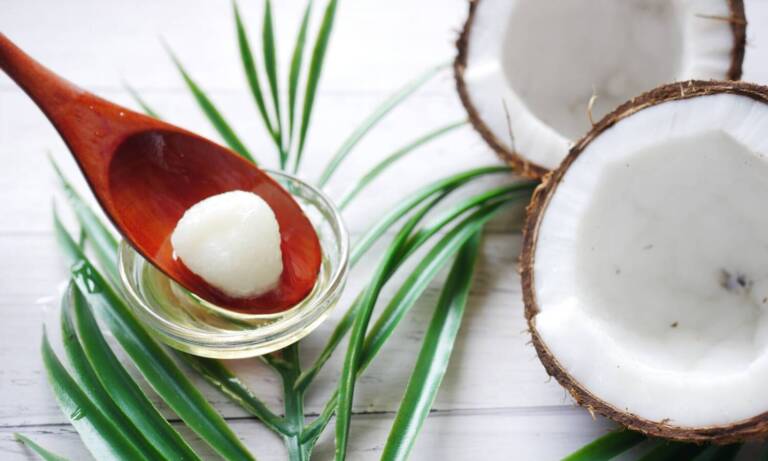
Coconut oil contains a high amount of healthy fatty acids, which not only have tremendous health benefits, but also act as an effective binding agent for the cannabinoids.
Tetrahydrocannabinol (THC) and cannabidiol (CBD) are the two primary compounds in cannabis. Both these cannabinoids require the presence of fat to become bioavailable once consumed within the human body. They are also fat soluble, which mean that cannabinoids are stored in the fatty tissues in our body.
THC especially has been noted by scientists to have a high affinity for fats. Whenever making cannabis infusions, one always needs a good fat for the cannabinoids to bind themselves to.
Photo by melati411 via Pixabay
Many cannabis products are infused into a variety of popular fats. Butter is the most common, especially for cooking and baking, though other widely-used fats include coconut oil, olive oil, walnut oil, and avocado oil to name a few others. But coconut oil is still the best among all these types of fat.
Benefits of Coconut Oil for Cannabis Infusions
Coconut oil has an endless list of versatile uses, and it’s also vegan-friendly. It can be used for cooking even in higher temperatures.
Coconut oil provides the greatest number of health benefits especially when combined with cannabis. It contains a high amount of healthy fatty acids, which not only have tremendous health benefits, but also act as an effective binding agent for the cannabinoids. Just one tablespoon of coconut oil already meets the 13 gram per day recommendation for saturated fats by the American Heart Association.
Additionally, it contains over 80% saturated fats, which is why it’s such a great carrier oil. Other oils, such as olive, only have a saturated fat content of around 20%. Saturated fats are usually found in animal products and by-products, such as butter, though butter isn’t vegan-friendly.
Meanwhile, other plant-based fats such as avocado and sesame oil are virtually unsaturated. Saturated fats normally will cause detrimental health problems such as high cholesterol when consumed in high amounts, but coconut oil simply doesn’t have that effect on the cardiovascular system. It’s the perfect healthy fat since the medium-chain fatty acids do not clog the arteries.
Saturated animal fats are the most efficient way to deliver the therapeutic benefits of cannabinoids when consumed.
Now when you combine that with the health benefits of cannabis, you have yourself one extremely powerful and therapeutic infused cannabis oil.
Photo by Anna Efetova/Getty Images
Types of Coconut Oil You Can Use for Cannabis Infusions
There are basically two kinds of coconut oils that are sold in the market: refined and unrefined. They each have their own advantages, though all of them can be used to make a variety of cannabis oil infusions. What makes them different are the methods of processing that they undergo.
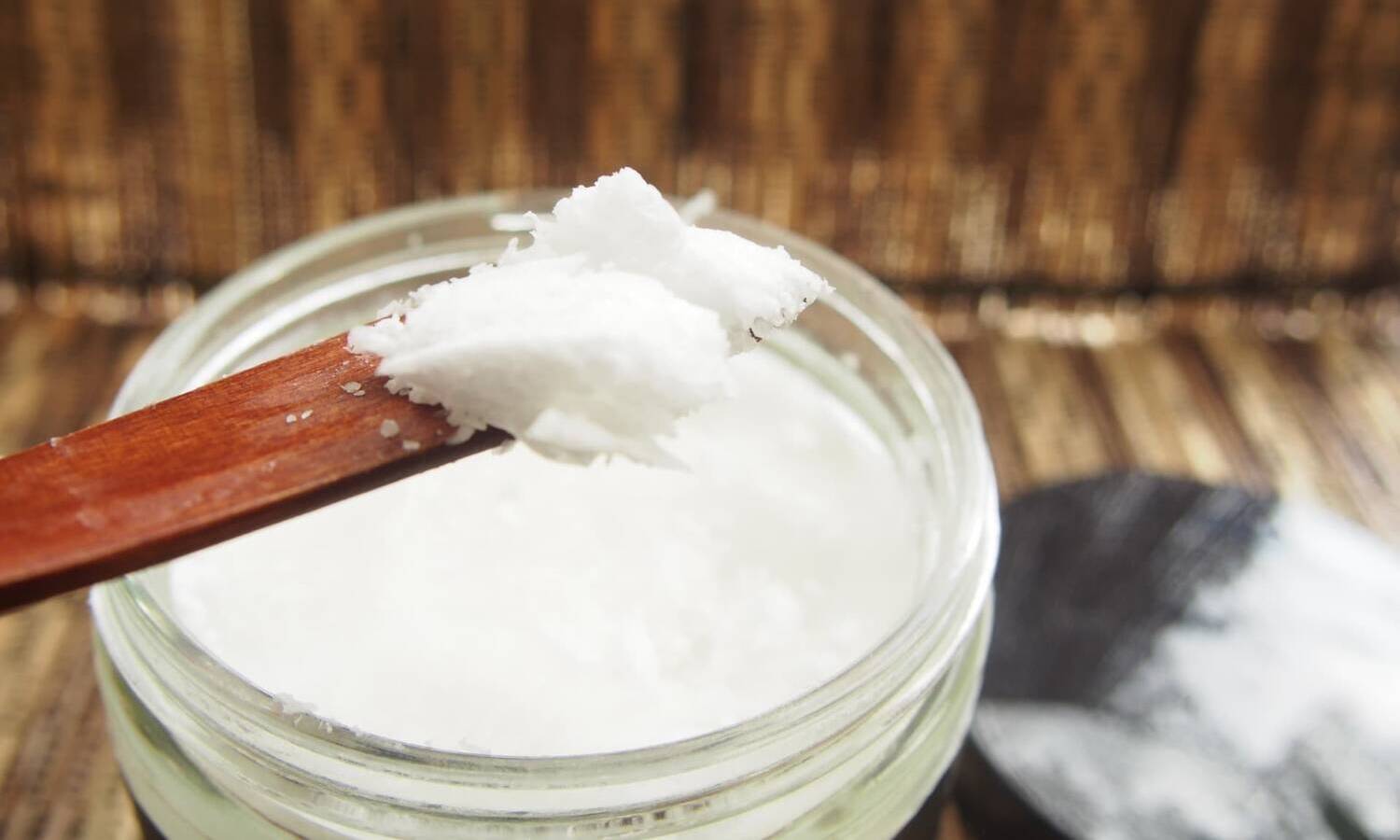
Virgin Coconut Oil: Virgin coconut oil, sometimes known as unrefined coconut oil, is essentially coconut oil that has not been processed. It’s extremely smooth and has a gentle taste, so much so that it’s easy to consume on its own.
Some unrefined coconut oils are sold and marketed as ‘cold pressed’, which means that they didn’t use any heat in extracting the oils.
Refined Coconut Oil: Refined coconut oil is widely sold at supermarkets. It has a more neutral taste and a much higher smoke point, making it more suitable for cooking and baking. The refining process does remove some of the nutrients. Just be sure to purchase refined coconut oil that’s solvent free.
MCT Oil: Medium-chain triglycerides (MCT) oil can be used in any cannabis infusion recipe, especially for gummies and candies. It’s flavorless, making it a great carrier for making tasty foods and dishes. It goes through a process that separates the different kinds of fat within the coconut oil, leaving just the medium chain fatty acids. The medium-chain triglyceride content makes the smaller molecules in this coconut oil easier to digest, and more efficiently absorbed in the blood stream.
In doing so, it can be converted into energy much quicker, which is why MCT oils are popular among keto diet enthusiasts. MCT oil is also known as fractionated coconut oil.
Whenever buying coconut oil to use in infusions, it’s always good to go for organic especially if you are using these products for health benefits.
Conclusion
Cannabis coconut oil is such a powerful combination that can be used for improving overall health as well as reducing the symptoms of chronic pain, heart disease, inflammation, diabetes, cancer, migraines, obesity and so much more. This is primarily because of the high concentration of saturated fat and medium-chain triglycerides in coconut oil, allowing it to work synergistically with the therapeutic cannabinoids in marijuana. As a result, the human body can absorb and metabolize these compounds efficiently compared to other carrier oils.
2022 is quickly coming to a close and we’re getting nostalgic about the cannabis news that graced our headlines this year.
As we approach the end of 2022, we are looking at the top 10 national cannabis stories of the year. Here is what we view as the most important cannabis stories of 2022.
1) Joe Biden’s Statement on Cannabis
On October 6, 2022 President Biden announced that he would pardon all Federal offenses of simple marijuana possession, urge governors to do the same for state offenses, and instruct his administration to initiate proceedings to reschedule or deschedule cannabis.
The Department of Justice and the Department of Health and Human Services have the power under federal law to move marijuana out of Schedule I of the Controlled Substances Act (CSA). Biden’s announcement could very well be the beginning of the end of Federal cannabis prohibition.
2) Medical Marijuana and Cannabidiol Research Expansion Act Is Signed Into Law
In December, President Biden signed the first ever standalone cannabis bill into law. The new law will allow US researchers to study cannabis without cutting through quite as much red tape. The research conducted under this new law could be used to reevaluate marijuana’s status as a Schedule I substance.
In 2022, several states faced legal challenges related to the Dormant Commerce Clause (DCC). The DCC is based on the Commerce Clause in the Constitution which grants Congress the power to regulate commerce among the states. The DCC is a well-established legal doctrine establishing that because the Constitution granted the power to regulate interstate commerce to the Federal government, states are prohibited from enacting laws that discriminate against or unduly burden interstate commerce.
In August, a federal judge nullified Maine’s residency requirement for cannabis business, as covered by MJBizDaily. Regulators in New York have faced a similar challenge. Green Light Law Group has sued the state of Oregon on behalf of Jefferson Packing House on the grounds that Oregon’s ban on the export of cannabis violates the DCC.
You can read more about that case and the DCC issue in New York here:
4) US Court of International Trade Allows for Cannabis Paraphernalia Importation
In the case Eteros Technologies USA vs. United States, the US Court of International Trade held that Washington’s repeal of certain prohibitions related to marijuana drug paraphernalia exempted the Federal prohibition on importing drug paraphernalia to ports in Washington.
5) DEA Considers Cannabis Seeds With Less Than 0.3% THC to Be Hemp and Not Marijuana
In January a letter from the DEA stated that the agency does not consider cannabis seeds with less than 0.3% THC to be marijuana. Instead, the DEA considers such seeds to be hemp, which is federally legal, though tightly regulated and not as a controlled substance.
6) Federal Court Rules Delta-8 Smokable Products Are Federally-Legal Hemp
On May 19, 2022, the United State Court of Appeals for the Ninth Circuit (9th Circuit) ruled that the plain and unambiguous text of the 2018 Agricultural Improvement Act (2018 Farm Bill) compelled the court to the conclusion that e-cigarette and vaping products containing delta-8 THC are lawful under Federal law.
The FDA has sent more enforcement letters to CBD businesses in 2022 than in any prior year, with the latest batch sent in November pushing the total to 33. The FDA also expanded its focus to products containing Delta-8 THC.
Over the summer, Minnesota lawmakers passed legislation allowing THC infused food and beverage items containing up to 5 milligrams per serving and 50 milligrams per package but did not outright legalize “marijuana” (i.e., cannabis plants with a THC concentration of greater than 0.3%).
Instead, THC products in Minnesota must be derived from hemp plants and cannot exceed a total concentration of 0.3% delta-9 THC. This makes Minnesota, at least temporarily a hot spot for hemp products containing an intoxicating level of THC. While a single item can only contain 50 milligrams of THC, there is no limit as to how many such products one person can purchase or possess.
On Election Night, cannabis-related initiatives five states considered initiatives that would legalize cannabis with only two passing. Despite these high-profile losses, 2022 saw major legislative victories for cannabis.
Brittney Griner, two-time Olympic Gold medalist, WNBA Champion and Phoenix Mercury all-star, spent nearly ten months in Russian custody for the possession of less than a gram of cannabis oil. On December 8, President Biden announced that she would be released in a prisoner-swap with Russia. She is now safe back in the US. Hopefully, seeing the harsh penalties imposed by Russia will cause the Biden Administration to fast-track legalization in the US.
Daniel Shortt is a corporate and regulatory attorney based in Seattle, Washington who works extensively with entrepreneurs in the cannabis industry. You can contact him at info@gl-lg.com or (206) 430-1336. This article originally appeared on Green Light Law Group and has been reposted with permission.
Despite Senator Chuck Schumer’s (D-NY) efforts to get cannabis banking reform in the omnibus and passed, negotiations failed to produce a package that includes the measure.
Much-needed and highly anticipated banking reform has been excluded from a large-scale spending bill expected to be released on Monday, a Senate staffer confirmed to Marijuana Moment.
This represents yet another major setback for passage of the Secure and Fair Enforcement (SAFE) Banking Act. It was hoped that the bill would pass during the soon-to-end lame-duck session.
Photo by Nikolay Ponomarenko/Getty Images
After the proposal failed to make it into the National Defense Authorization Act (NDAA) earlier in December, the hope was that appropriations would serve to protect banks that work with state-legal cannabis companies. The marijuana banking package included expungement grants and gun rights protections, reported Politico.
Despite Senator Chuck Schumer’s (D-NY) efforts to get cannabis banking reform in the omnibus and passed, negotiations failed to produce a package that includes the measure.
“The lack of SAFE Banking language leaves supporters with few legislative options—and very little time—to advance the reform during the final weeks of the lame duck,” said Marijuana Moment’s Kyle Jaeger.
NORML responded to what it called the Democratic leadership’s consistent failure to prioritize and advance marijuana reform legislation.
“Democrats’ failure and the GOP’s continued resistance to any progress is out of step with voters’ opinion, is bad politics, and most importantly, it is bad public policy,” said NORML executive director Erik Altieri. “Until Congressional action is taken, state-licensed marijuana businesses, the hundreds of thousands of people they employ, and the millions of Americans that patronize them will continue to be at a higher risk of robbery due to the cash-heavy nature of this industry created by outdated federal laws. Furthermore, smaller entrepreneurs who seek to enter this industry will continue to struggle to compete against larger, more well-capitalized interests.”
Displaying the THC percentage of cannabis products is important for consumers who likely want to know what they’re getting into before making a purchase. But what exactly constitutes high THC?
Cannabis products sold at licensed and reputable dispensaries are always labeled with their THC content. The value is written boldly on the package. Consumers that frequent these establishments are already used to seeing the THC content written in percentage or milligrams.
Delta-tetrahydrocannabinol (THC) is one of the major cannabinoid compounds present in cannabis plants. It is the main psychoactive compound. Molecules of this compound bind to brain receptors, and almost immediately, the neurotransmitter induces a “high”.
Photo by Animaflora/Getty Images
Cannabis breeders have pushed the boundaries of THC levels in the last 40 years. What stoners considered to be the highest THC level back then is merely a starting point for the hybrid varieties that are now in circulation. The growth of the cannabis industry can be compared to the rapid advancements in the computer industry.
Breeders now create plants with either a high THC percentage or a low THC percentage. These plants are then processed by manufacturers into cannabis extracts, edibles, flowers, etc which either have high THC concentration or low THC concentration.
There’s no specific quantity of THC that can be used to describe what a “high amount of THC” is. Scientific, personal, and commercial factors all play a role in this space. For example, some stoners get sky-high on THC levels of 15%, while some need it to be as high as 27% to feel any major effect.
Scientifically, the highest amount of THC that can be found in dried and cured buds of a weed variety is 30%. Modern breeders were able to achieve this feat by crossbreeding different premium varieties which originally have high levels of THC. These breeders are still hard at work trying to accommodate the demand for higher THC amounts.
When high levels of THC are consumed, the consciousness of the user gets altered intensely. Weed users from the 70s are usually amazed at how much progress breeders have made. A couple of decades ago, it took fewer THC levels like this to get stoned.
Using high levels of THC for the first time can leave the consumer feeling scared and confused, some say they were couch-locked for the entire time the drug stayed active. Subsequent use helps build tolerance, and users can then enjoy the relaxation, euphoria, happy and pleasantly intense effects of the drug.
The advancements in the THC numbers can also be attributed to commercial growers. These farmers have built and are still building on the genetic blueprint provided by modern breeders. They’ve also found amazing planting techniques that harness soil science knowledge and lighting technology to activate the genetic capability of each seed. Thanks to this, products are higher in cannabinoid, terpenes, and other important compounds concentrations
Photo by Olena Ruban/Getty Images
With high THC cannabis becoming more widely available, consumers will be able to get as high as possible without spending much. However, frequent use causes these consumers to develop a high tolerance. This results in quick cravings that need to be satisfied asap, meaning more cash is spent in the kong run trying to chase a high.
Growers Sometimes Fabricate High THC Levels
This concept is called THC inflation. At a point, it was observed that the numbers written on the packages were looking too good to be true. Shady companies that realize that consumers are always purchasing high prices have decided to alter their figures. To do this, they submit their product samples at multiple testing facilities, after which they settle on the highest percentage. Consumers are advised to remain vigilant while shopping for cannabis products. Having a trusted dispenser with a rock-solid reputation can guarantee the authenticity of the product label.
Consumption Method Determines THC Levels
The product labels of a product give the consumer an idea of what to expect, but the method of delivering THC into the body affects these expectations. Bioavailability explains this phenomenon better.
Bioavailability determines the amount of THC that remains active when it is introduced to the body system. Depending on the consumption method, this percentage can either be altered greatly or mildly. Here are some ingestion method and their THC bioavailability rates
This involves consuming oils, edibles, and capsules and sending them through the GIT and liver. This method of administration delivers between 5% to 13% of THC to the body. The THC is converted to 11-hydroxy-THC by the liver. This compound is much more potent and induces intense effects.
Here, cannabis oils are placed under the tongue. Through diffusion, the cannabinoids are delivered inconsistently into the bloodstream. The effects are set in less time than that observed in oral because it bypasses the liver and goes through the oral mucosa instead. The expected THC bioavailability can fall anywhere from 4% to 41%.
Inhalation
This refers to consuming cannabis either by smoking or vaping. The cannabinoids are introduced to the lungs, after which they travel into the bloodstream with the aid of diffusion. The best rate of bioavailability is offered through inhalation. At least 30% THC remains active when it gets to the bloodstream.
Photo by Nastasic/Getty Images
Final Word
Displaying the THC percentage of cannabis products is important for consumers who likely want to know what they’re getting into before making a purchase. Recently, some breeders have begun to work with not only THC, but the entirety of the available active cannabinoids present in a cannabis plant.
The total active cannabinoid will give consumers a better description of what to expect after using the drug, unlike THC levels which only describe the expected potency of the product. Premium strains are available globally, and more focus should be directed towards improving its diverse profile instead of its THC levels alone.
For now, seed banks, growers, and dispensaries can focus on meeting the demand for high-level THC, while the breeders focus on getting the most out of the best strains.
There’s no shortage of lawyers ready and eager to file suit on behalf of aggrieved customers, particularly since both lab testing and potency labeling are required by state regulations in California.
There’s been a spike recently in lawsuits filed against cannabis companies that have allegedly been inflating THC potency numbers on products they’re selling, ostensibly to appeal to consumers looking for the strongest cannabis they can find.
At least five such suits have been filed just since October, all potential class actions, all still active, all near-carbon copies of each other, and all by the same Southern California law firm — Dovel & Luner LLP:
Jasper Centeno v. DreamFields Brands Inc., which alleges that the parent company of “Jeeter” brand products overestimated the THC content by 70%-100%, according to a press release. The case was filed Oct. 20 in Los Angeles County Superior Court.
Rocky Willeford v. Greenfield Organix Inc. and LPF JV Corporation, which alleges that the makers of the “King Roll” brand of pre-rolled joints were “systematically overstating the THC content to deceive consumers,” according to a press release. The case was filed Oct. 28 in Monterey County Superior Court.
Shanti Gallard v. Ironworks Collective and STIIIZY LLC, which alleges that pre-rolls sold by the company and labeled as having 50% THC or higher only contained 33-34% THC. The case was filed on Dec. 6 in L.A. County Superior Court.
Aaron Argueta v. V.O. Leasing Corp., which alleges that some of the Presidential brand of pre-rolled joints advertised as having over 50% THC actually contained 19-21% THC. The case was filed Dec. 7 in L.A. County Superior Court.
Buntarn Lun v. Lowell Farms Inc. and Cypress Manufacturing Company, which alleges that the Lowell Smokes brand of pre-rolls advertised as having 38% THC actually contained 18-21% THC. The case was filed Dec. 14 in L.A. County Superior Court.
Photo by jirkaejc/Getty Images
“Consumers are willing to pay more for cannabis products with higher THC content, and expect to pay less for cannabis products with lower THC content,” Christin Cho, one of the attorneys leading all five cases, said in a news release.
“We look forward to holding defendants accountable for their actions,” Cho added.
Indeed, Cho’s firm specializes in class action lawsuits and states on its website that most such cases wind up settling out of court and never make it to trial.
Which means all of the companies that Cho is targeting can expect – at the very least – fairly significant legal pressure to pay out significant sums to make these cases disappear. The primary question is likely how much it will take to satisfy the plaintiffs in these cases, and just how much ammunition Cho and her clients may have to use as leverage during settlement negotiations.
Bottom line: There’s no shortage of lawyers ready and eager to file suit on behalf of aggrieved customers, particularly since both lab testing and potency labeling are required by state regulations in California.
Photo by Tetra Images/Getty Images
And the problem of both mislabeling and lab shopping for desired — though inaccurate — potency results is rampant, particularly in California, the suits allege.
This makes all of these cases cautionary tales for other manufacturers who may be tempted to also inflate their numbers so as to appeal to customers looking for the strongest high. Depending on the margins, the risk of a class action suit might not be worth the sales bump.
Unless you are using medical marijuana for an illness or chronic pain, daily use or frequent use may not provide as many benefits as you think.
With more people using marijuana and the drug being socially acceptable, users must take some time to consider their habits and frequency of use. Since more people are using recreationally and medically, additional studies are being performed to determine long-term effects. But what are the long term effects of daily marijuana use?
Marijuana can have some serious effects on the brain and body, and while some of these can be positive, there are some serious negative effects that need to be taken into consideration.
Photo by Nastasic/Getty Images
Brain and Body: Main Effects
Long-term and daily use of cannabis can have some major effects on the brain and your body. The actual effects will depend on the user and their overall health. It will also depend on the amount of weed that is consumed and the levels of THC in the strain being used. THC will react on your brain no matter what weed you are smoking and will cause the release of dopamine. This provides a sensation of pleasure. However, there are some long-term effects that are not always positive, which is what you should consider if you are a daily user.
When ingested, weed will enter your bloodstream, heading right to the brain. Here, it will affect the orbitofrontal cortex and affect your ability to form memories or impair the ability to process new or current information. Not only does cannabis use affect the brain, but it can also cause changes in the body, such as increased blood pressure, anxiety, or faster heart rates.
If you are a daily user but are not yet aware of the effects on your brain and body, read on to learn the pros and cons of daily use and how the drug causes different symptoms.
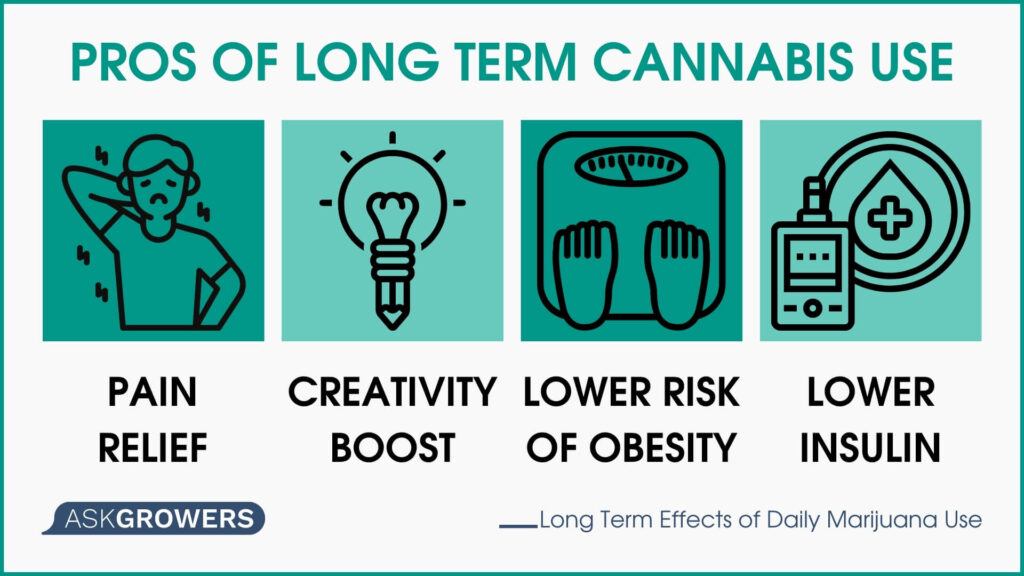
Pros of Long Term Use
You will find there are positive long-term effects of marijuana. Daily smoking can offer some benefits to the brain and body. One way in which frequent and daily use is beneficial is with controlling pain. Many people suffer from disorders or illnesses that cause chronic pain. It has been shown that daily use of weed can relieve pain and is often used for the treatment of menstrual pain or chronic pain ailments such as fibromyalgia.
Another benefit is for those that have a career in the arts. In regards to cannabis effects on the brain, creativity is often enhanced when using the drug frequently. Many people who have creative professional jobs will find this to be a great benefit of daily use.
Wondering about smoking weed effects on the body? There are some studies that have confirmed there are, in fact, benefits. Marijuana use can result in a lower risk of obesity, and regular users typically have lower insulin levels along with thinner waists. Due to this, daily cannabis use may be a great option for those that struggle to maintain weight or need to control or regulate blood sugar levels.
Drawbacks of Long Term Use
While there are some proven benefits to smoking cannabis on a daily basis, you should also be aware of the negative effects it can cause. Everyone will react differently to the drug, and the strain will also play a large role in whether there are benefits or drawbacks.
Daily smoking can greatly increase your chances of respiratory illness. Those who choose to smoke the drug may have problems with chronic coughing or bronchitis as well as wheezing. There is also a link between marijuana use and upper respiratory tract cancers. If this is a concern, yet you want to continue with daily use, consider using edibles.
Daily marijuana use effects also include an increased heart rate. This is not usually a problem for those that are healthy, but if you have a risk of heart disease or any family history, you may want to think twice about your daily use.
One final consideration is the impact on learning. Many will wonder, does weed influence memory? It does. It can impair learning and can also affect your ability to recall information. These symptoms are mostly experienced by those that consume large amounts regularly.
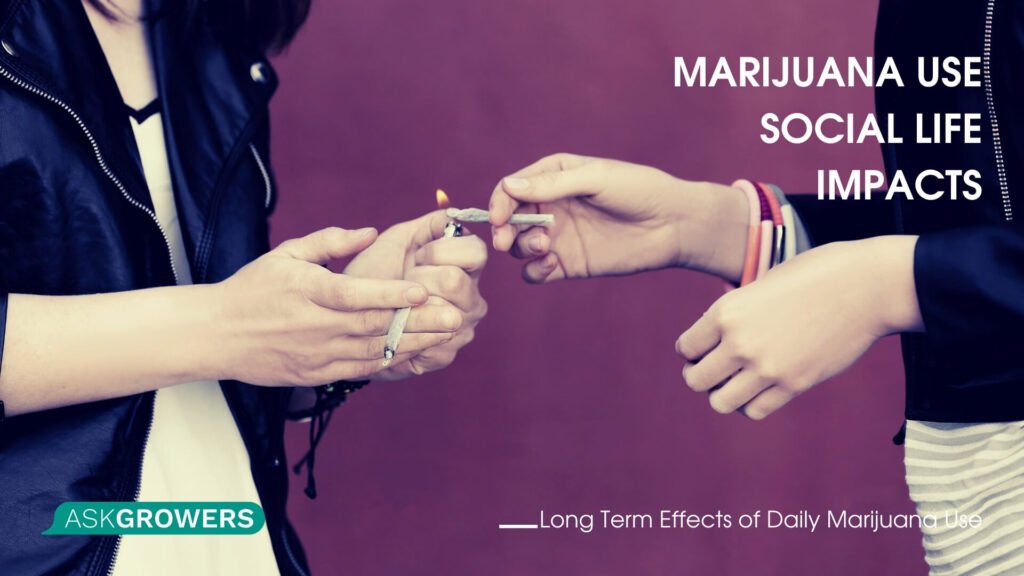
Just like effects on the brain and body, daily marijuana use will also have social impacts on our lives. These can be both positive and negative, and they can both be subtle and encouraging, either to use more or to use less. The use of marijuana can impact your judgment and perception, which can play a role in social settings.
So, how does weed affect your social life? When it comes to determining the negative and positive social effects, it all comes down to how the drug is being used and the tasks that are being performed at the time. If you are among peers who also use cannabis products, there is not likely to be a huge social impact. However, if you have a mixed group of friends, you may find that some will not approve and will become isolated or will not involve you in social circles.
The exact effect marijuana use has on your social life all depends on the type of life you lead, whether you are a student, what type of job you have, and how often you are under the influence of this drug. Let’s take a look at the pros and cons in terms of social life and the effects of daily marijuana use.
Pros
The use of marijuana has become widely accepted, and daily use can actually improve one’s social life. Individuals will feel connected to others and will enjoy being part of a group. Smoking week can also help people create new groups of friends and enhance their social circles. Most groups of people who smoke on a regular basis are welcoming and will open social circles to new members, offering a feeling of belonging and support to those that use.
Cons
Studies have shown that heavy and daily use of marijuana can impact your social life in a negative way. It can decrease your ability to learn and retain information, which can pose a risk to your job or your academic standings. Students who smoke marijuana daily have lower grades and impaired memory, attention, and learning skills. Weed use can also cause depression, causing younger smokers to withdraw from friends and isolate themselves completely.
For those in the workplace, the drug’s daily use can result in increased absences and even accidents on the job. Users often have fewer friends at work and are slow to develop new relationships.
Healthy Tips for Enjoying Marijuana
The best way to stay safe and healthy is to enjoy the short-term effects of weed. Unless you are using medical marijuana for an illness or chronic pain, daily use or frequent use may not provide as many benefits as you think. You can still get high while enjoying a relaxing sensation without overdoing it. In fact, those who smoke less often have more pronounced effects. This is due to tolerance.
Daily use will build tolerance, having an impact on how this drug reacts as well as what sensations you get. To avoid possible problems with long-term use, you may want to consider micro-dosing or cutting back by smoking every other day. This will reduce tolerance, provide better highs, and help to eliminate the possible negative effects of daily use.
Storing weed properly is essential to preserve it, but purchasing quality products from respected farmers is just as critical.
Cannabis is harvested throughout the year, but it is crucial to always preserve buds as best as possible upon purchasing. And with cold weather, you might want to take some extra steps. Here is how to preserve your weed through the winter.
Whether you procured the last ounce of a favorite strain, or take your time getting through your supply, preserving cannabis properly can keep your flower fresh and fragrant the entire winter, and beyond.
Photo by Photo by Elsa Olofsson via Unsplash
Studies point to UV light as the number one destroyer of cannabis potency. According to Medical Marijuana, Inc., “While direct sunlight is the most degrading to marijuana flower, even indirect light can cause a loss of potency.” With even indirect light affecting cannabis longevity, it is crucial to take time to purchase the perfect container.
There are several factors to consider when choosing a storage container for cannabis. According to Healthline, “Light, humidity, temperature, and oxygen can all mess with cannabis and affect its aroma, taste, and potency potential.” Therefore the container must be airtight to prevent unwanted humidity and oxygen from entering. Be sure to have a container with a secure seal.
The container’s material is also important. Many dispensaries provide cannabis in plastic containers. This works for quick storage purposes, but when preserving marijuana for a long period of time, plastic is an enemy. Plastic containers leak air and can release some of their chemical properties. This can transfer to cannabis and change its flavor and taste. Plastic can also cause sweating inside the container or bag, which can cause mold and deterioration in quality.
Airtight glass containers are ideal. When in doubt, use a mason jar. They are glass, airtight, inexpensive and always seem to be in fashion. Some brands have introduced opaque and dark colored jars that greatly protect against UV light. This jar style is a perfect inexpensive option for marijuana storage.
Once you have the right container it is time to find the perfect storage location. Cannabis does not like things too hot or cold. Studies have shown heat above 78 degrees Fahrenheit contributes to deterioration of cannabis potency.
Photo by Shannon Fagan/Getty Images
Do not store marijuana in the freezer either. The extreme cold dries out the cannabis and causes trichomes to break off. Instead, find a dark place that maintains a temperature around 60 to 70 degrees Fahrenheit.
Storing cannabis is essential in preserving it, but purchasing quality products from respected farmers is just as critical. Cannabis longevity starts in the curing process, which MedMen describes as“the process where fresh cannabis is properly dried to optimize potency, terpenes.” When cannabis is cured optimally, it can maintain its potency and integrity for up to a year.
As days get shorter and air blows colder, be sure to properly protect your cannabis. Find the perfect glass jar, a cool dark place in your home, and be sure to buy products from trusted farmers. This will ensure you will be able to savor vibrant and flavorful cannabis even while everything else around seems to be cold and dormant.
In a new double blind crossover trial, researchers found that even at a ratio of 3:1, CBD neither altered the subjective pleasurable effects of THC nor did it reduce adverse effects.
One of the biggest controversies in the cannabis field is whether CBD alters the physiological effects of THC. Many believe that CBD offsets some of the adverse effects of THC thereby making it more tolerable. And for sure, a number of studies have pointed towards such a possibility, especially where the ratio if CBD to THC is high.
Consequently, many believe that some of the adverse effects of THC can be “tamed” by adding CBD. While such a relationship can influence standards for safe THC limits, every effort needs to be made to ensure that such claims are substantiated.
Photo by Gajus/Getty Images
In a recent study published in the journal Neuropsychopharmacology, researchers did not find any evidence that CBD prevents adverse effects that may be caused by THC. This led them to propose that the finding be considered in health policy decisions on medical and recreational cannabis.
This double blind crossover trial testing different THC:CBD ratios examined whether cannabidiol made cannabis safer.
The study included 46 healthy participants who were infrequent users of cannabis. The participants were offered vaporized cannabis with different concentrations of THC and CBD in four visits. The ratios offered were 1:1, 1:2, and 1:3 in a randomized and counterbalanced order. Even at a ratio of 3:1, CBD neither altered the subjective pleasurable effects of THC nor did it reduce adverse effects. This led the researchers to rule out CBD as a critical consideration in defining a standard THC unit as well as determining the safety of a cannabis product.
Can Higher CBD:THC Ratios Change How THC Feels?
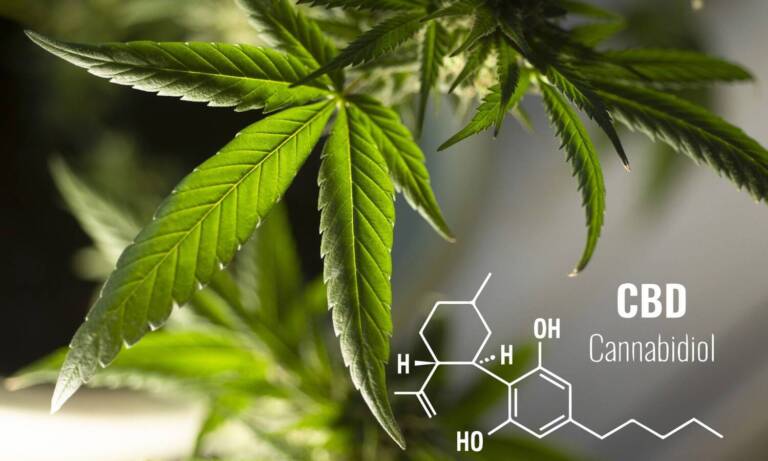
While CBD may not alter how THC feels at a ratio of 3:1, higher ratios exceeding 10:1 may indeed do so. Though CBD and THC both have action on the CB1 receptor, their mechanism of action is quite different. CBD has an open and twisted ring which does not allow it to fit well into the orthostatic CB1 receptor. Therefore, CBD modulates the CB1 receptor from allosteric sites.
THC on the other hand binds directly to the orthostatic sites on the CB1 receptors. This suggests that CBD can trigger biased CB1 agonism and this can affect the downstream effects of THC.
Indeed, preliminary reports with higher CBD: THC ratios have shown that CBD can taper off the adverse effects of THC. However, researchers in the study mentioned above have argued that this is not the effect of THC but rather it is the fact that the amount of THC in higher rations is not significant enough to cause adverse effects. Clearly, further studies are needed to provide direction on whether CBD makes THC safer.