The survey of more than 600 people revealed that 72% of them support marijuana legalization, while 66% of them supported a cannabis reform law that makes low-level possession legal.
Data shows DC overwhelming supports marijuana legalization – and opposes this! Washington D.C. voters are embracing cannabis. Not only do voters want the drug to be legalized and available to everyone who wants it — they also oppose the state’s restrictive measures.
The survey was commissioned by I-71 Committee, an organization of citizens and people involved with the cannabis industry that support marijuana legalization.
The survey of more than 600 likely voters revealed that 72% of them support marijuana legalization, while 66% of them supported a cannabis reform law that makes low-level possession, personal cultivation, and marijuana gifting legal. Gifting has become a problem for the state, with some businesses using this loophole to create a marijuana market that the law has yet to enable.
While the state is concerned with this loophole and is looking for valid ways of addressing it, according to the survey, gifting isn’t an issue for voters. Seventy-six percent of them said they’d prefer if the government reformed laws to create a functioning market instead of closing it down altogether.
Marijuana gifting has been a hot-button issue over the past year, particularly in states that have decriminalized the drug but have yet to establish a functioning legal market. The term refers to the practice of gifting people marijuana as they purchase a different item, say a t-shirt or a hat, and it’s allowed for a variety of businesses to thrive and make a business.
States like New York and Connecticut have been finding new ways to cope with marijuana gifting, sending cease and desist letters to businesses, and more.
D.C. decriminalized marijuana in 2015, allowing residents to carry up to two ounces of marijuana.
Aside from treating a variety of conditions that plague the lives of millions of Americans, the side effects associated with weed are nowhere near as risky as the ones that’ve been linked with opioids over the past decades.
One of the best arguments for legal marijuana is its possible influence on the opioid crisis. Supporters of cannabis have theorized that the plant’s medical capabilities could help treat a variety of conditions that are commonly treated by opioids, which come with a batch of adverse side effects.
Now, a new study supports this belief, showing that medical marijuana can help patients reduce their opioid intake while substantially addressing the condition that affects their quality of life.
Photo by Cappi Thompson/Getty Images
The study, published in the journal Substance Use and Misuse, surveyed more than 2,000 medical marijuana patients in Florida regarding their marijuana consumption habits and whether these had impacted their use of pharmaceuticals.
A whopping 90% of patients said marijuana was helpful in treating their condition, while 88% of them said it was important for their quality of life. In the case of the connection between opioids and marijuana, the results were very positive, with 85% of respondents claiming that cannabis reduced their pain. 79% of them said that they stopped or reduced their opioid intake after they started consuming cannabis.
In an accompanying press release, researcher Carolyn Pritchett explained why the survey should provide some supporting evidence for the benefits of medical marijuana, and why it should be considered as a valid alternative for many of these conditions.
“If there’s the option to instead use a medicine with less harmful side-effects, including a lower risk of overdose and death, then it should perhaps be considered. But more research, including studies that follow patients over time, is needed before substituting opioid painkillers for medical cannabis becomes commonplace,” she said.
This study joins a body of evidence that shows the positive aspects of medical marijuana. Aside from treating a variety of conditions that plague the lives of millions of Americans, the side effects associated with marijuana are nowhere near as risky as the ones that have been linked with opioids over the past decades.
Most candidates for federal office do not see cannabis as an issue prominent enough to discuss, and deep partisan differences still remain among elected officials.
Cannabis reform has grown in popularity with voters, activists, and state legislators; cannabis is now legal for medical use in 38 states and DC and for adult-use in 19 states and DC. Despite those advances in state level reforms and in the broader conversation nationwide, Congress has failed to pass a major piece of legislation addressing the issue, and many voters and activists wonder why. Congressional candidates’ silence on cannabis reform is troubling.
One argument is that federal level officials—in the executive branch and in Congress—simply don’t care enough about the issue to address it. To consider this question, I included a coding about cannabis reform in Brookings Primaries Project in 2022. The Brookings Primaries Project examines the publicly stated views—via the websites and social media presence—of all candidates running in U.S. congressional primary races. We coded each candidate on a four-point scale: whether they supported legalization or decriminalization of cannabis, whether they supported medical legalization only, whether their position was complex or indecipherable, and whether they failed to mention the issue at all.
The results provide three general takeaways. First, primary candidates for Congress do not consider the issue important enough to elevate to be included on their website or on social media. Second, on average, candidates who do engage on the issue are at least not harmed by staking out a public position. Third, stark differences exist between Democratic primary candidates for Congress and Republican primary candidates for Congress.
These findings generally reflect a reality that bears out in public opinion polling. While cannabis reform is popular among Americans (68% support in the latest Gallup poll), it is not a salient issue among voters; polling shows that cannabis reform has never jumped into even the top 20 most important issues for voters. That support but lack of salience has a compelling impact on members of Congress and congressional candidates: it gives them the freedom not to engage the issue.
Overall, we coded 2360 candidates running in Democratic and Republican primaries for Congress. As table 1 shows, the vast majority of candidates (81.4%) made no mention of cannabis reform at all on their websites and social media. In fact, clashing against the idea that the popularity of cannabis reform should be pushing legislators to make clear statements of support for reform, 86.4% of candidates either made no mention, staked out an unclear position, or explicitly opposed cannabis reform.
TABLE 1: CANNABIS CAMPAIGN POSITIONS AMONG 2022 CONGRESSIONAL PRIMARY CANDIDATES
Those publicly stated positions were not uniform across parties however. As Table 2 shows, a pro-cannabis reform position was much more popular among Democratic candidates (30.5%) than among Republican candidates (2.0%). This demonstrates clear differences between the parties that are also reflected in rates of opposition to cannabis. Although more than 90% of Republican candidates failed to mention cannabis at all, 4.1% of them staked out an anti-cannabis reform position. On the other hand, only three of the 962 Democratic primary candidates (0.3%) opposed reform.
TABLE 2: 2022 CONGRESSIONAL PRIMARY CANDIDATES’ CANNABIS POSITIONS BY PARTY
It is true in public polling that differences exist between Democratic voters’ support (83%) for cannabis reform and Republican voters’ support (50%). However, the polling data above show that there is still a clear disconnect between what voters want and what candidates for office are willing to say about the issue. For example, only 2% of Republican primary candidates supported cannabis reform, despite 50% of GOP voters endorsing that policy. And even while a third of Democratic primary candidates support legalization, that pales in comparison to the more than 80% support Gallup finds among Democrats.
Another way to look at these data are to divide states up according to whether they are running for Congress in the 19 states that are fully legal, the 19 states that have medical only, or the 12 states that have neither. As table 3 shows, the legal status of cannabis in a state has effectively no impact on whether a candidate engages on the issue: between 80.2% and 82.9% of candidates in each type of state are silent on it. Candidates in fully legal states (15.9%) are more likely to support cannabis legalization than in medical only (12.2%) or non-legal states (11.7%).
TABLE 3: 2022 CONGRESSIONAL PRIMARY CANDIDATES’ CANNABIS POSITIONS BY STATE TYPE
Similarly, as Table 4 shows, Democrats in fully legal states are the most supportive of cannabis reform, with more than a third of candidates in primaries voicing support. The same was not true of Republican candidates. Republicans in cannabis legal states were less likely to support cannabis reform than they were in medical only states and non-legal states. What’s more, this was not an artifact of fewer Republicans running in fully legal states—there were more GOP primary candidates in legal states than in either medical only or non-legal states.
TABLE 4: 2022 CONGRESSIONAL PRIMARY CANDIDATES’ CANNABIS POSITIONS BY STATE TYPE AND PARTY
The data also allow for an analysis of a) whether cannabis could be viewed as more than a fringe issue and b) whether taking a position on cannabis potentially harms candidates’ chances of winning. The latter point is of particular interest given the vestiges of drug-war era indoctrination among elected officials that a pro-drug reform position is politically toxic.
To do this, I examine the difference in cannabis position taking among candidates who went on to win their primaries versus those who lost. As Table 5 shows, among all candidates, winners were much more likely to address the cannabis issue (33.3%) than were congressional primary losers (9.5%). Those figures include winning candidates who were more likely to oppose cannabis legalization (6.0%) than were losing candidates (0.5%). However, winning candidates were also significantly more likely to support cannabis reform (22.2%) than were losing candidates (8.4%).
TABLE 5: 2022 CONGRESSIONAL PRIMARY CANDIDATES’ CANNABIS POSITIONS AMONG WINNERS AND LOSERS
There are a few key takeaways from these findings. First, while cannabis may not be a popular issue for congressional primary candidates to address publicly, it is not a fringe issue only discussed by unserious candidates. Successful primary candidates are addressing the issue significantly more than losing candidates.
Second, successful primary candidates do not see cannabis reform taking as a political liability—like it once was—as more than one-fifth of successful candidates voiced support for that position on their website and/or through social media.
Third, despite gains in cannabis reform in a variety of areas, public opposition to cannabis reform is still embraced successfully by some candidates.
Fourth, the analysis cannot tell us whether support or opposition to cannabis reform helps candidates, however, we can say that in many races, it does not harm those candidates, given the levels of success among cannabis position-taking candidates.
The data also show that cannabis position taking differences by winners and losers is driven largely by party. As Table 6 shows, of the 54 winning primary candidates who publicly opposed cannabis, 94.4% were Republicans. Conversely, of the 199 winning candidates who supported cannabis reform, 95.0% were Democrats. In fact, among all Democratic primary candidates, 64.5% of those taking a pro-cannabis position won their primary, and only 55.1% of winning Democratic candidates opted not to take a position on the issue. For Republicans, 78.1% of all winning candidates opted not to discuss cannabis in any context.
TABLE 6: 2022 CONGRESSIONAL PRIMARY CANDIDATES’ CANNABIS POSITIONS AMONG WINNERS AND LOSERS, BY PARTY
It is clear that among all candidates, all Democrats, and all Republicans, taking no public position on cannabis was the most popular strategy during the 2022 congressional primaries. However, among candidates who chose to take a clear position on cannabis, Republicans were more likely to oppose legalization than support it, and the reverse is true for Democratic primary candidates who took a position on cannabis.
In sum, cannabis as a political issue has risen in importance over the past 25 years. As state legislatures and voters via referenda have enacted changes to cannabis laws, the issue has become more popular even in the halls of Congress.
However, cannabis reform advocates’ frequent stupefaction at the lack of progress at the federal level bumps up against a stark reality. Most candidates for federal office do not see cannabis as an issue prominent enough to discuss, and deep partisan differences still remain among elected officials, even as support for cannabis in the general public has exploded in recent years. And the true motivator for a member of Congress to take or change a position—whether voters hold their feet to the fire over an issue—has not yet become a reality in the vast majority of Congressional races across the United States.
New Jersey workplace marijuana guidelines confuse employers. Released by the Cannabis Regulatory Commission (CRC) they have baffled workplace management over what they can and cannot do when a worker is high on the job.
Cannabis law experts and employment attorneys called the rules and their rollout vague and baffling and said the suggestions mentioned therein are impractical to implement and therefore will likely keep businesses in a “state of limbo.”
“I see a lot of risk from both the employer and the employees’ side that’s a little concerning,” said Sean Sanders, an employment attorney at Frier Levitt, reported the New Jersey Monitor.
Earlier this month, the CRC issued interim guidance while it continues to develop more permanent regulations to certify workplace impairment experts, which are required by law. Since legalization, employees can no longer be terminated solely because of a drug test positive for marijuana.
Photo by fauxels via Pexels
The interim guidelines allow employers to use an observation report form issued by the agency, which when used in conjunction with a positive drug test for marijuana.
Chair of the CRC, Dianna Houenou said the new guidelines seek to strike a balance between employers’ rights and employees’ rights, but the guidance doesn’t actually do anything new.
As such, lawyers and business leaders who have been awaiting the guidelines were unimpressed and frustrated with what the commission released, now five months after the industry launched and nearly two years since voters approved cannabis legalization.
“The concern is, how do we do this? That’s the biggest question, and I wish the CRC guidance would give us a little bit more, no pun intended, guidance,” said Tracy Armstrong, an employment lawyer at Wilentz, Goldman & Spitzer, who serves on the New Jersey State Bar Association’s cannabis law committee.
Look For Signs Of Behavioral Impairment? Good Luck With That
The form lists signs of physical and behavioral impairment: red, swollen eyes; sniffling nose; heavy breathing; a marijuana odor; rambling speech; looking confused; excessive yawning, and more even though many of these signs can also be due to allergies or medication, or even someone having a bad day.
“You don’t want to be targeting your employees who look depressed, and certainly you don’t want to be documenting it,” said employment attorney Sanders. “That brings up a whole ‘nother can of worms with the Law Against Discrimination.”
Stress is terrible for your physical and mental health. A new study says that it can impact your relationship, even during the honeymoon stage.
It makes life more difficult, whether we’re talking about people who live alone or those who live with a romantic partner. A new study says doing this in a relationship is likely to cause stress for a couple. While it makes sense, people focusing on their partner’s bad habits is rough for people. This behavior occurred even when couples were in the “honeymoon stage” of their relationship.
The study was published in the journal Social Psychological and Personality Science and was led by a researcher from the University of Texas.
Photo by SIphotography/Getty Images
The study involved 79 heterosexual newlywed couples, who were asked to complete surveys each night for 10 days. Before the start of the study, they were asked about the stress in their lives, allowing researchers to develop an understanding of their baseline stress level. Afterward, participants filled out a chart with their and their partner’s behavior every night.
Researchers claimed they wanted a sample of newlyweds since these people tend to focus on the positive aspect of their relationship, often overlooking their partner’s flaws and negative actions. They found that an accumulation of stress was enough to make participants shift their attention from their partners elsewhere.
“We found that individuals who reported experiencing more stressful life events outside of their relationship, such as problems at work, were especially likely to notice if their partner behaved in an inconsiderate manner,” study lead author Dr. Lisa Neff told told the Daily Mail.
While the results simply reinforce that stress is bad for relationships no matter at what stage they’re at, researchers think their study shows just how impactful stress can be. “But the fact that we found these effects in a sample of newlyweds speaks to how impactful the effects of stress can be,” said Neff.
She suggests expanding the study to include people at different stages of their relationships, likely showing that stress has a stronger impact on couples that have been together for longer periods of time.
In this modern age of marijuana, what happens to the part of the plant that doesn’t get you high? There are many options.
Endless time, money and thought go into exactly what to do with marijuana buds once they are ripe for the picking. There are ever-evolving methods of extraction, and always a new and exciting way to consume cannabis. But the THC rich buds, or flower, are a small fraction of the towering cannabis plant. What happens to marijuana scraps?
After the plant has been cured and trimmed, there remains a large mound of natural cannabis scraps that must be dealt with. Years ago, in the olden days of cannabis cultivation, this pile could have been added to a compost pile out back, or burned safely in a controlled burn. Those unregulated days are a thing of the past.
In today’s legal and highly regulated market, you can’t just toss marijuana scraps in the back of the greenhouse. So, in this modern age of marijuana, what happens to the part of the plant that doesn’t get you high?
What Is Cannabis Waste, Exactly?
When you picture cannabis waste, the visual you have is likely a tidy mound of plant stalks and unusable leaves. This does make up a large portion of cannabis waste, but there are other forms of waste as well that can be a bit trickier and less green. “Cannabis waste can be any material that has come in contact with cannabis throughout the cultivation, production, manufacturing, or retail process,” according to theEcoWaste, a cannabis waste disposal service.
There are the sponges and chemicals used to clone and propagate plants. There are other unused products, and used testing samples. This hodgepodge of cannabis waste can make it a bit trickier to dispose of.
Cannabis Waste Requires Strict Record Keeping
Perhaps you live in a place where trash pickup is a bit of a pain. Maybe you need to separate trash in 4 different bins and bring it all the way to a recycling facility. If you think that is annoying, imagine having to keep records of everything you throw away. That, essentially, is what most farm managers are responsible for at their facilities. You cannot simply sweep up a mess and dump it, or light it ablaze and tell authorities it has turned to dust. There must be records, and documented proof that the cannabis waste has, indeed, been completely and properly disposed of.
Photo by CRYSTALWEED cannabis via Unsplash
“Unlike other agricultural industries, cannabis growers in most areas must keep exhaustive records of every ounce of material they discard,” according to an article inBioCycle, a resource for organic recycling and composting. The article continues, stating that some laws are so strict and exact that “Some jurisdictions require that each plant get its own identification and tracking tag, or that senior managers from the producer accompany the wastes to any external disposal site.”
BioCycle also mentions how some states require video footage of cannabis waste areas be held for up to 90 days, in order to prove there is no discrepancy between written records and video proof. Needless to say, this is not your typical trip to the dump.
Composting Is Best, But Sometimes Complicated Option
Composting cannabis waste is often the best option for the environment and the growers. The problem is, you can’t simply throw cannabis waste into a compost pile and walk away. In addition to proper documentation, you need to grind, chop and mix the cannabis waste with non-cannabis waste to make sure that it no longer resembles anything that could be sold as a cannabis product.
In fact, according toGreen Mountain Technologies, “Many state regulations for the disposal of cannabis waste require the cannabis to be mixed at least 50%-50% by volume with non-cannabis waste in order to render the cannabis waste unusable.” Once you achieve this mixture, you still need to find a suitable facility to take this compostable waste. This can be an adventure in itself.
Other disposal methods include:
Bokashi Process
The Bokashi process is another compost-style method of recycling cannabis scraps, but involves using a vessel, an organic additive, and time. The process was invented in Japan in the 1980s, and, like competing, is a natural way of breaking down organic materials and turning them into a re-usable substance.
According toThe Spruce, “Unlike traditional composting, which is an aerobic process that requires oxygen, Bokashi is an anaerobic process that requires that you isolate the materials from oxygen as much as possible.” This is an organic process fit for smaller operations, but for those with very large growing facilities, it would involve a large investment to build vessels large enough to get rid of all the organic waste.
Cannabis Disposal Companies
As the cannabis industry continues to boom, all industries surrounding it are also growing and expanding — this even includes the waste treatment sector. All over the United States and Canada, small and large businesses are forming to help deal with cannabis waste removal. Some of these businesses focus on logistics and ease of surface, while others are focused on the organic route with the goal of lowering the cannabis industry’s carbon footprint. This is still a new frontier, and as the cannabis industry grows (along with the regulations that come with a legal cannabis market), these cannabis disposal companies are likely to multiply.
Landfills
While the last place you would expect or want cannabis waste is in a landfill taking up space, this is a legal option and potential final resting place for cannabis scraps. Sure, many growers are environmentally friendly at heart, but the fact remains that there is no incentive apart from one’s own environmental morality to compost cannabis rather than send it to a landfill. In fact there are a few reasons cannabis is more likely to end up in a landfill than a compost facility.
For one, landfills are often more accessible than compost facilities. This means, logistically, landfills are a much easier option for some companies. It is also important to note that you can only compost cannabis waste if it is mixed with equally organic materials, like dirt, grass or other organic waste. While this might be no problem for a large outdoor growing farm in a moderate climate, organic waste might be harder to come by in the middle of the winter for an indoor growing operation.
Cannabis disposal facilities offer an alternative to landfills, but they are not currently as prevalent an option. One can only hope that since these strict laws of marijuana waste disposal don’t seem to be going anywhere, perhaps we can at least find a simple and organic way to take care of the scrappier side of cannabis cultivation.
The Michigan State Police/Forensic Science Division (MSP/FSD) recently halted THC toxicology testing for drivers suspected to be driving under the influence of marijuana. This came after a “technical issue” that revealed that previous test methods allowed for the conversion of CBD into THC leading to false positive results.
THC, the intoxicating cannabinoid in marijuana, is believed to impair driving by prolonging one’s reaction time. CBD on the other hand is non-intoxicating and federally legal.
With the recent findings by the MSP, it appears that dozens of drivers who might have consumed CBD have been wrongfully penalized for testing positive for THC erroneously.
The MSP/FSD tests approximately 200,000 samples for alcohol and other drugs each year. An evaluation launched by the body on August 19, 2022 revealed that the current test for THC could result in a positive test even when a sample contains pure CBD. Following this discovery, MSP ordered an immediate stop to THC testing until this issue had been resolved.
Upon further investigation, the MSP believes that this error might have been carried forward since March 28, 2019 when CBD became legal in the state. Lab data indicates that about 3,250 samples have been affected by this error.
The MSP has escalated the issue to the ANSI National Accreditation Board (ANAB) which is the accrediting body. In addition, MSP has halted the disposal of all blood samples to preserve evidence in case there will be a need for re-analysis in the future.
Marijuana rentals are becoming more and more common, with hosts offering their guests a string of unique and memorable activities.
A weed getaway is more complicated than it sounds. While you may live in a legal state, the drug’s status of your destination matters. Marijuana is also federally illegal, meaning that transporting it across states lines is prohibited, even where it’s legal. So, it seems niche marijuana vacation rentals are catching on.
Marijuana-vacation rentals are a fraction of the market, yet one that’s been slowly on the rise. While there are some locations that simply allow you to rent the place in your (legal) state and smoke your own pot without worrying about your neighbors or your sheets, there are others that take creative routes to make guests feel welcome and meet the expectations of a true weed getaway, including providing the weed.
Photo by Fuse/Getty Images
Websites like BudandBreakfast.com are facilitating these transactions, connecting guests with hosts who allow marijuana use on their properties. While having a much smaller pool of locations than websites like Airbnb, these services are in demand and are finding more and more customers.
CNBC spoke with various hosts that provide these services, who provided a breakdown of their establishments and what makes their rentals stand out from the rest.
“I’ve really just tried to give people what they’re used to, just with the added element of cannabis,” said Nicole Butler, who rents a cannabis bed and breakfast. With a price point that starts at $420 per night, Butler provides her guests with a fully stocked cannabis bar and activities like yoga, CBD massages, and more.
“I think the pandemic made people really appreciate experiences, self-care, and just doing things that make them feel good,” she said.
Similar listings provide people a place where they can comfortably smoke cannabis, whether it’s BYOB or provided in the location. Listings also provide guests with important information on local dispensaries and cannabis events going on in the area, all in the hopes of getting people excited to smoke some weed on their vacation.
While cannabis tourism remains a niche activity and something that demands significant research ahead of time, more and more people are growing interested in the idea, looking for ways of monetizing it, and providing customers with a good experience.
As more states legalize recreational marijuana, more weed rental locations will pop up, especially those that merge wellness and that healthy slant that many cannabis users are searching for.
Some of the most powerful cannabis strains have THC percentages in the teens. But they are falling out of favor as the market embraces strains that test above 30%.
A recent Forbes article suggested that THC percentage is the cannabis industry’s biggest lie. True enough, the industry is polarized on this issue which unfortunately impacts heavily on the product that ends up on dispensary shelves.
One dispensary owner told me recently, “The rush for THC numbers is so bad that some consumers will not buy anything that is less than 30% THC. We have to sell what the market demands and not what we think is right for the market.”
First things first, delta-9-THC is the chemical that bestows cannabis that typical euphoric feeling. A few more intoxicating cannabinoids such as delta-8 and delta-10 have emerged recently, but they exist in minute quantities in cannabis. Hence, THC is the main intoxicating cannabinoid that’s sought after for that extra cerebral oomph.
Of course, THC has therapeutic benefits that compete well against those offered by the model cannabinoid CBD which though psychoactive, is completely non-intoxicating. However, THC stands out for its intoxicating benefits that are hyped to boost creativity and culminate in boundless laughter. For recreational users, that should be the it factor, right?
Is THC Percentage the ‘It Factor’ for Dope Cannabis?
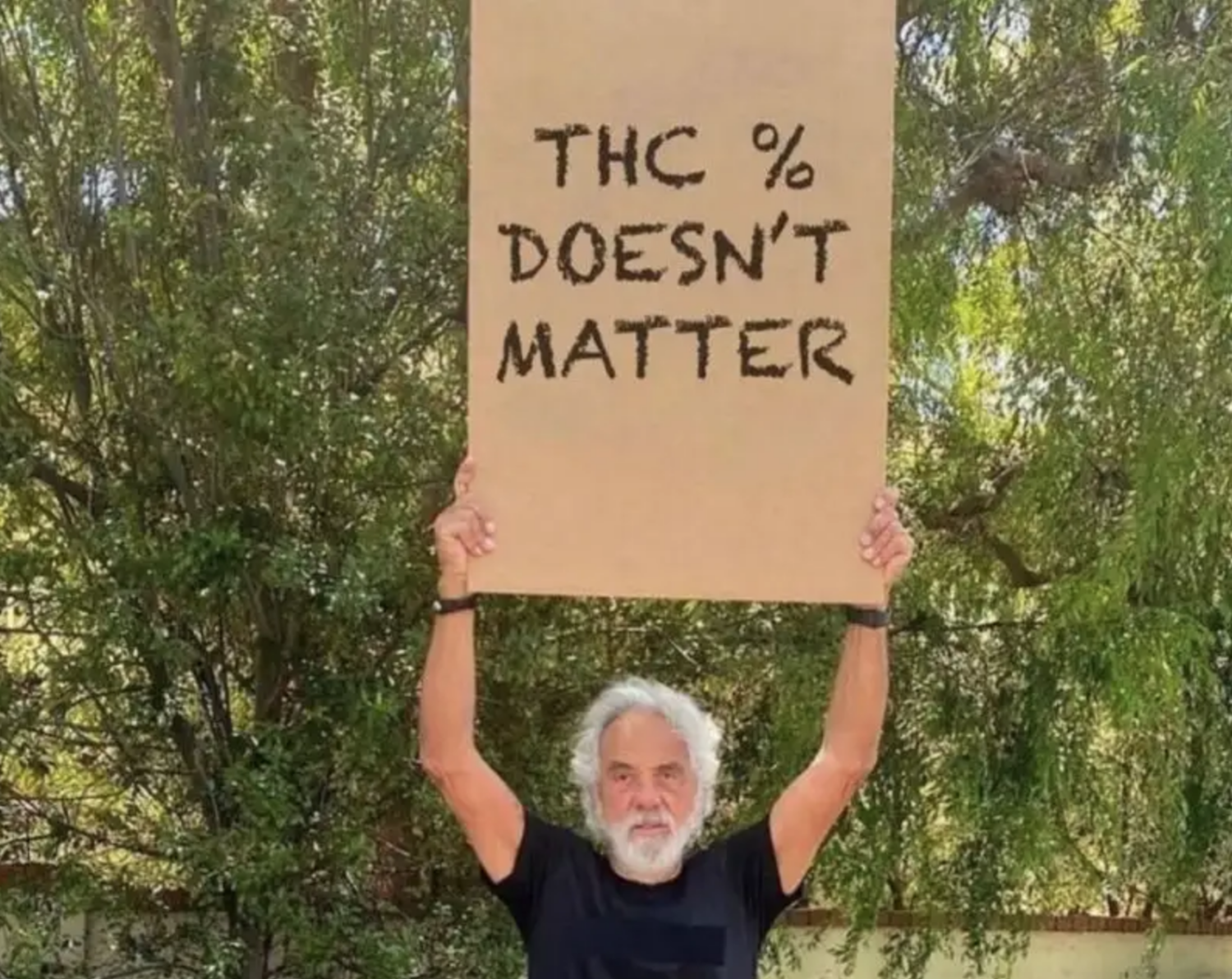
Tommy Chong, who is hailed as one of the cannabis greats doesn’t seem to believe so. A few other legends, especially the proponents of the entourage effect, hold a similar belief. And so does the Forbes article mentioned above that suggest that THC numbers are a scam after all.
If it’s true that THC doesn’t matter, then why don’t we go right ahead and smoke CBD flower and get high?
It’s all in the terpenes.
Tommy Chong/Photo via MyCannabis.com
Entourage Effects: Terpenes Over THC
The entourage effect is a term that was coined by two founding fathers of cannabis, Raphael Mechoulam, and Shimon Ben-Shabat in 1998. It is the suggestion that when terpenes are added to cannabinoids such as THC or CBD the resulting effect is both amplified and prolonged in such a way that “the whole is greater than the sum of parts.” This is what makes the argument that when it comes to the strength of a strain, terpenes have to be taken into consideration and not just THC alone.
Some of the most powerful cannabis strains have THC levels in teens (not exceeding 20). But unfortunately, they are falling out of favor as the market embraces strains that test above 30%.
To create products that are endeared to this market trend, unscrupulous manufacturers are bumping THC numbers. Consequently, there have been reports of consumers “feeling nothing” after consuming “potent” cannabis strains with labels reading over 35% THC. This is causing a lot of confusion in the market.
Terpene Profile Over Potency
When purchasing a cannabis product, the terpene and cannabinoid profile should be prioritized above the THC percentage alone. In Nevada for example, it is now mandatory for producers to list the top three terpenes in each product. This information should guide the consumer on the kind of effects to expect from each strain.
Science has now revealed that CBD may offset some of the negative effects caused by THC, allowing the user to enjoy the best of both worlds through the entourage mechanism. Some consumers have found that THC with CBD (with each exceeding 10%) can be a powerful combination for both medical and recreational use. Gradually, we expect consumers to become increasingly sensitized about the “truth in terpene profiles and lies in THC numbers.”
This should lead to the discovery of the most effective cannabinoid and terpene combinations for certain medical or recreational goals. It should also herald the demise of the rush towards 40% THC.
Meanwhile, should we smoke CBD because THC doesn’t matter?
Not at all. While THC does matter in a strain, it’s not everything. For recreational use, some legends swear by the 15% mark if any level of intoxication is to be achieved. Anything below might as well be considered hemp. Increasing THC above that level for stronger effects might be a gamble as well. It’s the terpenes that add the extra chutzpah. But well, further science is needed to back these claims.
As marijuana policy reform picks up steam across the country, Booker is urging the federal government to get with the program, especially in terms of equity.
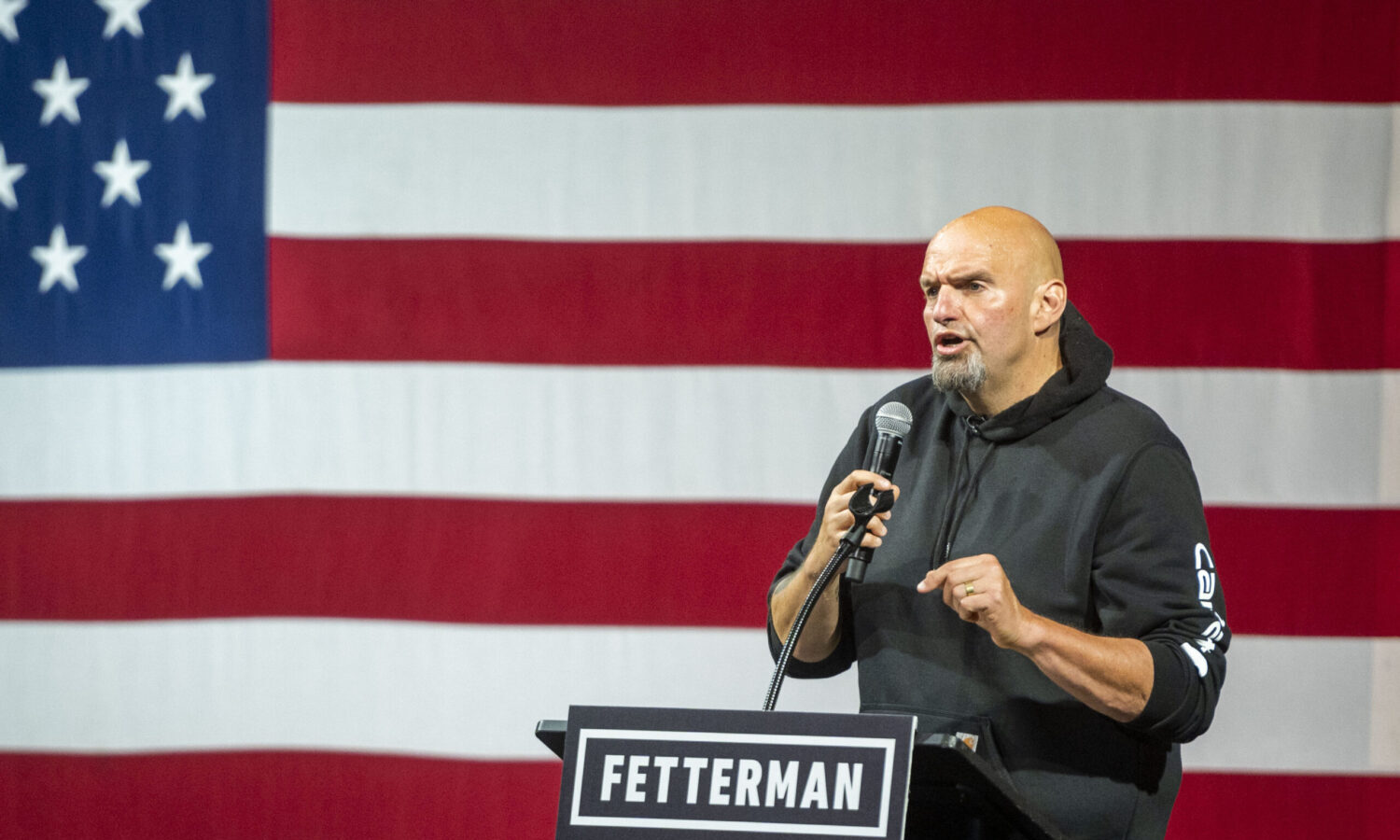
Democrats Sen. Cory Booker (D-NJ) and Pennsylvania Lt. Gov. John Fetterman (D) continue to push hard for cannabis policy reform.
“With a majority of Americans on both sides of the aisle in support of legalization, we know that this has opportunities,” said Booker in a pre-recorded video at the Cannabis Opportunities Conference. He added that there is hope for policy change considering state and nationwide support for marijuana legalization, reported Marijuana Moment. “We need, though, to continue to evolve our focus, vision, and strategies to make sure that economically, socially—and especially within our criminal justice system—we are expanding fairness, equality and opportunity.”
The event’s policy summit was led by PA State Sen. Sharif Street (D).
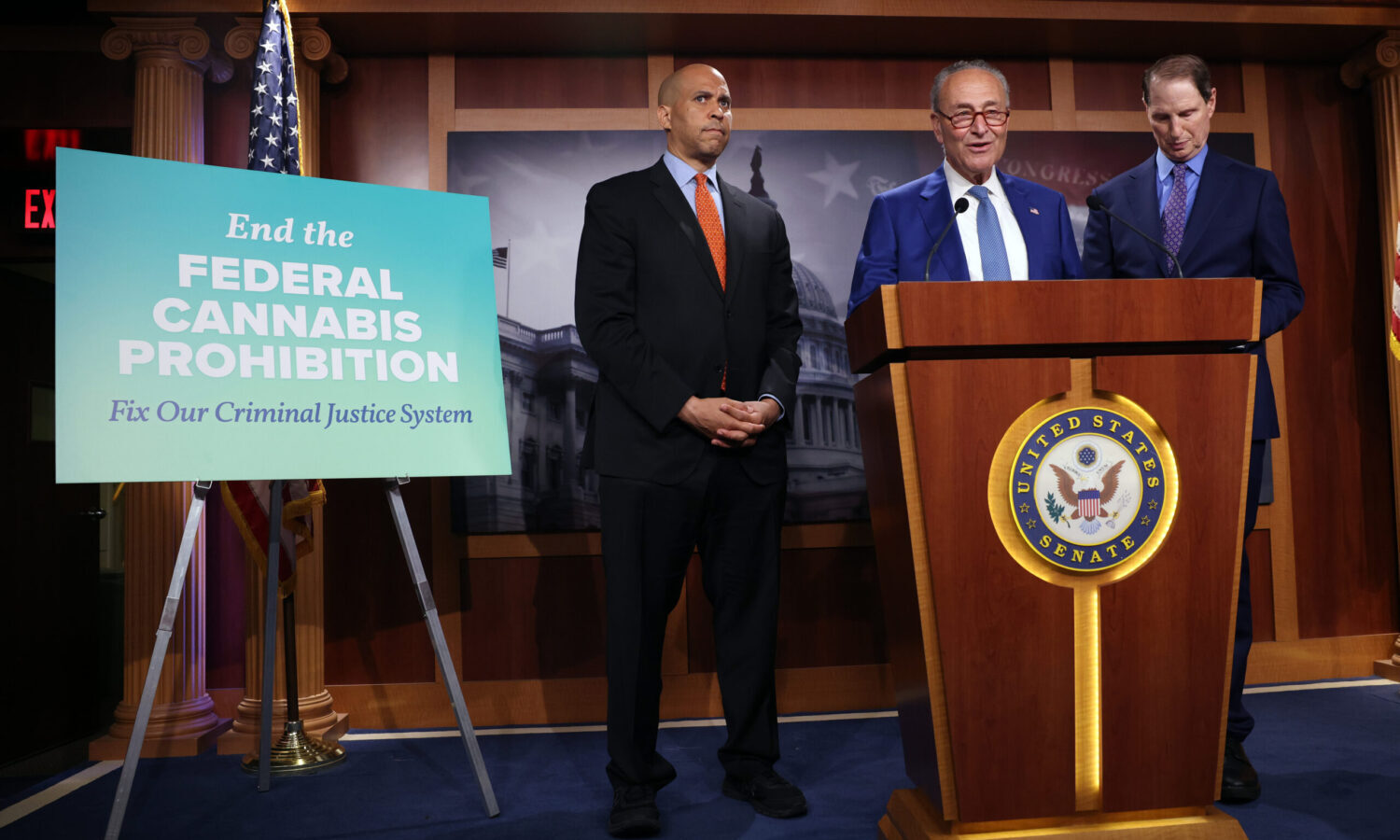
Booker, Senate Majority leader Chuck Schumer (D-N.Y.) and Sen. Ron Wyden (D-Ore.) introduced the outline of the Cannabis Administration & Opportunity Act (CAOA) in July 2021. The proposal seeks to decriminalize marijuana at the federal level by removing it from the Controlled Substances Act (CSA), expunging prior convictions and allowing people serving time for applicable crimes to petition for resentencing.
U.S. Senate Majority Leader Charles Schumer (D-NY) (C), joined by Sen. Cory Booker (D-NJ) (L) and Sen. Ron Wyden (D-OR) / Photo by Kevin Dietsch/Getty Images
As marijuana policy reform picks up steam across the country, Booker is urging the federal government to get with the program, especially in terms of equity.
“This legalization movement has really got to continue to focus on removing barriers to justice for marginalized communities,” he said. “This movement has got to be about expanding economic opportunities and democratizing those opportunities well. This movement has to be about not allowing us, in any way, to move backward, but continuing to take strides forward towards justice.”
Fetterman Continues To Push For Reform
To that end, Fetterman, a longtime cannabis advocate, talked about expungement — a “one-time, large-scale pardon effort” from Gov. Tom Wolf and Fetterman, who chairs the state Board of Pardons. Under the program that got underway earlier this month, Pennsylvanians convicted of possessing small amounts of marijuana can apply to get their records cleared.
“Pennsylvania is a place for second chances,” Fetterman said, adding that the joint effort “will help people get pardons quickly for stupid weed convictions.”
Fetterman, who is running for a Senate seat, recently urged President Biden to deschedule marijuana from a Schedule I drug and work to decriminalize it. Shortly after, Fetterman and the President crossed paths in Pittsburgh and discussed potential changes to the status of cannabis under the CSA prior to Biden’s Labor Day at a union hall.