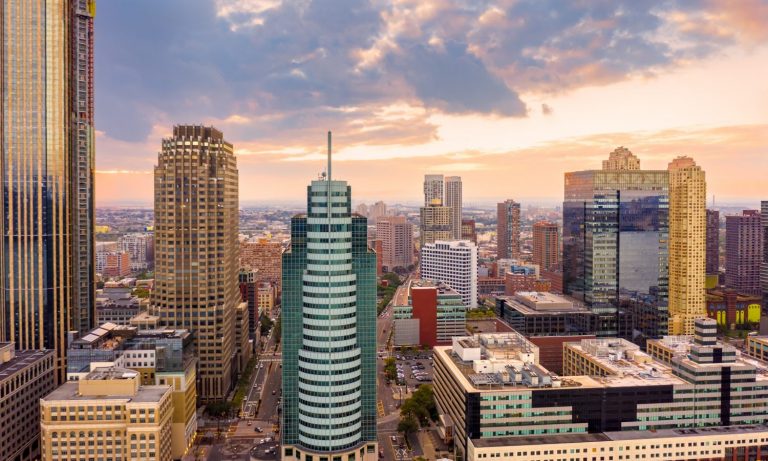
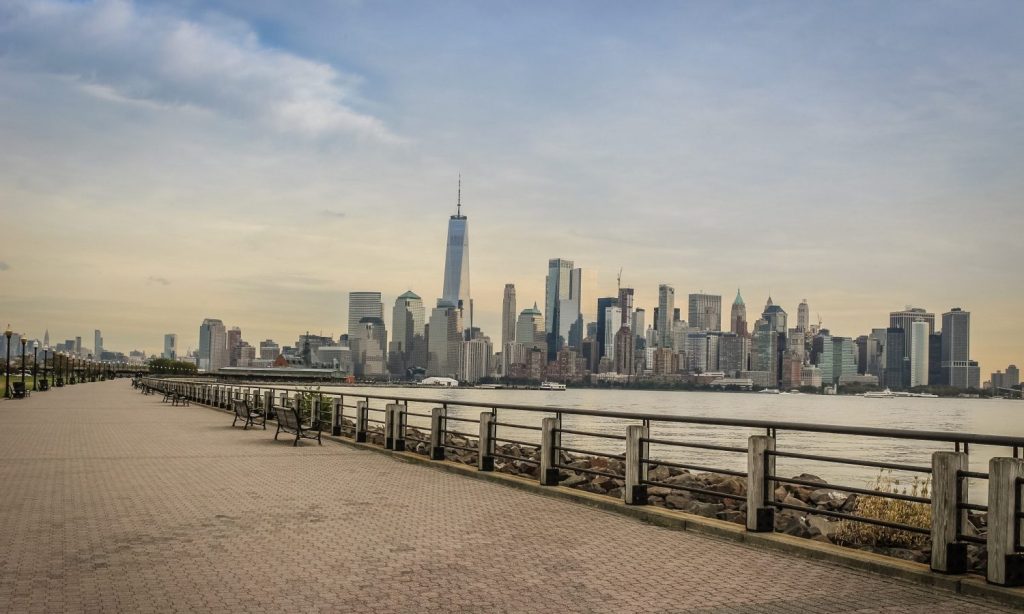
What happens in New Jersey will/could spur the start of recreational sales in neighboring states that have already legalized recreational cannabis, or that may in the future.
In the November 2020 elections, some 67% of New Jersey’s adults voted in favor of cannabis legalization.
The new cannabis law, signed by Governor Phil Murphy in February, had a deadline of Aug. 21 for the New Jersey Cannabis Regulatory Commission to create its rules and regulations. The commission complied.
Photo by Jametlene Reskp via Unsplash
However, out of the state’s 565 municipalities, some 32 cities and towns have chosen not to allow the creation of recreational cannabis programs in their towns, although they have the right to change their decisions in the future and jump back in.
Cantor Fitzgerald analyst Pablo Zuanic shared his notes from the last week’s New Jersey cannabis conference in his Sunday analyst note.
MSO Incumbents In Advance If The Program Starts On Time “Multi-state operator incumbents in New Jersey should have a great head start if recreational sales begin on time by the February 2022 deadline,” said the analyst who noted that incumbents are vertically integrated medical operators, who will be grandfathered into the adult-use cannabis program.
According to Zuanic, these incumbents will obtain a notable advance over both the 24 new Alternative Treatment Center licenses and the new applicants.
Currently, there are 12 licensees that will be grandfathered into the program, of which only two are not completely operational: Justice Grown, iAnthus Holdings. The rest include two private companies — Breakwater and Harmony — and eight multi-state operators — Acreage Holdings, Ascend, Wellness Holdings, Ayr Wellness, Columbia Care, Curaleaf, Green Thumb, TerrAscend and Verano Holdings.
At the moment there are 22 stores opened in New Jersey, but Zuanic said he believes all ten active operators will have three stores by the time the new program begins.
Photo by Howard Kingsnorth/Getty Images
Possible Delays
Zuanic further offered a possible scenario in which the start of recreation cannabis sales in New Jersey will be delayed by litigation, with the state’s Cannabis Regulatory Commission (CRC) having to estimate incumbents’ capacities to meet the demands of both medical patients and future recreational consumers. Another reason for the delay could come from the townships, which remain in opt-out status by the deadline.
“What happens in New Jersey will/could spur the start of recreational sales in neighboring states that have already legalized rec (Connecticut, New York, Virginia), or that may in the future (Pennsylvania, Maryland),” pointed out Zuanic, adding it could also impact the rule drafting depending on how the CRC’s plans workout.
“We continue to think NJ rec sales will be off to a slow start if we go by one of the required ‘three As’ (accessibility, assortment and affordability), with the number of approved stores at the beginning maybe only in the teens,” Zuanic concluded.
Making friends as an adult isn’t always easy. Here are some tips that can help you can get started.
There comes a time when you realize that you don’t know how to make new friends. While this might be a little bit of an exaggeration, once you’re out of your early 20s and there’s no college or new job to immerse yourself in, there’s also fewer opportunities to make new friendships. Add to that post pandemic anxiety, and it maybe even more difficult to make new friends.
But, like all things, with some practice you can get better at it. According to experts, what matters most when it comes to making new friendships is intention. That means you have to actually act on these feelings, pushing yourself out of your comfort zone in order to meet new people and reach out to them with friendship in mind.
Friends of friends are great options for new friendships, especially considering that you guys already have that link in common, facilitating conversations and shared experiences. Reach out to them over social media or via text, and plan for a coffee date. If that sounds like too much, make the time to approach them in person the next time you see them at a party or event. These people can quickly be your friends since you likely see them with a certain frequency
Use apps
Photo by Christina Morillo via Pexels
There are plenty of apps designed with friendships in mind, for example, Meet Up, hooking you up with groups and people who are into the same stuff that you’re into. Do some research and find an app you like and use to get to know others.
Workout classes are great ways to know people, since they create an immediate sense of community and shared experience. Pay attention to the people that surround you and make the time to talk with them, perhaps scheduling your next workout session together.
Get out of your comfort zone
Photo by monkeybusinessimages/Getty Images
Get out of your comfort zone, whether that means reaching out to someone you haven’t spoken to in years or simply visiting a bar and trying your best to talk to other people. While we all get very anxious about making friends and these types of situations, we all know deep down that the only way to make a new connection is to show up and try.
Being a convicted felon will no longer prevent people from getting a license to sell cannabis in Washington, which was the nation’s first state to legalize adult-use cannabis along with Colorado. Washington state eases cannabis licensing restrictions for them.
As it stands, most U.S. states require a criminal background check for applicants seeking a license to sell or grow cannabis; anyone with a felony or a few misdemeanor convictions is deemed ineligible. That changes next month in Washington, reported KOMO News.
Photo by Roman Budnyi/Getty Images
“I think it’s great what the state is doing in terms of allowing people who have issues in the past, to be able to qualify,” said Tran Du, co-owner of Shawn Kemp’s Cannabis in Seattle.
Under the new system, felonies will still be scrutinized, but a jail or prison sentence will no longer be an automatic disqualifier.
“We wanted to bring parity in the disproportionality that we saw from the leftover of the war on drugs and that Black people were being arrested and brown people were being arrested disproportionately,” said Democratic State Rep. Melanie Morgan, chair of Washington state’s Social Equity on Cannabis Task Force.
A study conducted by the Marijuana Arrest Research Project found that although African Americans and Latinos use marijuana at lower rates than whites, African Americans were arrested for weed possession at 2.9 times the rate of whites. Latinos were arrested at 1.6 times the rate of whites.
By relaxing the criminal background restrictions, Morgan said the goal is to keep people of color from being locked out of the legal cannabis industry.
“The bottom line is bringing parity to the industry and making sure that Black and brown people have equal access to this industry in ownership,” Morgan said.
The new rule has already been adopted by the Washington State Liquor and Cannabis Board and takes effect Oct. 2.
Photo by Animaflora/Getty Images
Black-Owned Cannabis Businesses Still Few And Far Between
While state and city leaders and cannabis advocates nationwide have embraced social equity programs with the goal of righting the wrongs of the War on Drugs and helping people of color get into the industry, their efforts haven’t yet made the desired impact.
The Pew Charitable Trusts looked at the situation around the country and noted that low-income Blacks and Hispanics, as well as the formerly incarcerated, seem to face a fundamental problem: money, or lack thereof.
“Cannabis businesses are uniquely expensive and difficult to operate. They must navigate a thicket of state and federal regulations, from installing special ventilation systems to following certain security protocols. Compliance can require hiring experts. And because selling marijuana is illegal under federal law, it’s nearly impossible to get a business loan,” wrote the think tank.
Not An Easy Lift
Pew’s comprehensive report quoted Laura Herrera, a cannabis consultant who advises social equity entrepreneurs in Oakland, who said the application process in the city is akin to getting permission to build a housing development. And that’s just the beginning, she said.
“Nobody’s really prepared, except for big firms, for the bureaucracy and then the compliance requirements, and all the operational requirements,” Herrera said. “It’s a huge lift.”
Kudos to the state of Washington for making the effort.
Stress is a part of every person’s life. Still, it can be difficult to differentiate normal amounts of stress from the type that limits your life.
We all deal with stress, especially nowadays, when the world seems to be getting crazier and like there’s less in our control. But there’s a difference between normal amounts of stress, prompted on occasions, and the type of stress that’s a symptom of something more serious going on, like an anxiety disorder or depression.
This past year has been challenging for our mental health, so it’s normal for you to be dealing with a little more stress than usual. Still, it’s important to keep track of your symptoms in order to deal with the problem accordingly and to know if your levels of stress are normal or if you need the opinion and advice of an expert.
Photo by Christian Erfurt via Unsplash
CNN spoke with a variety of experts on the matter, who provided some tips on how to notice the differences regarding the different types of stress. “If the worry is intrusive beyond the stressor, that’s anxiety,” said Dr. Cynthia Ackrill. “If the sadness is a mood that you can’t shift beyond the situation, that’s depression.”
While stress isn’t a condition in itself, its presence can make a condition worse and it could also be an indicator of general anxiety disorder, a condition that requires at least six months of consistent and elevated levels of anxiety in order to be diagnosed. Symptoms of a general anxiety disorder include trouble sleeping, restlessness, and difficulty
Normal stress should occur when faced with a change, whether that’s a new job or a moving places. Once some time passes, the stress should diminish and it shouldn’t affect other areas of your life in impactful ways. If you’re relationships or work start to be impacted by your levels of stress it might be time to talk to someone, with the earlier you do it, the better.
Stress can be managed by practicing a few helpful activities, like meditation and breathing exercises. Talking things out can also help, whether you’re doing it in therapy or simply discussing things openly with a friend or family member. Working out is also great for stress relief, channeling your energies into something, and allowing your brain to take a much-needed break.
The CDC has provided us with mixed information when it comes to the COVID-19 booster shots. Here’s a breakdown of who qualifies.
There’s been a lot of back on forth on the COVID-19 booster; you have to read the news every day to stay on top of it. The mishandling of matters by the Centers for Disease Control and Prevention (CDC) has only made things worse, confusing everyone on whether or not they’re able to get the shot or even if they should.
Do you qualify? Here’s what we know.
Photo by CDC via Unsplash
In order to qualify for a booster shot, you must have received the Pfizer vaccine, since that’s the vaccine that has earned approval. According to the suggestions made by the CDC, people 65 and older and people between the ages of 50-64 with underlying medical conditions should get the Pfizer booster. People between the ages 18-64 may get the booster if they have an underlying condition or if they work somewhere that exposes them to the virus to higher degrees than the normal population.
The CDC has provided a list of health conditions that qualify people for getting their Pfizer booster. It’s important to remember that people who are immunocompromised, whether they’re undergoing cancer treatment or suffering from a condition that affects their immune system, also qualify for the booster.
The toughest area to navigate would be jobs, since the CDC isn’t all that clear. The current list of high-risk occupations includes, “healthcare workers, teachers, and daycare staff, grocery workers, people who work in prisons and homeless shelters, among others.” It’s unclear what among others means, but a lot of people could fit under this definition, making the booster relatively easy to get.
Now that they were approved, boosters should become available soon. While before there were lines and wait times, experts predict that getting this vaccine will be relatively easy, since pharmacies, hospitals and more already have these items in stock.
I firmly believe that businesses that want to get into the California CBD industry are going to need to muster up some serious cash and focus on compliance rather than just marketing.
Last week, AB-45 completed its run through the California legislature and was presented to Governor Gavin Newsom for his signature, which is probably imminent. Once he signs it, the law takes effect and will pave the way for legal CBD consumables, while banning (at least temporarily) any kind of hemp-derived inhalable product. If you want to read our prior analysis of AB-45, see this post.
If you know even a little about the twists and turns of California’s attempts to legalize CBD since 2018, you’ll appreciate just how monumental this bill is, at least in theory. In 2019, AB-228 made it almost to the finish line but stalled out due to opposition (see my posts here, here, here, and here). In 2020, California legislators tried (and failed) to do the same thing two times with AB-2827 and AB-2028. Personally, I was telling people all year that even AB-45 didn’t stand a great chance.
Now that AB-45 has passed, a lot of folks are celebrating while others (namely inhalable product stakeholders) are upset. All of these reactions may be premature because things are likely to change substantially over the coming months (assuming Newsom signs AB-45) when the California Department of Public Health (CDPH) issues CBD regulations.
Before getting into these regs, it’s important to highlight that CDPH hates CBD. In 2018, and without any law supporting them or going through any kind of official rulemaking process, CDPH took it upon itself to straight up ban CBD foods and beverages in the state via a website FAQ. You can read an older analysis of mine on the CDPH’s position here. And at the beginning of this year, CDPH expanded its position to cover topical products via a revised FAQ.
With that all in mind, here are some of the things that CDPH has the power to or will have to regulate under AB-45:
Good manufacturing practice standards for manufacturers;
The amount of THC that’s allowed to be present raw hemp extract not intended for human consumption (i.e., work-in-process hemp extract);
Minimum age requirements for hemp products on a finding of emergency;
Prohibition of human or animal products that CDPH deems harmful;
Serving sizes;
Record-keeping standards;
THC concentration and ratio of cannabinoids for final-form products;
Specific contaminant levels (as an aside, the contaminant-level standards for California cannabis products are basically ported into the hemp market through AB-45, and CDPH is free to add even more standards);
Basically anything else within the purview of AB-45, including things like labeling, licensing fees, etc.
I have worked on hundreds of matters dealing with CDPH cannabis issues and CBD issues in California prior to AB-45. I have seen (a) how intensely CDPH regulated cannabis, and (b) how aggressively they went after CBD for reasons that still remain very unclear to me.
Photo by Anshu A via Unsplash
I can only surmise that when — not if — CDPH issues CBD regulations, they will be extremely aggressive and basically box out anyone in the industry who does not have the resources to spend tens of thousands of dollars or more on compliance. I firmly believe that the “wild west” days here are coming to an end and businesses that want to get into the California CBD industry are going to need to muster up some serious cash and focus on compliance rather than just marketing. I could be wrong, but I don’t think so.
Keep in mind too that the initial set of regulations will be exempt from the state Administrative Procedure Act and will be considered “emergency” regulations, which will take effect immediately while the public is commenting on them. CDPH could drop regulations at any time, and if it does there will probably be an initial period of chaos where people try to mold their existing CBD businesses into compliant ones. That too will be expensive.
Don’t get me wrong, on balance I am happy AB-45 passed and that the state will not take an arbitrary and (in my opinion, stupid) position on CBD anymore. But we all need to be very weary about what the future holds, and prepared to do a lot of work.
Griffen Thorne is an attorney at Harris Bricken, a law firm with lawyers in Seattle, Portland, Los Angeles, San Francisco, Barcelona, and Beijing. This story was originally published on the Canna Law Blog and has been reposted with permission.
The U.S. House of Representatives approved a large-scale defense spending bill on Thursday, just days after passing cannabis banking reform which was part of the legislation. So, it seems that cannabis banking could end up on President Biden’s desk along with the all-important defense budget.
The cannabis banking reform measure, approved Tuesday on a voice vote, would allow banks to do business with cannabis companies without being penalized by federal regulators.
Photo by Darren415/Getty Images
The vote came after the House Rules Committee made in order the amendment from Rep. Ed Perlmutter (D-CO) for floor consideration. It was one of various drug policy proposals lawmakers were hoping to attach to the National Defense Authorization Act (NDAA), Marijuana Momentreported.
The latest breakthrough is the fifth time that the House has passed the cannabis banking reform in recent years.
Pushback From Key Senators
Perlmutter indicated that he was optimistic about including banking reform in the NDAA as the vehicle to send it to the Senate floor.
“I think the fifth time is the charm,” Perlmutter told Marijuana Moment. “I mean, obviously, we still have to do some work to make sure that it remains part of the NDAA as the House and the Senate go to conference. So we still have work to do with the Senate to make sure that it remains part of it. But I think that it will.”
However, some key senators, including Senate Majority Leader Chuck Schumer (D-NY) and Sen. Cory Booker (D-NJ), have insisted on passing comprehensive justice-focused marijuana legalization first, arguing that passing the Secure and Fair Enforcement (SAFE) Banking Act first could affect support for broader reform.
A tweet posted by Politico’s Natalie Fertig cited a Schumer spokesperson who said the senator’s position — that both reforms should move “at the same time” — had not changed.
ALSO: a spokesperson for Maj Leader @chuckschumer told me today that his position has not changed since he told @politico in April that banking and comprehensive reform should move “at the same time.” Here’s that interview: https://t.co/OuCUFaSGSU
On Wednesday, Booker, who is working on a final legalization bill with Schumer and Senate Finance Committee Chairman Ron Wyden (D-OR), told Politico that cannabis banking is “something that should not be included” in the defense budget.
“It undermines the ability to get comprehensive marijuana reform and the kind of things that are harder to get done like expungement of people’s records,” Booker said, as per Fertig’s tweet.
The bill, which would remove marijuana from the Controlled Substances Act (CSA), also aims to create a pathway for resentencing for those incarcerated for cannabis offenses.
A bill to federally legalize marijuana will be voted on by the House Judiciary Committee next week, the panel announced on Friday.
The development, initially reported by Marijuana Moment, comes barely 24 hours after the House voted in favor of a defense spending bill with an amendment that would protect banks that do business with state-legal cannabis companies from being penalized by federal regulators.
Photo by Fokusiert/Getty Images
“Next week, the Judiciary Committee will hold a markup on a wide array of legislation that will combat the sale of counterfeit products online and limit race-based hair discrimination,” saidJudiciary Committee Chairman Jerrold Nadler’s (D-NY)in a press release.
Nadler’s Marijuana Opportunity, Reinvestment and Expungement (MORE) Act, to be voted on at Wednesday’s panel along with a dozen other pieces of legislation, seeks to “decriminalize marijuana federally and invest in communities that have been disproportionately harmed by the War on Drugs.”
The MORE Act comes with the backing of over 150 organizations across the country.
“Many of these bills were reported out of the committee and passed by the full House of Representatives last Congress, and I look forward to working with all my colleagues once again to get these bills through Congress and on to the president’s desk,” Nadler said in the press release.
Photo by Karolina Grabowska from Pexels
The bill, which would remove marijuana from the Controlled Substances Act (CSA), also aims to create a pathway for resentencing for those incarcerated for cannabis offenses, protect immigrants from being denied citizenship over marijuana and prevent federal agencies from denying public benefits or security clearance due to its use.
“The Committee will also consider a bipartisan package of bills that will help lower prescription drug costs by taking on certain anticompetitive practices employed by large pharmaceutical companies, legislation that will decriminalize marijuana federally and invest in communities that have been disproportionately harmed by the War on Drugs, and several private immigration bills,” Nadler said.
“Many of these bills were reported out of the Committee and passed by the full House of Representatives last Congress, and I look forward to working with all my colleagues once again to get these bills through Congress and on to the President’s desk.”
It is time for President Biden to face the reality of his role and the role of his colleagues and predecessors in advancing of the drug war.
The War on Drugs, not the war in Afghanistan, is America’s longest war. It has used trillions of American taxpayer dollars, militarized American law enforcement agencies (federal, state, and local), claimed an untold number of lives, railroaded people’s futures (especially among Black, Latino, and Native populations), and concentrated the effort in the country’s most diverse and poorest neighborhoods.
The War on Drugs has been a staggering policy failure, advancing few of the claims that presidents, members of Congress, law enforcement officials, and state and local leaders have sought to achieve. The illicit drug trade thrived under prohibition; adults of all ages and youth had access to illicit substances. Substance use disorders thrived, and policymakers’ efforts to protect public health were fully undermined by policy that disproportionately focused, if unsuccessfully, on public safety.
Photo by vladans/Getty Images
It is time for an American president to think seriously about broad-based policy change to disrupt the manner in which the United States deals with drugs.
Despite its dramatic policy failures, the War on Drugs has been wildly successful in one specific area: institutionalizing racism. The drug war was built on a foundation of racism and xenophobia. As I have written in Marijuana: A Short History, the historical foundation of drug policy in the United States was to vilify African Americans, Native Americans, immigrants from Asia and Mexico, and other out groups, and to turn White America against each. Michelle Alexander and numerous others have effectively highlighted how America’s criminal justice system from arrest to trial to incarceration to post-release conditions disproportionately punish people of color, creating a cycle of harm in their communities.
We know the design and enforcement of America’s drug laws were racist in intent and in practice. The Anti-Drug Abuse Act of 1986 enacted penalties for possession of crack cocaine (a substance predominantly used by poor and minorities users) that were 100 times higher than for the possession of powder cocaine (a substance used more often by wealthier, white users). And while Congress in 2010 reduced that disparity in penalties from 100 to 1 to 18 to 1, and in 2018 President Trump signed a law making that change retroactive, thousands of low level offenders were left out from resentencing because of a loophole. And in 2021, the U.S. Supreme Court refused to extend the retroactive resentencing effort for those low-level offenders.
In addition, research shows that Black and wWhite Americans use cannabis at roughly the same rates. However, Black Americans are more than 3.6 times more likely to be arrested for a cannabis offense than are wWhite Americans. And even in states that have reformed their cannabis laws, the institutionalization of racism in police departments’ enforcement of the drug war sustains, as Blacks are more than two times as likely as whites to be arrested for cannabis offenses in those legal jurisdictions. And while cannabis offenses have plummeted in those states, the impact of those remaining arrests and convictions are felt in an outsized way across Black and Brown America and in Native communities.
The 2018 law mentioned above was titled the First Step Act. This label was fitting in that it described the long road toward broader criminal justice reform and for justice in the communities that the War on Drugs targeted for decades. And in his 2019 State of the Union Address, President Trump praised that bill becoming law, by noting that it addresses the explicit racism in the American criminal justice system. He noted:
“This legislation reformed sentencing laws that have wrongly and disproportionately harmed the African American community. The First Step Act gives nonviolent offenders the chance to reenter society as productive, law-abiding citizens. Now States across the country are following our lead. America is a nation that believes in redemption.”
President Trump was right that America believes in redemption, but only in theory. It rarely advances redemption in practice. Every president in the 20th and 21st centuries helped perpetuate, in some way, a drug war with one “crowning achievement”: systematically harming minority communities in America with intent and malice. Supporters of prohibition, be they presidents or other elected officials, advocates, law enforcement leaders, or everyday citizens wrap themselves in a mystical cloak of “protecting the children” and “keeping communities safe.” In reality, that hypocrisy has sought simply to protect white children (a failed effort) and to keep white communities safe (another missed target).
Photo by LeszekCzerwonka/Getty Images
If prohibition supporters cared deeply about children and the safety of communities, they would look at what the War on Drugs have done to Black and Brown children and communities and be sickened. They would see families divided, young people (especially young Black men) have dreams dashed and future opportunities restricted, communities rocked by gang and police violence, systematic underinvestment with simultaneous over-policing in cities, and dozens more disastrous consequences because of their failed drug policies. Prohibition supporters from Main Street to Pennsylvania Avenue should consider how the drug war has harmed specific American communities and recoil, but instead, they ignore reality and refuse to advance legitimate alternatives.
It is time for President Biden to face the reality of his role and the role of his colleagues and predecessors in advancing of the drug war. He must consider vast reforms — some which require the cooperation of Congress and others than can be implemented via executive action— that deal with drug policy in a thoughtful and reasoned, rather than anachronistic and heartless way. Mr. Biden must realize that choices about drug reform—pardons, sentencing reform policy, the expansion of mental health and addiction services, cannabis legalization, police reform, prison reform, community reinvestment—should not focus on whether those reforms come without costs. Mr. Biden must compare whether those reforms are a policy improvement over the status quo: prohibition.
Too often elected officials, policy analysts, advocates, and citizens hide behind the cowardice of highlighting the challenges that drug reform can potentially cause, while refusing to speak and think bravely about the comprehensive failures and harms perpetuated by current policy. Mr. Biden can no longer do what he and his predecessors have done: sit idly by, awaiting a perfect policy to replace the unmitigated failures of the War on Drugs. A significant part of the electoral coalition that swept Mr. Biden to the Democratic presidential nomination and eventually to the White House were Black, Latino, and Native Americans who have been harmed the most by the War on Drugs.
Photo by sakhorn38/Getty Images
Part of that solution must be an embrace of full-scale criminal justice reform that works to inject fairness into a system that has, for centuries, disproportionately punished people of color, the poor, the undereducated, those without personal or political connections, and any others in our society who fall on hard times. Drug reform — and particularly cannabis reform — must sit at the forefront of the president’s efforts to chase the type of justice that has eluded so many for so long.
Legalizing cannabis, focusing broader drug reform efforts around public health policy rather than inhumane criminalization, prioritizing law enforcement funds toward violent crime rather than petty crime, coordinating an intergovernmental effort to harmonize criminal justice reform through legislative and executive efforts, and reinvesting in the communities that our government has targeted and persecuted are a requirement for President Biden to be the humane and justice-oriented president he marketed himself to be in the 2020 campaign.
Eight months into this administration, Mr. Biden faces an embarrassing reality with regard to drug policy. Donald Trump, who received only 8% of the Black vote in 2016, did more as president to change drug policy and ameliorate the effects of the drug war for communities of color than has Joe Biden, who won 87% of Black support in 2020.
In the same way this president took the bold step of ending America’s second longest war in Afghanistan, he should take the equally bold step of ending America’s longest war: the War on Drugs.
New data suggests there’s a difference between the leading vaccines that are being administered in the U.S.
One of the arguments that many health experts have posed comes in regards to vaccine effectiveness. They all say it’s important to get your shot, no matter whether it’s Johnson & Johnson, Moderna, or Pfizer. But is there a vaccine that’s superior to the rest? While they’re all very effective, data suggests there is one vaccine that stands out from the rest.
According to a report published this week in The New England Journal of Medicine, the Moderna vaccine appeared to have more protective powers than Pfizer.
This study analyzed the real world effectiveness of the vaccines at preventing disease in 5,000 health care workers in 25 states. Both vaccines were very effective, but Pfizer’s defense rate was 88.8% versus Moderna’s 96.3%. Data from the Centers for Disease Control and Prevention indicates that Pfizer’s protection fades over time, from 91% to 77% following a period of four months. Moderna’s protection doesn’t show this same decline.
The New York Times reports that if this gap starts to increase, it may be important data to have when it comes to booster shots and who needs them.
Still, while those who received the Pfizer vaccine may be feeling a little stressed out, experts say that this difference is small and should warrant any meltdowns. “It’s not appropriate for people who took Pfizer to be freaking out that they got an inferior vaccine,” said virologist John Monroe.
Photo by Diana Polekhina via Unsplash
A lot of factors could have affected these results, including the demographic of those who were vaccinated and the time of their release. For example, Pfizer was the first vaccine approved, meaning that a large percentage of adults and health care workers received it first, something that could be skewing the data.
Both Moderna and Pfizer vaccines are effective against preventing infection and severe disease, and both have surpassed the expectations set by researchers when they were first being devised.