Wednesday, May 6, 2026
Home Blog Page 356

Missed Your Flight? Here’s What You Can Do

0

Missing a flight is a huge bummer, but don’t lose hope yet. Here’s how you can remedy the situation.

Racing to your gate only to be told you missed your flight is a situation we all try to avoid. While you may be prepared with enough time and patience, airports have the ability to wreck our plans in seconds. If you miss your flight, there’s a few things you can do depending on your particular situation.

Airports are lawless places, but it works if you approach the subject with the right attitude. Thousands of people miss their flights on a daily basis. If you find yourself in this position, having the right attitude might differentiate you from the rest of the pack.

Here’s what you can do if you miss your flight:

Know the basics

People Are Now Stealing Marijuana From Chicago Airports
Photo by Flickr user Nick Harris

No matter how nice you are, airlines generally don’t care why you don’t show up at the gate. Whether you overslept or got held back at TSA, it’s up to you to make it to the gate on time. Still, there’s a “flat tire rule,” which gives airline agents some leeway in how to handle these situations.

This depends on the airline, for example, as reported by The Cheat Sheet, Delta’s flat tire rule explains that each situation is handled on a case by case basis. “Many times we can get them on the next available flight,” explained a Delta rep. American Airline’s late arrival policy covers tardiness “as long as you arrive within two hours of the missed flight.”

Analyze your situation

scientists could test if marijuana makes you susceptible to psychosis
Photo by rawpixel.com

RELATED: 5 Hacks To Find Cheap Flights

Be clear about your current situation. If you missed a domestic flight it is generally easier than if you missed an international one. For international flights it’s important to be aware of current COVID-19 measures and to have all of that documentation in place, that way you can avoid any delays in that department. It’s very important to prepare ahead of time, especially now that people are back traveling and rules are changing on a daily basis.

Call your airline right away

This Is How Our Bodies Will Change After Spending Months Indoors
Photo by Vlada Karpovich via Pexels

RELATED: The Scary Reason You Want To Avoid A Window Seat On Your Next Flight

The first thing you should do when you miss a flight is to call your airline as soon as you can. If you don’t show up to the gate, you’ll fall under the “no show” category, meaning that the airline may cancel your itinerary and leave you with fewer options to resolve your trip. If the wait list for the phone is too long, be sure to look for options on their website.

While it’s very difficult to account for all scenarios, it’s good to be as prepared as you can before you board a flight. In order to minimize the odds of losing a flight, try planning your trip with sufficient time, giving you the chance to book a direct flight that’s reasonably priced. When the day of the flight comes, be sure to get there with sufficient time, no matter how terrible the airport is.

Oregon Usable Marijuana Possession Bumped To Two Ounces But Dispensaries Lag

This is a rule that prohibits consumers from purchasing an ounce of their favorite strain while also purchasing a few pre-rolls at the same time.

On June 23, 2021, Governor Kate Brown signed SB 408 into law which included a host of important reforms for which Oregon’s cannabis industry has been lobbying for years. The chief backer of SB 408 this session was the Oregon Retailers of Cannabis Association (ORCA).

In my view, the most important aspect of this bill for consumers is the fact that it instantly increased the amount of “useable marijuana” (that is: cannabis flower and pre-rolls) from one ounce to two ounces. It is now perfectly legal for individuals to move about the state with up to two ounces of cannabis flower or pre-rolls without fear of harassment by law enforcement or other cannabigots.

Study Says Legal Marijuana Doesn't Increase The Odds Of Underage Cannabis Use
Photo by Heath Korvola/Getty Images

That being said, OLCC rules still limits the amount of usable marijuana a recreational consumer may purchase at a dispensary to no more than one ounce, so while it is now legal to carry up to two ounces in public, you can’t buy it all at one dispensary. Indeed, OLCC’s purchase rules have tracked the public-carry limits in statute in the past, and OLCC has resisted calls to increase purchase limits by retailer and consumer groups on that basis.

RELATED: Oregon Senate Approves Sales Tax Hike On Marijuana Consumers

Indeed, this is a rule that prohibits consumers from purchasing an ounce of their favorite strain while also purchasing a few pre-rolls to try out new strains at the same time – a result that consumers find inconvenient and incoherent. Yet three weeks have passed with no action by OLCC to amend its rules on a temporary basis to allow consumers to purchase up to the legal limit allowed by law.

CALL TO ACTION

OLCC should immediately, using its temporary rule authority, allow the sale of up to two ounces of useable marijuana by consumers at licensed dispensaries.

Kevin Jacoby is an attorney at Green Light Law Group. He has focused his career on advising small to medium-sized businesses both in litigation matters and in all aspects of administrative compliance and employment relations. In addition to business-to-business litigation, Kevin has devoted a significant amount of his practice to administrative law. You can contact Kevin at info@gl-lg.com or 503-488-5424.

This article originally appeared on Green Light Law Group and has been reposted with permission.  

Why Are Cannabis Stocks Down?

There are several reasons that could explain the drop, including Sen. Schumer’s acknowledgment that the current draft of the Cannabis Administration and Opportunity Act may not garner enough votes to pass in the Senate.

By Nina Zdinjak

Wednesday was a historic day for the marijuana industry with the unveiling of the highly-anticipated Senate bill that would federally legalize cannabis.

Details of the draft bill, the Cannabis Administration and Opportunity Act, were released early morning sparking excitement and speculation. Around mid-day, the bill’s sponsors Senate Majority Leader Chuck Schumer (D-N.Y.) and Sens. Cory Booker (D-N.J.) and Ron Wyden (D-Ore.) held a press conference.

Chuck Schumer's Long-Awaited Federal Marijuana Legalization Bill Unveiled
Photo by Kevin Dietsch / Getty Images

While the impact was expected to be felt on cannabis stocks, surprisingly marijuana stocks fell.

Cantor Fitzgerald’s Pablo Zuanic offered several possible explanations for this reaction in his latest analyst note, while also emphasizing that investors should “make use of yesterday’s weakness.” There’s an upside, claims Zuanic who recognized that Wednesday was a historic day for the industry despite the decline of cannabis stocks.

RELATED: Chuck Schumer’s Long-Awaited Federal Marijuana Legalization Bill Unveiled: Will The Full Senate Accept It?

For starters, the Canadian Marijuana Index fell 5.3% for the day, the US Marijuana Index dropped 2.8%, the AdvisorShares Trust AdvisorShares Pure US Cannabis ETF (ARCA: MSOS) lost 3.5%, and AdvisorShares Pure Cannabis ETF (ARCA: YOLO) was down 4.3%. All this while the SPDR S&P 500 (ARCA: SPY) was flat (+0.1%).

Why Did Cannabis Stocks Drop?

According to Zuanic, there are several reasons that could explain these market actions:

  • An ambitious plan — more of an all-out approach instead of a gradual one;
  • Sen. Schumer’s acknowledgment that the current draft may not garner enough votes to pass in the Senate;
  • Sen. Booker’s strong opposition to separate banking reform;
  • White House Press Secretary Jen Psaki revealing that President Biden prefers incremental decriminalization and has not endorsed this marijuana draft bill;
  • Several troublesome parts of the draft like the notion of interstate trade and a 25% marijuana federal sales tax.
Election Results Getting You Stoked About Cannabis Stocks? Here's How To Invest
Photo by boonchai wedmakawand/Getty Images

There are several potential areas of compromise, according to Zuanic, and those include: lowering the 10-pound possession limit; do not allow interstate trade for the first few years; implement the 25% federal tax over 10 years instead of the proposed five; leave expungement to the states; set a limit on the funds for the “opportunity programs.”

Use The Weakens But Choose Wisely 

With a certain amount of ambivalence around many aspects of the bill, particularly regarding banking reform, Zuanic advised investors to carefully pick multistate cannabis operators to invest in. Cantor’s top US picks remain Curaleaf  Holdings (OTCQX: CURLF), Green Thumb Industries Inc (OTCQX: GTBIF) (CSE: GTII), Trulieve Cannabis (OTCQX: TCNNF) and Cresco Labs (OTCQX: CRLBF).

The analyst further noted that investors should avoid “companies lacking state level depth; financially stretched; with high share-based cops to sales ratios; more focused on complaining about their valuations than running their businesses; those in bed with predatory lending entities.”

“Again, make use of Wednesday’s weakness — selectively, in our view.”

This article originally appeared on Benzinga and has been reposted with permission.

This Is How Long You Should Meditate For Best Results

Meditating is a very personal practice, but a study found that a set amount of time provides significant benefits and stress relief.

Meditation comes with a significant amount of benefits. Depending on your optics, meditation can be used to strengthen spiritual connections, to cope with anxiety or to decompress before completing an important activity. Still, when you’re just starting to do it, it’s difficult to know how long to time each session and whether or not it’s working.

There’s not one straight answer and it all depends on how long you’ve been meditating, but, according to Healthline, in order to measure how effective a meditation session is, you must account for four factors: frequency of practice, duration, adherence to instructions, competence and enjoyment.

RELATED: How Does Meditation Fuel Wellness? Experts Chime In

5 tips on how to quickly reduce stress
Photo by rawpixel.com

Different studies found that the more people meditated, the more effective it was. How consistent people were and how repetitive also mattered. Lastly, how competent people were at their meditation session was also important, implying that while time and commitment matters, focus is also key.

An important study conducted in meditators who had little experience found that meditating for 13 minutes a day over a period of eight weeks was enough for people to experience decreased negative moods, increased attention span, better memory and less anxiety.

RELATED: 5 Tips That Can Help You Start Meditating Successfully

Thirteen minutes sounds like a long time for inexperienced meditators, which is why competency is also important. Headspace explains that, when meditating, if it feels like too much time, it usually is. “If the session feels unbearable and continues to feel unbearable, and we are unable to discover the source of that resistance, then that is not time well spent.” While the session should feel a bit challenging, it shouldn’t be unbearable or demotivating.

If you’re a beginner, start off slow, with 3-5 minutes sessions. Be consistent with your practices, allowing yourself to stretch this amount of time in a way that feels organic and intuitive. Once you’ve reached the 10 or 15 minute mark, you’ll begin to spot noticeable improvements.

Liquor Vs. Cannabis: Which Is More Popular Post Lockdown?

By placing the “essential” tag on marijuana during the pandemic, cannabis joined the same category as pharmacies, hospitals, and other legitimate medicine.

The COVID-19 pandemic caused an unprecedented and worrisome impact on all businesses and sectors across the world. The cannabis and liquor businesses were not spared, and it is expected to think about the state of these businesses post-COVID-19.

Interestingly, one of the focal points to consider is the priority people will place on both substances. Will cannabis be more prominent in use than liquor, or will it be vice versa? How will cannabis businesses fare over the liquor business?

Does Smoking Cannabis Kill Your Brain Cells?
Photo by Matthew Haggerty via Unsplash

The move by the California state during the pandemic 

One week after the WHO declared the COVID-19 outbreak a global pandemic, the state of California announced a statewide business lockdown. The state of Illinois also followed through with the same directive after California.

Both states designated marijuana businesses and operators as “essential services” with supermarkets, pharmacies, and liquor stores. These businesses were allowed to be opened while other businesses shut down.

Other states quickly followed the California and Illinois lead by declaring marijuana operates as an important business. This move enabled a rush for such essential designations in the early weeks of the pandemic. This rush for marijuana was a progressive moment in the marijuana industry which also led to the creation of new legal state marijuana markets.

These new markets are projected to generate billions of dollars from marijuana sales, positioning the market and industry for future expansion. By placing the “essential” tag on marijuana, cannabis joined the same category as pharmacies, hospitals, and other legitimate medicine.

Cannabis went from being an alternative treatment to an essential medicine which is a significant upgrade in credibility. Therefore, states put marijuana on the same level as liquor. With both substances on the same level during the pandemic, it is expected that in the post-COVID-19 era, marijuana businesses will remain essential.

Marijuana over liquor: an inevitable choice post-COVID-19. 

During the pandemic, people generally focused more on the businesses that were tagged essential. This means cannabis enthusiasts weren’t left dry without access to their favorite substances. When the lockdowns were lifted, and people got vaccinated, the marijuana industry continued to grow exponentially, which cannot be said of the liquor market.

Of course, people who loved liquor also enjoyed it but thought that marijuana was a marginalized industry before the pandemic. It remains illegal at the Federal level. But the pandemic shifted this reality such that people started to see the value that marijuana offered, especially to their health.

Cannabis Unionization Efforts Continue To Grow Across Several States
Photo by Kevork Djansezian/Getty Images

Liquor, on the other, although an excellent recreational substance, was mainly seen as a threat as most people tried to get rid of things that could affect the organs of their bodies. As we all know, alcohol increases the risk of damage to our organs getting damaged with each drink.

There was reiterated emphasis on people checking what they consumed post-COVID-19, and if liquor doesn’t do much do, the focus will quickly shift to marijuana. The focus here is on marijuana for medical purposes, which positively impacts the human body.

Cannabis as an essential substance good for business

The “Essential” designation gives to cannabis during the pandemic destigmatized the drug amongst consumers. Such that regulators in many states insisted on business-friendly safety measures like home delivery and curbside pickup.

RELATED: Marijuana Is Replacing Alcohol During The Pandemic And May Have Long Term Benefits

Post COVID-19 era will see a continuation of this practice which means more people will gain access to cannabis, unlike the pre-pandemic period. State health authorities also gave physicians the green light to prescribe medical marijuana (through online appointments). This move made it easier for patients to get medical cards and receive marijuana-based treatment.

These factors led to states where marijuana was legal across the nation to attain record sales in 2020. This situation is a point of optimism for the marijuana industry on how well the market will thrive far above the liquor market post-COVID-19.

Why people prefer cannabis to alcohol post COVID-19

Since the pandemic, states saw increased new consumers at their dispensaries, with more people willing to explore marijuana. This increasing diversity amongst consumers continues largely, with people incorporating cannabis into their health and wellness routines.

The central message during the pandemic was simple: keep your immune system strong enough to resist the virus. Excessive intake of liquor counters that message, and this drove people into seeking solutions. Harris Poll surveyed on behalf of Curaleafa retailer of cannabis products operating in 23 states.

RELATED: Did COVID-19 Boost Medical Marijuana Use?

From that survey, some interesting statistics were discovered. The first of which is that aside from new consumers, old cannabis users also increased their usage.

  • 54% of those who increased their usage started at the beginning of the pandemic, and they said they did it to reduce stress and anxiety.
  • 50% of respondents increased their usage because they said that cannabis enabled them to relax.
  • At the same time, 48% increased their use to help them sleep.
  • Additionally, 33% attest to the fact that they prefer cannabis over alcohol.
alcoholics
Photo by Hero Images/Getty Images

More parents also turned to cannabis over liquor during the pandemic, and it continued post-pandemic:

  • With this realization, more than 52% of the respondents who have ever used cannabis with kids under 18 say they have started taking cannabis.
  • 33% of parents without children under the age of 18 agree with the first respondents.
  • 57% of parents agree that their use of marijuana has replaced alcohol consumption.

These facts further confirm that cannabis is taking a front stage over liquor which is a massive boost for the marijuana industry.

Bottom Line

Before the COVID-19 pandemic, there were still some hesitations in some states over the use of cannabis. But with California and Illinois tagging it as an essential service during the pandemic.

Medical marijuana started to take over with doctors getting the go-ahead to recommend it when needed. This explosion of cannabis in states during the pandemic continues post-COVID-19, and it has led to cannabis preference over liquor.

Eventually, people will always choose the more positively impactful substance, even for recreational purposes. Cannabis recorded groundbreaking sales from 2020 to the present, and with that, we have an answer for the original question: cannabis trumps liquor in a post pandemic world.

This article originally appeared on Cannabis.net and has been reposted with permission.

Chuck Schumer’s Long-Awaited Federal Marijuana Legalization Bill Unveiled: Will The Full Senate Accept It?

Though the legislation faces a 50-50 Senate, it is clearly a major milestone for cannabis and social justice advocates.

Senate Majority leader Chuck Schumer flanked by Sen. Cory Booker (D-N.J.) and Sen. Ron Wyden (D-Ore.) presented a highly-anticipated draft legislation bill on Wednesday to decriminalize marijuana at the federal level, calling it “long overdue” and monumental.

“At long last, we are taking steps in the Senate to right the wrongs of the failed war on drugs,” Schumer said, calling arrests for marijuana a “waste of human resources” that cause agony to those whose lives have been ruined by criminal arrest records for small amounts of pot, especially among communities of color and the poor who have been disproportionally impacted by prohibition.

Chuck Schumer’s Senate Balancing Act Could Impact Marijuana Reform
Photo by Sarah Silbiger/Getty Images

Schumer recognized that his own attitude toward legalization has evolved but now feels strongly about ending prohibition, as does “70% of the American population that support legalization.”

RELATED: Federal Cannabis Legalization Bill Is Proposed

He referred to the state of South Dakota. “If South Dakota can legalize recreational marijuana, so can the Senate!”

Banking Bill

Asked about whether the bill contained banking provisions, Cory Booker stepped up to the microphone and categorically said: if the Senate attempts to pass a banking bill to please the large companies before dealing with the social justice and legalization issues of cannabis, “I will lay myself down to stop an easy banking bill so someone can make the big money” and leave all the others behind.

Response From Cannabis Community

Steven Hawkins, executive director at the Marijuana Policy Project said he was heartened by the bill: “For justice reform, for equity, for individual liberty, and countless other reasons, it is time to respect the will of the American people and legalize cannabis. I am heartened by the Booker, Schumer, Wyden bill draft, which is a promising first step towards Senate passage, and hopeful that it will lead to negotiations and bipartisan support for an inclusive and equitable legal cannabis industry.”

RELATED: Schumer Is Learning He Doesn’t Have What It Takes To Legalize Marijuana

Now What?

Though the legislation faces a 50-50 Senate, it is clearly a major milestone for cannabis and social justice advocates.

Schumer explained in the press conference they, the sponsors, want public feedback on the proposal and are especially interested in hearing about cannabis potency, coordinating federal and state law enforcement and finding a fair system to reduce the often burdensome entry barriers to the cannabis industry while mitigating the influence of illicit cannabis operators, noted Marijuana Moment.

Interested parties are encouraged to submit comments on these and other issues to Cannabis_Reform@finance.senate.gov by September 1.

This article originally appeared on Benzinga and has been reposted with permission.
Those Who Get COVID-19 After Getting The Pfizer Vaccine Also Suffer From This

Breakthrough COVID-19 is causing a lot of stress for people who are inoculated. Here’s what these infections have in common in people who have the Pfizer vaccine.

COVID-19 vaccines have curbed the pandemic, being the only measure capable of enforcing some control. While the initial months of the year were marked by a sharp decline of COVID-19 cases, this hasn’t been the case over the last couple of weeks, with new variants in circulation and groups of people who have yet to be inoculated. Then there’s breakthrough COVID-19.

According to the CDC, breakthrough COVID-19 cases refer to any instance where someone gets COVID-19 two weeks after receiving their final COVID-19 shot. A lot is unknown about these infections, but new research has found a trend in over 40% of breakthrough COVID-19 cases in people inoculated with the Pfizer vaccine.

RELATED: COVID-19 Delta Variant: 4 Things You Should Know

This Can Let You Know If Your COVID-19 Vaccine Worked
Photo by Mat Napo via Unsplash

The study, published in the journal Clinical Microbiology and Infection, followed 152 participants that had been inoculated with Pfizer and had tested positive for COVID-19. The study concluded that 40% of these patients were immunosuppressed, including people who were going through chemotherapy, recipients of organ transplants, and more.

A deeper dive into the study showed that people with comorbidities made up a significant sample of infections. Seventy-one percent of patients had hypertension, 48% had diabetes, 27% had heart failure, etc. Only 6% of patients with breakthrough infections had no comorbidities.

RELATED: These Things Can Make It More Likely For You To Get COVID-19 Even If You’re Vaccinated

“We found that severe COVID-19 infection, associated with a high mortality rate, might develop in a minority of fully-vaccinated individuals with multiple comorbidities. Our patients had a higher rate of comorbidities and immunosuppression compared to previously reported non-vaccinated hospitalized COVID-19 patients,” said the study’s authors.

Despite this seemingly alarming data for people who are immunosuppressed, breakthrough COVID-19 infections remain very low. The real risk lies in people who are unvaccinated, who continue to make up the majority of COVID-19 infections and deaths that are making the news now. These deaths and infections are preventable; people just need to go and get their shots.

Sports Leagues And Cannabis Testing: A North American Survey

Sha’Carri Richardson’s disqualification provides an excellent opportunity for sports organizations to evaluate their marijuana policies.

By Andrew Smith 

On June 28, U.S. sprinter Sha’Carri Richardson was suspended for one month by the World Anti-Doping Agency (WADA) for using cannabis, effectively disqualifying her from competing in the Olympics. The suspension of a gold medal contending athlete caught many by surprise and sparked a worldwide debate about marijuana use by athletes should be addressed. Many in the sports world quickly rushed to her defense, including Super Bowl MVP Patrick Mahomes of the Kansas City Chiefs, who called the suspension “ridiculous.”

WADA has three criteria for a drug to qualify for its prohibited substances list: (1) it represents an actual or potential health risk to the athlete; (2) it has the potential to enhance or enhances sport performance; and (3) it violates the spirit of sport.

Sha'Carri Richardson
Photo by Patrick Smith/Getty Images

According to a 2011 paper written by WADA scientists, marijuana satisfies all three of the criteria. First, “athletes who smoke cannabis or Spice in-competition potentially endanger themselves and others because of increased risk taking, slower reaction times and poor executive function or decision making.” Second, “based on current animal and human studies as well as on interviews with athletes and information from the field, cannabis can be performance enhancing for some athletes and sports disciplines.” Third, “use of illicit drugs that are harmful to health and that may have performance-enhancing properties is not consistent with the athlete as a role model for young people around the world.”

The reasoning of the scientists has been met with significant opposition, if not further questions. One of the reasons many people found Richardson’s suspension so shocking may be because cannabis generally is not considered a performance-enhancing drug. Additionally, whether marijuana users are inherently bad role models for young people is incredibly subjective and should not be grounds for disqualifying an otherwise upstanding citizen from Olympic competition.

RELATED: Sha’Carri Richardson: World Anti-Doping Agency Claims US Consistently Pushed For Cannabis Prohibition, Is Anyone Surprised?

As more and more states have passed laws decriminalizing marijuana use, major professional sports leagues in North America have made major changes to their own marijuana policies. How these changes have come about is not uniform: some organizations update their collective bargaining agreements (CBAs) with athletes, while others have just stopped enforcing their cannabis policies. We thought this blog post would be a good opportunity to survey the major North American sporting associations and identify the current position of each with respect to cannabis testing policies (if any).

Roger Federer
Photo by Flickr user Christian Mesiano

International Tennis Federation

While smoking marijuana and all forms of THC are prohibited for competition, the ITF has determined that CBD is permitted.

Major League Baseball

The MLB removed cannabis from its list of “drugs of abuse” in 2019, and now the league no longer even tests for marijuana.

Major League Soccer

Major League Soccer’s policy simply states that any substance banned by WADA is banned by the league, and FIFA adopts the same policy.

NASCAR

NASCAR tests and disqualifies drivers for marijuana use.

National Basketball Association

The NBA’s policy still includes fines and then suspensions for players who repeatedly use marijuana, but some progress as been made. Last year, while the league moved to its bubble format in Orlando, the league stopped its random marijuana testing. Since then, the league has not resumed random testing. An NBA spokesman mentioned that there are no immediate plans to reinstate random marijuana testing, wanting to focus drug testing on “performance enhancing products and drugs of abuse.” There is optimism that the NBA will change its policy more permanently, as commissioner Adam Silver mentioned that may be behind the times regarding its marijuana policy.

NBA Exploring Marijuana For Players, Worried About 'Crazed Attorney General'
Photo by tookapic via Pixabay

National Football League

The NFL has stopped suspending players for using marijuana. Any positive marijuana tests are treated on a case-by-case basis, but only if they occur during the first two weeks of training camp.

National Hockey League

The NHL has adopted quite a hands-off approach regarding marijuana. As long as the a player plays for a team in a state where marijuana use is legal, the NHL does not penalize players for using marijuana. The NHL still tests its players, but just to identify players who need additional league help rather than to punish players.

National Women’s Soccer League

The NWSL has one of the more progressive marijuana policies in sports. The league allows use of cannabinoids, such as CBD, for pain management. The league is even allowing sponsorships from the cannabis industry, as Mendi, a CBD company started by Megan Rapinoe’s sister, Rachael, has partnered with two NWSL teams.

PGA Tour

While CBD was taken off of USGA’s banned substances list in 2018, golfers can still be suspended for marijuana use. Such was the case in 2019, when two golfers were suspended after testing positive for marijuana. The suspensions have led to challenges of USGA’s marijuana policy.

Photo by HeungSoon via Pixabay

Ultimate Fighting Championship

In January of this year, UFC announced that it will no longer care about positive THC tests, as long as there is no reason to believe that a fighter used it intentionally to enhance their performance. All other natural cannabinoids have been removed from UFC’s prohibited substances list.

USA Track & Field

The policy that USA Track and Field adheres to comes from the WADA, and is explained above. While WADA prohibits THC use, which Richardson used, it does not prohibit the use of CBD. However, in the aftermath of Richardson’s suspension, USA Track and Field has publicly stated that WADA policy on THC should be reevaluated.

Women’s National Basketball Association

The WNBA still tests for and penalizes use of cannabis, according to its new CBA which was agreed to in January 2020. The CBA also has a specific marijuana program that players can voluntarily take advantage of if they run into trouble with the league’s policy.

World Boxing Association

There is no universal cannabis policy instituted by WBA, as marijuana policies are generally left to state athletic commissions.

Richardson’s disqualification provides an excellent opportunity for sports organizations to evaluate their marijuana policies. Just Tuesday, the Nevada State Athletic Commission voted to eliminate disciplining fighters and boxers for marijuana use. While the attention of the sporting world is currently on marijuana policy, Richardson’s suspension may also be an opportunity for states and the United States as a whole to reevaluate marijuana laws.

The time has come to truly examine how and why cannabis users are punished, inside and outside of sport.

This article originally appeared on Canna Law Blog and has been reposted with permission.

Federal Cannabis Legalization Bill Is Proposed

The legislative draft that the Senators came up with was based partially on a bill that the House passed in December.

Senate Majority Leader Chuck Schumer (D-NY), Senate Finance Committee Chairman Ron Wyden (D-OR), and Sen. Cory Booker (D-NJ) released the full text of their federal draft marijuana legalization bill called the Cannabis Administration and Opportunity Act. This massive piece of legislation is clocking in at a hefty 163 pages and a public comment period is open until September 1.

In general, the legislation aims to deschedule cannabis, expunge prior records, fund equity programs, remove collateral consequences, and transfer regulatory authority for marijuana to the Food and Drug Administration and other federal agencies. Only consumers over the age of 21 would be allowed to buy legal cannabis and adults would be limited to purchases of up to 10 ounces. The bill would also impose a federal tax on marijuana products and put some of that revenue toward grant programs meant to support people from communities most impacted by prohibition who want to participate in the industry.

Will Weed Ever Be Federally Legal In The US? What The Experts Say
Photo by Anton Petrus/Getty Images

“Cannabis prohibition, a key pillar of the failed war on drugs, has caused substantial harm to our communities and small businesses, and especially for communities of color,” Wyden said. “It’s as simple as this: Senators Booker, Schumer, and I want to bring common sense to the federal government, end prohibition and restore the lives of those hurt most and set them up for opportunity.”

The legislation proposes to federally deschedule cannabis, expunge prior convictions, allow people to petition for resentencing, maintain the authority of states to set their own marijuana policies, and remove collateral consequences like immigration-related penalties for people who’ve been criminalized over the plant.

The Coalition for Cannabis Policy, Education, and Regulation (CPEAR) said in a statement, “The draft demonstrates a commitment to ensure a national legal cannabis market that is equitable, with protections for the small and minority-owned businesses that have been crucial for establishing legal markets in states across the country.

RELATED: GOP Congressmen File Marijuana Legalization Bill, But Don’t Get Too Excited

In addition to those items, the CAOA would transfer regulatory authority over cannabis to the Food and Drug Administration (FDA), the Bureau of Alcohol, Tobacco, Firearms, and Explosives (ATF), and the Alcohol and Tobacco Tax and Trade Bureau (TTB) from the Drug Enforcement Administration (DEA).

“The days of federal prohibition are numbered,” said NORML Executive Director Erik Altieri. “These actions by Senate Majority Leader Schumer and Senators Booker and Wyden reflect the fact that the supermajority of Americans are demanding that Congress take action to end the cruel and senseless policy of federal prohibition. It is time for legislators to comport federal law with the laws of the growing number of states that have legalized the plant, and it is time for lawmakers to facilitate a federal structure that allows for cannabis commerce so that responsible consumers can obtain high-quality, low-cost cannabis grown right here in America without fear of arrest and incarceration.”

Why 2021 Should Prove The Year Of Federal Cannabis Legalization
Photo by gradyreese/Getty Images

Dasheeda Dawson, Chair of Cannabis Regulators of Color Coalition (CRCC) and Cannabis Program Supervisor at City of Portland OR said, “The introduction of the Schumer, Wyden and Booker draft legislation is the first serious look at cannabis legalization for the Senate and I am hopeful that the equity-centered policy reform and regulation led by our members at the state and local levels will continue to shape this historic bill.

RELATED: Republicans From Legal Marijuana States Won’t Vote To Legalize Federally

Across the country, we have seen the positive impact of sharing our informed insights, testimony and proposed amendments aligned with our organization’s founding principles. As active stakeholders overseeing policy and implementation in the existing cannabis industry, CRCC will continue to actively engage with the Senators’ teams, providing industry best practices and cannabis competency gained from our collective and diverse experiences.”

Controlled Substance

One provision within the legislation is a requirement that the attorney general removes cannabis from the Controlled Substances Act within 60 days of the bill’s enactment. However, it continues to allow states to choose prohibition if they like. This would mean that it would still be federally illegal for a company to send cannabis to a state that has chosen prohibition. However, the states apparently wouldn’t be able to stop businesses from shipping cannabis products across state lines to other states where cannabis is legal.

Nancy Whiteman, CEO, Wana Brands said, “Federal decriminalization would also enable manufacturing and then shipping across state lines which would greatly benefit brands like Wana. Supply chains will become more efficient and cost-effective as plants would be grown in appropriate outdoor climates and other materials could be sourced across markets. For a company like Wana, it means that we would be able to manufacture and ship out of regional or national facilities instead of recreating the wheel in every market.”

could marijuana legalization unite a divided country
Photo by strelov/Getty Images

Government agencies would all get in on the act. The Bureau of Labor Statistics would begin compiling data on jobs and employers. The U.S. Department of Health and Human Services (HHS) would be required to work with the National Institutes of Health (NIH) on ways to promote cannabis research. The  HHS would also work with the U.S. Department of Transportation (DOT) on data collection for marijuana-impaired driving while also supporting research into “an impairment standard for driving under the influence of cannabis.”

Feedback

The public will have until September 1 to comment on the language of the bill. Marijuana Moment drilled down to summarize the main points for feedback:

  • Measuring the potency of cannabis products, the overlap of definitions for hemp and marijuana, regulations for synthetic THC, regulatory responsibilities for various federal agencies and FDA funding.
  • Coordinating federal and state law enforcement responsibilities for cannabis, state “primacy regarding cannabis regulation” and interstate commerce.
  • Balancing efforts to reduce barriers to entry to the marijuana industry while mitigating the influence of illicit cannabis operators.
  • Determining whether cannabis products should go through a premarket review before being marketed.
  • How to deal with international treaty obligations with respect to marijuana.

Interested parties are encouraged to submit comments on these and other issues to Cannabis_Reform@finance.senate.gov by September 1.

Next Steps

The legislative draft that the Senators came up with was based partially on a bill that the House passed in December.  It included similar language that would remove some federal penalties, feature a form of expungement and address social equity issues. The House vote at the time was split mostly down party lines and very few Republicans voted for the bill. It seems expungement is a sticking point for many Republicans. The likelihood of this legislation getting the votes in the Senate is low. Even Schumer suggested it was merely a jumping-off point to start the conversation.

“We’d certainly listen to some suggestions if that’ll bring more people on board,” Schumer said. “That is not to say we’re going to throw overboard things like expungement of records — very important to us — and other things like that, just ’cause some people don’t like it.”

This article originally appeared on Green Market Report and has been reposted with permission.
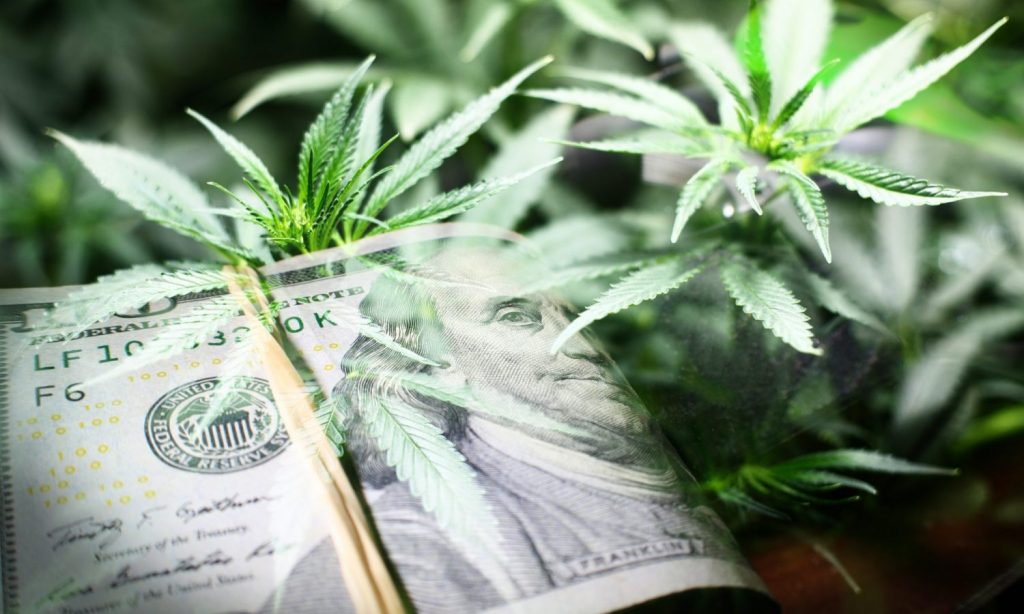
3 Vices Americans Are Choosing Over Cannabis

Compared to the other activities on this list, cannabis doesn’t cause or exacerbate any disease, it won’t give you a hangover, and it probably won’t empty your savings account.

As of July 2021, cannabis has been legalized recreationally in 18 states and medically in 36 states and additional territories, with census data indicating that states with legalized cannabis accounting for a majority of national population growth. That’s a lot of joints being burned every day. But has cannabis become our nation’s number one vice? Data point to no. 

Scrolling through social media or taking a trip to a legal state’s big cities, it’s easy to assume everyone is smoking cannabis these days in favor of other activities. But as it turns out, most of the people with legal access to cannabis aren’t in a hurry to spark up; a Gallup poll from 2019 indicates only about 12% of Americans smoke cannabis, but isn’t clear on how often. And while new surveys indicate certain demographics, like seniors, are using it more and more frequently, it still trails a number of more harmful American pastimes. 

Drinking alcohol

Binge Drinking Plummeting in States With Legalized Marijuana
Photo by MxfcoxycH_Y via Unsplash

RELATED: Marijuana Is Replacing Alcohol During The Pandemic And May Have Long Term Benefits

Per capita, the United States ranks 25th in global alcohol consumption, and over 85% of American adults have consumed alcohol in their lifetime. While there’s nothing wrong with a glass of wine with dinner, an estimated 25% of adults binge-drink, and as many as 15 million Americans have an alcohol use disorder. 

Smoking cigarettes

What's More Harmful, Cigarettes Or Blunts?
Photo by Donny Jiang via Unsplash

Despite a downward trend, around 14% of American adults regularly smoke cigarettes. Tobacco use, according to the CDC, is the leading case of “preventable disease, disability, and death” in the United States. Smoking remains especially prevalent in vulnerable populations, like indigenous communities, disabled people, and people living below the poverty line. 

Gambling

How To Get Your Money Back After A Bad Purchase
Photo by Sharon McCutcheon via Unsplash

All states except Utah and Hawaii permit some form of legal gambling, an industry that brought in over $43 billion in consumer spending in 2019, and 15 percent of Americans gamble weekly. The National Council on Problem Gaming estimates two million American adults have a severe gambling problem, with up to six million experiencing repercussions due to their behavior.   

RELATED: Majority Of Americans Believe Marijuana Use Just As Moral As Gambling

Looking at these numbers, maybe more people should try cannabis. Compared to the other vices on this list, cannabis doesn’t cause or exacerbate any disease, it won’t give you a hangover, and it can’t empty your savings account in the blink of an eye. Stigma and lack of access have clear influences on who consumes, but times are changing. 

Don't Miss Your Weekly Dose of The Fresh Toast.

Stay informed with exclusive news briefs delivered directly to your inbox every Friday.

We respect your privacy. Unsubscribe anytime.