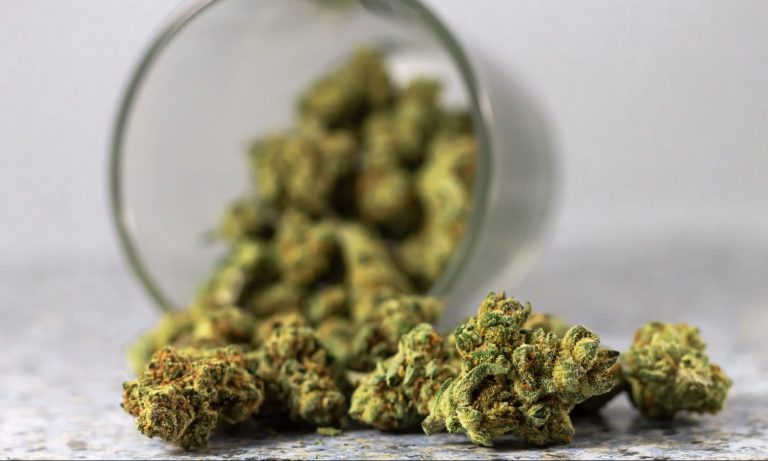
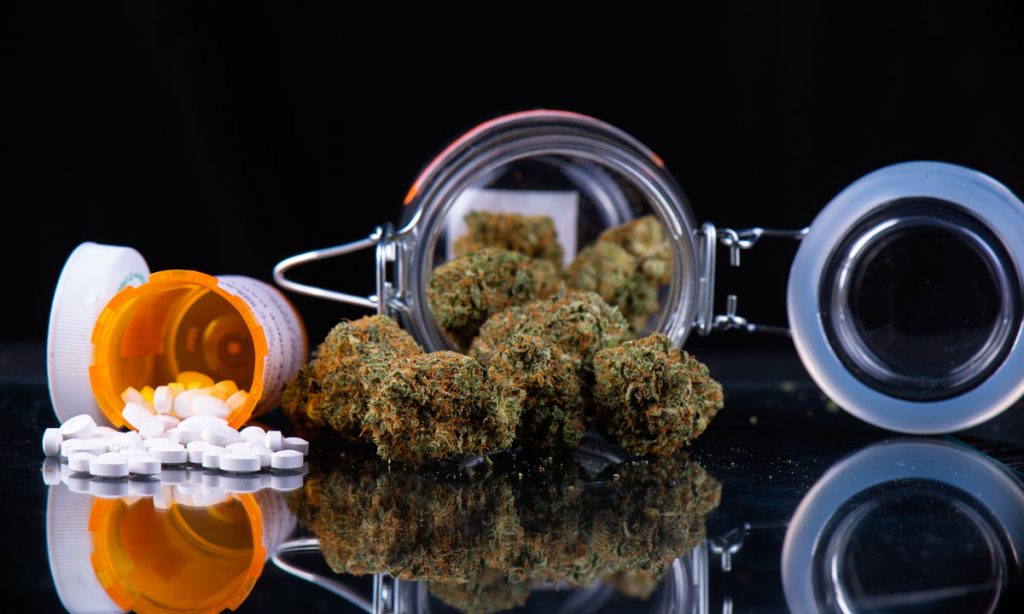
A 2019 study published in The Journal of Pain found that cannabis use was associated with 64% lower opioid use in patients with chronic pain.
Although opiates are meant to be a temporary tool, millions of Americans have not been able to kick opiate dependency after being prescribed it. With an estimated 10.3 million Americans using opiates in 2018, that’s almost 4% of the country’s population. Due to this, it is imperative to find an alternative in the world of pain management. A recent survey says most popular way to kick opiates is cannabis.
Many promising studies have been done using marijuana with opiates or as a replacement for them, including a December 2020 survey. This research focused on the effects of cannabis and opiates used together. However, as explained by the survey, research on medical cannabis is severely limited by cannabis’s status as a Schedule 1 substance. Because of this, physicians are unable to give concrete advice to patients. Thus, patients heavily rely on medical dispensaries when choosing cannabis, as doctors are legally and informatively limited.
With the outsider status of medicinal cannabis, research is often performed through surveys. The December survey included analysis of 525 responses out of 1181 responses given (656 either did not use opiates for 3 months to treat their pain or did not use cannabis and opiates together).
Photo by Roxana Gonzalez/EyeEm/Getty Images
Again, Cannabis Use Correlates To Lowering Dosages And Quitting Opiates
With astoundingly positive results, the study declared that:
“Our results show a remarkable percentage of patients both reporting complete cessation of opioids and decreasing opioid usage by the addition of medical cannabis, with results lasting for over a year for the majority. We hypothesize these effects may be due to the reported synergistic decrease in pain that has been shown with adding cannabis to opioids. Likely, as a result, the majority expressed not wanting opioids in the future, particularly those in the younger age group. Additional benefits of medical cannabis included improved ability to function and improved quality of life, especially for the younger age group.”
While this statement may sound shocking, it accompanies an entire growing body of research. A 2019 study published in The Journal of Pain found that cannabis use was associated with 64% lower opioid use in patients with chronic pain. It also found that cannabis was less likely to cause adverse effects and that cannabis was correlated to a higher quality of life. Other research from 2017 found that 97% of the 2897 medical patients they surveyed agreed or strongly agreed that cannabis use helped them lower their opiate use.
The rollout of the COVID-19 vaccine has been slow and complicated, dimming the hopes we had with the start of the new year.
Despite the COVID-19 vaccine’s availability and high degree of success, protecting people against the virus with 95% of efficiency, the shot is incredibly difficult to get. Even when people meet the prerequisites for eligibility, seniors are being asked to sign up for complicated online portals, not to mention the strict parameters dictated by states that end up disqualifying a large percentage of the population.
The distribution process has been slow, falling rapidly behind initial rollout predictions. Still, in recent weeks the process has picked up speed, with 10 times more people getting vaccinated than during the first days of vaccine distribution.
With additional vaccines in development, including one by Johnson & Johnson that works with only one inoculation, as the months progress and as health care workers get used to this new process, the vaccination distribution will grow more intuitive and effective. Still, we’re in for some months of wait time.
Photo by Karolina Grabowska from Pexels
CNN predicts if only the Moderna and Pfizer vaccines are in circulation and if the vaccination rate is the one that has been showing up over the past seven days, then every adult in the US should be vaccinated by summer 2022. If this process speeds up according to Biden’s plan, which plans to increase budget for hospitals and governments in order to speed the process up, the timeline shrinks a bit, with projections suggesting that every adult should be inoculated in the US by spring 2022.
This sounds like a lot of discouraging news, especially for those of us who are uninvolved in the health care industry and don’t know how this process works. Still, it’s not all bad, especially since every adult in the U.S. doesn’t need to be vaccinated in order for things to get better and for people to be able to do more social activities. Herd immunity is expected to happen when 70% to 80% of the U.S.population is vaccinated, which could happen by the end of 2021 and beginning of 2022.
Aside from that, there’s also the fact that every person who’s been inoculated is at much less risk of contracting the disease, with a very low risk of spreading the virus. These people — grandparents, seniors, front line workers and people with underlying condition — should be able to see their families again, still taking care of themselves but enjoying many of the things that the majority of the world has been deprived of for the past year.
The vaccination numbers aren’t great, even when sped up. But if things continue to progress and evolve, it should be easier for people to get vaccines and for distancing measures to relax, at least in a small degree.
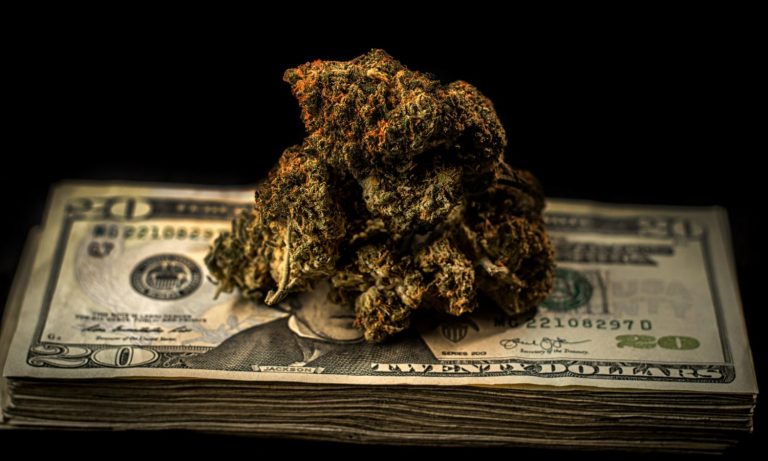
Picking stocks is an insider’s game that requires sharp due diligence since the management of many of these companies have hurt investors and don’t control their spending.
The cannabis market is off to a strong start in 2021, carrying ample amounts of promise with it. As demand booms, analysts say that 2021 could be a year of consolidation and continued innovation in the cannabis sector. Market activity expects to continue to trend upward, backed by increased access to legal cannabis in the U.S. and abroad.
New investors may want to take notice of the cannabis market and its potential for lucrative gains. Two common options are proving beneficial for numerous stock market participants. Investing in cannabis stocks could be a fruitful effort for wise investors who can pinpoint the next big thing. On the other hand, experts say that exchange-traded funds (ETFs) could provide gains without the same work level for the less savvy investor.
Both stocks and ETFs carry pros and cons investors must consider.
Investing In Stocks Takes Time And Research
Cannabis stocks pique the interest of a growing number of investors seeking an eventual win in the form of legalization. While cannabis is sure to deliver, not every stock will end up a winner. Investors can certainly win with stocks but must be aware of movements in the market and their securities. Those without the know-how could lose their shirt with the wrong moves.
Without staying up on the latest market movements, investors could find themselves in the red in short order. “It’s important to understand the markets in which they operate and how they create value,” said 420 Investor Founder Alan Brochstein.
Investors can look at the company’s performance, as well as its leadership, to gauge the viability of a company.
Michael Sassano, founder and CEO of Somai Pharmaceuticals, has been a private investor for 25 years. He emphasized the importance of a company’s management team. He believes that U.S. MSOs have a leg up over Canadian operations thanks to billions of dollars in investments supporting expansion and development efforts.
“At this point, it is a race to profitability, yet the large investors and mainstream companies have yet to even enter,” said Sassano. He expects asset values to skyrocket going forward.
Photo by Darren415/Getty Images
Investing In ETFs
Instead of investing in a particular stock, some choose ETFs, which are a collection of securities. Often operating on a singular underlying index, ETFs trade daily, acting similar to stocks.
Experts say that ETFs provide investors with the ability to gain exposure to the market without doing such intensive research and analysis that comes with stocks.
“Cannabis is a real asset class, and the smartest way to gain exposure is through a diversified ETF,” said Sassano. He added, “Picking stocks may not yield you the right results as individual companies are not a basket.”
Sassano added several ETFs worth considering, including MJ, YOLO, MSOS, CNBS, THCX and POTX. Not only do ETFs allow investors to gain exposure, but Sassano said they also provide an option that doesn’t require as much stock market expertise as stocks might.
“Picking stocks is an insider’s game that requires sharp due diligence since the management of many of these companies have hurt investors and don’t control their spending,” said Sassano.
Less of a demand but still requiring its analysis, ETF investors have their cautions to consider. Dennis O’Neill, a former investment banker and current president of BioMediCan, discussed an ETF’s track record of investment and the charges associated as prime areas of concern.
“Some focus on just large companies. Others will venture into smaller companies that have more risk and possible reward,” he said.
Outlook For 2021
Experts differed on what to consider the cannabis stock market. Brochstein said that no cannabis stocks are a safe bet due to their high-risk, high potential rewards.
On the other hand, O’Neill said that both stocks and ETFs “should be part of a balanced portfolio,” suggesting that they represent no more than 10% of an overall portfolio.
He broke it down further for those choosing between the two options: “ETFs for people who do not have the time or experience investing in cannabis. Individual stocks for people who have the experience and time.”
While so much is still unknown about marijuana’s effects on antidepressants, your personal answer may reside in two important pieces of information.
For the over 16 million Americans with depression, many are seeking alternative remedies to alleviate their symptoms and turning to marijuana. Marijuana has been studied for its affects on the mood and depression dozens of times. But does marijuana lower the effects of anti-depressants?
A 2017 study, featured in the U.S. NationalLibrary of Medicine found that, “first-line antidepressant treatments are associated with significant side effects, leading many afflicted individuals to seek alternative treatments.” The study, conducted by McMaster University in Canada, found that individuals who had significant side effects often looked to marijuana to ease their anxiety and depression, citing that anxiety is in the “top five” medical symptoms which medical marijuana helps treat.
Another study in 2017, sponsored by the Dartmouth-Hitchcock Medical Center, found that in 13 patients who suffered from schizophrenia and took clozapine, cannabis use was effected as opposed to medication. The study cited:
“Cannabis use decreased in patients treated with clozapine, compared to patients treated with other antipsychotics (OR 2.8; 95% CI 0.97–7.9). Compared to no medication, clozapine exposure was associated with significantly less cannabis use (OR 7.1; 95% CI 2.3–22.3). Relative to treatment with other antipsychotics, clozapine exposure was significantly associated.”
Meredith Patterson (aka The Cannabis Brain Nurse) shared with GB Sciences that new treatments for depression might include cannabis. She explained, “A new study that caught my attention was published earlier this year by researchers at Washington State University. It found that adults reported a significant reduction in depressive symptoms with just a single puff of cannabis that was high in cannabidiol (CBD) and low in in tetrahydrocannabinol (THC).” The study, which had over 12,000 responses, was published in the Journal of Affective Disorders.
Photo by Cassidy Kelley via Unsplash
Carrie Cuttler, clinical assistant professor of psychology at WSU and lead author of the study, stated, “Existing research on the effects of cannabis on depression, anxiety and stress are very rare and have almost exclusively been done with orally administered THC pills in a laboratory. What is unique about our study is that we looked at actual inhaled cannabis by medical marijuana patients who were using it in the comfort of their own homes as opposed to a laboratory.”
The National Health Service (NHS) in the United Kingdom states in their research that, “Cannabis or marijuana can interact with tricyclic antidepressants (TCAs), such as amitriptyline, imipramine and dothiepin. Both cannabis and TCAs can cause an abnormally fast heartbeat (tachycardia) hypertension.”
While so much is still unknown about marijuana’s effects on antidepressants, your personal answer may reside in two important pieces of information: Your body’s genetic makeup and the strength of your medicinal doses and marijuana strain. To best understand your body’s reaction to antidepressants and cannabis, it’s best to speak with your health care team and pharmacy to understand risk factors and protocols.
The website you’re ordering from should look legitimate, like it was designed in this century, and should also have recommendations from publications and reviews from different customers.
Marijuana’s slow but steady movement towards federal legalization has been heavily documented, gaining support across the nation and with more and more medical and recreational programs gaining approval. But there remains a lot of mystery in the purchase process, with many turning to black market marijuana because it seems simpler and less intimidating than legal weed. One area is how to buy legal weed online.
Legal marijuana still has some growing pains, but it has slowly become a simple and more intuitive process. Now, depending on the state where you live, you’re able to purchase marijuana online, at times having it delivered or scheduled for pick-up. Here’s how to buy weed on the web.
Do your research
Photo by Andrea Piacquadio via Unsplash
When ordering marijuana flower and marijuana products, it’s important to account for where you live, since you won’t have access to these services if you live in an illegal state.
Your second step is to get very informed and to be sure that you’re not falling for any scams or sketchy websites. The website you’re ordering from should look legitimate, like it was designed in this century, and should also have recommendations from publications and reviews from different customers. When scrolling through these reviews, make sure they use different words and ways of expressing themselves; this suggests they’re not a bot.
While there are websites out there where you can purchase marijuana products directly, there are others that can connect you with dispensaries. This latter option might be better for someone who wants to talk to a budtender regarding their marijuana purchase, who can make recommendations on the types of products that work best for them.
Ordering weed for delivery is very simple, like ordering pizza or groceries. You can usually email or call a licensed store or website and order an item from their menu. You’ll likely get a confirmation text or email. The main difference between ordering weed and ordering something else is the fact that they’ll likely ask for your ID and for you to pay in cash. Make sure that before you order you have the right bills and enjoy one of the best things provided by modern technology.
No one has died from a marijuana overdose and there is no evidence of anything more lasting than embarrassment. That certainly is not the case with alcohol.
Disclaimer:The views expressed in this article solely belong to the author and do not necessarily represent those of The Fresh Toast.
The pandemic has produced a number of social changes that we hope may last. An online Harris Poll sponsored by marijuana company Curaleaf found that 45% of cannabis consumers age 21 and up have replaced or reduced their alcohol consumption with marijuana since the beginning of the coronavirus pandemic, and one-third of those who use cannabis recreationally prefer cannabis to drinking alcohol. Yes, marijuan is replacing alcohol during the pandemic.
Half of the respondents (50%) said they increased their use because cannabis helped them relax, and 48% said they did so to help them sleep. Of those who said they use marijuana recreationally, a third (33%) said that they prefer cannabis over alcohol.
Interestingly, parents are actually turning to cannabis at higher rates than those without children. Think of the children!
Really. “Parents struggling with alcoholism may be surprised or concerned after reading about the impact their addiction can have on their children now and through adulthood.”
Another recent poll commissioned by the Glass House Groupfound that a majority plan to replace alcohol with cannabis.
Photo by Darrin Harris Frisby/Drug Policy Alliance
DrugWarFacts.org reports, “In 2017, 140.6 million Americans aged 12 or older were current alcohol users, 66.6 million were binge drinkers in the past month, and 16.7 million were heavy drinkers in the past month. Thus, nearly half of current alcohol users were binge drinkers (47.4%), and 1 in 8 current alcohol users were heavy drinkers (11.9%). Among binge drinkers, about 1 in 4 (25.1%) were heavy drinkers.”
As of 2015 in the United States, about 17 million (7%) of adults and 0.7 million (2.8%) of those age 12 to 17 years of age are affected. Alcoholism is most common among males and young adults.
Photo by crotography/Getty Images
Alcoholism is also a major public health problem. A 2018 National Institute of Health study “shows steep increase in rate of alcohol related ER visits.” Also:
“Increases were larger among females than males, providing more evidence of narrowing gender gaps in alcohol-related harms in the U.S.
The rate of alcohol-related visits to U.S. emergency departments (ED) increased by nearly 50 percent between 2006 and 2014, especially among females and drinkers who are middle-aged or older, according to a new study conducted by researchers at the National Institute on Alcohol Abuse and Alcoholism (NIAAA), part of the National Institutes of Health. The study findings are available online in the journal Alcoholism: Clinical and Experimental Research.
“In just nine years, the number of people transported to the ED annually for medical emergencies caused or exacerbated by alcohol increased from about 3 million to 5 million,” said NIAAA Director George F. Koob, Ph.D. “These findings are indicative of the detrimental effects that acute and chronic alcohol misuse have on public health, and the significant burden they place on our healthcare system.”
The rate of all alcohol-related ED visits increased 47 percent between 2006 and 2014, which translates to an average annual increase of 210,000 alcohol-related ED visits. The rate of visits for acute alcohol consumption rose by 40 percent, and the rate of visits related to chronic alcohol consumption increased 58 percent. These increases far outpaced changes in the number and rate of ED visits for any cause during the years studied. The NEDS data also showed that total annual costs of alcohol-related visits increased from $4.1 billion to $15.3 billion during this time.
Taken together, these findings highlight the growing burden of acute and chronic alcohol misuse on public health and underscore the opportunity for healthcare providers to conduct evidence-based interventions, ranging from brief interventions to referral to treatment, during alcohol-related ED visits.”
Photo by Hero Images/Getty Images
Meanwhile in the UK, the Telegraph reports, “Alcohol-related hospital admissions have risen by 45 per cent in a decade, new figures show, as charities and MPs warn of the dangers of further budget cuts to treatment services. In 2018-19 there were 1,261,907 hospital admissions where the primary or any secondary reason for admission was linked to alcohol in England, compared to 863,300 in 2008.”
Unfortunately, the UK is still in the grip of Reefer Madness, so cannabis is not as easy an alternative to alcohol.
Now let’s consider a major point about ED visits. Not all visits are equally serious. There has been an increase in ED visits in states that have legalized marijuana. The primary cause of these increases has been edibles. When marijuana was illegal it could be dangerous to seek medical help, so now people are much more likely to go to the ED.
No one has died from a marijuana overdose and there is no evidence of anything more lasting than embarrassment. That certainly is not the case with alcohol.
Working from home is comfortable yet it’s also monotonous and challenging. Here’s what dressing up can do for your mental health.
After an approximate year of remote work, we’ve all grown tired of the work from home debate, especially that argument where one group says you should get dressed up and the other vehemently refuse to. As is the case with most things, getting dressed up to work from home has its pros and cons.
While some people still make the effort to get dressed and to look sharp for their Zoom meetings, the majority of us settle with some form of sweatpants and a cute top, this one reserved for the days where we have video calls. But it’s also true that our collective mental health isn’t doing all that great and some psychologists believe there’s a correlation between this and the way we look.
“For a lot of us, there’s an internal message of ‘I care about myself,’ and that’s going to look differently for different people,” psychologist Donna Novak told the Huffington Post. This doesn’t mean you have to wear a suit or some heels every day in your living room, but it does mean that a little effort can take you to a healthier mental space.
A trick that many people reference in order to commit to workouts is to put on workout clothes first thing in the morning. In a similar way, wearing a comfortable work outfit or putting on a small amount of make up can help you feel motivated and invigorated for the day, something that’s difficult to do when the situations that surround us are challenging.
Photo by Ivan Samkov via Pexels
Wearing different outfits can also help you draw some boundaries between your work life and your private life, with one look signifying work time and another letting you know that it’s okay to relax and stop checking your emails.
Emotional scientist and psychologist Tracy Thomas says that people with creative jobs might experience even more benefits than people who have more traditional roles. “Typically, the people who would have the most struggle with emotional issues are also the people who need to create. And if you’re not creating every day — including creating your own self with your different wardrobe and the way [you] adorn and decorate yourself — you’re essentially taking away part of your creative process and then that can create sadness and depression,” she said.
Still, if you want to get dressed up for remote work, the benefits only work when there’s no pressure on yourself, when dressing up doesn’t become a distressing activity. It all depends on the person; if dressing up and putting some effort in your look makes you feel better, go for it. If putting on sweatpants and a different shirt every day does the trick, well, then that’s even better for you: less laundry to deal with.
To the delight of fans, model and new mom Gigi Hadid recently announced the name of her baby girl on Instagram.
Gigi Hadid gave birth to her baby four months ago, but her and baby daddy Zayn Malik were very protective of their daughter’s identity, only releasing disguised photos of her. But on Friday, instead of making an announcement of their child’s name, Hadid updated her Instagram bio, writing: “khai’s mom.”
Screenshot/Instagram
But what we want to know: Does she smoke weed?
Hadid has been pretty quiet regarding her involvement with marijuana. One of the most incriminating pieces of evidence is a photo of her walking around with a weed pendant. So, you know, not very conclusive.
The one who speaks up most about cannabis tends to be Zayn. While talking with the Evening Standard back in 2016, Zayn explained that he and Hadid were living together and that smoking marijuana helped him stay creative.
“Weed is also a part of my life for certain things,” he said. “I find it helps me be creative. Some people say it kills your ambition, some people say it destroys your personality. Personally I haven’t had any of them experiences yet.”
The one other connection between Hadid and weed was when she attended a cannabis jewelry launch in 2016. The event, which was held in Beverly Hills, was meant to encourage conversation regarding weed. Among the guests in attendance were Hadid, Kendall Jenner and Vanessa Hudgens. According to the Hollywood Reporter, Hadid was spotted browsing vape pens and marijuana themed outfits.
There is now a much clearer roadmap towards conducting legal cannabis-related activities in Mexico.
In our last post, we alerted you on the publication of the new Regulations on Sanitary Control for the Production, Research and Medical Use of Cannabis and Its Pharmacological Derivatives (the “Medical Regulations”). In this post, we provide an overview of what the Medical Regulations will address and what it potentially means to your business. Medical cannabis is fully legal in Mexico, what comes next?
As expected, the Medical Regulations deal with the control, promotion and sanitary supervision of raw materials, pharmacological derivatives and medicines. Regulated activities include:
Primary production for manufacturing supply;
Raw material generation for research and seed production;
Health and pharmacological research;
Manufacturing of pharmacological derivatives and medicines and medical activities related to diagnoses, therapeutic, rehabilitation and palliative care;
Importation, exportation and marketing.
Activities connected with all of the above will be authorized through licenses or permits, and the Regulations provide the requirements to obtain them. Among the activities that will be authorized officially for the first time are:
Quality control laboratories
Growing for research and industrial purposes
Cannabis research protocols
Processing, transport, import (both for industries and for self-consumption)
Export
Issuance of cannabis-related prescriptions
Set-up of establishments permitted to sell medical cannabis products
The regulations clarify that COFEPRIS (Federal Commission for the Protection against Sanitary Risks) will not be the only agency to deal with. Although COFEPRIS will remain the chief agency involved in cannabis-related applications, other agencies are also charged with interpreting and applying these Medical Regulations, along with issuing permits and licenses. All of this means added time and costs that companies have to factor into their business plans for Mexico.
Photo by John Coletti/Getty Images
That said, there is now a much clearer roadmap towards conducting legal cannabis-related activities in Mexico, although the Medical Regulations have entered into force without a specific fee schedule for the permits or licenses included (aside from the specific fees are provided for in the Federal Fees Law (Ley Federal de Derechos)). Because the Medical Regulations’ transitory articles mandate implementation without impacting agencies’ current budget for this fiscal year, it seems certain that a fee schedule will be added soon.
Now, although the Regulations implement a federal law (the General Health Law) and are therefore applicable in the whole country, health-related licenses and permits are linked to the domicile stated in an application. There is a distinction to be made here: for some activities, like growing or processing, the Regulations expressly or impliedly allow for performance in various States, as long as you apply for a license for each venue. In other cases, a single permit/license, though linked to a domicile, will cover the activity, regardless of where it is performed (e.g. transportation).
It is also important to note that licensees can sell to other licensees below them in the supply chain for medical, research and refinement purposes. For instance, grow licensees can sell to processor licenses, while processor licensees can sell to distributor licensees. Cannabis cannot be sold to the general public, save through licensed establishments. This means that if you, as a patient, need to import medical cannabis products for your treatment, you apply for a special import permit showing your prescription, at which point you may order freely (although ordering online and having product sent to you via mail/parcel is prohibited).
Finally, the Medical Regulations provide for the regulation and licensing of establishments that provide medical attention and sell cannabis products. These will include pharmacies or other specialized medical and therapeutic establishments, but not more general (i.e. convenience) stores. The Medical Regulations further provide that licenses authorizing establishments shall be renewed upon expiry in accordance with other relevant regulations implementing the General Health Law, but do not provide for a license expiry date from the outset.
Adrián is an attorney at Harris Bricken and oversees the firm’ss Mexico practice, where he helps companies on US-Mexico cross border legal matters, including cannabis law matters, Latin American and European companies on China and International Law issues, and local companies with international and domestic business transactions. This article originally appeared on Canna Law Blog and has been reposted with permission.
The price of marijuana can change significantly from state to state. Here are some factors that could have an influence on the final price tag.
Cannabis is gaining more and more traction across the United States, with each passing election approving new medical and recreational programs in various states. If you’ve never been to a marijuana dispensary, or if you’ve been to several and have noticed significant price fluctuations, it’s easy to wonder why this happens and whether there’s a price standard that the industry follows. Short answer: there’s not. So, how much does weed cost?
Marijuana prices can vary a lot, depending on the place where you live, the type of product you’re purchasing and its quality. Since cannabis remains federally illegal, there’s not a fixed price tag that dispensaries must follow, with every state demanding different things of product makers and impacting the final price of their product.
Here are some of the most important factors that can have an influence on your cannabis price:
Location
Photo by Patrick Tomasso via Unsplash
Where cannabis is grown, manufactured and sold plays an important part in pricing. Each community has its own rules and regulations, impacting the price of the final product. For example, Washington state sells much cheaper weed than California.
State and local tax rates and the amount of growers and sellers in the area will likely have an impact on pricing. Like most products, if there’s a small amount of growers and manufacturers, product prices will likely be higher than if you were to live in a community where there’s a lot of people working and investing in the cannabis industry. Think of it like shopping at Costco vs. your local high-end grocery.
How the product was cultivated and grown
Photo by Bloomberg Creative/Getty Images
The way in which the product is grown also has an effect; outdoor growing is cheaper since it costs less to produce and it’s more subject to tampering from outside forces like nature and animals. These prices can alter depending on the season and whether or not it’s harvest time. Indoor growing requires special lights and settings that while may result in better product, cost more to make.
Each batch of cannabis is different, even by small degrees. Once it’s dried and cured, prices can change depending on the quality available, like the amount of terpenes and cannabinoids it has, and more.
The type of product
Photo by SageElyse/Getty Images
The type of product you’re buying also has an influence on the price. If you’re buying a product that comes in a bottle or a container, this will generally be reflected on the price tag, especially if the product is designed to be high-end. This includes both flower and edibles.
The cannabis industry is going through a lot of changes. The best thing you can do in order to ensure you’re getting a fair deal is to do your research. Visit different dispensaries in your area and find a budtender you trust, who can provide you with recommendations and with products that are worth your money.