USPS reports that a large number of letters have touched on the pandemic, asking for cures for the virus, jobs for their parents and more.
Not even Santa can escape COVID. Ending the pandemic is one of the most popular requests on kids’ letters to the North Pole, something that’s both heartwarming and terribly sad.
The United States Postal Service Operation Santa published many letters from kids and families online, in hopes of encouraging others to respond to their requests. One of the letters succinctly reads: “This year, I would like end of Covid-19, world peace, climate control, new Xbox.” Another: “Dear Santa, I don’t want anything for Christmas, but I would like to ask you if you can do me a favor: Can you please find a cure for Covid-19 and give it to us to save the world. Thank you.”
This trend is one that’s been noted by the post office, exemplifying how much the state of the world is weighing on them.
Letters to Santa tend to be unusually sincere, with kids opening up and asking for material objects, the health of their family members, and other things they think will make them happy. But this year, those things have taken a backseat to jobs for unemployed parents and a cure for COVID-19.
Photo by annca via Pixabay
Child psychologist Avital Cohen spoke with CNN and explained that kids view Santa as an open and trustworthy person, someone who’s in charge of spreading joy and making wishes come true. “What I read in these letters is that kids really are thinking about the needs of their parent or the world and not just their own desires this year (though of course some kids are asking for the gifts they want this year, which is to be expected!),” she said.
USPS Operation Santa program started in 1912, with volunteers and organizations adopting letters from children, replying to them and fulfilling some of their gift requests. The presents and letters are then handled by the USPS, who’s in charge of delivering them to the right recipients. The whole process can be done online, with volunteers adopting letters from as many kids as they want.
While most letters have been adopted already, Operation Santa officially ends on December 19. Packages should be dropped off at participating post office locations as soon as possible in order to be shipped by Christmas, even though they may still be shipped after the deadline.
One financial analyst pointed out that House Republicans are “growing more pessimistic about federal level cannabis reform” over the course of the next couple of years.
On Friday, the House of Representatives voted 228 to 164 in favor of the Marijuana Opportunity Reinvestment and Expungement (MORE) Act.
The legislation — first introduced by Rep Jerrold Nadler and sponsored by Vice President-elect Kamala Harris — is poised to decriminalize marijuana on a federal level. It’s intended to eliminate cannabis from the list of federally controlled substances and also cancel criminal penalties related to marijuana.
As the dust around voting settles, cannabis industry experts say the upper chamber’s current Republican control could jeopardize the effort.
Cantor Fitzgerald analyst Pablo Zuanic said in an analyst note on Monday that “without Democrats gaining the two Senate seats in GA on Jan 5th, we would put the chances of SAFE passing the Senate in the next two years at less than 30% (tough to see it as part of a COVID relief package), STATES at 10%, and MORE at 1%.”
In addition, only five House Republicans voted in favor of the bill, he noted.
He pointed out that they are “growing more pessimistic about federal level cannabis reform” over the course of the next couple of years.
Photo by Stefani Reynolds/Getty Images
Cannabis Reform Deepens Rift Between Parties
U.S. Senate Majority Leader Mitch McConnell is only adding fuel to the fire, and the gap between Republicans and Democrats — when it comes to the cannabis reform — is more substantial than previously assumed.
“Senate Republicans are focused on targeted proposals for COVID relief, but over in the House, Speaker Pelosi and House Democrats are chronically prioritizing marijuana legislation over COVID relief,” McConnell said last Thursday.
McConnell’s “mocking” of cannabis reform efforts conducted by Democrats only demonstrates that “MJ reform will be one more of the many topics that divide the two parties,” according to the analyst.
In addition, giving up on the “incrementalism” approach to cannabis reform is the right path, taking into account a Republican-controlled Senate, Zuanic noted.
“This is not the time for incrementalism – this is no time for half-stepping,” Harris disclosed in mid-Nov.
Nevertheless, following the legalization of marijuana in Arizona, Mississippi, New Jersey, Montana, and South Dakota, the analyst believes that “more states legalizing, especially so-called red states, will facilitate passage of reform at the federal level.”
With the weather dropping and the pandemic raging, it’s more important than ever to learn the difference between COVID-19, allergies, the common cold and flu.
Winter is fast approaching and COVID-19 cases are on the rise, leaving us with an uncomfortable question when we start getting the sniffles: Do I have a cold or am I experiencing COVID symptoms?
There are a lot of similarities between a cold, the flu, COVID and even seasonal allergies, ranging from chills, body aches and coughs. That, with the added stress we’re all experiencing, is enough to make everyone paranoid.
There are some key differences between these conditions that we should all learn in order to have some peace of mind. Colds are the most common, especially once the weather starts dropping. Although they can make us feel pretty terrible, they tend to be milder than the flu and much milder than COVID. Colds typically last anywhere from 7 to 10 days and are accompanied by symptoms such as a sore throat, runny nose, cough, fatigue and physical aches. While some medication can be taken, the majority of the symptoms that appear are your body’s way of getting rid of the infection. Most often, what works best is to give your body time to fight the cold off.
Photo by twinsfisch via Unsplash
Seasonal allergies are common when the weather shifts, triggering a variety of symptoms depending on the person. You can be fatigued, experience coughs, watery eyes, runny nose and even shortness of breath. During the winter, these allergies can be triggered by things located inside your house, like dust mites, animal dander and mold. Notice the moments when you experience these symptoms or pay attention to your history with allergies, since this can be the easiest way to tell what’s afflicting you.
At the moment, aside from COVID-19, the flu should be your biggest concern, since it produces some strong symptoms that can quickly grow complicated and require medical attention. The flu can be easily prevented by taking a flu shot. The infection affects your nose, throat and lungs and can last from 5 to 7 days. Symptoms include fever, cough, fatigue, aches and pains, sore throat and more.
Finally, COVID-19 is similar to all of the conditions previously listed. It can range from mild to severe, affecting older people and those who struggle with underlying health conditions more severely. Symptoms include shortness of breath, difficulty breathing, fatigue dry coughs and more. A runny nose or a sinus congestion is very rare with COVID cases and very common with the other conditions listed above, making it one of the key distinctions between these ailments.
There’s a lot a variability from people who’ve experienced COVID-19, with cases ranging from barely noticeable to those that require hospitalization. Among their most identifiable symptoms there’s the loss of taste and smell, which usually appears suddenly. Lastly, if your condition is too confusing, the most definite way of knowing what’s affecting you would be to get a COVID test.
For one, technology is creating more effective CBD products for the CBD market, and better, more efficient products.
Wall Street experts project the CBD industry to swell to more than 22 billion dollars over the next two years. Within a decade that number is projected to exponentially grow towards 75 billion dollars.
As is with any big industry boom, everyone wants a piece of the action. Fortunately, with CBD hemp there is plenty of pie to go around. And technology plays a big role in the CBD industry from seed to shelf and beyond.
This article goes over four important aspects of the CBD industry and how technology shapes and molds the big boom of CBD oil.
Tech-Centered CBD Hemp Farming
Farming is labor-intensive process that requires lots of tedious work. It’s no wonder that tech steps in to make certain processes and tasks more efficient. Equipment and machines that speed up tasks such as potting, planting, and digging aren’t the only kinds of technology on the farm. Visit a tech-centered hemp farm and you’ll find RFID tags on plants, biometric security systems, and incredibly advanced.
Complex and sensitive instruments measure every aspect of the environment including soil, water, air, light, and more. Dehumidifiers, air conditioners, barometers, and all types of monitoring systems turn processing and drying harvested hemp flower into an exact science.
CBD Extraction Tech
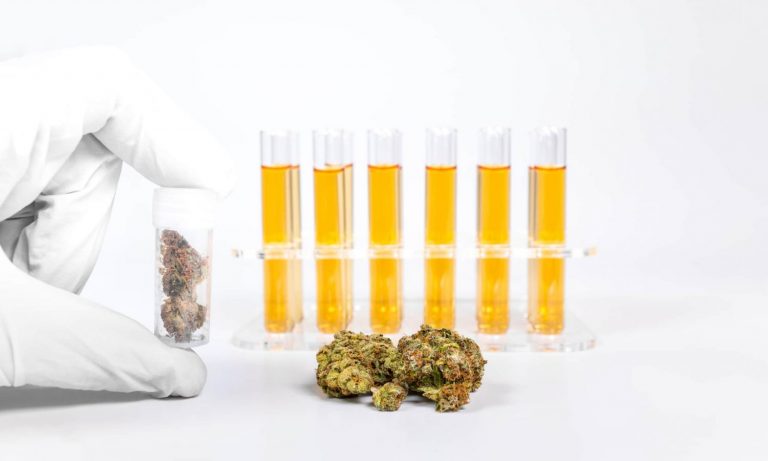
Extracting the beneficial compounds from hemp flower is likely the biggest tech-influenced niche in the CBD industry. Extraction is the process of separating the unwanted waxy plant materials from the desirable hemp compounds like phytocannabinoids, terpenes, and flavonoids.
Different extraction techniques create numerous types of different CBD products (click here to learn more about Hawaiian Haze) generally referred to as extracts and concentrates. Some concentrates such as hash are readily made by hand, but thanks to advancements in extraction technology today’s extracts are much more complex and varied.
High-level extraction equipment comes with a high-level price tag. Furthermore, while some types of extraction machines are simple, the top tier processors require engineers and scientific consultants to calibrate and operate their equipment properly.
Photo by BATCH by Wisconsin Hemp Scientific via Unsplash
All of this combined creates a madly complex niche that takes up a huge portion of that projected 75 billion projection for the CBD industry over the next ten years. Some products produced by extraction include –
Vape cartridges
Dabs, Wax, Oil, Shatter
Rosin
CBD oil
Pure phytocannabinoid-rich CBD hemp oil concentrate
And more
CBD Oil Product Effectiveness
Technology is also creating more effective CBD products for the CBD market, and better, more efficient products. In a free-market world, better products and lower prices that consumers want to buy are the name of the game.
Advances in the micro-encapsulation of beneficial hemp compounds such as CBD create a higher bioavailability for consumers. This means that they can get more effect and benefit from less product, saving them money and time.
Custom crafted hemp compounds combinations and recipes are also unlocking the incredible therapeutic potential within phytocannabinoids and terpenes. There are hundreds of different beneficial compounds in hemp, each with unique properties and benefits. Every type or strain of hemp expresses various combinations and ratios of these compounds giving them a “fingerprint”.
As hemp laws relax, extraction techniques advance and our scientific understanding of hemp compounds grows, hemp follower suppliers like MrHempFlower are leveraging new chemistry and molecular tech to meet the growing market’s insatiable appetite for novel phytocannabinoid and terpene combinations.
It’s within this niche that lies some of the greatest opportunities for patentable intellectual property through novel phytocannabinoid and terpene products.
Photo by Tinnakorn Jorruang/Getty Images
AI and AR in the CBD industry
Artificial intelligence, machine learning, and augmented reality comprise another handful of technologies molding the shape of the growing CBD industry. Farmers use AI and big data to improve soils, keep track of inventory and plants, improve workflow within facilities, and understand market trends.
On the market and advertising end, augmented reality offers businesses a fascinating approach to modeling, presentation, and retail.
AI and AR together are transforming the hemp industry into something hyper-interesting and new, shifting a once rebellious and illegal counter culture into a hipster-type health endeavor with all the bells and whistles.
Blockchain and Crypto in the Hemp Industry
While governmental policies and regulations have placed plenty of roadblocks in front of the world’s biggest boom since the internet bubble, nothing can stop what is coming. A big aspect of the CBD industry has been banking and many of the world’s biggest companies have had their fair share of issues. Here steps in blockchain technology.
Blockchain technology combined with cryptocurrency allows CBD businesses not legally permitted to operate with normal banking and financing to purchase and move money without much governmental regulation or oversight.
Niche Tech for Green CBD Industry Investors
Anyone seeking the biggest growth sectors will find immense opportunities within the various tech-centered niches shaping the CBD industry. These technologies are driving factors in this market and if you can find yourself in the right place at the right time, you may still be able to get in on the action.
Just know that the best time to get in was yesterday, so don’t hesitate.
The Department of Heath and Human Services and the Justice Department would work together to establish a list of pros and cons for downgrading the Schedule I listing of marijuana to a Schedule II.
While many diehard cannabis advocates are calling for the plant to be legalized in the United States in a manner similar to alcohol and tobacco, President-elect Joe Biden isn’t quite ready to take that leap. Instead, he wants to focus on federally decriminalizing the herb, expanding research opportunities and making it available for medicinal purposes. Interestingly, his pick for health secretary almost solidifies that the nation is indeed headed down such a progressive path.
Biden announced this week that he wants California Attorney General Xavier Becerra to lead the Department of Health and Human Services. If confirmed, one of his jobs would be to work with a team of health officials to combat the pandemic. The other would be to oversee the orders necessary to reclassify marijuana under the Controlled Substances Act.
Becerra, who was Biden’s second choice after Rhode Island Governor Gina Raimondo turned down the job, is a feather in the cap of cannabis advocates. Not only does he have a solid record on legal cannabis, but he’ll lead the charge of the rescheduling process if Biden makes good on his promise.
Biden’s campaign issued a directive months ago showing exactly what his administration would be willing to do, if elected, to lessen federal cannabis restrictions. “Democrats will decriminalize marijuana use and reschedule it through executive action on the federal level,” the document stated.
Biden wants to put the cannabis plant in a Schedule II listing instead of its current Schedule I. It’s a move that says marijuana “has accepted medical uses,” but a high rate of abuse, so it requires supervision. That process would begin with a health review conducted by Becerra and the HHS.
From there, Becerra and crew would file a petition to reschedule cannabis with the U.S. Attorney General. At the time this article was written, Alabama Senator Doug Jones was said to be the leading contender to oversee the Justice Department. Remember, whoever lands this gig will be selected by Biden because of an alignment of political views and agenda. And Jones is pro-pot. He told reporters in 2019 that the time has come to legalize marijuana. “I think it is about time that we moved it off the controlled states list,” he said. “This is really a states right issue these days.”
President-elect Joe Biden replaces his face mask after announcing members of his health team, including his pick for secretary of Health and Human Services Xavier Becerraa / Photo by Chip Somodevilla/Getty Images
The HHS and the Justice Department would then work together to establish a list of pros and cons for downgrading the Schedule I listing of marijuana to a Schedule II. If the agencies find the review warrants this action, the attorney general would then initiate the rule-making proceedings to make it happen. Since this request will be made by Biden and not an outside party, we imagine that the rescheduling recommendations will go off without a hitch. After all, the White House would have final say on whether to go full speed ahead with the rescheduling rule.
Although Biden has made rescheduling marijuana part of his mission, we still don’t have any indication if it will be done in his first 100 days or whether it will be something that takes a backseat until the nation has a grip on COVID. Considering that the House Of Representatives just approved a bill (one that has a companion measure sponsored by Vice President Elect Kamala Harris in the Senate) to legalize marijuana at the federal level, the most likely scenario is that Biden will pick up the issue sooner rather than later.
One thing is certain, the upcoming administration is set up to make some drastic changes with respect to the cannabis plant. Perhaps then Congress will find the common sense to take larger steps to end prohibition altogether.
Cannabis products make for great gifts. Here are some recommendations for every type of friend, from seasoned stoners to newbies.
Christmas is right around the corner and it’s expected to be a lonelier affair than usual. A simple way to feel closer to your friends this year is to mail them thoughtful gifts. An even better way is to send them thoughtful weed gifts.
Making cannabis gifts is getting easier every year, with new products targeting a wide variety of people, from the canna-curious to seasoned users.
Here are some gift suggestions for this holiday season:
Relaxation is a booming business, especially when paired with CBD. CBD products, no matter how they’re packaged, are devised with relaxation in mind, making them ideal gifts for anyone who’s lived through this crazy year. Brands like Vertly, Rosebud CBD and Prima make great CBD and hemp bath soaks, salts and bombs, leaving people refreshed and smooth-skinned.
For oils and tinctures the market is even larger. Cannabis tinctures and oils tend to promote relaxation and wellness, aptly vague terms that still make for interesting presents. The best reviewed brands include Kanibi, Standard Dose and Pure Kana.
For friends who want to experiment with cannabis, you can take the CBD route or you can send them some edibles and advise them to take it easy. Brown Box Kitchen provides homemade treats, while popular Kiva Confections offers tailored options.
If your loved one is interested in vaping, you can also send them a disposable THC or CBD pen, which you can find in different styles and prices from G-Pen.
Seasoned stoners are the toughest ones to please, since they know their way around a joint or a bong and probably already know what they like. If you’ve noticed that your friend has a crappy or musty looking bong, you can splurge and purchase them a nice glass or silicone version. If they’ve never tried a cannabis method like dabbing, you can buy them a dab pen, which is simple, portable and much more accessible than a rig.
For someone who’s hard to shop for
If your friend falls under none of these categories you can always take the cool route. Tokyo Smoke makes some of the coolest looking items out there, from shirts to pens to pipe necklaces, all looking like they were made by a fancy designer, which is actually the case. You don’t always have to use a book cover to roll joints; weed trays are pretty useful and they can actually look great, like this Keith Haring one.
In an interview with RuPaul, Dolly Parton discusses her Christmas movie, cooking in heels, and why she wakes up so darn early every single day.
Dolly Parton is a national treasure, revealed some key insights into her routines. Among them, the fact that she wakes up at 3 a.m. every morning and that she wears high heels when she cooks.
Parton was interviewed by RuPaul for Marie Claire, discussing topics like her daily routines, songwriting process, career, and more. Parton said she’s a very spiritual person, that she prays every morning, usually very early on. “But I’m always, almost always up for good around 3 a.m. So I do some of my best spiritual work, some of my best writing, and some of my business work—call-ins and letters that I’m writing or whatever—between 3 a.m. and 7 a.m,” she said, which is probably a nightmare for her colleagues and is likely the reason why she’s a billionaire who’s written dozens of hit songs.
Photo by Terry Wyatt/Stringer/Getty Images
Aside from waking up at 3 a.m., the 74-year-old said that she only needs between three or five hours of sleep a night, with a little power nap thrown in there when needed.
“I don’t require a lot of sleep. Three to five hours I can work on. Five hours I like to get. But usually I’m between three and five. But usually, if I’m on the job, I’ll take a little power nap.”
Another aspect that might be a key to her success is that she’s always street ready. “I have to keep my makeup on and keep my hair done,” she said. “If we get an earthquake, I’m not running out in the street looking like you look now,” which is a strong dig at Rupaul’s Zoom outfit. When explaining why she wears high heels in the morning she says: “They’re not always as high as the ones I wear for show. But I’m little. I’m short. And I have to wear heels in order to reach my cabinets.”
Parton has a Netflix Christmas movie coming up called Christmas On The Square, where she obviously plays an angel. You can read the full interview here if you’re interested in learning more about her wigs, her goddaughter Miley Cyrus and her Christmas album.
Twitter IncTWTR 0.63% revealed trends that dominated 2020 in its annual review report, released on Monday.
Here are the most tweeted about people and emojis in a year that was dominated by a pandemic that is still ravaging the globe.
2020’s People Of Twitter: This year, the United States saw a presidential election, in which the outgoing President Donald Trump took on the President-Elect Joe Biden, and it comes as no surprise the two candidates took the top spots among the ten most tweeted about people in 2020. Trump topped the charts, followed by Biden. The number three spot was taken by George Floyd, a Black man who died in an encounter with the police in Minnesota in May. Floyd’s death caused widespread protests across the U.S. over racial discrimination.
NBA legend Kobe Bryant, who passed away in a tragic helicopter crash in January, took the number four spot in the list. Other notable people in the list include former President Barack Obama, Tesla IncCEO 2.78% Elon Musk, Korean band BTS, and India’s Prime Minister Narendra Modi. Vice President-elect Kamala Harris took the number 10 spot on Twitter’s list.
Top Emojis This Year: Twitter said that this year people were increasingly grateful or thankful, by up to 20% globally and particularly appreciative of doctors, teachers, and frontline workers. In terms of expressing emotions through Emojis, the most dominant glyph was the tears of joy emoji, followed by sobbing face and pleading face emojis. Notably absent from the top ten list of emojis was the mask face emoji or the fever face emoji.
#Hashtags Of 2020: COVID-19 emerged as the top hashtag of 2020, while #BlackLivesMatter emerged as the second-most trending hashtag as tweets called for equality and social justice following the death of George Floyd.
Despite the proven track record of cannabis sales in the U.S., Senate Republicans still refuse to go down the path toward legalization.
For the first time in history, Congress has voted to legalize marijuana in the United States. Well, kind of.
The House of Representatives approved a piece of legislation (MORE Act) last week to eliminate the cannabis plant from the Controlled Substances Act and work to expunge criminal records and dedicate funds to those communities choking on the bones of the drug war. But the bill is not expected to advance with Senate support. More accurately, it’s probably dead in its tracks.
This inaction is mostly because top-ranking Republicans are still morally opposed to legal weed. They argue that the country needs to focus first on fixing the economy crushed by the novel coronavirus and bring jobs back to millions of Americans still waiting on some kind of relief.
But Senate Republicans have forgotten about (or maybe they just don’t want to discuss it) the economic benefits that the U.S. could reap from legal marijuana. Early reports show that nationwide legalization (depending on whether every state jumped on board) would create one million jobs and contribute billions in economic impact.
The latest predictions from cannabis marketing agency Gram by Gram estimate that job creation could reach closer to 1.63 million by 2025. Considering that millions are still out of work due to the virus, businesses are shutting down by the day, and nobody knows what bogeyman is coming next, legalizing weed could be the most common sense move toward recovery. No, it might not mean salvation for the country in the short term, but it’s hard to argue that House lawmakers aren’t on the right track by proposing legal weed as a long-term solution.
Marijuana has proven to be a pandemic-proof slice of American commerce. Early on, during the initial wave of shutdowns, many states deemed cannabis dispensaries essential businesses, allowing them to continue servicing customers in uncertain times. And cannabis consumers took full advantage of it, too.
Market data shows that customers weren’t spending any less on weed in states that have legalized it for recreational use, even though they weren’t shopping as frequently to keep from further exposing themselves to the virus. But the cannabis trade was still collecting their cash. In many cases, dispensaries were selling more weed than before the pandemic hit.
Photo by MmeEmil/Getty Images
Some speculated that thriving weed sales had to do with the extra $600 in unemployment pay from the federal government. That money has since run out, but cannabis sales continue to increase.
A new report from global market research provider BDSA (formerly BDS Analytics) shows global cannabis sales for 2020 will hit nearly $20 billion. That is roughly a 40% increase from last year, at a time when populations weren’t being tragically disabled by the economic fallout of the coronavirus. Analysts predict marijuana sales will be closer to $35 billion in the U.S. alone by 2025.
“While the 2020 forecast is down less than 1% from the forecast released earlier this year, cannabis sales YTD have swung wildly in different states as a result of COVID-19,” Roy Bingham, Co-Founder and Executive Chairman of BDSA said in a statement.
Unfortunately, despite the proven track record of cannabis sales in the U.S., Senate Republicans still refuse to go down the path toward legalization. The only hope the MORE Act has to gain traction is if the Democrats end up flipping the Senate in Georgia’s runoff election in January; a victory would put enough donkey party power behind the bill to get it to the desk of President-elect Joe Biden.
And even though Biden claims not to support full-blown legalization, many believe he might adapt to a more progressive policy if Congress were to find a way to approve it. Again, that’s only possible if the Democrats gain majority control of the Senate. If they don’t, Republicans will surely discount the economic benefits of legal weed for the next few years.
The country is aiming to implement recreational legalization within nine months, and even if there are delays, that means mid-to-late 2021.
A few months ago, I wrote a post entitled, “Israel: Cannabis Powerhouse“. That post noted how Israel has been at the forefront of cannabis for decades. Namely, it was one of the pioneers of cannabis research, an early adopter of medical cannabis, and one of the few countries that has embraced of medical cannabis imports and exports (for example, Israel recently exported medical cannabis to Australia). Nevertheless, Israel still lags behind countries like Canada that have legalized cannabis for recreational purposes. But that’s changing.
As I noted in the above post back in the summer, there had been a preliminary vote in Israel’s Knesset (i.e., its parliament) to push towards a national recreational cannabis market. At the time, this was a huge step toward a legal recreational market. But it ultimately didn’t advance the ball that much until more recently.
In November 2020, Israel announced that it was moving forward with a plan to legalize recreational cannabis nationally. The country is aiming to implement recreational legalization within nine months, and even if there are delays, that means mid-to-late 2021. There’s still a ways to go and more hearings will be held this month.
Photo by Haley Black via Pexels
Israel is reportedly modeling its recreational cannabis law on Canada’s federal laws and will allow sales to persons over 21 years of age, but unlike Canada and many U.S. states, it will not allow home grows (for now, at least). The legislation would also reportedly reform existing medical cannabis laws and decriminalize possession of larger amounts of cannabis.
A legal recreational market in Israel will be extremely significant. Only a very small handful of other countries have legalized cannabis at the federal level, and other countries are actively resisting recreational legalization, like Germany. Considering the fact that Israel has already embraced imports and exports of medical cannabis, this means it will be lightyears ahead of countries like the United States, which is still struggling to get to federal legalization.
Israel’s recreational cannabis laws have a ways to go, so stay tuned to the Canna Law Blog for more updates.
Griffen Thorne is an attorney at Harris Bricken, a law firm with lawyers in Seattle, Portland, Los Angeles, San Francisco, Barcelona, and Beijing. This story was originally published on the Canna Law Blog and has been reposted with permission.