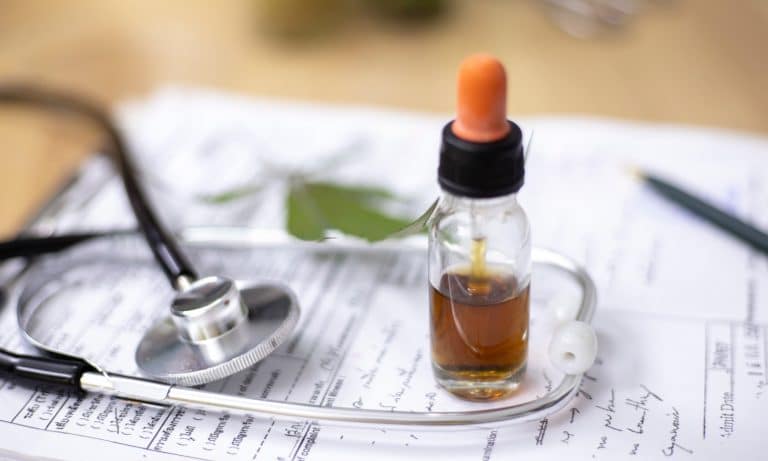
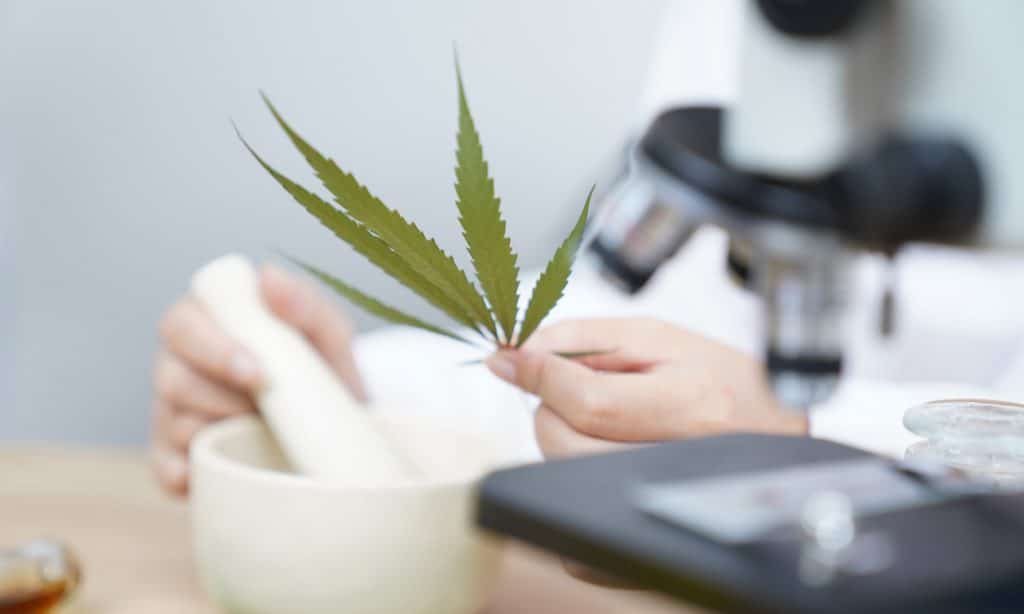
A new study shows that marijuana may contribute to the long term treatment of migraines, reducing their frequency, intensity and the need to consume other medications.
A study from Israel looking into how marijuana use affects migraines showed that continued exposure to the drug may reduce the frequency of these bouts in the long term.
Published in the journal Brain Sciences, the study surveyed 145 patients between the ages of 34 and 54, all of whom had been treating their migraines with medical marijuana for at least the past three years.
The study found that 61% of subjects reported that their monthly migraines had been cut in half. It also found that those subjects who did have reoccurring migraines suffered less impairment than usual, had better sleep patterns, and were consuming less medications in order to treat their symptoms.
“These findings indicate that MC [medical cannabis] results in long-term reduction of migraine frequency in [more than] 60% of treated patients and is associated with less disability and lower antimigraine medication intake,” concluded the study. Researchers theorized that the endocannabinoid system can influence these behaviors, stimulating the development of serotonin and reducing pain.
Marijuana and migraines have been studied by other researchers in the past, with results showing that the drug can help to prevent these attacks, especially in patients who’ve been experiencing these kinds of cluster headaches since childhood.
While more studies are definitely necessary to get a clearer picture, data continues to fill in the blanks of how our endocannabinoid system functions. The more research that’s conducted, the more we can understand our bodies and why marijuana provides such a wide variety of effects, from treating chronic pain to improving mental health.
Marijuana history ties directly into larger conversations around police brutality and systemic racism than most Americans realize.
When Brookings Institution senior fellow John Hudak wrote Marijuana: A Short Historyin 2015, cannabis legalization was still regarded with a curious novelty by many Americans. Since then, cannabis has emerged in the national conversation through politics, culture, medicine, wellness, and more. And in light of recent discussions around policing and systemic racism in the United States, Hudak believed it was important to build upon that history and discuss how the roots of prohibition impact us today. Here is some insight into marijuana reform, policing and racial justice.
Hudak wrote a new edition to his book, which will be available June 30. To promote the book’s launch, Brookings hosted a webinar with Hudak, Buddings Solutions CEO/founder Shanita Penny, and Politico reporter Natalie Fertig to unpack how cannabis sits at the intersection of race, politics, and culture in America.
When many Americans think about marijuana history, Hudak explained, they focus on the 60s and 70s, when Richard Nixon introduced the Controlled Substances Act, which officially criminalized cannabis. But the foundation of cannabis laws as we recognize them today really started at the turn of the 20th century.
“Cannabis law and drug policy in general really had explicitly racist roots in the United States. Cannabis laws initially came about out of fear of Mexican immigration to the United states,” said Hudak. “The term ‘marijuana’ was rooted in that attempt white Americans and immigrants coming across the border of Mexico. That spiraled into a broader, racially divisive set of policies that, by the 1920s, begin to vilify black Americans, in addition to Latinos and immigrants.”
That eventually led to Nixon’s infamous War on Drugs. In reviewing those policies and statements made by politicians, Hudak was struck by the languages used at the time. It was rhetoric typically reserved for war. And if it is a war, why shouldn’t the police use war equipment to fight it?
“That really transformed how police departments operate in this country,” Hudak said. “It was all based on opposition to people of color, opposition to agreement, and opposition to certain political groups.”
Sadly, as Penny said, it’s taken 50 years to reach a place where lawmakers and industry leaders have begun addressing the racial aspects of historical drug policy. To repair the damages caused by the Drug War, states have included social equity programs designed to benefit communities of colors that were disproportionately affected by marijuana’s criminality.
Photo by Cappi Thompson/Getty Images
But those programs often fail to lift up these communities with the support necessary to thrive. Creating expungement programs that require extra bureaucratic legwork from marijuana offenders doesn’t go far enough, Penny said. Marijuana legalization doesn’t automatically fix all the problems rooted in decades of systemic obstacles.
“Many of the systems that have held these same individuals down most of their lives since they were impacted, or even before that, are still in existence,” Penny said. “They are systems that need to be re-tooled for any of this progressive legislation to ever stand a chance. If we don’t center race and equality in this conversation, it will all be for naught.”
State lawmakers might pay lip service to doing this work when constructing legislation, but their actions often fail to provide the foundation necessary for social equity programs to thrive. Massachusetts, for example, only has lifted one social equity-owned cannabis store off the ground for the whole state.
“Cannabis business is hard. It’s hard if you’re well-funded, politically connected, if you’ve run successful businesses and exited them. This idea that giving a business license to someone impacted by the War on Drugs or only making a certain amount of money per year, and now their life is equitable in this country? It’s an absolute joke.
“It doesn’t make sense to throw this license out there and expect them to be successful and thrive,” she continued. “We’ve seen millions and millions of dollars being lost annualy by large companies. It just isn’t realistic that there’s an expectation these folks can get up and running faster than anyone else.”
While cannabis legalization is popular in America, it isn’t necessarily salient, Hudak explained. Many voters have access to cannabis through legal markets and if they don’t, can’t usually access it without serious consequences, especially if they’re white. That cause a dilemma where many people see other issues that need to come to the front of the line before cannabis.
“That said, if cannabis reform gets folded into the larger conversation around racial justice and policing, that could create that policy window,” said Hudak. “Where everything comes together at the right time and something can get done. That makes it more salient to Americans. Because then Americans stop thinking about it as can you buy cannabis legally or not. You’re thinking about it as something systemic, something institutional, something that touches a lot of issues.”
Where does cannabis fit in with the intricate tapestry of bacteria and enzymes in the gut? We’re here to explain.
The rise in cannabis and its various correlated products are bringing about attitudinal perceptions and changes. The new mindset is in how we think about traditional antibiotics, and how we create responsive treatments of gut health. There is increasing anecdotal evidence of the efficacy of cannabis in treating various gastrointestinal conditions. Here is information for health providers should know about probiotics and cannabis.
Microscopic bacteria, known as microbiomes, are organisms that go a long way to improving gastrointestinal health. They are a diverse collection of microorganisms that line the inner walls of your gut, like sticky wallpaper.
There are two types of supportive bacteria. The first, prebiotics, have their basis in the health benefits of plant fiber. They serve an essential function, acting as a sort of fertilizer to stimulate the growth of bacteria and support digestion in your gut lining.
The second type, probiotics, are mostly live bacteria or yeasts sourced from fermented foods. Mayo Clinic states that probiotics are different than prebiotics in that they contain live organisms, precisely many types of bacterial organisms, which effectively help balance the healthy microbes. The most common probiotic food that everyone knows is yogurt with live cultures. Yogurt is milk fermented with many different types of bacteria. Beyond yogurt, other fermented foods include sauerkraut, kombucha, and kimchi. Seek a dietitian or medical professional if you want to research what types of gastrointestinal supplements to recommend to patients and clients.
Companies market probiotics as supplements. There are two things to keep in mind in recommending probiotics. First, there are many types of probiotic supplements, and second, the different levels or concentrations of supplements can often be confusing. For example, lactobacillus is a popular strain…of which there are 120 different species.
Probiotics are not an automatic, overlapping fix in search of a specific gastrointestinal condition. It is essential here to recommend the right probiotic with the correct gastrointestinal diagnosis.
There is not a “one probiotic fits all situations” set of circumstances. Some individuals reported symptoms of digestive problems (such as gas and bloating) upon initial consumption of probiotics.
According to AZO Life Sciences, there is a healthy body of evidence that supports the existence of the “gut-endocannabinoid axis” where both gut barrier function and intestinal permeability have improved upon the addition of probiotic bacteria. This reaction results from the increase in select endocannabinoids concomitant with a decrease in others.
Photo by rgbspace/Getty Images
The interactions between the gut microorganisms and the endocannabinoid system govern the integrity of the gut barrier, which directly influences health. Cannabis is one drug that bridges the endocannabinoid system and the gut microbiome.
Where does cannabis fit in with this intricate tapestry of bacteria and enzymes? Both gut barrier function and intestinal permeability improve upon the addition of probiotic bacteria, mediated by the increase in select endocannabinoids concomitant with the decrease in others. The right level of cannabis products will show improvements.
The anecdotal evidence of the efficacy of cannabis in various gastrointestinal disorders can often show correlation with the discovery of endogenous cannabinoids, receptors, and synthetic and degradative enzymes in the gut.
“What we’re hearing from 7-Eleven is they consider this a criminal activity and money laundering,” said one dispensary owner.
By all accounts, the Oklahoma cannabis industry is a runaway success. Medical marijuana sales routinely break expectations and smash records, even amid the pandemic. Oklahoma permits a free-market system for medical cannabis, or as close to one as possible. That means no licensing caps, no municipality zoning restrictions, and doctors can recommend cannabis for any ailment they see fit. But now, 7-Eleven is waging a war against Oklahoma marijuana dispensaries.
This has allowed Oklahoma to avoid the typical headwinds thwarting growth potential in other markets. Back in January, 7-Eleven Inc. bought out property leased to multiple cannabis dispensaries in Oklahoma. Dispensary owners were told not to worry. “On day one, nothing changes,” an email sent to owners read. “There is no need for lease assignments.”
Now, amid a global pandemic, multiple dispensary owners have been informed those leases won’t be renewed. Owners like Starla Norwood, a registered nurse who operates The Nurses Station with her husband, didn’t receive a written notice or explanation for why they’d been kicked out. Instead, the property managers delivered the news over the phone. The message was direct and clear: Marijuana businesses had 14-days notice to vacate by the end of June.
“What we’re hearing from 7-Eleven is they consider this a criminal activity and money laundering, and there are 300,000 Oklahomans with medical cards, and they seem to think their business is not important,” Norwood told local news station KFOR.
Those who attempted a dialogue with the property managers were confronted with a unflinching wall. No investigation or business review would occur. When some inquired about the 30-day notice requirement by landlord and tenant in their contracts, they were redirected to a different clause that essentially voided that stipulation.
Photo by Jayson Delos Santos via Pexels
“She just said that they’re not for marijuana, they don’t believe in it, and they’re not renewing any leases going forward with anyone who’s in the marijuana business and leases from 7-Eleven,” John Koumbis, owner of JKJ Processing Inc., told The Oklahoma Chronic.
Still, Koumbis pushed back. He asked when 7-Eleven had reached this outcome. Possibly, it was a business decision caused by the pandemic. But Koumbis learned this was 7-Eleven’s plan since January when the company took over the leases. They had just waited until the last possible moment to tell the marijuana businesses.
“The building we occupy, it sat empty for over 12 years before we leased it, it took a lot of time and money just to get it up to code, and so many other mom and pop shops are in the same boat,” Koumbis said. “They’ve sunk their life savings into these places, and they’re just getting pushed out now.”
The news could pose a devastating setback to the Oklahoma green rush. In May, Oklahoma medical marijuana sales hit $73 million, the highest monthly figure yet.
Marijuana can produce different feelings, from giggles to intense anxiety. Your genes, the type of strain you consume and dosage are all important factors.
Marijuana is a stress relieving property for many, allowing people to feel relaxed and uninhibited, like a giant weight has been lifted off their shoulders. Curiously, cannabis is also a common anxiety inducing substance. So how does marijuana influence your anxiety?
Paranoia and anxiety are two of the most popular negative side effects of marijuana, to a degree where these kinds of experiences keep a lot of people from regularly using the drug. Luckily, the degree of anxiety that marijuana produces can be managed through several factor; your mindset, the kind of marijuana you consume and dosage all play a part.
While there are many perks and therapeutic benefits of THC, research shows that it’s the compound most associated with anxiety. THC is responsible for that “high” feeling we all associate with marijuana use, while CBD has been shown to block the paranoia and anxiety effects of THC. If you’re someone who’s concerned over feeling anxious, choosing the right strain is key.
Officially speaking, there’s three major kinds of strains: indica, sativa and hybrids. After many years of crossbreeding marijuana plants, these labels feel a bit outdated. The majority of strains are hybrids, with a sativa or indica slant. Scientists need to dive deeper into this topic, but anecdotal evidence says that indica dominant strains provide a “body-focused” high. This means that they are less cerebral and less likely to produce anxiety.
Photo by M.T ElGassier via Unsplash
Dosage is also key, particularly with people who are inexperienced with marijuana or are trying out a new method or strain. Start off slow if you’re trying anything new, giving your body some time to experience the effects of the drug before taking another hit.
In order to prevent anxiety bouts, the best thing you can do is try to control the factors. Speak with your budtender and ask for an indica dominant strain or something with a manageable THC content. When trying out marijuana for the first time or trying out a new method, be sure to do so with someone you trust or in a setting that’s safe and comfortable for you.
From holding your breath to test if you have COVID-19, to wiping down surfaces so you don’t catch it. Here’s what you should not believe about the coronavirus.
The coronavirus has been around for most of 2020, giving us plenty of opportunities to learn about a constantly evolving topic. A virus that triggered a pandemic understandably prompts challenges for all, from average people who are uninformed, to experts and scientists who are learning on the go. The scale of the coronavirus is unprecedented, as are the myths that it has prompted.
The Huffington Post compiled a list of them, from those that are commonly believed to the truly egregious ones that should be corrected ASAP. Here, we highlight some of the most interesting coronavirus myths that have already been debunked.
This myth has some science to support it but sadly, the coronavirus is here to stay for the foreseeable future, no matter how warm the weather gets. Right before the pandemic became a pandemic, some experts believed that summer might be able to control the coronavirus, since many viruses like the flu and the common cold propagate when the weather is cold and people are more vulnerable. So, here we are, officially in summer. And we still have the coronavirus to contend with. In fact, many cities are seeing spikes in cases.
One of the most annoying beliefs that the Centers for Disease Control (CDC) and other health experts spread for months was that masks shouldn’t be worn by people who weren’t hospital workers. This was mainly because they didn’t want our frontline workers to not have masks themselves. However, it’s now been reported multiple times that face masks are, indeed, an effective way of preventing the spread of the virus when worn by everyone.
Packages and groceries can spread the virus
Photo by josemiguels via Pixabay
One of the biggest sources of stress for people is whether to disinfect packages and groceries. While it is possible for the virus to survive on surfaces like cardboard (which is porous) and hard plastics, the CDC is explicit in reassuring people that the main thing they should worry about is contracting the virus through other people.
While the coronavirus deals the worst hand to older people or those with preexisting conditions, people of all ages can get it, including children. There have been several cases reported in children associated with COVID-19, where there’s heart, lung and kidney inflammation.
Holding your breath for long times proves your virus free
The silliest myth in this list is one you’ve likely seen around social media during the first couple of weeks of the virus. No, holding your breath for prolonged periods of time doesn’t mean that you’re virus-free, no matter how much you want it to be true. The only way to know for sure if you have the virus is to either have symptoms or to get a test. Pro tip: If you think you may be infected, voluntarily restricting your breathing won’t make you feel better.
According to one analyst, if the Democrats capture the Senate, bills to legalize marijuana at the federal level will easily pass both the Senate and the House next year.
Marijuana legalization might not receive its expected attention in the upcoming election due to advocacy complications caused by the pandemic. Because of these issues, and how the political landscape might change following the election, analysts pinpoint 2021 as the year cannabis prohibition ends in parts of the country.
Ballot initiatives have emerged in recent years as the primary mechanism activists use to push legalization in state elections. The way it works is pretty simple: Legalization networks collect signatures from state residents until they reach a threshold determined by the state. Montana lawmakers, for example, required 25,000 and 51,000 valid signatures for two separate adult-use marijuana measures to qualify for the November ballot.
Only physical signatures meet the criteria, which is difficult to gather amid social distancing protocols. Montana activists collected more than 130,000 signatures in what Marijuana Policy Project deputy director Matthew Schweich described as the “most innovative signature drive I’ve ever seen.” Other state drives haven’t been as successful and the general consensus is the coronavirus has negatively impacted marijuana legalization.
Those consequence could be temporary, suggest some analysts. According to Canaccord Genuity analyst Bobby Burleson, a center on Budget & Policy Priorities study of 38 states found state budgets are expected to fall short by an aggregate 10%.
In 27 states, tax revenue budgets are expected to drop by 10% or more. According to Barron’s, Burleson noted that cannabis reform has received attention in nine of those states, saying, “We expect budget concerns to prompt resurgent legalization efforts for these and other challenged states.”
Photo by Bulat Silvia/Getty Images
This has already happened to some extent. Bipartisan lawmakers in Pennsylvania, New Mexico, and New York have already suggested cannabis legalization as an injection to state budgets. Shifting political winds, The Motley Fool writes, could also change the conversation around federal marijuana legalization.
Expectations were that Republicans would maintain control of the senate after the 2020 election. But according to RealClearPolitics, five senate seats are currently toss-ups and poll projections show Democrat candidates leading in each race.
“If the Democrats capture the Senate, my prediction is that bills to legalize marijuana at the federal level will easily pass both the Senate and the House (which appears to be safe for Democrats) in 2021,” Motley Fool’s Keith Speights wrote. “I don’t see either Joe Biden or Donald Trump vetoing this legislation, despite the lack of fervor for either candidate on marijuana legalization.”
Researchers believe they’ve uncovered another antibiotic element that cannabis offers, creating an additional tool in the weapon against healthcare associated infections.
“An interdisciplinary team of McMaster researchers found that the chemical compound, or cannabinoid, called cannabigerol (CBG) is not only antibacterial but also effective in mice against a resilient family of bacteria known as methicillin-resistant Staphylococcus aureus (MRSA).” — McMaster University Could cannabis have a hand in treating Methicillin-resistant Staphylococcus aureus (MRSA) infections? Researchers at McMaster University believe they’ve uncovered another antibiotic element that cannabis offers, creating an additional tool in the weapon against the rise of healthcare associated infections (HAIs), which are costing hospitals and clinics billions of dollars.
Looking at 18 commercially-available cannabinoids, the team identified a “non-psychoactive cannabinoid” called CBG, which offered the most promise. After synthetizing and recreating the element in mass quantities to study, the research team “found that CBG had antibacterial activity against drug-resistant MRSA,” targeting the cell’s membrane and eliminating the bacteria.
Study lead Eric Brown, Professor of Biochemistry & Biomedical Sciences, says:
CBG proved to be marvelous at tackling pathogenic bacteria… findings suggest real therapeutic potential for cannabinoids as antibiotics.
Noting that researchers had been looking into the antibiotic properties of cannabis for years, Brown noted that reducing the stigma in cannabis research could lead to more findings. “There has been some stigma of investing in this kind of research, but there’s increasing anecdotal evidence of the medicinal use of cannabis. The stigma seems to be waning.”
Photo by wera Rodsawang/Getty Images
According to the Centers for Disease Control (CDC), about two in every 100 people carry MRSA, a bacterial infection that’s difficult to treat and easy to spread — especially in a healthcare setting. Costing hospitals around $10 billion a year to treat in the United States at an average of $60,000 per patient, MRSA infections often are difficult to control as they can lead to outbreaks.
Being studied at a faster pace than ever before, several studies have already looked into the antibiotic effects of cannabis on the human body, with many concluding that cannabis offered great promise in treating infection in new ways. Often referred to as “antimicrobial,” a 2017 study published in the journal Neuroimmunomodulation found that cannabis research is the key the fight against many infectious diseases. The study stated:
“Contact with cannabinoid compounds can affect different types of infectious agents, by allowing their replication or by eliminating them. This supports the idea of existing cannabinoid receptors infecting pathogens and that their activation may be responsible for previously mentioned effects, pointing to a new biological function of ECS activation.”
With new research coming each year, scientists and doctors across the globe are looking into how cannabis can help treat infection without the side effects of many drugs currently on the market and the results look promising.
The link between cannabis and a heightened risk of stroke has been studied multiple times as THC turns “on” the CB1 and CB2 receptors in the central nervous and cardiovascular systems.
In late 2019, a report was published in the American Association for the Advancement of Science (AAAS) that found, “frequent cannabis (marijuana) use among young people was linked to an increased risk of stroke” as well as an increase on heart rhythm disturbances, or arrhythmias. Published by the American Heart Association, the study did not look into the direct connection between stroke and cannabis use, rather it discovered it as a potential link.
The study found that younger cannabis users had a heightened risk of stroke, compared to individuals that didn’t use cannabis. Interestingly, the study also cited that, “The cannabis users were also more likely to be heavy drinkers, current cigarette users and e-cigarette users, which may have also influenced their risk, even though the researchers adjusted for those factors in their analysis.” Study author Tarang Parekh, M.B.B.S., M.S., a health policy researcher at George Mason University in Fairfax, Virginia had this to say: “Young cannabis users, especially those who use tobacco and have other risk factors for strokes, such as high blood pressure, should understand that they may be raising their risk of having a stroke at a young age.”
The link between cannabis and a heightened risk of stroke has been studied several other times as THC turns “on” the CB1 and CB2 receptors in the central nervous and cardiovascular systems. One study in 2013 found that CB1 receptors who worked overtime, often could lead to significantly higher risks of cardiovascular disorders in the valve and arteries.
Put simply, cannabis elevates blood pressure, putting strain on the heart and body, which can cause issues for people with underlying or even unknown health conditions — making important discussions with your care team even more imperative if you’re a medical marijuana or cannabis user.
Photo by Robina Weermeijer
Here are three important items to note about cannabis and your heart:
Cannabis doesn’t directly lead to heart attacks or stroke.
What can happen is, cannabis can elevate the blood pressure for as long as 3 hours, especially for new users. While the effects of blood pressure elevation seemed to decrease over time for some users, it’s important to discuss with your care team.
Not all doctors and healthcare professionals agree with the studies.
While many doctors are citing the studies, some like Dr. Mark Rabe, chairman of the scientific advisory board for Medical Marijuana Sciences, believe more research is needed. He explained, “When you look retrospectively into databases and pull out bits and pieces of data, and then assemble them and present them, the results can often times be misleading.”
Rabe believes that while it’s important to have frank conversations with your healthcare team about the study and its results, the use of marijuana might outweigh the cardiovascular risk. “The evidence that’s out there would suggest that the risk of cardiovascular problems would be very low relative to the potential benefit of the therapeutic effects of cannabis.”
Research is far-behind what we need to know to draw important conclusions.
For many, marijuana research is still unattainable, held under a titanium seal of the U.S. Food and Drug Administration (FDA.) Until the drug is declassified, medical researchers face issues with accessibility to dig further into research.
It’s important to remember that while medical marijuana is on the rise, healthcare professionals still don’t have important information on how cannabis affects all areas of the body. The hope is that the FDA continues to greenlight research to not only showcase the drug’s powerful benefits, but its potential risks as well.
Marijuana’s complicated history will be the topic of a webcast conversation hosted by Governance Studies at Brookings on June 23.
Propaganda and misinformation overshadow much of marijuana’s history in America. In the early 1900s, cannabis was a medicine used across the country. Pharmacies sold cannabis tinctures and extracts to treat stomach problems and rheumatism. Historians have found evidence that ancient cultures in China, Egypt, and Greece alleviated inflammation, labor pain, and anxiety through cannabis medicine. These traditions were lost over the past century and replaced with myths and taboos that eventually led to the War on Drugs.
Brookings Institute Senior Fellow John Hudak, who is one of the foremost experts on cannabis legalization, tracks marijuana’s complicated past and how the plant has become a mainstream issue in his new book Marijuana: A Short History. Recent attention to systemic inequalities and racist policies in America following George Floyd’s killing by Minneapolis police has brought this history into a new light.
“As the U.S. debates issue of racial justice, criminal justice, and policing, the role cannabis has played in harming Black and Brown America must be part of that discussion,” Hudak told The Fresh Toast. “This book engages those issues and reveals a history of racism, over-policing, and political targeting via the War on Drugs.”
Photo by Olga Volkovaia/Getty Images
These issues and histories will be the topic of a webinar hosted by Governance Studies at Brookings tomorrow (June 23). Politico reporter Natalie Fertig will moderate the discussion between Hudak and Budding Solutions founder and CEO Shanita Penny.
“Now is a critical time to have a conversation about the history of cannabis and the effect it has had on this country,” Hudak said. “Cannabis criminalization began as a racist effort to divided white Americans from immigrants and people of color and has been used to incarcerate and disrupt the lives of millions of Americans for a century.”
Those interested in learning more can check out the event page here or submit questions via email at events@brookings.edu or by tweeting at @BrookingsGov using #MarijuanaHistory.
(Full disclosure: Both John Hudak and Natalie Fertig have previously contributed articles to The Fresh Toast.)