Tuesday, June 16, 2026
Home Blog Page 510

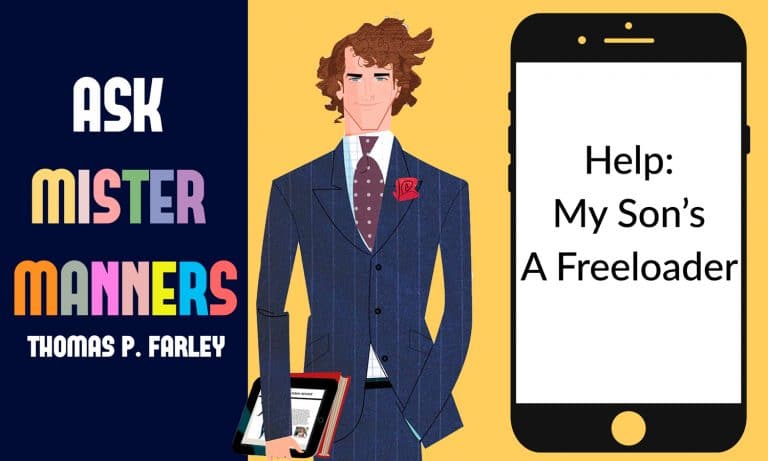
Ask Mister Manners, Thomas P. Farley: ‘My Son’s A Freeloader’

My adult son moved back home to quarantine with our family, but he’s not pitching in for household expenses, even though he makes good money. What can I do?

Etiquette tips on how to interact in today’s world. Have a question for Mister Manners? Send your queries to info@whatmannersmost.com and look for replies in the coming weeks. 

REUNITED AND IT FEELS SO RUDE

Q: I have a 26-year-old son who’s moved back home to North Dakota to wait out the pandemic with my husband, our 15-year-old daughter and me. He’s been working remotely here since March and makes good money. Unfortunately, it never dawns on him to chip in for anything. I’m not expecting rent, and to be candid, we’re thrilled to have this bonus time with him. But is there any way I can gently suggest he begin chipping in for household expenses?

A: Though it has been years since your son was a teen, it would seem it didn’t take long for him to revert to the mindset of being your dependent again. Old habits die hard and apparently, now that he’s back in the abode of Mom and Dad—albeit as a salaried young professional—he’s presumed he can have his cake and eat it, too. 

Clearly, the idea of his taking on even a modest part of your monthly spending has yet to occur to him. By extrapolation, I highly doubt he’ll pick up on your feelings through subtle hints. 

RELATED: Ask Mister Manners, Thomas P. Farley: ‘Will They Call Me Racist?’

All of which means the time for tiptoeing around this issue has passed. Instead, I would have a loving conversation with him, reassuring him of how much you enjoy having him back on the homestead. From there you can explain that since he is a fully grown, wage-earning, milk-drinking, washer-using, steak-eating, Netflix-watching member of the household, you’d welcome his taking part in ongoing expenses. He’ll still be shelling out far less than if he were living on his own, but the funds he’ll provide should help contain your monthly budget while also easing any concern that your continuing generosity has gone unappreciated. 

Last but not least, he’ll also be setting an example for your daughter should she decide to move back home as an adult in (gulp) 2031.

NOT READY FOR THE NEXT STEP

Q: I work for a small dance school in northern California. We’ve been conducting classes for students on Zoom, but my boss recently sent a group text to my fellow teachers and me letting us know she expects us to be instructing in-person again next week. This thread quickly became awkward, with some people responding how excited they are to return, and others expressing concern. I have an older person in my household, so I’m in the latter camp. What’s the best way for me to have my feelings heard?

A: After so many months away from your place of work, it is easy to see why you might have mixed feelings about returning. With the vast majority of the U.S. population under stay-at-home guidance for the better part of spring, you and millions of others now find themselves on the cusp of summer, emerging from hibernation like tardy daffodils suddenly coming to life — and yet still not sure it’s safe to bloom.

threesome apps are real but do they work
Photo by rawpixel.com

The decision to head to back work is an individual one, a choice to be undertaken thoughtfully. And while I appreciate your boss’s desire to return to business as usual, given that yours is a small organization, I might have suggested she handle the reopening with more sensitivity. 

Rather than a group text — which always results in a chaotic chorus of voices — she could have started with an informational email to everyone detailing the new precautions and guidelines your school will certainly be implementing. Presuming that her teachers’ physical and emotional well-being are as important to the school as the institution’s financial well-being, she could also have scheduled a call to speak with each of you individually. This would have been her opportunity to hear your thoughts and concerns. 

RELATED: Ask Mister Manners, Thomas P. Farley: ‘A Home-Wrecker Lives In The Apt. Above Me’

Ultimately, it will be your choice whether you are prepared to return to the studio. And though I’m certain your students must miss working with you in-person, I appreciate that you are also being mindful of a potentially at-risk senior citizen back home. All of which equates to a conversation far more nuanced than you could ever hope to achieve by text. Therefore, although your boss chose to begin the conversation with everyone via smartphone blast, in this instance, I think you’ll find a pas de deux works far better than a do-si-do.

Mister Manners, Thomas P. Farley, is a nationally regarded expert who appears regularly in the media to discuss modern-day etiquette dilemmas — from how to split a check fairly to how to get a word in edgewise. Follow Thomas on Facebook, Twitter and Instagram. And for more insights, listen to his brand-new podcast, “What Manners Most,” which will be focused exclusively on Coronavirus-related etiquette for the foreseeable future.


I Disagree With My Loved Ones On Social Distancing Guidelines—What Should I Do?

The pandemic has created a lot of rifts between family members and friends. Here’s what you can do to avoid them.

As time passes and the pandemic evolves, we learn more about the virus and begin to adjust to our new lives. As cities reopen, people’s different experiences feed in to their opinions on what’s going on. Within the same country, you may have people wearing masks every time they leave their houses and people who aren’t required to do the same. Then there’s the individual ways in which people cope, which have caused serious rifts between roommates, close friends, couples, and family members.

Since states are adapting their social distancing guidelines and reopening their economies, it’s important to remember that the virus hasn’t changed. No cure has been found. In order to care for your health and the health of others, it’s important to follow your state’s guidelines and to apply some common sense.

While everyone is allowed to have their own opinion, it’s hard to understand these differences in times of stress. Here’s what you can do in order to avoid conflict with a loved one over pandemic safety measures:

Learn where they’re coming from

The first step in resolving any type of conflict is to use your empathy. Try to have the willingness to see the other person’s perspective. Understand what’s making them anxious or act a certain way. What helps most is the way in which you communicate. Avoid having fights over social media and try to hold these discussions over the phone or in person. Stay calm and be as understanding as possible. That way you’re more likely to get a similar response.

Be vulnerable

5 First Date Rules You Should Forget About
Photo via rawpixel.com

RELATED: Coronavirus Tracing Apps Could Pose A Threat To Your Personal Data

In order to have someone be open and vulnerable with you, you have to be vulnerable and open yourself. Express what’s making you anxious about your friend’s or family member’s response and why it’s a source of concern for you. Even though it’s hard, try to avoid pulling out scientific facts and trying to win the argument.

Have these conversations with your close relationships

Save your breath and avoid trying to save every person in the world, or getting them to think the way that you do. People will react differently to the pandemic, with some taking it more seriously than others. Focus on your close relationships, the people that are truly affecting you and that you’re concerned over.

Be clear about your boundaries

5 Therapy Apps You Can Use When You Need To Talk To An Expert
Photo by Andrea Piacquadio via Pexels

RELATED: 4 Positive Habits We’ve Picked Up During Lockdown

If your parents want to board a plane and visit you, let them know that you don’t feel safe doing that and that you’re concerned over their health. Be aware things are evolving rapidly and that what you might be feeling right now might change within a couple of weeks. Talk it out with your loved ones, see where they’re coming from, establish a boundary and negotiate. Maybe you can meet up with friends if you’re all wearing masks, or visit your family members if you have a space where you can quarantine yourself.

Don’t try to control other people

At the end of the day, people are going to do what they want to do. As long as they respect your boundaries and your safety, you can only do so much in terms of protecting them and in trying to get them to understand your point of view. Be vulnerable and open, sharing your concerns. Then leave them be.

Two Celebs Are Working To Empower Black Marijuana Owners

The two celebrities will use their platforms to lift up black owners in the cannabis industry through incubator programs and advocacy initiatives.

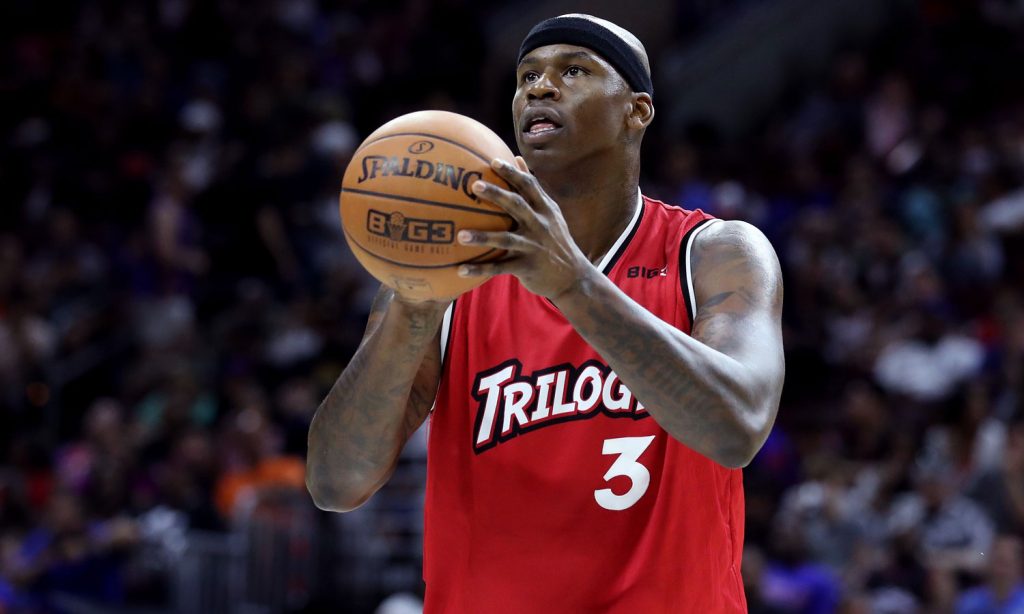
Two celebrities aim to spearhead more diverse representation in the cannabis space. This week, rapper Method Mad and former NBA basketball player Al Harrington announced new programs that would usher more black ownership into the industry. These initiatives accompany the nationwide protests against systemic inequalities following the police killing of George Floyd in Minneapolis. The civic demonstrations have shined a new spotlight on diversity access and opportunity in multiple business sectors, including cannabis.

“Personally, it is essential that we use our brand to help bring awareness to the social, systemic and economic injustice in communities that have struggled with oppressive mass incarceration and racially biased policing policies,” Method Man said in a statement.

RELATED: The Role Marijuana Legalization Can Play In Fighting Racial Injustice

Method Man launched a new social conscious cannabis brand called TICAL, which stands for “Taking Into Consideration All Lives.” It is also the name of Method Man’s 1994 debut album. TICAL sold product from its first three marijuana strains—“Gelato, “Cake,” and “Crusher”—to four black-owned dispensaries in California last weekend. Method Man, who owns a 20% stake in TICAL, will use the business to promote advocacy against racism in law enforcement and promote cannabis legalization.

Al Harrington, meanwhile, plans to make 100 black individuals into millionaires through the cannabis industry. Harrington, who is the CEO of Viola Brands, labeled it his mission and will launch an incubator program the helps transition black market marijuana business into legal, licensed ventures. Cannabis entrepreneurs say it’s “nearly impossible to get a license” in legal marijuana states, but black market products might have “million dollar valuations” if they received effective marketing and retail placement, Harrington said in an interview with CNBC.

al harrington all my best teammates smoked marijuana
Photo by Rob Carr/Staff/Getty Images

“A lot of brands that are on the black market that has a lot of credibility and unbelievable following, have market share, but they just don’t know how to get into the legal market,” Harrington said.

Multiple state lawmakers have referenced legalization as a possible solution to boost local economies in the wake of the coronavirus pandemic. That can’t happen, Harrington said, unless diversity program that lift up communities of color are included.

“That is something I will continue to harp on; continue to bring awareness to because once again, I feel like the war on drugs was aimed towards our community, and they used cannabis as pretty much the main drug to continue to lock us up,” Harrington said “All this money being made now, we’re not represented; we’re not there. I feel like we pioneered this industry.”

RELATED: 13 Rappers Who Are Dominating The Cannabis Industry

Diversity representation in the cannabis industry is far from ideal. A study released by Denver policymakers just last week showed about 75% of licensed dispensary owners in the city were white. Only 12% of business owners were Hispanic and 6% were Black or African American.

“This study sadly confirmed what was widely suspected,” executive director of Denver’s Excise and Licensing division Ashley Kilroy said in a statement. “Just like what has been seen across the state and in other legalized markets across the U.S., Denver does not have a diverse marijuana industry.”

Consumers Require Better Education On Cannabis 101 From Marijuana Industry

A new comprehensive survey found many consumers still need help understanding basic cannabis concepts like THC and alternative delivery methods.

Despite various efforts by numerous companies big and small, education remains the biggest obstacle in the cannabis industry, a new survey conducted by Oasis Intelligence found. The firm’s research showed the majority of legal consumers still lack foundational knowledge about marijuana’s effects, risks, and benefits. One explanation? The number one resource customers use when seeking out information about cannabis and potential products is their friends.

The survey places stark contrast between the conversations occurring inside cannabis spaces and how people discuss marijuana at home.

RELATED: Cannabis Beverage Market To Hit $1.82B By Year’s End

“We inside the industry have a real advantage when it comes to understanding the plant from a scientific, regulation and usage perspective that is generally a requirement for those in the space,” Oasis Intelligence co-founder Laura Albers told The Fresh Toast. “However, when it comes to the average consumer, we see the needs for education are not about more advanced topics that the industry may prioritize—think terpenes, minor cannabinoids gaining popularity or even the endocannabinoid system.”

According to the Oasis study, over 70% of people are unfamiliar with terms like the “entourage effect” and “endocannabinoid system.” Instead, Albers said, many are still grasping the basics. Subjects that most interest consumers include different available products, CBD:THC ratios, and alternative consumption methods. A significant portion of consumers still seek more understanding around tetrahydrocannabinol, or THC.

5 ways cannabis can improve your summer
Photo by McKinsey via rawpixel.com

Put simply, many customers still require education in Cannabis 101. The good news is that customers prefer to learn while visiting dispensaries and view budtenders as indispensable assets. That isn’t what always happens, though. Most people find the majority of information through Google searches, cannabis websites, and online video platforms like YouTube. But friends remain the biggest marijuana resource, as 43% of people rely on social circles to keep them informed.

“Cannabis is a unique category where previous personal experience counts tremendously,” Albers said. “It’s a relatively new shopping experience for the masses and the stories of taking too much of an edible can make a person less confident about how exactly to engage with cannabis.”

RELATED: Why The Pandemic Could Be A Boon For Cannabis Education

The Oasis Intelligence report surveyed more than 20,000 current and prospective customers across every states, representing one of the most comprehensive profiles of modern cannabis consumers to date. The results indicate that the majority of modern consumers support many social justice initiatives, including legalization, expungement for marijuana-related crimes, and social equity programs that invest in communities disproportionately affected by the War on Drugs.

But the survey shows education is still essential in determining purchasing behavior by consumers. While the industry prides itself on cutting-edge research and deeper knowledge about the cannabis plant, many of the people these businesses serve still need help with the fundamentals.

“Best advice is to begin at the beginning and while messaging can, and should, expand into details for the more curious set, continue to beat the drum of Cannabis 101,” Albers said. “We know that consumers are going to online search and YouTube for video content as the first line of personal research so ensuring strong SEO and creating more video info-tainment will help enormously.”

CBD Brands Still Have Inaccurate Dosages

CBD products have always had a labeling issue. A new report shows that the problem remains but that it has improved consistently.

Dosage is very important for marijuana products. The accuracy of them allows people to understand how the drug and its compounds interact with their bodies, preventing overdoses and giving them a point of reference when trying out new brands and strains. Unfortunately, some CBD brands still have inaccurate dosages. A recent report found that 27% of leading CBD brand products don’t have the correct amount indicated on their labels. It’s a number that has improved over the past couple of months.

The report, conducted by Leaf Report, analyzed the CBD industry and compiled the biggest names in the business. From this list, they then selected 37 different kinds of CBD products and tested them for their cannabinoid potency. About 27% of them showed variances in claims versus potency, to a degree that wouldn’t be accepted by states with legal marijuana standards. The rest of the products fared better, making researchers conclude that the CBD industry is growing and cementing itself as something reliable.

RELATED: 4 Things You Need To Know Before Visiting A Marijuana Dispensary

CBD isn’t regulated by the FDA, a main causes behind the inaccuracy in these labels. Brands are responsible for everything about their products, from making them, to ensuring that they’re safe, to labeling them correctly. While these are common problems for an emerging industry, they do make it more difficult for smaller businesses to find steady footing.

CBD wrong dosages
Photo by pcess609/Getty Images

Most importantly, lack of FDA regulation makes it imperative for customers to be careful with their purchases. They must go out of their ways to find brands they can trust, supply them with data that ensures product safety, and demonstrate it was tested by third-party experts.

RELATED: 5 Things You Should Look For When Reading A CBD Label

Despite the bumps, the report has a positive outlook on the CBD industry. Researchers express that they were surprised by the numbers they found and by the overall accuracy of the leading brands in the CBD industry.

If you find a new CBD brand that appeals to you and that has an attractive price, be sure to check it and to do your research. While it’s likely that there are brands that are starting from scratch and are simply trying to make a good product, it pays to be safe while the industry remains so new and shaky.

Marijuana Industry Celebrates Pride

The cannabis and LGBTQ communities share a history of support, but marijuana companies could step up more with monetary support.

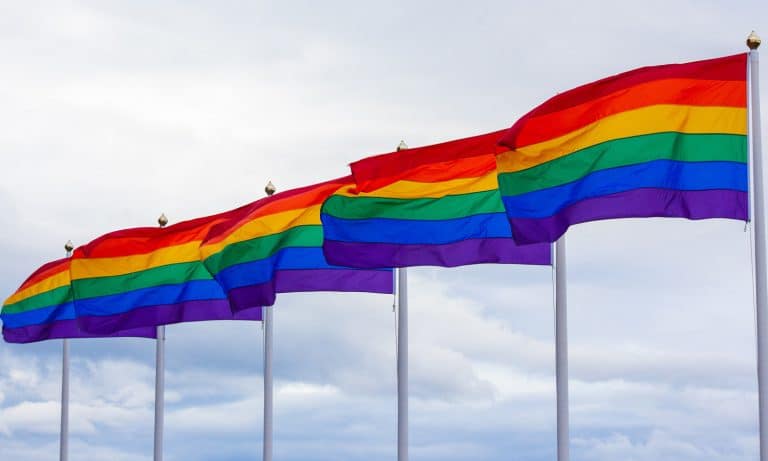
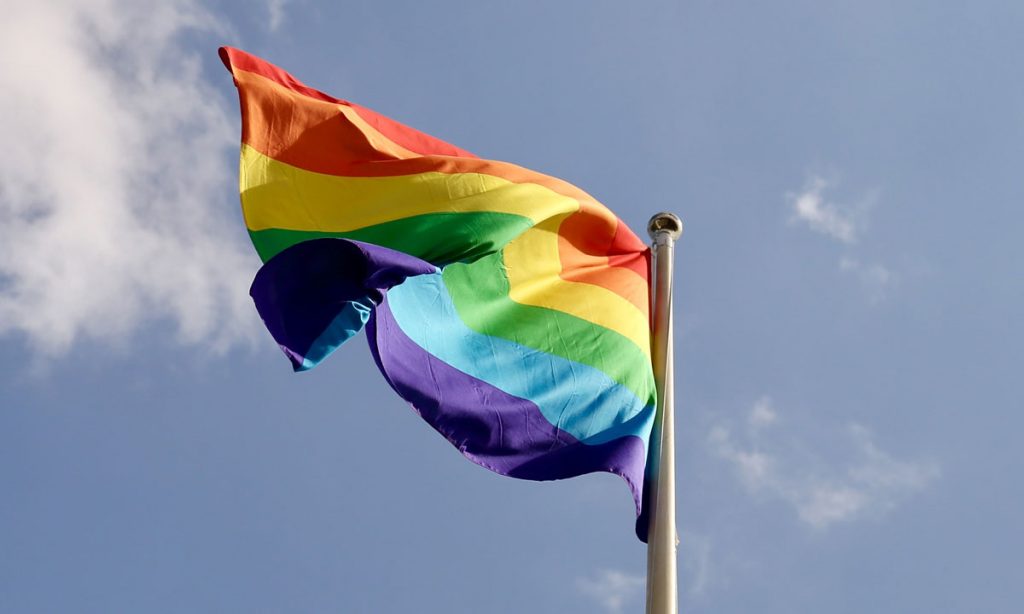
The Marijuana industry celebrates Pride. The shared history between cannabis and the LGBTQ+ community is long, including the landmark moment when HIV/AIDS activists pushed through medical marijuana legalization in California in 1996. There is a commonality of lived experience as well. As articulated by Laila Makled and Caroline Phillips in an April 2019 article for The Washington Blade, “Both cannabis and LGBTQIA community have lived on the fringes of society for decades, navigating a country where their acceptance was, and often still is, hard to attain.”

Several cannabis companies are stepping up to support and commemorate Pride month. In addition to donating $15,000 to GLAAD for Pride month, edibles brand Kiva Confections has re-released their tropical-flavored Proud Camino gummies. San Francisco-based company SPARC has launched its exclusive Unicorn OG cartridge, and is donating $1 per sale to the GLBT Historical Society. Peak Extracts is offering a Pride promo with 10% off of their entire line of tinctures and topicals, and purchases of Aster Farms’ limited edition Rainbow Chip Pre-Rolls and a Coolhaus pint will benefit Los Angeles based LGBTQ+ charities.

RELATED: Why A Big Win For The LGBT Community Matters To Marijuana Companies

But Pride month is not happening in a vacuum. We are in the midst not only of a global pandemic, but a global uprising of citizens in the face of systemic racism and police brutality against Black people.  Though many cannabis companies have made strong gestures of solidarity with the fight for racial equality during Pride month, such as Envy CBD which posted a “How to Support Your Community” primer on its website, few are stepping up on the monetary end, at least not yet.

Why A Big Win For The LGBT Community Matters To Marijuana Companies
Photo by lillen via Pixabay

Black communities have long been disproportionately affected by the criminalization of marijuana (as reflected in this report published by the ACLU), and black trans women of color are even more vulnerable to police brutality than their cisgender counterparts. “Trans people who have done street economy work are more than twice as likely to report physical assaults by police officers and four times as likely to report sexual assault by police” according to Blueprint for Equality, published by the National Center for Transgender Equality. In case you missed it, “street economy” includes the sale of marijuana in places where its recreational use is still a crime.

RELATED: 3 Ways To Celebrate Pride Month This Year

Many Pride event organizers have offered to dedicate their marches and rallies to solidarity with the Black Lives Matter movement, such as the All Black Lives Matter march in Los Angeles on Sunday, June 14. The organizers made inclusivity an explicit theme of their protest, which helped to highlight the invisibilization of black trans people that occurs within the context of racial justice.

The annual Pridefest in Milwaukee, Wisconsin was canceled altogether to center the concerns of the Black Lives Matter movement. With all of the crossover between cannabis, LGBTQ+ and Black communities, it seems a natural step that in addition to “sharing the mike” with Black voices, cannabis companies might be moved to share the spotlight and profits from their promotions as well. With two weeks left of Pride 2020, there’s still time.

This post originally appeared on Green Market Report. 

COVID Apps Pose Threat To Personal Data

Coronavirus tracing apps have been suggested as an effective method of keeping people safe. Experts believe they could also pose a big risk to your digital information.

The coronavirus restructured our lives without giving us time to prepare. Once the virus hit the U.S., it took weeks for the government to implement effective social distancing guidelines and for people to understand the gravity of the situation.

Time passed, thousands of people died, the curve of the virus stabilized and now cities are tiptoeing their way back to normal. The social distancing guidelines remain, however,  since they’re the only effective measure against the virus until a vaccine is available.

One way of making this process easier and safer for people is through technology. Contact tracing apps have been much discussed. These would function with people logging relevant data, such as their location, activity, and whether they’ve contracted the virus. The app would then provide suggestions from health and government officials on how to proceed and stay safe.

RELATED: Is It Safe To Go Back To Your Gym?

It sounds like a great tool in theory, but even people who don’t know too much about technology should be hearing some warning bells by now. We live in an age too jaded by Facebook and breaches of privacy, making it a tall order to ask us to trust apps with information as sensitive as the state of our health, especially during a pandemic that has brought social unrest.

Patient Data Tracking: How Technology Is Evolving With COVID-19
Photo by Gilles Lambert via Unsplash

Check Point, a cyber security firm, recently released a report detailing how the features necessary to run these coronavirus tracing apps could be used to steal your data.

RELATED: 4 Positive Habits We’ve Picked Up During Lockdown

Among the biggest red flags the report uncovered are the possibility of hacking your phone’s Bluetooth, which has an individual “identification packet,” your GPS location, and the personal data stored in your device, which includes passwords, logins, phone numbers and emails.

While these apps are still in the development stage, the precedent they could set could contribute to an even more concerning digital privacy landscape. It doesn’t sound too far off for governments to ask people to log their locations, activities, likes and dislikes, all for the sake of keeping them safe.

And Update To The FDA’s COVID-19 Home Testing FAQ

In-home testing has received Emergency Use Authorization, but its’ necessary to keep updated on what tests are currently approved and what tests have been withdrawn from EUA approval.

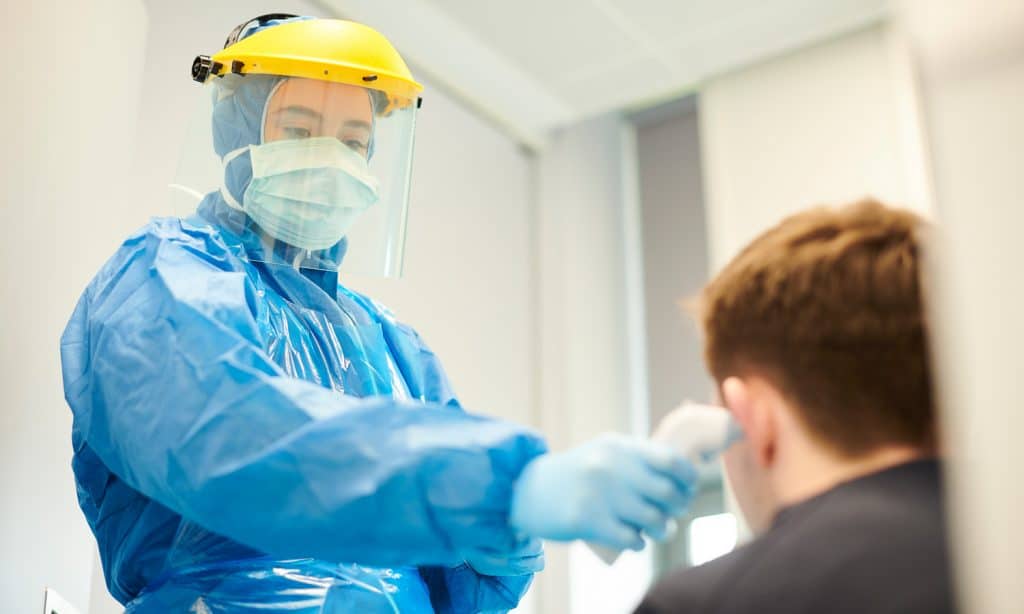
In a national push to expand testing, the Food and Drug Administration (FDA) provides updates to its FAQs page online almost daily. Public health officials believe the push for tests, including at home testing, is essential news to monitor, whether you’re planning to have a COVID-19 test taken or if you’re a healthcare professional involved in the tracking or treatment of SARS-CoV-2. 

The FDA has used its Emergency Use Authorization (EUA) process to accelerate the availability of tests, as well as PPE, to combat the still spreading COVID-19.

In one of the newest updates, the FDA has no objection to serology tests to identify antibodies to SARS-CoV-2. This is an area where the test has been validated. This is done while the manufacturer is preparing its EUA request

RELATED: FDA Has Approved A New At-Home Test For COVID-19

Commercial manufacturers have notified the FDA that they intend to distribute serology tests with instructions included for use. For your information, there are some caveats to current testing procedures:

  • Negative results do not preclude acute SARS-CoV-2 infection. If acute infection is suspected, direct testing for SARS-CoV-2 is necessary.
  • Results from antibody testing should not be used to diagnose or exclude acute SARS-CoV-2 infection.

These tests have not gone through the usual FDA testing and review process due to the health emergency conditions. In-home testing has received EUA, but its’ necessary to keep updated on what tests are currently approved and what tests have been withdrawn from EUA approval.

The FDA Reissued Guidelines For PPE In Hospitals And Clinics
Photo by sturti/Getty Images

There are still marked supply issues with obtaining personal protection equipment (PPE) of various kinds, including swabs. The FDA is moving to make more equipment readily available.

RELATED: Understanding New Rules Around Serological Testing

In a June 4 update to the FAQ, the FDA states that some report trouble obtaining viral transport media/universal transport media (VTM/UTM) and a flocked nasopharyngeal swab to collect and transport patient samples.  

The FDA believes that a nasopharyngeal specimen is the preferred choice for swab-based SARS-CoV-2 testing. There are two different types of swab (polyester vs. rayon), depending on what anatomical part the sample is drawn from. Health care professionals are encouraged to share their results; and the FDA will update its validation data if you agree to share the test data. This way, other laboratories can learn from the data.  

Should You Tip Your Budtender

Tip jars started to take shape around a decade ago when medical marijuana was first beginning to build momentum across the country.  

Now that marijuana legalization has taken hold in more parts of the United States, people are showing up to cannabis dispensaries in droves to see what it’s like to purchase legal weed. Sure, there is a novelty factor to it for some, while others are stepping inside these establishments destined to become regular patrons. 

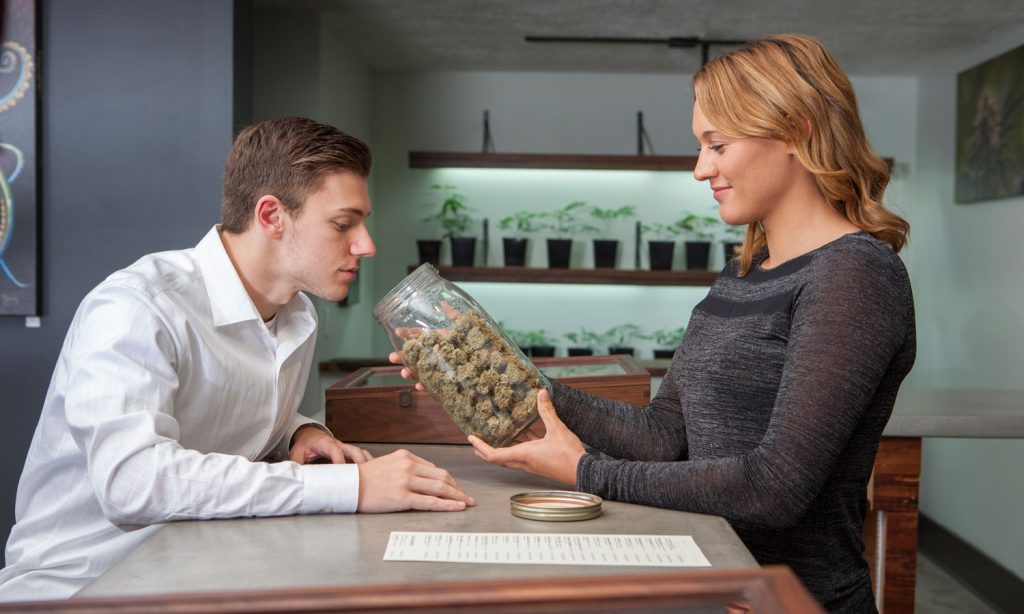
At the front of the house are budtenders. These folks act in several different capacities, assisting customers in finding the best possible strain, showing them new products and answering questions to help them walk away with the best possible experience. It is important work, especially when it comes to dealing with a new customer whose only experience with marijuana was that one time back in college when they took a hit off a bong. These people need to be guided through the latest developments on the cannabis scene and the budtender is a big part of the process.

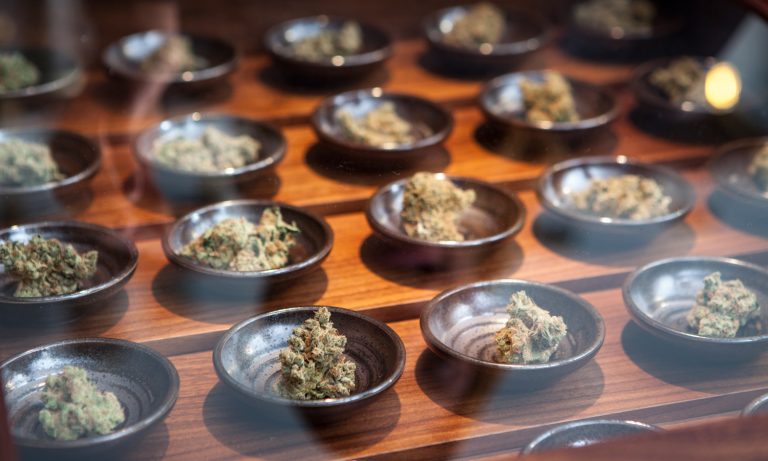
One of the things a new customer might notice while browsing the display cases in a dispensary is the presence of tip jars. This trend started to take shape around a decade ago when medical marijuana was first beginning to build momentum across the country. But now they seem to be turning up more in both the medical and recreational sectors. The idea, as with any situation where a tip jar is present, is to give the budtender an opportunity to earn additional income.

It is also an incentivizing measure. If a budtender believes he or she can earn an extra $50 or more each day by simply providing superb customer service, chances are they will come to work ready to make it rain.  

Why Are Marijuana Retailers Struggling To Keep Budtenders?
Photo by Heath Korvola/Getty Images

Still, some people take issue with tip jars becoming more commonplace in dispensary life. Some feel that while a budtender might deserve and extra $10 or so for helping them identify a strain most effective in treating their specific health condition, others think it is flat out BS that they must cough up extra cheddar just because one sold them a package of edibles. And while tipping is always optional, many argue that some budtenders act as though they are entitled to a tip for spending a few minutes with a customer. 

RELATED: Want To Be A Marijuana Budtender? Here’s How To Do It

So what is the right thing to do? Should we tip our budtenders, or simply treat them the same way we do our liquor store clerks? After all, the people who sell us beer do not get tipped out just for telling us where they keep the Lagunitas.

The answer should be simple, but it is actually a bit tricky.

Photo by Heath Korvola / Getty Images

For starters, what exactly is a budtender’s job? According to the California-based employment agency Vangst, it is to provide “excellent customer service to all patients and customers in medical and recreational dispensaries. Uses point-of-sale system and other technology to ensure all cannabis product sales are properly tracked. Provides information to customers on product choices, consumption methods, compliance, and safety. Remains up to date on all cannabis regulations to ensure compliance within the dispensary.”

RELATED: Let Your Friendly Neighborhood Budtender Help You

No doubt, there is a lot of responsibility involved with being an exceptional budtender, which is the reason that these people are paid an above-average salary right out of the gate. Budtenders often start out making around $16 per hour. These are not excellent wages, but they are significantly higher than if these people were to punch a clock at a fast food joint, where employees are not compensated with tips.

It is also more money than what the average liquor store clerk earns. And as we established earlier in this article, they don’t get tips either. But then again, society has no qualms whatsoever about tipping bartenders a buck or two for simply popping the top on a beer and setting in front of them.

So, do we tip budtenders or not? 

Listen, don’t feel obligated to leave a tip just because a dispensary has scattered jars all around. However, if a budtender is friendly, helpful and makes your dispensary experience a pleasant one, by all means, don’t be afraid to leave them a few extra bucks. Yet, if all a budtender does is ring up a package of edibles or pre-rolls, a tip isn’t exactly necessary. These products are already expensive enough with all of the additional taxes for people to be required to pay more just because an employee punched a few buttons on a cash register.

But, here’s the thing: Good people who do good work and, above all, help you in ways that could not have been achieved without them, are always deserving of more. It is a classy move to offer a gratuity for exceptional service. 

What To Know About CBD And Eczema

Although there’s a lack of scientific research on CBD due to the compound’s strange legal standing, many experts are hopeful in the effect it could have on eczema.

Eczema is a condition that targets a large percentage of people across the country. Known for irritating the skin and leaving it patchy and red for stretches of time, eczema occurs due to a combination of genetics and environmental situations. Flare ups of the condition can occur from pollen in the air or the types of foods and drinks you ingest.

Could CBD provide some relief for this type of skin inflammation?

Eczema, which refers to a group of skin conditions that can manifest in different ways, is traditionally treated by managing its most prevalent symptoms in order to prevent flare ups. The condition is not contagious and can be very different from person to person, with the most prevalent symptom manifesting as patches of itchy skin.

RELATED: 5 Cannabis Products That Will Defeat Eczema In Time For Summer

There is no cure for eczema, which is why people who suffer from this ailment have to be careful, moisturizing their skin often, while also looking for effective ways of avoiding triggers. The ways in which people treat their eczema are varied and personal, ranging from warm baths and gentle soaps to wearing cotton clothes that won’t hurt them.

Here's What You Should Know About CBD Topicals
Photo by vadimguzhva/Getty Images

Since its rise in popularity, CBD has garnered some acclaim within the beauty and skincare industry. Although there’s a lack of scientific research on CBD due to the compound’s strange legal standing, many experts are hopeful in the effect it could have on eczema.

RELATED: Could CBD And Cannabis Eliminate The High-Cost And High-Stakes Of Current Psoriasis Medicines?

Different studies have shown that CBD is effective in providing anti-inflammatory effects and managing skin irritation. There are also studies that have found CBD has antioxidant properties, which could help prevent infections when skin has been damaged by eczema and is at its most vulnerable.

Once additional studies are conducted, CBD can finally outgrow many of the issues that plague it and stop the compound from being perceived as a legitimate source of relief. For now, there’s some promise for treating different skin ailments with CBD.

Don't Miss Your Weekly Dose of The Fresh Toast.

Stay informed with exclusive news briefs delivered directly to your inbox every Friday.

We respect your privacy. Unsubscribe anytime.