Sunday, July 19, 2026
Home Blog Page 516

Portland Plans To Do What With Marijuana Tax Revenue

0

  Mayor Ted Wheeler announced they will redirect $12 million from police budgets toward directly supporting communities of color.

Police benefit from marijuana legalization in ways you probably don’t expect. Research shows no longer enforcing marijuana policies allows cops to redirect their attention to solving more pressing crimes, including burglary, theft, and property crimes. But multiple states and municipalities also allocate legal marijuana tax revenue to police budgets. That could change following nationwide protests against police brutality and systemic racism.

This week Portland, Oregon Mayor Ted Wheeler announced the city would redirect $12 million from the city’s police department and pledged the funds toward supporting communities of color. This comes just one day after the Oregon Cannabis Association (OCA) called upon Wheeler to stop sending Portland police budget funding derived from cannabis tax revenue. According to the OCA, police budgets received more than $2 million from marijuana tax proceeds last year.

RELATED: The Role Marijuana Legalization Can Play In Fighting Racial Injustice

“This is simply unacceptable,” the OCA’s open letter reads. “As the Council considers its budget this year, it is imperative that you take strong steps to end the distribution of these funds, even in the face of declining revenues, to the same law enforcement agency that very often is the perpetrator of similar actions that caused the demonstrations in Portland these past weeks.”

In a press conference, Wheeler said he hopes that cannabis tax revenue will help source the redirected $12 million in police funding.

Oregon Will Stop Using Marijuana Tax Revenue To Fund Police
Photo by Vasiliki Volkova via Unsplash

Police departments often argue legal marijuana will require more labor dedicated to catching drivers under the influence of cannabis. However, studies on the topic deliver conflicting results. In Washington state, Colorado, and Oregon, a study published in the Addiction journal reported there was one additional traffic death per million residents the first year of marijuana legalization. But scientists found this increase was temporary and rates returned to normal after a year.

Another study from the American Journal of Public Health concluded that three years after legalization, there was no significant statistical difference in crash death rates in Washington and Colorado. Research by the Insurance Institute for Highway Safety and Highway Loss Data Institute, however, reports that motor vehicle crashes were up 6% in four recreational marijuana states compared to neighboring non-legal states.

RELATED: Data Shows Roadside Searches Decrease After Marijuana Legalization

Notably, roadside searches dramatically dropped more than half following marijuana legalization in Colorado and Washington. According to Stanford researchers, traffic stops are a primary tool police use in enforcing the War on Drugs, which can lead to fatal results for African-American drivers.


The Weed Sites Exposing Shade, Scandals And Secrets

There is a darker side to the marijuana industry that isn’t always revealed to the public or investors. Here are three digital publications shining a light on the weed industry underbelly.

The marijuana industry is booming during and post lockdown. Investors are starting to look again at the industry with dreams of finding the cannabis version of Amazon, Apple or Google. But while retailers and product companies are profitable, other parts of the industry are struggling with profitability or finding a workable business plan.

Over $20 billion has poured into the industry and multiple companies have gained unicorn status by going public at $1 billion or more. But as companies like Medmen, High Times, MassRoots and others show, there is a darker side that isn’t always revealed to the public or investors.

“When I talk to investors, especially family offices interested in the space, they want to know the full, unvarnished story. Companies that try to hide negative or damaging news only hurt the industry as a whole” says Noa Kahner, founder of Kahner Global, the highly respected cannabis investor summit series.

Mainstream media, like Politico and the New York Post, are quick to share the scandals, but most cannabis media tend to shy away from negative business coverage. MJBiz.com, the largest B2B media in the space, trails others in unpleasant news. Luckily for investors and the industry itself, three mavericks expose the honest and unvarnished truth.

The editorial process of Green Market Report, founded by former Wall Street executive Debra Borchardt, is based on a review of SEC filings, investigative reporting, and interviews with sources. They mostly report on publicly traded companies as the SEC filings are a wealth of information. Their background gives the advantage of being able to quickly analyze complicated financial documents and pick up on details that other reporters may not catch. The Fresh Toast syndicates some of their content.

RELATED: Top 5 Cannabis Industry Scandals

All sources are verified, and do not rely on documents unless a reporter has been able to obtain a copy. They do not accept anonymous sources and will not use source material like emails, court cases, or other financial records without seeing the actual documents. They also ask companies for comment when reporting difficult stories in order to make sure the company has a chance to clear up any details or get their side of a story told.

Unlike many sites, Green Market Report does not provide sponsored posts as they feel it is a conflict of interest and would hurt journalistic integrity.

Cannabis.net founder Curt Dalton says, “We are an amalgamation of National Lampoon, the Wall Street Journal, and Barstool Sports. Writers have editorial freedom to give opinions, use a swear or two, and take a stand against the greed and corruption that has plagued the early years of the legal cannabis industry.”

RELATED: The Rise And Impending Doom Of Canna-Bro Culture

He shared that his publication’s secret sauce is hardly a secret, as most of their content is responses or opinions about publicly posted information via filings, social media and press releases. Independently funded, they have no ties in the industry that could color coverage.

5 Ways To Prevent Your Electronic Device From Overheating
Photo by VIKTOR HANACEK via picjumbo.com

Dalton worries about the importance of company transparency, especially after the recent cannabis stock market crash. “The cannabis stock market crash exposed some shady dealings and back door deals in the marijuana space, and we just hope to be a voice of honesty and integrity in a niche that is having a hard time gaining legitimacy in the public’s eye, and for good reason.

RELATED: Investors Are Jumping Into Psychedelics After Learning Hard Lessons In Cannabis Industry

“With any new industry, greed and dishonesty took over in many back alleyways of the early industry as people tried to make a quick buck at shareholder or investor expense.  We use our text and video platforms at Cannabis.net to expose some of those characters, bring a laugh to a few faces, and always try to give the reader something to think about or ponder as they finish reading our articles,” said Dalton.

L.A. Cannabis News is in the middle of the hub of the U.S. marijuana industry. They cover local, hyper-local business news and national stores. Founder Brian Weiss is from a noted Angeleno family, giving him extensive contacts who provide the insider take.

As the cannabis industry continues to grow globally on a daily basis there is a lot of news to cover and not always good news. I feel many publications are afraid to cover the people/companies that are not always doing right by the industry, but we have no problems doing that.” – Brian Weiss, Cofounder & CEO, L.A. Cannabis News.

Their goal is to ultimately cover all local markets where cannabis is legal or becoming legal around the world under CN Media which stands for CannaNation.

It seems the wild wild west of the marijuana industry has at least three good folks who watch out for the public’s best interest.

As Dalton said, “This plant is doing so much good in the world and helping so many people, we want to highlight those facts and be a force pushing for its legalization and acceptance.”

How To Stop Coughing So Hard From Marijuana Smoke

Sure, it’s a natural instinct to jump in there and start chiefing away like Cheech and Chong, but that’s where most beginners go terribly wrong.

There is nothing that makes a marijuana user appear more like a novice than when they cough after every single hit. Their face turns all beet red, their eyes start watering as though they had just watched “Toy Story 3” and the hacking sounds coming from their gyrating body tells the others in the room that they can’t hold their weed.

In a lot of ways, coughing incessantly after smoking marijuana is tantamount to when someone scrunches up their face down at the local bar after taking a shot a tequila. Everyone can always tell a lightweight by these physical reactions and let’s face it, no one wants to be considered an amateur in a time when smoking grass is becoming so popular. 

If you are reading this, chances are you sound as though you are choking on a chicken bone every time you smoke weed. Fortunately, there are a few things a person can do to help them cough less and join the ranks of the professionals. Pay close attention here, kids, your reputation is on the line.

The first move a new marijuana smoker can apply to diminish those embarrassing coughing fits is to just take smaller hits. Sure, it’s a natural instinct to jump in there and start chiefing away like Cheech and Chong, but that’s where most beginners go terribly wrong. The virgin lungs need some finessing, a little wining and dining before they are anywhere ready for this sort of abuse. Smoking weed isn’t a competition. Never be afraid to take a smaller hit than everyone else, if that’s what needs to happen to prevent one of your lungs from ending up on the living room floor

RELATED: Why Does Marijuana Make Me Cough And How Do I Stop It?

A true professional understands his or her limits. 

Another pro toker move that helps keep coughing to a minimum is to just inhale deeply after taking a hit. One of the most common rookie mistakes is taking a hit and hesitating to suck the smoke down into the lungs right away. This can sometimes cause the smoke to get trapped in the throat, and that’s when the body goes haywire in its fight for survival. What’s more is inhaling the smoke deeply also allows you to gain the maximum buzz benefits from your weed smoking endeavors. 

How To Stop Coughing So Hard From Marijuana Smoke
Photo by Artur Matosyan on Unsplash

Well, would you look at that, you’re already well on your way to stepping up your weed smoking game.  

RELATED: Here’s Why Smoking Weed Makes Your Eyes Red

There is also something to be said about buying higher quality marijuana. Some of the stuff sold on the black market could contain dangerous pesticides and other chemicals that make even the smallest hits entirely too harsh. And nobody wants to smoke grass that has been tainted by poisons anyway.

The best move is to purchase cannabis products from a licensed dispensary, one that is subject to testing and other regulations that ensure the weed you are buying is clean. That could make all the difference in the world when it comes to controlling those coughing fits. 

However, some people just aren’t fit for smoking. It doesn’t matter how good the weed is or how small the hits are, these people are just destined to cough themselves into a red-faced stupor each time they partake. If you find that you are one of those who falls into this category, don’t give it a second thought. There are a variety of other marijuana products on the market right now that are entirely smoke-free. Might we suggest trying vaporizers (from legal stores only) or edibles? These products come with their own risks and side effects, but coughing typically isn’t one of them.

5 Things To Know Before Driving With Cannabis

Mobilizing with marijuana remains a complex issue, changing depending on your area and state laws.

Now that marijuana is legalized across a growing number of states, it’s natural to wonder how to move your purchase from point A to point B and what to do if the police pull you over. These questions are common for all users, residents and visitors alike, whether they’re moving marijuana from a business to their home or traveling longer distances.

Here is a basic break down of the most important facts you need to know:

Follow state possession limits

Could CBD Cause Impaired Driving?
Photo by William Krause via Unsplash

RELATED: Get Busted Driving With Marijuana And You May Lose Your Vehicle

While most people purchase marijuana in small amounts, there are some who like to purchase in bulk. These people should be more careful than usual, informing themselves on state laws in order to prevent fines or even jail time if they’re caught by the police. For example, in California the law states that buyers are allowed to carry an ounce of flower or eight grams of concentrates like oil, hash and dabs.

Learn about open container laws

Your Designated Driver Should Be Someone Who Doesn’t Use Marijuana
Photo by Maxwell Ridgeway via Unsplash

RELATED: Data Shows Roadside Searches Decrease After Marijuana Legalization

Open container laws state that open alcohol bottles should travel in the trunk of the car or in a locked glove compartment. In many states, marijuana operates under the same condition, having to travel in the trunk of the car if the package is opened.

Don’t smoke in your car

is new marijuana breathalyzer technology on the way
Photo by JasonDoiy/Getty Images

RELATED: Never Admit To Police That You’ve Been Smoking Marijuana

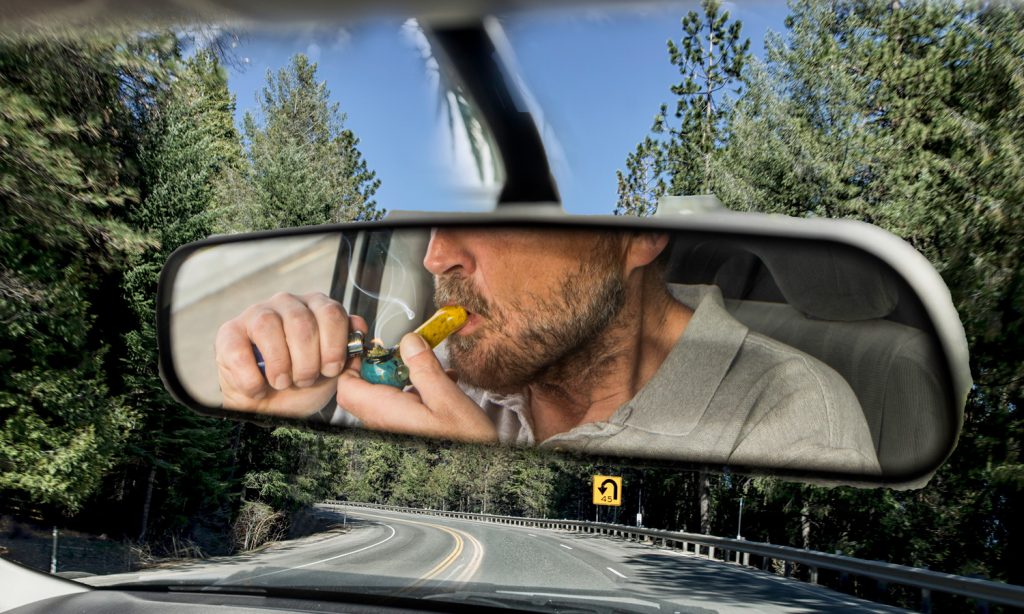
No matter whether you’re driving or not, it’s best to avoid any issues and smoke when you’re home or when you’re in an area that’s safe and private. Smoking in your car breaks the open container law and could also lead to a DUI.

Don’t cross state lines with cannabis

Colorado Weed
Photo by MichaelGaida via Pixabay

RELATED: Here’s What You Should Know If You’re Caught Driving While High

Cannabis laws and regulations are still too muddled to take this kind of risk, no matter if you’re traveling from one legal state to another. Until marijuana is legal on a federal level it’s best to avoid these scenarios and to err on the side of caution.

Know your rights

Traffic Searches
Photo by bluegame/Getty Images

RELATED: Can Police Search Cars For Marijuana Based On Odor Alone?

The debate regarding the legality of marijuana means that laws are even more confusing than usual, with a lot of gray areas. Nowadays, a cop might be able to pull you over because they smell weed without actually having the right to search your vehicle.

If your car smells like weed, cops are able to conduct a visual search of the car. If your marijuana is stored in the trunk or in the glove compartment, you’ll be more careful and less likely to face these kinds of issues.

Concentrates Really Won’t Make You Higher Than Smoking Weed

0

Researchers found that concentrate users had higher THC levels in their blood, but flower and concentrate use ultimately caused the same level of “being high.”

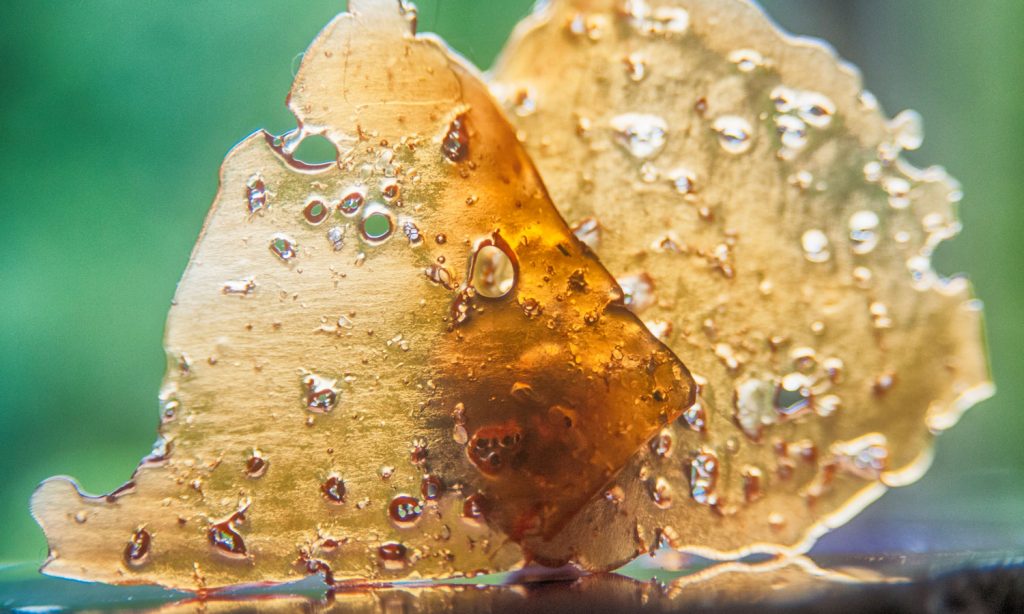
Potent myths around cannabis concentrates have discouraged some patients that could benefit from their use. Popular misconceptions include: one hit will leave you high for days, some concentrates are akin to “crack,” and smoking concentrates can have fatal outcomes.

A new study published in JAMA Psychiatry examined how smoking traditional cannabis flower versus concentrates affected users. Researchers concluded that consuming concentrates will boost THC levels in your blood, but won’t cause you to become significantly more “high” compared to conventional marijuana.

“Surprisingly, we found that potency did not track with intoxication levels,” the study’s lead author Cinnamon Bidwell said. “While we saw striking differences in blood levels between the two groups, they were similarly impaired.”

University of Colorado-Boulder researchers recruited 121 participants who regularly consumed legal marijuana flower or concentrate products. They were then randomly divided into a high-THC group and a low-THC group. Four types of marijuana products in total were used for the study: 1) high-THC concentrates (90% THC), 2) low-THC concentrates (70% THC), 3) high-THC flower (24%), and 4) low-THC flower (16%). All products used were purchased at legal marijuana stores, making this one of the first cannabis studies to use real-world products in their assessment.

RELATED: A Simple Guide For Marijuana Concentrate Newbies

On the day of testing, researchers drew blood from participants and asked them to complete a baseline assessment. Measurements for mood, intoxication level, cognitive function, and balance were made at three junctures: before smoking, right after smoking, and then an hour post-smoking. Regular concentrate users had higher THC levels at all points in the study. Regardless of potency, however, all participants had similar intoxication levels, balance coordination, and cognitive impairment.

5 myths about cannabis concentrates
Photo by rgbspace/Getty Images

Researchers found that balance was about 11% worse after cannabis use among all groups, and memory was compromised. But the impairment faded within an hour.

“People in the high concentration group were much less compromised than we thought they were going to be,” study coauthor Kent Hutchison, who also studies alcohol addiction, said. “If we gave people that high a concentration of alcohol it would have been a different story.”

RELATED: Here’s Why Smoking Weed Makes Your Eyes Red

These results, researchers emphasized, came from normal cannabis users who have varying degrees of tolerance. Inexperienced or novice consumers could experience different outcomes, and should approach concentrates with caution. Based on their results, scientists added that more research into how the body metabolizes marijuana is needed. It could be, they suggested, that intoxication has diminishing returns after someone smokes their first hit.

“Does long-term, concentrated exposure mess with your cannabinoid receptors in a way that could have long-term repercussions? Does it make it harder to quit when you want to?” Hutchison said. “We just don’t know yet.”

A Patient’s View Of Cancer And Medical Marijuana

A breast cancer patient from Minnesota shares  her cancer journey and how medical marijuana has made a great deal of difference in her treatment.

“Marijuana has been used in herbal remedies for centuries. Scientists have identified many biologically active components in marijuana. These are called cannabinoids. The two best studied components are the chemicals delta-9-tetrahydrocannabinol (often referred to as THC), and cannabidiol (CBD). Other cannabinoids are being studied.” — American Cancer Society

With states all over the U.S. legalizing medical marijuana for those with certain conditions, many more cancer patients are not hesitating to ask their care teams if marijuana could help them through cancer treatment, recovery and beyond. 

Nancy (whose name was changed to protect her privacy), a breast cancer patient from Minnesota, shared exclusively with The Fresh Toast her cancer journey and how medical marijuana has made a great deal of difference in her treatment. When asked how marijuana had augmented her treatment, Nancy shared that while she had hesitation in the beginning, marijuana changed her life in a matter of hours. “I am able to be off my anti-nausea cocktails now. It’s pretty remarkable how medical marijuana is not only helping my nausea and appetite, but my pain as well.”

Nancy isn’t the only cancer patient who has seen a dramatic shift while taking marijuana. Time Magazine featured stories of cancer patients and the marijuana they received in their documentary, “Weed the People.” Hosted by veteran television star and producer Ricki Lake, the documentary focused on real-life examples of patients seeking alternative drugs. Lake explained, “I want to get people seeing it as a medicine, seeing what it was able to do for these children, and fight for this medicine to be available to everyone who needs it.”

cannabis during breast cancer treatment what are the benefits
Photo by Shidlovski/Getty Images

Here’s what three of America’s most famous cancer organizations have to say about medical marijuana and cancer: 

The American Cancer Society: According to the American Cancer Society, “studies have long shown that people who took marijuana extracts in clinical trials tended to need less pain medicine.” Additionally, the Society notated that, “a number of small studies of smoked marijuana found that it can be helpful in treating nausea and vomiting from cancer chemotherapy. A few studies have found that inhaled (smoked or vaporized) marijuana can be helpful treatment of neuropathic pain (pain caused by damaged nerves).” 

RELATED: Cannabis During Breast Cancer Treatment: What Are The Benefits?

BreastCancer.org: BreastCancer.org shared a patient story regarding medical marijuana’s effects for those with terminal illnesses, featuring  Virginia F. Borges, M.D., MMSc., professor of medicine and director of the Breast Cancer Research Program at the University of Colorado Cancer Center. She stated: 

“It’s rare that a person living with metastatic breast cancer would have only one side effect to manage. So, by adding in medical marijuana, it often allows me to cut back on the number of drugs I prescribe. With a high-quality source for medical marijuana and knowing how it affects an individual, using medical marijuana can put more control back in the hands of my patient. If someone is feeling good, she may only need to take one or two drops per day. If she’s not feeling good, she may need three or four drops per day. Many of the prescription drugs don’t have this flexibility. Any time you can give control back to a person when their living with cancer, it’s a good thing.”

RELATED: CBD And Chemo Combo Increases Cancer Survival Rates

Livestrong: Focused on holistic care for those wanting to live their best life, Livestrong shared that not only does hemp oil contain Phyto cannabinoids and terpenes (the substance in many essential oils) but, cannabis contains  elements like “phytosterol in hemp oil, beta-sitosterol, is known for being able to reduce inflammation and cholesterol.” 

For those looking to specific studies of how cancer might be managed with CBD or marijuana, see our recent pieces.

Is The NBA Pro-Marijuana Now?

Not only did the head of the NBA’s player union join the board of Cresco Labs, the league suspended testing for marijuana use.

The National Basketball Association will return July 31 under a “bubble” system in Orlando. Only 22 teams will compete in an abbreviated regular season hosted at ESPN Wide World of Sports Complex on the Disney World grounds before playoffs commence. Should players feel stressed about the competition or coronavirus, there is good news — they can consume marijuana without repercussion.

According to The Athletic’s Shams Charania, the NBA will not conduct recreational drug tests while players live in the Disney bubble. Tests for performance-enhancing drugs, however, will resume.

The NBA didn’t drug test players throughout the coronavirus hiatus, meaning players were free to use recreational marijuana for the past couple months. Superstar Kevin Durant has previously advocated to allow player consumption of marijuana. Commissioner Adam Silver, however, labeled it a “complicated issue” and worried what message the league would send its younger fans. Silver added the league doesn’t worry if players smoke cannabis legally during its annual summer break.

RELATED: Cannabis And The Big Four Sports Leagues: Trial and Error

“When we change our policy we have to be really careful because we’re clearly sending a message to young people,” Silver said. “Just like with alcohol, you have to teach young people how to use a substance appropriately and responsibly so it doesn’t overwhelm your life.”

NBA Exploring Marijuana For Players, Worried About 'Crazed Attorney General'
Photo by tookapic via Pixabay

So what message did NBA Players Union Executive Director Michele Roberts just send? Cresco Labs, a multi-state marijuana operator, announced Wednesday that Roberts had joined the company’s Board of Directors. Roberts is the first woman and person of color to join Cresco’s board.

In a statement, Roberts said she looks forward to advancing Cresco Labs products and medical marijuana missions. She added she is “also committed to supporting Cresco’s Labs’ social responsibility efforts which are focused on the industry’s first national Social Equity and Education Development initiative to better both individual lives and underrepresented communities.”

RELATED: Al Harrington: ‘All My Best NBA Teammates Smoked Marijuana’

Roberts previously voiced support for NBA players using medical marijuana, stating in 2018 “there are substantial signs that support its efficacy and the value that it has for us, especially pain management. We’re in talks with the league to see where we can go with it.”

Can Coronavirus Be Transmitted Through Sex

Data from China says that traces of the COVID-19 virus were found in some men’s semen. Still, experts are not too concerned.

COVID-19 is a novel coronavirus that’s widespread and still not understood, making it a perfect recipe for panic. Every couple of weeks new studies pop up, alarming us to the horrible possibilities the virus presents. One of these cases occurred in China, where a study showed that a percentage of men had traces of the COVID virus in their semen.

The study was small, conducted on just 38 men who had received treatment or were being treated for COVID-19. Results of the study said that 16% of these men had traces of COVID in their semen (6 men in total). Four of them were still infected.

Despite this evidence and how alarming it might sound, medical experts believe that there’s no cause for alarm, even if more research should be conducted. They emphasize that there’s not enough data to suggest that the virus can be transmitted through sexual contact alone.

The study has many limitations, including the small size of it. Researchers also didn’t dive into important specifics, like whether the virus was alive or dead when it was found in the semen samples.

RELATED: England Is Banning Sex Between People Who Don’t Live Together

Dr. Jaimie Meyer, an infectious disease specialist, told Cosmopolitan said that if there’s transmission during sex it most likely occurred through kissing and close contact. “We still think that the primary mode of transmission is through droplets,” she said. “Droplets that actually invade the nasal mucosa and the upper respiratory tract.”

What Will Sex Look Like In The Post Pandemic World?
Photo by vadimguzhva/Getty Images

Dr. Meyer says that there might be increased risk when it comes to oral sex, since the oral mucosa would be involved, but this is still just speculation.

Traces of the COVID-19 virus are found in people’s blood, saliva, stool samples, and more, which is similar to other viruses like Zika and Ebola. Despite this knowledge, sex isn’t the main way in which these diseases are transmitted.

RELATED: How To Take Care Of Your Libido When Quarantined With Others

More research is necessary, but what we do know is that close contact with infected people greatly improves the odds of contracting coronavirus. “More and more we are seeing that it’s the close, extended viral exposure time spent in close proximity, especially indoors or in a poorly ventilated or small room, that is most effectively transmitting COVID,” explains Dr. Jill Grimes to Healthline.

While you might not have to worry about the specifics of sex and coronavirus, sadly, breathing and kissing someone who might have been exposed remains a big risk.

Study Shows Cannabis Temporarily Relieves PTSD Symptoms

0

The study suggests that cannabis does reduce symptoms of PTSD acutely, but might not have longer term beneficial effects on the underlying condition.

A new study concludes that marijuana temporarily relieves post-traumatic stress disorder symptoms by half, but questions the plant’s use in long-term PTSD treatment. Published in the Journal of Affective Disorders, the research represents more evidence that marijuana could play a significant role in helping PTSD patients, including veterans.

This study, led by Washington State University researchers, analyzed data self-reported by more than 400 PTSD patients. Using the Strainprint app, users tracked when they smoked or vaped marijuana, and how consumption was affecting their symptoms. Though other forms of marijuana were used by patients, this study did not focus on those results. Overall, there were over 11,000 patient entries over a 31-month period.

RELATED: For Our Veterans: How Cannabinoids Soothe PTSD Symptoms

According to the data, smoking or vaping cannabis decreased all PTSD symptoms by more than 50%. More specifically, irritability was reduced by 67% and anxiety by 57%. The intrusion of returning thoughts of a traumatic event dropped by about 62%, and flashbacks by 51%. Higher doses led to larger reductions in anxiety and intrusions while the amount of marijuana patients used to treat anxiety rose over time.

These effects weren’t permanent, the study’s lead author Carrie Cuttler noted.

PTSD
Photo by Xavier Sotomayor via Unsplash

“The study suggests that cannabis does reduce symptoms of PTSD acutely, but it might not have longer term beneficial effects on the underlying condition,” Cuttler said in a statement. “Working with this model, it seems that cannabis will temporarily mask symptoms, acting as a bit of a band aid, but once the period of intoxication wears off, the symptoms can return.”

Researchers added that whole-plant cannabis with a combination of CBD and THC created the therapeutic effect in patients. But there was no significant determination in differing levels of CBD and THC, just that both were present. Cuttler’s team also recognized the limitations of the study, which relied on self-reported data. Without a placebo or double-blind setting, researchers couldn’t compare symptom reductions between marijuana users and non-users.

RELATED: How CBD Blocks The Paranoia And Anxiety From Marijuana’s THC

A 2019 study noted that PTSD patients that used medical marijuana were seven times less likely to have experienced a recent major depressive episode versus patients who didn’t use cannabis. Another study published in the Clinical Psychology Review added that evidence showed cannabis could likely benefit patients with PTSD, depression, and social anxiety.

Despite COVID, Cannabis Sales To Hit $20.4 Billion In 2020

The pandemic certainly affected the industry for the first half of 2020, but the lingering effects will still be felt throughout the rest of the year.

Legal cannabis sales continue to grow despite the strength of the illegal market. The new State of Legal Cannabis Markets report from the Arcview Group highlights the strengths of the industry going into 2020, while also acknowledging the challenges ahead.

Arcview partnered with analytics firm BDSA and is forecasting that worldwide spending on legal cannabis will grow 38% to $20.4 billion in 2020. Despite this, the lions share of purchases occur in the illegal markets. The report estimates that in 2019 $214 billion was spent in the illicit channels, while $14.8 billion was spent in the legal market.

This had been one of the biggest arguments for legalizing marijuana. Activists promised that if cannabis was legalized, then the illicit market would crumble because consumers would want to support legal businesses and enjoy the tested products with lots of variety. Instead, states that have enjoyed legal adult-use cannabis for at least five years continue to see 30-50% of sales occur in the illegal market. It would seem that this would not support more legalization, but it could have the opposite effect.

The report suggests that high taxation resulting in higher prices for product in the legal stores is the biggest hurdle. It said, “Local regulators could lower tax rates and/or relax regulations in pursuit of a quicker reduction in illicit-market sales, driving more legal spending and ultimately more tax revenue.”

RELATED: Dark Web Marijuana Sales Soar During Pandemic

This will be harder than it sounds. Oklahoma opted for a typical sales tax of 4%, while Washington is at an eye-popping 39%. California attempted to keep cannabis taxes from increasing, but it was blocked. It seems the state is pleased with the money it gets despite the effect it is having on pushing customers to cheaper options.

how to invest in marijuana stocks
Photo by p_saranya/Getty Images

COVID’s Silver Lining

The COVID-19 pandemic certainly affected the industry for the first half of 2020, but the lingering effects will still be felt throughout the rest of the year. Cannabis was deemed an essential service in many states, but that didn’t mean all companies thrived under that designation. The report suggests that a recession starting this year could have short-term impacts that could be dire for some cannabis companies. Still, there could be a silver lining.

“State tax shortfalls due to recession could prompt more legislatures to proceed with cannabis legalization sooner rather than later,” read the report. It has the support of the population. BDSA’s fourth-quarter Consumer Insights study determined 29% of Americans already consumer cannabis. States that legalized cannabis also experienced an increase in cannabis consumers. In other words, passing new legislation would be popular and in turn increase, the tax revenue as more consumers come into the industry.

New Legalization

The flip side to COVID and new legislation is that with quarantines in place, it’s hard to push through new legal states even though it’s a big election year. 2016 was a big year for new states, but 2020 looks to be less so. Only three states have initiatives on the November ballot. Mississippi for medical use, New Jersey for adult use, and South Dakota for both. With limited federal aid, Governor Cuomo is considering cannabis legalization as a key strategy to generate crucial revenue streams for NYC and the entire state.

RELATED: Nielsen Predicts Legal Cannabis Sales In The U.S. To Reach $41 Billion By 2025

New Jersey had tried to pass legislation in 2019, but couldn’t get the three-fifths majority needed from legislators. Now the state is letting voters decide and it is expected to pass. That means sales could begin in 2022 or sooner. The report forecasts that New Jersey could jump from $107 million in 2019 spending to $1.3 billion by 2025.

The issue of federal illegality still looms over the industry. All the legislation that looked promising has stalled. While some thought President Trump might make a legalization move to garner support as his popularity declines amongst his base, he has not signaled any such effort. The Democratic nominee Joe Biden has taken a moderate approach and according to the latest CNN poll, looks to be leading Trump. However, COVID and racial injustice issues look to be the hot button issues, pushing legalization to the back burner

This article originally appeared on Green Market Report.

Don't Miss Your Weekly Dose of The Fresh Toast.

Stay informed with exclusive news briefs delivered directly to your inbox every Friday.

We respect your privacy. Unsubscribe anytime.