Stretching is not the most entertaining of activities, but it’s very helpful for keeping your body in shape. It’s also an escape for these trying times.
Stretching is probably the least popular form of a workout, if you can even call it that.
Stretch routines are not as demanding as pilates or yoga and they’re definitely something that most of us are naturally not good at. But stretching is very healthy and relaxing, especially in situations when you don’t want to commit to an intense sweat session yet are still feeling the urge to move around. You might have experienced this throughout the past month.
Stretching routines can improve anyone’s body, no matter their age or fitness level. They also require no equipment or the need to break a sweat. It’s a practice that will make you feel good and will help you get rid of any of the annoying pains and aches that might have popped up because you’ve been hunched in front of your computer for hours.
Studies show that stretching improves mobility, posture, that it helps prevent injuries and reduces soreness of all types. It increases your energy levels and de-stresses you, much like a meditating session would.
How Marijuana Can Improve Your Home Workouts
When starting off with your stretches, it’s important to be consistent and to not get too crazy before your body is ready. Allot 10 minutes a day for your stretches and practice them a couple of days a week, looking up some routines online or targeting a particular muscle group that bothers you (lower back pain, we see you). Don’t push your joints and muscles if you feel pain and stretch evenly on both sides of your body. Try to hit all major muscle groups.
Quarantine stiffness is real and you might only be seeing these painful changes now, after spending a month cooped up indoors. Start off slow with your stretches, using alarms as weekly reminders and push yourself as you feel your body start to let loose. If you’re consistent, your body will experience changes and an increased range of mobility within weeks.
Kylie Jenner, reality TV star, ‘self-made’ billionaire and part of the Kardashian clan, is one of the most famous people in the world. Does she smoke marijuana?
Kylie Jenner is pretty open on social media, advocating for the causes that interest her and giving updates on her life with baby Stormi. When it comes to cannabis, Jenner has taken to social media to shill different CBD products, including a CBD-laced drink that relieves anxiety called Happy Tea. Jenner’s social media posts are known for making or breaking companies, with most of the products she recommends earning large amounts of new followers, not to mention a ton more money for her own bank account. But so far, we’ve never seen her promote or smoke marijuana online.
Jenner’s ex-boyfriend, Travis Scott, however, has been way more open about his marijuana use.
In an interview with Desus & Mero, Seth Rogen talked about Scott and the last time they smoked weed together. “I recently was smoking weed with Travis Scott, just me and him in a weird weed-smoking circle,” he said. “We get along really well… He’s a hilarious [dude]. That was just, like, a week ago so it’s fresh in my head. You always get along pretty well with people [who smoke].”
Photo by Theo Wargo/Staff/Getty Images
The most clear indication that Jenner does indeed smoke weed comes from a Snapchat video she uploaded the night of the release of Travis Scott’s Netflix documentary. In it, Scott blows smoke into Jenner’s mouth. We assume it’s marijuana smoke since people don’t really shotgun cigarettes unless they’re in high school.
Jenner’s appearances in reality TV and Instagram posts, which tend to feature her lipstick and make up products, have taken a quarantine turn, meaning that we now see her in sweatpants and with bags of Lays chips. Celebrities, they’re just like us.
Many hemp farmers have not yet been able to access economic relief because funds made available by the CARES Act were not earmarked for agriculture-related businesses. That appears to be changing.
We recently wrote about how these economic benefits would not be available for marijuana businesses due to the continued prohibition of marijuana activities under federal law. This was recently confirmed in a tweet from a representative from the Small Business Administration (SBA) responding to a question about whether cannabis businesses would be eligible for federal Coronavirus relief:
With the exception of businesses that produce or sell hemp and hemp-derived products (Agriculture Improvement Act of 2018, Public Law 115-334), marijuana-related businesses are not eligible for SBA-funded services (OMB, 2 C.F.R. § 200.300).
This is a significant burden on the marijuana industry but as you can see from the response above, hemp producers are not disqualified from federal relief thanks to the Agriculture Improvement Act of 2018 aka the 2018 Farm Bill.
However, many hemp farmers have not yet been able to access economic relief because funds made available by the CARES Act were not earmarked for agriculture-related businesses. That appears to be changing.
On Thursday, April 23rd, the US House of Representatives voted to pass a $484 billion economic stimulus package that had previously passed the Senate and now awaits signature from Donald Trump. According to Hemp Industry Daily $321 billion is going to fund the SBA’s Paycheck Protection Program (PPP) including $60 billion for small lenders and community banks. In addition, Economic Injury Disaster Loans (EIDL) will be available for farms with fewer than 500 employees. These EIDLs provide up to $10,000 in advance for small businesses. To be eligible, agricultural businesses will need to show they have been hurt economically by COVID-19.
Photo by David Trood/Getty Images
This is welcome news for farmers generally as agricultural-related businesses have not yet been able to apply for EIDL offered under the CARES Act. The Amendment that passed the House included a provision that allowed agricultural businesses to participate in the EIDL. This could be especially good news for hemp businesses who already face stigma due to the crops close relationship to marijuana. After all, the difference is just the amount of THC in the plant, a compound that cannot be detected without sophisticated testing. In my experience, many hemp businesses have been denied access to basic financial services despite the 2018 Farm Bill’s passage in December 2018.
Hemp producers who want relief should plan to act fast as funds are going to run out quickly after Trump signs the amendment. There really will be no time to waste in applying for EIDLs or the PPP.
When it comes to hemp-derived CBD (Hemp CBD) focused businesses, things aren’t quite as simple because depending on the product, Hemp CBD may not be fully compliant with the Food, Drug, and Cosmetic Act (FDCA) and Food and Drug Administration (FDA) regulations and policy. The FDA’s view is that most Hemp CBD products violate the FDCA, specifically Hemp CBD foods and dietary supplements, and any Hemp CBD products (besides Epidiolex) marketed as drugs.
We’ll keep tracking relief for the economic downturn caused by the coronavirus. In the meantime, if you have any questions feel free to contact our hemp team.
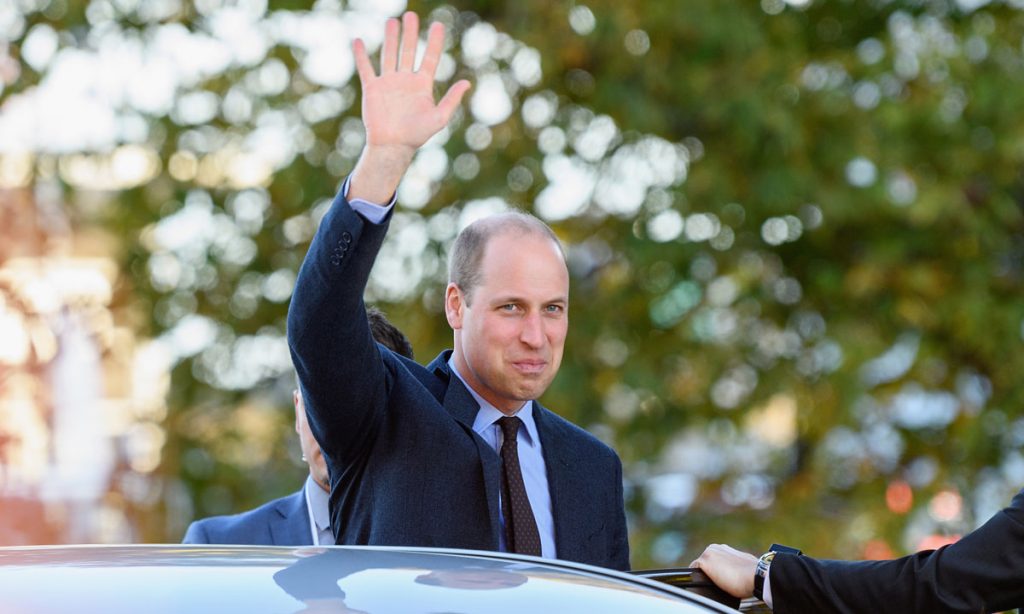
The future king made an appearance on Stephen Fry’s “Big Night In” and joked about life in quarantine.
There’s no better equalizer than being under quarantine. While most of us have run out of things to binge watch in order to tame our boredom, Prince William has managed to steer clear of one of the most popular shows on Netflix right now: “Tiger King.”
Raise your hand if you wish you could get those nearly seven hours of your life back?
The seven-part docuseries about a private zoo owner and a husband killer (allegedly) has been the breakout hit of quarantine. But the future king of England isn’t interested.
While making an appearance on actor Stephen Fry’s “Big Night In,” William poked fun at his self-quarantine situation, especially when it comes to home schooling his three young children, saying, “It’s been a nightmare, really.”
William then asked Fry, who had reprised his iconic role as Lord Melchett, head of the royal household, for the occasion: “By the way have you seen anything good on TV? It’s hell without ‘EastEnders.'”
“They tell me ‘Tiger King’ is rather good,” Fry (Lord Melchett) replied.
“I tend to avoid shows about royalty,” said Prince William.
Since this was a comedy sketch, we’re not sure if Wills was being serious or just reading his scripted line, but either way, he definitely has a second career as a comedian if the whole British monarchy thing doesn’t work out.
This was just amazing! Thank you your Highness for being such a good sport!
This was great! Well done to all involved. Thank you ?
Such a good sport William – and fantastic timing!
The clip aired ahead of William and his family’s participation in the weekly Clap For Our Carers, when everyone in the U.K. shows their appreciation for the workers who are tirelessly working to keep everyone safe and healthy from COVID-19.
The CIA emphasizes that smoking marijuana doesn’t make you a bad person, just maybe someone unfit for clearance.
You can’t easily or quickly characterize the relationship the Central Intelligence Agency (CIA) maintains with cannabis. Like most associations with the CIA, the truth is shrouded in decades of rumors, half-truths, and misdirection. Did the CIA develop a truth serum using marijuana? What facts exist around the CIA growing fake marijuana to display at trade shows? Is the CIA the originator behind the mysterious G-13 marijuana strain?
Some answers we’ll never know. Those who previously characterized the CIA as marijuana haters, however, discovered recently that isn’t exactly the truth. In its ongoing Ask Molly series, where the CIA publicly addresses common questions asked by the public, the federal agency clarified that using illicit drugs like marijuana doesn’t automatically qualify them as a “bad” or “unworthy” person. However, it may disqualify you from acquiring a necessary security clearance.
“I’m not asserting that those who have experimented with drugs are in some way bad or unworthy, but a willingness to break federal law to engage in illicit drug use can be used as a measure of someone’s fitness to hold a security clearance,” wrote Molly Hale, the CIA’s public voice since 2002. “It should be noted that drug use and abuse is one of the most common reasons applicants are denied a security clearance.”
Someone had asked whether using illegal drugs would limit them from joining the federal agency. The CIA stated that no, they won’t automatically deny your application because you smoked a joint or popped a molly at music festival. Instead, the CIA expects any candidate not to have consumed illicit drugs within the past 12 months.
Photo by skeeze via Pixabay
This emphasis isn’t an anti-drug stance. Instead, the CIA comes from a pro-security position.
“It might seem a bit archaic, but consider the access to information we’re giving CIA employees, and consequences of granting access to the wrong person,” Hale wrote. “Officers regularly handle classified information, which, if leaked, could spell disaster for national security and endanger the life of CIA officers, assets, and their families.”
Clever individuals may wonder if smoking marijuana in a state with legal recreational access constitutes as illicit drug use. But the CIA already considered this position.
“[You may say] I live in a state where marijuana use was legalized under state law, so would any of this really apply in my case? The short answer is yes,” Hale wrote. “Marijuana remains illegal under federal law in every state. CIA is bound by federal law, which prohibits CIA from granting security clearances to unlawful users of controlled substances, including marijuana. State laws do not supersede those of the federal government.”
While there has been anecdotal talk of cannabis with THC as a potential solution to weaning opioid addicts to a less dangerous level of drug use, it has never been proven to be a fail-safe alternative.
The U.S. Food and Drug Administration (FDA) has issued warning letters to two companies for illegally selling unapproved products containing cannabidiol (CBD) in ways that violate the Federal Food, Drug, and Cosmetic Act (FD&C Act). The FDA said that BIOTA Biosciences and Natures CBD Oil Distribution were claiming their CBD products could be used to treat opioid addiction.
The FDA has requested responses from the companies within 15 working days stating how they will correct the violations. Failure to correct the violations promptly may result in legal action, including product seizure and/or injunction.
“The opioid crisis continues to be a serious problem in the United States, and we will continue to crack down on companies that attempt to benefit from selling products with unfounded treatment claims,” said FDA Principal Deputy Commissioner Amy Abernethy, M.D., Ph.D. “CBD has not been shown to treat opioid addiction. Opioid addiction is a real problem in our country and those who are addicted need to seek out proper treatment from a health care provider. There are many unanswered questions about the science, safety, effectiveness and quality of unapproved products containing CBD, and we will continue to work to protect the health and safety of American consumers from products that are being marketed in violation of the law.”
The two warning letters were issued to:
BIOTA Biosciences, LLC of Washington state for marketing and distributing injectable CBD products as well as an injectable curcumin product. These products are marketed for serious diseases and as an alternative to opioids. BIOTA Biosciences markets private label CBD and wholesale CBD extracts, and their products include beverages, bulk CBD extracts, and water soluble CBD, as well as injectable curcumin.
Homero Corp DBA Natures CBD Oil Distribution of New Hampshire for marketing and distributing CBD products as a treatment to opioid addiction as well as other serious diseases. The firm is an own-label distributor for CBD products as well as a retailer for Green Roads CBD products.
Photo by GIPhotoStock/Getty Images
The FDA noted that Natures CBD website claimed that its product “Has had success in alleviating severe withdrawal symptoms associated with opiate dependency. Natures Pure CBD also has taken off the ball and chain around the opiate addicts’ neck and has relieved the addiction totally by using Natures Pure CBD restoring the person back to a quality of life worth living.” “The Opiate addiction rate of recovery is low and Natures Pure CBD oil offers promise for those suffering from chronic opiate use.” “Natures Pure CBD oil works for these medications which all have addictive properties to them: opium, fentanyl, heroin, hydrocodone, oxycodone, methadone, morphine and hydromorphone. Natures Pure CBD Oil has been effective in the treatment and eradication of opiate use.”
For BIOTA, the FDA pointed out claims on the website like “CBD . . . and its ability to suppress pain and aid in the detoxification processes has highlighted it as a promising therapeutic for a wide array of disorders such as epilepsy, including many challenging neuropathy conditions. When patients consider trying a new therapeutic like CBD, there are many options for delivery that can be more efficacious to the patient. One delivery option is BIOTA CBD Sterile Vial Therapy.” “Instant relief for patients that are symptomatic of inflammatory auto-immune diseases”
While there has been anecdotal talk of cannabis with THC as a potential solution to weaning opioid addicts to a less dangerous level of drug use, it has never been proven to be a fail-safe alternative. There have been no FDA evaluation of whether these products are effective for their intended use, what the proper dosage might be, how they could interact with FDA-approved drugs, or whether they have dangerous side effects or other safety concerns.
In addition, the manufacturing process of unapproved CBD drug products has not been subject to FDA review as part of the human or animal drug approval processes. In March, the FDA provided updates on its work related to CBD products with a focus on protecting public health and providing market clarity. The FDA continues to be concerned that some people wrongly think that the myriad of CBD products on the market have been evaluated by the FDA and determined to be safe, or that using CBD “can’t hurt.”
Under the FD&C Act, any product intended to treat a disease or otherwise have a therapeutic or medical use, and any product (other than a food) that is intended to affect the structure or function of the body of humans or animals, is a drug. The FDA has not approved any CBD products other than one prescription human drug product to treat rare, severe forms of epilepsy.
Israeli researchers have launched three clinical trials that utilize CBD’s anti-inflammatory properties as potential COVID-19 treatment.
Researchers believe CBD could be crucial to COVID-19 Israeli scientists have launched clinical trials into whether cannabis can play an effective role in stopping or slowing the coronavirus. Though lung health experts have warned smoking marijuana could exacerbate COVID-19 and its spread, the scientists will study cannabidiol (CBD) alongside existing treatment options as a possible solution.
Last week, InnoCan Pharma announced a collaboration with Tel Aviv University to instill CBD medicine through exosomes — or the small cell structures created when stem cells multiply. The unconventional method will utilize the exosomes as “homing missiles,” as they can uniquely target cell organs damaged by COVID-19. Researchers then believe CBD’s anti-inflammatory properties will repair the damaged cells through a synergistic effect.
As COVID-19 attacks the respiratory system, scientists will have patients receive CBD-enriched exosomes through an inhalation device. Previous studies have shown CBD can help regulate the body’s immune system and reduce inflammation throughout the body.
A second clinical trial will occur over the coming weeks and includes 10 Covid-19 patients currently undergoing treatment in Israel’s Rabin Medical Center. Doctors will combine traditional steroids and CBD, with the belief CBD will enhance the therapeutic potential of the steroids. The trial, conducted by Stero Biotechs in collaboration with Mor Research Application, already has plans to expand treatment to 40 additional patients should it prove successful.
Photo by PublicDomainPictures via Pixabay
“We estimate that our CBD-based treatment can enhance the current treatment of those patients who are in life-threatening conditions,” Stero Biotechs founder and CEO David Bassa said in a statement. “Hospitalized COVID-19 patients are mostly being treated with steroids and our study is planned to demonstrate the benefit of a combined solution with Steroid treatments. We are hopeful that this study will lead to faster benefit for the growing number of COVID-19 patients in Israel and around the world.”
A third study, launched by Tel Aviv’s Ichilov Medical Center, will investigate whether CBD’s anti-inflammatory properties could lower respiratory symptoms experienced in moderate COVID-19 patients.
Canadian researchers have also announced intentions to study what role cannabis can play in slowing COVID-19. They also believe marijuana’s anti-inflammatory properties could provide a crucial role in potential treatment.
All indications are that this could be a safer investment with a substance that has been shown to be a more natural way to treat overall human wellness.
In this moment of a pandemic affecting businesses around the world, the cannabis business situation is especially sobering.
Canopy Growth, once the darling of the industry and a self-described “world leading” cannabis company,announced on April 16 the closing of various operations in Africa, Canada, Latin America and the U.S., resulting in the loss of over half a billion dollars.
Both of these operations were founded and run by the so-called “cannabros” who got into the industry without a clear path for profit or sustainability that some made worse. In the case of MedMen, Bierman faced many accusations of burning through earnings with extravagant purchases supporting a high-flying lifestyle.
The glow of fast bucks and sustainable profitable operations has dimmed. Cannabis stocks have been crashing hard through most of 2019, withmany of the top cannabis companies in the U.S. having enough cash to continue operations just through the middle of this year — struggling through 280E tax issues (a tax rule where they can’t write off business expenses), and not yet able to fully factor in the ongoing hit from the coronavirus.
Now, there could be a new target for investors who have learned the lessons from the cannabis industry and are working to build another related industry: psychedelics.
All indications are that this could be a safer, calmer, more step-by-step investment with a substance that has been shown to be a more natural way to treat various mental health conditions and overall human wellness — just what the coronavirus has put in the spotlight.
Research suggests that psychedelics are catching on. In 2019, theGlobal Drug Survey collaborated with psychedelic researchers to explore the acceptability of psychedelics and other drugs such as MDMA (ecstasy or “Molly”) and ketamine in psychiatry. “We found high rates of acceptance especially among those with prior experience of using them, although fears based on myths and outdated science, were evident among psychedelic naïve respondents,” the survey concluded. “Psychedelics are a boom business.”
Photo by Activedia via Pixabay
Some insiders say the psychedelics industry could be as much as $5 billion annually. “I have seen some investment groups out there who have invested $100 million in the last 12 to 24 months,” says Tim Regan, vice president of capital markets for KCSA Strategic Communications who is focused on investor relations for their psychedelic practice.
The research players are also in place, offering a closer look at what may be driving interest in this industry.
Rick Doblin, Ph.D., is the founder and executive director of the Multidisciplinary Association for Psychedelic Studies (MAPS). He’s helping design and sponsor psychedelic psychotherapy drug development and has already raised over $70 million in donations. MAPS received FDA Breakthrough Therapy Designation for MDMA-assisted psychotherapy for post-traumatic stress disorder (PTSD) with phase 3 clinical trials already underway and FDA approval expected in 2021.
And just last year, theFDA approved Spravato, or esketamine, sold by Janssen Pharmaceuticals, which is a nasal spray used for treating depression, that was also part of the FDA’s Fast Track and Breakthrough Therapy designations. It has beenwidely hailed as the first approved psychedelic treatment for psychiatric use.
In 2000, Johns Hopkins was granted regulatory approval to do research into psychedelics, publishing a landmark study on psilocybin in 2006, then publishing additional peer-reviewed articles and creating theCenter for Psychedelic and Consciousness Research. “Upcoming studies will determine the effectiveness of psilocybin as a new therapy for opioid addiction, Alzheimer’s disease, post-traumatic stress disorder (PTSD), post-treatment Lyme disease syndrome (formerly known as chronic Lyme disease), anorexia nervosa and alcohol use in people with major depression. The researchers hope to create precision medicine treatments tailored to the specific needs of individual patients,” according toinformation on their website.
Photo by Moha El-Jaw/Getty Images
Better yet, possession of psilocybin has been decriminalized in both Oakland, California and Denver, Colorado with other cities looking to follow suit.
Investors are itching to get more involved, and the starting gun has been fired.
According to theNew York Times, one of those investing groups is Able, an early-stage investor in two companies involved in research of psychedelic compounds for medical use: London-based Compass Pathways (granted a patent that covers treating drug-resistant depression with psilocybins), and Germany’s Atai Life Sciences (a biotech company that is a major investor in Compass).
The psychedelic sector is going to be one of the drivers of the collective recovery from the current economic malaise around the world,according to Richard Skaife, venture capitalist withThe Conscious Fund, speaking during the Virtual Psychedelic Conference in April sponsored by the Fund. The Fund is an early stage venture capital firm focused on medical cannabis, hemp and psychedelics.
“What you are looking at is a business that is ultimately closer to being a bioscience company, so you want to look at the validity of the science,” Skaife says. “If we found someone who had the perfect scientific execution, but really had serious questions around how they were approaching business, then we would struggle in terms of making investments into that type of entrepreneur.”
Matthew Nordgren, founder and CEO of the Arcadian Fund, which is focused on the cannabis and hemp industries, said during the conference that the psychedelic industry should be more about developing patients and therapies, whereas cannabis also focused on the recreational part. “You should ask yourselves how to not fall into the cannabis space issues with penny stocks, where people tried to make a quick buck,” he says. “It’s important to have a long term investment view, and long term access to capital.”
Panelists at the conference were asked what was learned from the cannabis business startups? “I joke that weed was just a warmup,” said Robert Laurie, lawyer and board advisor to MAPS. “Psychedelics is much more complicated. At the moment, you have a lot of people in the car going 100 miles per hour in all sorts of directions. I don’t think we are even at the start of venture capital. Smart venture capital and startups are realizing these days that they can get money themselves. What they need big brothers and big sisters for is to be able to do things they can’t do themselves. Just teeing up with a venture capital fund to get money, that it won’t do it.”
“I think that there is a fundamental difference between the two industries,” says Regan. “There is a much more tactical approach to capital raising, to investor marketing, and to communications. In the cannabis business, there was a rush to raise capital and bring in new business and generate profits. Within the psychedelic arena, which is in health care and biotech, you are going to see development that is well thought out.”
Six out of 10 New Jersey voters say they will vote ‘yes’ to legalize marijuana this November, but uncertainty remains around regulation and sales.
Momentum to legalize adult-use marijuana in New Jersey has existed before, but the matter will rest in voter ballots this election. According to a new Monmouth University poll, recreational marijuana has majority support in the state.
State lawmakers have attempted multiple bids to legalize cannabis through the legislature over the past couple years, but they failed to gather the necessary votes. Instead, they voted late last year to put legalization forward as a ballot question, which has emerged as the primary political vehicle to end prohibition at the state level.
A Monmouth poll released Thursday found 61% of respondents would approve the ballot question this November. Another 34% plan to vote ‘no’ while 5% said they have no opinion. Support is highest among Democrats (74%) and Independents (64%), but Republican voters (40%) aren’t as keen on legal cannabis.
Photo by SeanPavonePhoto/Getty Images
Less than 50% of voters believe allowing the sale of marijuana to adults ages 21 and older through licensed retailers is a good idea. That comes as a surprise as the ballot question with majority approval would accomplish exactly that. But only 30% consider it a bad idea while 22% state they have no opinion.
“Support for the marijuana ballot measure is widespread in part because many who have no opinion on whether legalization is a good idea figure they might as well vote for it,” Patrick Murray, director of Monmouth’s Polling Institute, said in a statement.
This conflict isn’t anything new in New Jersey. Residents may support legalizing marijuana, just so long as stores don’t appear in their backyard. A 2018 Quinnipiac poll found only 50% of state residents would welcome marijuana stores into their communities, while 45% opposed cannabis sales in their town. More than 50 towns/municipalities have already banned legal cannabis from entering their communities.
The pandemic is forcing us to cook more, increasing the odds of us wasting food. Here’s how you can avoid this.
During a pandemic, it becomes more important to avoid food waste, even if it’s more difficult, like when you’re facing a fridge filled with perishable items that you panic bought at the grocery store.
Now that people are spending most of their time at home and don’t have the luxury of visiting the grocery store whenever they want, weekly grocery visits should be conducted with care. Perishable items should be purchased in moderation, not only because we should be considerate with others, but also because it’s likely for us to forget about them and for they to go to waste.
Here’s what you should do to reduce as much food waste as possible:
Stick to your grocery list
In order to avoid food waste it’s important to keep a grocery shopping list and to tailor it according to your needs. While in quarantine it’s common to feel the urge to bake or to prepare dishes that you stumble upon on social media, you should try to limit your impulse buys as much as possible. Keep a flexible list of the meals you’d like to prepare and think in advance of what you want to bake or cook that demands more ingredients. Spread these out throughout your quarantine; there’s no rush.
Inevitably some foods will go to waste. Keep track of these foods and pay closer attention to them the next time you purchase them, adapting your portions or cooking them and transporting them to the fridge, that way extending their shelf life.
Know when to use your freezer and refrigerator
If you end up cooking a large meal and don’t want to have to eat it for a week, freeze it and eat it next week. Food experts also suggest storing perishable items in the back of your fridge, which is usually the coldest part of the appliance.
Food labels are very confusing and they all don’t mean the same thing. There’s four kinds: best by, sell by, freeze by and use by. The first refers to flavor but it doesn’t mean that your item will be wasted after the printed date. “Sell by” indicates when the grocery store should sell the item by. “Freeze by” indicates when the food should be frozen for best quality and “use by” indicates when the food is at peak quality.
No matter the print date, the most reliable way to tell if food is spoiled is by using your senses. Smell the food, look at its texture and/or taste it.
Know what to do with your leftovers
When cooking three meals a day, you’ll inevitably accumulate some leftovers. Try looking up what you can do with these, whether that’s freezing them, eating them the next day, re purposing them for other meals, using citrus peels for baking, stale bread for croutons or cheese rinds for making soups.