Cleaning is similar to meditation in that it’s also a helpful stress management technique when implemented correctly.
Working from home and self-quarantining are things that a lot of us have grown acquainted with during the past couple of weeks. Still, this doesn’t make the process of prolonged isolation any easier. If you’re having a hard time finding a routine or find yourself having more bad days than good ones, you’re not alone. The current situation can make even the most organized person feel very stressed and aimless.
Although cleaning your house doesn’t traditionally rank high up in fun home activities, it’s an action that is completely under your control and that provides instant results. Cleaning and organizing will make you feel like you’ve done something productive with your time while also making you feel cleansed and orderly, just like the space you’re inhabiting.
Psychologists explain that cleaning provides endorphins while also propagating an uncluttered and focused behavior in other aspects of your life, such as work, fitness, cooking, and more.
“Humans crave structure and familiarity, especially during times of uncertainty,” psychologist Jaime Zuckerman told The Huffington Post. “When we seek out ways to reduce feelings of helplessness, cleaning is one of the ways we might decide to do that.”
Very Well Mind explains that cleaning up your space can also make you feel thankful for different things, like your objects, your space, and yourself. Cleaning is similar to meditation in that it’s also a helpful stress management technique when implemented correctly.
To make the cleaning process smoother and more bearable, it’s important to know how much of a mess you’re in. If you haven’t cleaned up your house in months and are only realizing the mess you’re in due to your self-isolation, you should take it easy and split up the cleaning process according to rooms or days.
Set up a distinct time for cleaning, much like you’d do with a workout or other task, and implement some time limits. While it’s important to clean up your home regularly, it’s also important for you to not get even more stressed because your cleaning routine is too strict.
Make sure to set benchmarks for your healing and timelines to gage how the treatment is working so you can evaluate whether or not to continue.
Do natural remedies work? Today, many people are embracing eastern medicine practices like acupuncture, reiki and Ayurvedic medicine to supplement or replace western medicine. Here are some things to consider for a visit to a naturopathic doctor.
While there is still a fair amount of controversy over whether naturopathic medicine has good, effective results, many people are turning to it to treat recurring persistent ailments and diseases and some are having good results.
A naturopathic doctor is commonly referred to as an alternative medical practitioner and is generally licensed and regulated by state licensing requirements. If you decide to explore healing with an ND, you should make sure they are licensed in your state, are experienced and have received good reviews.
An ND is someone who treats illness by using natural or herbal remedies in place of — or as a complement to — prescription drugs. They believe in identifying the cause of an illness, not just relieving the symptoms. As part of their treatment, they may prescribe herbs, supplements, massage, acupuncture or even, filtered water. They will guide you on what to take, the dosage and length. They should also be able to track your progress. Some act as an alternative to your primary care physician.
Here are four things to consider before/during your first visit:
1. Does your health insurance cover naturopathic medicine and does the ND have remedies available at his/her office or are they accessible locally or online?
2. Some NDs specialize in particular illnesses or diseases. You may want to research if one is available near you.
3. Decide whether you are looking for a prescribed remedy or a lifestyle change that an ND can help you with, and see if they have other alternate therapies available on site, such as massage, acupuncture, or chiropractic sessions.
4. Consider whether any prescription drugs will be replaced or contraindicated by any of the ND’s recommendations. You may want to check with your doctor.
No matter who you use, you should set benchmarks for your healing and timelines to gage how the treatment is working so you can evaluate whether or not to continue.
Kanye West is one of the most outspoken performers in the world who doesn’t care what you think of him. But does he smoke weed?
I’m sure you don’t need to hear this again, but Kanye West is a pretty polarizing figure. A great performer who’s also one of the most annoying celebrities in the world, West is quick to strike up controversy, be that due to his lyrics or through his weirdly vindictive relationship with Taylor Swift. When’s that gonna end?
Anyway, let’s move on to what really matters: does Kanye West smoke weed?
Photo by Neilson Barnard/Staff/Getty Images
Unlike other rappers and musicians who are unabashed smokers, marijuana is one of the few things that Kanye is kind of discreet about. While he references weed in some of his old music, like “Get ‘Em High,” that doesn’t really mean anything.
In 2012, West supposedly upset the royal family while staying in a room above them in a hotel in London. Reports say that he was listening to loud rap music and smoking tons of weed with guests, including Common, Big Sean and Pusha T.
“Kanye had rented out the top floor and we was banging that b*tch out. Every room was a studio. The Royal Family below were complaining, like, ‘We got all this loud-ass rap music above us and weed smoke.’ They paid all this money and you don’t expect to get these kind of complaints,” said Big Sean. Still, we can’t really count on the veracity of this information since the article isn’t from the most credited source and it sounds pretty racist.
In 2015, West suggested that he had smoked weed right before giving that weird speech after he was awarded the VMA’s Video Vanguard Award.
So, while West might not be a marijuana advocate or a regular weed user, it’s safe to assume that he has consumed weed from time to time. It might even make him weirder than usual.
If dispensaries get cut from the “essential business” list, you had better believe there’s going to be supply shortages until the country returns to normal. Would you be willing to live for months without weed?
There could come a time when humanity is forced to either become self-sufficient or suffer the consequences. For the millions of Americans on mandatory lockdown as a result of the coronavirus, a nasty bug that is rapidly infecting more of the global population with each passing day, this is all too real.
This crisis has forced America to a screeching halt, forcing businesses all across the United States to shut down “indefinitely” because they haven’t been deemed “essential” by government controls. Fortunately, cannabis dispensaries have caught a break during this dreadful time; most legal states are treating pot shops like pharmacies and allowing them to stay open.
But that could all change at a moment’s notice. Health officials say the nation still hasn’t felt the entirety of this virus’ savage wrath. It is possible that more shutdowns will be necessary to get a grip on the situation. So, we could see a day when those “essential” businesses become few and far between.
And if marijuana dispensaries get cut from the list, you had better believe there’s going to be supply shortages until the country returns to normal. Even the black market is going to take a hit. So you must ask yourself: Would you be willing to live for months without weed?
Any survivalist will tell you that the key to not being eaten alive is always being prepared for the worst before it happens. It’s the reason the nation has all of a sudden become overly fascinated with toilet paper.
Having plenty of weed on hand is a priority for some, the same as food and water. But growing it is also not the easiest skill to get into without enduring a considerable learning curve. Not everyone was born with a green thumb. In fact, expert cannabis growers have spent decades figuring out what it really takes to grow healthy, potent cannabis plants. Considering the dark days ahead, a person looking to create his own cannabis garden might not have that kind of time.
But never fear. We have found some easy-to-use kits for wanna-be weed growers looking to dive right in.
Disclaimer:This article is not intended to vouch for these products, only to provide the reader with some ideas about how they might approach their home marijuana cultivation needs in the months ahead.
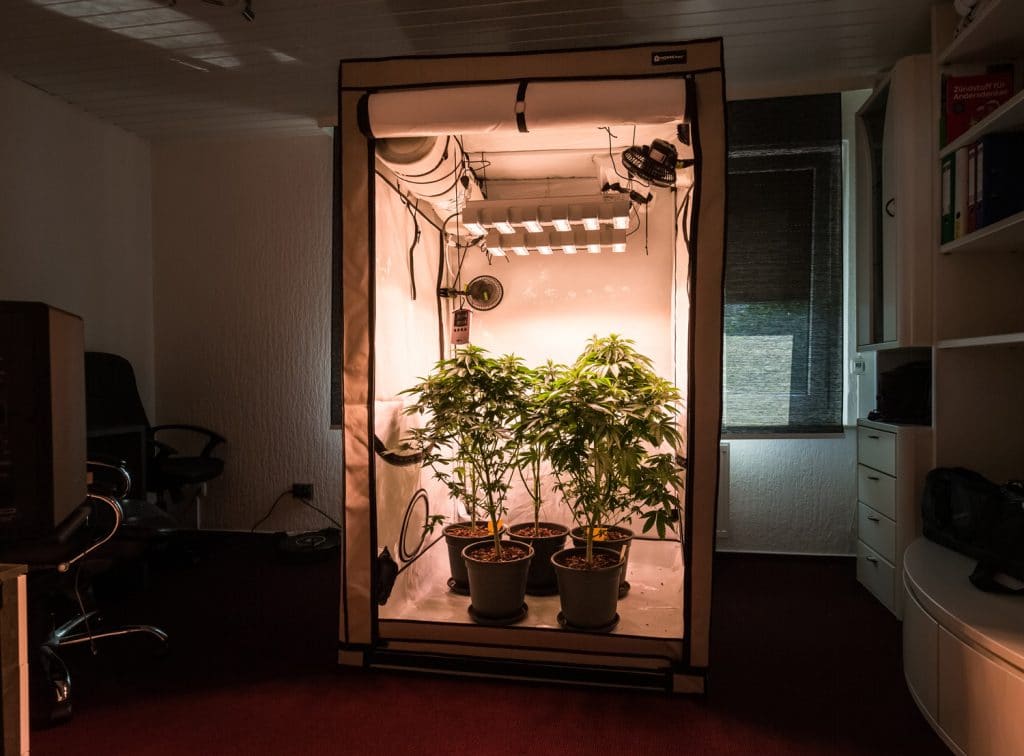
The Bud Grower Complete: This kit is perfect for the prospective grower who doesn’t know where to begin. It comes with everything you need to get an indoor grow room set up in your house or apartment. It includes a 24”x24”x60” grow tent, lighting, soil, multi-speed ventilation fans, etc. It scores high points for being easy to assemble, stability and overall value. And it’s definitely not a bad deal for roughly $580. It is worth mentioning that seeking out all of these items separately would be time consuming and you’d probably end up spending hundreds more in the end.
GrowAce Complete Indoor Tent System: This 2’x4’ tent (48” wide by 24” deep) package is also a nice option for growing a few plants in tight indoor spaces. It comes with a tent, odor filter, lighting, fan, soil mix, and a growing guide. This complete system has a wealth of positive customer reviews, and it is a good buy, too, at just under $800. Look at it as an investment in sanity.
TopoGrow LED Grow Tent Complete Kit: Another great complete tent system (comes with the tent, fans, and lighting) for growing 3-4 plants indoors for personal use. It has a user-friendly Full Spectrum design that will see plants through every phase of the grow cycle from germination to flower. It is also shipped in discreet packaging to keep all of your business hush-hush. It has excellent reviews, and for less than $300, it might be a good place to start when considering a home grow.
Grandma’s Secret Garden Grow Box: This particular kit is what is known as a stealth system. It grows about four plants, and it does so without causing any spikes in utility bills, light leakage or problems with odor. We can see this kit being advantageous to the growing novice looking to set up shop in an apartment complex. It comes with lights, exhaust system, air pump, water pump, hydroponic supplies, nutrients, odor control, latches and locks. After it is set up, all the grower really has to do is change out the nutrients and water every couple of weeks, according to the website. It’s an easy-to-use system for the plug and play beginner. Now, a system like this, at more than $1,300, is a bit more costly than some of the others. But it’s a bargain considering that home cultivation can save cannabis consumers thousands of dollars in the long run.
Finding Seeds: Marijuana laws are different depending on where a person lives in the United States. In legal jurisdictions, tracking down seeds might be as easy as visiting a dispensary. There are also seed banks in Europe like Sensi Seeds that are worth exploring, as well as a few seed collectives in the United States. But federal law makes this aspect of growing a little difficult at times. Our advice is to do some research online and talk to others in the cannabis scene.
Marijuana is illegal in North Carolina, except when you’re ordering takeout with the mayor of Raleigh.
In a time of national emergency, everyone wants to help however possible. On the surface, you would probably view the actions of Mary-Ann Baldwin, mayor of Raleigh, North Carolina, as benevolent and kind. Last week, she posted a photo online of her takeout lunch — a show of solidarity towards healthy social distancing while supporting local business.
“Here is what we did tonight to support our local restaurants. Take out from Garland. And we left a 35 percent tip. Please do the same,” she wrote in a tweet.
Here is what we did tonight to support our local restaurants. Take out from Garland. And we left a 35 percent tip. Please do the same. pic.twitter.com/SI21NAvV8U
That positive call to action didn’t go according to plan, though. With everyone working from home and more idle time on our hands, internet sleuths noticed an item that shouldn’t be there. And we’re not talking about lamb shanks, either. Right above the tandoori poussin box, a marijuana vape pen can be seen.
This is notable because North Carolina has no comprehensive medical or recreational marijuana laws. Lawmakers did pass a restrictive medical bill that allowed cannabis oil with less than 0.9% THC for intractable epilepsy patients. But nowhere in the state of North Carolina can someone carry a weed vape pen legally.
There’s no confirmation yet if the vape pen belonged to the mayor or not. She has not commented on the pen’s existence or deleted the phone online. It’s also worth adding that Baldwin has criticized marijuana enforcement in Raleigh in the past.
“The other thing is, you get kids busted for a little bit of marijuana, where we’re sending people to jail for something that is legal in other parts of the country,” she previously told Indy Weekly. “Is that really how we should be policing? Are there ways that we can help kids, help young people, instead of just busting them?”
“What are we doing to facilitate conversations in the community between the police?” she continued. “We have a great police department. At the same time, I know that there’s opportunity for improvement.”
Spending long stretches of time with kids, roommates or even a romantic partner can be a challenge. Here’s how you can make things easier for yourself.
The millions of people that are currently going through self-quarantine are finding themselves in unparalleled situations. Everyone’s facing different hurdles, whether they are living alone, with roommates, with a partner or with children. While those who are alone are forced to spend more time nurturing themselves, those who are with others must also create their own space, especially when inhabiting small apartments.
Here’s what you can do to eliminate friction in these kinds of situations:
Have meals together
Whether you’re spending this time with roommates, a partner or kids, social distancing is an opportunity that can bring you all together. Take advantage of the fact that you’re with people and enjoy their company, having meals together and using these opportunities to talk about the good things and the bad.
If you’re self-quarantining with kids then you’ve probably done thousands of arts and crafts by now. Help yourself by using Google: search for educational programs for kids, online activities, virtual tours, etc. All of these can keep your kids busy and help you stay sane.
Don’t stress if you’re routine breaks
Although it sounds crazy, now that we have all of this time for ourselves, it’s really hard to commit to a thing, whether that’s completing your work load or watching an engaging TV series. Lower the bar in all regards and understand that this is an unprecedented time and that you’re adapting. It’s okay if your kids watch more TV or if you are eating more than you’re used to. Forgive yourself and start over again.
Whether you’re with roommates, a partner or kids, it’s important to have some alone time and space. Communicate openly, splitting duties with your partner or asking for your roommates for some space in order to get some work done or relax without having to talk to someone.
Have sex
Whether you’re alone, with roommates or with your partner, it’s still important to have fun. NYC Health recently released a sex memo that quickly became a meme due to the sincere and hilarious language it used, including phrases like “You are your safest sex partner.”
“You are your safest sex partner” — obsessed with NYC’s guide to sex during corona pic.twitter.com/xuKRzD0Jhw
If you’re with kids, try to go to bed at the same time and continue to stay connected with your partner through these difficult times. If you’re alone or with roommates, don’t forget that Pornhub is free. It’s all about the little things right now.
Cannabis grown indoors is considered better quality and sells for 40% more than greenhouse cannabis, according to an agricultural economist.
While the black market is thriving in nearly every market where cannabis is sold — it was60% of second quarter sales in Canada in 2019— it appears to be particularly troublesome in California, where a lack of enforcement, a lack of oversight, and regulatory burdens on legal businesses has allowed it to grow.
A report by cannabis research firm BDS Analytics found that California’s illicit market is predicted to comprise 53% of all sales in 2024; the black market in other states with more supportive regulatory regimes are expected to shrink to 30% or less of total sales in that time frame, according to the report.
Black market enterprises are not always the guy in a parking lot or dorm room selling weed in a state where it has been legalized. Anaudit from the United Cannabis Business Association, a California retail cannabis advocacy association, found that, of the 3,757 dispensaries or delivery services listed on the popular cannabis service platform Weedmaps, only 922 were licensed to legally sell weed.
California now has a bill that would fine each of these illegal businesses $30,000 a day —AB 97 effective as of July 1, 2019 — but enforcement is still lagging.
The vaping crisis has played an important role in the fight to identify and stop the black market in California, as many dangerous vaping products were sold there and in other states. California stepped up enforcement and busted 24 unlicensed locations last December.
Then in February, the state’s Bureau of Cannabis Control proposedemergency regulations that included adding a “quick response code” to the packaging of all legal cannabis products to help consumers identify licensed cannabis retail stores, thus supporting the legal cannabis market. A consumer couldscan the code into his or her smart phone to confirm that it’s legitimate.
While new regulations are helpful, it’s been the regulatory structure in part (along withhigh taxes on retail products) that has caused the black market to thrive in California.
Photo by Yarygin/Getty Images
A quick look at138-page list of regulations from the California Bureau of Cannabis Control shows how daunting it can be to be perfectly compliant: application fees, licensing fees, video surveillance details, track and trace system requirements, delivery requirements, and on and on.
Others cities and states are also reeling from the cannabis tax burden. For example, recreational buyers inChicago will pay over 41% in taxes for their legal product.
Then there’s the cannabis legacy of the state. Being an illegal cannabis grower/seller in California is just, well, sort of a natural thing. The state is the home to third generation cultivators who have been growing some of the world’s best cannabis, and living an illegal cannabis lifestyle has been happening since the 1960s.
One cannabis connoisseur living in Humboldt County in the 1970s told The Fresh Toast about growers assembling each year in an unofficial “smoke off” competition. Here, they compared strains of cannabis they were growing in what is called the Emerald Triangle — the region in northern California known as the largest cannabis-producing area in the country.
Growers here are used to a sort of renegade lifestyle, growing indoors for the most part to hide the illegal crop they were growing. Now they are being asked to come out into the limelight, share their knowledge, and pay fees and taxes to the very institutions they have dodged and snubbed for 50 years or more. It’s a tough transition, but it is beginning.
Organizations such as theInternational Cannabis Farmers Association are helping farmers in the Emerald Triangle area work toward a more artisanal product, and address the barriers to compliance.
There is an unexpected silver lining gleaned from illegal growers.
Photo by RichVintage/Getty Images
The black market method of growing indoors has been shown to have real value over growing outdoors, because there are more light, nutrient and ventilation controls. This leads to more controlled and repeatable experimentation with cultivars, which can meet an increasing demand for variety, according to agricultural economist James Eaves during apresentation at Cannabis Sciences 2020.
Cannabis grown indoors is considered better quality and sells for 40% more than greenhouse cannabis, according to Eaves.
So there is that to consider.
All indications are that the cannabis black market will continue to thrive, and the peak of its influence is still a few years away. How it will continue to affect the huge worldwide cannabis market — expected to be $42.7 billion worldwide by 2024, according toa recent BDS analytics repor— is anybody’s guess.
As more product is sold, and tax structures become more in line with other consumer products — because of industry feedback and advocacy — and enforcement gains a better foothold, the hope is that the black market should jus fade away.
While over-the-counter medicines can offer relief in a pinch, lifestyle changes can help you sleep more soundly for years to come.
We’ve all been there. With your mind racing and the seconds on the clock ticking, 6am is going to come entirely too early on such little sleep. In a pinch, you head to the kitchen to grab something (anything!) to help your body relax and sleep. Crinkling your nose at the taste of Nyquil, you settle in, expecting to feel recovered and energized when the sun rises. But it hardly works that way, right? For some people, Nyquil can bring a buzz. That’s to do with the active ingredient, dextromethorphan. When combined with doxylamine succinate — another active ingredient in the medicine — the two work together to clear the nasal passages with drowsiness as a side effect.
Blocking histamine — a chemical in the body that causes many of the symptoms associated with allergies and is the body’s response to being attacked — can be helpful if you’re experiencing the sudden onset of a cold or flu. But dextromethorphan goes into the bloodstream, followed by the brain in an attempt to block the production of histamines. When the brain is disrupted, the exhausted, underwater feeling that occurs is the result.
So, what’s a better bet to help the body get a restful, solid night’s sleep? Mayo Clinic explains that while over-the-counter medicines can offer relief in a pinch, lifestyle changes can help you sleep more soundly for years to come. Mayo also advised that frequent use of antihistamines can make them less likely to work over time.
“Most over-the-counter sleep aids contain antihistamines. Tolerance to the sedative effects of antihistamines can develop quickly — so the longer you take them, the less likely they are to make you sleepy.”
Marijuana and CBD have been shown to help with insomnia and certain conditions that make a good night’s sleep less likely. The American Sleep Apnea Association’s research shows that over 50 million Americans experience the pain of falling (and staying asleep) with complications due to 80 different sleeping disorders. A few studies have even found that marijuana can help with insomnia and a more restful night’s sleep when incorporated into a care routine — all with a lack of the side effects and long-term effects of Nyquil.
Researchers found that setting and context played a bigger role in psychedelic experience than previously assumed.
Imagine volunteering for a clinical trial where Johns Hopkins University researchers would gift you free psychedelics. They’d also provide the ultimate psychonaut setting — comfy floor cushions, ambient music, light shows, and trippy movies like Baraka playing in the background. You would probably expect to experience serious hallucinations, right? Now imagine all of this is true, but no one told you the drug was a fake placebo.
That’s what happened two years ago for a study recently published in the journal Psychopharmacology. When researchers previously used double-blind models in psychedelic experiments — meaning some participants would receive real drugs and some would take the placebo without knowing which was which — the placebo group didn’t often report any results. But researchers wanted to know if “these effects may have been obscured by the study design, setting, or analysis decisions.”
Turns out they were onto something. In their study, they gave participants a placebo they described as resembling psilocybin, the hallucinogen found in “magic mushrooms.” The majority (61%) verbally reported feeling some drug-like effect, with some even describing sensations associated with moderate to high doses of psilocybin.
“Several stated that they saw the paintings on the walls ‘move’ or ‘reshape’ themselves, others felt ‘heavy… as if gravity [had] a strong er hold,’ and one had a ‘come down’ before another ‘wave’ hit her,” researchers wrote.
Photo by Activedia via Pixabay
Researchers eventually told those in the study the truth — they weren’t on any psychedelics at all.
“So we were all sober and just watching these paintings for 45 minutes?!” one participant said, according to VICE.
Yes, they were. But the study’s authors weren’t attempting to debunk the effects of psychedelics or prank participants. They were suggesting that setting and ambiance — or to use a hippie word, the “vibe” — affected how users experienced a “trip.” If they understood what role those variables played, they could help those use psychedelics for their mental health benefits, such as treating symptoms of depression and anxiety.
The study concluded that, “Understanding how context and expectations promote psychedelic-like effects, even without the drug will help researchers isolate drug effects and clinicians to maximize their therapeutic potential.”
Alex Berenson didn’t fully blame cannabis for the coronavirus outbreak, but he didn’t not blame it either.
Over the past couple weeks multiple local and state governments have labeled marijuana an “essential good” under shelter-in-place quarantine orders. In most places governments also removed delivery and pick-up restrictions placed on dispensaries, giving residents marijuana while maintaining proper social distancing practices. These actions signaled a confirmation by governing bodies that cannabis was a medical necessity and access should go uninterrupted.
Alex Berenson, author of the controversial book Tell Your Children: The Truth About Marijuana, had a different outlook on marijuana in the time of coronavirus. He told FOX News host Laura Ingraham this week that maybe cannabis deserved partial blame for the outbreak.
“There’s a really strong correlation between the places that have the most cannabis use and the places where this epidemic has really taken off,” Berenson said. “Whether that’s New York City, the Bay Area, Seattle, Colorado…then Italy and Spain are the countries in Europe, along with France, that have the most [marijuana] use.
“Look, I think it would be irresponsible to say there’s any causation there,” he continued. “We don’t anything about this [virus]. And obviously a lot of older people who don’t use [cannabis] get very sick. But it’s very striking to me.”
Previously, Berenson linked last year’s school shootings in El Paso and Dayton to marijuana use as well. He referenced science from his book that smoking cannabis can cause psychosis in users. “Marijuana causes psychosis,” he writes. “Psychosis causes violence. The obvious implication is that marijuana causes violence.”
Scientists and experts have publicly denounced Berenson’s book, which they say draws faulty conclusions from medical literature. In an open letter to Berenson, 75 doctors and scholars from New York University, Harvard Medical School and Columbia University disputed the book’s claims, which they state are “based on a deeply inaccurate misreading of science.”
The letter reads, “We urge policymakers and the public to rely on scientific evidence, not flawed pop science and ideological polemics, in formulating their opinions about marijuana legalization.”