Some experts predict CBD canned drinks will rake in $11 million in sales by 2025. Here’s what you should know about these products.
Cannabis canned drinks have run into a few snags along the way. Product makers aren’t able to get the dosage right and it seems like the cans themselves might also be a problem, tampering with the THC in the product. But when it comes to CBD, plenty of businesses say that their cans contain between 20-25mg of the compound in a wide variety of flavors.
CBD canned drinks are the latest CBD product to enter the market, which, according to The Outside, are expected to make $11 million in sales by 2025. Here’s what you should know about these products.
Pricing
Prices range from 20 to 100$ per box, having a wide range of options for people to choose from. Still, prices are high when compared to other canned drinks on the market, including alcoholic beverages. CBD companies must ensure that their products produce significant results. As of yet, these claims have not been supported by science.
While there’s not a lot of science to support most of the claims made about CBD, product makers of CBD canned drinks claim that the compound is very effective when consumed in liquid form, allowing for the body to absorb its anti-stress and anti-inflammatory benefits rapidly and efficiently.
What about the cans themselves?
Experts believe that the material used to make the cans can remove some of the effects of THC, sucking out the benefits and reducing their potency.
“Our theory is the cannabis material, the droplets, will stick to the liner and cling on it. When you open the can to take a drink, it will lose its potency,” says Harold Han, founder of cannabis company Vertosa. CBD canned drink makers have not addressed these claims, so we don’t know if this problem is limited to THC or if it extends to different cannabis compounds.
Consuming CBD in a can sounds like a promising idea, one that lends itself to producing quick therapeutic effects. Still, unless we get the science, we remain in the dark with these kinds of products. Although there’s almost nothing that suggests that CBD is harmful for your health, there is evidence that indicates these products might just be a waste of money.
While more research is necessary, a new study confirms CBD contains neuroprotective potential against degenerative diseases, such as Alzheimer’s and Parkinson’s.
Back in 2003, the U.S. Department of Health and Human Services was granted a patent for the neuroprotective capacity of non-psychoactive cannabinoids. You are not reading that incorrectly. An arm of the federal government, which classifies marijuana as an illegal substance with no accepted medical value, has technology rights to CBD’s ability to protect the brain.
“Cannabinoids are found to have particular application as neuroprotectants, for example in limiting neurological damage following ischemic insults, such as stroke and trauma, or in the treatment of neurodegenerative diseases,” reads patent No. 6,630,507.
A new study from Korean scientists published last month in the Cannabis and Cannabinoid Research journal aimed to dive deeper. While the federal government owns this patent, the scientific community has released mixed results on this phenomenon. Variables like brain cell types and experimental conditions have led to “different and somewhat contradictory results,” the researchers wrote, with the goal of understanding whether or not CBD held any potential in protecting brain cells against oxidative stress.
Photo by Tinnakorn Jorruang/Getty Images
The answer, it turns out, is yes — a possible link between CBD and slowing brain cell death exists.
“The use of low-concentrated CBD significantly rescued the neurons from the oxidative stress, confirming its neuroprotection capability,” researchers concluded.
For the study, researchers tested what effects varying levels of CBD molecules had on hydrogen peroxide (H2O2), or oxidative stress. The molecule is considered a pathological culprit in neurodegenerative diseases like Alzheimer’s, Parkinson’s, Huntington’s, and ALS. Tested under “in vitro” conditions, or in a petri dish, researchers found the antioxidant properties of CBD provided hippocampal neurons a protective layering from the initiation and progression of apoptosis, or cell death, caused by oxidative stress.
Researchers acknowledged more examination is necessary, as the brain contains complex structures and networks that could influence such results. They added possible avenues of further study could be around the administration of CBD — that is, if taking CBD by smoking, eating edibles, or applying topically could impact its effect on the brain. But the study concluded that CBD does contain neuroprotective potential worthy of further exploration.
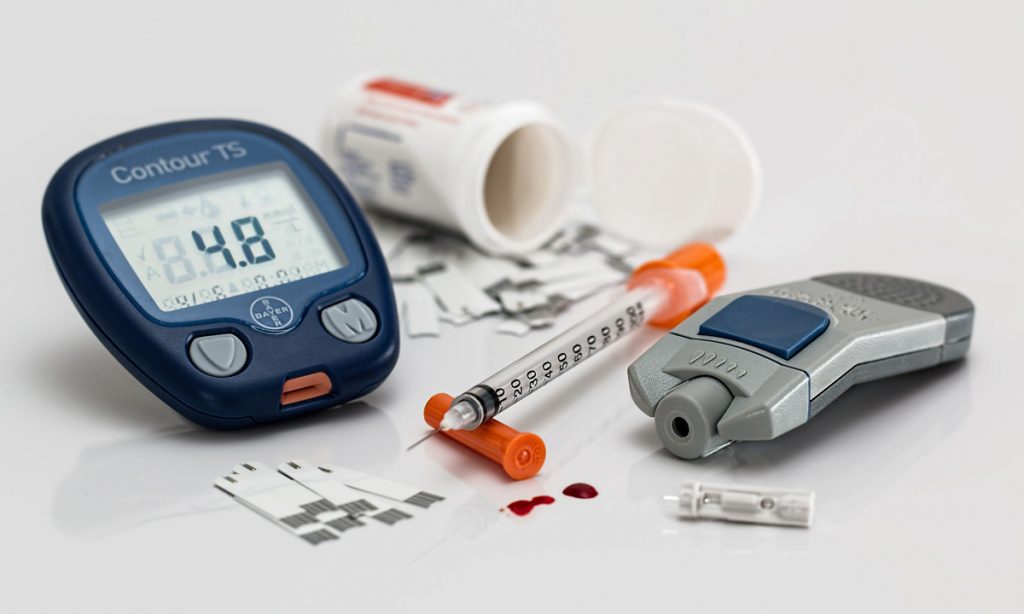
A team of researchers developed new protocols for generating human stem cells to allow the body to heal damage caused by diabetes in mice.
Could a type-1 diabetes have a cure on the way? A new study featured in Nature Biotechnology showcases findings that are causing a stir in the diabetes community and beyond.
Researchers looked to examine human pluripotent stem cells (hPSCs) in more depth to analyze cell replacement therapy as a treatment for diabetes. Past studies have featured hPSCs and showed promise as well, leading researchers to continue down the path of better understanding the cell-sequencing and how a solution might look and act within the human body. The research, just finalized in 2020, built-on what previous teams have found and utilized the already known link between diabetes and cell replacement therapy, while also understanding and modeling other cell behaviors.
In short, the team developed new protocols (or solutions) for generating human stem cells to allow the body to heal damage caused by diabetes in mice. The results were remarkable. In mice, the stem cells that were implanted in the cytoskeleton, or inner layer of the cell, cured diabetes, keeping blood sugar levels stable for over 9 months.
Photo by stevepb via Pixabay
Older research featured in the proceedings of the National Academy of Sciences of the United States of America (PNAS) looked at the unknown consequences of diabetes killing pancreatic β cells and the damage of molecular degeneration. They looked to a type of stem cell, or pluripotent cells (cells that have the capacity to self-renew), to see how they could use the cells to help “reprogram” cells to regenerate those damaged by diabetes.
Identifying new cells modeling, the research team paved a new path to better understanding stem cell therapy with diabetes in 2009 with new technology that allowed for better recreation and usage of stem cells.
What’s next? The research team is looking to replicate findings in larger animals to better understand the complexities involved and hoping to be able to replicate the same results to eventually allow for human trials. With just under 10% of the population living with diabetes, according to the Centers for Disease Control, (CDC) a cure would change the life of millions. According to the World Health Organization (WHO,) diabetes has been on the rise since the early 1980’s with 108 million individuals living with diabetes in 1980 to 422 individuals in 2018. Causing blindness, kidney failure, and stroke, diabetes is a major concern in countries with both higher and lower incomes.
The current frontrunner for the Democratic nomination can’t keep his story straight about cannabis reform.
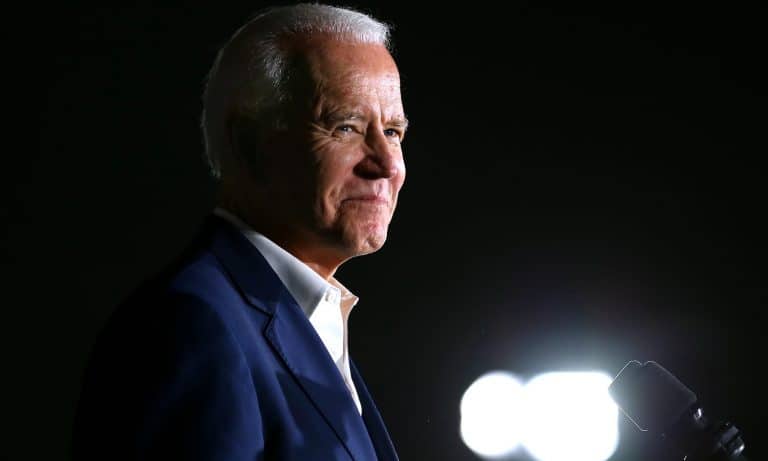
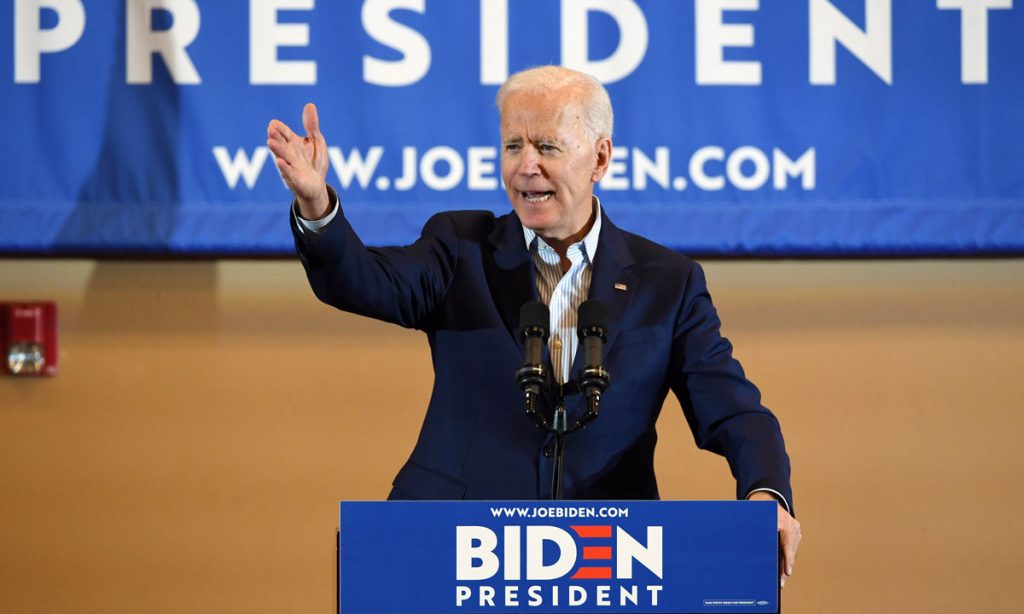
Joe Biden wishes you would stop reminding him he once qualified cannabis as a “gateway drug.” At a Las Vegas town hall last November, Biden stated he couldn’t support federal marijuana legalization because he wasn’t sure if weed was a gateway drug. Joe Biden conflicting opinions about marijuana are concerning the industry and the public.
“There’s not nearly been enough evidence that has been acquired as to whether or not it is a gateway drug,” he said at the time.
The comment opened up Biden to attacks from more left-leaning opponents, and he’s been trying to walk it back ever since. “I don’t think it is a gateway drug,” he told reporters a week later. “I said some say it’s a gateway drug.”
Ever since then, Biden has walked a fine line between supporting marijuana reform, but not full-blown legalization. In a recent interview with The Shade Room, Biden once again felt the need to defend himself about marijuana.
“When you talk about marijuana, everybody says, ‘Biden says it’s a gateway drug’. I don’t think it’s a gateway drug.”
Biden went on to repeat his official platform position, which is to decriminalize cannabis nationwide and expunge prior marijuana convictions. States can decide to legalize adult-use cannabis under Biden’s plan, and he would move cannabis to a Schedule II drug, which would lift many restrictions currently in place around marijuana research.
Photo by Ethan Miller/Staff/Getty Images
However, Biden can hardly blame reporters and voters for misunderstanding this position. Just last weekend, he mistakenly said he would legalize marijuana before correcting himself.
“There is evidence that we have to do some more study on the impact on mental acuity,” he told KMOV-TV in St. Louis Saturday. “And so I would legalize — I would decriminalize and I would provide for the ability of the researchers to get in and make sure we got it right this time.”
This isn’t the first time Biden’s made this mistake either. Last month, Marijuana Policy Project’s Don Murphy asked the candidate about his “hawkish” cannabis policy. He repeated it his policy platform, before stating twice he doesn’t believe marijuana is a “gateway drug.” Then he added this interesting nugget.
“I think it is at the point where it has to be, basically, legalized,” Biden said in a recording obtained by Politico.
Following the results of Super Tuesday last week, advocates across the country have become dismayed about substantial federal marijuana reform occurring this year. Thanks to a sweeping comeback by Joe Biden, Democratic candidates that supported major reform, like Pete Buttigieg and Elizabeth Warren, have dropped out of the race. President Donald Trump, meanwhile, has aligned himself as anti-marijuana in recent months, reversing previous promises to let states decide legalization.
The only major candidate left in the race that supports full marijuana legalization is Bernie Sanders, who says he would remove cannabis as a Schedule I drug through executive order his first day in office. Whether Biden would legalize or decriminalize marijuana as President remains open to interpretation of his above statements.
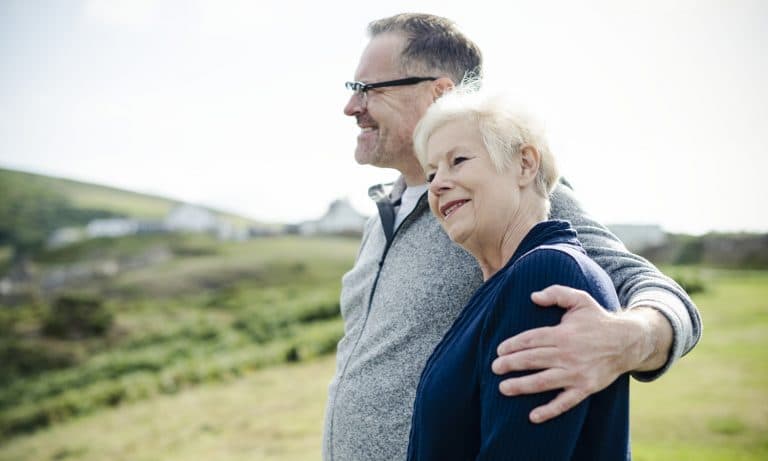
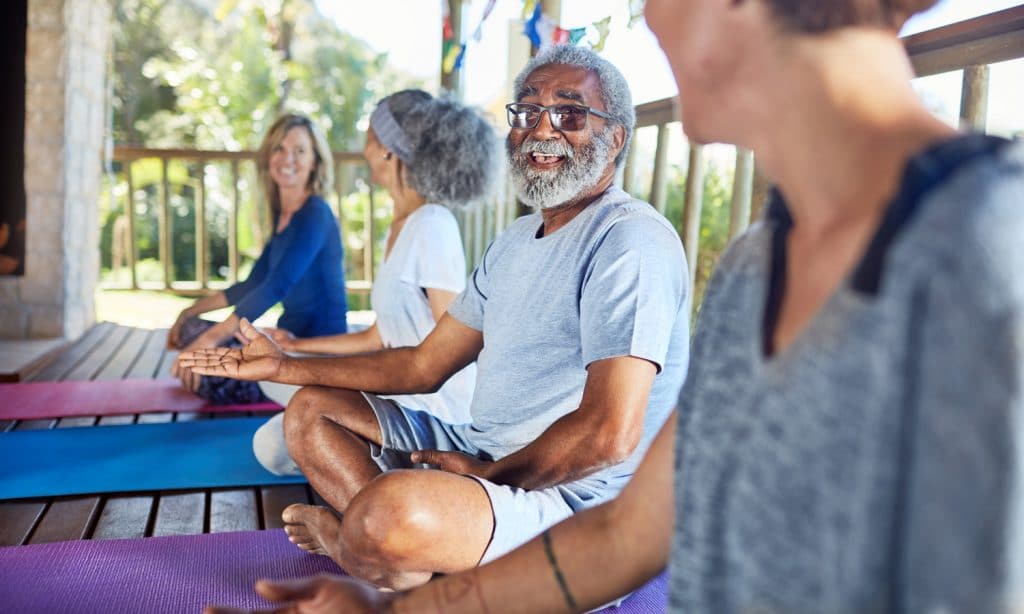
High on effectiveness and low on side-effects, CBD is a great method of managing symptoms that effect seniors, such as arthritis, pain and sleep disorders. Here’s how to get them started.
As a 60-year-old senior who has used cannabis for 44 years, Karen Watts Nauman of Comfortably Numb CBD has always believed in the medicinal healing of this plant medicine. However, she admits her fellow senior consumers lack an understanding of the full medicinal benefits of cannabis and hemp.
“My generation just got whatever weed we could get and didn’t know anything about the science.”
After she tried CBD with her husband and they were impressed by how their health improved significantly , they thought, “Our peers need to know about CBD!” That’s when they started Comfortably Numb to educate older adults about how CBD can be an alternative to Big Pharma in treating ailments that impact seniors, such as pain and inflammation, sleep disorders, bone health, and lack of appetite.
In their work, they explain the importance of healing the body’s endocannabinoid system, explaining that there are few ways to better support this system than with CBD. “High on effectiveness and low on side-effects, CBD is a near perfect method of managing symptoms.”
For those looking to introduce their senior family members to CBD, Watts Nauman notes education is key. “Our generation likes studies backed by science.” She suggests focusing on the senior’s specific problems and how CBD can address these concerns. “CBD needs to be looked at like a vitamin that should be taken every day for maximum benefit.” Also, seniors should discuss their CBD use with their doctor to avoid any complications due to other medications they are taking. According to Watts Nauman, the website Project CBD is an excellent resource that resonates well with seniors.
Photo by Caiaimage/Trevor Adeline/Getty Images
CBD Recommendations for Seniors
Watts Nauman advises starting seniors with a topical hat contains at least 125mg CBD per ounce of lotion/salve/oil but would then go higher to 250mg CBD per ounce. “If they have arthritis, or are using it for pain, maybe look for products that contain other carrier oils that work well with this particular issue.” She adds that they need to apply it three to four times per day, especially in the beginning.
Also, Watts Nauman suggests this population avoids sweet edibles, like CBD chocolate. “Seniors like sweets and will want to go this method and it is cheaper to try. But as many edibles use isolate, more than likely, they won’t feel anything immediately. Then they will be angry at the money they spent and tell others it doesn’t work.” Soft-gels and CBD teas can be good alternatives, but only if they have a high milligram count and are made using full spectrum CBD.
After seniors experiment with topicals, Watts Nauman recommends an oil tincture or a nasal inhaled delivery system. “These delivery methods are better for bioavailability and feeling the effects faster.” She offers these recommendations for dosing. “Start them with a minimum of 8-12mgs full spectrum or 20-30mg isolate taken in the early evening after a meal. Then stay on this dosage for about three days to determine how it works with their needs. Once they get a feel for their best dosage, then they can go into micro-dosing and using other delivery methods.”
Gym memberships and workout classes cost a lot of money. Here’s how you can stay healthy without having to worry about the bill.
Joining a sports team or acquiring a gym membership costs money, usually lots of it. StatisticBrain reports that people spend, on average, $58 a month on their gym memberships, which they sometimes don’t even use. If you’re on a tight budget and need money to pay for food and rent, this dollar amount most certainly makes you question your priorities.
Despite the fact that working out doesn’t require much more than a willingness to sweat, it’s much easier to be healthy and fit if you have the proper tools and the right environment. Cheap and free places to work out at aren’t always easy to find but they’re there in every city.
Here are five ways you can work out without spending most of your paycheck:
Parks & playgrounds
No matter where you live, there’s gotta be a public park with those free to use “gyms” that include pull out bars and other rusty looking machines. If you mix cardio with some of these machine exercises, you’ll be getting a complete and perfectly decent workout, the same one you’d get in a fancy gym.
This tip works mostly for those who live in big cities, which tend to have these type of places. These spaces are free or very cheap and don’t force you to sign a contract, which tend to be really problematic in the long run. To find public fitness centers use Google or check your local park & recreation department’s website.
At home
If the weather becomes a determining factor on your workouts, you can always stay in shape from home. Nowadays there are tons of apps that allow you to download routines that require no equipment or basic weights that you have laying around your house. These apps give you the chance to work out at your own pace, fitting these in on tight schedules and more.
Proper weights are not an excuse for skipping out on workout routines. Plenty of household items can do the job, such as a sturdy chair, which can be used for some of the most effective muscle toning routines, such as lunges, reverse crutches and step ups. If there’s a dog or a baby at home, you can also use them for presses, bicep curls, and more, with their squiggling nature adding more of a challenge than a weight ever could. Just, you know, don’t drop them.
Make a schedule
The most important aspect about a workout routine is consistency. You need this whether you’re going to the most expensive gym in the world or you’re working out from your living room. Make a schedule at the beginning of the week and stick to it. If you’re serious about getting in shape, you’ll start seeing results in no time.
Could all the news around coronavirus be affecting your mental health? A New York City psychiatrist chimes in on what you can do to stop (or at least temper) your worrying.
From Facebook friends who are prepping to your great aunt who is sharing that its the end of times, the hype around coronavirus (or 2019-nCOV as the CDC refers to it) is higher than its ever been.It seems almost difficult to escape minute-by-minute news of impending doom, doesn’t it?
Whether you’re planning on stocking up on necessities or waiting for it to blow over, one thing is certain: It’s difficult to escape the constant barrage of media attention. But, could all the news around coronavirus be affecting your mental health? New York City psychiatristDr. Zlatin Ivanovbelieves recent events can hit those with anxiety especially hard and recently spoke to The Fresh Toast in what individuals can do to keep worry at bay.
Q: Share with our readers how they can emotionally prepare and explore the often complicated feelings they may have around coronavirus?
A: This is a very good question as it reflects our current situation. The most important step to emotionally prepare for this specific subject is to be well informed. The first thing to be informed about is their health condition; physical and mental health is very important in scenarios like the coronavirus.
The next step would be to make sure we are well informed about the virus itself. In order to protect ourselves and our loved ones from getting infected, we should take measures (of precaution). Some of the measures that I recommend to my patients and everyone around me, is to wash hands frequently. Use of antibacterial soap could help too. Avoid large groups of people, if you can.
Q: How can our readers navigate fears around the coronavirus?
A: Doing our own research is very helpful and important when we talk about exploring feelings. You need to give yourself the necessary time to overview the situation, (personal and global,) before making any conclusions. It is natural to feel anxious at first. When a person is well informed, then they are less likely to stress over a certain subject or topic.
Q: In your experience, have you used CBD or marijuana to help with anxiety in your patients?
A: Colleagues of mine have used it and have seen the effects of these medications. I am looking for more available data and experience from my colleagues in order to introduce it and use it more often in my practice.
We know CBD and marijuana can be helpful to individuals with anxiety, or stress-related disorders. Brandan Bures recently shared its effects in the anxiety and Parkinson’s space and how CBD oil is helping those suffering. While professionals and researchers can only predict where coronavirus is going and its effects, the only control we have is learning to “let go.” Focusing on the now, enjoying each moment and utilizing products that help can go a long way.
This is not the first time the Girl Scouts have gone to bat against a cannabis company, previously having clamped down on the use of the strain name “Girl Scout Cookies.”
As usual, we’ve been monitoring both brewing and active trademark disputes in the cannabis space, and the most recent example involves the institution that is the Girl Scouts.
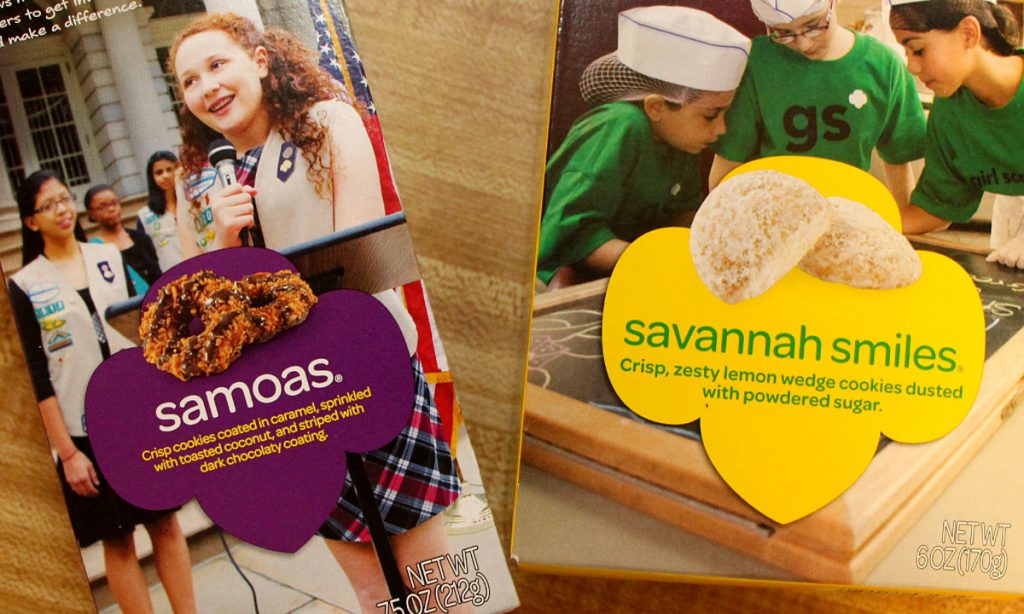
According to a recent article in Forbes, California cannabis-edibles company Kaneh Co. was promoting its cannabis-infused cookies as similar to several of the Girl Scouts’ cookie brands. According to the article, Kaneh was comparing its “Toasted Coconut Caramels (‘flecked with vanilla and sea salt’) to the Scouts’ Samoas; its Lemon Sugar Cookies to the Scouts’ Lemonades; and its Salted Toffee Blondies (‘a brown sugar blondie swirled with toffee chips and a generous dose of sea salt’) to the Scouts’ Toffee-tastic cookies.” All of these descriptions were included in an emailed advertisement for Kaneh’s goods, and a representative from Kaneh stated that the Girl Scouts comparison would not appear in any print or online advertisements.
The Girl Scouts, however, were not amused by Kaneh’s likening of its products to the Girls Scouts’ cookies, particularly given the connection to cannabis. A statement from the Girl Scouts said, “We consider … such use of our [cookie names] trademarks to be misappropriation, which we take seriously and, when applicable, [we] will send a cease and desist request.”
This is not the first time the Girl Scouts have gone to bat against a cannabis company, previously having clamped down on the use of the strain name “Girl Scout Cookies.” See: How an LA Weed Dispensary Pissed Off the Girl Scouts.
Quite frankly, it’s understandable that a youth organization would object to the use of its intellectual property in conjunction with a Schedule I controlled substance. But what is interesting about the Girl Scouts’ current beef with Kaneh’s use of its intellectual property (IP) is that the Girl Scouts representative didn’t argue that Kaneh was infringing the Girl Scouts’ trademarks (as was the case in the disputes we’ve covered in the past and linked to above). The representative instead asserted that such use of the Girl Scouts’ cookie names was “misappropriation,” and this is an important distinction.
Photo by Flickr user StarsApart
As we’ve covered before, a trademark is a word, phrase, symbol, and/or design that identifies and distinguishes the source of the goods of one party from those of others. And trademark infringement is the “unauthorized use of a trademark or service mark on or in connection with goods and/or services in a manner that is likely to cause confusion, deception, or mistake about the source of the goods and/or services.” In the case at hand, the Girl Scouts would be hard pressed to show that Kaneh’s use of the names of its cookies (which are protected by trademark registrations), was likely to cause consumer confusion or mistake about the source of the goods, since Kaneh was only referencing the cookies in a comparative manner, to explain to customers what its cookies tasted like. In fact, this comparative manner of use would make it very clear to customers that Kaneh’s cookies were not Girl Scout cookies.
But are companies allowed to make these kinds of comparative statements? And what is “misappropriation” in the context of trademarks? The theory of misappropriation in a trademark context is tenuous, but there are three basic elements (J. THOMAS MCCARTHY, 2 MCCARTHY ON TRADEMARKS AND UNFAIR COMPETITION § 10.72 (4th ed. 2006)):
Plaintiff has made a substantial investment of time, effort and money into creating the thing misappropriated such that the court can characterize that “thing” as a kind of property right [the creation element].
Defendant had appropriated the “thing” at little or no cost, such that the court can characterize defendant’s action as “reaping where it has not sown” [the appropriation element].
Defendant has injured plaintiff by the misappropriation [the injury element].
The idea here would be that Kaneh was free-riding on the goodwill that the Girl Scouts have worked to establish over the years. But there are also “fair use” exceptions to trademark infringement, including for comparative advertising. It is unclear whether such comparative advertising principles would apply in this case, since traditional girl scout cookies fall within a completely different product category from cannabis-infused cookies. Still, this is something that all cannabis business owners should be mindful of. Use of another company’s trademark in comparative advertising may be allowed under certain circumstances, but businesses must be very careful to avoid advertisements that could be deemed false and misleading.
Even if you think that your use of another’s trademark does not constitute trademark infringement, or that your use falls within a fair use exception like comparative advertising, it is important to consider claims that could be made against you like misappropriation, or false and misleading advertising, and it is important to run these types of advertisements by your IP lawyer.
Alison Malsbury is an attorney at Harris Bricken, a law firm with lawyers in Seattle, Portland, Los Angeles, San Francisco, Barcelona, and Beijing. This story was originally published on the Canna Law Blog.
So far, 11 states have legalized marijuana. Decriminalization, however, is a different beast.
The issue of marijuana reform is not one dimensional, not in the slightest. In addition to the various underlying issues aside from just making it legal, fear and skepticism have led to a variety of ways that this plant is presently being managed in the United States.
Some jurisdictions have legalized for medicinal use, while others have unleashed the leaf in a manner that allows adults 21 and over to partake. Other states have opted instead to just decriminalize it.
But if there is one confusion in this day and age concerning the methods of marijuana reform this country has been experimenting with, it’s precisely what the difference between legalization and decriminalization is. And which one is better in the grand scheme of longevity and public health and safety.
First, the differences between the two methods.
When a state legalizes marijuana, what it’s really doing is eliminating the laws it has associated with the possession and personal use of cannabis. It means people (typically adults 21 and older) can no longer be punished by the county, city or state for most marijuana-related offenses.
These laws often come with possession limits, allowing adult individuals to hold up to an ounce of weed (sometimes two) without getting into trouble. In many cases, these laws also allow adults to engage in home cultivation. Depending on the state, the rules essentially give adults the freedom to grow a certain number of plants in their home (or outside garden) for personal use.
Legalization also gives the state government the power to establish a taxed and regulated market, allowing pot consumers to purchase cannabis products from a retail environment. Usually, the state gives local municipalities the freedom to decide whether they want to cater to pot shops or not. Just think of marijuana legalization in terms of how the alcohol trade works. Booze is fully legal, and adults 21 and older can buy it from liquor stores and other licensed retailers. But there are still some “dry” counties in parts of the country. Marijuana isn’t any different.
State and local jurisdictions benefit from the legalization model, too, as they all collect tax revenue allotted for road construction, schools and combatting drug addiction. So far, 11 states have gone this route.
Photo by RobinOlimb/Getty Images
Decriminalization, however, is a different beast.
These laws basically allow low-level marijuana offenders to escape jail and criminal charges. The rules are just a little less restrictive than in a full-blown prohibition regime and there is no retail market. Anyone caught for pot in a place where decriminalization is in effect can expect to receive a small fine (typically, between $50 and $200), and they may have to make an appearance in court. It just depends on the state or local authorities. But as long as small-time possession is involved, there is never a situation where an offender has to worry about spending time in jail, losing their vehicle or dealing with a criminal record.
Go over the possession limit, though, and it’s a different story altogether. Think of decriminalization as similar to a seat belt violation. It’s still against the law to drive around without a seat belt, but the cops aren’t going to cuff you for it. They’re going to hand you a citation, tell you to be careful and move on. But don’t expect to keep your weed. Police will usually seize it even though it is decriminalized. After all, it’s not legal to be in possession of marijuana, it’s just not a criminal offense. Several states and cities have gone this way rather than entertain a fully legal system.
Now, which is best?
At its core, legalization is really the most American way of dealing with marijuana. It puts it safely in the hands of marijuana consumers and knocks out the black market, it creates business opportunities, jobs, and reignites stagnant economies. Some naysayers, however, are concerned that it also gives children the wrong impression about the overall safety of the drug and they worry that it may also create more socioeconomic problems down the road.
Decriminalization has had its fair share of success — it reduces marijuana-related arrests — but it also strengthens the black market. So while most pot consumers benefit from these laws, the streets become even more lucrative money-makers for criminal organizations. And this can increase violent crime. On the other hand, only drug dealers and violent criminals end up in the prison system.
We are of the opinion that legalization makes the most sense when pushing for marijuana reform that tackles issues of public health and safety. Toss in the financial rewards, and it’s hard to argue that this substance shouldn’t receive the same treatment as other legal drugs like alcohol and tobacco.
For parents who are not informed, dabbing can seem like a scary and dangerous practice.
Teens are consuming less drugs and alcohol than ever, with statistics showing that new generations have been delaying their first encounters with substances. Despite this, the legalization of marijuana and an evolving perspective on the drug means that teens could encounter substances and new methods of consumption more easily. This understandably is a source of concern for some parents.
Marijuana can be ingested in myriad ways, but one of the most popular methods is called dabbing, and it’s on the rise among teens. And while it’s not a new practice, it’s more mainstream than ever.
Dabbing consists of consuming cannabis concentrates through a dab rig. These concentrates are placed in the device, with the user applying heat until the concentrate becomes vapor. Users ingest this vapor and experience stronger highs than the ones provided by smoking cannabis, making dabbing a useful method for medical cannabis users or experienced marijuana consumers. For reference, a marijuana joint can contain up to 20% of THC while marijuana concentrates can contain up to 90% of the compound.
Photo by Martin Novak/Getty Images
While many enjoy dabbing, it makes sense for parents to be concerned over their kids getting involved with this method of consuming cannabis. Dabbing generally produces powerful results; if the user is not experienced, the high can quickly devolve into a bad one.
Aside from paranoia, anxiety and some trouble functioning, other risks posed by dabbing include the method of consuming the concentrate. While smoking marijuana simply requires a lighter, when dabbing, the source of heat must be very powerful in order to vaporize the concentrate. Butane torches are needed to make this process work and should only be used by people who are experienced and careful.
While there are questions when it comes to teens smoking marijuana flower, this is a method that has existed for years. There are no chemicals involved and the major risk is the damage that’s done to the lungs. With dabbing, there’s more stuff we don’t know, especially since more time is needed in order to grasp the true harms and benefits of cannabis concentrates.
Dabbing is a process that should be approached with care, even for adults who’ve been consuming marijuana throughout their lives.





%20no-repeat%20center%20center;-webkit-background-size:cover;-moz-background-size:cover;-o-background-size:cover;background-size:%20cover; "The Difference Between Marijuana Legalization And Decriminalization")